Leggy Growth on Zebra Plant: Causes, Checks & Fixes
Quick answer
Leggy growth on Zebra Plant means stretched stems from too little light-not a feeding problem. Move to bright indirect light first, then prune long bare stems after flowering to encourage branching.
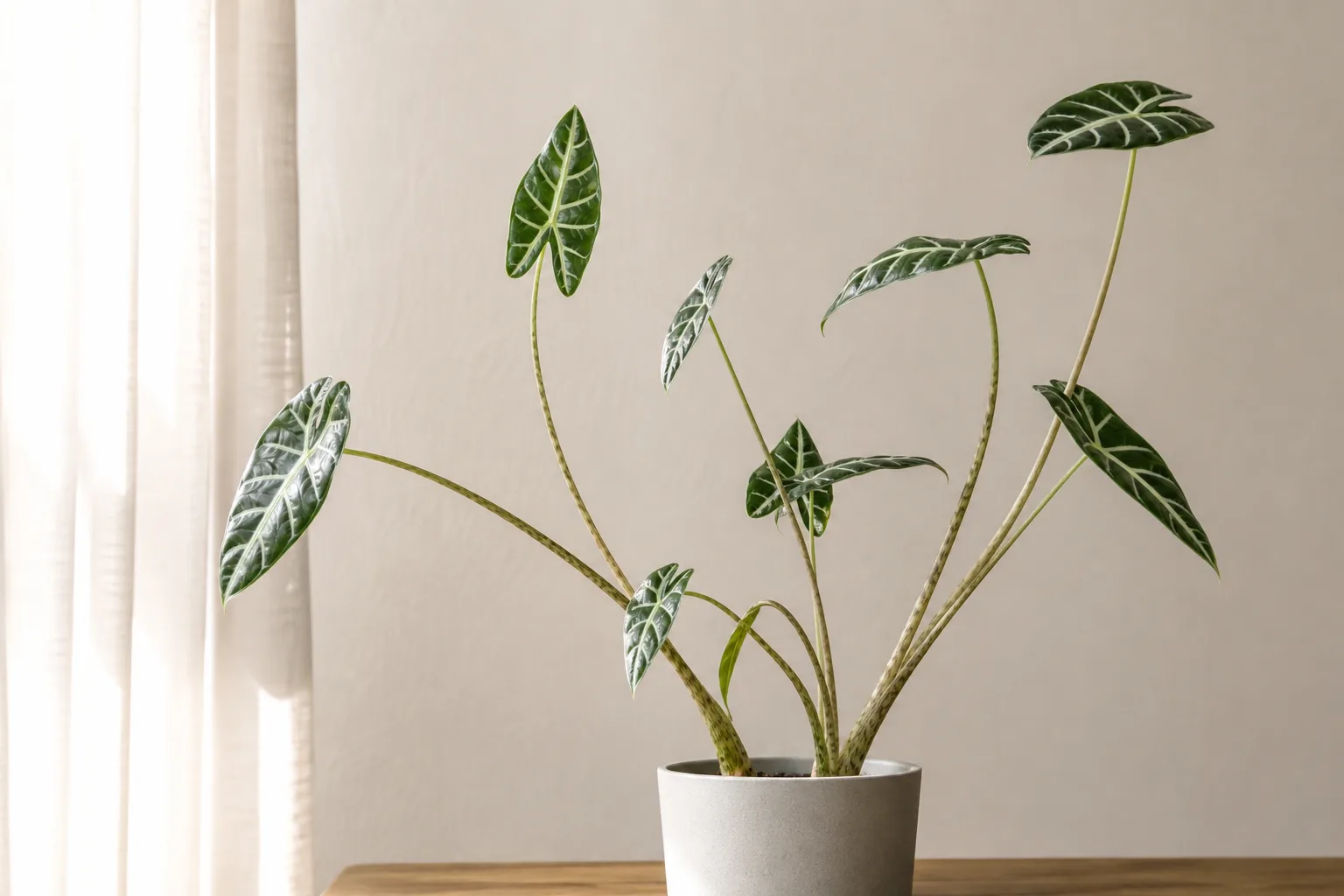
Leggy Growth on Zebra Plant: Causes, Checks & Fixes
This guide covers leggy growth on Zebra Plant. See also the general Leggy Growth guide, watering, and light pages for this plant.
Leggy Growth on Zebra Plant: Causes, Checks & Fixes
Quick answer
Leggy Zebra Plant (Aphelandra squarrosa) stems are a light problem, not a fertilizer shortage. This tropical evergreen wants bright indirect light, but avoid direct sun indoors and stretches toward whatever photons it can find when placed in dim rooms. Stems elongate, internodes widen, lower striped leaves drop, and the bold white-veined foliage thins until the plant looks like a sparse topiary on a bare stick.
First step: move the pot to the brightest filtered spot you have-an east window, a north window with clear exposure, or a south window behind sheer curtains. Do not jump to direct midday sun; zebra plant scorches in harsh rays. Once new growth comes in tighter, prune the worst stretched sections after flowering.
What leggy growth looks like on Zebra Plant
Leggy growth on Aphelandra squarrosa is etiolation-the plant sacrificing compact form to reach more light.
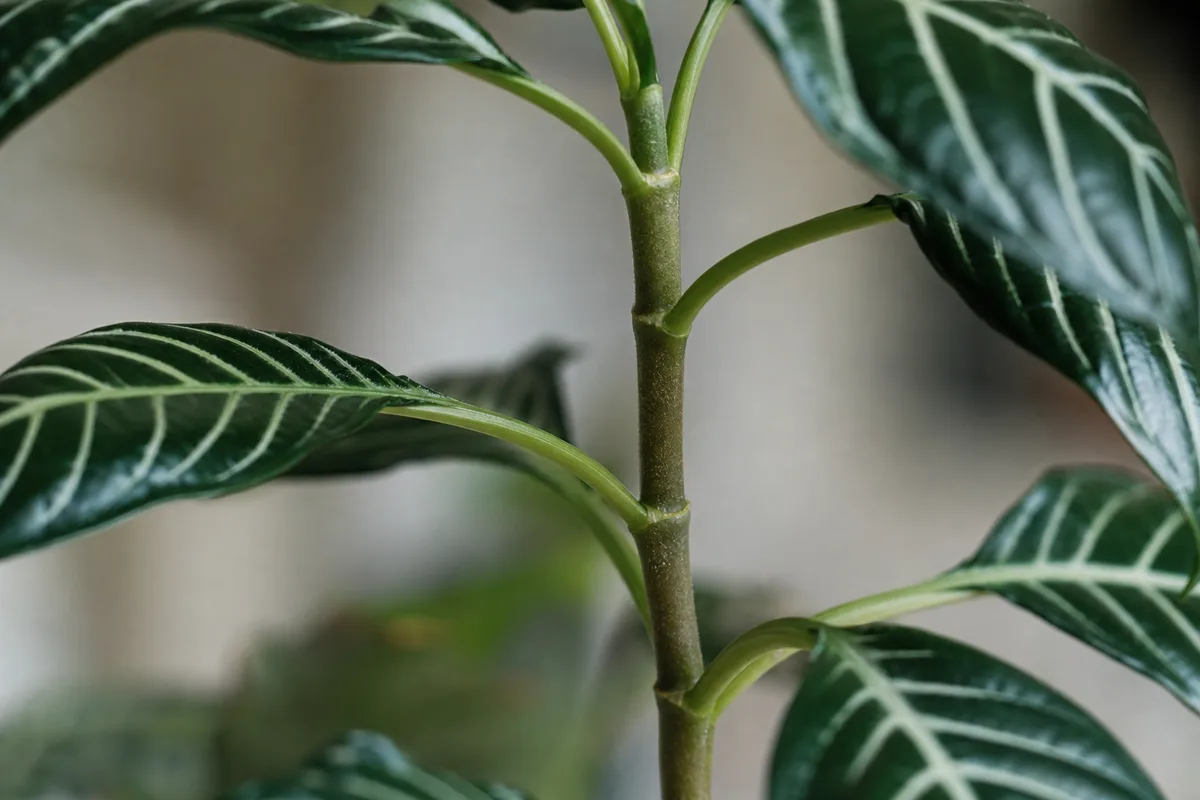
Leggy Growth symptoms on Zebra Plant - compare with healthy tissue on the same plant.
Typical signs:
- Upright stems with long empty gaps between leaf pairs
- Leaves clustered at stem tips while lower sections go bare
- New leaves smaller than older ones, with faded white striping
- Whole plant leaning toward the window or lamp
- Thin, weak stems that bend or flop under their own weight
- No yellow flower bracts despite otherwise healthy-looking top growth
- Pattern worsens in winter when daylight hours shrink
Unlike slow growth from low humidity alone-which usually shows brown tips first-legginess is directional. The plant reaches toward light. If every stem leans the same way and internodes keep lengthening on new shoots, light is the driver.
A mature zebra plant can reach two feet indoors when well grown. Leggy specimens often hit that height on a few weak stems with almost no foliage below the crown-very different from a bushy plant with leaves stacked along the stem.
Why Zebra Plant gets leggy
Zebra plant evolved under rainforest canopy in Brazil, where it receives dappled but steady bright light-not deep shade. Indoors it sits in the bright-indirect group with other flowering tropicals, not with pothos or snake plants that tolerate dim corners.
Insufficient light intensity is the primary cause. When photons are too few, Aphelandra elongates internodes and sheds lower leaves to put remaining energy into stems that reach brighter zones. The plant may lose the lower leaves until they become leggy in prolonged shade.
Short winter days trigger the same response even when summer placement was fine. North rooms and interior shelves that worked in June often fail from October through February.
Uneven light produces one-sided stretch. Plants against walls or tucked behind furniture grow toward the open side, leaving a bare back face.
Post-bloom decline can look sparse but is different from true etiolation. After yellow bracts finish, zebra plant naturally rests and may drop some foliage-but random mid-season stretch with active stem elongation still means light slipped.
Over-fertilizing in low light can push weak elongated shoots when the plant cannot photosynthesize enough to support dense tissue. Do not reach for fertilizer before fixing light.
Crowding from nearby taller plants blocks light to lower zebra plant leaves, accelerating lower-leaf drop and bare stems.
How to confirm the cause
Work through these checks before pruning or Zebra Plant repotting guide:
- Light at the pot - Stand where the pot sits at midday. If you cannot read comfortably without a lamp, the zebra plant cannot either. Bright indirect means a soft shadow when you hold your hand in the beam-not a sharp dark shadow from direct sun.
- Direction of lean - Strong lean toward one window confirms the plant is hunting light. No lean but still sparse may mean overhead light is too weak everywhere.
- New growth quality - Compare the newest leaves to ones from six months ago. Smaller, paler, more widely spaced leaves mean ongoing etiolation.
- Season timing - Legginess that started in late fall often tracks shorter days, not a sudden care change.
- Soil moisture pattern - Chronically wet soil in a dim corner slows evaporation and invites root problems, but wet soil alone does not cause stretch. If soil stays soggy while stems elongate, fix light and watering together.
- Pest check - Spider mites on dry, dim plants cause stippling-not legginess. Confirm no webbing or stippled patches before blaming light alone.
If light is genuinely bright and filtered, stems are still tight, and white veining stays bold, legginess is unlikely. When in doubt, move closer to filtered window light for two weeks and watch whether new internodes shorten.
First fix for Zebra Plant
Move the pot to bright indirect light-filtered east exposure, bright north light, or curtained south light-and leave it there for at least two weeks before any other intervention.
This single step addresses the root cause without stacking repotting, fertilizer, and heavy pruning on day one. Zebra plant needs bright indirect light but must avoid direct sun that scorches striped leaves.
While improving light:
- Acclimate over several days if moving from a very dim spot-shift closer to the window in stages rather than one jump to harsh direct rays.
- Rotate the pot a quarter turn every week so all sides receive similar exposure.
- Keep even moisture; do not let the pot go bone dry while it adjusts, but do not overwater in the old dim corner habit.
- Do not fertilize a stretched plant hoping to bulk it up-roots need stable light before feeding helps.
Hold off on major pruning until you see whether new growth tightens. If internodes on fresh shoots shorten within two to three weeks, light correction is working.
Step-by-step recovery
After the initial light move:
- Add supplemental lighting if natural light is marginal - A full-spectrum LED grow lamp 12–16 inches above the canopy for 10–12 hours daily bridges winter short days. Indoor plants can become spindly or “leggy” when they stretch to reach for more light.
- Prune after flowering - Once yellow bracts finish, cut plants back after flowering to control growth-trim the longest leggy stems to just above a leaf node, leaving at least two rows of leaves on each stem you keep. Removed tips root easily for propagation if you want backup plants.
- Pinch new tips lightly - After the post-bloom cutback, pinching soft new growth encourages lateral branching and a bushier habit.
- Stabilize humidity at 60–70% - Dry air will not cause legginess, but it stresses recovery. Plants require high humidity; pebble trays or humidifiers support new compact growth once light is adequate.
- Hold temperature above 65°F - Minimum 65º F in winter matters; cold drafts near windows compound stress on plants already weakened by stretch. Keep pots away from winter glass and AC vents.
- Propagate severe cases - If one stem is mostly bare, take a tip cutting from healthy tissue, root it in moist perlite-heavy mix, and start a compact specimen in proper light while rejuvenating the parent.
Do not move the plant repeatedly between rooms during recovery. Each relocation resets adaptation and can worsen lean.
Recovery timeline
New growth after a light correction often shows shorter internodes within two to three weeks during active spring or summer growth. Winter recovery may take four to six weeks before you see clearly tighter shoots.
Old elongated stem sections never shrink-only new tissue grows compact. Expect three to six months before a pruned zebra plant looks reasonably full again, depending on light quality and season.
Flowering on corrected plants may wait until the following late summer or fall bloom cycle. Judge success by bold striping on new leaves and shorter stem gaps, not immediate bracts.
If stems keep stretching after four weeks in clearly brighter filtered light, the spot is still too dim-move closer or add a grow lamp rather than pruning again.
Lookalike symptoms to rule out
Not enough light overlaps heavily with legginess-low light is the cause. The not-enough-light page covers broader pale foliage and wet-soil issues; legginess is the stretch-specific pattern.
Slow growth from poor humidity or watering produces small leaves and brown tips without long bare stem sections. Stems stay short; foliage quality drops instead of internodes lengthening.
Normal post-bloom rest after bracts fade may drop some leaves and slow growth, but stems should not keep reaching toward windows unless light is also insufficient.
overwatering on Zebra Plant in dim corners causes yellow lower leaves and droop, not directional stretch. If soil stays wet and the plant wilts despite elongation, address roots and light together.
Confusion with succulent zebra plants - Haworthia and similar species are compact rosettes that rarely etiolate the same way. This page is for Aphelandra squarrosa, an upright tropical with striped foliage and yellow bracts.
Mistakes to avoid
Do not assume fast vertical growth means health. Stretching is the plant struggling, not thriving.
Do not prune heavily without improving light first-you will get another round of leggy shoots from the same dim conditions.
Do not move from a dark corner directly to unfiltered south-window sun. Acclimate to filtered bright light; scorched leaves add a second problem.
Do not fertilize heavily in shade. Excess nitrogen drives weak elongation when photosynthesis cannot support dense growth.
Do not ignore one-sided lean. Rotation alone cannot fix a pot that sits in a permanently shaded alcove.
Do not repot hoping to fix legginess. Root space does not replace photons.
Do not wait until the plant is mostly bare stem. Earlier light correction saves more foliage and flowering potential.
Zebra Plant care cross-check
Leggy growth usually means the light leg of baseline care failed:
- Light: Bright indirect, filtered-never long-term dim interior shelves
- Water: Top inch dries between thorough waterings; even moisture without soggy soil
- Climate: Above 65°F, 60–70% humidity, stable placement away from drafts
After flowering, zebra plant benefits from cutback and slightly reduced watering during its rest period-but it still needs adequate light through winter. A dim post-bloom corner is a common path to bare stems by spring.
How to prevent leggy growth next time
Place new zebra plants where they receive bright filtered light from day one-not where the pot looks decorative in a dark hallway.
Supplement with grow lights from October through March if your brightest window still produces stretch each winter.
Rotate the pot weekly for even exposure and inspect new internode length monthly. The moment gaps between leaves widen, increase light before bare stems form.
Cut plants back after flowering to manage height and encourage branching before the next growth cycle.
Keep humidity and watering steady so the plant spends energy on compact foliage rather than stress responses-but remember humidity does not replace light.
Scout for spider mites when humidity drops in bright light; pests weaken plants but do not cause etiolation.
When to worry
Legginess itself is not urgent-it will not kill the plant overnight. Treat as higher priority when weak stems snap, the pot sits in chronically wet soil in a dim spot, or the plant has not flowered in multiple seasons despite age.
Also act when lower leaf drop accelerates into crown thinning on wet soil-that combination suggests root decline stacked on light stress, not etiolation alone.
A slightly stretched plant with firm stems and bold new striping after a light move is on track. A mostly bare stick with mushy base on soggy mix is a different rescue-not a simple legginess fix.
Conclusion
Leggy growth on zebra plant traces to insufficient bright indirect light in almost every case. Move to stronger filtered exposure first, let new growth prove internodes are shortening, then prune stretched stems after flowering to rebuild a bushy habit. Old bare stem sections will not fill in on their own, but a firm Aphelandra squarrosa in proper light can push striking striped foliage again within a few months-and reward you with yellow bracts when day length and care align.
When to use this page vs other Zebra Plant guides
- Zebra Plant watering guide - Use for routine moisture checks before assuming leggy growth is the main issue.
- Zebra Plant problems hub - Browse all 32 common issues on this species.
- Not Enough Light on Zebra Plant - Different entry point when symptoms overlap with leggy growth.
- Slow Growth on Zebra Plant - Different entry point when symptoms overlap with leggy growth.
- Leaf Drop on Zebra Plant - Different entry point when symptoms overlap with leggy growth.