Slow Growth on Zebra Plant: Causes, Checks & Fixes
Quick answer
Zebra Plant is a naturally slow grower, but almost no new striped leaves through a warm season means conditions are off. First step: confirm you are not in normal post-bloom or winter rest, then move the pot to the brightest filtered light available.
Slow Growth on Zebra Plant: Causes, Checks & Fixes
This guide covers slow growth on Zebra Plant. See also the general Slow Growth guide, watering, and light pages for this plant.
Slow Growth on Zebra Plant: Causes, Checks & Fixes
Quick answer
Zebra Plant (Aphelandra squarrosa) is a slow-growing tropical shrub-not a pothos that pushes new leaves every week. A few weeks without visible change after flowering or in short winter days is normal. What is not normal is an entire warm season with almost no new striped foliage while the plant looks otherwise alive.
First step: confirm you are not in normal post-bloom or winter rest, then move the pot to the brightest filtered light spot you can offer. Zebra Plant needs warm, bright, indirect light and high humidity to keep metabolism up. Dim corners, cool drafts, and soil that swings bone-dry to soggy are the usual reasons growth stalls beyond the plant’s natural pace. Full species context: Zebra Plant overview. Light placement details: Zebra Plant light guide. Moisture rhythm: Zebra Plant watering.
Post-bloom wait window: After yellow bracts finish, plan on six to eight weeks of reduced visible growth before you treat the plant as stalled. Firm striped leaves through that pause are rest-not decline.
What slow growth looks like on Zebra Plant
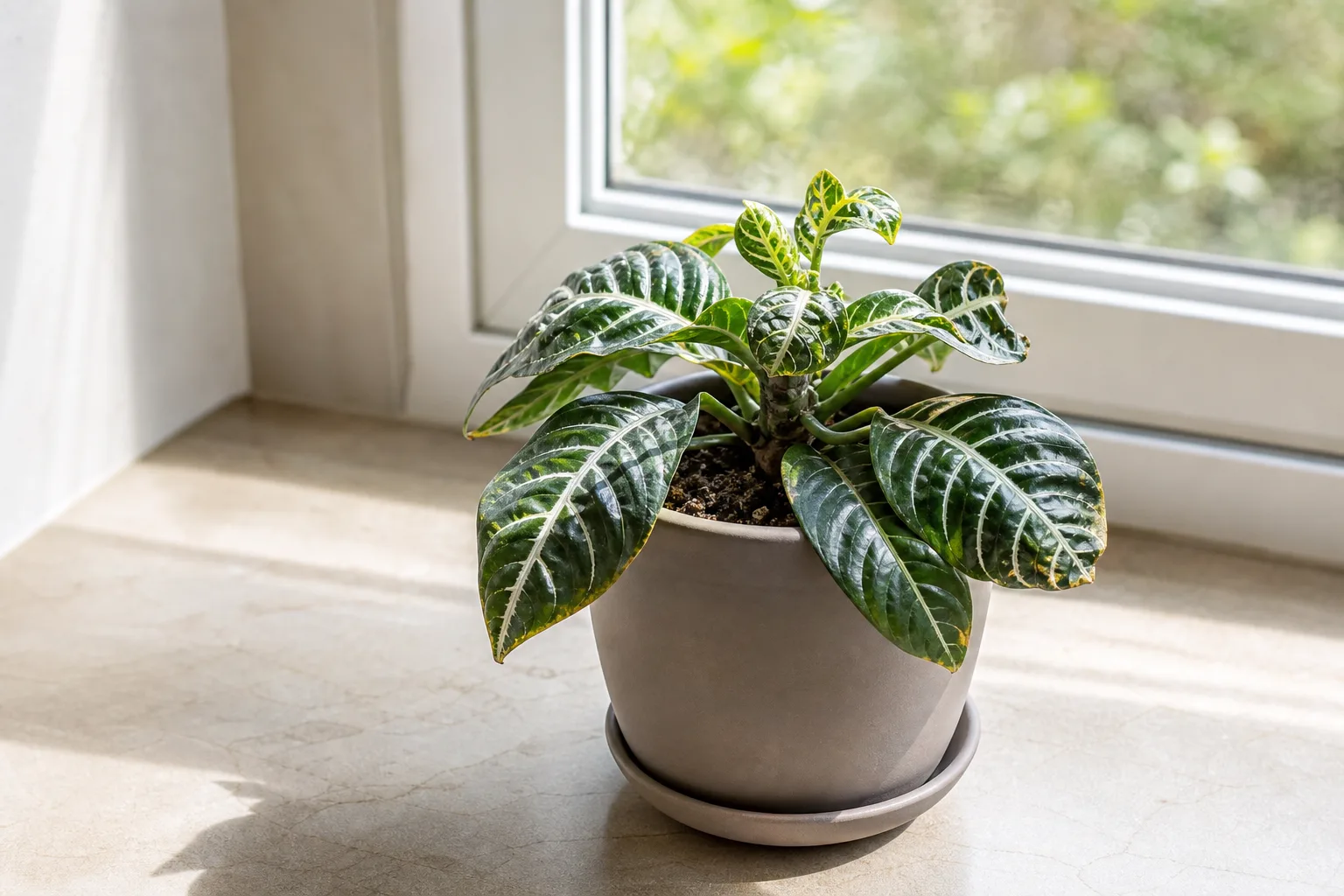
Healthy Zebra Plant growth means new dark green leaves with bold white veins opening from stem tips during active months. Growth is upright and compact when light is adequate-not long bare stems with leaves only at the top.
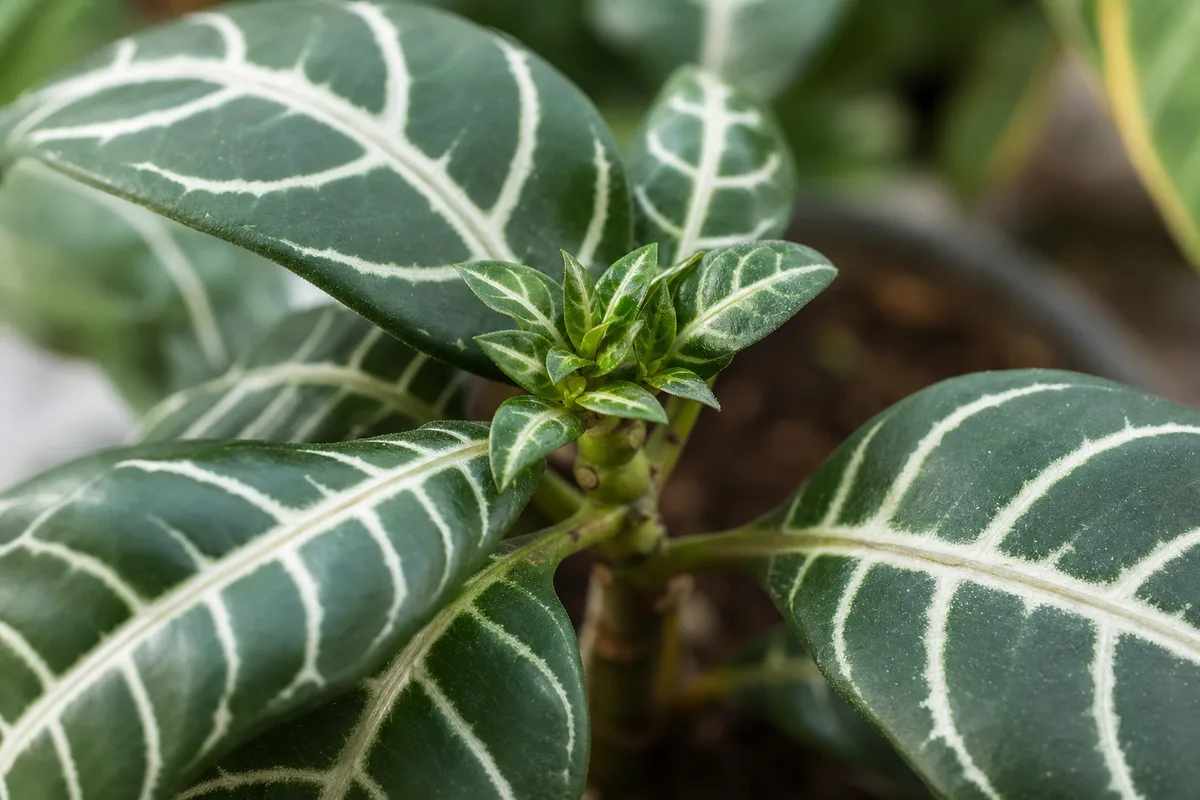
Slow Growth symptoms on Zebra Plant - compare with healthy tissue on the same plant.
Photo callout: Compare a plant in normal post-bloom pause-firm glossy striped leaves, no new tips for several weeks, soil drying slowly but stems still stiff-against a warm-season stall where emerging leaves are smaller than baseline foliage and vein contrast looks faded. Rest keeps mature leaves bold; true stall shows weak new tissue.
Normal slow periods vs. stalled growth
Normal slow periods (not a problem):
- Winter months when the plant enters semi-dormancy with reduced watering
- Six to eight weeks after yellow bract flowering while the plant redirects energy
- Late winter before new growth becomes evident again
Stalled growth that needs attention:
- No new leaves for months through spring and summer despite watering
- New leaves emerge smaller than older baseline foliage, with faded vein contrast
- Stems stay the same height while lower leaves yellow and drop
- Soil stays wet for days without the plant using water-often paired with dim light
- Buds fail to form and the plant tends to decline without even watering, moderate temperatures, and filtered light
Slow growth alone rarely kills Zebra Plant. It becomes urgent when combined with wilting, mushy stems, pest colonies, or sour soil smell.
Why Zebra Plant gets slow growth
Several factors stack on this species because it evolved for warm, humid Brazilian forest understory-not average dry living rooms.
Insufficient light is the most common cause
Zebra Plant belongs in the bright indirect light group, not low-light tolerant corners. Without enough photosynthetic energy, the plant conserves resources: fewer leaves, smaller leaves, no bracts. Low light also keeps peaty mix wet longer, which compounds stress even when you water carefully. When the stall is primarily light-related, start with the not enough light guide for placement checks beyond this page’s pace framing.
Cool temperatures slow metabolism
Aphelandra squarrosa prefers warmth and should not experience temperatures below 65°F. Plants near cold windows, AC vents, or unheated rooms in winter use less water and produce less tissue even when light looks acceptable.
Inconsistent moisture halts new leaves
This species wants evenly moist soil-not constant sogginess and not repeated full dry-outs. Do not allow the soil to dry out completely, but excessive water or extremely dry conditions cause lower leaves to brown and drop. Both extremes divert energy away from new striped foliage. Match rhythm to the watering guide.
Low humidity adds chronic stress
Dry indoor air above heating vents browns leaf tips and discourages the tender new growth Zebra Plant needs to look full. Humidity below roughly 60% rarely stops growth entirely, but it slows it-especially alongside low light. Setup comparisons live on low humidity.
Post-flowering rest is built in
After the showy yellow bract spike finishes, many plants pause visibly. Watering should be reduced but not stopped during winter rest, and growth picks up again when days lengthen. Mistaking this rest for decline leads to overwatering and fertilizer mistakes.
Root problems and pests sap vigor
Waterlogged mix in dim light can rot roots while tops look merely slow. Sap-sucking aphids, scale, mealybugs, and spider mites on Aphelandra also reduce growth before damage looks dramatic. Check undersides if growth stalls without an obvious environmental cause. Wet-soil stalls with soft stems belong on root rot.
Winter light shortfall
Short days and weak window intensity can stall zebra plant even when summer placement was adequate. A full-spectrum grow light run ten to twelve hours daily twelve to eighteen inches above the canopy supplements weak winter windows-same approach as the light guide grow-light section. Pair supplemental light with warmth above 65°F; light alone in a cold draft will not restart striped foliage.
How to confirm the cause
Work through these checks in order before changing everything at once:
- Season and bloom history - Did yellow bracts finish in the last two months? Is it mid-winter? If yes, expect slower pace first. Use the six-to-eight-week post-bloom window before escalating.
- Light at the pot - Hold your hand above the soil at midday. A soft, defined shadow means usable indirect light. Deep shade or only reflected room glow confirms low light-cross-check not enough light and leggy growth if stems are stretching.
- Temperature - Measure near the leaves overnight. Sustained readings below 65°F explain sluggish growth.
- Soil moisture pattern - Insert a finger to the first knuckle. Bone dry for days, or wet for a week without drying, both stall growth. Ideal: top inch dries, then you water thoroughly with drainage.
- Humidity clues - Crispy brown tips, curled leaf margins, or aborted buds suggest dry air compounding the stall-see low humidity.
- Root and pest check - If light and moisture look reasonable but growth is flat for months, gently slide the plant from the pot. Firm white-tan roots are healthy; mushy brown roots or visible pest clusters need targeted treatment-not more fertilizer. Wet rot salvage: root rot guide.
If winter rest explains the timeline and leaves look firm with no rot smell, patience plus stable care is enough. If spring arrives with no new tips and light is weak, treat light as confirmed cause.
The first fix to try
Move the pot to the brightest filtered light available-east window, filtered south exposure, or a few feet back from a bright west window-without exposing striped leaves to harsh direct sun.
Do this before fertilizing, repotting, or increasing water volume. Zebra Plant cannot use extra inputs in dim light; it will sit idle or stretch leggy instead. Acclimate over a week if moving from deep shade to avoid leaf scorch. Do not fertilize a dim, cool, or water-stressed plant to “force” growth-the roots cannot use the nitrogen and leaf tips burn easily.
Once light improves, keep the existing watering rhythm unless soil was clearly wrong. Do not stack multiple interventions on day one.
Step-by-step recovery
After the light move:
- Stabilize moisture - Water when the top inch of mix feels dry, then let excess drain. Never leave saucer water sitting. Match frequency to how fast the brighter spot dries the pot per the watering guide.
- Raise humidity toward 60–70% - Use a humidifier, pebble tray, or grouped plants. High humidity supports tropical foliage without stagnant wet leaves.
- Hold warmth above 65°F - Move off cold window sills at night in winter; avoid AC drafts.
- Add grow light in weak seasons - If natural light fails in winter, run a full-spectrum LED ten to twelve hours daily as described in the light guide.
- Feed lightly only when new growth appears - Apply a dilute fertilizer every few weeks during active growth. Skip feeding during rest or while correcting root rot.
- Treat pests if found - Isolate, rinse leaf undersides, and use insecticidal soap or alcohol on confirmed colonies before expecting growth to resume.
- Address root rot only if confirmed - Trim mushy roots, repot into fresh airy peat-perlite mix, and reduce water until new tips emerge. Follow root rot for salvage depth-not a scheduled repot.
- Prune after the next bloom cycle if needed - Cut plants back after flowering to encourage branching once active growth returns-not while the plant is still stalled in winter rest.
Recovery timeline
Expect gradual change, not overnight leaps. Zebra Plant is slow by nature.
- 2–3 weeks after better light: Soil should dry on a more predictable schedule; existing leaves look firmer.
- 4–8 weeks in warm active season: Tiny new leaf tips or slightly larger emerging leaves signal recovery. In a north-facing corner moved to filtered east light in June, first clean striped leaf often appears around week five of active season once warmth and humidity align.
- Late winter to early spring: New growth becomes evident after semi-dormancy even before you change much else-judge progress against this natural rhythm.
- One full season: A well-placed plant should produce several new leaves and possibly bract buds if humidity and feeding supported it.
Old leaves that yellowed during the stall will not revert-track success by fresh striped foliage from stem tips, not by old tissue greening up.
Lookalike symptoms to rule out
Use this table when the plant looks “quiet” but the cause differs:
| Pattern | What you see | Primary page |
|---|---|---|
| Post-bloom rest | Firm striped leaves; no new tips for 6–8 weeks after yellow bracts; winter slowing | This page - patience + reduced water |
| Winter semi-dormancy | Slower pace in short days; soil dries slower; leaves still glossy | This page - hold warmth and filtered light |
| True slow stall | Almost no new striped leaves through warm spring/summer; compact short stems | This page - light-first fix |
| Leggy stretch | Long bare internodes; occasional leaves at stem tips; reaching toward window | Leggy growth |
| Low-light vigor loss | Pale faded veining; small new leaves; no stretch yet | Not enough light |
| Wet root stall | Soil wet days; lower yellow leaves; soft base on heavy pot | Root rot |
| Dry-air chronic stress | Crispy tips; aborted buds; slow tender new growth | Low humidity |
Sudden leaf drop with wet soil points to overwatering or root rot-not normal slow growth. Inspect roots before assuming patience will fix it.
Wilting with dry soil is underwatering. Growth resumes quickly once moisture stabilizes-usually faster than correcting chronic low light.
Nutrient deficiency shows pale or small new leaves on an otherwise bright, well-watered plant. Confirm light first; then feed at half strength during active months only.
Mistakes to avoid
Do not fertilize heavily to “force” growth on a dim, cool, or water-stressed plant-Aphelandra burns easily and stalled roots cannot use the nitrogen.
Do not repot into a much larger pot hoping for a growth spurt. Oversized containers stay wet and slow roots further unless the plant was genuinely rootbound.
Do not confuse winter semi-dormancy with decline and double watering. Reduced-but not stopped-winter drinks are correct.
Do not place the plant in direct sun to fix slow growth. Striped leaves scorch; filtered bright light is the target.
Do not expect pothos-speed growth year-round. Accept the species’ slow growth rate and evaluate by seasonal new leaf count instead.
Zebra Plant care cross-check
Slow growth often means one pillar of care slipped while others looked fine. Confirm together:
| Factor | Target for active growth |
|---|---|
| Light | Bright indirect/filtered; avoid direct sun - light guide |
| Temperature | Above 65°F; avoid cold drafts |
| Water | Even moisture; top inch dries between drinks - watering guide |
| Humidity | 60–70% where possible - low humidity |
| Feed | Dilute fertilizer every few weeks only in active growth |
| Rest | Reduced water after bloom; resume when new tips show |
Zebra Plant is considered short-lived indoors but easy to refresh from stem cuttings after pruning. Slow growth on an older specimen may reflect age as much as care-propagation preserves the striped look when the parent will not speed up despite corrected conditions.
How to prevent slow growth next time
Place new plants where bright indirect light, but avoid direct sun is realistic all year-not just where the pot looks decorative. Learn your pot’s dry-down speed in that spot before setting a calendar watering schedule. Brightness and humidity change the rhythm every season.
Maintain humidity in heated rooms. Mist alone rarely suffices; pebble trays or humidifiers work better for Aphelandra.
Rotate the pot weekly so all sides receive similar light and growth stays even.
Resume slightly reduced watering during rest after bracts fade, then return to active-season moisture when new tips appear.
Scout for pests monthly on leaf undersides and stem joints-early colonies steal growth before stickiness or webbing shows.
When to worry
Treat slow growth as urgent when:
- Stems soften at the base or crown despite wet or dry soil
- Yellowing spreads quickly while soil smells sour
- Wilting persists after correcting moisture
- Pest colonies cover new growth tips
- No new leaves appear through an entire warm season after light and humidity were corrected
At that point, unpot and inspect roots, trim rot, and repot only if tissue is compromised. Zebra Plant is non-toxic to cats and dogs, so handling during rescue is straightforward-still wash hands after touching sap-heavy cut stems.
Conclusion
Slow growth on Zebra Plant is often normal rest, sometimes environmental drift, and occasionally root or pest trouble hiding behind a merely quiet plant. Separate seasonal pause from true stall, put filtered bright light first, then align moisture, warmth, and humidity with how this tropical species actually grows. Judge recovery by new striped leaves over weeks-not by forcing the plant to match faster houseplants. When sibling symptoms fit better, follow the linked guide before stacking fixes.
Related Zebra Plant guides
- Zebra Plant overview
- Zebra Plant light - placement, grow lights, hand-shadow test
- Zebra Plant watering - top-inch-dry rhythm
- Zebra Plant propagation - refresh aging slow specimens
- Leggy growth - stretch vs. true stall
- Not enough light - faded veining and vigor loss
- Root rot - wet-soil stall salvage
- Low humidity - tip burn and aborted buds
- All Zebra Plant problems