Curling Leaves on Zebra Plant: Causes, Checks & Fixes
Quick answer
Curling leaves on Zebra Plant usually mean dry air below 60% humidity or spider mites cupping the striped foliage inward. First step: place a humidifier beside the pot and inspect every leaf underside for stippling and fine webbing.
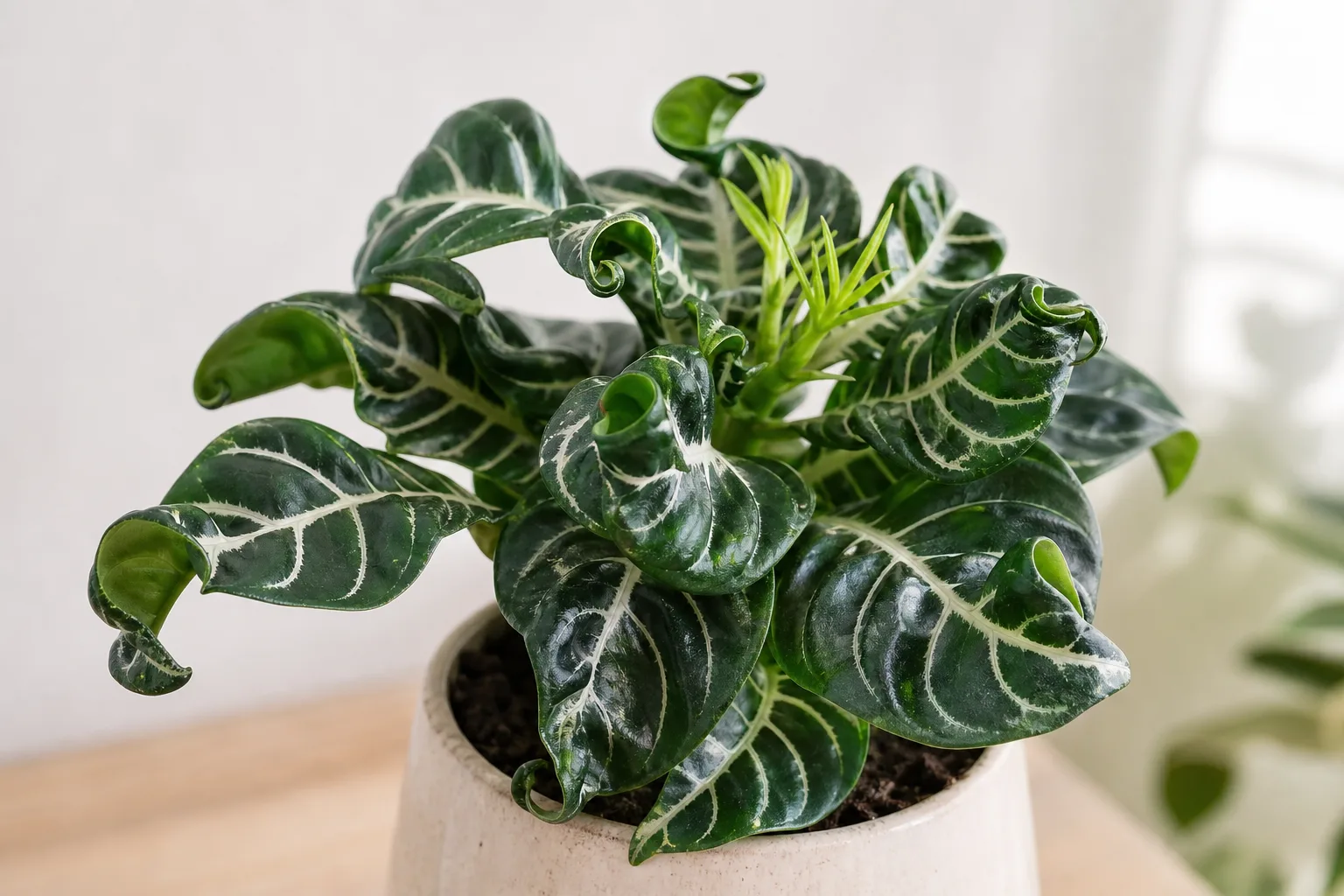
Curling Leaves on Zebra Plant: Causes, Checks & Fixes
This guide covers curling leaves on Zebra Plant. See also the general Curling Leaves guide, watering, and light pages for this plant.
Curling Leaves on Zebra Plant: Causes, Checks & Fixes
Quick answer
Curling leaves on Zebra Plant (Aphelandra squarrosa) almost always trace to dry indoor air or spider mites feeding on the undersides of its large, glossy striped leaves. This Brazilian tropical is a houseplant for bright, humid areas that struggles when winter heating drops humidity into the 30–40% range. Mites move in during those same dry spells and cup leaves inward as they pierce cells between the bold white veins.
First step: run a humidifier beside the pot and aim for 60–70% relative humidity at plant level. While humidity climbs, inspect every leaf underside with a hand lens for yellow stippling and fine silk webbing. If mites are present, rinse foliage and treat after confirming pests-do not spray blindly on a plant that may only need moisture.
Nutrient deficiency is a poor first guess on this slow feeder. Curling that appears suddenly in a heated room with crisp leaf edges fits environmental stress or pests far more often than a missing fertilizer element.
Why Zebra Plant leaves curl
Aphelandra squarrosa evolved under rainforest canopy humidity with warm, stable temperatures. Its broad evergreen leaves transpire heavily through glossy surfaces. When ambient moisture falls, leaf margins roll inward to reduce exposed surface area-a protective response that shows up fast on a species that requires high humidity and temperatures that do not dip below 65º F.
Low humidity is the leading indoor cause. Central heating, air conditioning, and forced-air vents strip moisture from rooms that already sit below the 60–70% Zebra Plant overview prefers. Brown leaf tips can be caused by low humidity, and curling often appears alongside or just before those crisp edges on the same leaves.
Spider mites exploit the same dry conditions. Spider mites thrive in dry, warm conditions on houseplants, piercing leaf tissue and causing stippling that makes stripes look dull. As feeding continues, leaves cup and twist inward-especially on the warmest, brightest side of the plant near a window.
underwatering on Zebra Plant adds mechanical curl when soil dries too far between drinks. Zebra plant wants consistent moisture year around without waterlogging. Letting the pot go bone dry shrinks leaf cells faster than roots can rehydrate them, producing inward curl and limp stems on thin woody shoots.
Too much direct sun or heat curls upper leaves differently. Foliage near hot glass may roll under and look crimped while lower leaves stay flat. Leaves dropping or scorching can indicate dry soil, cool temperatures, or too much sunlight-sun-side curl with bleached or faded stripes points to light stress rather than mites.
overwatering on Zebra Plant rarely causes inward curl by itself on zebra plant, but soggy soil plus low light produces yellow lower leaves and soft stems. If curl comes with wet heavy pot weight and yellowing basals, check roots before raising humidity.
What curling looks like on Zebra Plant
Healthy zebra plant leaves are ovate, glossy, dark green with sharp white veining-flat or slightly wavy at the margins. Curling changes that silhouette in distinct patterns:
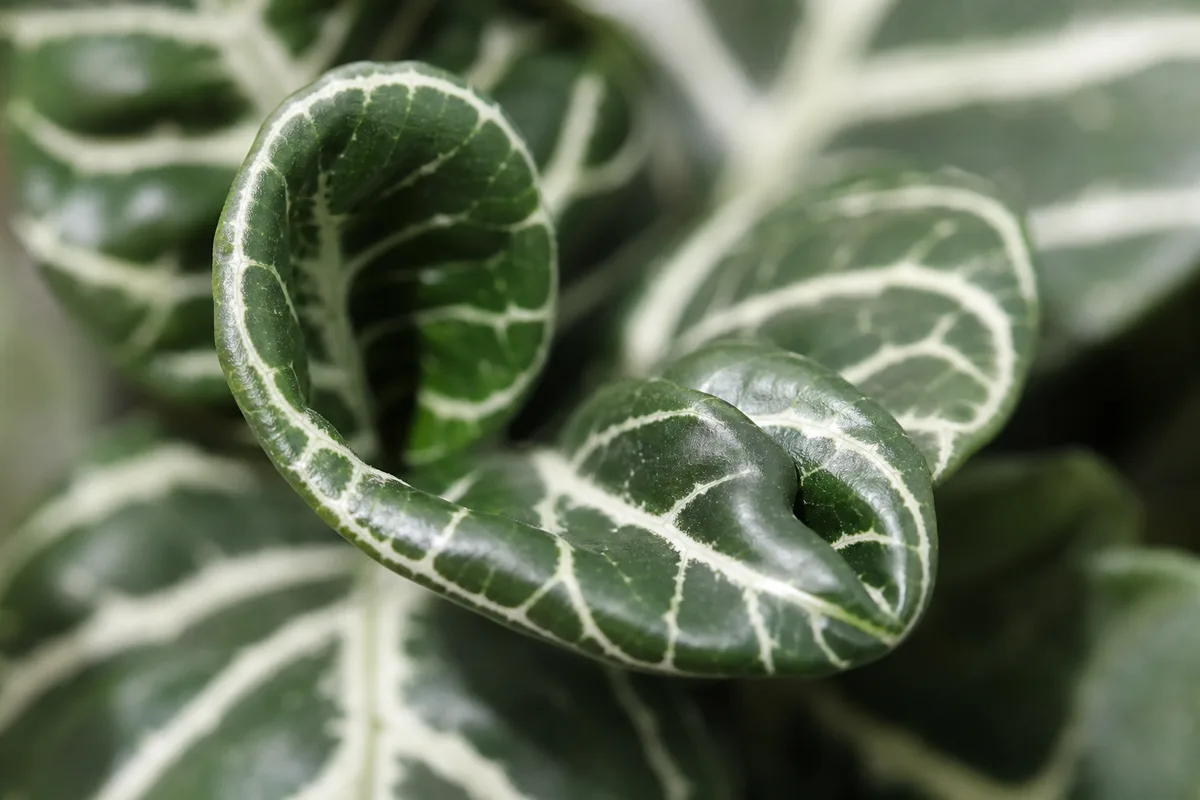
Curling Leaves symptoms on Zebra Plant - compare with healthy tissue on the same plant.
Low-humidity curl:
- Margins roll under along the full leaf edge
- Leaf surface feels dry or papery, sometimes with brown tips starting
- Stripes may look slightly dull but lack fine speckling
- Often worst on leaves closest to heating vents or AC registers
- Yellow flower bracts may abort if dryness persists
Spider mite curl:
- Yellow or bronze speckles between white veins on the upper surface
- Fine silk webbing at growing tips and along leaf undersides
- Inward cupping concentrated on the brightest side of the plant
- Dull, washed-out stripe contrast compared with healthy foliage
- Tiny moving dots visible with a hand lens on leaf backs
Underwatering curl:
- Leaves curl inward and feel thin or limp rather than crisp
- Pot feels light; top inch of soil is completely dry
- Stems may droop slightly before edges brown
- Recovery begins within hours of a thorough drink if roots are healthy
Light or heat curl:
- Upper leaves near the window roll under; shaded lower leaves stay normal
- Faded or bleached stripe color on the sun-facing side
- Crispy margins on the most exposed leaves only
Work through these patterns before treating. Uniform winter curl across the whole plant with no stippling usually means humidity, not pests.
How to confirm the cause
Run these checks in order at the pot:
- Humidity reading - Place a hygrometer beside the foliage, not across the room. Below 50% with inward-rolling margins strongly suggests dry air stress on this species.
- Leaf underside inspection - Flip leaves on the warmest side and scan with a 10× hand lens. Fine webbing and stippled discoloration confirm spider mites; uniform green undersides with no specks point away from mites.
- Tap test - Hold white paper under a suspect leaf and tap the blade. Tiny moving specks on the paper confirm active mites.
- Soil moisture - Stick a finger into the top inch. Bone dry with limp curl fits underwatering. Wet, heavy mix with yellow lower leaves suggests look elsewhere-overwatering or root stress, not humidity alone.
- Location audit - Note distance to heating vents, AC, and window glass. Drafty cold spots and hot afternoon sun both stress Aphelandra foliage.
- New growth check - Are only old leaves curled while new tips emerge flat? That may be past stress. Repeated distortion on fresh striped leaves means the cause is still active.
If humidity is adequate, soil moisture is even, and undersides are clean, reconsider direct sun on upper leaves before reaching for fertilizer or Zebra Plant repotting guide.
First fix for Zebra Plant
Run a humidifier beside the pot and hold 60–70% relative humidity at plant level for at least 48 hours.
This single step addresses the most common cause on zebra plant without stacking treatments. Grow in humidified rooms, on wet pebbles, or in bathrooms if a humidifier is not available-pebble trays help but rarely reach 60% alone in a dry living room. Move the plant away from heating vents while humidity stabilizes.
While the humidifier runs, inspect every leaf underside. If you find stippling and webbing, proceed to the recovery steps below for mites-humidity alone will not eliminate an established colony. If undersides are clean and soil is dry, water thoroughly after humidity is addressed; do not soak a plant you have not checked for root rot on Zebra Plant.
Do not fertilize, repot, or prune heavily on day one. Stressed Aphelandra squarrosa needs stable environment first.
Step-by-step recovery
After the humidifier is running, follow the path that matches your diagnosis:
If humidity was low and no mites found:
- Keep the humidifier running continuously until readings stay above 60%.
- Group with other tropical plants to build a shared microclimate.
- Water when the top inch dries-soils must not be allowed to dry out completely, but avoid soggy peat.
- Mist only in the morning if you lack a humidifier; misting alone is a supplement, not a substitute.
- Watch new growth over two to three weeks for flatter striped leaves.
If spider mites are confirmed:
- Isolate the plant from other houseplants immediately.
- Wash leaves thoroughly-shower small pots or spray undersides with a firm stream in the sink. Let foliage dry the same day.
- Keep humidity high after rinsing; dry recovery rooms invite mite rebound.
- Apply insecticidal soap or horticultural oil labeled for spider mites on ornamentals, covering undersides completely. Repeat at label intervals until no live mites appear on inspection.
- Re-check weekly for three weeks. Mites reproduce quickly in warm dry pockets that remain after treatment.
If underwatering caused curl:
- Water until a little drains from the bottom, then discard saucer water.
- Maintain the humidifier-dry air plus drought doubles stress on striped foliage.
- Adjust schedule to when the top inch dries, not on a fixed calendar day.
If direct sun caused upper-leaf curl:
- Move to Zebra Plant light guide-bright indirect light, but avoid direct sun.
- Keep humidity up while scorched tissue hardens off.
- Do not rotate into stronger sun hoping to fix pale stripes.
Recovery timeline
Humidity correction shows results on new growth within one to two weeks. Margins on existing leaves may relax partially but rarely flatten completely-judge success by the next unfurling striped leaf, not old tissue.
Mite recovery takes longer. Expect two to three weeks of rinsing and labeled spray repeats before new tips emerge clean. Stippled areas on mature leaves stay marked permanently.
Underwatering bounce-back can visible within hours of proper watering if roots are firm. If leaves stay curled and limp after rehydration, inspect roots for rot before watering again.
Light-stressed upper leaves do not uncurl; new growth under filtered light should emerge flat within three to four weeks.
Lookalike symptoms to rule out
Drooping without curl - Soft limp stems with wet soil suggest overwatering or root issues, not humidity curl. Drooping leaves or stems can also mean too much water.
Brown tips only - Often low humidity or fluoride in tap water without full-leaf cupping. Filtered water helps tips; humidifier helps curl.
Yellow lower leaves - Overwatering, cold drafts, or natural aging after flowering. Yellowing without inward roll points away from mite cupping.
Leggy pale growth - Too little light stretches stems; leaves stay flat but small. Move to brighter indirect exposure rather than adding humidity.
Thrips scarring - Silvery streaks on new growth with distorted tips. Thrips scar tissue rather than producing fine mite webbing.
Mistakes to avoid
Do not assume fertilizer deficiency when stripes curl in a dry heated room-Aphelandra is a slow feeder and rarely needs emergency feeding on stressed foliage.
Do not mist once and stop. A single misting does not replace sustained 60–70% humidity for large tropical leaves.
Do not place the plant in direct sun to “help” it recover. Heat and scorch worsen curl on a species that wants filtered light.
Do not spray pesticides before confirming mites. Clean undersides with adequate humidity need no chemical treatment.
Do not expect old curled leaves to flatten fully. Trim only leaves that are more than half brown or heavily mite-stippled; slightly curled mature leaves still photosynthesize until replaced.
Do not ignore ants or sticky residue on stems-that signals sap feeders, not humidity alone.
How to prevent curling next time
Run a humidifier through winter heating season or keep the pot in the most humid bright room available. Monitor with a gauge rather than guessing from room comfort.
Maintain bright indirect light without direct afternoon sun and stable temperatures above 65º F away from cold window glass in winter.
Water when the top inch of soil dries-consistent moisture supports leaf turgor alongside humidity.
Rinse foliage monthly to remove dust and allow early mite detection. Quarantine new purchases for two weeks before placing near your zebra plant.
Scout leaf undersides weekly from October through March when indoor air is driest. Catching stippling early prevents widespread cupping across the striped canopy.
When to worry
Treat as urgent when new striped leaves emerge already curled and stippled, webbing coats multiple growing tips, yellow bracts drop en masse during bloom, or lower leaves yellow while soil stays wet for days. Those patterns suggest active mites plus possible watering failure-not a wait-and-see humidity tweak.
Replace or cut back severely if more than half the canopy is mite-stippled with no clean new growth after three weeks of treatment and high humidity. Aphelandra is short-lived but easily propagated from stem cuttings-starting fresh from healthy tops sometimes beats fighting a collapsed lower plant.
Mild winter curl on a few older leaves with stable humidity above 55% and clean undersides is not urgent. Confirm the cause before escalating to chemicals or repotting.
Conclusion
Curling leaves on Zebra Plant usually mean the air is too dry for a rainforest understory species-or spider mites have moved into that same dry environment. Measure humidity, inspect leaf undersides, and run a humidifier as your first move. New striped growth tells you whether the fix worked; old curled leaves are history. That diagnostic order saves healthy plants from unnecessary sprays and stops mite and humidity problems before bold white veins fade on the entire canopy.
When to use this page vs other Zebra Plant guides
- Zebra Plant watering guide - Use for routine moisture checks before assuming curling leaves is the main issue.
- Zebra Plant problems hub - Browse all 32 common issues on this species.
- Low Humidity on Zebra Plant - Different entry point when symptoms overlap with curling leaves.
- Spider Mites on Zebra Plant - Different entry point when symptoms overlap with curling leaves.
- Thrips on Zebra Plant - Different entry point when symptoms overlap with curling leaves.