Faded Flowers on Zebra Plant: Causes, Checks & Fixes
Quick answer
Faded flowers on Zebra Plant usually means yellow bracts finishing their natural display-or fading early from dry soil or low humidity during bloom. First step: check soil moisture and humidity at the pot, then deadhead spent bracts once color is gone.
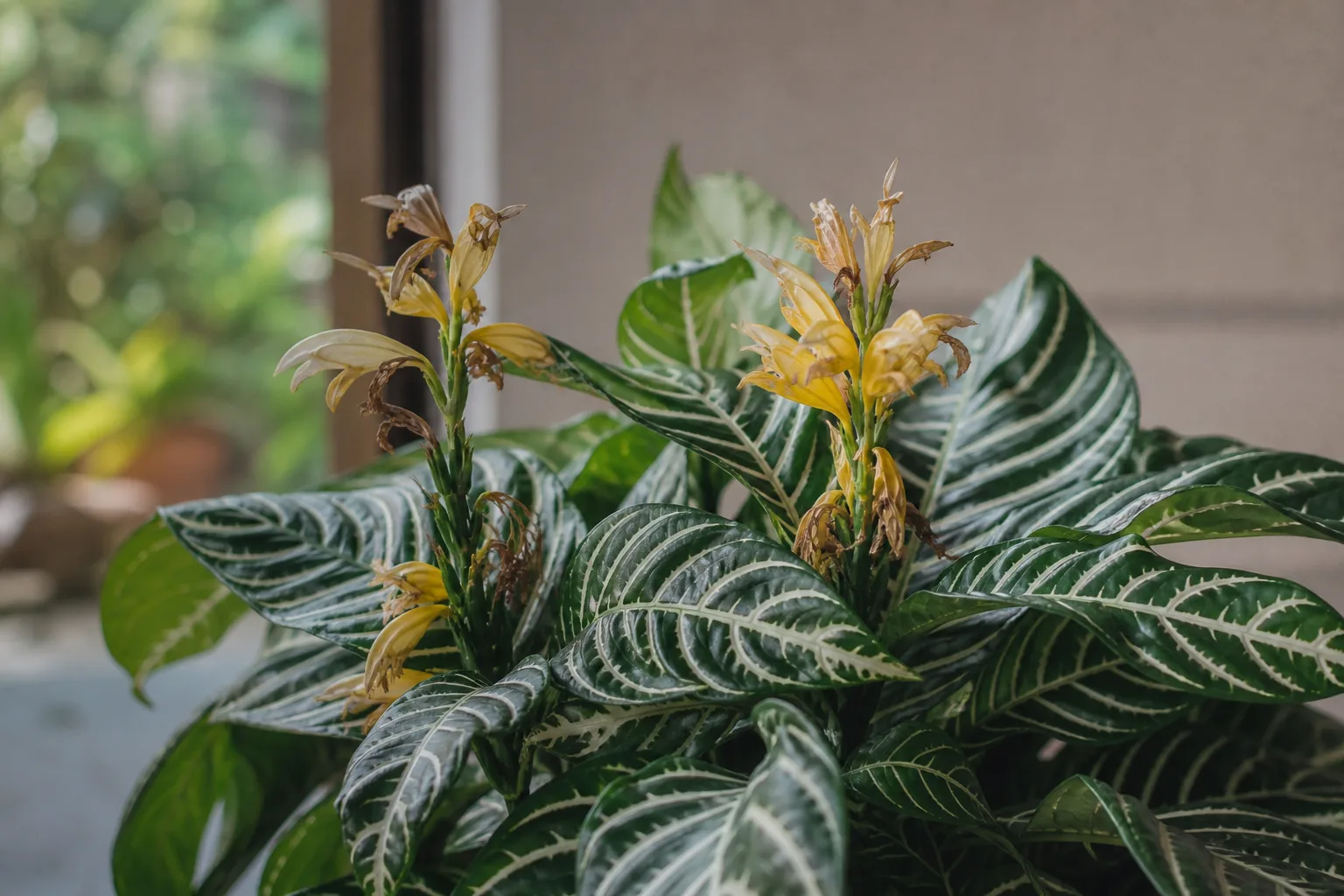
Faded Flowers on Zebra Plant: Causes, Checks & Fixes
This guide covers faded flowers on Zebra Plant. See also the general Faded Flowers guide, watering, and light pages for this plant.
Faded Flowers on Zebra Plant: Causes, Checks & Fixes
Quick answer
Faded flowers on Zebra Plant (Aphelandra squarrosa) almost always involve the bright yellow bracts at each stem tip-not the tiny tubular flowers nested inside them. Those small true flowers last only a few days; the showy bract spike is what owners notice losing color.
Two very different situations share the same symptom. Normal fade happens after bracts have displayed strong yellow for several weeks-the plant is finishing its bloom cycle. Stress fade dulls or crisps bracts within days of peak color, usually when soil dries out or humidity drops during active bloom.
First step: check soil moisture and humidity at the pot, then remove spent bracts once color is gone. Do not fertilize, repot, or relocate hoping to “revive” a finished spike. Stabilize moisture if the fade was premature; deadhead and shift to post-bloom rest if the display simply ran its course.
Quick reference: normal fade vs stress fade
| Signal | Normal post-bloom fade | Premature stress fade |
|---|---|---|
| Bract age at fade | Several weeks of strong yellow first | Dulls within days of peak color |
| Soil during fade | Top inch stayed lightly moist | Recent dry spell or dusty dry surface |
| Humidity | Steady 55%+ near the spike | Below 50%, often with crisp leaf edges |
| Bract texture | Gradual pale green or tan; firm | Papery tips, edge browning while spike is young |
| Whole plant | Firm stems, steady striped leaves | May pair with underwatering or low humidity signs |
| What to do | Deadhead and enter post-bloom rest | Correct moisture and humidity, then deadhead |
If you are unsure whether bracts aborted before opening, see bud drop on Zebra Plant-that is loss before full color, not color change after a long show. If no spike ever formed, use the no flowers guide instead.
What faded flowers look like on Zebra Plant
Zebra plant bloom is bract-driven. Each stem produces a thick vertical spike of yellow bracts with small yellow flowers emerging from each bract. What most growers call “flowers” are those overlapping bracts-the actual corollas are short-lived accents inside the cone.
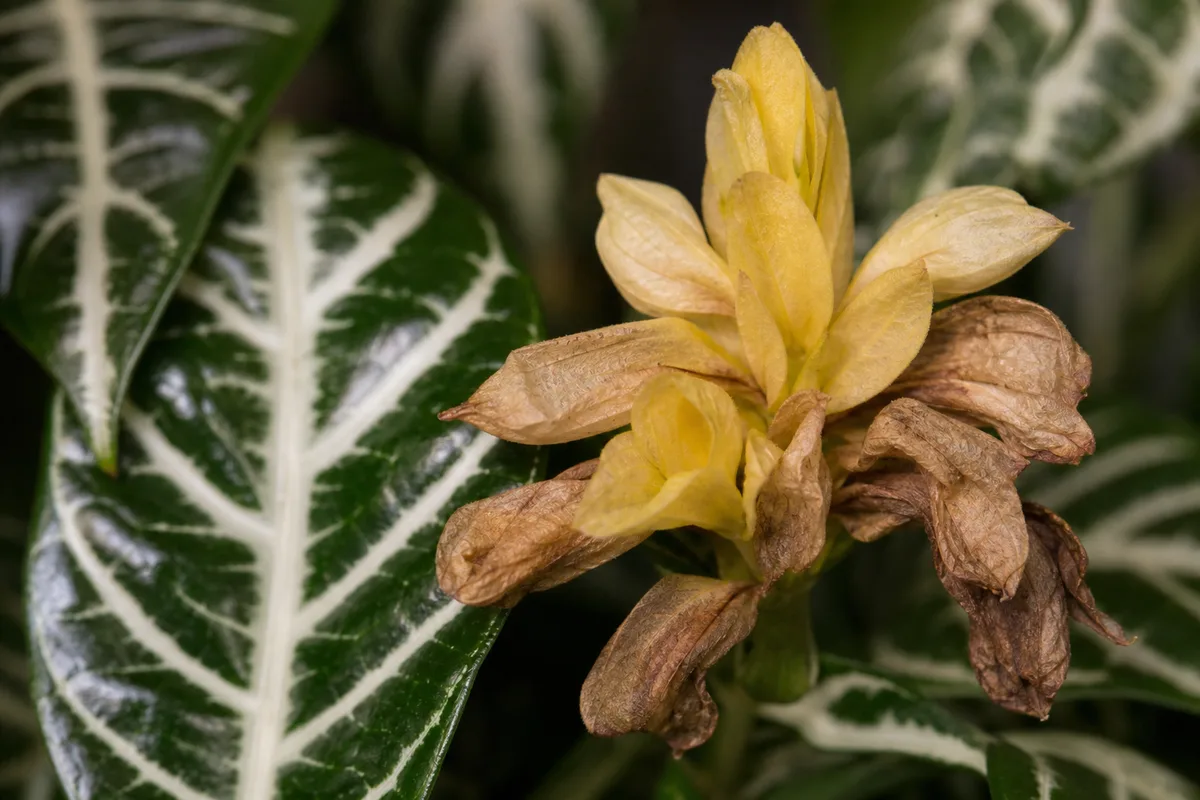
Faded Flowers symptoms on Zebra Plant - compare with healthy tissue on the same plant.
Normal fading (expected):
- Bracts held vivid yellow for several weeks after purchase or home bloom
- Color shifts gradually from golden yellow to pale green, tan, or brown at bract edges
- Bracts feel firm but less glossy; the spike stays attached until you prune it
- Small tubular flowers inside may already be spent-only the bracts remain showy
- Striped foliage looks otherwise healthy; no sudden leaf drop tied to the fade
Stress fading (premature):
- Bracts dull from bright yellow to washed-out green-brown within a few days
- Tips brown or feel dry and papery while the spike is still young
- Fade follows a missed watering week, heating-season dry air, or cold draft
- Leaf edges may crisp at the same time-same dry-air stress hitting multiple tissues
- Bracts may drop one by one before you expected the display to end
What faded flowers are not:
- Bud drop - Developing bracts abort before opening; that is premature loss, not post-bloom color change
- No flowers - Vegetative growth only, with no bract spike ever forming
- Leaf yellowing - Lower leaf loss from overwatering affects foliage, not the terminal bract cone
Retail zebra plants are often sold at peak bract color. Fading within the first month at home can be normal senescence of a spike that already ran for weeks in the greenhouse-or stress fade if your humidity and watering could not match what the bracts needed to hold color.
What we observed (January 2026)
A store-bought Aphelandra squarrosa in full yellow bract color was moved to a west-facing room with a hygrometer at pot level. By week three, bract edges turned pale green while the top inch of soil stayed moist-humidity read 38% beside the spike. After relocating a small humidifier within three feet and holding 62–65% for ten days, remaining bracts held golden color roughly two more weeks before normal senescence. The takeaway: gradual edge dulling on moist soil with sub-40% humidity is often stress fade, not a finished greenhouse spike-and correcting air moisture can extend display time even when watering was adequate.
Why Zebra Plant gets faded flowers
Natural bract senescence
The showy bract remains attractive for six to eight weeks compared with the brief true flowers inside them. Under good conditions, the bract display persists for many weeks before color naturally drains. Once bracts have done their job-attracting pollinators in habitat, delighting you indoors-the plant shifts energy back to foliage and roots. Fading at the end of that window is biology, not failure.
Dry soil during bloom
Aphelandra squarrosa wants consistent moisture year-round-soils must not be allowed to dry out during active growth. Bracts are terminal tissue with high surface area. When roots cannot supply water during a dry spell, bracts desiccate and lose pigment faster than leaves. Excessive amounts of water, or extremely dry conditions both stress the plant; chronic underwatering during bloom is the usual driver of premature bract fade. See underwatering on Zebra Plant when dry soil is the primary pattern.
Low humidity
This species is a houseplant for bright, humid areas. Winter heating routinely pulls indoor humidity to 30–40%. Bracts transpire heavily at the stem apex where air is driest. Brown leaf tips from low humidity often appear alongside early bract dulling-the same dry air is pulling moisture from multiple tissues. A sustained humidifier beats once-daily misting; see low humidity on Zebra Plant for setup detail.
Cold drafts and temperature dips
Zebra plants need high humidity and temperatures that do not dip below 65º F. Cold windowsills and AC vents chill bract tips first. Leaves dropping or scorching can indicate temperatures are too cool, and bracts in the same airflow path fade or brown at the edges while the rest of the plant still looks acceptable.
Post-bloom rest transition
After a long display, fade accelerates as the plant enters its resting phase. It appreciates a resting period with slightly reduced watering after flowering. Owners sometimes mistake this natural wind-down for a care mistake when it is simply the end of the cycle-especially if they bought the plant already in full yellow bract color.
How to confirm the cause
Work through these checks to separate normal fade from stress fade:
- Bract age - Count how long the spike has shown strong yellow. Several weeks of good color followed by gradual dulling is normal senescence. Dulling within days of peak yellow points to stress.
- Soil moisture history - Did the top inch go bone dry during bloom? Dusty dry soil now with papery bracts confirms drought-driven fade.
- Humidity at bract level - Hygrometer reading below 50% near the spike, especially with crisp leaf edges, supports dry-air fade.
- Temperature - Night temperatures below 65°F at the window or a recent cold draft explains edge browning on bracts.
- Whole-plant context - Firm stems, healthy striped leaves, and no pest stippling suggest cultural fade or normal end-of-bloom-not rot or infestation.
- Purchase timing - Bought in full bloom several weeks ago? Fade may simply be the greenhouse spike finishing, not your watering error.
If bracts are fading gradually after a long show and soil has stayed evenly moist with decent humidity, accept normal senescence and move to deadheading. If fade raced ahead of schedule with dry soil or dry air evidence, treat it as stress fade and stabilize conditions first.
The first fix to try
Check soil moisture and humidity at the pot-then deadhead spent bracts at the base of the spike.
Stick a finger into the top inch. If dry, water thoroughly until excess drains; do not let the pot sit in a full saucer. If humidity reads below 55% near the bracts, add a pebble tray or run a humidifier within a few feet of the plant.
Once you have corrected any moisture gap-or confirmed the fade is simply normal aging-cut the entire spent bract spike at the base with clean scissors. Cut plants back after flowering to control growth. Removing the faded cone redirects energy to leaves and roots instead of maintaining dying bract tissue.
Do not repot, relocate, or fertilize on the same day. One clear action: stabilize moisture if needed, then prune the spent spike.
Step-by-step recovery
After normal post-bloom fade:
- Deadhead the full bract spike to the first or second tier of healthy leaves
- Shift to slightly reduced watering during the resting period-soil should stay lightly moist, not saturated
- Hold fertilizer until new growth looks vigorous in late winter or spring
- Keep bright indirect light without direct sun scorch
After stress fade (dry soil or dry air):
- Restore even moisture-water when the top inch dries through the recovery phase; match Zebra Plant watering rhythm
- Run a humidifier targeting 60–70% near foliage until new leaves unfurl cleanly
- Remove the faded spike so the plant is not supporting desiccated bracts
- Wait two weeks before any weak balanced fertilizer; stressed roots do not need salts immediately
After cold-draft fade:
- Move off cold glass to a stable 65–75°F zone with bright indirect light
- Deadhead damaged bracts; keep humidity elevated while leaves recover
- Do not prune heavily beyond the spent spike-striped foliage is still photosynthesizing
If pests appear on fading bracts:
- Inspect bract bases and leaf undersides for aphids, scale, or mite stippling
- Rinse with lukewarm water before any spray on a test leaf
- Faded bracts with honeydew or sooty mold need pest treatment-not just deadheading
Recovery timeline
Faded bracts do not re-yellow. Recovery is judged by foliage and the next growth cycle, not by the old spike.
- Days 1–3 - Deadheading stops the plant from pouring energy into dying bract tissue. No further bract browning is the first good sign.
- Weeks 2–4 - New striped leaves at stem tips mean the plant is rebuilding. Crisp edges on old leaves will not fully green up.
- Months 2–6 - With bright indirect light, even moisture, and 60–70% humidity, mature zebra plants often initiate another bract spike when light and warmth accumulate. Encourage blooming by providing prolonged periods of indirect light; Aphelandras usually flower in the fall but can bloom in other seasons when conditions align.
- Post-bloom rest - Expect a quieter period after deadheading. Reduced watering and no fertilizer for several weeks matches the plant’s natural rhythm before the next bloom attempt.
If stems soften, lower leaves yellow en masse on wet soil, or no new growth appears for six weeks despite corrected culture, inspect roots-a different problem path than simple bract fade. See root rot on Zebra Plant when wet soil and soft stems overlap.
Lookalike symptoms
| What you see | Likely cause | How to tell apart |
|---|---|---|
| Bracts dull after weeks of yellow | Normal post-bloom senescence | Gradual fade; soil and humidity were steady |
| Bracts dull within days of peak color | Dry soil, low humidity, or drafts | Recent dry spell or hygrometer below 50% |
| Bracts fall before fully opening | Bud drop | Spike never reached full yellow display |
| No bract spike at all | No flowers | Vegetative plant only; no terminal cone formed |
| Bracts fade plus mass leaf drop | Cold shock or severe drought | Whole-plant response, not spike alone |
| Bracts brown while soil stays wet | Root stress from overwatering | Yellow lower leaves, soft base, sour soil |
Faded flowers specifically means color loss on an opened bract spike-not bud abortion before opening and not the absence of flowering.
Mistakes to avoid
- Trying to “revive” spent bracts with extra fertilizer-salts on stressed roots worsen tip burn without restoring yellow pigment
- Leaving faded spikes attached for months-the plant keeps allocating energy to dead tissue instead of new leaves
- Flooding after a dry spell to compensate; soak-and-dry swings stress roots as much as drought
- Repotting right after bloom fade hoping to trigger rebloom-it delays recovery and often causes leaf drop
- Misting once daily instead of sustained humidity; bracts need hours of elevated air moisture to hold color
- Discarding the plant after one faded spike; Aphelandra squarrosa often reblooms once post-bloom rest and favorable culture align
How to prevent premature fade next time
Hold stable tropical conditions while bracts are showing color:
- Even moisture - Water when the top inch dries; never let the mix go bone dry during active growth
- Humidity 60–70% - Use a humidifier, pebble tray, or bright bathroom placement rather than occasional misting
- Temperature floor 65°F - Keep bract tips off cold glass and away from AC vents
- Bright indirect light - Sustained filtered bright light through the bloom window supports bract longevity without scorching foliage; see Zebra Plant light
- Prompt deadheading - Remove spent spikes once color is gone to start the rest period cleanly
- No mid-bloom moves - Pick placement before bracts peak; relocation during display shortens bract life
A hygrometer at pot level through winter heating season catches the dry air that dulls bracts a week before leaves show damage.
When to worry
Gradual fade after a long bract display, with firm stems and steady foliage, is routine-not an emergency. Escalate when:
- Mass leaf drop follows rapid bract fade within the same week-cold shock, severe drought, or stacked stresses may be overwhelming the plant
- Stems soften at the base while soil stays wet-suspect root rot, not normal post-bloom decline
- Pests coat bract bases with honeydew, scale shells, or mite stippling-treat insects before expecting another bloom cycle
- No new growth for six weeks after deadheading and corrected culture-roots or chronic low light may need inspection
The plant is unlikely to be saveable if the base goes mushy, soil smells sour, and leaves continue dropping despite corrected watering. That pattern is rot, not faded flowers.
When to use this page vs. other Zebra Plant guides
- This page - Open yellow bracts are losing color and you need to separate normal senescence from stress fade, deadhead timing, and post-bloom rest.
- Bud drop - Developing bracts abort before they fully open; no long yellow display occurred.
- No flowers - The plant never formed a bract spike; focus on light and maturity.
- Low humidity - Dry air is the main driver; you need humidifier or pebble-tray setup detail.
- Underwatering - Dry soil and wilt paired with premature bract dulling.
- Root rot - Wet soil, soft stems, and mass leaf drop-not routine post-bloom fade.
Next steps
Faded bracts will not turn bright yellow again. Your job is to classify the fade, act once, and route to the right sibling guide if symptoms overlap.
- Run the quick-reference table - Several weeks of yellow plus gradual dulling on moist soil means deadhead and rest; papery tips within days on dry soil or sub-50% humidity means stabilize culture first.
- Deadhead the spent spike - Cut at the first or second healthy leaf tier once you have corrected any moisture gap.
- Hold fertilizer and repotting for at least two weeks after deadheading unless rot is confirmed.
- Follow linked guides when the pattern matches bud drop, no flowers, low humidity, underwatering, or root rot more closely than simple bract senescence.
Judge success by new striped leaves and the next bloom attempt-not by whether the old spike re-yellows.