Cold Damage on Zebra Plant: Causes, Checks & Fixes
Quick answer
Cold damage on Zebra Plant hits fast because Aphelandra squarrosa is tropical. When temperatures fall below about 65°F near a window or draft, leaves drop and buds abort. First step: move the pot to a stable 65–75°F spot away from cold glass before changing water or fertilizer.
Cold Damage on Zebra Plant: Causes, Checks & Fixes
This guide covers cold damage on Zebra Plant. See also the general Cold Damage guide, watering, and light pages for this plant.
Cold Damage on Zebra Plant: Causes, Checks & Fixes
Quick answer
Cold damage on Zebra Plant (Aphelandra squarrosa) is chilling injury-cell damage from temperatures above freezing that are still too cold for a tropical species. Zebra plant evolved in the warm, humid forests of northeast and southeast Brazil and has no tolerance for the cool, dry winter air common in many homes.
First step: move the pot to a stable 65–75°F (18–24°C) location away from cold window glass, entry drafts, and AC vents. Do not repot, fertilize, or drench the soil until the plant has been warm for several days and you have checked whether roots are still firm. Cold slows zebra plant root activity; adding water to “help” a chilled plant often makes things worse.
Why Zebra Plant gets cold damage
Aphelandra squarrosa is classified as a broadleaf evergreen houseplant that needs high humidity and temperatures that do not dip below 65°F. Unlike temperate houseplants that slow cleanly in winter, zebra plant expects warm nights year-round. When air or root-zone temperature drops, photosynthesis and water uptake stall while the peat-based mix zebra plants prefer stays damp longer than the plant can use.
Several home situations trigger chill injury on Zebra Plant overview:
- Winter window sills - Glass can be 10–20°F colder than the room. Leaves touching pane surface chill fast, especially at night.
- Heat cycling - Furnaces that drop overnight, then blast hot dry air, create temperature swings zebra plant handles poorly. Missouri Botanical Garden notes foliage may scorch in dry or drafty locations-cold drafts and hot dry vents both count.
- AC in summer - Direct cold air on striped leaves causes the same wilt-and-drop pattern as winter chill.
- Transport and placement - Plants left in unheated cars, on cold porches, or near frequently opened doors show damage days after the event, because chilling symptoms often develop with a delay.
Zebra plant also pushes yellow bract flowers when conditions align. Night temperatures above 65°F are part of that bloom trigger-cold snaps abort buds even when light and humidity look acceptable.
What cold damage looks like on Zebra Plant
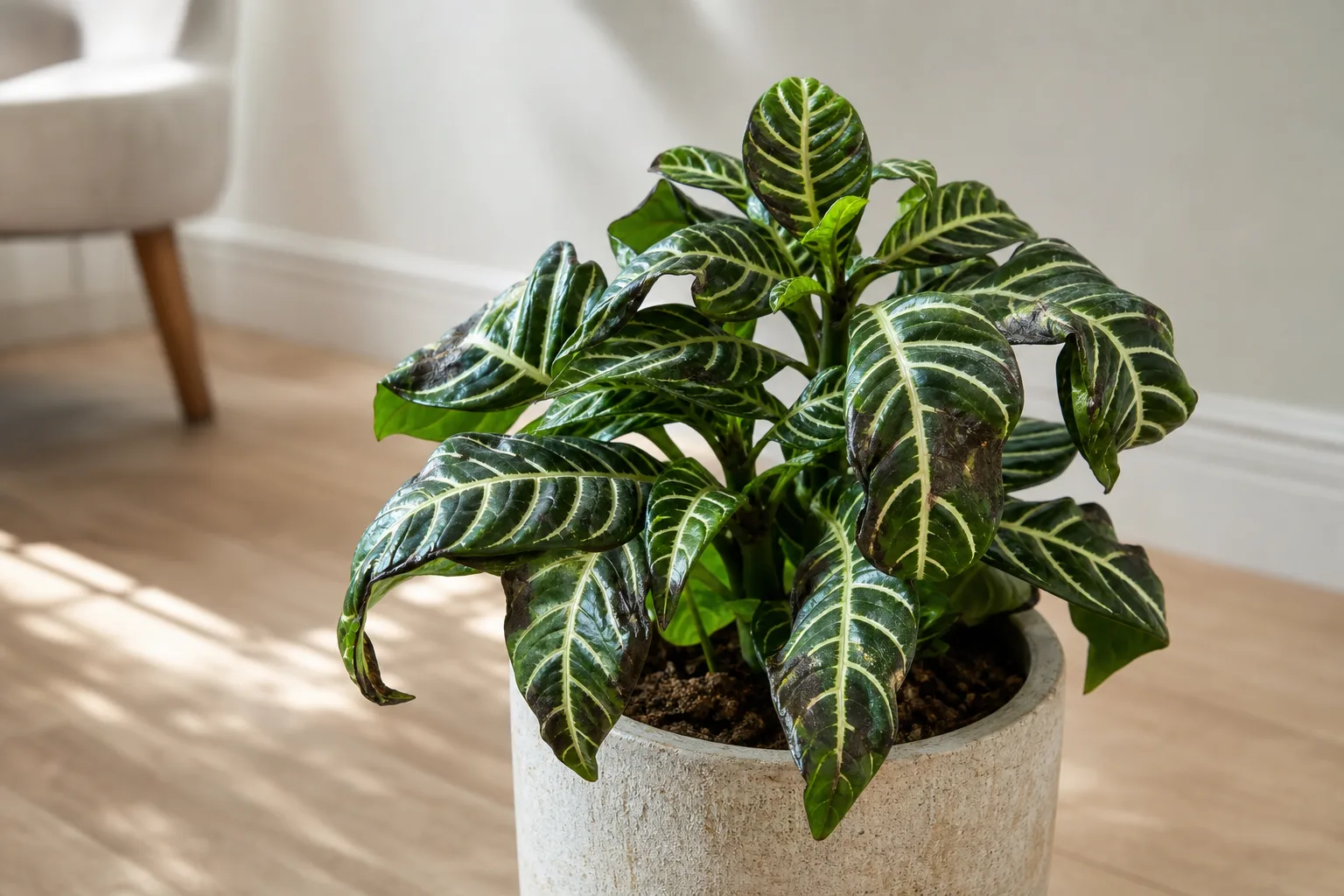
Chill injury on Aphelandra squarrosa has a recognizable pattern on its dark green, white-veined foliage:
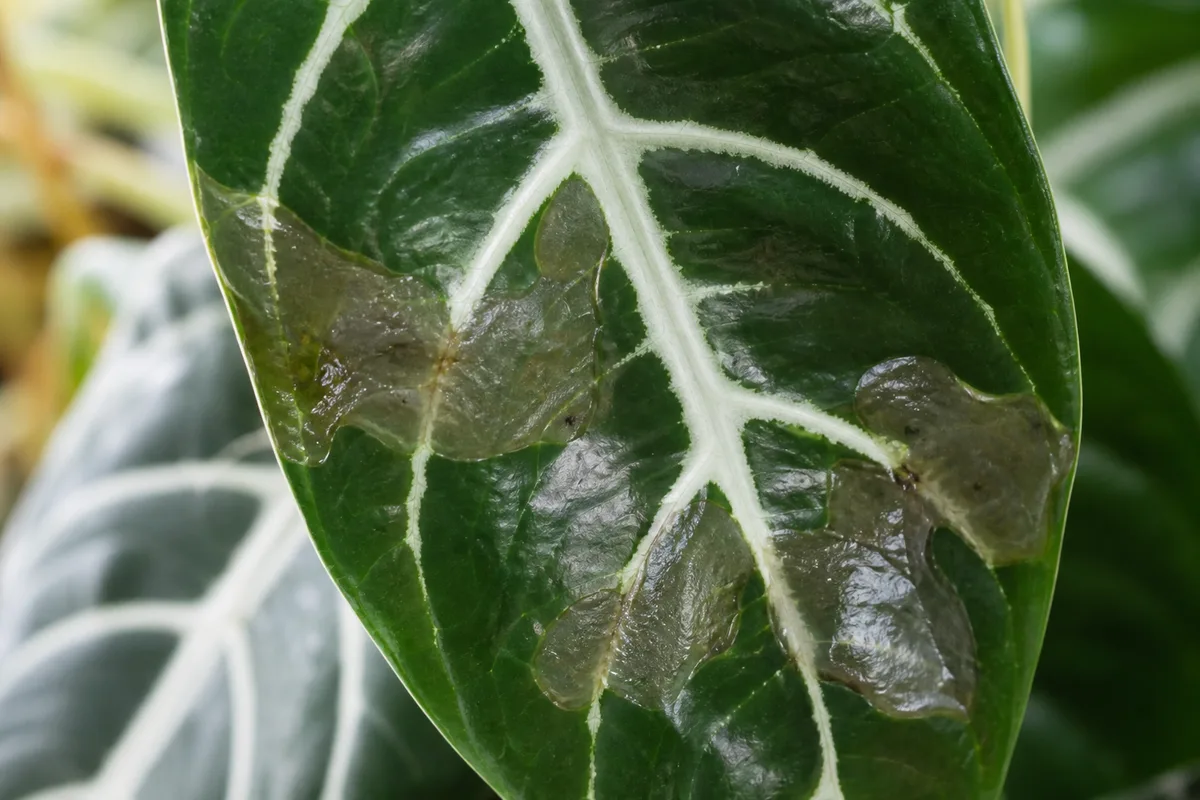
Cold Damage symptoms on Zebra Plant - compare with healthy tissue on the same plant.
- Dark, water-soaked patches on striped leaves-translucent areas that later brown or blacken
- Sudden mass leaf drop on Zebra Plant within days of a cold night, often starting with lower or outer leaves
- Wilting on thin stems even when soil feels evenly moist-roots in cold mix cannot deliver water
- Yellow bract buds browning and falling before flowers open
- Crisp brown margins that spread inward if chill repeats before tissue heals
Damaged leaf tissue does not recover. The white zebra-like veining on surviving leaves stays intact; only the chilled sections collapse. Stems that remain firm and green at the crown can still produce new growth once warmth returns.
How to confirm cold damage
Work through these checks before treating cold as the only cause:
- Timeline - Did symptoms appear within three to seven days of a known cold event (heat failure, window placement, car transport, AC blast)? Delayed symptom expression is typical of chilling injury on tropical foliage.
- Thermometer at plant level - Hold a thermometer beside the top leaves for 24 hours. Readings below 65°F confirm the plant sat in a chill zone even if the wall thermostat says 70°F.
- Glass and draft proximity - Foliage touching winter glass or sitting in a direct air stream from a door or vent strongly supports chill diagnosis.
- Soil moisture and root check - Stick a finger into the top inch. Cold damage often pairs with damp soil and limp leaves-a different pattern from underwatering on Zebra Plant, where soil is bone dry and leaves crisp from the edges inward.
- Pest scan - Inspect leaf axils and undersides for mealybugs or scale. Sticky residue with insects points to pests, not chill alone. Cold-stressed zebra plants attract pests faster, so both can be present-fix warmth first, then treat insects if found.
- Stem firmness - Press the base gently. Firm green tissue supports recovery. Soft, dark tissue at soil line on wet mix suggests rot compounded by cold-see lookalikes below.
If the plant dropped leaves after Zebra Plant repotting guide with no temperature change, transplant shock or overwatering on Zebra Plant may be primary. Cold and repot stress stack easily on Aphelandra squarrosa-address placement and soil moisture together.
First fix for Zebra Plant
Move the pot to a stable 65–75°F spot at least 12 inches back from window glass, off cold floors, and away from AC vents and entry doors.
This single relocation stops ongoing chill so existing tissue can stabilize. Choose Zebra Plant light guide-zebra plant still needs light during recovery, but avoid a cold sill even if the window is sunny. If the only warm spot is dimmer, prioritize warmth over light for the first week; cold plus low light kills faster than moderate light plus stable heat.
Do not fertilize, repot, or prune heavily on day one. Do not move the plant repeatedly between rooms-each relocation adds stress. Let it sit in the new warm location and observe for five to seven days.
Step-by-step recovery
After the plant is warm and stable:
- Remove only mushy leaves - Snip cold-injured tissue at the base of the petiole with clean scissors. Leave partially damaged leaves if they are still firm; they continue photosynthesizing until replaced.
- Adjust watering to match reduced uptake - Zebra plant wants consistent moisture without drying completely, but cold roots drink slowly. Water when the top inch feels slightly dry-not on a fixed calendar-and never let the pot sit in a full saucer.
- Raise humidity - Target 60–70% humidity with a humidifier, pebble tray, or grouped plants. Dry winter air plus chill is why many zebra plants lose buds after a cold spell.
- Hold fertilizer for three to four weeks - Resume half-strength feeding only when new growth appears and stems stay firm.
- Watch for new shoots - Fresh striped leaves from the crown or stem nodes mean the plant is recovering. Pinch leggy recovery growth only after several new leaves harden off.
Skip repotting unless you find soft brown roots on inspection. Cold plus fresh wet repotting mix is a common second wave of failure on this species.
Recovery timeline
Expect a realistic pace:
- Days 1–3 - Leaf drop may continue briefly after warmth returns; this is delayed shedding of tissue already injured.
- Weeks 2–4 - Drop should stop. Surviving leaves look unchanged; no new growth yet is normal.
- Weeks 4–8 - New striped leaves and possibly bract buds appear if crown tissue stayed healthy.
- Beyond 8 weeks - No new growth with continuing stem softening usually means crown or root failure rather than slow recovery.
Individual chilled leaves never revert to green. Judge success by firm stems and fresh growth, not by old foliage color.
Lookalike symptoms
Several zebra plant problems mimic cold damage:
- Overwatering - Yellow lower leaves on constantly wet peat, sour-smelling soil, and mushy roots. Cold slows uptake and makes overwatering worse; check roots if warmth alone does not stop decline within two weeks.
- Underwatering - Crisp, dry leaf edges and bone-dry top soil. Wilting improves within hours of a thorough soak-chill wilt does not.
- Draft stress without sustained cold - Brief air movement causes leaf drop similar to chill; confirm with thermometer readings over time, not a single snapshot.
- Low humidity alone - Brown tips without water-soaked patches or sudden mass drop after a cold night. Humidity fixes help but do not replace warmth.
- root rot on Zebra Plant after chill - Soft crown on damp soil weeks after a cold event. Requires unpotting, trimming rotten roots, and repotting into fresh perlite-heavy mix-different from simple chill recovery.
Mistakes to avoid
- Watering heavily to “revive” a chilled plant - Cold roots in soggy peat rot quickly. Match water to uptake.
- Placing on a heat register - Hot dry blasts scorch striped leaves and abort buds-the opposite problem with similar leaf loss.
- Immediate repotting or fertilizer - Stressed Aphelandra squarrosa needs stable warmth first; repot only for confirmed root failure.
- Trusting the room thermostat - Microclimates at windows and floors run colder than the wall unit reads.
- Removing all leaves at once - Keep any firm foliage until new growth replaces it.
How to prevent cold damage
- Keep zebra plant above 65°F year-round, including nights.
- Pull pots back from glass in October through March; use a sheer curtain as an air buffer if the only bright spot is a window.
- Insulate roots-avoid setting pots directly on cold stone or tile; use a cork mat or elevated saucer.
- Acclimate new purchases gradually; do not leave plants in unheated cars during transport.
- Maintain 60–70% humidity so the plant is not fighting dry air and chill simultaneously.
- When shipping or gifting zebra plants in winter, warn recipients to unpack immediately into a warm room.
When to worry
Treat as urgent when:
- More than half the leaves drop within a week and stems begin softening at the base
- Yellow bract buds abort en masse during what should be bloom season
- Wilting continues for five or more days after moving to stable warmth and adjusting water
- Black spreading tissue reaches the crown on wet soil-likely rot, not recoverable chill alone
A plant with bare stems but firm green crown tissue can still recover over two months in stable warmth and humidity. Discard only when the crown goes mushy or roots are entirely brown and soft on inspection.
When to use this page vs other Zebra Plant guides
- Zebra Plant watering guide - Use for routine moisture checks before assuming cold damage is the main issue.
- Zebra Plant problems hub - Browse all 32 common issues on this species.
- Brown Leaves on Zebra Plant - Different entry point when symptoms overlap with cold damage.
- Leaf Drop on Zebra Plant - Different entry point when symptoms overlap with cold damage.
- Drooping Leaves on Zebra Plant - Different entry point when symptoms overlap with cold damage.