Brown Leaves on Zebra Plant: Causes, Checks & Fixes
Quick answer
Brown leaves on Zebra Plant usually follow inconsistent watering, cold drafts, or direct sun on striped foliage-not normal aging alone. First step: check soil moisture and room temperature, then stabilize even moisture away from cold glass and harsh sun.
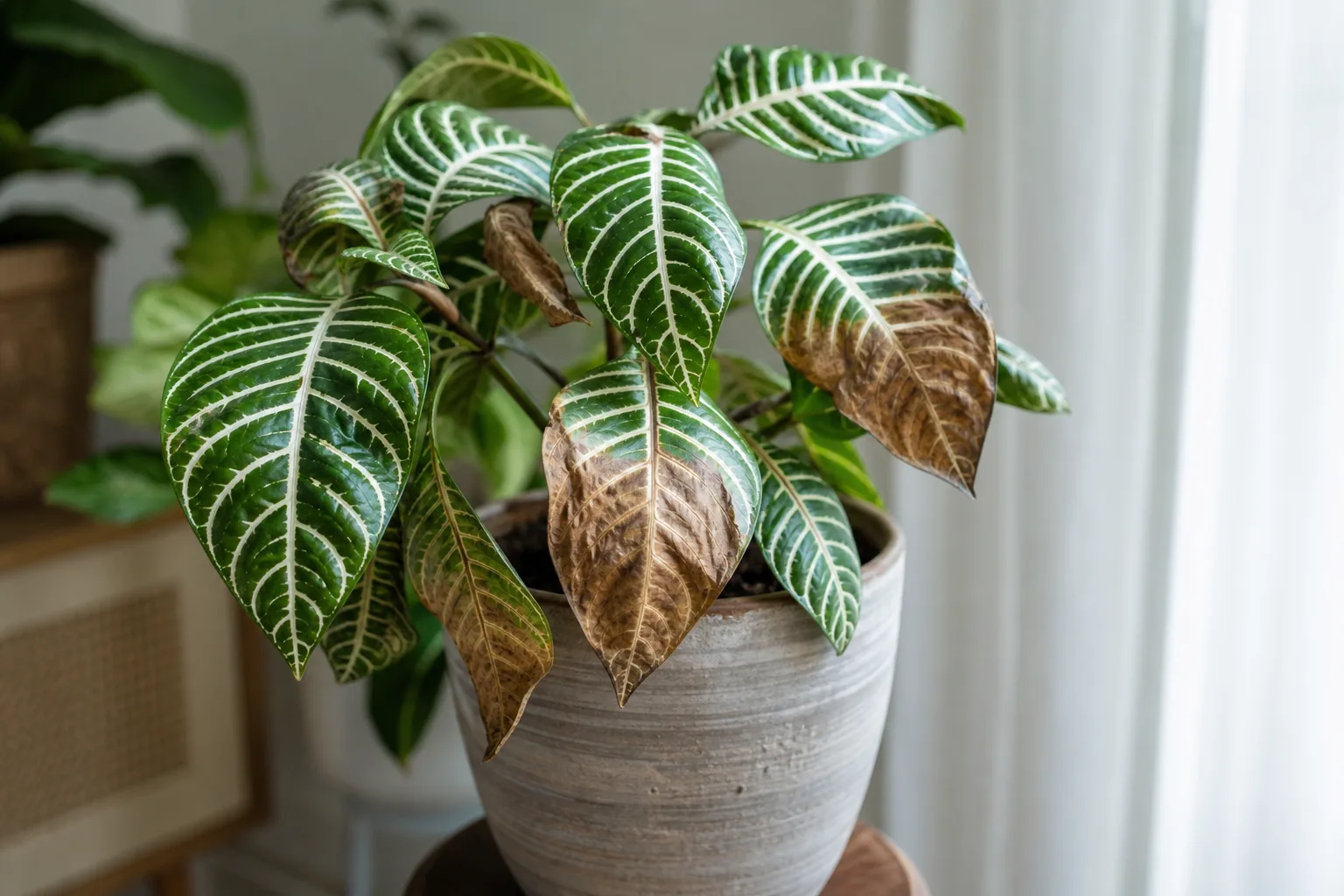
Brown Leaves on Zebra Plant: Causes, Checks & Fixes
This guide covers brown leaves on Zebra Plant. See also the general Brown Leaves guide, watering, and light pages for this plant.
Brown Leaves on Zebra Plant: Causes, Checks & Fixes
Quick answer
Brown leaves on Zebra Plant (Aphelandra squarrosa) are a stress signal, not a normal part of aging on a healthy specimen. The striped dark-green foliage is thin for a tropical evergreen and reacts quickly when moisture, temperature, or light swing out of range. Excessive amounts of water, or extremely dry conditions, will cause the bottom leaves to brown and drop. Cold nights, dry air, and drafts brown whole blades too-foliage may scorch in dry or drafty locations-not just tips.
First step: check soil moisture in the top inch and the temperature at the pot before you prune or repot. If the mix is bone dry or the plant sat below about 65°F near a window, fix those conditions first. If soil stays wet for days while lower leaves brown, suspect overwatering on Zebra Plant before you add more water.
Why Zebra Plant leaves turn brown
Zebra plant is native to humid Brazilian forests and expects steady warmth, high humidity, and evenly moist-but not waterlogged-soil indoors. That combination makes it sensitive to care swings that tougher houseplants shrug off.
Inconsistent watering is the most common driver. Aphelandra holds moisture in peaty mix and uses it steadily in bright rooms. Letting the pot dry completely starves roots, while keeping it soggy in low light rots them. Both paths show up as brown lower leaves before the crown fails. Soils must not be allowed to dry out, yet this plant does not like wet feet-the balance is even moisture with drainage, not constant saturation.
Cold and drafts chill tropical tissue fast. Temperatures below minimum 65º F in winter cause leaf drop and bud loss. Winter window glass, AC vents, and entry drafts expose striped leaves to chill even when the thermostat reads warm.
Direct sun scorch burns the dark green portions of zebra-striped leaves. The plant wants bright indirect light, but avoid direct sun. A sudden move to a south-facing sill, or reflected heat from glass, creates tan-to-brown patches on the sun-facing side while shaded tissue stays green.
Overwatering with poor drainage browns lower leaves first as roots fail. Unlike underwatering on Zebra Plant, the pot stays heavy, soil smells sour at advanced stages, and stems may droop despite wet mix-drooping leaves or stems can also mean too much water.
Leaf spot disease causes discrete brown or black spots that expand in stagnant humid air. Crown rot and leaf spots may occur when foliage stays wet and airflow is poor.
Pest feeding from aphids, scale, or spider mites can yellow then brown patches on stressed plants, especially when humidity is too low. Inspect growing tips if browning spreads unevenly without a clear environmental trigger.
What brown leaves look like on Zebra Plant
Water-stress browning:
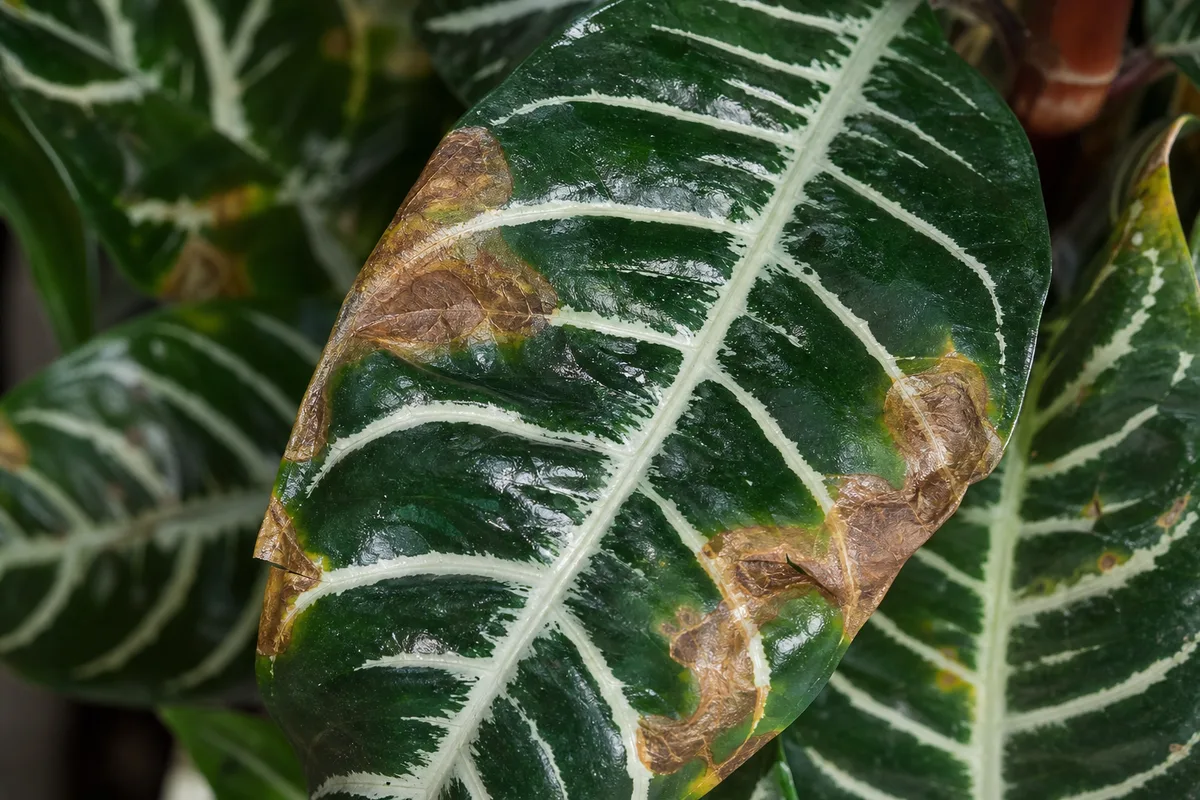
Brown Leaves symptoms on Zebra Plant - compare with healthy tissue on the same plant.
- Tan to dark brown whole leaves, often lower ones first
- Crispy dry texture when underwatered; soft darkening when roots are rotting
- Pot very light (dry) or heavy and slow-draining (wet)
Sun scorch:
- Brown or bleached patches on the window-facing side of striped leaves
- Damage appears after a move to brighter direct light
- Unaffected side of the blade stays green with white veining
Cold injury:
- Sudden browning or dark water-soaked patches after a cold night
- Mass leaf drop near glass in winter
- Buds brown and fall before opening
Leaf spot:
- Round brown or black spots with yellow halos, not uniform whole-leaf color
- Spots merge on heavily infected leaves
- Often follows overhead watering or stagnant humid corners
Unlike brown tips alone-which usually mean low humidity or fluoride in tap water-whole-leaf browning on zebra plant signals a bigger environmental swing. Tips-only damage is a different problem page; large dead sections of the blade need the checks below.
How to confirm the cause
Work through these checks in order:
- Soil moisture - Insert a finger to the first knuckle. Bone dry means underwatering stress; wet, clumping mix that has not dried in a week points to overwatering. Lift the pot-very light weight confirms dryness; heavy saucer water confirms excess.
- Temperature at the pot - Place a thermometer near the foliage overnight. Readings below 65°F explain sudden browning even if the room felt fine from the couch.
- Light exposure - Note whether midday sun touches leaves directly. Window-facing brown patches with green on the shaded side confirm scorch.
- Pattern on the plant - Lower leaves only suggests watering or root-zone issues. One-sided patches suggest sun. Scattered spots with halos suggest leaf spot.
- Stem and crown check - Firm green stems with only leaf loss is recoverable. Soft, mushy tissue at the base on wet soil means advanced rot-do not wait.
- Pest scan - Look at leaf axils and undersides for scale shells, mealy cotton, aphid clusters, or fine webbing. Treat pests only after you confirm them.
If soil moisture and temperature are stable, light is indirect, and no pests appear, browning should stop spreading within one to two weeks once conditions hold.
First fix for Zebra Plant
Stabilize watering: water thoroughly when the top inch of soil feels dry, then let excess drain completely.
This single step addresses the most common cause without stacking Zebra Plant repotting guide, fertilizer, and heavy pruning on day one. Use room-temperature water until water runs from the drainage hole, empty the saucer within 30 minutes, and do not water again until the top inch dries-matching the even-moist approach Water frequently, not thoroughly describes for this species.
While adjusting water:
- Move the pot away from cold window glass and AC vents into a stable spot above 65°F.
- Shift to bright indirect light out of direct sun if scorch patches appeared on one side.
- Snip fully brown leaves at the base with clean scissors-necrotic tissue will not recover.
Do not repot on day one unless roots smell sour or the mix never dries. Do not fertilize a stressed zebra plant hoping to push new growth-that can burn margins when roots are already compromised.
Step-by-step recovery
After the initial watering correction:
- Hold the new rhythm for two weeks - Track how fast the top inch dries in your room. Bright, warm spots need water more often than cool corners.
- Raise humidity to 60–70% if edges crisp even after watering stabilizes. A humidifier, pebble tray, or bathroom placement helps meet the high humidity this plant requires.
- Improve airflow if leaf spots appeared-gentle fan circulation prevents fungal spread without blasting cold drafts on foliage.
- Inspect roots only if browning continues on wet soil. Unpot, trim mushy roots, and repot into fresh well-drained, peaty potting mixture with perlite if rot is confirmed.
- Remove spotted leaves individually when leaf spot is the pattern; avoid overhead splashing when you water.
- Treat confirmed pests with alcohol dab for scale/mealybugs or insecticidal soap for aphids-after isolation, not before you know insects are present.
Keep the plant in one place while it recovers. Moving it repeatedly between rooms resets its stress response.
Recovery timeline
Environmental browning from a single dry spell or cold night often stops spreading within one to two weeks once warmth and moisture stabilize. New striped leaves at stem tips may take three to six weeks to appear in bright indirect light during active growth.
Overwatering recovery takes longer if roots were damaged-expect four to eight weeks before clean new growth, and accept that severely rotted plants may not fully recover. Sun-scorched leaves stay brown; judge success by unburned new foliage, not old patches.
Leaf spot clears as new leaves emerge spot-free after airflow improves-typically two to four weeks if wet foliage is avoided.
Lookalike symptoms to rule out
Brown tips only usually mean low humidity or fluoride/chloramine in tap water, not whole-leaf death. If most of the blade stays green with crisp edges, see the brown-tips guide instead.
Yellow leaves before brown often signal overwatering or nutrient stress on zebra plant. Yellow lower leaves on wet soil point to root-zone problems rather than sun scorch.
Cold damage water-soaked patches look dark and limp before turning brown-distinct from the tan crispy browning of drought.
Natural lower-leaf drop on old plants happens occasionally on short-lived specimens after flowering, but random whole-leaf browning mid-season is not normal aging-it means conditions slipped.
Mistakes to avoid
Do not water on a fixed calendar without checking soil. Peat dries at different speeds by season and room.
Do not move a stressed plant into direct sun “for more energy”-that scorches striped foliage adapted to filtered light.
Do not leave saucer water sitting. Even moisture does not mean standing water at the roots.
Do not prune every leaf at once. Partially green leaves still feed recovery until replacements open.
Do not repot into a much larger pot hoping to fix browning-extra wet soil around slow roots worsens rot risk.
Do not confuse this zebra plant (Aphelandra squarrosa) with succulent “zebra plants” such as Haworthia-they need opposite watering and will die on an Aphelandra schedule.
Zebra Plant care cross-check
Brown leaves often mean the baseline care triangle slipped:
- Light: Bright indirect, no direct midday sun on leaves
- Water: Top inch dries between thorough waterings; never bone dry for days
- Climate: Above 65°F, 60–70% humidity, no cold drafts
After flowering, zebra plant appreciates a rest period with slightly reduced watering-but still not complete dry-out. Resume steady moisture when new growth starts in late winter.
How to prevent brown leaves next time
Check soil moisture before every watering rather than following a weekly schedule. In winter, slow evaporation means less frequent water even though the plant still cannot dry out completely.
Keep pots on pebble trays or in humidified rooms during heating season. Dry furnace air browns tips first, then whole leaves if humidity stays low for weeks.
Pull plants back from window glass when outdoor nights drop below 65°F. A curtain layer between foliage and cold glass prevents chill injury.
Rotate the pot a quarter turn monthly for even light, but never jump from a dim corner to a sunny sill in one move-acclimate over several days.
Scout for pests when humidity drops-spider mites thrive in dry air on Aphelandra. Early treatment prevents stippling that later browns.
Use a well-drained, peaty potting mixture in a pot with drainage holes. Refresh mix when it compacts and stops draining even if roots are not yet bound.
When to worry
Treat as urgent when more than half the leaves brown within a few days, stems soften at the soil line on wet mix, or the plant collapses after a cold night. Crown rot on zebra plant is difficult to reverse once tissue at the base turns mushy.
Also act quickly when brown spots with yellow halos spread to new growth despite dry foliage-active leaf spot or rot may need isolation from other tropicals.
A few lower brown leaves after one missed watering on an otherwise firm plant is manageable. Mass drop with cold, soggy soil, or pest colonies on every tip is not-prioritize root inspection and environmental correction immediately.
Conclusion
Brown leaves on zebra plant almost always trace back to watering swings, chill, harsh sun, or failing roots-not mysterious disease on a healthy specimen. Check moisture and temperature first, stabilize even watering away from drafts and direct sun, and judge recovery by clean new striped growth at the stem tips. Old brown blades will not green up again, but a firm Aphelandra squarrosa can look striking again within a few weeks once its tropical basics stay consistent.
When to use this page vs other Zebra Plant guides
- Zebra Plant watering guide - Use for routine moisture checks before assuming brown leaves is the main issue.
- Zebra Plant problems hub - Browse all 32 common issues on this species.
- Brown Tips on Zebra Plant - Different entry point when symptoms overlap with brown leaves.
- Yellow Leaves on Zebra Plant - Different entry point when symptoms overlap with brown leaves.
- Overwatering on Zebra Plant - Different entry point when symptoms overlap with brown leaves.