Draft Stress on Zebra Plant: Causes, Checks & Fixes
Quick answer
Draft stress on Zebra Plant triggers sudden leaf drop when cold AC, winter window drafts, or heating vents hit tropical foliage. Move the pot to a stable 65–75°F spot away from moving air before changing fertilizer or water.
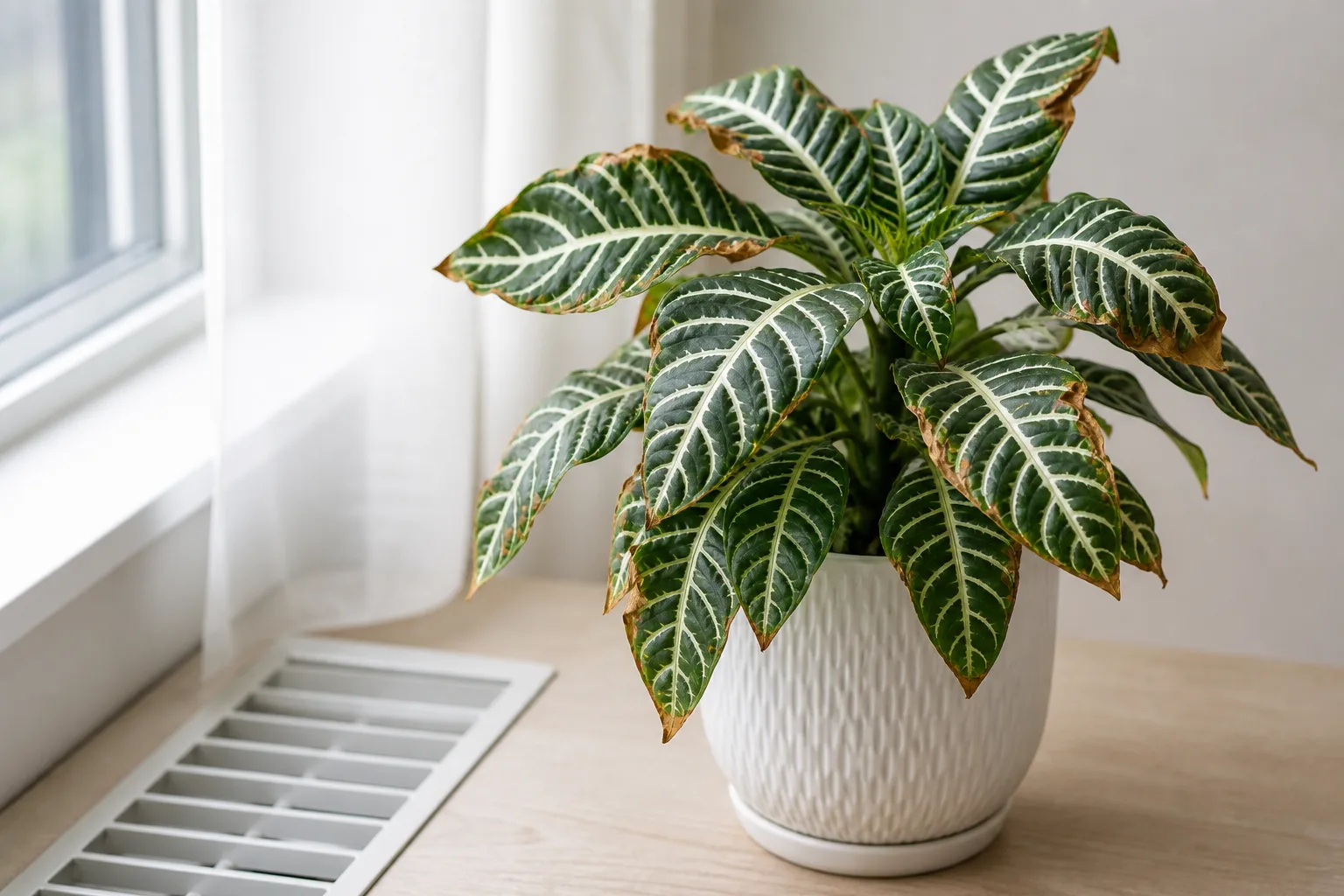
Draft Stress on Zebra Plant: Causes, Checks & Fixes
This guide covers draft stress on Zebra Plant. See also the general Draft Stress guide, watering, and light pages for this plant.
Draft Stress on Zebra Plant: Causes, Checks & Fixes
Quick answer
Draft stress on Zebra Plant (Aphelandra squarrosa) is sudden environmental shock-cold or hot air streams hitting tropical foliage cause leaf drop faster than on many forgiving houseplants. Foliage may scorch in dry or drafty locations, and leaves dropping or scorching can indicate that temperatures are too cool even when watering looks correct.
First step: move the pot away from every source of moving air-AC vents, heating registers, exterior doors, and winter window glass-into a stable bright indirect spot before you change water, fertilizer, or repot. Zebra plants react to placement within days; fixing the draft path is the only first fix that matters.
What draft stress looks like on Zebra Plant
Draft injury on Zebra Plant overview shows up as rapid, pattern-based damage-not slow yellowing from old age.
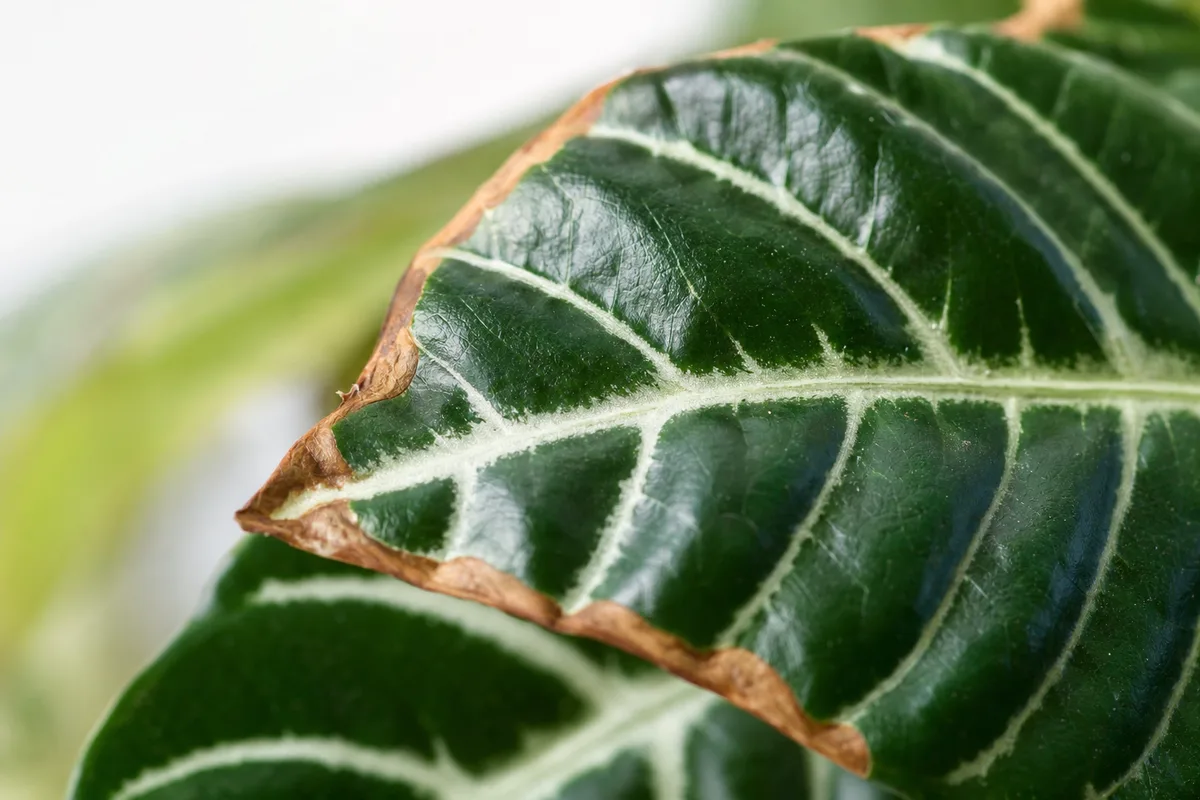
Draft Stress symptoms on Zebra Plant - compare with healthy tissue on the same plant.
Typical draft-stress signs:
- Multiple striped leaves falling within two to five days of a move or seasonal change
- Brown or tan scorched edges on the side of the plant facing the vent, door, or window
- Drooping leaves with otherwise normal soil moisture-not the limp collapse of underwatering on Zebra Plant
- Yellow bract buds shriveling and dropping during bloom season
- Curling leaf margins on tips exposed to dry heated air
- Only plants in one draft path show symptoms; others in the same room look fine
What draft stress is not:
- Gradual lower-leaf yellowing over weeks with wet soil (overwatering on Zebra Plant or root rot on Zebra Plant)
- Uniform brown tips on every leaf in a dry room without a draft source (low humidity)
- Stippled leaves with fine webbing (spider mites in dry stagnant air)
- White cottony clusters in leaf axils (mealybugs)
Dropped leaves on zebra plant will not reattach. Scorched margins are permanent on affected tissue. Recovery shows up as new growth from firm stem tips once air around the pot stays still and warm.
Why Zebra Plant gets draft stress
Aphelandra squarrosa evolved in the warm, humid forests of northeast and southeast Brazil, where temperatures stay tropical and air movement is gentle-not the sharp cold streams common in homes.
Several traits make zebra plants draft-sensitive:
Low temperature tolerance. Plants require temperatures that do not dip below 65º F. Winter window glass, open entry doors, and AC blow air far below that threshold across the leaf surface even when the room thermostat reads 70°F. Night temperatures above 65 degrees are part of what this photo-accumulating species needs to hold leaves and set flowers.
Thin stems and large glossy leaves. Zebra plant leaves are ovate, dark green, and prominently veined-lots of surface area to lose heat when cold air washes over them. The paired leaves on relatively thin stems wilt quickly when chilled, then abort to protect the growing tip.
High humidity demand. The plant prefers high humidity and even moisture. Heated winter drafts and dry AC air strip humidity from leaf margins within hours. Draft stress and low humidity often stack, which is why bud drop and tip browning appear alongside leaf fall.
No true dormancy escape. Unlike succulents that slow down in cool rooms, zebra plant does not go fully dormant indoors. It appreciates a resting period with slightly reduced watering after flowering, but it still needs warmth. Cold drafts during that rest period drop leaves just as readily as during active growth.
Common home draft sources:
- Central AC and HVAC vents blowing directly on foliage
- Winter window sills where glass radiates cold at night
- Frequently opened exterior doors in entryways and kitchens
- Heating floor registers that cycle hot dry air
- Ceiling fans set on high near the plant
- Moving the plant from a humid greenhouse to a dry living room in one step
How to confirm draft stress on Zebra Plant
Work through these checks before treating pests, Zebra Plant repotting guide, or overwatering a drooping plant.
-
Timeline - Did symptoms start within days of a move, AC season, heat turning on, or placing the pot on a window sill? Draft stress has a clear onset. Slow decline over weeks points elsewhere.
-
Air-movement test - Hold a tissue or strip of paper near the leaves at different times of day. Movement means the plant sits in a draft path even if you do not feel air standing across the room.
-
Pot-level temperature - Place a thermometer beside the pot overnight. Readings below 65°F beside cold glass confirm chill stress. A warm room average can still hide a cold microclimate at the leaves.
-
Damage pattern - Draft injury is often one-sided: the face toward the vent or window shows scorch or drop first. Uniform damage around the whole plant suggests humidity or watering problems instead.
-
Soil moisture check - Stick a finger into the top inch. Drooping with moist soil fits draft shock. Drooping with bone-dry soil fits underwatering. Drooping with soggy soil and sour smell fits root rot.
-
Stem firmness - Press the main stems above soil. Firm wood-like stems with dropped leaves support draft-stress recovery. Soft, waterlogged stems at the base mean rot-do not wait for warmth alone to fix that.
-
Pest inspection - Check leaf axils and undersides for mealybugs, scale, spider mites, and aphids. Look out for aphids, white fly, scale, spider mites, and mealybugs on this species. Pests cause drop too, but you will see colonies, webbing, or sticky honeydew-not clean sudden fall with firm stems.
If moving air, cool microclimates, and rapid onset align, draft stress is the working diagnosis. You do not need every box checked-one obvious vent blowing on the pot is enough to act.
First fix for Zebra Plant
Relocate the pot today to a stable spot with Zebra Plant light guide, away from all vents, doors, and window glass.
Choose a location where:
- No register, fan, or doorway directs air across the leaves
- The pot sits at least 12–18 inches back from winter window glass-or on an interior table
- Temperature stays between 65°F and 75°F (18–24°C) day and night
- Light is bright but filtered; avoid direct sun while the plant recovers
Do not repot, fertilize, or prune heavily on day one. Do not compensate for drooping by soaking wet soil-that invites rot on stressed roots. Let the plant sit in the new spot for at least a week before secondary changes.
If the only warm bright spot still has slight airflow, rotate the pot so no single side bears all the exposure, and add a clear acrylic shield or furniture buffer between the plant and the vent.
Step-by-step recovery
After the move, support recovery in this order:
Week 1 - Stabilize only. Keep the plant in its new location. Water when the top inch of soil feels dry-soils must not be allowed to dry out completely, but avoid drenching cold-stressed roots. Run a humidifier or place the pot on wet pebbles to hold 60–70% humidity near the foliage.
Week 2 - Assess tissue. Remove only leaves that are fully brown, black, or mushy. Leave partially scorched leaves if they still have green tissue-they photosynthesize while new growth forms. If yellow bracts dropped, accept that rebloom may wait until the next growing season.
Weeks 3–6 - Watch for new growth. Small paired leaves emerging from stem tips mean the plant has stabilized. Resume light feeding only after you see fresh growth and only at half strength-stressed zebra plants scorch easily from heavy fertilizer.
Ongoing - Adjust watering to the new spot. A warmer brighter location may dry the pot faster than the drafty corner did. Check moisture with your finger rather than a calendar.
If stems stay firm but no new leaves appear after six weeks, reassess light-too dim slows recovery-and confirm the new spot is truly draft-free at night.
Recovery timeline
| Stage | What to expect |
|---|---|
| Days 1–3 | Leaf drop may continue briefly after the move as the plant sheds already-injured foliage |
| Weeks 1–2 | Drooping should ease if soil moisture is even and air is still |
| Weeks 3–4 | First small new leaves may appear at stem tips on healthy plants |
| Weeks 6–10 | Enough new paired leaves to restore a compact silhouette on well-cared-for specimens |
| Bloom recovery | Bud formation may wait until the next warm season if bracts aborted during stress |
Zebra plant is considered short-lived but easy to propagate from stem cuttings. If the main plant loses most foliage but stems remain firm, you can root tip cuttings as a backup while the parent recovers.
Lookalike symptoms
Cold damage overlaps heavily with draft stress-both involve chill injury. Cold damage usually follows a specific cold event (heat failure, frost near glass). Draft stress emphasizes continuous or repeated air movement from vents and doors. Fix is the same: stable warmth and still air.
Underwatering wilts leaves and drops lower foliage when soil goes bone dry. The pot feels light and soil pulls from the edges. Draft-stressed plants often have moist soil and firm roots with sudden upper-leaf loss.
Overwatering and root rot cause yellowing, wilting, and drop with soggy soil and soft stems. Drooping leaves or stems can also mean too much water. Smell the drainage hole-sour odor means rot, not drafts.
Low humidity browns tips and curls margins gradually across the whole plant in dry winter rooms. Draft stress adds directional scorch and faster leaf fall tied to air movement.
Relocations and repotting shock can drop leaves without a permanent vent nearby. If you moved the plant between rooms twice in one week, stabilize placement and wait before diagnosing a mechanical draft.
Mistakes to avoid
- Soaking the pot immediately because leaves drooped-wet cold roots rot faster
- Misting once daily instead of raising ambient humidity-surface mist evaporates in draft air within minutes
- Repotting during shock-wait until new growth shows the plant has settled
- Fertilizing to “boost” recovery-salt stress on damaged leaves worsens scorch
- Placing on a windowsill “for more light” in winter-glass chills foliage overnight
- Ignoring AC in summer because the room feels comfortable-vents create localized cold zones
- Pruning the plant bare-keep any green leaves that remain to fuel recovery
How to prevent draft stress
Long-term prevention is mostly placement discipline:
- Keep zebra plant in bright, humid areas of the home-not entryways or directly under ceiling vents
- Maintain minimum 65º F in winter at pot height, not just at the thermostat
- Use humidifiers in heated rooms; pebble trays help locally but may not offset strong drafts
- In summer, redirect AC louvers away from plants or close vents in the plant room
- When buying a flowering zebra plant, acclimate gradually-greenhouse to home shifts are a common draft-stress trigger
- Avoid moving the pot while yellow bracts develop; bud drop follows drafts during bloom
When to worry
Most draft-stressed zebra plants recover if stems stay firm and you fix placement quickly. Escalate care when:
- Stems soften at the soil line while mix stays wet-inspect for crown rot immediately
- More than half of leaves drop within a week and no new tips emerge after a month
- Black mushy tissue spreads up stems from the base
- Pests appear on stressed new growth-mealybugs and spider mites exploit weakened plants
If the crown is soft and smells sour, salvage firm stem cuttings above the rot line and discard the base. That is propagation rescue, not draft recovery.
Conclusion
Draft stress on Zebra Plant is a placement problem before it is a watering problem. Tropical Aphelandra squarrosa loses leaves fast when AC, heat vents, doors, or cold glass push air across its foliage. Move the pot to still, warm, bright indirect light first; keep humidity near 60–70% and moisture even while you wait for new paired leaves. Firm stems are hope; soft wet crowns are a different diagnosis. Get placement right and this demanding but striking houseplant usually fills back in over the following weeks.
When to use this page vs other Zebra Plant guides
- Zebra Plant watering guide - Use for routine moisture checks before assuming draft stress is the main issue.
- Zebra Plant problems hub - Browse all 32 common issues on this species.