Fertilizer Burn on Zebra Plant: Causes, Checks & Fixes
Quick answer
Fertilizer burn on Zebra Plant shows as rapid crispy brown tips and margins after feeding, often with white salt crust on the soil. First step: stop all fertilizer and flush the pot with plain water until excess runs clear.
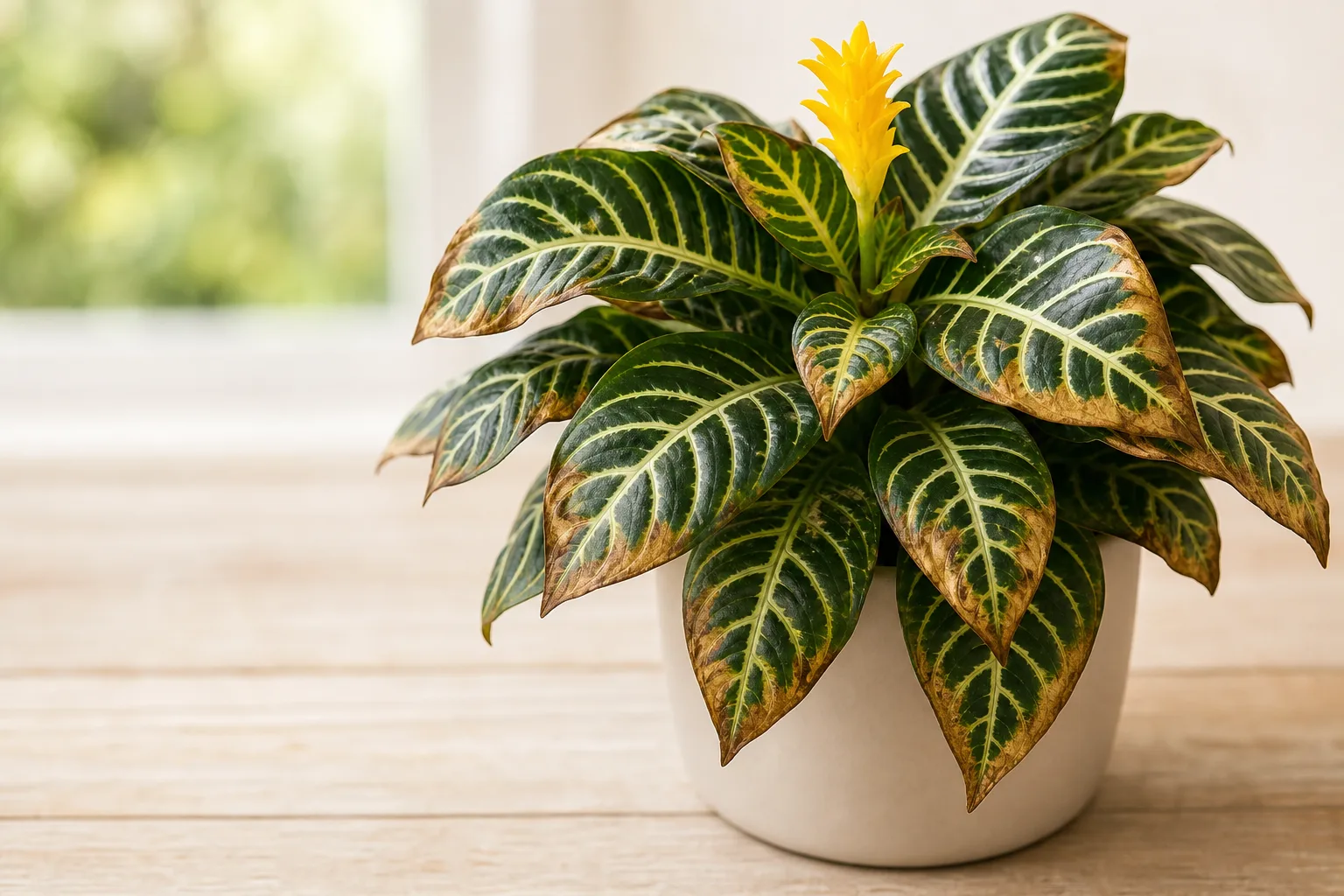
Fertilizer Burn on Zebra Plant: Causes, Checks & Fixes
This guide covers fertilizer burn on Zebra Plant. See also the general Fertilizer Burn guide, watering, and light pages for this plant.
Fertilizer Burn on Zebra Plant: Causes, Checks & Fixes
Quick answer
Fertilizer burn on Zebra Plant (Aphelandra squarrosa) is salt damage-not a disease. Excess fertilizer concentrates soluble salts in the potting mix, pulls water away from root tips, and kills leaf margins first. On this tropical foliage plant with large, glossy striped leaves, the damage shows up fast on sensitive tips and edges, often within days of a heavy or mistimed feed.
First step: stop all fertilizer and flush the pot with plain room-temperature water until a steady stream runs from the drainage holes. Repeat until you have passed roughly the pot’s volume in water through the mix, and discard every drop of runoff so salts are not wicked back in. Do not feed again until new growth looks healthy for several weeks.
Why Zebra Plant gets fertilizer burn
Zebra plant is a moderate feeder during active growth, not a heavy-feeding summer annual-but its large leaves and steady moisture needs make salt buildup dangerous in small pots. NC State Extension recommends a weak fertilizer solution every few weeks only as new growth resumes after winter semi-dormancy. Indoor growers who apply full-strength liquid feed on the same schedule as fast-growing pothos or outdoor herbs easily overshoot what Aphelandra roots can handle.
The physics are straightforward. Dissolved fertilizer becomes soluble salts in the mix. When salts concentrate, water moves out of root cells instead of into them-effectively dehydrating the plant from the roots up even when the soil feels moist. Leaf tips sit farthest from the root system and die first. University of Maryland Extension lists browning leaf tips and margins, reduced growth, lower leaf drop, and wilting among typical fertilizer-toxicity symptoms.
Several habits specific to zebra plant care raise burn risk:
- Feeding through winter rest when growth nearly stops and unused salts accumulate
- Full label strength instead of the half-strength dilution Zebra Plant overview tolerates best
- Feeding dry soil on a plant that prefers even moisture-roots take up concentrated salts suddenly
- Slow-release pellets in small pots that release steadily in a confined root zone
- Skipping leaching while feeding regularly through spring and summer
- Softened or high-mineral tap water stacking salts from water and fertilizer together
Zebra plant also shares tip-browning triggers with low humidity and fluoride in tap water. Those problems build gradually. Fertilizer burn typically spikes right after a feed and often comes with visible salt crust-an important distinction when you diagnose.
What fertilizer burn looks like on Zebra Plant
Burn on Aphelandra squarrosa targets the decorative leaf edges first:
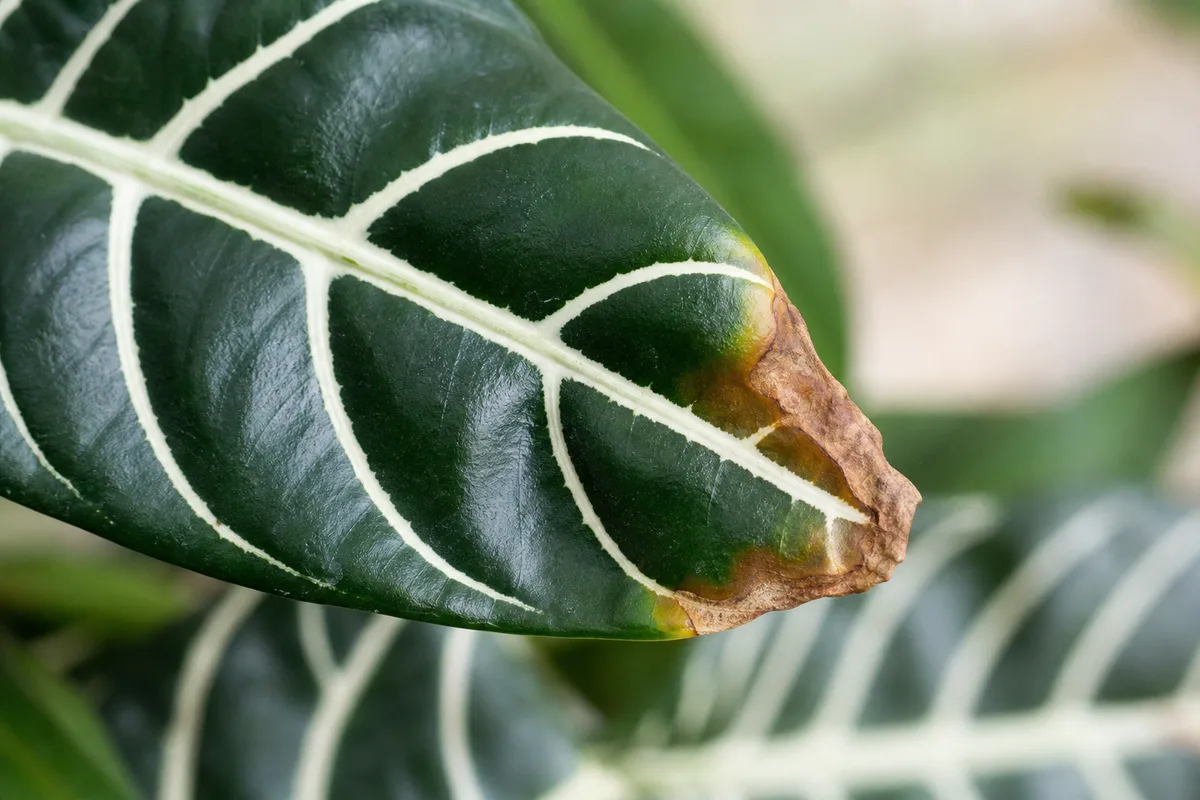
Fertilizer Burn symptoms on Zebra Plant - compare with healthy tissue on the same plant.
- Crispy brown tips and margins on Zebra Plant on otherwise green striped leaves, sometimes with a thin yellow band between dead tissue and healthy green
- Symptoms on multiple leaves at once, often including newer foliage if the last dose was recent
- White or tan crust on the soil surface, pot rim, or exterior of clay pots
- Wilting or drooping despite damp soil-damaged roots cannot move water normally
- Stunted or distorted new leaves when salt levels stay high
- Lower leaf yellowing and drop as stress progresses
The bold white veining on dark green leaves makes tip damage obvious. Unlike spider mite stippling, burn does not produce fine dots or webbing. Unlike fungal leaf spot, you will not see discrete round lesions with halos-just dry, dead margins.
Dead tip tissue does not recover. Once a margin has turned papery brown, only new leaves can look clean again.
How to confirm the cause
Work through these checks before you change anything else:
- Feeding timeline - Did tips crisp within three to seven days of your last fertilizer application? That timing strongly points to burn.
- Dose and product - Full-strength synthetic liquid, slow-release spikes, or foliar spray on glossy leaves increases risk. Half-strength organic feed rarely causes acute burn unless applied repeatedly on dry roots.
- Salt crust - Scrape the soil surface gently. White mineral residue confirms soluble salt buildup.
- Soil moisture vs. wilt - Damp mix with crispy tips and limp stems fits salt stress better than simple underwatering on Zebra Plant.
- Season - Feeding in late fall or winter when zebra plant slows is a red flag. Missouri IPM notes that most houseplants need little fertilizer in winter without supplemental light.
- Humidity cross-check - Use a gauge near the pot. If humidity sits above 55% with no recent feed and no salt crust, low humidity or dry drafts may explain tips instead.
- Root spot-check - If wilt is severe, unpot carefully. Brown, dead root tips support salt damage; firm white roots with dry soil suggest drought.
Confirmed burn means you fed too much, too often, or at the wrong time-not that the plant lacks nutrients.
First fix for Zebra Plant
Stop all fertilizer immediately and leach the potting mix with plain water.
Place the pot in a sink or tub where it can drain freely. Water slowly until excess runs from the bottom, wait five minutes, then water again so the second pass washes dissolved salts out-Virginia Cooperative Extension describes this two-pass leaching method for houseplants. Use enough total water to equal at least the pot’s volume, and never let the container sit in the drainage saucer afterward.
If a thick salt crust covers the soil, remove only the top quarter-inch of crusty surface before leaching-do not strip deep soil and expose roots.
Do not repot on day one unless the pot has no drainage or leaching water barely penetrates compacted mix. Do not trim half the plant or add “recovery” fertilizer. One clear action first: flush and pause feed.
Step-by-step recovery
After the initial leach:
- Repeat leaching once more in 48 hours if tips keep spreading or crust was heavy. UC Cooperative Extension recommends periodic leaching every two to three months for regularly fed houseplants-after burn, an extra flush helps.
- Move to stable care - Keep soil evenly moist without waterlogging. Zebra plant does not like wet feet, but drought on salt-stressed roots slows recovery.
- Hold humidity around 60–70% so remaining leaf tissue does not lose moisture at the edges while roots heal.
- Trim only fully dead margins with clean scissors if brown tips snag or look unsightly. Leave any green tissue attached.
- Watch new growth - The next one or two leaves tell you whether salt levels dropped enough.
- Resume feeding cautiously - Wait four to six weeks minimum after visible burn, then restart at half strength every two to four weeks only during active spring or summer growth when new shoots appear. Skip feed entirely through fall and winter rest.
If mass leaf drop continues after two thorough leaches, unpot, rinse roots gently, trim dead root tips, and repot into fresh peat-perlite mix without adding fertilizer for another month.
Recovery timeline
Moderate tip burn on a stable plant often stops spreading within one to two weeks after leaching. New leaves with clean edges may take four to eight weeks during active growth season. Winter-burned plants recover slower because growth pauses.
Old burned tips stay brown permanently. Judge success by unstressed new foliage and firm stems-not by old leaves re-greening.
Lookalike symptoms to rule out
Low humidity browns tips gradually across winter without salt crust or a recent feed date. NC State lists brown leaf tips from low humidity on Aphelandra squarrosa-pair dry air below 50% with slow edge crisping, not post-feed shock.
Fluoride or hard tap water can crisp edges on sensitive tropical foliage over months. Switching to filtered water helps; acute spread after fertilizer points to burn instead.
Underwatering wilts the whole plant with light, dry pot weight. Salt burn wilts tips while mix stays damp.
overwatering on Zebra Plant and root rot on Zebra Plant yellows lower leaves with sour-smelling soil and soft stems at the base. Rot spreads from wet roots upward; burn starts at leaf margins after feeding.
Spider mites leave stippling and fine webbing, usually when air is dry-not uniform margin scorch after a feed.
Mistakes to avoid
Do not feed a burned plant hoping to “push new growth.” More salts worsen root damage.
Do not use full-strength fertilizer “just once” to speed recovery.
Do not leach and leave the pot sitting in the saucer-runoff reabsorbs salts back into the mix.
Do not confuse fertilizer burn with nutrient deficiency and stack multiple products. Zebra plant in fresh mix with regular half-strength feeding rarely needs supplements.
Do not feed during the six-to-eight-week post-bloom rest period when the plant intentionally slows.
Zebra Plant care cross-check
Burn recovery depends on the basics this species already demands. Missouri Botanical Garden describes Aphelandra squarrosa as a houseplant for bright, humid areas that needs consistent moisture without soggy roots and temperatures above about 65°F. A plant in too little light uses less water and fertilizer-making the same feed schedule more likely to burn.
After flushing, align light, humidity, and watering before you resume any feed. Fertilizer supports healthy growth; it cannot fix salt-damaged roots on its own.
How to prevent fertilizer burn next time
- Dilute balanced liquid fertilizer to half the label strength
- Feed every two to four weeks only from mid-spring through late summer when new striped leaves unfurl
- Stop entirely in fall and winter and during post-bloom rest
- Water onto moist soil, never onto bone-dry roots
- Leach with clear water every four to six months during the feeding season-before your next fertilizer application, not after
- Empty drainage saucers after every watering so salts are not wicked back
- Avoid slow-release pellets in small indoor pots unless label rates are cut sharply
When to worry
Treat as urgent when more than a third of leaves drop within two weeks of feeding, stems soften at the soil line on wet mix, or wilt persists after two thorough leaches. Those signs suggest significant root dieback from soluble salts.
Isolated tip burn after one over-strong dose is correctable if you flush promptly and pause feed. The plant is rarely doomed from margin scorch alone when roots still feel firm and new buds appear within a month.
Conclusion
Fertilizer burn on zebra plant is preventable salt stress, not mysterious leaf disease. Match feeding to this species’ slow winter rhythm, leach regularly during growth season, and act fast with a plain-water flush when tips crisp right after a feed. Pause fertilizer until new striped leaves emerge clean-that is your signal that Aphelandra squarrosa is ready for gentle half-strength food again.
When to use this page vs other Zebra Plant guides
- Zebra Plant watering guide - Use for routine moisture checks before assuming fertilizer burn is the main issue.
- Zebra Plant problems hub - Browse all 32 common issues on this species.
- Overfertilization on Zebra Plant - Different entry point when symptoms overlap with fertilizer burn.
- Brown Tips on Zebra Plant - Different entry point when symptoms overlap with fertilizer burn.