Water Stress on Zebra Plant: Causes, Checks & Fixes
Quick answer
Water stress on Zebra Plant covers both underwatering and overwatering-opposite problems that both cause wilt. Before you water again, check the top inch of soil and lift the pot to feel whether it is light or heavy.
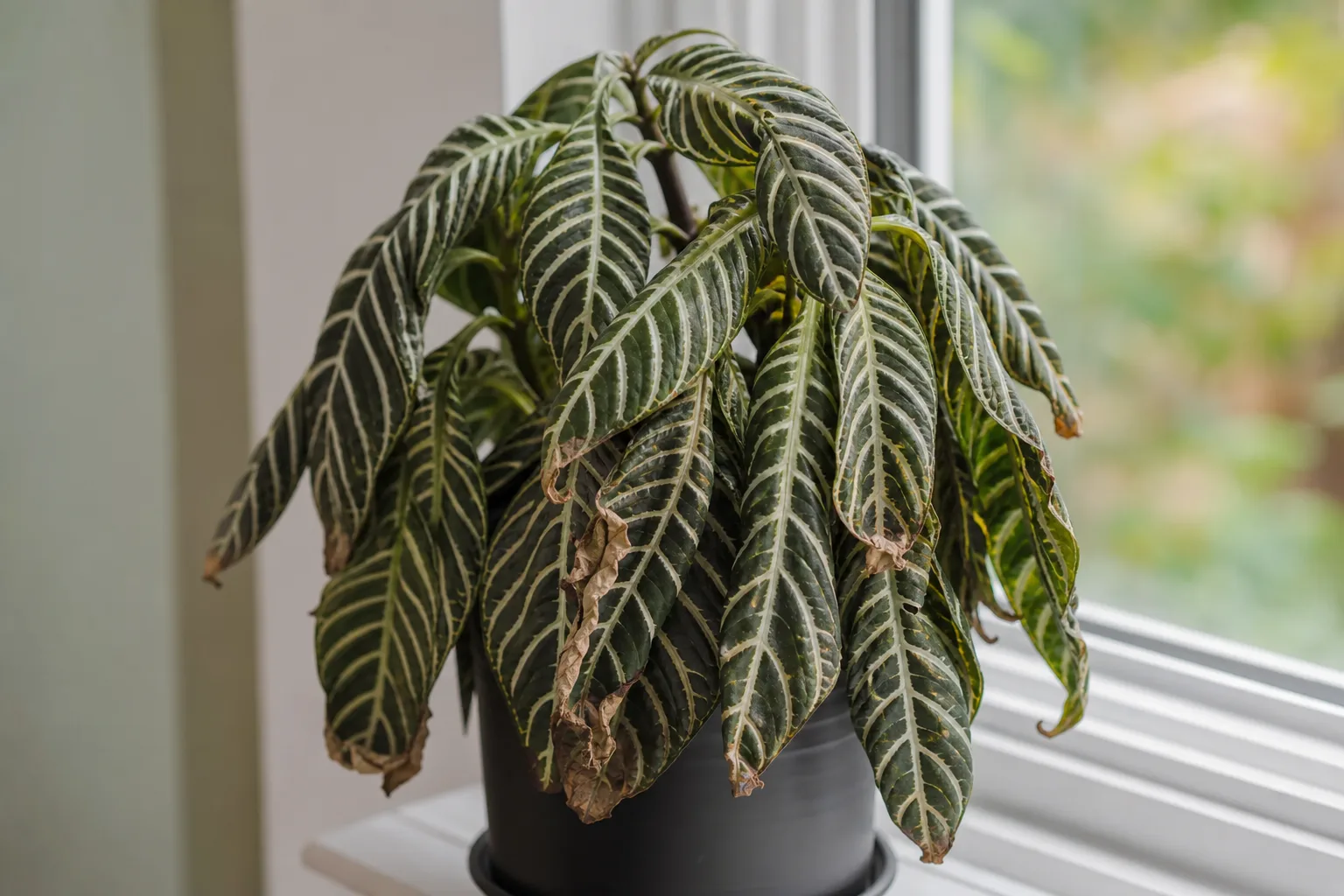
Water Stress on Zebra Plant: Causes, Checks & Fixes
This guide covers water stress on Zebra Plant. See also the general Water Stress guide, watering, and light pages for this plant.
Water Stress on Zebra Plant: Causes, Checks & Fixes
Quick answer
Water stress on Zebra Plant (Aphelandra squarrosa) means roots cannot deliver steady moisture to those bold striped leaves-either because the mix is too dry or because it stays wet too long. Both extremes produce similar wilt, which is why guessing rarely works on this species.
First step: check the top inch of soil and lift the pot before you add any water. A light pot with dry surface mix points to dry stress; a heavy pot that still feels damp days after watering points to wet stress. Zebra plant wants even moisture, not a flood-or-drought cycle.
What water stress looks like on Zebra Plant
Aphelandra squarrosa reacts dramatically to moisture swings. The large, glossy leaves have no drought reserve like a succulent-once roots fail, turgor collapses fast.
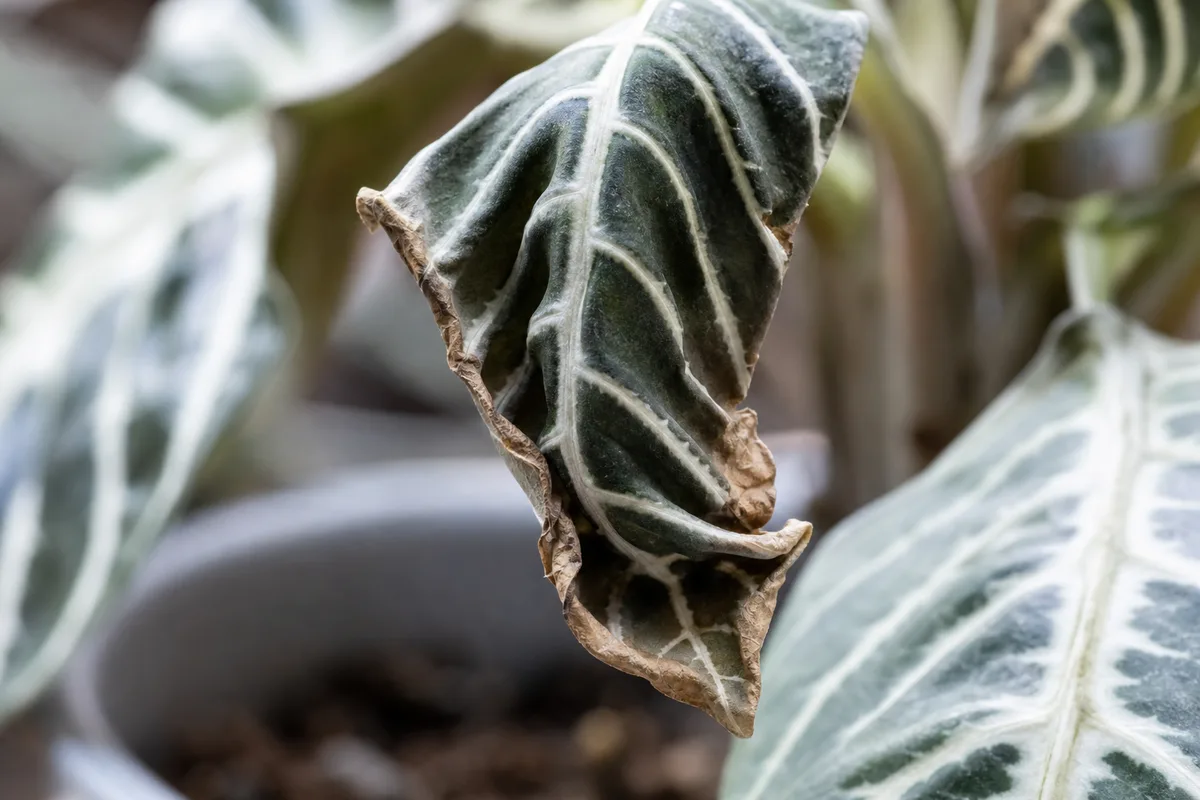
Water Stress symptoms on Zebra Plant - compare with healthy tissue on the same plant.
Dry stress (underwatering):
- Leaves go limp and droop on thin stems, often starting at the tips
- Top inch of mix feels dry and pulls away slightly from the pot edge
- Pot feels noticeably light when lifted
- Yellow bracts and flower buds may abort or dry before opening
- Leaf edges turn crispy brown, especially when low humidity adds to the problem
- Recovery is often visible within hours after a proper drink
Wet stress (overwatering):
- Leaves wilt even though soil feels damp or waterlogged
- Lower leaves yellow first, then brown and drop
- Pot stays heavy days after the last watering
- Stems may soften at the base; soil can smell sour
- Crown rot and leaf spots become more likely in stagnant wet mix
- Wilt persists or worsens after you water again
The same plant can show both patterns over time if you alternate neglect with heavy soaking to “make up” for missed waterings.
Why Zebra Plant gets water stress
Zebra plant evolved in Brazilian tropical forests where soil stays moist but drains freely. That narrow band-never bone dry, never soggy-is hard to replicate on a windowsill.
The even-moisture trap. Missouri Botanical Garden notes that Aphelandra squarrosa needs consistent moisture year-round and soils must not be allowed to dry out. Many growers interpret that as “water often,” which leads to wet feet when light is low or drainage is poor. NC State Extension adds that this plant does not like wet feet and that drooping can mean too much water-not just drought.
Calendar watering. Watering every Sunday regardless of pot weight ignores how fast your home dries the mix. Cool rooms, short winter days, and dense peat hold moisture longer. A routine that worked in summer keeps roots wet for a week in December.
Low light slows water use. Zebra plant in a dim corner drinks slowly. If you keep summer watering frequency, the mix stays saturated while roots lose oxygen. Wet stress follows even though you are “following the care guide.”
Travel and neglect swings. Letting the pot go completely dry-even once-often triggers lower leaf drop on Aphelandra. University of Arkansas Extension notes that those who let zebra plants wilt a time or two see lower leaves fall and the plant take a palm-like shape. A panic soak afterward can push the mix from too dry to too wet in one day.
Cache pots and full saucers. Decorative outer pots without drainage trap runoff. Sitting in a full saucer keeps the bottom of the root zone anaerobic-the classic wet-stress setup despite “proper” top watering.
Humidity compounds the problem. Dry air increases transpiration from large leaves. You may need to water more often in winter heating, but if you pour without checking soil, you overcorrect and create wet stress instead.
How to confirm the cause
Work through these checks in order before changing anything:
- Top-inch finger test - Insert a finger to the first knuckle. Dry and dusty means dry stress is likely. Cool, clinging, or muddy means hold water.
- Pot weight - Lift the pot after watering once when you know the plant is well hydrated. Compare daily. A sudden lightness with wilt confirms dry stress; persistent heaviness with wilt suggests wet stress or root damage.
- Stem firmness - Gently squeeze the base of the main stem above soil. Firm tissue is good. Soft, mushy, or collapsing tissue on wet mix is urgent wet stress-possibly crown or root rot.
- Leaf pattern - Crispy edges with perky recovery after water lean dry. Yellow lower leaves on damp soil lean wet.
- Drainage check - Confirm drainage holes are open and no outer pot is holding water. Pour a small amount and watch whether it exits within seconds.
- Recent history - Note skipped waterings, heavy post-vacation soaks, repotting, or a move to a darker room. Context often explains which stress type you are seeing.
If soil is wet and stems are soft, do not water-proceed to wet-stress recovery below.
First fix to try
If the top inch is dry and the pot is light: water thoroughly until excess runs from drainage holes, then discard saucer water within 30 minutes.
Use lukewarm water and wet the root zone evenly without leaving the plant sitting in runoff. That single corrective drink is the right first move for dry stress. Wait 4–6 hours and check whether leaves regain turgor before you do anything else.
If the top inch is wet and the pot is heavy: stop watering and move the plant to bright indirect light with good airflow.
Do not add more water to “perk up” wilted leaves-that deepens wet stress. Let the top inch dry before the next drink. This pause is the correct first fix when roots are drowning.
Do not repot, fertilize, or mist heavily on day one. Confirm which stress type you have, apply one fix, then observe.
Step-by-step recovery
Recovering from dry stress
After the first thorough watering:
- Keep humidity at 60–70% with a pebble tray or humidifier so leaves do not crisp while roots rehydrate
- Remove fully brown, crispy leaves-they will not green up
- Resume a rhythm of watering when the top inch dries, not on a fixed calendar
- Track recovery by leaf turgor within 24 hours and new growth over the next two to three weeks
If leaves stay limp after a good drink, slide the plant out and inspect roots. Dry stress rarely rots roots, but a prior wet period may have left damage that only shows up when you water again.
Recovering from wet stress
After stopping water and improving light and airflow:
- Wait until the top inch feels dry before watering lightly
- Empty saucers after every future watering
- If yellowing spreads while soil stays wet for more than 7–10 days, unpot and inspect roots
- Trim soft brown roots back to firm white tissue with clean scissors; repot into fresh well-drained, peaty mix with perlite
- Hold fertilizer until new growth appears
Wet stress recovery is slower than dry stress because damaged roots must regrow before the plant can drink normally again.
Recovery timeline
| Stage | Dry stress | Wet stress |
|---|---|---|
| First 24 hours | Leaves often perk after one good drink | Wilt may persist; soil must dry |
| 3–7 days | Bud drop may stop; edges stay crisp on damaged tissue | Lower yellow leaves may drop; no new watering until top inch dries |
| 2–4 weeks | New leaves or bract buds signal stable moisture | New firm roots and upright stems mean recovery |
| Long term | Crisp tips remain until pruned or replaced by new growth | Severe rot may leave a leggy, palm-like shape |
Judge success by new growth and stable pot weight-not by old damaged leaves reverting.
Lookalike symptoms
Low humidity browns leaf tips and margins without necessarily wilting the whole leaf. Fix humidity alongside watering; misting alone does not replace soil moisture.
Cold drafts cause sudden leaf drop similar to dry stress. Check whether the plant sits near an AC vent or cold window; Aphelandra squarrosa needs temperatures that do not dip below 65°F.
Spider mites in dry air cause stippling and curl that mimics drought. Inspect leaf undersides for fine webbing before assuming water is the only issue.
Normal post-bloom rest allows slightly reduced watering after flowering. Do not confuse that with permission to let the mix go completely dry.
Root rot from chronic overwatering produces wilt on wet soil-the advanced form of wet stress. If stems are soft and roots are mushy, see the root rot guide after stabilizing moisture.
Mistakes to avoid
- Watering because leaves look sad without checking soil first-the most common way to turn dry stress into wet stress
- Heavy soaking after a dry spell without drainage; one flood after drought can rot stressed roots
- Misting instead of watering the root zone; surface moisture does not fix dry mix
- Repotting into a much larger pot to “help” watering; extra soil holds water longer and worsens wet stress
- Keeping a saucer full for humidity; roots sit in stagnant water
- Continuing summer frequency in winter when light and growth slow
How to prevent water stress next time
Build a routine around the pot, not the calendar:
- Water when the top inch of mix dries, typically every 5–7 days in active growth but slower in winter-always confirm with your finger
- Use a well-drained, peaty potting mixture with perlite and a pot with drainage holes
- Maintain 60–70% humidity so leaves lose less moisture between drinks
- Place in bright indirect light so the plant uses water predictably
- After flowering, reduce watering slightly during the resting period but never stop entirely
- Empty saucers within 30 minutes of every watering
Learn how fast your specific pot dries in your room. That personal baseline matters more than any generic schedule.
When to worry
Treat as urgent if:
- Stems soften at the soil line while mix is wet
- Soil smells sour or roots are brown and mushy on inspection
- Mass leaf drop follows a cold snap below 65°F combined with dry or wet extremes
- Wilt continues on wet soil after a week of dry-back and improved drainage
The plant may not be saveable if the crown collapses, most roots are gone, or new stem tissue blackens upward from the base. A leggy stem with a few firm roots can sometimes be cut back and rerooted-that is a last resort, not a first fix.
Conclusion
Water stress on zebra plant is a balancing act between two opposite failures. Dry stress punishes quickly with wilt and leaf drop; wet stress hides behind damp soil until roots fail. The diagnostic shortcut is always the same: check the top inch and lift the pot before you pour. Match moisture to Aphelandra squarrosa’s need for even, never-extreme conditions, and this demanding tropical will reward you with stable striped foliage and those long-lasting yellow bracts.
Related Zebra Plant guides
- Zebra Plant overview
- Zebra Plant watering
- Zebra Plant light
- Underwatering on Zebra Plant
- Overwatering on Zebra Plant
- Wilting on Zebra Plant
- Drooping Leaves on Zebra Plant
- All Zebra Plant problems
Conclusion
Use this page to confirm water stress on Zebra Plant by pattern and pot checks-not by treating every houseplant the same. When symptoms overlap with sibling pages, follow the linked guide for the matching cause before stacking fertilizer, repotting, or pesticide.