Crispy Leaves on Zebra Plant: Causes, Checks & Fixes
Quick answer
Crispy leaves on Zebra Plant mean leaf tissue dried out-usually low humidity below 60% or soil allowed to go too dry-not a fungal disease. First step: raise humidity with a humidifier or pebble tray and check soil moisture before trimming anything.
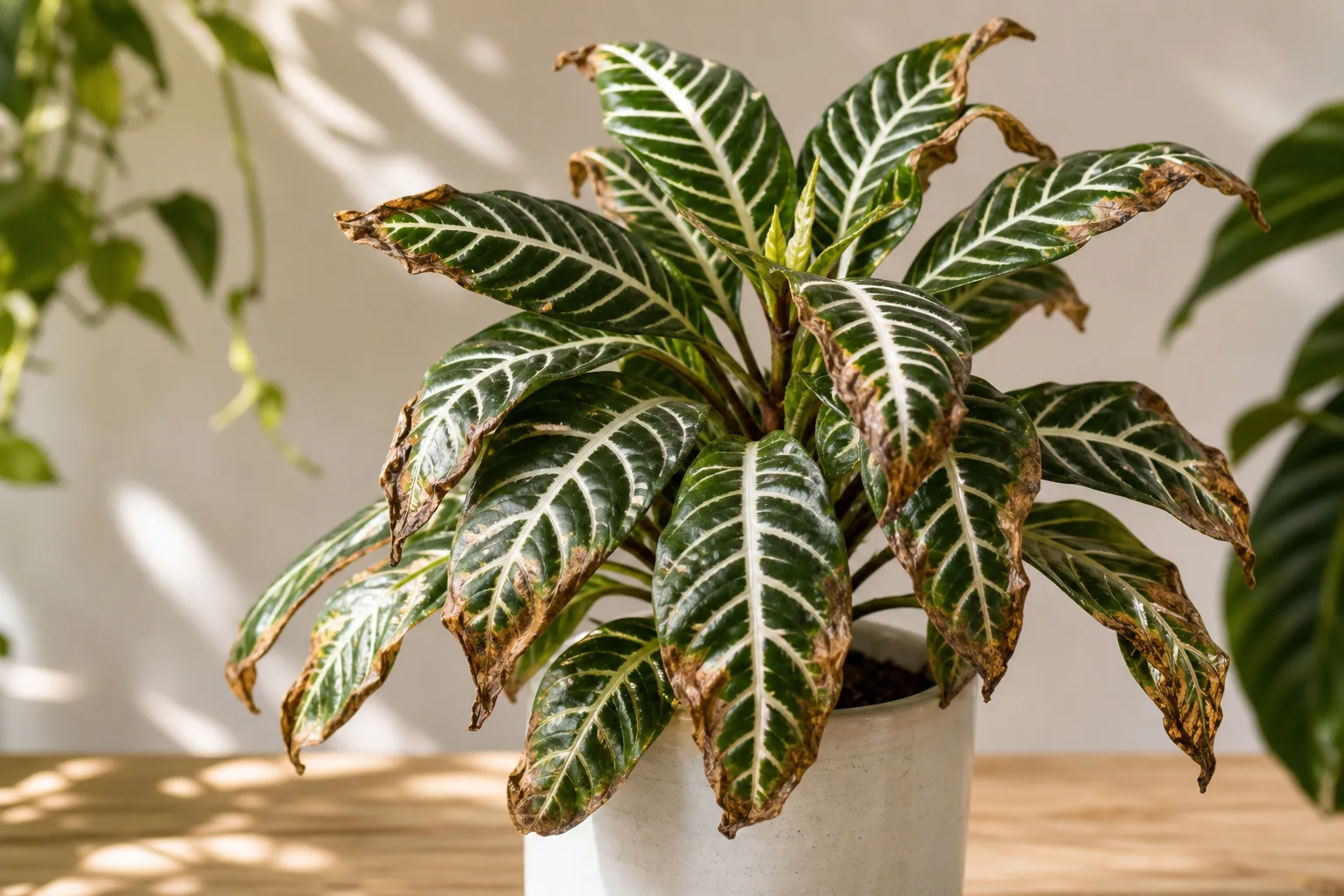
Crispy Leaves on Zebra Plant: Causes, Checks & Fixes
This guide covers crispy leaves on Zebra Plant. See also the general Crispy Leaves guide, watering, and light pages for this plant.
Crispy Leaves on Zebra Plant: Causes, Checks & Fixes
Quick answer
Crispy leaves on Zebra Plant (Aphelandra squarrosa) mean the foliage lost water faster than the roots could replace it. On this tropical houseplant, that almost always traces to low humidity and uneven moisture-not a mystery disease. Brown leaf tips can be caused by low humidity, and dry margins often spread into papery, brittle edges when winter heating drops indoor air to 30–40% relative humidity. Plants require high humidity, which makes crisping common in average homes.
First step: raise humidity at the pot and check whether the top inch of soil is dry. Run a humidifier or set the pot on a pebble tray, then water thoroughly if the mix feels light and dusty. Do not trim every damaged leaf or repot on day one-fix the environment first and let new growth tell you whether care is working.
What crispy leaves look like on Zebra Plant
Healthy zebra plant leaves are glossy dark green with bold white veining and slightly wavy margins. When they go crispy, the change is tactile-you can hear a faint crunch when you brush the edge.
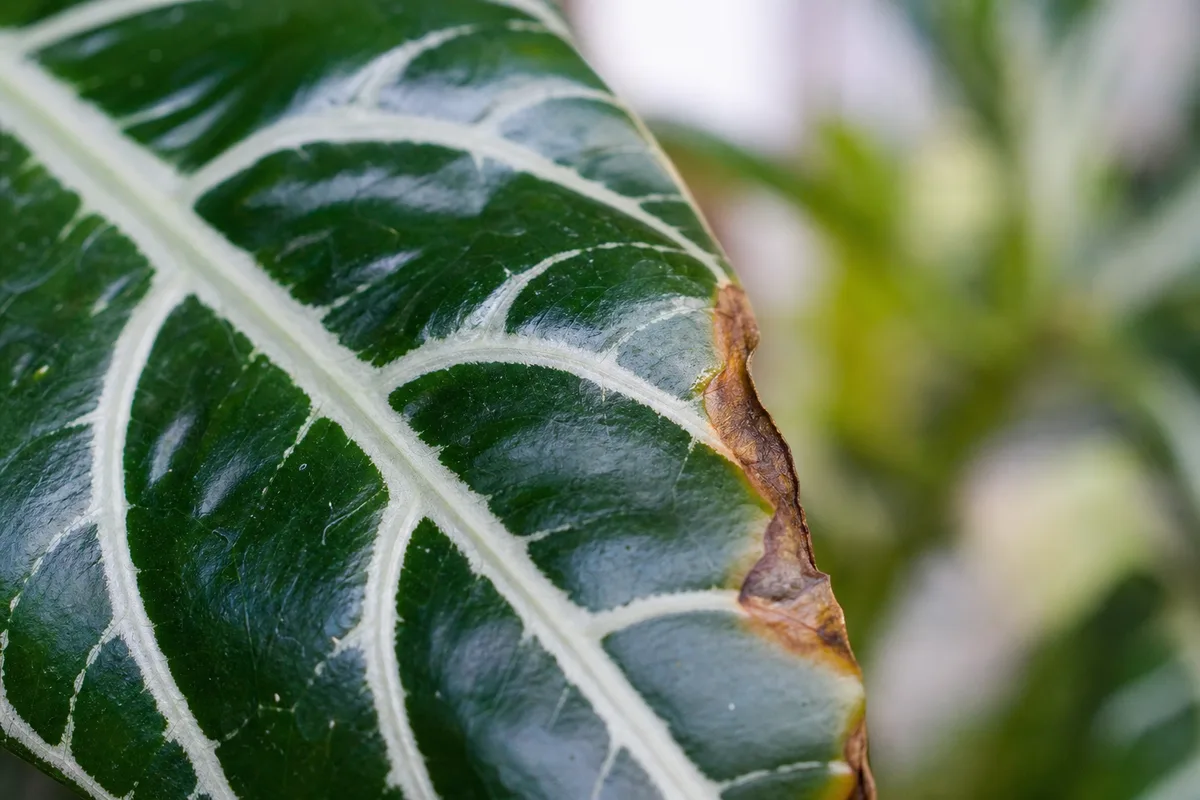
Crispy Leaves symptoms on Zebra Plant - compare with healthy tissue on the same plant.
Typical patterns:
- Dry papery margins that turn tan to brown and crumble when pinched
- Edges worse than the center of the leaf blade, often starting at tips and creeping along sides
- Leaves nearest vents or sunny glass showing damage first while inner foliage still looks normal
- Slight inward curl on stressed leaves, especially when dry air and underwatering on Zebra Plant overlap
- Firm stems with crisp foliage-stems should not feel soft or mushy at the base
Crispy tissue feels thin and brittle, not soft or spreading. If brown patches are soggy, smell sour, or show yellow halos, you are likely dealing with overwatering on Zebra Plant or leaf spot-not simple dry-air crisping.
Unlike spider mite damage, early humidity crisping does not show fine stippling or webbing on undersides. Unlike fertilizer burn alone, you will usually see humidity below 50% or a dry potting mix at the same time.
Why Zebra Plant gets crispy leaves
Zebra Plant is native to humid Brazilian forests. Indoors, it wants the conditions Missouri Botanical Garden describes for humidified rooms: Zebra Plant light guide, steady warmth, and air moisture well above what most heated living rooms provide.
Low humidity is the leading cause. When relative humidity falls, leaf margins lose water first because that tissue has the least reserve. Foliage may scorch in dry or drafty locations, and winter heating accelerates the problem. Dry, brown and brittle leaf margins are a classic sign houseplants need supplemental humidity.
Underwatering compounds desiccation. Zebra Plant likes even moisture-soils must not be allowed to dry out completely during active growth. When the top inches go dusty dry, roots cannot keep up with transpiration from large striped leaves. Excessive water or extremely dry conditions will cause bottom leaves to brown and drop, so alternating flood and drought stresses edges and lowers before you notice wilt.
Heat and airflow steal moisture. Placement near radiators, forced-air vents, or frequently opened doors creates microclimates far drier than the rest of the room. Leaves in that path crisp first even if a wall hygrometer across the room reads acceptable.
Direct sun plus dry air scorches faster. Zebra Plant needs bright indirect light. A sudden move into harsh direct sun-especially with low humidity-can produce pale patches or crispy edges as leaf tissue burns.
Secondary triggers that worsen crisping but rarely act alone:
- Spider mites thrive when humidity is low; NC State lists mites among common zebra plant pests. Stippling and webbing dry leaves further.
- Salt or fertilizer buildup can crisp margins after heavy feeding, similar to brown tips.
- Cold drafts below about 65°F stress tropical foliage and pair with humidity loss near windows.
How to confirm the cause
Work through these checks in order before you change multiple variables at once:
- Humidity at the pot - Hold a hygrometer beside the foliage, not across the room. Below 50% with papery edges strongly confirms dry air. Target 60–70% for Zebra Plant overview.
- Soil moisture - Stick your finger into the top inch. Dusty dry mix plus crisp leaves means underwatering is contributing. Wet, heavy mix with soft stems points away from simple crisping.
- Placement audit - Note distance to heating vents, radiators, fireplaces, and sunny south or west windows. Leaves on the exposed side crisping first implicates local dry air or sun.
- Damage texture - Dry, brittle, papery margins = humidity or water stress. Soft brown with sour smell = rot. Stippling plus fine webbing on undersides = spider mites.
- Pattern over time - Winter onset after heating starts fits humidity. Crisping right after a window move fits light shock. Slow spread on lower leaves with white soil crust fits salt stress.
- New growth check - If only oldest lower leaves are crisp while new striped leaves are supple, you may be seeing normal aging plus dry air. Crisp new tips mean current conditions are still wrong.
If humidity is adequate, soil is evenly moist, and margins still crisp with stippling, inspect for mites before assuming more water will help.
First fix for Zebra Plant
Raise humidity at the plant and water if the top inch of soil is dry.
Move the pot away from heating vents and drafty windows. Place a cool-mist humidifier within a few feet of the plant, or set the pot on a pebble tray with water below pot level so roots never sit submerged. A portable humidifier near plants offers the most benefit, especially in larger dry rooms during winter.
If the top inch of mix feels dry and the pot is light, water thoroughly until excess drains from the bottom, then empty the saucer. Consistent moisture year-round supports recovery-do not compensate for dry air by keeping soil soggy.
That single environmental correction is the right first move. Hold off on Zebra Plant repotting guide, heavy pruning, and fertilizer until new leaves emerge looking healthy.
Step-by-step recovery
Once humidity and moisture are addressed, work through these steps over the following weeks:
- Stabilize placement - Keep bright indirect light without direct midday sun on the leaves. Avoid moving the pot repeatedly while it recovers.
- Run humidity daily - Maintain 60–70% through heating season. Grouping plants can create a helpful microclimate, but a humidifier is more reliable for Aphelandra in very dry homes.
- Water on soil dryness - Check the top inch every few days. Water when it dries, not on a calendar. Never let the entire pot go bone dry during active growth.
- Trim only dead tissue - Snip fully crisp margins or whole leaves that are mostly brown with clean scissors. Partial green tissue will not refill.
- Inspect for mites weekly - If you see stippling, rinse leaf undersides in the morning and treat with insecticidal soap if colonies are active. Raising humidity alone helps prevent mites but does not clear established infestations.
- Hold fertilizer - Wait until two to three weeks of healthy new growth before resuming light feeding. Feeding stressed zebra plants can crisp edges further.
Recovery timeline
Damaged leaf tissue does not rehydrate. Expect two to four weeks before new striped leaves feel fully supple if humidity and watering stay steady. Older crisp margins remain brown until you trim them or the plant sheds those leaves naturally.
Signs recovery is working:
- New leaves open with smooth, glossy edges
- Existing crisping stops spreading to fresh growth
- Soil dries at a predictable rate between waterings
- No new leaf drop beyond occasional old lower leaves
Signs the problem is worsening:
- Crisping reaches new growth tips despite higher humidity
- Leaves yellow and drop in clusters
- Stems soften at the soil line on wet mix
- Stippling and webbing increase on undersides
Lookalike symptoms
Brown tips only - Often the early stage of the same humidity problem. Crispy leaves usually mean more margin tissue is involved. Fix is the same: humidity plus even moisture.
Overwatering / root trouble - Yellow lower leaves, sour soil, and wilt on wet mix-not dry papery edges alone. Unpot only if stems soften or soil stays wet for days.
Sun scorch - Bleached or tan patches on the leaf face after a sudden bright-sun move, not just margins. Pull back from direct sun and stabilize humidity.
Spider mites - Fine pale dots, webbing, and dull stippled leaves. Dry air invites them; treat pests while you raise humidity.
Fertilizer burn - White crust on soil surface with tip-focused burn after recent heavy feeding. Flush soil in spring and feed at half strength later.
Mistakes to avoid
Do not mist once and assume humidity is fixed-surface moisture evaporates in minutes and can encourage fungal spots on crowded foliage. Do not flood the pot to fight dry air; soggy roots cause different damage. Do not strip every crisp leaf before conditions improve-you need healthy foliage to photosynthesize. Do not place the plant directly on a radiator or inside a closed terrarium with poor airflow unless you monitor humidity and ventilation carefully. Do not fertilize hoping crisp leaves will green up.
When to worry
Crispy edges alone on a few leaves are common and reversible. Escalate your response if:
- More than a third of leaves crisp or drop within a week
- Stems turn soft or black at the base while soil is wet
- New growth emerges already brittle despite corrected humidity
- Webbing and stippling spread after you raised moisture
Those patterns suggest root rot on Zebra Plant, advanced mite infestation, or multiple stacked stresses-not simple winter dryness.
How to prevent crispy leaves next time
Treat zebra plant as a houseplant for bright, humid areas. Run a humidifier or pebble tray through heating season, keep the pot away from vents, and water when the top inch dries without long drought cycles. Monitor with a hygrometer at plant level. During spring sun shifts, move gradually into brighter spots to avoid scorch. Zebra Plant is non-toxic to cats and dogs, so humidifiers and pebble trays are safe household fixes near pets-just keep cords and standing water out of reach.
Conclusion
Crispy leaves on Zebra Plant are a humidity and watering signal on a species that never adapted to dry indoor winters. Measure air moisture at the pot, raise humidity first, and water when the top inch of soil dries. Old crisp tissue will not heal, but new striped foliage should tell you within weeks whether you have the environment right. Fix placement and moisture before you prune aggressively, repot, or feed-and inspect for mites if edges keep drying despite good humidity.
When to use this page vs other Zebra Plant guides
- Zebra Plant watering guide - Use for routine moisture checks before assuming crispy leaves is the main issue.
- Zebra Plant problems hub - Browse all 32 common issues on this species.
- Brown Tips on Zebra Plant - Different entry point when symptoms overlap with crispy leaves.
- Brown Leaves on Zebra Plant - Different entry point when symptoms overlap with crispy leaves.
- Curling Leaves on Zebra Plant - Different entry point when symptoms overlap with crispy leaves.