Free Soil Mix Calculator for Houseplants
Get peat, perlite, and pumice ratios for your plant.
Soil Mix Calculator
Get your soil mix ratio
Pick your plant group to get a simple peat, perlite, and pumice blend.
Free Soil Mix Calculator for Houseplants
Get peat, perlite, and pumice ratios for your plant.
Pick your plant group to get a simple peat, perlite, and pumice blend.
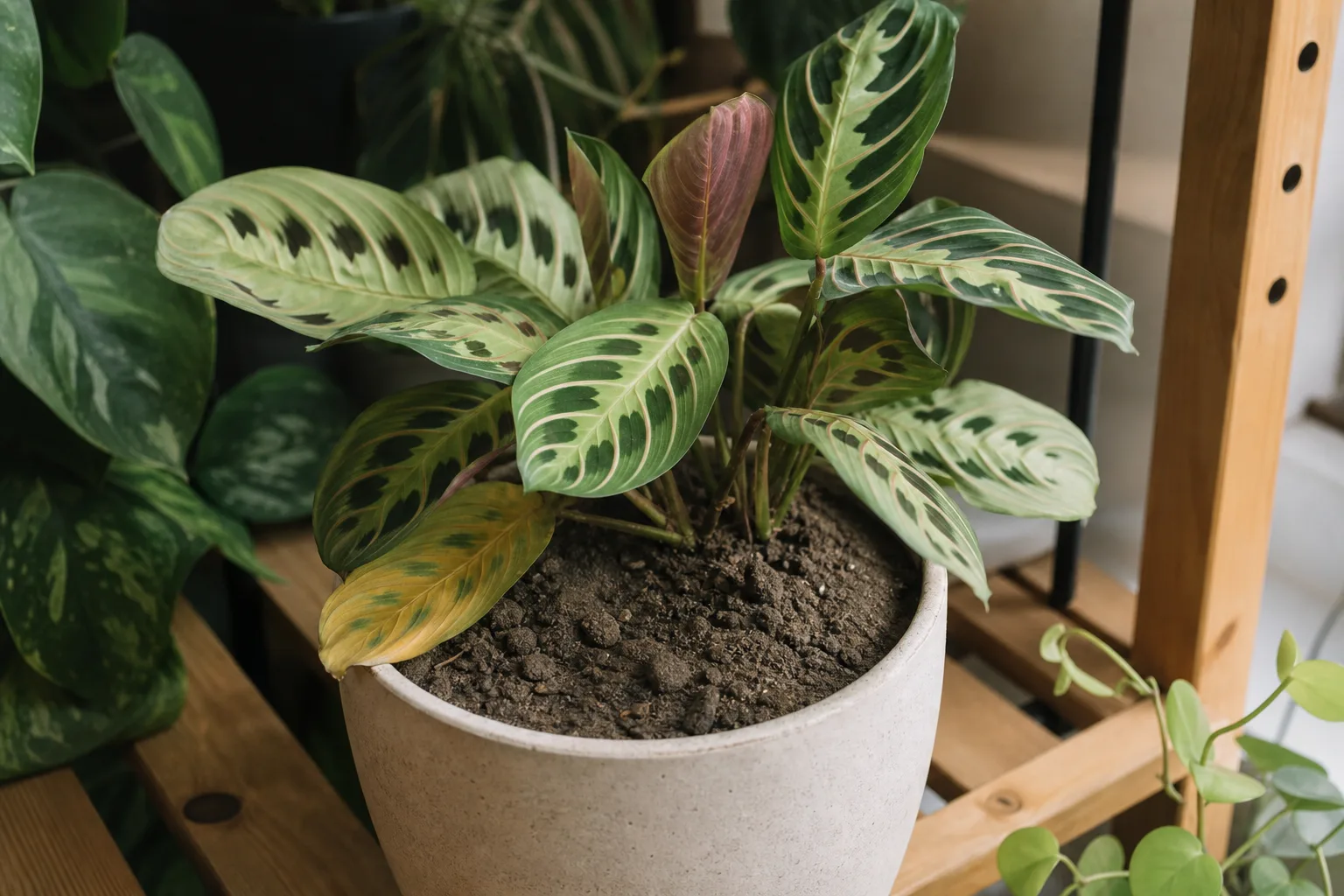
The Soil Mix Calculator gives you a practical starting blend for common indoor plant groups: tropical foliage plants, aroids such as Monstera and pothos, and succulents or cacti. It is built for the moment when a bag of all-purpose potting mix feels too vague, a specialty mix feels expensive, and the plant in front of you clearly needs something more specific than “well draining.”
Use the result as a recipe baseline, not as a law. A potting mix is a small root environment, and small changes matter: pot size, light, watering style, root health, room temperature, and the ingredients already inside your bagged mix can all change how fast the root zone dries. The calculator makes the first decision easier by turning plant group into a clear ratio you can mix, test, and adjust.
The current calculator asks for one input: plant type. Choose tropical foliage, aroid, or succulent/cactus, and it returns a mix by percentage. For tropical foliage, the default is 50 percent potting soil, 30 percent perlite, and 20 percent orchid bark. For aroids, it shifts chunkier: 40 percent potting soil, 30 percent orchid bark, 20 percent perlite, and 10 percent horticultural charcoal. For succulents and cacti, it gives a faster-draining blend: 40 percent cactus mix, 30 percent perlite, and 30 percent coarse sand.
Those recipes reflect a simple container-media principle: combine a moisture-holding base with ingredients that keep the mix open enough for drainage and air. UF/IFAS describes homemade container mixes as combinations of materials such as peat moss, composted bark, compost, perlite, or sand, with the key being a balance between materials that retain moisture and materials that allow water to drain through a loose, porous medium (UF/IFAS homemade potting mix).
The calculator does not identify a plant species, diagnose root rot, test pH, calculate exact quarts of mix, or decide whether a plant needs repotting. Pair it with the Pot Size Calculator if you are sizing up a container, the Plant Watering Calculator if the issue is timing, and the Soil Volume Calculator if you need to know how much material to prepare.
Indoor containers are not miniature garden beds. A pot has fixed walls, a shallow profile, limited air exchange, and a drainage hole that can only do so much if the media above it stays saturated. That is why most indoor recipes start with a potting mix or soilless base rather than unmodified outdoor soil.
University of Maryland Extension notes that container growing media are generally lightweight, drain well, hold water and nutrients, and are typically free of weeds, insects, and diseases; the same source lists common ingredients such as sphagnum peat moss, perlite, vermiculite, composted bark, compost, and coconut coir (container growing media). That combination is hard to get from straight garden soil, especially indoors where compaction, odor, fungus gnats, and slow drying become more obvious.
Garden soil can be amended for some container uses, but it is rarely the easiest indoor starting point. If you do use it, treat it as one ingredient inside a tested recipe rather than the whole pot. Fine particles settle, pore spaces shrink, and roots lose the air-water balance they need. USDA NRCS explains the broader soil principle clearly: compaction reduces pore spaces, and adequate pore space is essential for movement of water and air through soil (soil compaction technical note).
A good indoor mix has three jobs. It must hold enough water for the plant to use between waterings. It must drain excess water before the root zone turns stale. It must leave enough pore space for oxygen to move around roots. The right mix is not simply “dry” or “wet”; it is a controlled compromise.
The compromise changes by plant. A fern, calathea, or prayer plant usually wants a mix that stays evenly damp longer. A Monstera or philodendron still wants moisture, but the thicker roots and climbing growth habit usually handle a chunkier structure well. A jade plant, Echeveria, Haworthia, cactus, or aloe needs a mix that releases water faster and does not stay dense around low-water roots.
This is why the calculator separates tropical foliage, aroids, and succulents instead of giving every plant the same 1:1:1 recipe. The plant group tells you which side of the balance to favor: retention for soft tropical foliage, structure for aroids, and fast drainage for succulents.
Potting soil is the base. In most indoor recipes, that means a commercial potting mix, not literal field soil. It usually contributes fine organic material, water retention, some nutrient-holding capacity, and often starter fertilizer or lime. Clemson Cooperative Extension describes peat-lite mixtures for indoor plants as peat moss with perlite or vermiculite, and also notes that coconut coir has become a more sustainable alternative to peat moss (indoor soil mixes).
Orchid bark adds larger particles. Those chunks create structure, slow collapse, and help a mix feel airy after repeated watering. Bark is especially useful for aroids and other plants with thicker roots because it keeps the root zone from becoming a uniform sponge.
Perlite is the white, lightweight mineral amendment found in many potting mixes. In practical terms, it lightens a blend and increases air space. It is not a magic drainage switch, though. If the base mix is extremely fine, old, or waterlogged, adding a small handful of perlite will not fully rebuild structure.
Horticultural charcoal is included in the aroid recipe at 10 percent because many growers use it as a minor structural ingredient in chunky blends. Treat it as optional if you cannot source it. It should not replace bark or perlite, and it should not be confused with fertilizer or a cure for sour soil.
Coarse sand belongs mainly in the succulent/cactus recipe. The word “coarse” matters. Fine play sand can pack into pore spaces and make a pot heavier without improving root conditions. If the only sand available is fine, use more perlite or pumice instead.
Choose tropical foliage when the plant has thinner roots, broad leaves, and a care pattern that depends on steady moisture. Good examples include many calatheas, marantas, fittonias, pileas, begonias, and ferns. These plants usually dislike a mix that turns bone dry too quickly, especially in small pots or warm rooms.
Choose aroid when the plant is a Monstera, pothos, philodendron, syngonium, anthurium, alocasia, or similar plant with a stronger need for structure around the roots. Aroids vary, but the calculator’s aroid blend works well as a starting point when you want a chunkier mix than ordinary potting soil without going as gritty as a cactus blend.
Choose succulent/cactus when the plant is adapted to lower water storage in the potting medium: jade plant, aloe, Haworthia, Echeveria, string of pearls, many cacti, and similar dry-leaning plants. Some common houseplants marketed as “beginner plants,” including snake plant and ZZ plant, often perform better with a faster-drying blend than with moisture-heavy tropical soil.
If a plant sits between categories, decide by root behavior and watering risk. A hoya, for example, may like a chunkier aroid-style mix even though it is not always discussed with Monstera and philodendron. A peperomia may need more drainage than a fern but more moisture than a cactus. The calculator gives you the center of the category; your plant tells you how far to move from that center.
The tropical foliage output is 50 percent potting soil, 30 percent perlite, and 20 percent orchid bark. This is the most forgiving blend for plants that want moisture but still resent standing in a heavy, stale root ball. The potting soil holds water, the perlite opens the texture, and the bark keeps the blend from acting like a single dense mass.
This is a good first mix for plants such as calathea, begonia, pilea, Boston fern, and many leafy tabletop plants. If your plant wilts fast in a very gritty mix, this recipe moves the blend back toward retention without dropping all the way into a peat-heavy sponge.
Adjust it by pot size. In a tiny nursery pot, the mix can dry faster because there is less total water reserve. In a deep decorative pot or a cachepot with poor airflow, the same recipe can stay wet longer than expected. If the plant is in low light, reduce water frequency before making the mix more water-retentive.
The aroid output is 40 percent potting soil, 30 percent orchid bark, 20 percent perlite, and 10 percent charcoal. This is the calculator’s chunkiest foliage blend. It is designed for plants where standard bagged mix often holds too much water around the roots, especially after the plant has been watered for months and the organic particles begin settling.
Use this recipe for Monstera, pothos, philodendron, syngonium, and many climbing or vining tropical plants. The bark fraction matters because aroids often respond well to a mix with physical gaps. Roots can move through the blend, and water can leave the pot without the entire mass behaving like wet cake.
If you skip charcoal, redistribute that 10 percent into bark and perlite. For example, use 40 percent potting soil, 35 percent bark, and 25 percent perlite. If the plant is a thirsty aroid in a bright room, keep the potting soil share at 40 percent. If the plant is in a dim corner and has a history of root rot, move closer to 35 percent potting soil and increase bark or perlite.
The succulent/cactus output is 40 percent cactus mix, 30 percent perlite, and 30 percent coarse sand. This is not meant to be rich, fluffy tropical soil. It is meant to move water out of the root zone quickly and leave a mineral-heavy texture that does not stay wet for a week after every watering.
The base cactus mix gives you some organic matter and a ready-made starting structure. Perlite adds lightweight air space. Coarse sand adds weight and grit. UF/IFAS lists a succulent recipe that includes soil, peat moss, perlite, and coarse sand, which supports the calculator’s logic of using both a base medium and drainage-focused ingredients for dry-leaning plants (succulent potting recipe).
If your home is humid, cool, or low-light, lean even grittier. If your succulent sits in strong light, a small unglazed pot, and a warm room, the default may already dry fast enough. Watch the plant after watering: leaves should not wrinkle from chronic drought, but the root zone should not stay damp long enough to smell stale.
Many commercial potting mixes still use sphagnum peat moss because it holds water, has useful structure when fresh, and is easy to blend. The trade-off is environmental. The Royal Horticultural Society encourages gardeners to move toward peat-free gardening because peatlands are important habitats and carbon stores, and because peat extraction damages those systems (peat-free gardening).
That does not mean every peat-free bag behaves the same as every peat-based bag. Coir, composted bark, wood fiber, green waste compost, and other alternatives can vary in water behavior, salinity, pH, and nutrient profile. Iowa State University Extension separates potting media components into organic components, such as peat moss and bark, and inorganic components, such as mineral or rock-like materials, and notes that organic components decompose over time while inorganic components change much less (potting media components).
If you swap peat-based potting soil for coir-based or bark-based potting mix, keep the calculator ratio but test the feel. Coir can hold water differently from peat. Bark-heavy peat-free mixes may drain faster but need more consistent fertilizing. Compost-heavy mixes can be nutrient-rich but may stay too wet in low light. The ratio is the first draft; the bag’s ingredient list is the reality check.
Most houseplant mix problems are physical before they are chemical. Drainage, air space, particle size, and watering rhythm usually matter more on repotting day than chasing a perfect pH number. Still, pH is not irrelevant. The University of Connecticut Soil Nutrient Analysis Laboratory lists many indoor ornamentals in mildly acidic ranges; for example, Monstera, philodendron, peperomia, rubber plant, and pothos-type foliage plants are commonly listed around pH 5.0 to 6.0, while many palms and spider plants tolerate broader ranges (plant pH preferences).
Commercial potting mixes are often adjusted with lime and may contain starter fertilizer. University of Maryland Extension notes that many container media have a pH around 6.2 and often include small amounts of lime and fertilizer (potting media pH). That is one reason you should be cautious about adding extra lime, sulfur, compost, fertilizer, or “soil sweetener” unless you know what problem you are solving.
If leaves are yellowing, do not assume pH is the cause. First check light, watering, pot size, root health, and whether the plant was recently moved. Then use the Soil pH Checker or a proper soil test if the symptoms and plant type point toward pH as a realistic issue.
Percentages sound precise, but you do not need lab equipment. Use any clean scoop as one part. For the tropical blend, mix five scoops potting soil, three scoops perlite, and two scoops orchid bark. For the aroid blend, mix four scoops potting soil, three scoops orchid bark, two scoops perlite, and one scoop charcoal. For the succulent blend, mix four scoops cactus mix, three scoops perlite, and three scoops coarse sand.
Make a little more than you think you need, because bark and perlite create voids and settle around roots during potting. Pre-moisten dry peat- or coir-based mix before repotting. A bone-dry base can repel water at first, which makes you think the recipe drains beautifully when it is actually shedding water around dry pockets.
Mix in a tub, not directly in the pot. Break up clumps, remove oversized bark pieces from small pots, and keep dust down by misting the ingredients lightly. If you are sensitive to dust, wear a mask and mix outdoors or near ventilation. Perlite dust and dry potting mix are unpleasant to breathe even when the ingredient itself is ordinary garden material.
Say you are repotting a Monstera that came in dense nursery media. The leaves look fine, but the pot stays heavy for eight or nine days after watering. You choose the aroid setting because the plant has thick roots and benefits from a chunkier blend.
For a small batch, use four scoops potting soil, three scoops orchid bark, two scoops perlite, and one scoop charcoal. If you do not have charcoal, use three and a half scoops bark and two and a half scoops perlite. Remove the plant, loosen only the outer compacted media, and avoid stripping every root clean unless the old mix is sour or rotting.
After repotting, water thoroughly and watch the dry-down. In a bright room, the pot may become noticeably lighter within several days. In a low-light room, it may still take longer. That does not mean the recipe failed. It means light and transpiration are part of the same system as soil.
Now take a calathea in a four-inch pot near a bright east window. The plant wilts every three days, the leaf edges crisp, and the current mix is almost half bark. The aroid-style structure may be too open for this plant in that pot size.
Choose tropical foliage and mix five scoops potting soil, three scoops perlite, and two scoops orchid bark. If the room is dry or the pot is very small, you can shift slightly toward six scoops potting soil, two scoops perlite, and two scoops bark. Do not remove all drainage material. The goal is to extend useful moisture, not to trap the roots in sludge.
Pair the new mix with stable watering. If crispy edges continue, check humidity with the Humidity Calculator and inspect for mineral buildup or inconsistent watering before changing the recipe again.
A jade plant in standard potting soil often looks fine for months, then starts dropping leaves after a stretch of generous watering. The plant does not need a richer mix. It needs a faster-drying root zone and a watering rhythm that lets the media dry thoroughly.
Choose succulent/cactus. Mix four scoops cactus mix, three scoops perlite, and three scoops coarse sand. If coarse sand is not available, use pumice or extra perlite. Choose a pot with a drainage hole, avoid an oversized container, and do not add a gravel layer at the bottom as a substitute for a good mix.
After repotting, wait until the mix has dried well before watering again. If stems are mushy or roots smell rotten, use the Root Rot Checker before assuming soil alone will fix the plant.
The same recipe behaves differently in different homes. Bright light, warm rooms, small porous pots, fans, and active growth all speed drying. Low light, cool rooms, oversized pots, glazed ceramic, cachepots, and winter conditions slow drying. Adjust the recipe only after considering those variables.
If the pot dries too fast, increase the base potting mix by 5 to 10 percentage points and reduce perlite, sand, or bark by the same amount. If the pot stays wet too long, reduce the base mix and increase bark, perlite, pumice, or coarse sand. Make one adjustment at a time so you can tell what worked.
Plant condition also matters. A root-bound plant can dry extremely fast even in a moisture-retentive mix. A plant that lost roots to rot may stay wet because there are fewer healthy roots taking up water. In that case, a chunky mix helps, but the pot may also need to be smaller.
The first mistake is using the wrong particle size. Fine sand, decomposed bark dust, and old compacted potting soil can make a recipe look correct by percentage while behaving badly in the pot. The second mistake is changing the mix but keeping the old watering habit. A chunkier mix may need more frequent checks; a moisture-retentive mix may need longer intervals.
The third mistake is upsizing too aggressively. A small root system in a large pot leaves unused wet media around the edges. If you are repotting because of root rot or stress, the Repotting Calculator can help you avoid jumping into a container that is too large.
The fourth mistake is treating drainage holes as a complete solution. Holes let excess water leave, but they do not make dense media airy. If the mix has collapsed, smells sour, or stays wet deep in the pot, the structure needs attention.
Do not trust the result blindly if the plant is rare, newly imported, mounted, semi-hydroponic, growing in pon, growing in pure sphagnum, or adapted to a very specific culture method. Do not use it as a rescue plan for severe rot without inspecting roots. Do not assume a soil change will fix symptoms caused by pests, low light, cold damage, fertilizer burn, or poor water quality.
Also be careful with edible herbs and vegetables grown indoors. The calculator is aimed at houseplant-style container culture, not food-crop production, seed starting, or outdoor raised-bed soil. For herbs such as mint, rosemary, or tulsi, use the result as a texture guide and cross-check the plant’s own care page.
If you are mixing for a large collection, test one or two plants before repotting everything. A recipe that works in a bright plant room may behave very differently on a shaded apartment shelf.
Soil mix is often the hidden variable behind repeated care problems. Yellow leaves, black spots, soft stems, fungus gnats, wilting after watering, and slow growth can all involve the root zone. But the same symptoms can also come from light, pests, temperature, disease, or watering frequency.
Use the Soil Mix Calculator when the potting medium is a plausible driver. Use Yellow Leaves Diagnosis when leaf color is the main clue, Black Spots on Leaves Checker when spotting is spreading, and Plant Care Calendar Generator when the bigger problem is inconsistent care timing.
The best diagnosis is usually boring and sequential: inspect the plant, check the pot, test the mix with your fingers or a wooden skewer, review light, then change one variable. Soil is foundational, but it is not the only foundation.
The Soil Mix Calculator is most useful when you treat it as a clear first draft. Pick the plant group, mix the recommended ratio, then judge the result by how the pot actually dries in your home. Tropical foliage usually needs steady moisture with enough air to avoid sludge. Aroids usually need a chunkier structure around stronger roots. Succulents and cacti usually need a faster-drying, grittier medium.
Start with the calculator’s blend, keep the ingredients coarse enough to matter, and adjust in small steps. If the plant improves, you have a repeatable recipe. If it does not, the result still gives you a better question: whether the real issue is pot size, light, watering, root health, pH, pests, or the plant’s own needs.
This Soil Mix Calculator was researched and written by . Logic, safety notes, and result copy for Soil Mix are reviewed against LeafyPixels plant-care data, extension references, and veterinary toxicity sources where pet safety is involved.
We prioritize sources that hold up under scrutiny:
The LeafyPixels editorial team then reviews the draft for clarity, step-by-step usefulness, and fit with real apartment and home conditions-not ideal greenhouse setups. When guidance changes materially, we update the page and note the revision date.
The long-form review for this page covers Soil Mix Calculator. Its bottom source list includes 7 external citations pulled from the long-form guide, then deduplicated with the tool’s frontmatter sources.
Most tropical houseplants thrive in a well-draining, nutrient-rich mix made from regular potting soil combined with perlite and orchid bark or coco coir. A common ratio is 60 percent potting mix, 20 percent perlite, and 20 percent bark or coco coir, which provides good drainage while retaining enough moisture for tropical roots. Our soil mix calculator lets you input your specific plant type and pot size to get a customized blend recommendation.
Garden soil is not recommended for indoor houseplants because it is too dense, does not drain well in containers, and can introduce pests, diseases, and weed seeds into your home. Indoor pots require a well-aerated mix that allows excess water to drain freely and air to reach roots. Always use a high-quality potting mix formulated for container plants, and amend it with perlite or bark for better drainage if needed.
Perlite is a lightweight volcanic glass that is heated and expanded into white, porous granules. When added to potting mix, it improves drainage and aeration by creating air pockets in the soil, which prevents compaction and reduces the risk of root rot. Most potting mixes already contain some perlite, but adding more - typically 20 to 30 percent - is beneficial for plants that prefer drier conditions like succulents, cacti, and many aroids.
Yes, succulents and cacti require a fast-draining, low-nutrient mix that allows water to pass through quickly and dries out completely between waterings. A standard cactus mix or a blend of 50 percent coarse sand or perlite and 50 percent potting soil works well for most species. Using a standard potting mix without amendments can hold too much moisture and quickly lead to root rot in succulents and cacti.
Most houseplants prefer a slightly acidic to neutral soil pH between 6.0 and 7.0, which allows them to absorb nutrients efficiently. If the pH is too high or too low, nutrients become locked in the soil and unavailable to the plant, causing deficiency symptoms even when the soil is regularly fertilized. Testing your soil’s pH and amending it accordingly can resolve many mysterious nutrient deficiency issues in indoor plants.
The amount of potting mix you need depends on the size of the new pot and how much of the existing soil you plan to replace. Our soil mix calculator estimates the volume of mix required based on pot dimensions and helps you determine the right blend ratios for your specific plant. Having the right amount of mix prepared before you start repotting makes the process much smoother.