Free Pot Size Calculator for Houseplants
Find the right pot diameter for your plant's size.
Pot Size Calculator
Find the right pot size
Measure plant height and root ball width for a suggested pot diameter.
Free Pot Size Calculator for Houseplants
Find the right pot diameter for your plant's size.
Measure plant height and root ball width for a suggested pot diameter.
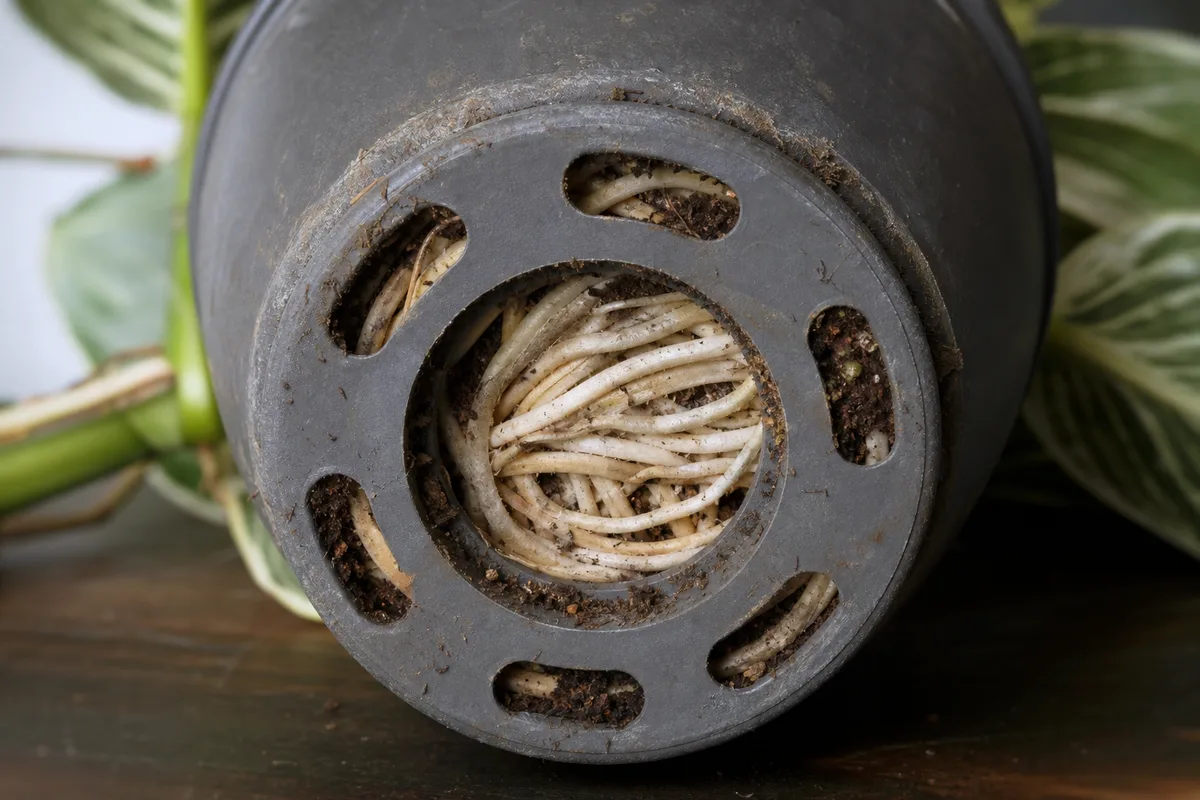
Choosing a pot is one of those houseplant jobs that looks simple until the plant starts arguing with the decision. A pot that is too small can dry out in a day, tip over, squeeze the root ball, and slow new growth. A pot that is too large can leave a wide ring of wet, unused potting mix around the roots, which is exactly where many indoor-plant problems begin.
The Pot Size Calculator gives you a practical starting diameter by comparing the plant’s current container, root ball width, growth habit, and the amount of extra root room the plant can actually use. It is built for indoor plants and container-grown patio plants, not for field planting or landscape bed spacing. Use the result as a measured next step, then check it against the plant in front of you.
The calculator helps answer one narrow question: what pot diameter should I choose next? It does not diagnose every care issue, and it does not decide whether repotting is needed in the first place. For that, you still need to inspect roots, soil condition, drainage, watering behavior, and plant stability.
The output is most useful when you already know the current pot diameter and can estimate the root ball width. For most healthy houseplants, the next pot should be modestly larger than the current root mass. Illinois Extension gives the same practical warning: do not place a small plant into a large pot because the soil can stay wet too long, and moving up one pot size usually means choosing a container 1-2 inches larger in diameter.
That is the core idea behind the calculator. It favors a small increase when the plant is healthy, actively growing, and only mildly root-bound. It becomes more conservative when the plant is stressed, recently propagated, slow growing, planted in heavy mix, or likely to sit in lower light.
The tool does not replace a root check. If the plant is declining, yellowing, wilting in wet soil, or smelling sour at the base, pot size may be only part of the problem. In that case, use the calculator after you inspect the roots, not before.
It also does not guarantee that a larger pot is the right move. A plant can look crowded because the top growth is wide while the roots are still modest. Some plants naturally prefer a snug pot for longer than others. Some are top-heavy and need a heavier container more than they need extra diameter. Some need fresh potting mix, better drainage, or a more stable cachepot rather than a larger root zone.
The result should not override species-specific care. A compact snake plant in bright light and gritty mix can tolerate a different setup from a thirsty peace lily in a warm room. A trailing pothos may look huge because of vine length while still having a manageable root ball. A large-leaved monstera deliciosa may need both a larger pot and a sturdier support system.
For small and medium houseplants, the safest default is usually one pot size up: about 1-2 inches wider than the current pot or root ball. For larger floor plants, a 2-4 inch increase can be reasonable when the root ball is genuinely filling the old container and the plant is growing strongly.
This is not just a tradition passed around by plant shops. RHS advises choosing a houseplant pot 5-10 cm, or about 2-4 inches, larger in diameter than the current pot when potting on for future growth, and it also notes that houseplants are often best potted on in spring so they can establish during the growing season (RHS houseplant guide). For smaller containers, that upper end may be too much; for a 4-inch nursery pot, jumping to an 8-inch pot is usually a big change in soil volume.
The calculator treats those rules as a range, not a command. A healthy 6-inch pothos with roots circling the pot might move to 7 or 8 inches. A stressed 6-inch calathea in dense, damp mix may be better in the same pot with fresh mix, or in only a slightly wider container, until root health improves.
The danger in an oversized pot is not the plastic, ceramic, or terracotta itself. The danger is the extra potting mix that stays wet outside the active root zone. Roots need both moisture and oxygen. If the mix remains saturated, the air spaces around roots shrink, and the plant becomes more vulnerable to root decline.
RHS explains the same mechanism in container culture: overly large pots can leave excess compost waterlogged, and waterlogging displaces air around roots, which can cause roots to rot (RHS container guidance). Illinois Extension is even more direct about drainage, noting that wet soils favor root rot because they leave little space for air to reach roots (Illinois drainage guidance).
This is why pot size and watering schedule cannot be separated. A bigger pot changes the drying pattern. The top inch may feel dry while the lower, outer ring is still wet. If you keep watering on the old schedule, the plant may look thirsty from root stress even though the pot is actually too wet.
The calculator starts from the root ball, not from the leaf spread. Leaf spread matters for stability, but root volume is what determines how much potting mix the plant can colonize. A plant with a 5-inch root ball usually needs a different next pot than a plant with an 8-inch root ball, even if both have similar foliage width.
The basic estimate is:
The most common result is one size up. That is deliberate. A calculator that tells everyone to buy a much bigger pot will feel convenient once, then create watering problems for months.
Measure the current pot across the inside top rim if possible. Decorative pots often flare outward, so the outside diameter can exaggerate the usable planting space. Nursery pots can also be listed by trade size rather than exact inches, so a quick tape measure is more reliable than the label.
If the plant can be lifted safely, slide it out and look at the root ball. Firm, pale roots wrapping lightly around the outside suggest the plant can use a small upgrade. A dense mat of circling roots, roots emerging from drainage holes, or potting mix that dries within a day suggests the plant may be ready for more room. UMN Extension lists several repotting signs for Monstera deliciosa, including roots growing from the bottom, potting soil drying within 24 hours, easy removal of the whole root ball, dull growth, and the plant outgrowing its container (UMN Monstera guidance).
Do not force a root inspection on a fragile plant unless you have a reason. For brittle succulents, freshly rooted cuttings, orchids in chunky bark, or plants with delicate rhizomes, use visible signs first: drying speed, stability, drainage behavior, and whether roots are showing at the holes.
Roots tell you whether the plant needs more space, a better mix, or less disturbance. Healthy roots are usually firm. Depending on the species and medium, they may be white, cream, tan, green, or light brown. Troubled roots often look mushy, hollow, dark, or smell sour.
If roots are firm and circling the outside, the calculator’s normal one-size-up recommendation is usually reasonable. If roots are sparse inside a large mass of wet soil, sizing up makes little sense. The better move may be to remove soggy mix, trim only dead roots, and repot into a container that fits the reduced root system.
If the plant is severely root-bound, do not assume the answer is a huge jump. A tight root ball often needs loosening, fresh mix, and a manageable pot increase. If you put a hard, compact root mass into a large pot without teasing or adjusting the outer roots, water may still run around the root ball instead of hydrating it evenly.
Diameter is the main number, but depth and shape matter. Shallow-rooted plants do not always benefit from a deep pot, especially if the lower mix stays wet. Top-heavy plants may need a heavier container or wider base even when the root ball does not need much extra room.
RHS notes that large containers dry more slowly than small ones, shallow containers dry quickly, and tall narrow containers can be prone to blowing over or tipping with tall plants (RHS container sizing). Indoors, the same logic applies on a smaller scale. A tall ceramic pot may steady a cane plant, but a deep wet column of mix can be a problem if the root system is shallow.
For plants with heavy top growth, separate two decisions: root room and physical support. If the root ball only needs a slight increase, choose a slightly wider inner nursery pot and place it inside a heavier decorative outer pot. That gives stability without forcing the roots into too much wet mix.
A correctly sized pot still needs a drainage path. A pot without holes turns every watering into a guess because excess water has nowhere reliable to go. If you love a decorative container, use it as a cachepot and keep the plant in a draining liner pot.
Illinois Extension says a hole at the bottom of a container is critical because it lets water drain freely so adequate air is available for roots (container drainage). RHS also advises that houseplant containers should have drainage holes and that plants should drain thoroughly after watering, with water-filled saucers emptied afterward (RHS watering guidance).
This matters more after repotting. Fresh mix often holds water differently from old compacted mix. A larger pot adds more medium. A cachepot can trap runoff. Put those together, and a plant that used to be forgiving can suddenly stay wet much longer than expected.
Pot material does not change the root ball size, but it changes how quickly the setup dries. Unglazed terracotta loses moisture through its walls and can be helpful for plants that prefer a faster dry-down. Plastic and glazed ceramic hold moisture longer and can work well for tropical plants that dislike drying hard, provided the pot has drainage.
Use material as a correction factor, not as a substitute for size. If the calculator suggests a 7-inch pot, a 7-inch terracotta pot and a 7-inch glazed ceramic pot may behave differently in the same room. The glazed pot may need a lighter mix or a slower watering rhythm. The terracotta pot may need more frequent checks in hot, dry conditions.
Self-watering containers need extra caution. Illinois Extension notes that self-watering pots can be useful for vegetables and tropical houseplants, but plants that need to dry out, such as many cacti and succulents, usually do not warrant that setup (self-watering containers). If your plant hates constant moisture, do not use a larger self-watering pot just because the diameter looks right.
Pot size and soil mix work together. A small pot with a dense, peat-heavy mix can stay wet longer than expected. A larger pot filled with a chunky, high-porosity aroid mix may dry faster than a smaller pot of compacted old medium. This is why the calculator’s result should be paired with mix choice.
RHS defines porosity as the spaces in a growing medium that hold water and air, and notes that high porosity can help prevent waterlogging while low porosity can lead to poor drainage and less oxygen around roots (RHS growing media guide). That makes porosity one of the hidden variables behind pot-size decisions.
If the plant needs a larger pot but you are worried about overwatering, adjust the medium before you overcorrect the pot size. Use the Soil Mix Calculator to think through drainage and water retention, especially for aroids, succulents, ferns, and plants recovering from root trouble.
Imagine a pothos in a 5-inch nursery pot. The vines are long, but the root ball is about 4.5 inches wide. Roots are visible at the drainage holes, the pot dries in three or four days in bright indirect light, and the plant is pushing new leaves.
The calculator would likely suggest a 6-inch pot, possibly 7 inches if the root ball is dense and the plant is vigorous. An 8-inch pot would usually be too much for this plant because the foliage length makes it look larger than the root system. The better upgrade is a modest increase, fresh airy mix, and a pot with drainage.
After repotting, the watering rhythm should be checked rather than copied from the old pot. Illinois Extension notes that watering frequency is affected by plant type, temperature, humidity, light, pot size, plant size, potting mix, and drainage (houseplant watering factors). In this example, the new pot should stay moist slightly longer than the old one, but it should not remain heavy and wet for a week.
Now imagine a monstera in a 10-inch pot. The plant is leaning, roots are circling the root ball, and the pot dries rapidly despite thorough watering. The leaves are large, and the plant has a support pole that no longer anchors well.
The calculator may suggest a 12-inch pot, or possibly a 14-inch pot if the root ball is genuinely wide and the plant is in active growth. The stability issue matters, but it should not be solved only by adding soil volume. A heavier pot, a better support, and a mix that drains well may matter as much as diameter.
If the root ball is only 8 inches across but the foliage is enormous, the answer changes. The plant may need staking or a heavier cachepot more than a big jump in root space. A pot-size calculator can surface that mismatch because it asks about roots rather than only plant height.
Consider a compact succulent in a 4-inch pot. The plant looks healthy, but the current container is deep and glazed, and the mix stays damp for a long time. The leaves are firm, the roots are not crowded, and growth is slow.
The calculator may recommend staying close to the current diameter rather than sizing up. The best move could be a shallower 4- or 5-inch terracotta pot with a gritty mix and a drainage hole. The plant does not need more soil around its roots; it needs a setup that dries at the right pace.
This is a common case where “repotting” does not mean “larger pot.” It means a better matched pot. If the plant is already in too much wet medium, a smaller or shallower container may be the healthier correction.
Stay in the same pot when the roots are sparse, damaged, recently trimmed, or not filling the current container. Also stay put when the plant was recently bought, shipped, divided, propagated, or moved into a dramatically different light level. A second major change can slow recovery.
You may also keep the same size when the plant needs fresh mix but not more room. Remove degraded medium, check the roots, and repot into the same container or a clean pot of the same diameter. This is useful for plants that are at the maximum size you want to maintain.
If the plant is in a pot that is too large, do not be afraid to go down. RHS leaf-damage guidance specifically advises checking roots and repotting into a smaller container when a houseplant is in a pot too large for the root system (RHS leaf damage guidance). Downsizing can feel backward, but it often fixes the moisture pattern.
Going bigger than one size can make sense when the plant is large, vigorous, root-filled, and clearly able to use the added volume. Floor plants with woody stems, large aroids in active growth, or container shrubs on a bright patio may justify a larger jump than a small desk plant.
Even then, look for supporting conditions. The plant should have strong light, a suitable mix, warm enough temperatures for active growth, and a pot with good drainage. If the plant will sit in low winter light, a big jump is riskier because root activity and water use may slow down.
Large jumps are also more defensible when the current pot is genuinely undersized for stability. A tall plant that tips easily can be unsafe and stressful to maintain. Still, try to solve stability with pot weight, support, and shape before assuming the roots need a huge volume increase.
Once you choose the new pot, water thoroughly, let excess water drain, and then reset your expectations. The new pot will not behave exactly like the old pot. It may hold moisture longer. It may dry unevenly while roots grow into the fresh medium. The plant may pause visible growth while it adjusts.
Check moisture by pot weight, finger test, or a wooden skewer rather than by calendar alone. RHS advises checking whether a pot needs water before watering routinely, and notes that dry pots feel lighter than wet pots (RHS houseplant watering). That habit becomes especially important after a size change.
Watch new growth, not old scars. A yellow leaf that was already failing may still drop. A torn leaf will not repair itself. The useful signs are firm new roots, leaves that emerge normally, steady hydration, and a pot that dries at a predictable pace.
The first mistake is buying for the plant you hope to have in two years. Indoor plants do not need a future mansion; they need enough root room for the next growth phase. Too much unused mix makes watering harder, not easier.
The second mistake is measuring foliage instead of roots. Leaf spread helps you judge balance, but the root ball decides the planting diameter. A trailing plant can look huge while still needing only a modest pot. A compact plant can have an unexpectedly dense root system.
The third mistake is using gravel inside the bottom of the pot as a drainage fix. Illinois Extension explains that a gravel layer inside an individual pot does not improve drainage because water can perch in the soil above the gravel until air spaces fill (gravel drainage myth). Use a proper drainage hole and a suitable mix instead.
The fourth mistake is ignoring the outer pot. A nursery pot inside a decorative cachepot is a good system only if runoff is emptied. If water collects in the outer pot, the plant can sit in water even though the inner pot has holes.
Pot size is rarely an isolated decision. If your result suggests a larger pot but the plant is showing yellow leaves, check whether the issue is moisture, nutrients, light, or root health first. The Root Rot Checker is a better next step when the plant is declining in wet soil. The Watering Schedule Calculator can help reset your rhythm after changing pot diameter.
If the plant is growing slowly, compare the result with slow growth and root-bound symptoms. If the pot is clearly too big, read pot too large before watering more. If roots are crowded or escaping from the pot, pot too small can help confirm what you are seeing.
Plant pages add the species layer the calculator cannot fully carry on its own. Use the result alongside care guides for plants such as fiddle leaf fig, zz plant, spider plant, and aloe vera because each one responds differently to root restriction, moisture, and disturbance.
The right pot size is the smallest container that gives healthy roots enough room for the next stage of growth without surrounding them with more wet mix than they can use. For many houseplants, that means one size up. For large, vigorous plants, it may mean a wider jump. For stressed plants, slow growers, and plants in heavy or wet mix, it may mean staying the same size or even moving down.
Use the Pot Size Calculator as a disciplined starting point: measure the current pot, look at the root ball, account for plant vigor, and choose a container with drainage. Then adjust watering and observation after the move. A good pot-size decision should make care easier, not create a bigger moisture problem in a prettier container.
This Pot Size Calculator was researched and written by . Logic, safety notes, and result copy for Pot Size are reviewed against LeafyPixels plant-care data, extension references, and veterinary toxicity sources where pet safety is involved.
We prioritize sources that hold up under scrutiny:
The LeafyPixels editorial team then reviews the draft for clarity, step-by-step usefulness, and fit with real apartment and home conditions-not ideal greenhouse setups. When guidance changes materially, we update the page and note the revision date.
The long-form review for this page covers Pot Size Calculator. Its bottom source list includes 8 external citations pulled from the long-form guide, then deduplicated with the tool’s frontmatter sources.
The ideal pot size is generally 1 to 2 inches larger in diameter than the plant’s current root ball for small to medium plants, and 2 to 4 inches larger for larger plants. Going too large causes the soil to hold excess moisture that the roots cannot absorb, increasing the risk of root rot. Our pot size calculator helps you determine the optimal next pot size based on your plant’s current size and growth stage.
An oversized pot holds far more soil than the plant’s roots can use, causing the unused portions to stay wet for extended periods and creating ideal conditions for root rot and fungal disease. Plants in pots that are too large also tend to focus energy on root expansion rather than leaf and stem growth, resulting in slow top growth. Choosing a pot that is only slightly larger than the root ball gives plants the best conditions to thrive.
Yes, pot material significantly impacts how quickly soil dries out. Terracotta pots are porous and allow air and moisture to escape through their walls, making them ideal for succulents and plants that prefer to dry out between waterings. Plastic and glazed ceramic pots retain moisture longer, which suits tropical plants that prefer consistently moist soil. Choosing the right material for your plant type is just as important as choosing the right size.
Most indoor plants benefit from repotting every one to two years, or when you notice roots circling the bottom of the pot, growing out of drainage holes, or pushing the plant up out of the soil. Fast-growing plants like pothos and monstera may need repotting annually, while slow growers like cacti and snake plants can go several years between repottings. Repotting in spring at the start of the growing season gives plants the best chance to establish in their new pot.
For most houseplants, increasing pot size by 1 to 2 inches is the standard recommendation, as it provides enough room for root growth without excess moisture retention. However, if a plant is severely rootbound with tightly compacted roots, going up two sizes may be appropriate. Some plants like peace lilies and spider plants actually bloom or produce pups more readily when slightly rootbound, so repotting into too large a pot too soon can reduce flowering.