Repotting Calculator
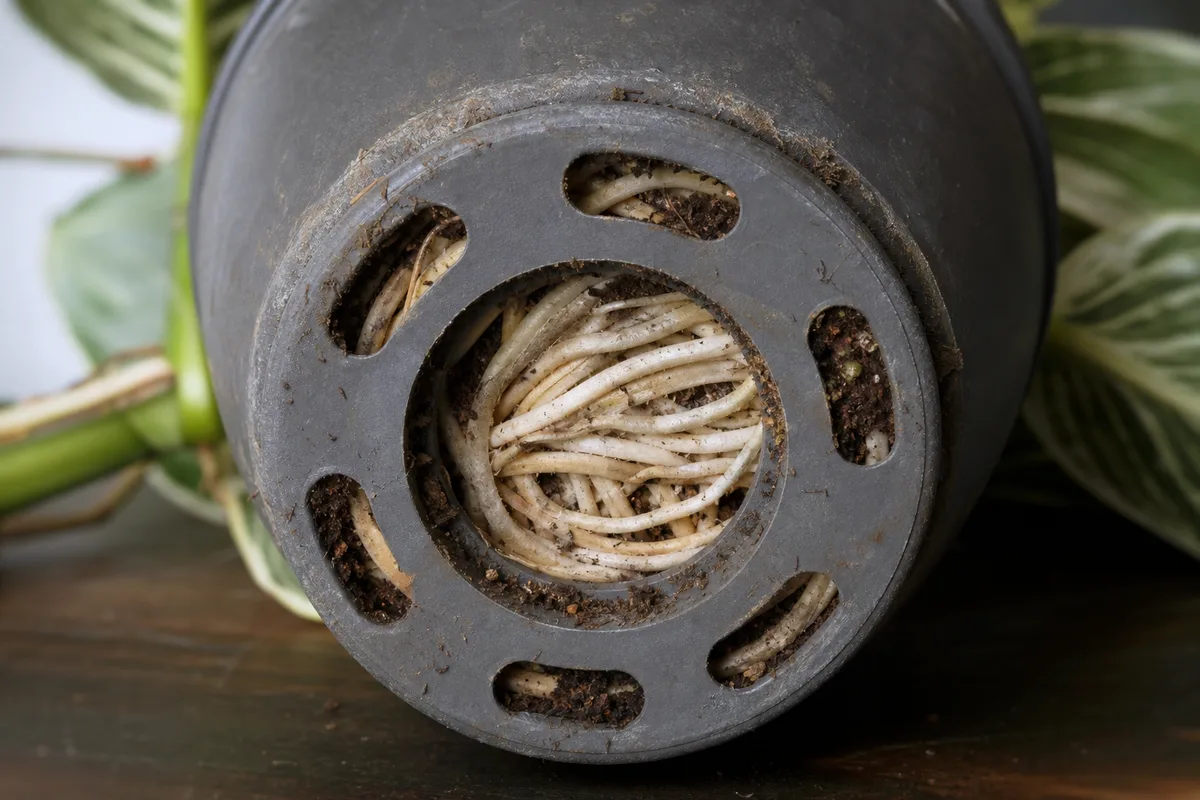
Repotting looks simple until the plant gives mixed signals. Roots may be circling the pot, but the plant may still be growing well. Soil may dry out fast because the pot is crowded, or because the room is brighter and warmer than it was a month ago. A plant may lean because it is top-heavy, root-bound, recently moved, underwatered, or sitting in a cache pot that never drains properly.
The Repotting Calculator gives those signals a structure. Instead of deciding from one symptom, it weighs the condition of the roots, pot size, soil behavior, growth rate, season, and current stress level. The goal is not to push every plant into a bigger pot. The goal is to decide whether repotting is helpful now, whether you should wait, or whether the better fix is a smaller correction such as refreshing mix, improving drainage, changing watering, or checking for root rot.
What the calculator decides
The calculator estimates how strongly your plant is asking for a repot. It treats roots as the strongest evidence, then adjusts the result for pot size, recent growth, moisture behavior, season, and warning signs above the soil. That matters because a single clue can be misleading. Roots visible at one drainage hole may mean the plant is ready for more room, but a few exploratory roots do not always mean an emergency. A plant that wilts soon after watering may be crowded, but it may also be in a hot room, a porous terracotta pot, or a mix that no longer absorbs water evenly.
Use the result as a decision aid. A high score means the plant likely needs a bigger container, fresh potting mix, root work, or a closer root inspection. A medium score means you should look for a second sign before disturbing the plant. A low score means repotting is probably not the first move, especially if the plant is dormant, stressed, newly purchased, flowering, or recovering from another care change.
The calculator does not identify every disease, choose a species-specific potting mix, or guarantee recovery after root damage. If the roots are brown, mushy, sour-smelling, or collapsing, shift from timing into diagnosis and use the root rot risk checker or the root rot guide before you size up.
The evidence that matters most
Root evidence should carry more weight than leaf evidence. Leaves react to light, temperature, humidity, pests, fertilizer salts, and watering mistakes. Roots tell you whether the container itself is still working. Penn State Extension lists common repotting signals such as roots growing out of the container, soil drying quickly, tipping from an overgrown plant, and a dull plant that has stopped growing when a plant is potbound.
The best inspection is direct. Slide the root ball out gently when the mix is slightly moist, not bone dry and not soggy. A healthy, mildly crowded plant usually has visible roots around the outside while some potting mix remains between them. A severely bound plant may come out as a firm cylinder, with roots circling the wall and bottom of the pot. A root-damaged plant may have too few firm roots to justify a larger pot even if the foliage is large.
The calculator therefore treats “roots circling heavily” differently from “one root through a hole.” It also treats “pot dries within a day” differently from “top inch dries quickly.” Fast surface drying can happen in warm, bright rooms, while a root ball that drains immediately and cannot hold moisture often points to crowding or hydrophobic old mix.
Measure the current pot diameter across the top, then note whether that is the nursery pot or the decorative outer pot. The calculator needs the container that actually holds the root ball. Cache pots, baskets, and sleeves can hide drainage problems, but they are not the functional pot size unless the plant is planted directly in them.
Check the plant’s recent growth. New leaves, longer vines, active roots, and faster water use make repotting more tolerable because the plant has energy to rebuild fine roots. A plant that has not grown for months may still need repotting, but stalled growth alone is weak evidence unless it appears with crowded roots, stale mix, or clear container limits.
Describe the soil honestly. Old potting mix can compact, repel water, or stay wet too long. University of Maryland Extension’s indoor repotting guidance emphasizes using new potting mix under the root ball and setting the root ball below the rim so there is headroom for watering when repotting indoor plants. That headroom matters because a pot filled to the brim sheds water instead of letting it soak through the mix.
Finally, note season and stress. Spring is often the easiest window because many houseplants are entering active growth; Penn State Extension describes spring as the best time to repot when plants naturally begin seasonal growth for houseplants. The calculator can still recommend action outside spring when the roots are clearly failing or the pot is causing harm, but the recovery risk is different.
How the scoring logic works
Think of the calculator as a weighted checklist, not a calendar. It begins with root pressure: roots through drainage holes, circling roots, a lifted root ball, cracked plastic, or a plant that dries so fast that watering no longer reaches the whole root zone. It then adds growth and plant balance: top-heavy foliage, stalled new leaves, a plant that tips easily, or a specimen that has outgrown its support.
Next it adjusts for container behavior. A pot without drainage, a pot that is far larger than the root ball, or a pot that sits inside standing water can create symptoms that look like “needs repotting” but actually mean “needs a safer container setup.” University of Maryland Extension notes that containers need adequate holes or slits to drain excess water and help prevent roots from drowning and rotting in container culture. For houseplants, that principle is just as important as the diameter.
The final adjustment is timing. Active growth raises confidence. Winter, low light, recent pest treatment, recent shipping stress, flowering, or root rot lowers confidence unless the current pot is actively making the problem worse. The output should feel like a practical next step: repot now, inspect roots first, wait and monitor, refresh the top layer, improve drainage, or use a different diagnostic tool.
Choosing the next pot size
Most houseplants do better with a modest size increase than a dramatic jump. A common extension-backed rule is to move to a pot about one size larger, often around 1 to 2 inches wider for many indoor plants. UNH Extension cautions that a repotting container should be no more than two inches larger in diameter for indoor plants.
That rule is about water management, not neatness. Extra potting mix beyond the root zone stays wet longer because roots are not using that water. In a warm greenhouse, that extra volume may dry acceptably. In a cool apartment corner, it can remain saturated long enough to stress roots. If you are unsure, choose the smaller reasonable increase and pair it with a better mix.
There are exceptions. Very large floor plants may move up by more than two inches if the root ball is already big, stable, and vigorous. Tiny plants and succulents may need less. Plants with root loss after rot may need the same size pot or even a smaller one after damaged roots are removed. The calculator should push you toward a diameter range, then your root inspection should confirm whether the plant has enough healthy root mass to use that space.
When not to size up
Do not size up just because a plant looks sad. Yellowing, drooping, brown tips, leaf curl, and slow growth can all come from water, light, pests, fertilizer salts, cold drafts, or poor drainage. If the current pot is already much larger than the root ball, a bigger pot makes the core problem worse. Use the plant problem diagnosis tool when symptoms are broad and the roots have not been checked.
Do not size up when roots are rotting. Mushy brown roots cannot colonize fresh wet mix. In that case, the better sequence is to prune dead tissue, use fresh airy mix, choose a pot that matches the remaining healthy roots, and stabilize watering. Missouri Botanical Garden describes root rot as a condition favored by excess soil moisture and poor drainage around houseplant roots, so a larger wet reservoir is usually the wrong correction.
Do not size up purely for aesthetics. Decorative pots can be useful as outer sleeves, but the inner nursery pot still needs drainage and an appropriate diameter. If the decorative pot is too large, keep the plant in a correctly sized inner pot and use a riser so it does not sit in runoff.
Repotting, potting up, and refreshing mix are different jobs
People use “repotting” for several different tasks. Potting up means moving the plant into a larger container. Repotting can also mean replacing old mix while keeping the same pot size. Top-dressing means removing and replacing only the upper layer of mix. Root pruning means reducing part of the root mass so a plant can stay in the same or similar container.
The calculator is most useful when you know which job you are considering. A young pothos with roots filling a 4-inch nursery pot may need potting up. A large snake plant in a stable pot may only need a mix refresh and division later. A floor plant that is already as large as you can handle may need root pruning rather than another size increase.
Root pruning is a higher-disturbance job. University of Maryland Extension describes cutting into healthy roots at intervals and removing dead brown roots as part of indoor repotting steps for an established root ball. Use that approach with restraint indoors. If the plant is rare, weak, or slow-growing, remove less root mass and prioritize stable aftercare.
Worked example: crowded pothos in spring
Suppose a pothos is in a 6-inch nursery pot. It has active new leaves, roots coming from several drainage holes, and the whole root ball slides out as a dense but healthy cylinder. The mix dries within two days even after a thorough watering, and the plant is in bright indirect light during spring.
Those inputs point strongly toward potting up. The root evidence is direct, the plant is actively growing, and the fast drying is consistent with a crowded container rather than only hot weather. A reasonable next step is an 8-inch pot with drainage and a fresh, general indoor mix. If the old root ball is tightly circling, gently loosen the outer roots before setting it into the new mix.
The calculator would likely return “repot now” or “high confidence.” The human check is simple: confirm that the roots are firm and light to tan, not soft and sour-smelling. If they are healthy, the pot size increase solves the bottleneck. If you also need a mix estimate, pair the decision with the soil mix calculator or soil volume calculator.
Worked example: drooping peace lily in an oversized pot
Now take a peace lily in a 10-inch decorative pot with no visible inner nursery pot. The foliage droops, the top inch feels dry, but the lower mix is wet and heavy. There are no roots at the drainage holes because there are no drainage holes. The plant has produced little new growth, and it sits in a cool room away from a window.
Those inputs should not produce a simple “go bigger” answer. The pot is already too large or poorly drained for the root system. The droop could be water stress, but the lower root zone is wet, which raises concern for oxygen-starved roots. University of Maryland Extension’s watering guidance warns that watering by schedule can lead to too much or too little water and recommends checking soil moisture below the surface before watering.
The better next step is inspection. Remove the plant, check for firm roots, trim dead roots if needed, and move it into a draining pot that matches the healthy root mass. If the roots are mostly healthy, fresh mix and a better container may be enough. If roots are damaged, treat it as a root recovery case and avoid fertilizer until the plant is stable.
Worked example: succulent in a pretty pot
A succulent in a 4-inch pot may look cramped because the rosette is wider than the container. That alone does not mean it needs a big upgrade. Many succulents prefer snug containers and fast-draining media. UNH Extension notes that succulents should be held snugly if repotted and that they dislike wet or damp soil in winter care guidance.
If the succulent has firm roots, healthy new growth, and mix that dries normally, the calculator should lean toward “wait” or “repot only if roots demand it.” If roots are densely circling and growth has stalled during active season, move up only slightly and use a gritty, free-draining mix. Do not jump from a 4-inch pot to an 8-inch decorative bowl unless several plants are being arranged together and the drainage plan is clear.
This is where plant type matters. Tropical foliage plants, succulents, palms, African violets, cacti, orchids, and bulbs do not all want the same root environment. The calculator can flag container pressure, but species habit should temper the final decision. When the plant type is the uncertain input, check the species page under /plants/ before changing the pot.
Season changes the risk
Spring and early summer usually give the cleanest repotting window for indoor plants because light is improving and many species are ready to produce roots. Penn State Extension describes spring as the preferred time to repot many houseplants during active growth. A spring result can therefore be acted on with more confidence when roots and growth agree.
Late fall and winter are different. Lower light slows water use, indoor heating dries leaves while cool windows chill root zones, and new roots may form slowly. Repotting in winter is not forbidden; it is simply less forgiving. If the plant is stable but only mildly crowded, waiting is often better. If the plant is unstable because the pot has no drainage, the roots are suffocating, or the mix has collapsed, repotting may still be the safer option.
The calculator’s season input should never override an urgent root problem. It should change how aggressively you act. In spring, you might pot up and loosen the root ball. In winter, you might inspect, replace sour mix, keep the pot size conservative, and stabilize light and watering before making additional changes.
Reading the result without overreacting
A calculator result is strongest when it explains direction. “Repot now” means enough evidence points to container pressure or unsafe mix that waiting is likely to cost more than disturbance. “Inspect first” means above-soil symptoms are not enough. “Wait and monitor” means the plant may be fine in the current pot if other conditions are corrected.
Avoid treating the output as a command. If a plant is rare, recently shipped, freshly divided, blooming heavily, or already stressed by pests, the cost of disturbance is higher. If the plant is common, vigorous, and clearly pot-bound, the cost is lower. The same score can deserve different timing depending on plant value and recovery capacity.
The most useful follow-up is to write down the reason for the result. “Roots circling plus spring growth” is different from “top-heavy but no root check.” That note helps you decide what to watch over the next few weeks. If the plant improves after repotting, future decisions become easier. If it declines, you know which assumption may have been wrong.
Aftercare affects whether repotting works
Repotting is not finished when the plant enters the new pot. Water thoroughly enough to settle mix around the roots unless you are handling a species that needs a drier post-repot routine. Let excess water drain fully. Keep the plant in stable light, avoid cold drafts, and do not combine repotting with heavy pruning, fertilizer, pest treatment, and a major location change unless the plant truly needs it.
Fertilizer is usually not the first aftercare move. Fresh potting mix may already contain nutrients, and disturbed roots are less able to handle salts. Give the plant time to restart growth before feeding. If the plant was repotted because of root rot, wait for signs of recovery before adding fertilizer at all.
Expect some adjustment. A few older leaves may yellow, and growth may pause while roots explore the new mix. Judge success by firm stems, stable moisture use, and healthy new growth, not by whether old damaged leaves repair themselves. Use the plant watering calculator after repotting because the same plant in a new pot may dry at a different pace.
The first mistake is measuring the wrong pot. A decorative outer pot may be 10 inches wide while the plant is actually growing in a 6-inch plastic liner. The root system only experiences the liner. Record both if the outer pot affects airflow or traps water, but use the inner pot for size.
The second mistake is guessing root condition from foliage alone. A plant can look thirsty with wet roots if root rot has reduced uptake. It can also wilt in a small pot simply because the root ball dries too fast. The calculator becomes much more accurate when you actually slide out the root ball.
The third mistake is ignoring light. A plant in brighter light uses water faster and may appear to need repotting sooner. A plant in low light may stay wet in the same pot for much longer. If you recently moved the plant, use the light requirement calculator or humidity calculator to separate room conditions from pot problems.
The fourth mistake is choosing the pot you want instead of the pot the roots can use. A beautiful oversized pot can be used as a sleeve. It should not force the plant into a volume of wet mix it cannot occupy.
Use the Repotting Calculator when the main decision is timing and container fit. Use another tool when the main uncertainty is diagnosis, watering, soil recipe, or environmental stress. If leaves are yellowing before you have inspected roots, start with yellow leaves diagnosis. If the plant droops repeatedly, compare the repotting result with drooping leaves diagnosis. If roots are dark and soft, prioritize root rot risk checker.
For material planning, use the pot decision first and the mix quantity second. The pot size calculator helps translate the recommended step-up into a practical container range. The soil volume calculator helps estimate how much mix is needed, especially for larger floor plants where bag sizes matter.
For plant selection, move outward from the pot. If a plant repeatedly outgrows your space, dries too fast, or becomes hard to manage, the issue may not be one repotting decision. It may be plant-room fit. In that case, a finder such as best plant for my room may prevent the same problem from returning.
When to ask for human help
Most routine repotting is manageable at home. Human help becomes more valuable when the plant is expensive, rare, very large, structurally unstable, or already declining fast. A large indoor tree can be damaged by rough handling. A rare aroid with root rot may need a recovery plan before it needs a bigger pot. A heavy ceramic container can also be a physical safety issue.
Ask a nursery specialist, extension office, or experienced grower when the calculator points to action but the root inspection conflicts with the result. For example, a plant may score high because it dries quickly and leans, but the root ball may be sparse because of rot. That is not a pot-up case. It is a recovery case.
Professional help is also sensible when the plant is tied to a larger installation, such as an office lobby, atrium, restaurant, hotel, or staged interior. In those settings, plant health, container weight, floor protection, irrigation, and replacement cost all matter. The calculator can prepare the question; a local professional can inspect the real site.
Conclusion
The Repotting Calculator is most useful when you treat repotting as a root decision, not a leaf reaction. Strong evidence comes from roots circling the pot, roots exiting drainage holes, a root ball that dries too fast to water evenly, a plant that has clearly outgrown its container, or old mix that no longer supports healthy watering. Weak evidence comes from vague sadness, one yellow leaf, or a decorative pot that makes you want a size change.
Use the calculator to decide whether to repot now, inspect first, wait, refresh mix, improve drainage, or diagnose a different problem. Then confirm the result with your hands: check the root ball, match the new pot to the healthy roots, keep the size increase modest, and give the plant stable aftercare. A good repot does not just give a plant more space. It restores the balance between roots, soil, water, air, and the room the plant actually lives in.