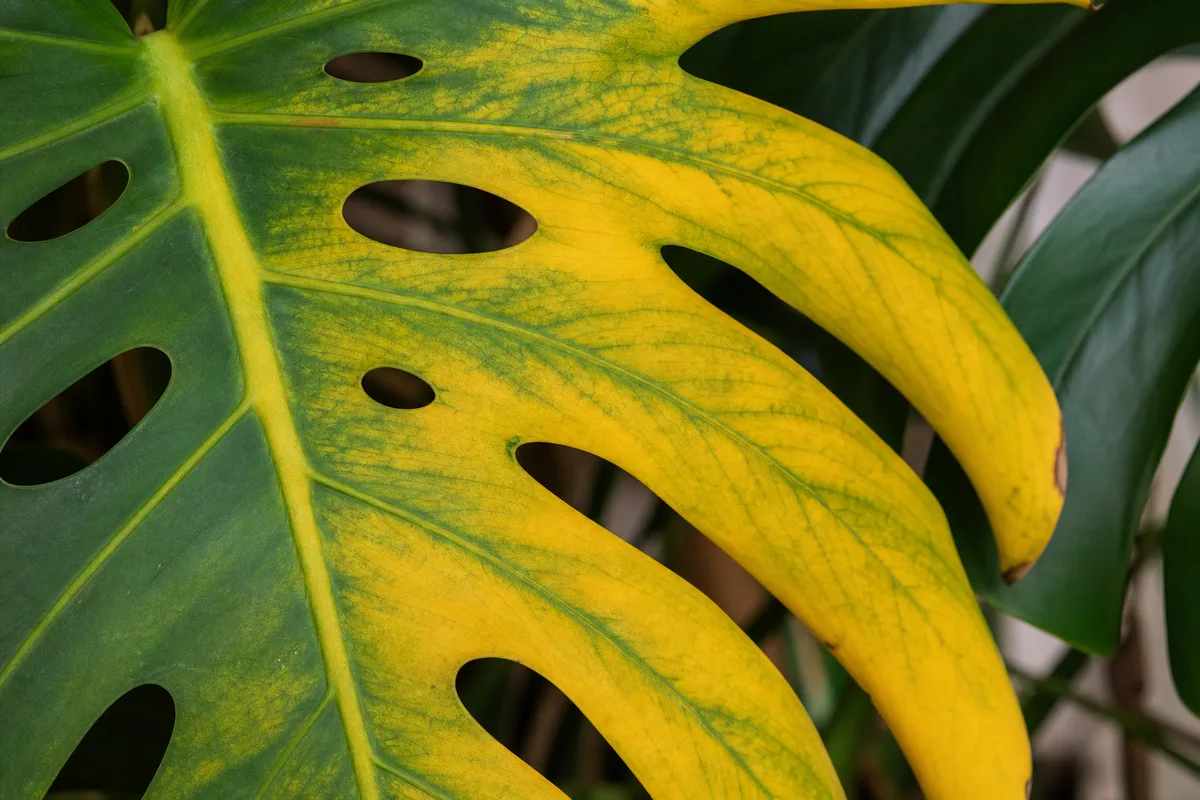
Yellow leaves are not a diagnosis by themselves. They are a signal that the plant has stopped maintaining normal green tissue in one place, and the reason can be as ordinary as an old lower leaf aging out or as serious as roots dying in a wet pot. The useful question is not simply “Why is this leaf yellow?” It is “Which pattern of yellowing matches what changed in the plant’s water, light, roots, nutrients, pests, or environment?”
The Yellow Leaves Diagnosis Tool is built for that pattern-matching step. It takes the clues you can see right now, compares them against the most common indoor-plant causes of chlorosis, and turns the mess into a shorter list of likely next checks. It works best when you use it before you fertilize, repot, treat pests, or move the plant across the room, because each extra intervention can blur the evidence.
Use the result as a practical triage guide, not as a laboratory diagnosis. A tool can help rank causes, but it cannot smell sour roots, test soluble salts, identify every pest under magnification, or know how long your soil stayed wet last week. Your job is to feed it honest observations, then confirm the top result with a physical check.
The tool focuses on yellowing leaves on indoor plants and patio plants managed like houseplants. It is most useful for problems involving overwatering, underwatering, low light, sudden light changes, nutrient stress, pest feeding, natural leaf aging, root damage, and transplant shock. Those categories overlap, so the tool does not try to force every plant into one neat answer.
Instead, it asks symptom questions that separate causes by pattern. Yellow lower leaves with wet soil point in a different direction from yellow new growth with green veins. A plant with dry, crispy margins needs a different first check than one with limp yellow leaves in a heavy pot. Fine stippling, sticky residue, cottony clusters, or webbing shift the investigation toward sap-feeding insects; Colorado State University lists aphids, scale insects, mealybugs, spider mites, thrips, and whiteflies among common houseplant pests that feed on plant tissue and weaken indoor plants (common houseplant pests).
The tool does not identify every disease, virus, mineral imbalance, or species-specific disorder. It also does not replace a soil test, pest identification under magnification, or advice from an extension office when a valuable plant collection is declining. Its value is narrower and more practical: it helps you avoid guessing from one symptom and gives you a sequence for checking the most likely causes first.
Why yellow leaves happen in plants
Leaves look green because chlorophyll is present and functioning. When a plant stops making enough chlorophyll, breaks chlorophyll down, or cannot move water and nutrients normally, leaf tissue can turn pale, yellow, or mottled. Plant-health guides often use “chlorosis” for yellowing associated with reduced chlorophyll, and Penn State Extension includes chlorosis among visible symptoms that can result from many different plant stresses rather than one single cause (chlorosis as a symptom).
That is why yellowing needs context. A leaf can yellow because it is old and being abandoned by the plant. It can yellow because the roots are too wet to function, too dry to supply water, too damaged to absorb nutrients, or too cold after a seasonal change. It can yellow because the plant is underlit, sunburned, deficient in a mobile nutrient, carrying pests, or reacting to a recent repot.
The key is pattern. Which leaves are yellow? Are they older or newer? Is the yellowing even, patchy, between veins, at margins, or dotted with tiny pale specks? Is the soil wet, dry, sour-smelling, compacted, or pulling away from the pot? Did anything change in the last two to four weeks? The tool is designed around those questions because the pattern usually tells you more than the color alone.
The observation checklist before you run it
Take two minutes to inspect the plant before entering answers. Look at the oldest leaves near the base, the newest leaves at the growing tips, the underside of several leaves, the stems, the soil surface, and the drainage holes. Lift the pot if you can. A heavy pot with limp yellow leaves tells a different story from a light pot with dry soil and crispy margins.
Check moisture at more than the surface. A dry top layer can sit above a wet lower root ball, especially in deep pots, cachepots, dense peat mixes, and containers without strong drainage. If you have a moisture meter, use it as a clue rather than a verdict; cheap meters can be misleading in airy bark mixes or salty soil. A wooden skewer, chopstick, or careful finger check through the upper mix often gives better texture information.
Look for pests before you assume the problem is nutrition. Spider mites often start as fine speckling before webbing is obvious. Scale can look like small brown bumps on stems. Mealybugs can hide in leaf axils and look like bits of cotton. Maryland Extension notes that indoor plant problems can come from insects, disease, watering errors, light problems, temperature stress, humidity, and fertilizer issues, which is why a diagnosis should start broadly rather than with one favorite fix (indoor plant problems).
Leaf position is one of the strongest clues. If one or two of the oldest, lowest leaves yellow while the rest of the plant is firm and producing healthy growth, natural aging is plausible. Plants routinely reallocate resources from older leaves, and a single aging leaf is not the same as a whole-plant decline.
Yellowing on new growth is more concerning. New leaves that emerge pale, yellow, small, or distorted can indicate light stress, nutrient availability problems, root damage, or pest pressure near the growing points. Interveinal yellowing, where tissue turns yellow while veins stay greener, deserves closer attention because it often points toward a nutrient uptake problem, pH-related availability issue, or root condition rather than simple old-leaf senescence.
Whole-plant yellowing usually means the issue is systemic. The plant may be underlit, overwatered, nutrient-starved, rootbound, chilled, or recovering from a major environmental change. When the whole canopy fades, do not treat one leaf. Work backward through the plant’s conditions.
Moisture clues are central because roots need both water and oxygen. Overwatering is not just “too much water once.” It is a root-zone condition where the mix stays wet long enough to reduce oxygen and damage root function. Clemson Cooperative Extension explains that overwatering houseplants can contribute to root rot because saturated soil limits oxygen around roots (overwatering and root rot).
Underwatering creates a different pattern. Leaves may yellow after repeated drought stress, but they often also wilt, curl, crisp at the edges, or feel thin and papery. The pot may feel unusually light, and the mix may shrink away from the container walls. Hydrophobic peat can make this worse: water runs down the sides and out the drainage holes while the center of the root ball stays dry.
The tool weighs these moisture clues heavily because many yellow-leaf mistakes begin with watering assumptions. A plant can look wilted when it is too wet because damaged roots cannot move water. That is why “drooping” alone is not enough. Pair drooping with pot weight, soil smell, drainage, and root appearance before deciding whether to water again.
Low light can slowly drain vigor from a plant. The plant may shed older leaves, stretch toward the window, produce smaller new leaves, or fade overall because it cannot support the same amount of foliage. Missouri Botanical Garden describes low light as a common environmental cause of weak growth, pale leaves, and leaf drop in indoor plants (low light symptoms).
Too much direct sun can also yellow or bleach leaves, especially after a plant moves from a dim interior to a bright window, balcony, or outdoor patio. That damage is usually more localized to exposed leaves and may include tan, bleached, or scorched patches. The timing matters: a sudden move to stronger light can cause damage even if the same species enjoys bright conditions after gradual acclimation.
When you answer the light questions, think in real placement terms. “Bright room” is not the same as bright plant light. A plant several feet from a window, behind curtains, under an overhang, or in a north-facing room may receive much less usable light than your eyes suggest. If the tool points toward low light, confirm by looking for stretched stems, long gaps between leaves, leaning growth, and slow drying soil.
Pests can cause yellowing through sap removal, cell damage, toxin injection, honeydew buildup, and general stress. The most useful early sign is often not a dramatic insect outbreak but a texture change: stippling, dull leaves, sticky residue, distorted new growth, or tiny pale dots that spread across the leaf surface.
Spider mites are especially easy to miss until populations are high. They often favor dry indoor air and leaf undersides, and their feeding can create pale stippling before leaves yellow and drop. Scale insects and mealybugs are slower-moving but can build quietly on stems, petioles, and protected leaf joints. The University of Maryland Extension recommends checking the undersides of foliage and leaf axils for insects or disease when selecting indoor plants, which is the same close-inspection habit useful during diagnosis (inspect leaf undersides).
If pest signs are present, isolate the plant before treating. Then identify the pest closely enough to choose a treatment that fits. A quick shower may reduce mites; hand removal may work for small scale infestations; insecticidal soap can help with soft-bodied insects when used according to the label. The tool can flag pest pressure, but treatment choice still depends on the actual pest and the plant’s sensitivity.
The shape of yellowing matters. Even yellowing of older leaves often points toward age, water stress, or mobile nutrient shortage. Yellowing between green veins suggests interveinal chlorosis. Tiny yellow dots or stippled patches suggest pest feeding. Yellow halos around dark spots point toward leaf-spot disease or tissue injury rather than a plain watering problem.
Missouri Botanical Garden describes chlorosis as yellowing that may be caused by nutrient deficiencies, poor drainage, root damage, high soil pH, compacted soil, or other conditions that interfere with normal plant function (chlorosis causes). That range is important. Seeing yellow between veins does not automatically mean “add fertilizer.” The plant may have nutrients in the pot but lack the root health or soil chemistry to use them.
For houseplants, the safest first step is to check root-zone basics before feeding heavily. Confirm that the pot drains, the mix is not staying saturated, the roots are not rotting, and the plant is not badly rootbound. Fertilizer can help a hungry plant in active growth, but it can stress a plant with damaged roots or dry soil.
The tool treats each answer as evidence. Wet soil, limp yellow leaves, sour smell, and recent frequent watering increase the likelihood of overwatering or root stress. Bone-dry mix, pot lightness, curled leaves, and crispy margins increase the likelihood of underwatering. Stippling, webbing, sticky residue, cottony clusters, or shell-like bumps increase pest probability. Pale new growth, interveinal patterns, and long-term low feeding increase nutrient-related possibilities, especially when root and moisture clues are not dominant.
The ranking is intentionally conservative. It does not jump straight to rare causes when ordinary care issues explain the pattern. It also does not treat every yellow leaf as an emergency. A plant with one yellow lower leaf and no spread should not receive the same warning as a plant with yellowing new growth, wet soil, and a rotting stem base.
Think of the result as a “most likely first checks” list. If the top result is overwatering, inspect roots and drainage before watering again. If the top result is pests, use magnification and isolate. If the top result is low light, improve placement gradually. If the top result is nutrient stress, make sure the plant is in active growth and not root-damaged before applying fertilizer.
Worked example: the wet pothos
Imagine a pothos with three yellow leaves near the base, limp stems, and soil that still feels damp eight days after watering. The pot sits inside a decorative cachepot with no visible drainage water removed after watering. There is no webbing, no sticky residue, and no obvious insect sign.
Those answers should push the tool toward overwatering or root stress. The next step is not to fertilize the yellow leaves. It is to remove the nursery pot from the cachepot, check whether water is sitting below it, smell the soil, and inspect drainage. If the root ball smells sour or roots are brown and mushy rather than pale and firm, root damage is part of the problem.
The least risky correction is staged. Stop watering until the root zone dries to an appropriate level for that species, improve drainage, empty the cachepot after watering, and remove leaves that are fully yellow. If roots are badly rotted, repotting into a fresh, airy mix may be necessary, but only after confirming the condition rather than guessing from leaf color alone.
Worked example: the pale monstera in a dim corner
Now imagine a monstera that has slowly faded over winter. Lower leaves are yellowing one at a time, new leaves are smaller, stems are stretching toward the window, and the soil stays wet for a long time even though watering has not increased. There are no pest signs and no recent fertilizer burn.
The tool should rank low light and secondary watering stress high. In this situation, the soil may be staying wet partly because the plant is not using water quickly in low light. Watering less helps, but it does not solve the underlying energy problem.
The practical move is to improve light gradually and adjust watering to the new drying rate. Shift the plant closer to a bright window or use a suitable grow light, then watch new growth over the next several weeks. Existing yellow leaves will not become perfect again. The success measure is slower yellowing, firmer stems, better drying rhythm, and healthier new leaves.
Worked example: stippled leaves on a calathea
A calathea has yellow-speckled leaves, dry-looking patches, and faint webbing near the leaf undersides. The soil is not soggy, and the pot is not unusually dry. The plant sits near a warm vent where air is dry.
Those answers should move pest pressure, especially spider mites, above fertilizer deficiency. The next step is isolation and close inspection. Hold a white sheet of paper under the leaves and tap gently; tiny moving specks suggest mites. Use magnification if possible, because early infestations can be hard to see.
Treatment should match the pest and the plant. Calatheas can be sensitive to harsh sprays, so test any product on a small area and follow label directions. Repeated cleaning and follow-up checks matter because pest eggs and hidden individuals can keep the cycle going.
When the result says nutrient deficiency
Nutrient stress is real, but it is overdiagnosed from yellow leaves alone. Nitrogen deficiency can yellow older leaves because nitrogen is mobile in the plant. Iron-related chlorosis often appears first on newer leaves because iron is less mobile. Magnesium deficiency can produce interveinal yellowing on older leaves in some plants. But houseplant nutrient symptoms are easily confused with wet roots, depleted potting mix, high soluble salts, low light, and pH-related availability problems.
Use the nutrient result as a prompt to review the whole system. How long has the plant been in the same potting mix? Is it actively growing? Has it been fertilized at all during the growing season? Is the mix compacted or waterlogged? Are roots healthy? A hungry, actively growing plant in a well-drained pot is a better fertilizer candidate than a stressed plant in a cold, wet, airless mix.
If feeding makes sense, use a balanced houseplant fertilizer at label rate or weaker, and avoid stacking fertilizer with repotting, heavy pruning, pest treatment, and a major light move on the same day. Old yellow tissue may not recover. Judge the result by new leaves and by whether yellowing slows.
When the result points to normal aging
Normal aging is the diagnosis people often miss because it feels too simple. A plant can shed old leaves while staying healthy, especially after seasonal change, relocation, flowering, new growth, or a shift in available light. The difference is scale and direction. One older leaf aging out is ordinary. Multiple leaves yellowing quickly, new growth yellowing, stems softening, or pests appearing is not ordinary.
If the tool points to normal aging, do less before you do more. Remove the fully yellow leaf if it comes away cleanly or trim it with clean scissors. Keep care steady. Watch the next two weeks for spread. A stable plant with healthy new growth usually does not need a dramatic correction.
Normal aging should be a relief, not an excuse to ignore the plant. If the same pattern repeats faster than expected, rerun the tool with updated details. The point is to avoid turning a harmless old leaf into an overwatering, overfertilizing, overrepotting spiral.
How to use the result without making things worse
Make one meaningful change at a time whenever the plant is stable enough to wait. If you move the plant, repot, fertilize, prune, water deeply, and spray for pests all in one afternoon, you may never know what helped or hurt. The plant may also have to recover from your intervention as well as the original stress.
Start with the least invasive confirmation step. Check soil moisture before watering. Inspect pests before spraying. Improve drainage before blaming nutrition. Move a plant gradually toward better light rather than shocking it with direct sun. If roots are the suspected issue, unpot carefully and only when the evidence justifies it.
There are exceptions. A plant sitting in standing water should be drained immediately. A pest-heavy plant should be isolated. A plant with a rotting stem base may need urgent propagation or pruning. But most yellow-leaf cases benefit from calm sequencing rather than panic care.
The tool cannot know the plant’s exact species tolerance unless you pair it with plant-specific care information. A fern, snake plant, calathea, citrus tree, pothos, and succulent can all yellow for different reasons under the same room conditions. Use the diagnosis with LeafyPixels plant profiles when species matters, especially for plants with unusual moisture, light, or humidity needs.
It also cannot see local water chemistry, salt buildup, cold drafts, heat vents, pesticide injury, herbicide exposure, viral disease, or a root ball that is dry in the center and wet around the edges. It cannot tell whether a nursery recently shifted the plant from greenhouse conditions to your home. It cannot identify all leaf-spot pathogens from a photo-like symptom description.
That is why the best result is not always the most dramatic result. A good diagnosis narrows the next check. If the top three causes are close, treat that uncertainty as useful information. Look for the one piece of evidence that separates them: root smell, underside pests, drying rate, light history, or whether yellowing is on new growth.
If the result points toward water stress, compare it with the Watering Calculator and any species-specific watering notes in the plant library. If it points toward root stress, use the Root Rot Risk Checker before repotting. If pests look likely, pair the result with symptom guides for visible clues such as stippling, sticky leaves, webbing, or distorted growth.
For unclear whole-plant decline, the Plant Problem Diagnosis Tool can widen the investigation beyond yellowing. For light-related yellowing, a light-level tool or plant profile can help you decide whether “bright indirect light” in your room is actually bright enough for the species.
The goal is not to bounce between tools forever. Use each one to answer a narrower question. This tool asks, “What is most likely causing yellow leaves?” A watering tool asks, “How should moisture be managed from here?” A root-rot tool asks, “How urgent is the root-zone risk?” Together, they make your next care move more defensible.
Conclusion
Yellow leaves are common because they sit at the intersection of water, light, roots, nutrients, pests, age, and stress. The Yellow Leaves Diagnosis Tool helps by turning those overlapping clues into a ranked set of likely causes and next checks. It is most useful when you inspect the plant first, answer with real observations, and confirm the result before acting.
Use the output to slow down the guesswork. Check moisture below the surface, inspect leaves and stems for pests, think through recent light changes, and separate old-leaf aging from new-growth trouble. Then make the smallest care change that fits the evidence and watch new growth, not old damage, for proof that the plant is recovering.