Root Rot Risk Checker
Root rot is easy to miss because the top of the plant often looks thirsty while the root zone is actually too wet. Leaves droop, older foliage yellows, stems soften, and the first instinct is to water again. That extra water can make the real problem worse if the roots are already short on oxygen or starting to decay.
The Root Rot Risk Checker is built for that uncertain moment. It helps you compare the clues you can observe right now: how wet the mix is, whether the pot drains, whether the soil smells sour, whether the stem base is firm, and whether the plant is declining even though the pot still feels damp. The result is not a lab diagnosis. It is a risk screen that helps you decide whether to keep observing, adjust watering, improve drainage, or inspect the roots before the plant loses more of its root system.
What the checker actually estimates
The checker estimates the likelihood that your houseplant’s current symptoms are connected to excess moisture and root damage. It weighs direct root-zone clues more heavily than general leaf symptoms because yellowing, drooping, brown edges, and slow growth can also come from drought, pests, nutrient issues, cold drafts, light stress, or normal leaf aging.
That distinction matters. A plant with one old yellow leaf and a pot that dries normally is a very different situation from a plant with wet soil, a sour smell, blackened roots, and a soft crown. University of Maryland Extension notes that plants exposed to excess moisture can show symptoms similar to root rots, crown rots, or drought stress, including wilting and yellowing, so the checker treats leaf symptoms as supporting evidence rather than proof by themselves (excess moisture symptoms).
Use the score as a triage tool. Low risk means root rot is not the strongest explanation from the inputs you gave. Moderate risk means the root zone deserves closer attention and the next watering should probably wait. High risk means you should stop guessing from the leaves and inspect the pot, drainage, lower mix, and roots before making another care move.
What root rot means in practical plant care
Root rot is not one single disease with one single cause. It is a general term for root deterioration caused by pathogens or decay processes that damage the root system. Wisconsin Horticulture defines root rot broadly as a disease where the causal organism causes deterioration of a plant’s roots, and notes that many ornamental plants are susceptible (root rots on houseplants).
For indoor growers, the practical issue is usually the same: roots cannot function well when the root ball stays wet for too long. Healthy roots need both moisture and air. When pore spaces in the potting mix stay filled with water, oxygen drops, fine roots weaken, and water-loving organisms have a better chance to spread. Some root and crown rots are associated with true fungi, while others involve water molds such as Pythium and Phytophthora, which Wisconsin Horticulture describes as common root and crown rot organisms that favor wet soil conditions (wet soil conditions).
The confusing part is that a rotting root system can make a plant look dry above the soil line. Damaged roots cannot move water efficiently to leaves, so the canopy may wilt even while the pot is wet. That is why the checker asks about soil moisture and drainage instead of relying on drooping alone.
The highest-value input is persistent moisture. If the potting mix is still wet several days after watering, or the lower root ball stays damp while the surface looks dry, risk rises. Surface dryness is a weak clue because the top layer is exposed to room air. The lower half of the pot tells you more about what roots are experiencing.
Drainage is the next major input. A pot without drainage holes traps excess water at the bottom, and a decorative outer cachepot can create the same problem if water collects around the nursery pot. Missouri Botanical Garden warns that plants grown in pots without drainage are especially prone to trouble and recommends drainage holes plus emptying excess water from saucers or outer pots (pots without drainage).
Smell is another strong signal. A fresh potting mix may smell earthy. A sour, swampy, or rotten odor from the lower mix points toward stagnant wet conditions and decaying organic matter. Odor is not required for root rot, but when it appears with wet soil and declining foliage, it should push the risk score higher.
Stem and crown condition also matters. A soft, dark, mushy base is more serious than leaf yellowing alone because it suggests the problem may have moved beyond fine roots into crown or stem tissue. The checker treats that as a high-priority warning sign.
How the scoring logic works
The checker starts with moisture risk, then adds or subtracts weight based on drainage, symptoms, and plant context. Wet soil plus poor drainage is the core risk pattern. Wet soil plus poor drainage plus sour smell or soft stems is a much stronger pattern. Damp soil with no smell, firm stems, and only one aging leaf is less convincing.
The logic is intentionally conservative. It should not tell you to unpot every plant with a yellow leaf. Unpotting a weak plant can add stress, and many houseplants lose older leaves as part of normal growth. The checker is more likely to recommend observation or watering adjustment when symptoms are mild and the root-zone clues are weak.
It also avoids the opposite mistake: treating a wet, declining plant like a dry one. If the plant is wilting while the mix is still wet, the risk score rises because that combination is common in root stress. Missouri Botanical Garden explains that overwatering can lower oxygen in soil and lead to root rot, while both under- and overwatering may show up as yellowing or wilted leaves (low oxygen in the soil).
A quick worked example
Say your pothos is in a 6-inch plastic nursery pot inside a decorative ceramic cover pot. The leaves are drooping, the soil surface is dark, the pot still feels heavy five days after watering, and you find standing water in the outer pot. The stems are still firm and there is no strong odor.
That should land around moderate to high risk. The wet lower pot and trapped water are stronger evidence than the drooping leaves. Your next step is not to add fertilizer or water again. Remove the inner pot, drain the cover pot, let the plant sit where air can move around the container, and check whether water flows freely from the drainage holes.
Now change one input. If the same plant has a soft, dark stem base and the mix smells sour, the risk moves higher. At that point, you have enough evidence to inspect the roots. If many roots are brown, mushy, or pull apart easily, the plant needs intervention rather than another week of routine care.
Reading moisture without fooling yourself
The most common measurement error is checking only the surface. A dry top inch can sit above a wet core, especially in large pots, dense peat-heavy mixes, glazed containers, or rooms with low air movement. If the checker asks whether the soil is still wet, answer based on the lower root zone when you can.
Use more than one signal. Lift the pot and learn its wet weight versus dry weight. Check through the drainage holes if roots or damp mix are visible. Push a wooden skewer into the root ball and see whether it comes out damp. Use a moisture meter only as a supporting tool, because cheap meters can vary by mix composition and salt level.
Timing matters too. A plant watered yesterday should not be judged the same way as a plant that remains wet after a week. Room temperature, light, plant size, pot size, and season all change drying speed. In winter, lower light and slower growth can reduce water demand, and University of Maryland Extension identifies overwatering as a common winter indoor plant problem (winter indoor plant problems).
Drainage, pot size, and mix structure
Drainage is not just the presence of a hole. It is the whole system: container, saucer, outer pot, potting mix, root mass, and watering volume. A pot can have holes and still stay wet if it sits in a saucer full of runoff. A chunky mix can drain fast in a small terracotta pot and stay wet much longer in a deep glazed pot.
Oversized pots increase risk because the plant’s roots cannot use moisture from all the surrounding mix quickly enough. University of Minnesota Extension recommends increasing houseplant pot size by no more than 2 to 3 inches in diameter and notes that plants placed in containers that are too large can be susceptible to root rot (2 to 3 inches).
Dense mixes create a similar issue. Fine particles hold water tightly and reduce air space, especially after repeated watering. If the checker flags high risk and the plant is in a heavy, compacted mix, repotting into a better-draining blend may be part of the fix once damaged roots are removed. For future prevention, pair this page with the Soil Mix Calculator and Pot Size Calculator so the container and medium match the plant’s root system.
Symptoms that raise risk
The clearest above-soil warning sign is wilting or drooping while the mix is wet. That combination deserves attention because it suggests the roots may not be absorbing water even though water is present. Yellowing lower leaves, leaf drop, slow growth, and blackening at the crown can also fit excess moisture, but they are not specific by themselves.
Look for clusters of evidence. One symptom is a clue. Three symptoms that all point toward the root zone are a pattern. Wet mix, lower-leaf yellowing, and a heavy pot after many days should be treated differently from yellowing on one old leaf in a pot that dries normally.
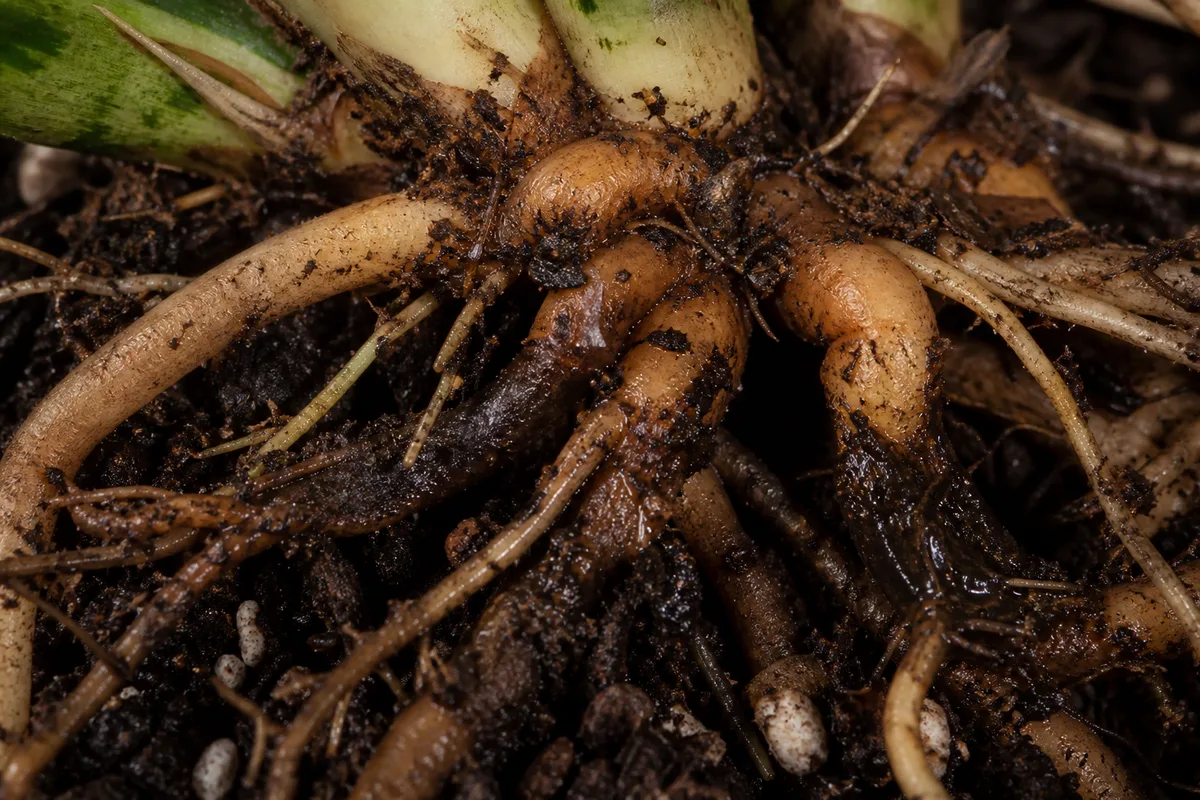
Root inspection gives the strongest visual evidence. Healthy roots are usually firm and pale, tan, or species-appropriate in color. Rotted roots are often brown to black, soft, hollow, or slimy. Missouri Botanical Garden says root rot is often associated with overwatering, too-large pots, or inadequate drainage, and that turning the plant out of the pot and examining roots can confirm the condition (examining the roots).
Symptoms that can mislead you
Brown tips do not automatically mean root rot. They can come from low humidity, inconsistent watering, salt buildup, physical damage, fertilizer excess, or species sensitivity. A single yellow leaf near the base of a mature plant may simply be an older leaf being shed.
Fungus gnats can point toward wet potting mix, but they are not proof of rotted roots. They tell you the surface environment is favorable for gnats and organic decay. Pair that observation with deeper moisture checks before deciding the plant has root rot.
Pests can also mimic water stress. Spider mites, scale, mealybugs, and thrips can cause stippling, yellowing, curling, sticky residue, webbing, or general decline. If the checker gives moderate risk but you also see pest signs, inspect leaf undersides and stems before repotting. The Yellow Leaves, Drooping Leaves, Overwatering, and Root Rot guides can help separate overlapping patterns.
Low, moderate, and high risk results
A low-risk result means the current evidence does not strongly point to rot. The soil may be drying normally, the pot drains, stems are firm, and symptoms are mild or explainable by another cause. Keep monitoring, avoid unnecessary repotting, and compare the plant against its normal watering rhythm.
A moderate-risk result means the next move should be cautious. Pause watering until the lower mix has dried to the level appropriate for the plant. Empty saucers and cachepots. Improve light and airflow if the plant can tolerate the brighter position. Recheck in a few days rather than making several major changes at once.
A high-risk result means the root zone should be checked directly. If the pot has no drainage, smells sour, stays wet for too long, or the stem base is soft, the plant may not have time for a wait-and-see approach. Unpot gently, keep any healthy root mass intact, remove clearly dead or mushy roots with clean tools, and repot only if enough healthy roots remain to support recovery.
What to do before unpotting
Before you pull the plant out, gather the information that will help you make a cleaner decision. Note when you last watered, how long the pot has stayed wet, whether water drains out, whether the plant recently moved to lower light, and whether the room has cooled. Photograph the plant from the front, the soil surface, and the stem base.
Then check the least invasive clues. Is there water in the saucer? Does the pot feel unusually heavy? Do drainage holes smell sour? Are roots visible, and do they look pale and firm or dark and soft? These checks may be enough to decide whether the plant simply needs a longer drying interval.
If the plant is valuable, rare, very large, or already collapsing, consider asking a local extension office, experienced grower, or plant clinic before heavy pruning. Root rot can move quickly, but rough handling can also finish off a stressed plant. The right level of intervention depends on how much healthy root tissue is left.
If the checker points to likely root rot
Stop watering first. Do not fertilize a plant with a compromised root system. Fertilizer does not rebuild dead roots, and salts can add stress when the plant is struggling to take up water normally.
Unpot the plant carefully and remove loose, wet, sour mix without tearing healthy roots. Trim roots that are clearly mushy, hollow, or blackened. Clean your tool between cuts if you are removing diseased tissue. If the root system is mostly gone, the realistic goal may shift from saving the original plant to propagating healthy stems, depending on the species.
Repot into a clean container with drainage and a fresh mix suited to the plant. Do not move a small remaining root system into a much larger pot. Water lightly after repotting only if the fresh mix is dry enough to need it, then let the plant recover in appropriate light. For aroids, peperomias, succulents, and other common indoor groups, use the plant profile under /plants/ to match moisture tolerance instead of applying one rule to every species.
When not to trust the result too much
The checker is only as accurate as the inputs. If you guessed the moisture level, did not check the lower pot, or answered based on memory, treat the score as provisional. A moderate score from weak inputs is a prompt to inspect, not a conclusion.
Species differences also matter. A fern, peace lily, cactus, orchid, snake plant, and calathea do not want the same drying pattern. Some plants naturally hold thick roots or rhizomes that look different from fine white roots. Some potting media, especially bark-based orchid mixes or gritty succulent mixes, drain fast but still hold pockets of moisture.
Recent changes can distort the signal. Repotting, shipping, cold exposure, heat stress, pest treatment, heavy pruning, or a sudden move from bright light to a dim corner can all cause symptoms that overlap with root stress. If the result seems inconsistent with the plant’s history, run it again with best-case and worst-case answers and compare the range.
Prevention after the plant recovers
Prevention is mostly about rhythm and structure. Water thoroughly when the plant actually needs water, let excess drain, and do not let the pot sit in runoff. Match pot size to root size. Use a mix that balances moisture retention with air space. Increase light gradually when a plant is sitting too dim to use water at its usual pace.
Build a simple habit: check before watering, not after a fixed number of days. The Plant Watering Calculator can help set a starting interval, but the final decision should come from the pot in front of you. A calendar can remind you to inspect; it should not force you to water.
After a rot scare, judge recovery by new growth and stable stems, not by old leaves becoming perfect. Damaged foliage often stays damaged. A recovering plant may shed some leaves while it rebuilds roots. The useful signs are slower decline, firmer stems, new root growth, and a pot that dries at a more normal pace.
Use this checker with other tools when the risk pattern is mixed. If the plant is in a suspiciously large container, compare it with the Pot Size Calculator. If the mix feels dense or stays wet too long, use the Soil Mix Calculator to think through aeration and moisture retention. If you are trying to reset the care routine after recovery, use the Plant Watering Calculator as a baseline, then adjust with observation.
The symptom guides are useful when root rot is not the only possible answer. Start with Water Stress if you are unsure whether the plant is too wet or too dry. Use Damaged Roots when recent repotting, breakage, or root loss may explain the decline. Use Poor Root Growth when the plant survives but never seems to anchor or push new growth.
For plant-specific decisions, check the profile rather than applying a single moisture rule. A succulent in a low-light room and a tropical foliage plant in an airy mix can both suffer from excess moisture, but the safe drying interval and recovery strategy are not identical.
Conclusion
The Root Rot Risk Checker is most useful when you treat it as a structured inspection, not a verdict. The score helps you slow down, separate leaf symptoms from root-zone evidence, and decide whether the next step is observation, drainage correction, watering restraint, or a direct root check.
The strongest root rot clues are persistent wetness, poor drainage, sour odor, soft crown tissue, and wilting that continues while the pot is still damp. The weakest clues are isolated leaf symptoms without root-zone evidence. When the result is high risk, act carefully but promptly. When it is low or moderate, improve the conditions you can verify and keep watching the plant’s newest growth.
Root recovery is possible when enough healthy tissue remains, but prevention is easier than rescue. Use a pot that drains, choose a mix that fits the plant, water by need instead of habit, and let the checker give you a repeatable way to read the signs before a small moisture problem becomes a root-system failure.