Small Flowers on Bird of Paradise: Causes, Checks & Fixes
Quick answer
Small Bird of Paradise flowers usually mean the spathe and petals opened at reduced scale-not a leaf problem. Mature S. reginae spikes should show a bird-head structure well over 15 cm (6 in) tall; first blooms and indoor plants often run smaller. First step: measure spathe height against that benchmark, confirm plant age and species, then increase direct sun hours before changing fertilizer.
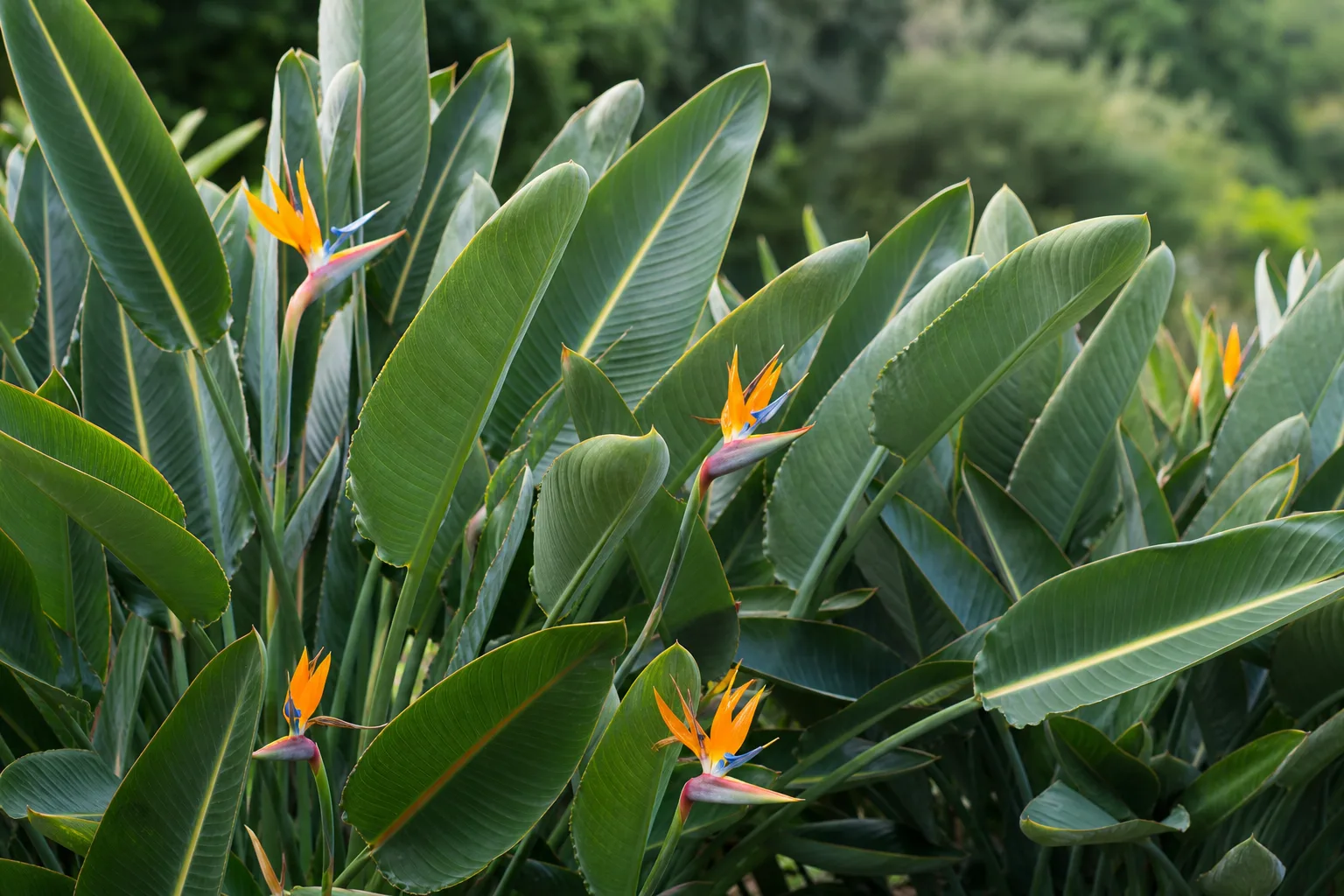
Small Flowers on Bird of Paradise: Causes, Checks & Fixes
This guide covers small flowers on Bird of Paradise. See also the general Small Flowers guide, watering, and light pages for this plant.
Small Flowers on Bird of Paradise: Causes, Checks & Fixes
Quick answer
When growers say small flowers on Bird of Paradise, they mean the orange-and-blue crane bloom opened at reduced scale-a short spathe, narrow petals, or a spike that looks like a miniature version of reference photos-not yellow leaves or general plant stress. On mature Strelitzia reginae, a healthy inflorescence is a hard, beak-like spathe with showy orange sepals and blue petals emerging in sequence; NC State Extension lists mature flower size as greater than six inches (about 15 cm). Indoor first blooms and plants in moderate light often land well below that benchmark while still technically flowering.
The top causes on Strelitzia are youth or first bloom season, too little direct sun during the prior growing season (when bud energy accumulated), heavy nitrogen feeding, recent repot or division, and overcrowded rhizome clumps splitting energy across shoots-not generic underwatering on Bird of Paradise alone.
First step: measure spathe height on the open or opening spike and estimate plant age. If the plant is under four years old, recently divided, or sitting in bright indirect light only, adjust expectations and increase direct sun before stacking fertilizer or Bird of Paradise repotting guide. Our Bird of Paradise light guide covers window placement and outdoor summer moves.
What counts as “small” on Bird of Paradise
Bird of Paradise flowers are not single petals on a thin stem. Each bloom emerges from a boat-shaped spathe (the hard “beak”) at the end of a stalk; UF/IFAS Extension describes the showy structure as blue petals and orange sepals rising from that beak-like bract. On a mature S. reginae in strong light, the combined bird-head display is large enough to read clearly across the room-typically well over 15 cm (6 in) tall for the flower itself per NC State, on a stiff stalk above the paddle leaves.
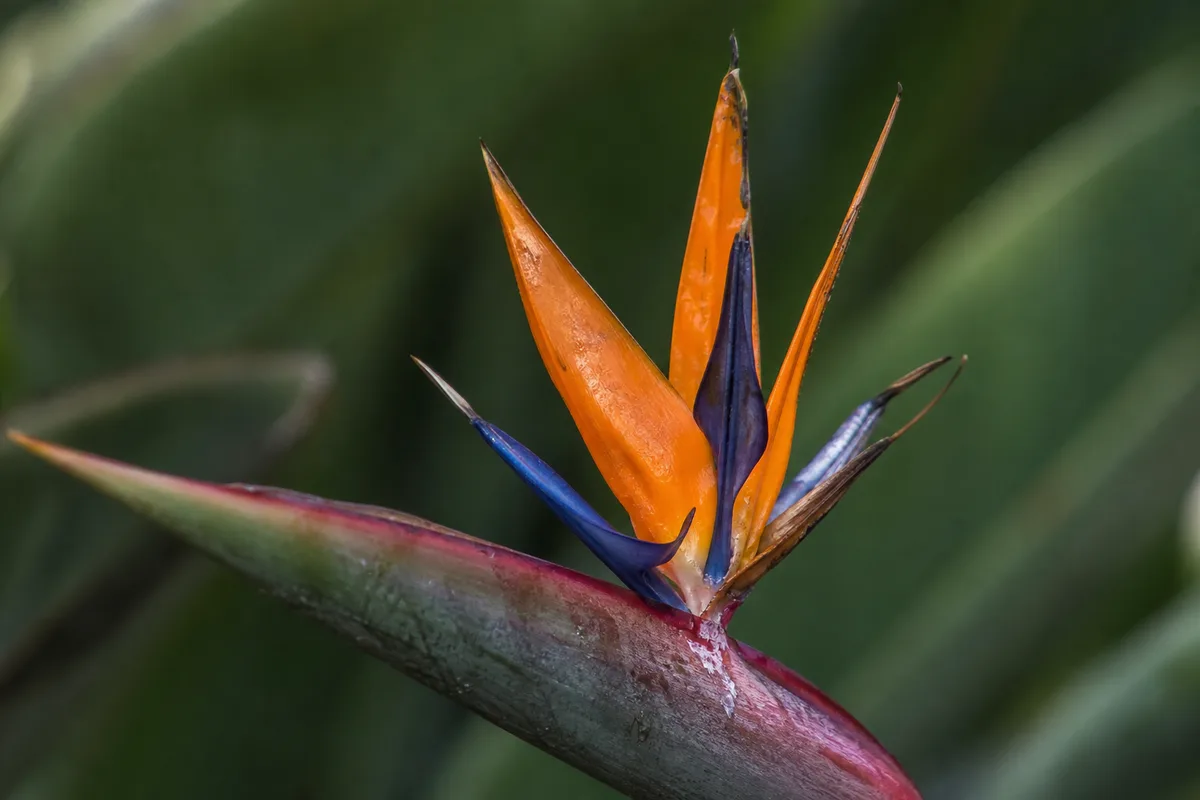
Undersized Bird of Paradise bloom - short spathe and miniature-scale orange-and-blue crane structure compared with a mature full-sun spike.
Undersized blooms look like:
- A short or narrow spathe that opens only partway, with petals that seem cramped inside
- Correct orange-and-blue colors but at miniature scale compared with outdoor or conservatory specimens
- A thin stalk supporting a bloom that would fit in one hand where reference photos show a two-hand span
- First spike ever on a plant that is finally old enough to bloom-often legitimately smaller than later seasons
Small flowers are not the same as:
| Symptom | What you see | Different page |
|---|---|---|
| No flowers | Years of leaves, zero spathe ever | No flowers |
| Faded flowers | Full-size bloom that loses color or wilts with age | Faded flowers |
| Bud drop | Spathe forms then aborts before petals open | Bud drop |
| Wrong species | Giant banana-like leaves, no orange crane | S. nicolai - foliage plant indoors |
You cannot enlarge an already open spike. Bloom size is set when the inflorescence develops; recovery means better conditions for the next bud, not a rescue of the current flower.
Why Bird of Paradise produces undersized blooms
Young plant or first bloom season
Strelitzia reginae does not open full-scale flowers on a houseplant schedule. Seeds take four to seven years to reach first bloom, and UF/IFAS notes three to five years from seed outdoors in Florida. The Royal Horticultural Society states plants usually need to be substantial size and five to ten years old before they flower indoors.
That first spike-exciting as it is-often carries a smaller spathe and shorter petals while the rhizome is still building reserves. A nursery plant under three feet with its first bloom is showing progress, not failure, even if the flower looks modest next to Instagram photos from Kirstenbosch.
Not enough light during the prior growing season
Bloom size reflects energy stored while the bud was initiating, not this week’s watering. Strelitzia evolved in open coastal bush and riverbank clearings in South Africa with strong direct sun. NC State Extension classifies S. reginae as full sun-six or more hours of direct sunlight daily-or partial shade with two to six hours of direct sun on the leaves.
The frustrating pattern indoors: foliage stays green in light that will never produce a full-scale bloom. Wisconsin Horticulture lists insufficient light as one of the most common reasons mature Strelitzia fail to bloom well-and the same light deficit produces blooms that open small when the plant barely crosses the threshold into flowering. Window glass already cuts intensity; a plant five feet from a south window may flower once and still look undersized.
Grow lights maintain leaf health but rarely deliver the photon budget of outdoor summer sun. See not enough light and the dedicated light guide for diagnosis and fixes.
Too much nitrogen, not enough bloom balance
Bird of Paradise is hungry in bright light, but heavy nitrogen pushes foliage at the expense of reproductive investment. Clemson HGIC notes overfertilization leads to excessive foliage with little or no flowering on Bird of Paradise-indoors that often means large leaves and tiny or absent spikes. High-nitrogen feeds on a plant already in weak light produce lush vegetative growth with undersized blooms if any appear.
Balanced feeding during active growth supports overall health; bloom-leaning formulas only matter on mature, high-light reginae-see our fertilizer guide. Fertilizer cannot replace missing photons.
Overcrowded rhizomes splitting energy
Strelitzia spreads by underground rhizomes into multi-stem clumps. UF/IFAS notes bird-of-paradise tends to produce more flowers along the outside of the plant, which hints that interior shoots in a dense clump compete for the same root mass. A pot crowded with many active fans-each pushing leaves and optional bloom stalks-may open smaller flowers per shoot than a slightly constrained clump with fewer dominant stems.
This is different from slight pot-binding, which Wisconsin Horticulture links to more profuse blooming once the plant is about three feet tall. The problem is too many competing shoots in one container, not healthy root tension against the pot wall. Division can help-but read the repot caveat below.
Recent repot, division, or root disturbance
Repotting redirects energy into roots. Wisconsin Horticulture advises that plants which have been blooming for a few years can be divided, but this may prevent blooming again for a few years. A spike that opens the same season as a spring repot or rhizome split is often small or absent while the clump re-establishes. UF/IFAS warns planting too deeply may delay flowering-another reason bloom size drops after sloppy repot work.
If your small bloom followed division or a move into a much larger tub within the last year, patience and stable light matter more than bloom booster.
Species note: Strelitzia reginae vs. S. nicolai
Only orange-and-blue S. reginae is the realistic indoor flowering species. Strelitzia nicolai (giant white bird of paradise) grows tree-sized outdoors and Wisconsin Horticulture notes it does not bloom until plants are quite mature-impractical indoors. If you have enormous upright banana-like leaves and any “flower” is rare or white at huge scale outdoors, you may be judging the wrong species entirely. Small or absent orange blooms on nicolai are not a fixable reginae problem.
How to confirm the cause
Work through this checklist in order:
- Confirm species. Orange sepals and blue petals on gray-green paddles = S. reginae. Giant white-label foliage = likely S. nicolai; adjust expectations toward architecture, not crane flowers.
- Measure the spike. Use a ruler on the spathe plus exposed petals. Well under 10 cm on a plant older than five years in moderate indoor light strongly suggests light-limited bloom, not normal maturity.
- Estimate age and bloom history. First spike ever? Mark youth as primary. Years of prior full-size blooms now shrinking? Suspect recent repot, division, feeding change, or light loss (moved away from window, tree growth outside, winter dimness without supplement).
- Log direct sun hours. Note window direction and distance from glass. At midday, a sharp hand shadow on the leaves means direct sun is hitting the plant; several hours daily on a south or west sill supports larger blooms. Bright room with no shadow on foliage = undersized bloom risk.
- Review fertilizer. Heavy nitrogen all year on a dim plant? Pause bloom-size expectations until light is fixed. White salt crust on soil or scorched leaf tips = overfeeding stress that can shrink the next cycle.
- Inspect the clump. Count active fan bases in the pot. Five or more crowded shoots with only one small spike may indicate energy split across rhizomes; a single dominant fan in a slightly tight pot is the better bloom profile per extension pot-bound guidance.
- Check timeline. Repot, division, or major move in the last twelve months? Temporary small blooms are normal while roots recover.
| Likely cause | Key confirming sign |
|---|---|
| Youth / first bloom | First spathe ever; plant under ~4–5 years or small nursery size |
| Prior-season light deficit | Long petioles, lean toward window; bloom small but colored |
| High nitrogen | Fast dark green leaves; no or tiny spikes; recent heavy feeding |
| Recent repot / division | Small bloom same year as root disturbance |
| Dense multi-shoot clump | Many fans, one weak spike each |
| Wrong species | S. nicolai foliage; no orange crane |
First fix for Bird of Paradise small flowers
Increase direct sun on a mature Strelitzia reginae for the rest of the current growing season-and hold everything else steady for at least one bloom cycle.
Move the pot to on or within one to two feet of your brightest south or west window so direct sunlight falls on the leaves for several hours daily, acclimating over seven to fourteen days if the plant lived in shade. Do not repot, divide, or apply full-strength fertilizer the same week. Follow the window workflow in our Bird of Paradise light guide.
Why light first: bloom size is tied to photosynthate accumulated before bud initiation. No product fixes a spike already open; the sun you add now feeds the next spathe, not the one in front of you.
Secondary steps after light is corrected-not on day one:
- Plan an outdoor summer when nights stay above roughly 50°F (10°C), acclimating gradually per Wisconsin Horticulture.
- Switch to balanced fertilizer at half strength during active growth only-see fertilizer timing-not high nitrogen on a dim plant.
- Thin an overcrowded clump in early spring if five or more weak fans compete; keep divisions with healthy roots and two to three leaves each, accepting a one-to-two-year bloom pause on splits per UF/IFAS division guidance.
If the plant is under four years old or is S. nicolai, the first fix is expectation alignment, not sun-chasing for full-scale orange cranes.
Recovery timeline - when to expect larger blooms
Bloom-size recovery is measured in seasons, not days.
- Current open spike: Fixed size until it senesces-usually one to two weeks per flower on the stalk. Deadhead the spent stalk at the base to redirect energy.
- After a light upgrade: Allow one full growing season (spring through summer) of stronger direct sun before judging the next spathe. Some growers see improvement the following winter or spring; many need two seasons.
- After repot or division: Expect one to three years of smaller or absent blooms while rhizomes re-establish per Wisconsin Horticulture.
- First bloom on a maturing plant: The second and third spikes often scale up if light improves-even when the debut bloom looked toy-sized.
Signs the fix is working: Shorter, stiffer new petioles; faster leaf unfurling in warm months; the next spathe visibly taller and thicker at the beak before petals emerge.
Signs the problem is worsening: Blooms shrinking further each year in the same dim spot; yellowing with wet soil after you increased watering “for flowers”; brown scorch from jumping into harsh sun without acclimation.
Lookalike symptoms
- No flowers - No spathe ever forms. Small-flower diagnosis starts only after something opens.
- Faded flowers - Bloom opened at reasonable size then lost color or collapsed with age. Different timeline from small at first open.
- Bud drop - Spathe started then aborted. No petals to measure.
- Leggy growth - Shared light deficit; long petioles plus small blooms both point to insufficient direct sun.
- overwatering on Bird of Paradise / root rot on Bird of Paradise - Yellow paddles, sour wet soil, soft rhizome. Fix roots first; bloom size is secondary until the plant stabilizes.
What not to do
Do not expect the open spike to grow taller-it will not. Do not repot into a huge container hoping to “give bloom room”; oversizing delays flowering and can shrink the next cycle. Do not apply high-nitrogen fertilizer on dry soil to force size. Do not judge S. nicolai for failing to show orange cranes. Do not repot or divide right before the bloom season if larger flowers are the goal. Do not stack light moves, repotting, pruning, and bloom booster in one weekend-change one variable and read the next spike.
How to prevent small flowers next season
Bloom size is a season-long project:
- Maximize direct sun through spring and summer-indoor south or west sill or outdoor placement per the light guide.
- Feed during active growth with balanced liquid at half strength per the fertilizer guide; avoid nitrogen-heavy feeds on plants that already push large leaves in moderate light.
- Keep mature reginae slightly pot-bound once about three feet tall-refresh top soil yearly instead of upsizing early per Wisconsin Horticulture.
- Deadhead spent stalks promptly so the rhizome is not maintaining old inflorescences-see pruning.
- Wipe dust from broad leaves monthly so light reaches the blade surface; the RHS recommends occasional leaf wiping for maximum light uptake.
Cross-check ongoing care against the Bird of Paradise overview. If your home cannot deliver several hours of direct sun daily, accept smaller indoor blooms or foliage-only display-many excellent specimens never match outdoor bloom scale, and that is an honest ceiling, not a care failure.
When to worry
Small but correctly colored blooms on an otherwise firm plant are low urgency. Escalate if the crown softens with wet soil, pests coat new growth, or every bud aborts before open (bud drop). Worry less about size alone on a first bloom than on a five-year-old reginae in a south window that keeps shrinking each season-in that case, reassess light honestly before buying more products.
Conclusion
Small Bird of Paradise flowers mean the plant crossed into blooming but did not have enough maturity, light, or balanced energy to build a full-scale spathe. Measure against the greater-than-six-inch mature benchmark, confirm S. reginae and plant age, increase direct sun for the next growing season, and avoid repot shock and nitrogen-heavy feeding. The spike open today will not enlarge; judge success on the next hard beak emerging from the crown.
When to use this page vs other Bird of Paradise guides
- Bird of Paradise watering guide - Use for routine moisture checks before assuming small flowers is the main issue.
- Bird of Paradise problems hub - Browse all 20 common issues on this species.