Bud Drop on Bird of Paradise: Causes, Checks & Fixes
Quick answer
Bud drop on Bird of Paradise means a flower spike or spathe formed, then browned, shriveled, or fell before opening. On Strelitzia reginae, the usual triggers are moving or repotting during sheath swell, weak direct sun, cold nights below about 50°F, or wet/dry swings. First step: leave the pot where it is and do not repot until the plant stabilizes.
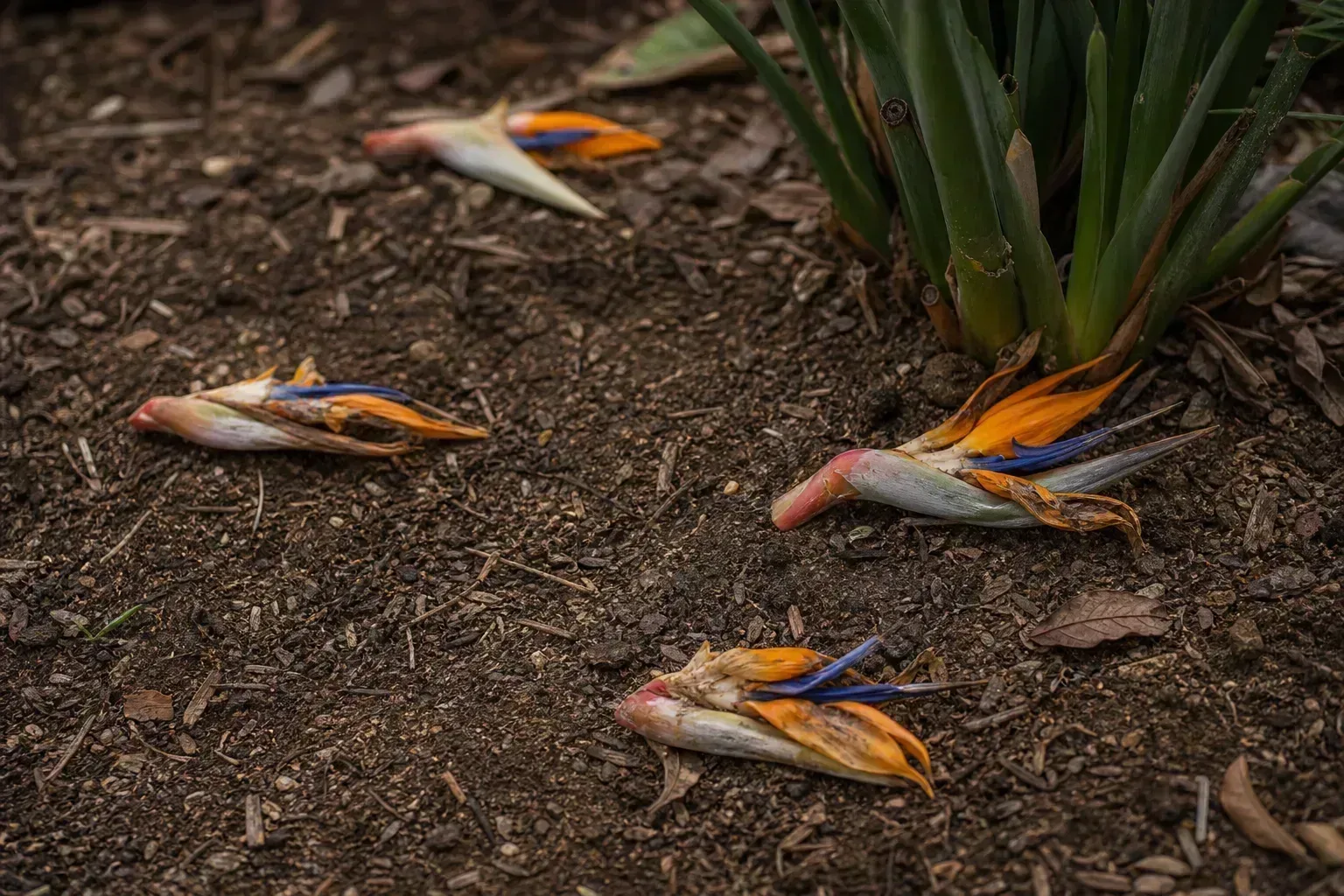
Bud Drop on Bird of Paradise: Causes, Checks & Fixes
This guide covers bud drop on Bird of Paradise. See also the general Bud Drop guide, watering, and light pages for this plant.
Bud Drop on Bird of Paradise: Causes, Checks & Fixes
Quick answer
Bud drop on Bird of Paradise means a flower spike or hard spathe (the boat-shaped bract) started developing from the crown, then browned, shriveled, or fell before the orange-and-blue flowers opened. On Strelitzia reginae, that is almost always cultural stress during bud set-not a mysterious bloom disease.
First step: leave the pot exactly where it is. Do not repot, divide, relocate, or stack fertilizer and pruning on the same day. Bird of Paradise aborts inflorescences when roots or light are disturbed while a sheath is swelling-a pattern Clemson HGIC links to the plant’s need for stable bright light and moderate humidity through the bloom cycle.
If your plant never formed a spathe and only grows paddle leaves, you are dealing with no flowers-a different diagnosis. This guide is for owners who had a visible spike or sheath that failed.
What bud drop looks like on Bird of Paradise
Healthy Strelitzia reginae bloom development starts when a hard, horizontal spathe emerges from the clump-often mistaken for a new leaf until the beak-like tip points sideways. Inside, pointed orange sepals and blue petals eventually push out one at a time. With bud drop, you will see:
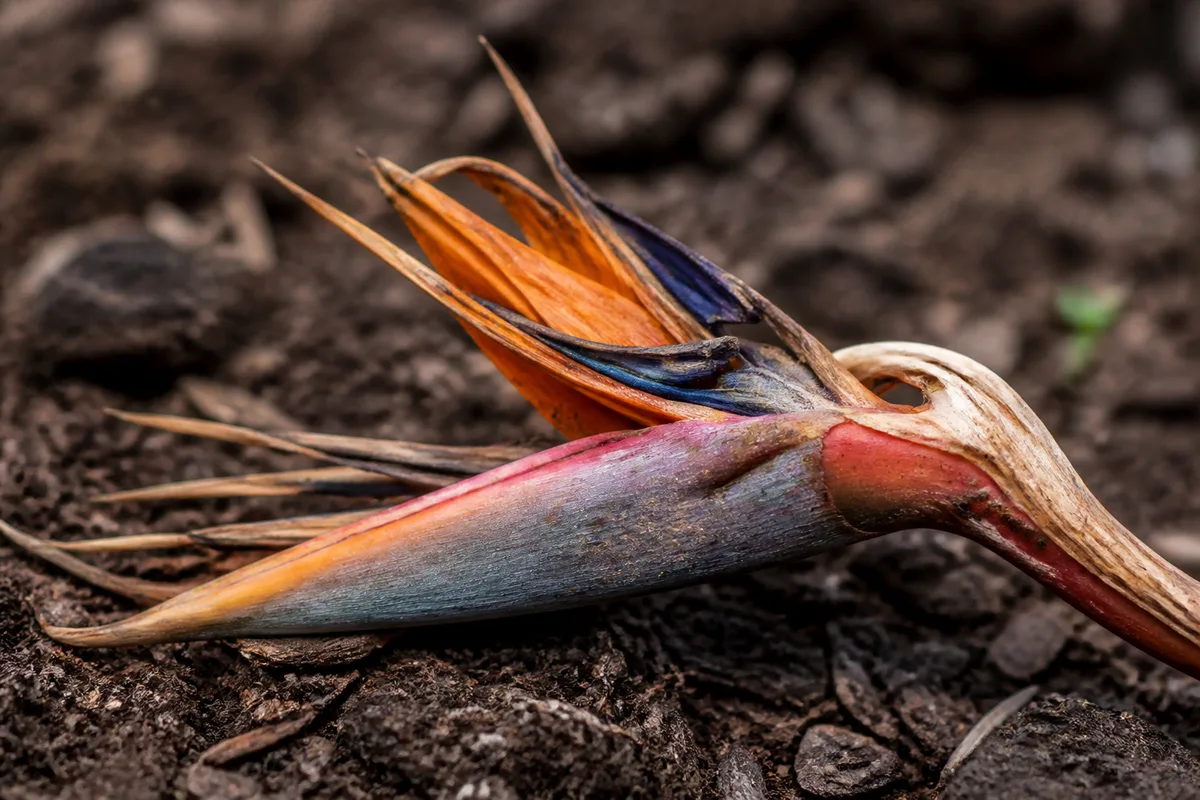
Bud Drop symptoms on Bird of Paradise - compare with healthy tissue on the same plant.
- A spathe that browns, softens, or dries at the tip before petals emerge
- An aborted sheath hanging limp or breaking off, leaving a bare stalk or stub at the crown
- Sometimes one bud lost while a second sheath on the same stalk continues-single-bud loss after a move is common; every flush aborting means chronic stress
- No orange color ever visible inside the bract-distinguishes abortion from faded flowers after a successful open
What it is not: a new paddle leaf failing to unfurl (that is a leaf problem, not bud drop), normal post-bloom senescence on an already-open flower, or the absence of any spike on a young plant (see no flowers).
Species check: Orange-and-blue crane flowers come from S. reginae. Strelitzia nicolai (giant white bird) is sold under the same common name but rarely blooms indoors at houseplant size. If you have a tall banana-leaf specimen and “buds” never looked like orange crane flowers, adjust expectations toward foliage-not cultural bud drop on reginae.
Bud drop vs. no flowers vs. faded blooms
Three bloom URLs on this plant overlap in search-but they answer different questions:
| Symptom | What you see | Read this guide |
|---|---|---|
| Bud drop | Spathe or spike formed, then aborted before open | This page |
| No flowers | Years of leaves, zero spathe ever | No flowers guide |
| Faded flowers | Bloom opened, then color washed out quickly | Faded flowers guide |
If you are unsure whether a structure was a flower sheath or a leaf, watch the next flush: spathes are stiff, beak-shaped, and horizontal; new leaves emerge vertically as rolled paddles.
Why Bird of Paradise aborts flower buds
Strelitzia reginae invests heavily in each inflorescence. When energy, light, or root stability falls short during sheath development, the plant drops buds first-they are the most expendable tissue.
Move, repot, or division shock during sheath swell
Relocating a pot, Bird of Paradise repotting guide into a larger container, or dividing a clump while a spathe is visible disrupts water uptake and hormone balance. Clemson HGIC notes that after division, plants need about eight weeks of recovery in bright indirect light before moving to full sun-and flowering may not return for two to three years. Even moving a blooming plant from patio to living room mid-swell commonly aborts the active sheath.
Insufficient direct sun during bud development
Bird of Paradise can maintain foliage in bright indirect light but needs strong direct sun to retain buds. NC State Extension lists S. reginae as full sun (six or more hours of direct sunlight daily) or partial shade with two to six hours of direct sun-and partial shade still means sun on the leaves, not a dim corner. Clemson HGIC prefers full sun but tolerates lower light from a south-facing window; that tolerance helps foliage, not reliable bud retention indoors.
When light drops during sheath swell-cloudy weeks, autumn move indoors, or shading from a new object-buds often abort before petals open. See our light guide for window placement and outdoor summer recharge.
Cold nights and temperature swings
Strelitzia is sensitive to chill during bud development. Clemson HGIC recommends 65–70°F days and 50–55°F nights for active growth. NC State Extension notes moderate night temperatures of 55–65°F. Exposure below about 50°F (10°C) can damage developing flower buds-UF/IFAS Extension warns that freezing temperatures damage developing buds and flowers-and MSU floriculture research lists temperature extremes among causes of flower bud abortion across many crops.
Indoors, leaving a sheathed plant near a cold window draft, bringing it inside too late after outdoor nights in the high 40s, or running heat without the cool-night differential Strelitzia uses in nature often triggers abortion.
Water stress-too wet or too dry during bud set
During active sheath development, roots need oxygen and steady moisture-not swings between bone-dry peat and soggy mix. UF/IFAS notes that dry or soggy conditions during establishment cause leaf yellowing; the same stress aborts buds on a plant already committed to bloom. Clemson HGIC advises watering thoroughly, then allowing the mix to dry slightly before watering again-a rhythm our watering guide translates for indoor pots.
Chronic overwatering weakens rhizomes and mimics drought at the shoot tip; underwatering on Bird of Paradise during a hot sunny spell when a sheath is swelling also causes drop.
Low humidity and dry winter air
Clemson HGIC recommends moderate relative humidity around 60 percent and daily misting during dry winter months when central heating runs. Sheath tips can desiccate when air is very dry-even if soil moisture is correct. If heat vents blow directly on an emerging spathe, pair humidity correction with our low humidity checklist.
Immaturity-young plants abort their first attempts
Even perfect care cannot hold buds on a juvenile plant. Seeds take four to seven years to reach first bloom; UF/IFAS notes seed-grown plants need three to five years before flowering. Divisions may bloom in one to two years when replanted under good conditions. A first sheath that aborts on a two-foot nursery plant is often normal trial-and-error, not a permanent failure-keep building light and age.
Pests on the emerging spathe
Clemson HGIC lists scales, mealybugs, whiteflies, and aphids as occasional houseplant pests on Bird of Paradise. Sap feeders on a tender sheath weaken tissue before flowers open. Sticky residue, white cottony clusters at the spathe base, or distorted bracts point to pests-not pure light stress.
Recent repot into an oversized pot
Wisconsin Horticulture advises not repotting anxiously once the plant is about three feet tall and notes that division may prevent blooming again for a few years. Slightly root-bound conditions often favor bloom; a fresh upsize redirects energy into roots and can abort an active sheath.
How to confirm the cause
Work through these checks in order before repotting, feeding, or spraying:
- Confirm species and maturity. Orange-and-blue S. reginae goal; giant S. nicolai indoors rarely blooms. Under three to four years from seed or a recent small division? Mark immaturity as a factor.
- Timeline of moves and repots. Any relocation, repot, or division within two weeks of sheath browning? Shock is the leading suspect-hold placement steady.
- Direct sun hours on foliage. South or west window with several hours of sun on the leaves? If the plant lives on bright indirect light across the room, suspect light deficit-see not enough light.
- Night temperatures. Log overnight lows near the pot. Repeated exposure below 50–55°F during sheath swell implicates chill.
- Soil moisture at 5 cm depth. Wet, heavy pot with yellowing lower leaves? Check overwatering. Light pot and curled leaves with dry mix? Correct underwatering before expecting new buds.
- Spathe and crown inspection. Firm rhizomes, no sour smell? Cosmetic bud loss. Soft crown with wet soil? Root emergency first-not bloom advice.
- Pest check. Magnify the spathe base and newest leaf axils for scale, mealybugs, or sticky honeydew.
First fix for Bird of Paradise
Stabilize placement-one change at a time. Your first action: do not move, repot, or divide while any new sheath is swelling. If you recently relocated the pot, leave it in the new spot for at least six to eight weeks so roots and light adaptation can settle-matching the recovery window Clemson HGIC describes after division.
After stability:
- If light was weak: move gradually to the brightest direct-sun window over seven to fourteen days, or plan an outdoor summer once nights stay above 60°F-our light guide covers acclimation.
- If soil was wet: skip the next watering until the top 5 cm dries; confirm drainage holes are open.
- If soil was dry: water thoroughly once, then return to wet-dry checks-not daily shallow splashes.
- If cold exposure occurred: protect from drafts; keep nights above 55°F when possible through bud development.
- If pests are present: isolate, wipe scales/mealybugs from the spathe base, and treat new growth with insecticidal soap-repeat weekly until clear.
Do not fertilize a stressed Bird of Paradise hoping to force buds back. Clemson HGIC warns overfertilization produces excessive foliage with little flowering.
Recovery timeline
On a mature, firm plant corrected during spring or summer active growth:
- Single sheath lost after a move: new spathe initials often appear within one full growing season once placement and light hold steady
- After repot shock: expect one to two years before reliable bloom returns-division can delay flowering two to three years
- After cold bud damage: recovery may wait until the next cool-rest winter with warm days and 50–55°F nights triggers a new flush
Signs you are on track:
- Firm rhizomes at the soil line and upright new paddle leaves
- A new horizontal spathe forming without immediate tip browning
- Stable soil moisture-pot weight predictable between waterings
Signs the problem is worsening:
- Soft crown, sour soil, or yellow leaves spreading with wet mix
- Every sheath aborting through multiple seasons despite corrected light
- No new growth for months after bud loss
Lookalike symptoms
No flowers ever - No spathe history, only vegetative leaves. Diagnose light, age, and species via no flowers.
Faded open blooms - Flowers opened, then color washed out. That is post-bloom senescence or spent-flower care-see faded flowers.
root rot on Bird of Paradise - Bud drop plus soft rhizomes, sour smell, and limp leaves despite wet soil. Stop watering and inspect roots before bloom fixes.
Normal spent stalk - After a successful bloom, the old spathe and stalk brown and dry. Remove at the base; that is cleanup, not abortion.
Leaf unfurl failure - Vertical rolled leaf stuck or torn. Not flower bud drop.
What not to do
Do not repot or divide while a spathe is visible unless rot is confirmed. Do not move the pot repeatedly between rooms hunting better bloom. Do not increase watering because a bud fell-wet roots abort more buds. Do not feed heavy nitrogen during stress; that pushes leaves over flowers. Do not confuse S. nicolai foliage with reginae bud failure. Do not ignore a soft crown while focusing only on lost petals.
How to prevent bud drop next time
Prevention follows Strelitzia flowering biology:
- Keep four to six or more hours of direct sun on mature S. reginae-see the light guide
- Avoid repotting while spathes are developing; stay slightly root-bound rather than oversized
- Hold placement steady from sheath emergence through open bloom
- Match wet-dry watering from our watering guide; avoid soggy or bone-dry extremes during bud swell
- Provide cool winter nights near 50–55°F when feasible-warm days around 65–70°F
- Maintain ~60% humidity in dry heated rooms; mist or humidify away from heat vents
- Deadhead spent flower stalks at the base so energy redirects to the next flush
- Bring outdoor plants inside before nights drop below 60°F-Clemson HGIC recommends indoor move when outdoor temperatures fall below 60°F
- Inspect emerging spathes weekly for scale and mealybugs
Stable, boring care through sheath development beats heroic interventions every time.
When to worry
Cosmetic bud loss on firm rhizomes and healthy green foliage is frustrating but not fatal. Worry when bud drop accompanies soft crown tissue, sour-smelling soil, rapid wilt, or pests coating new growth-those patterns need root or pest intervention first. If every sheath aborts for multiple seasons on a mature S. reginae in strong sun, audit whether night temperatures, pot size, or chronic overwatering still block bloom energy.
Conclusion
Bud drop on Bird of Paradise is the plant aborting an inflorescence when light, temperature, water, or root stability fails during sheath development-not leaf damage or missing fertilizer. Confirm you have a mature S. reginae with a visible spathe history, hold the pot still, correct direct sun and watering, and protect developing buds from cold and move shock. For plants that never formed a spike, start with no flowers; for blooms that opened then faded, see faded flowers. Full care context lives on the Bird of Paradise overview.
When to use this page vs other Bird of Paradise guides
- Bird of Paradise watering guide - Use for routine moisture checks before assuming bud drop is the main issue.
- Bird of Paradise problems hub - Browse all 20 common issues on this species.