No Flowers on Bird of Paradise: Causes, Checks & Fixes
Quick answer
Bird of Paradise usually skips blooms because the plant is too young, light is too weak, or you have the wrong species indoors. First step: confirm you have mature Strelitzia reginae, then move it to the brightest direct-sun window you have-see our light guide-or plan an outdoor summer.
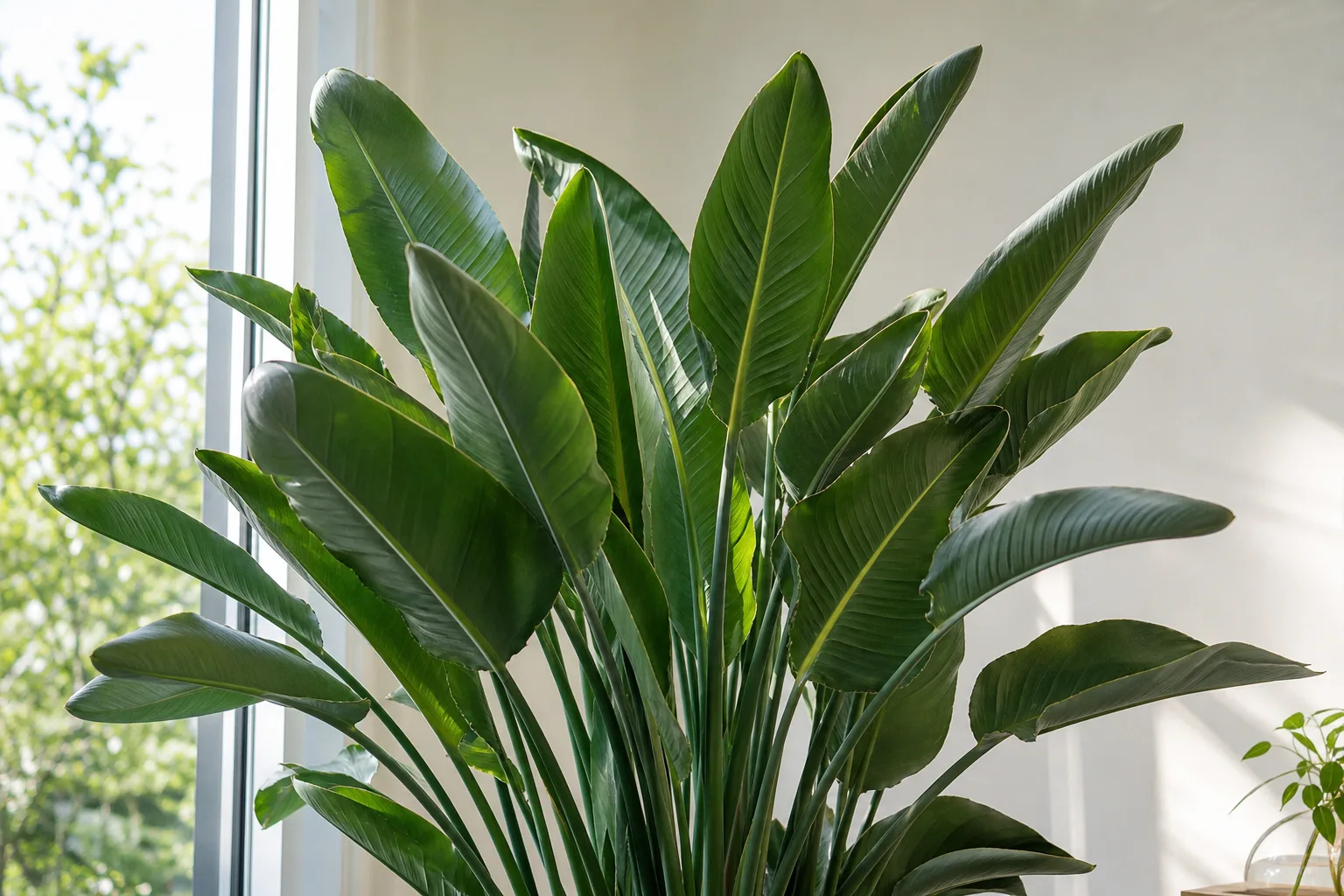
No Flowers on Bird of Paradise: Causes, Checks & Fixes
This guide covers no flowers on Bird of Paradise. See also the general No Flowers guide, watering, and light pages for this plant.
No Flowers on Bird of Paradise: Causes, Checks & Fixes
Quick answer
When Bird of Paradise grows lush paddle leaves but never produces the orange-and-blue crane flowers, the cause is almost never “missing fertilizer” or “needs a bigger pot.” On Strelitzia reginae, insufficient light is one of the most common reasons mature plants fail to bloom well indoors-followed by immaturity, wrong species (S. nicolai rarely flowers as a houseplant), and oversized pots that delay the slightly root-bound conditions that encourage blooms.
First step: confirm you have a mature orange-flowering S. reginae, then move the pot to the brightest direct-sun position available-on or within one to two feet of a south or west window after gradual acclimation if it lived in shade. Our Bird of Paradise light guide covers window placement, outdoor summer moves, and why bright indirect light alone rarely triggers blooms. Do not repot, divide, or feed heavily on the same day you change light.
What no flowers looks like on Bird of Paradise
“No flowers” on Bird of Paradise is usually absence of any bloom spike, not a disease symptom. A healthy vegetative plant pushes new leaves from the crown on stiff petioles while no boat-shaped spathe (the hard beak-like bract) ever emerges from the clump. That can continue for years without yellowing, wilting, or pest damage- which is why owners assume care is fine when bloom energy never accumulates.
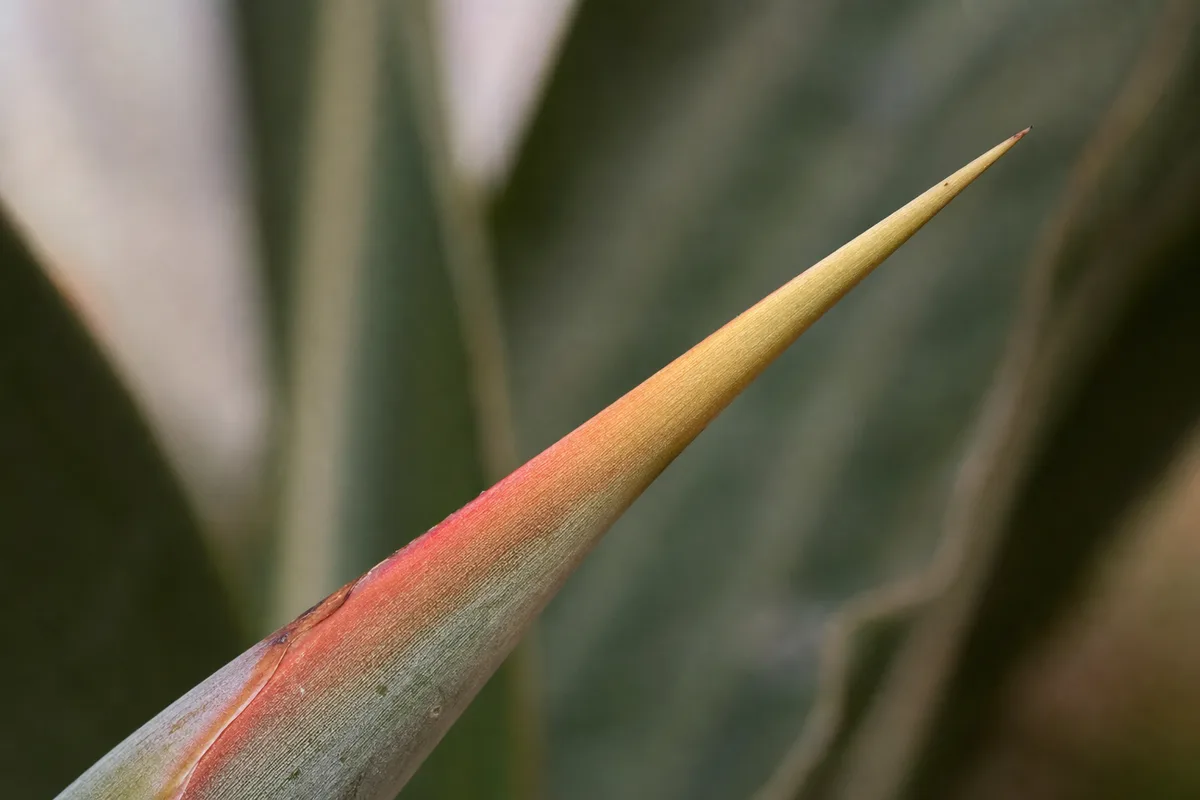
No Flowers symptoms on Bird of Paradise - compare with healthy tissue on the same plant.
Typical patterns on S. reginae:
- Years of new paddle leaves, zero flower spikes - especially in rooms with only bright indirect light
- Long petioles and smaller new leaves compared with summer outdoor growth - often paired with leggy growth toward the window
- Very slow annual growth - one or two leaves per year in a dim spot (slow growth overlap)
- A young plant under about three feet with no bloom history - simply not mature yet
- A tall “banana leaf” specimen that never shows orange sepals - likely Strelitzia nicolai, not the flowering species
What it usually does not look like: buds forming then falling (see bud drop if a spathe appeared and aborted), small faded blooms after a spike opened (small flowers), or widespread yellow leaves with wet soil (overwatering on Bird of Paradise or root stress-not bloom failure alone).
Strelitzia reginae vs. Strelitzia nicolai - indoor bloom expectations
Most “bird of paradise not flowering” searches assume Strelitzia reginae - the orange-and-blue crane flower sold as a houseplant. Strelitzia nicolai (giant white bird of paradise) is also sold under the same common name. It grows much larger, with tree-sized potential outdoors, and Wisconsin Horticulture notes it does not bloom until plants are quite mature - often impractical indoors.
| Species | Typical indoor role | Realistic bloom expectation |
|---|---|---|
| S. reginae | Orange crane flowers; clumps to ~3–4 ft | Possible after years of strong direct sun; uncertain indoors |
| S. nicolai | Large banana-like foliage | Foliage plant indoors; blooms rare until very old and huge |
| S. juncea | Rush-like leaves; smaller flowers | Same high-light needs as reginae; rarely sold |
If your plant has enormous upright leaves on thick trunks and no orange in the nursery tag photo, adjust expectations toward architectural foliage, not indoor flowers. All Strelitzia species want strong light, but only mature S. reginae in exceptional indoor conditions typically blooms.
Why Bird of Paradise stops flowering
Plant immaturity - the bloom clock starts late
Bird of Paradise does not flower on a houseplant timeline. Seeds take four to seven years to reach first bloom, and UF/IFAS Extension notes seed-grown plants need three to five years before flowering outdoors in Florida. Divisions of mature clumps can bloom sooner - often one to two years after replanting when conditions are right. The Royal Horticultural Society states plants usually need to be substantial size and five to ten years old before they flower indoors.
A two-year-old nursery pot with two leaves is not failing-it is juvenile. Expecting blooms on a young plant is the most common unrealistic expectation after light.
Insufficient direct sun - foliage vs. flower energy
Strelitzia reginae evolved in coastal bush and riverbank clearings with full sun in South Africa. NC State Extension classifies it as full sun (six or more hours of direct sunlight daily) or partial shade (two to six hours)-and partial shade still means direct sun on the leaves, not a dim living room.
The deceptive part: Bird of Paradise can look perfectly green in light that will never produce a bloom. Bright indirect light may maintain foliage; it rarely supplies the photosynthetic budget for flower spikes. Wisconsin Horticulture recommends nearly full sun in summer and as much light as possible in winter for mature plants to bloom. Window glass already cuts intensity versus outdoor South Africa; a plant five feet from glass is vegetating, not blooming.
For full diagnosis steps, see not enough light on Bird of Paradise and the dedicated light guide.
Oversized pots and recent Bird of Paradise repotting guide
Unlike African violets, Bird of Paradise often blooms more when slightly pot-bound. Wisconsin Horticulture advises not repotting anxiously once the plant is about three feet tall-replace top soil yearly instead. Exposure of the top of the roots supposedly encourages flowering. A fresh repot into a much larger container redirects energy into roots and can delay blooms for one or more seasons. Division of a blooming clump can also pause flowering for a few years.
Feeding imbalance - nitrogen vs. bloom energy
Bird of Paradise is a hungry plant in bright light, but heavy nitrogen pushes leaves at the expense of flowers. High-nitrogen feeds on a plant already in weak light produce lush vegetative growth with no spikes. Balanced feeding during active growth supports overall health; bloom-leaning formulas only matter on mature, high-light reginae-see our fertilizer guide. Fertilizer cannot replace missing photons.
Missing outdoor summer sun
Even perfect winter windowsills deliver less energy than outdoor summer sun. Wisconsin Horticulture recommends moving the plant outside for summer with gradual acclimation, then bringing it in before frost. Three to four months of genuine outdoor light can recharge a plant that slowly lost bloom potential indoors. If your climate allows, this is often the highest-impact bloom intervention after correcting window placement.
Cool nights and cultural alignment
NC State Extension notes Bird of Paradise prefers moderate night temperatures of 55–65°F (13–18°C) with warmer days. Constant overheated dry rooms without ventilation stress the plant but rarely cause bloom alone; still, a cool bright winter room matches native rhythm better than a hot dim corner.
How to confirm the cause
Work through this order before repotting or changing fertilizer:
- Identify the species. Orange-and-blue flowers on stiff gray-green paddles = S. reginae goal. Giant white-label “banana leaf” plant = likely S. nicolai; indoor blooms are unlikely regardless of care.
- Estimate plant age and size. Under three feet with no bloom history, or clearly a recent seedling or small division? Mark as too young and focus on light and steady growth for years, not bloom forcing.
- Measure light at the plant. Note window direction and distance from glass. At midday, check for a sharp hand shadow on the leaves. South or west sill with several hours of direct sun on foliage = bloom-capable; north room or bright indirect across the room = foliage-only for most homes.
- Review pot size vs. root mass. Is the plant swimming in excess soil with few visible roots at the edge? Has it been repotted into a much larger tub in the last year? Oversized pots delay blooming.
- Check for lookalikes. Leggy stretch and lean = light deficit (leggy growth). One leaf every season = light or youth (slow growth). Yellow leaves with sour wet soil = water/root issue first.
- Audit feeding. Heavy nitrogen all year on a dim plant? Pause bloom expectations until light is fixed, then use balanced feed in spring and summer only.
If the plant is mature S. reginae, slightly root-bound, well fed in summer, and still bloomless after years in a south windowsill, you may be at the realistic limit of indoor culture-outdoor summer or acceptance of foliage-only display is the honest next step.
First fix for Bird of Paradise
Move a mature Strelitzia reginae to the brightest direct-sun placement you can provide-on or within one to two feet of a south or west window-and hold everything else steady for at least one growing season.
If the plant lived in shade for months, acclimate over seven to fourteen days so leaves do not scorch. Do not repot, divide, or apply full-strength fertilizer the same week. Follow the window and outdoor-summer workflow in our Bird of Paradise light guide.
Secondary steps after light is corrected (not on day one):
- Plan an outdoor summer when nights stay above roughly 50°F (10°C), acclimating gradually.
- Resume mild balanced fertilizer only after new leaves open cleanly in bright light-see fertilizer timing.
- Avoid upsizing the pot until roots clearly fill the current container; refresh top soil instead.
If the plant is under four years old or is S. nicolai, the first fix is adjusting expectations, not chasing bloom products.
Recovery timeline
Bloom recovery on Bird of Paradise is measured in seasons to years, not weeks.
- After a light move: Expect two to four months of stronger new leaf growth before any bloom spike is even possible. Old stretched petioles do not shorten.
- First bloom on a maturing reginae: Often year four to seven from seed, or one to three years after a mature division, with excellent light-UF/IFAS and Wisconsin Horticulture timelines align on multi-year waits.
- After repotting or division: Blooms may pause one to three years while the rhizome re-establishes.
- After one outdoor summer: Some growers see a spathe the following winter or spring; many do not. No guarantee the same season.
Signs the fix is working: Shorter, stiffer new petioles; faster leaf unfurling in warm months; upright growth without extreme lean; optional-not required-a hard spathe emerging from the crown on a plant that previously never produced one.
Signs the problem is worsening: Continued stretch in the same dim spot; yellowing with wet soil after you increased watering “for blooms”; brown scorch from jumping into harsh sun without acclimation.
Lookalike symptoms
- Not enough light - Overlaps heavily: no blooms plus long petioles and lean. Fixing light is the shared first step; this page adds maturity, species, and pot-size gates.
- Leggy growth - Stretch toward windows without necessarily caring about blooms yet. Same light fix; blooms need longer on top of compact growth.
- Slow growth - One leaf per year can mean youth, dim light, or oversized pot. Confirm age before expecting flowers.
- Bud drop - A spathe formed then aborted. Different problem from never forming a spike at all.
- Overwatering / root rot on Bird of Paradise - Yellow or drooping leaves with sour wet soil. Fix drainage and dry-down; blooms are irrelevant until roots stabilize.
What not to do
Do not treat Bird of Paradise like a gesneriad or African violet-north windows, “bright indirect only,” and slight root-binding for violets do not map to Strelitzia bloom biology. Do not repot into a huge container hoping to “give it room to flower.” Do not apply high-nitrogen fertilizer on dry soil to force buds. Do not expect blooms within two to four weeks of any care change. Do not discard a healthy S. nicolai for failing to show orange flowers-it was never the right species for that show indoors.
How to prevent repeat bloom failure
Match the plant to your home honestly before buying: mature S. reginae, brightest south or west exposure, optional outdoor summers, and patience for multi-year timelines. Keep the plant slightly pot-bound once it reaches about three feet-refresh top soil yearly per Wisconsin Horticulture. Feed during active growth at modest strength per our fertilizer guide. Wipe dust from broad leaves so light reaches the surface.
Cross-check ongoing care against the Bird of Paradise overview and light guide. If your space cannot deliver direct sun for several hours daily, choose to grow Bird of Paradise for sculptural foliage-many excellent indoor specimens never bloom, and that is not a care failure when species, age, and architecture are aligned.
When to worry
Chronic no blooms on an otherwise green plant is normal indoors and not an emergency. Worry when leaves yellow with wet soil, the crown feels soft, pests coat the leaves, or the plant collapses-not when it simply refuses to flower in a north room. If a mature S. reginae has had years of direct south-window sun, slight root binding, and outdoor summers without any spathe, you have likely reached the ceiling of your indoor setup; consult a local extension office before stacking more interventions.
When to use this page vs other Bird of Paradise guides
- Bird of Paradise watering guide - Use for routine moisture checks before assuming no flowers is the main issue.
- Bird of Paradise problems hub - Browse all 20 common issues on this species.