Faded Flowers on Bird of Paradise: Causes, Checks & Fixes
Quick answer
Faded flowers on Bird of Paradise are usually normal bloom aging, not a crisis. Orange-and-blue bracts lose color over one to three weeks indoors; deadhead only when the stalk turns tan and papery, cutting at the rhizome base - never while the stalk is still green.
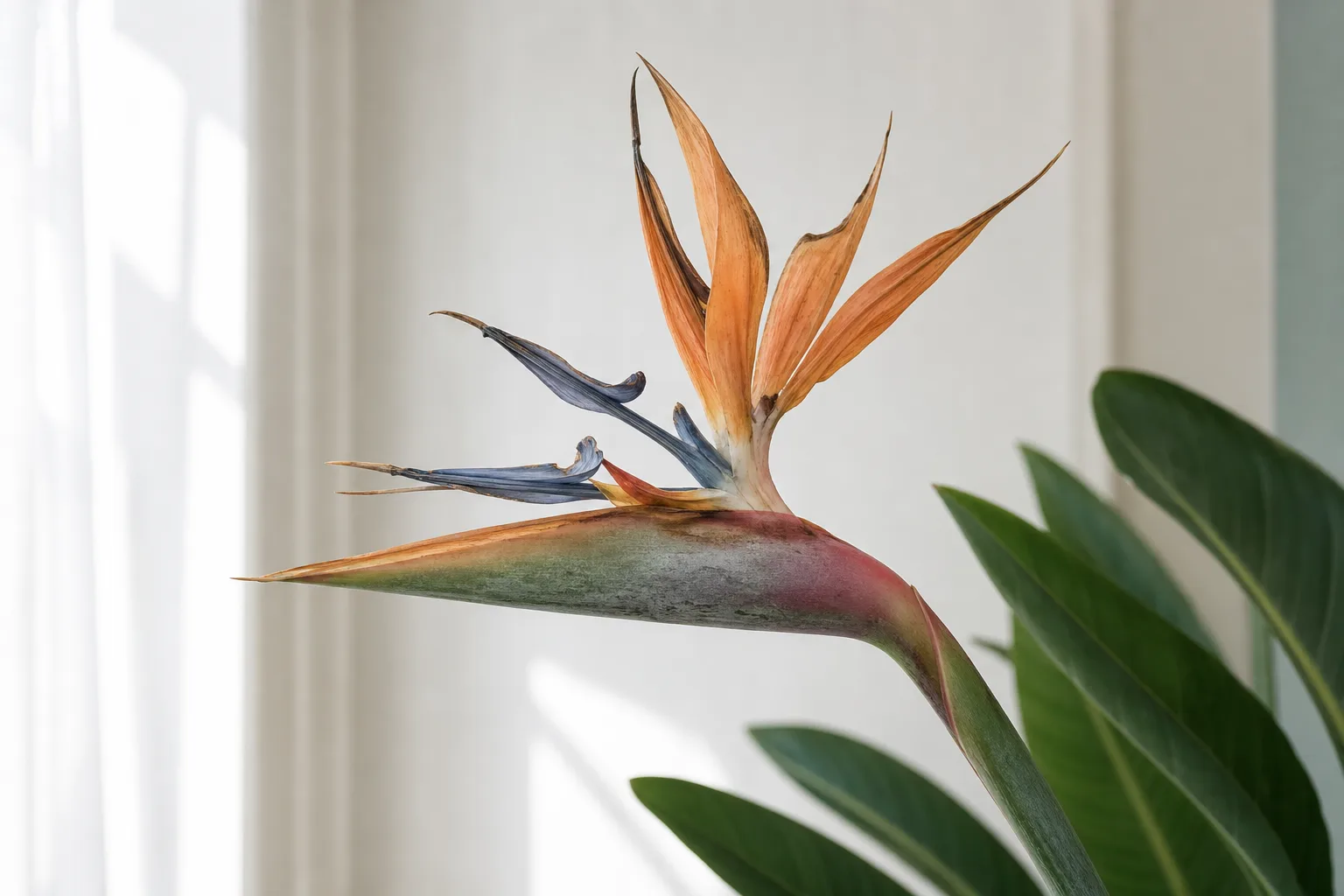
Faded Flowers on Bird of Paradise: Causes, Checks & Fixes
This guide covers faded flowers on Bird of Paradise. See also the general Faded Flowers guide, watering, and light pages for this plant.
Faded Flowers on Bird of Paradise: Causes, Checks & Fixes
Quick answer
Faded flowers on Bird of Paradise (Strelitzia reginae) are usually normal bloom aging, not a sign that your plant is dying. Each inflorescence opens with vivid orange sepals and blue petals, then gradually loses color over one to three weeks indoors - sometimes up to a month in strong light and humidity. That timeline is expected on a plant that may have waited years to bloom.
First step: decide whether fading is normal aging or premature collapse. If blooms have been open more than a week and only the petals are browning while leaves stay firm and green, you are watching a spent inflorescence finish its cycle. If color drains within days of opening, buds abort before opening, or fading comes with crown softness and wet soil, treat it as a stress problem - not simple deadheading.
When the entire flower stalk turns tan, dry, and papery, cut it at the rhizome base with clean bypass pruners. Never cut green flower stalks; green tissue is still feeding the underground rhizome and premature removal can delay the next bloom season.
What faded Bird of Paradise flowers look like
On Strelitzia reginae, the showy “bird” is built from stiff orange sepals and arrow-shaped blue petals emerging one at a time from a beak-like spathe on a separate upright stalk. NC State Extension describes flowers emerging sequentially from the spathe, with each bloom lasting its own cycle before the next appears.
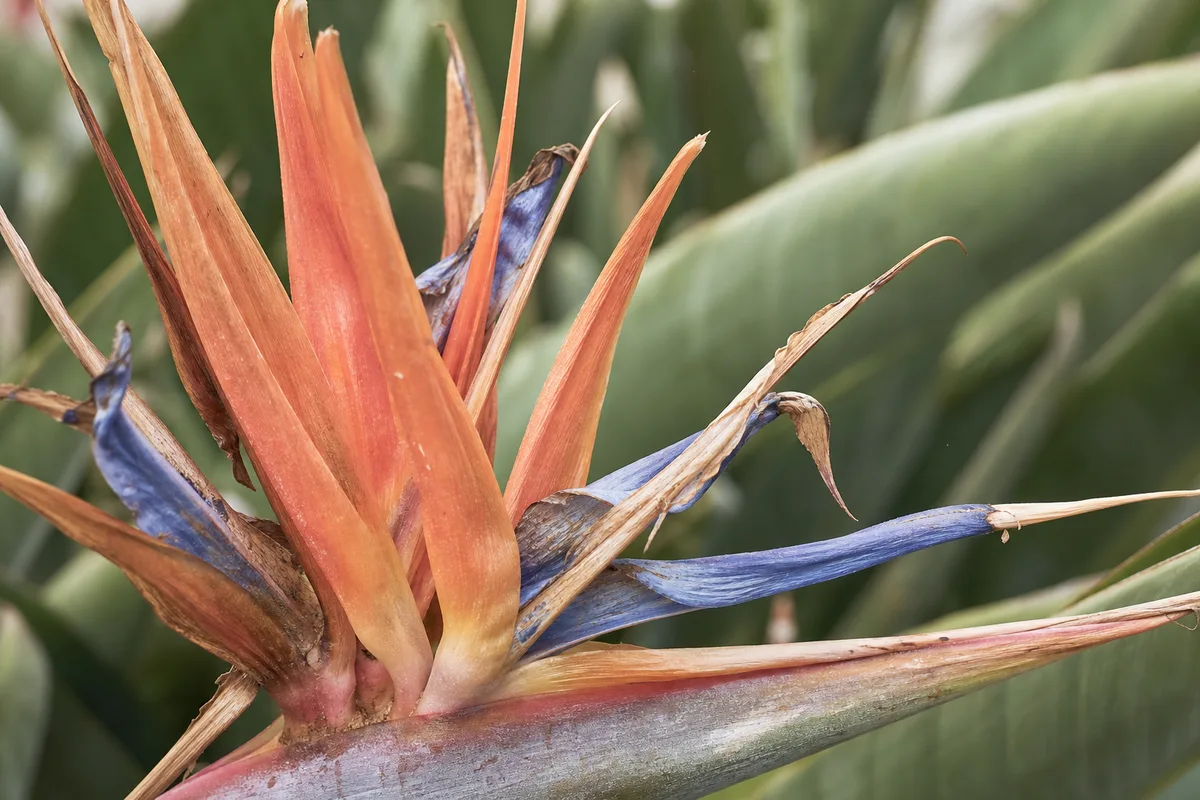
Faded Flowers symptoms on Bird of Paradise - compare with healthy tissue on the same plant.
Normal aging fade
Normal fade progresses slowly over days:
- Orange sepals lose saturation first, turning peachy or rusty before drying brown
- Blue petals curl inward, lose gloss, and crisp at the edges
- The spathe may stay green while individual flowers brown - that is still normal
- The supporting stalk remains green for a while, then shifts to tan and papery as the inflorescence fully senesces
- Paddle leaves nearby stay firm, gray-green, and upright
Wisconsin Horticulture notes that older flowers dry up after a while and can be carefully removed as newer flowers emerge, or left to shrivel on the stalk until the whole inflorescence is spent.
Premature fade or collapse
Premature problems look different:
- Color drains within two to four days of opening despite firm leaves
- Buds brown and abort inside the spathe before fully opening - overlap with bud drop
- Petals go limp and water-soaked rather than crisp and papery
- Fading coincides with multiple yellow leaves, sour wet soil, or pest coating on new growth
- Indoor blooms directly above a heat vent or ripening-fruit bowl collapse faster than the rest of the plant
Species note: reginae vs. nicolai
Most indoor “bird of paradise” bloom questions involve Strelitzia reginae - orange and blue flowers on separate stalks beside the leaf fans. Strelitzia nicolai (giant or white bird of paradise) is primarily a foliage houseplant; its white-and-blue flowers appear high in mature outdoor specimens and rarely bloom indoors. If your plant has banana-scale leaves and no orange bracts, faded-flower care on reginae still applies to any rare nicolai bloom - but lack of flowers is usually species and space, not fade timing.
Why Bird of Paradise flowers fade
Natural bloom lifespan
Fade is the end of a normal inflorescence life cycle. The RHS growing guide states each Strelitzia reginae flower lasts up to a month, standing above the foliage in winter and spring. Indoors, dry air and lower light often compress that window to one to three weeks of peak color.
Bird of paradise does not rebloom on the same stalk. Each stalk is a one-time flowering structure. Once petals senesce, the plant’s next show depends on overall vigor, light, maturity, and whether new stalks are already forming at the rhizome - not on leaving dead petals attached.
Low humidity and dry indoor air
Strelitzia has large paddle leaves that transpire heavily. The RHS notes brown leaf edges and flowering problems when humidity is too low and recommends misting or a humidity tray. The same dry air that crispens leaf margins accelerates petal desiccation on open blooms. Winter heating without supplemental humidity is a common reason indoor flowers look tired within days even when the plant is otherwise healthy.
Heat and direct sun stress on open blooms
Mature bird of paradise tolerates strong light - NC State lists full sun to partial shade - but a bloom positioned against hot glass or above a radiator can lose color faster than foliage elsewhere on the plant. Heat above roughly 85°F (29°C) at the flower level speeds petal curl without necessarily harming roots.
Ethylene exposure
Ethylene gas from ripening apples, bananas, and other climacteric fruit can hasten senescence on many tropical blooms. Keep flowering bird of paradise away from kitchen fruit bowls and enclosed cars during transport. This is an accelerator of normal fade, not a disease.
Spent blooms still draw resources
Until you remove them, faded inflorescences and their green-to-tan stalks continue occupying space and pulling energy that could support new leaf fans and future stalk initiation. UF/IFAS Gardening Solutions recommends removing dead leaves and spent flower stalks to keep plants neat and reduce fungal problems - aesthetic and practical, not an emergency rescue.
When fade points to deeper stress
If flowers collapse while buds on the same stalk abort, or fading pairs with no new flowers year after year, look beyond petal age. Chronic low light, recent repot into an oversized pot, root rot from overwatering, or immaturity (plants often need five to ten years before first bloom) explain poor bloom performance more often than “fading disease.”
How to confirm normal aging vs. a real problem
Work through these checks in order:
- Days since open - More than seven to ten days with only petal browning while leaves stay firm strongly supports normal aging.
- Stalk color and texture - Green, turgid stalk with brown petals only = still alive; wait before cutting. Tan, papery, dry stalk = ready for deadheading.
- Leaf health - Firm gray-green paddles with fade isolated to the inflorescence = cosmetic senescence. Multiple yellow leaves plus wet soil = check roots before blaming the bloom.
- Bud status - Buds dropping before open = bud drop, not fade. Small, weak blooms on an otherwise healthy stalk = see small flowers.
- Recent changes - Repot, move, or heat spike within two weeks of open blooms can accelerate fade; stabilize environment first.
- Light context - Compare bloom position to your light setup. Dim rooms produce shorter-lived, paler flowers even when fade is still “normal” for those conditions.
- Species ID - Confirm S. reginae if you expected orange-and-blue crane flowers; nicolai indoors is usually foliage-only.
| Pattern | Timeline | Stalk | Leaves | Likely verdict | Action |
|---|---|---|---|---|---|
| Normal aging | 1–3+ weeks after open | Green → tan slowly | Firm, green | Expected senescence | Deadhead when stalk is papery |
| Premature fade | 2–4 days after open | Green but limp bloom | Firm | Heat, ethylene, or dry air | Fix environment; deadhead when dry |
| Bud blast | Before full open | Green, buds brown inside | May yellow if stressed | Water/light shock | See bud-drop guide |
| Plant decline | Any | Any | Yellowing, wet soil | Root or crown stress | Inspect roots; not a flower-only issue |
First fix: deadhead spent inflorescences at the base
When the flower stalk is fully tan and papery, cut it flush at the rhizome with sterilized bypass pruners.
That single action is the correct first response to faded flowers on a healthy plant. It improves appearance, reduces fungal debris, and clears space for new growth - without the risk of cutting live tissue.
Step-by-step deadheading
- Wait for the right stage - The RHS advises removing the whole flower stalk once each flower fades, meaning after the inflorescence is spent and the stalk has dried - not while still green.
- Sterilize tools - Wipe bypass pruners with 70% isopropyl alcohol. Thick stalks on mature plants may need a serrated knife; keep cuts clean.
- Trace the stalk to the crown - Flower stalks emerge beside leaf fans from the rhizome, not from mid-leaf. Follow the stalk to its base at soil level on that fan cluster.
- Cut flush at the base - UF/IFAS MG106 recommends removing old flower stalks for aesthetic quality. Make one smooth cut at the rhizome - no stub, no mid-stalk chop.
- Do not pull - Twisting or yanking risks tearing rhizome tissue. Cut, do not snap, unless the stalk is fully desiccated and releases with gentle pressure.
- Bag and discard - Compost only if tissue is clean; discard suspicious mushy material.
- Leave green stalks alone - If any part of the stalk is still green, wait. Green stalks are still transporting nutrients.
For full pruning context - dead leaves, fan thinning, and timing - see the Bird of Paradise pruning guide.
What to expect after flowers fade
Faded petals do not “recover” to orange and blue. Senesced tissue stays brown; success is a clean plant ready for its next growth phase.
Immediately after deadheading: The clump looks tidier. No watering or fertilizer change is required solely because a bloom ended.
Next few weeks: New leaf spears may continue unfurling from existing fans. That is normal and healthy. Do not expect a replacement flower stalk overnight.
Next bloom cycle: Future stalks depend on plant age, light, and slight root restriction. Wisconsin Horticulture notes that insufficient light is the most common reason mature Strelitzia fail to bloom well indoors, and that plants bloom more profusely when slightly pot-bound. A deadheaded plant may not flower again for many months - sometimes not until the following season - even when care is correct.
Indoor vs. outdoor: Blooms moved outdoors for summer often hold color longer in humid coastal air than furnace-dried winter rooms. That difference is environmental, not a sign of indoor failure.
Lookalike symptoms and causes to rule out
Flower fade overlaps with several sibling problems:
- Bud drop - Buds abort before opening. No full bloom ever developed to fade.
- No flowers - Plant never produces stalks, or stalks stall green for months. Maturity and light are the leads.
- Small flowers - Blooms open but stay undersized or pale from the start - a vigor and light issue, not end-of-life fade.
- Brown leaves - Paddle browning from underwatering or root stress is leaf tissue failure, not spent bracts on a stalk.
- Sunburn - Bleached or crisp patches on leaves after a sudden move to harsh sun - check light stress before deadheading healthy stalks.
What not to do
Do not cut green flower stalks because blooms look less vivid. Green stalks are still alive; removing them can delay the next inflorescence by a season or more on indoor plants.
Do not pull spent stalks. Rhizome tears invite rot and weaken the clump.
Do not fertilize heavily right after fade hoping to “push” new blooms. Feed during active spring and summer growth on healthy plants - not as a panic response to brown petals.
Do not repot immediately after your first successful bloom. Bird of paradise often flowers best slightly root-bound. Repotting resets the clock.
Do not treat normal petal browning as a leaf-disease spray problem. Pesticides on senescing flowers solve nothing and stress the plant.
Do not deadhead live orange-and-blue blooms for aesthetics unless you accept cutting a stalk that will not rebloom on that stem.
How to prevent premature fading next time
- Maximize usable light - Wisconsin Horticulture recommends nearly full sun in summer and as much light as possible in winter for bloom. See the light guide for window placement.
- Hold moderate humidity - Target 50–60% during bloom; mist or use a pebble tray when heating runs.
- Avoid bloom-zone heat - Keep inflorescences off radiators and away from hot glass midday.
- Move fruit away - Reduce ethylene exposure from ripening produce.
- Deadhead on schedule - Remove tan stalks promptly so debris does not harbor moisture or pests.
- Stable watering - Allow the top few centimeters to dry between soaks per your watering rhythm; swings during bud set worsen both bud drop and short-lived blooms.
- Feed in season - Regular feeding during spring and summer supports the next stalk initiation; see the fertilizer guide.
When faded flowers signal a deeper problem
Escalate beyond deadheading if:
- Every new bud aborts before open for two or more cycles - read bud drop
- The plant has not produced a stalk in years despite age and bright light - read no flowers
- Fading comes with crown softness, sour soil, and widespread yellow leaves - inspect for root rot before any more pruning
- Pests coat new spears or sticky residue appears under paddles - treat the infestation; petal fade is secondary
Normal fade alone is not urgent. A tan papery stalk on firm green leaves is housekeeping, not triage.
Related Bird of Paradise flower guides
- Pruning and deadheading technique
- No flowers troubleshooting
- Small or weak blooms
- Bud drop before open
- Light requirements for bloom
- Bird of Paradise care overview
Conclusion
Faded flowers on Bird of Paradise are usually the normal end of a short, spectacular show - not a crisis. Confirm whether petals are browning after a week or more on firm leaves, then deadhead only when the stalk turns tan and papery, cutting at the rhizome base with clean pruners. Never cut green stalks, never pull, and do not expect the same stem to bloom again. For stronger, longer-lasting flowers next season, prioritize bright direct light, stable watering, moderate humidity, and prompt removal of spent inflorescences while investigating bud drop, no flowers, or root stress only when fade patterns do not match normal aging.