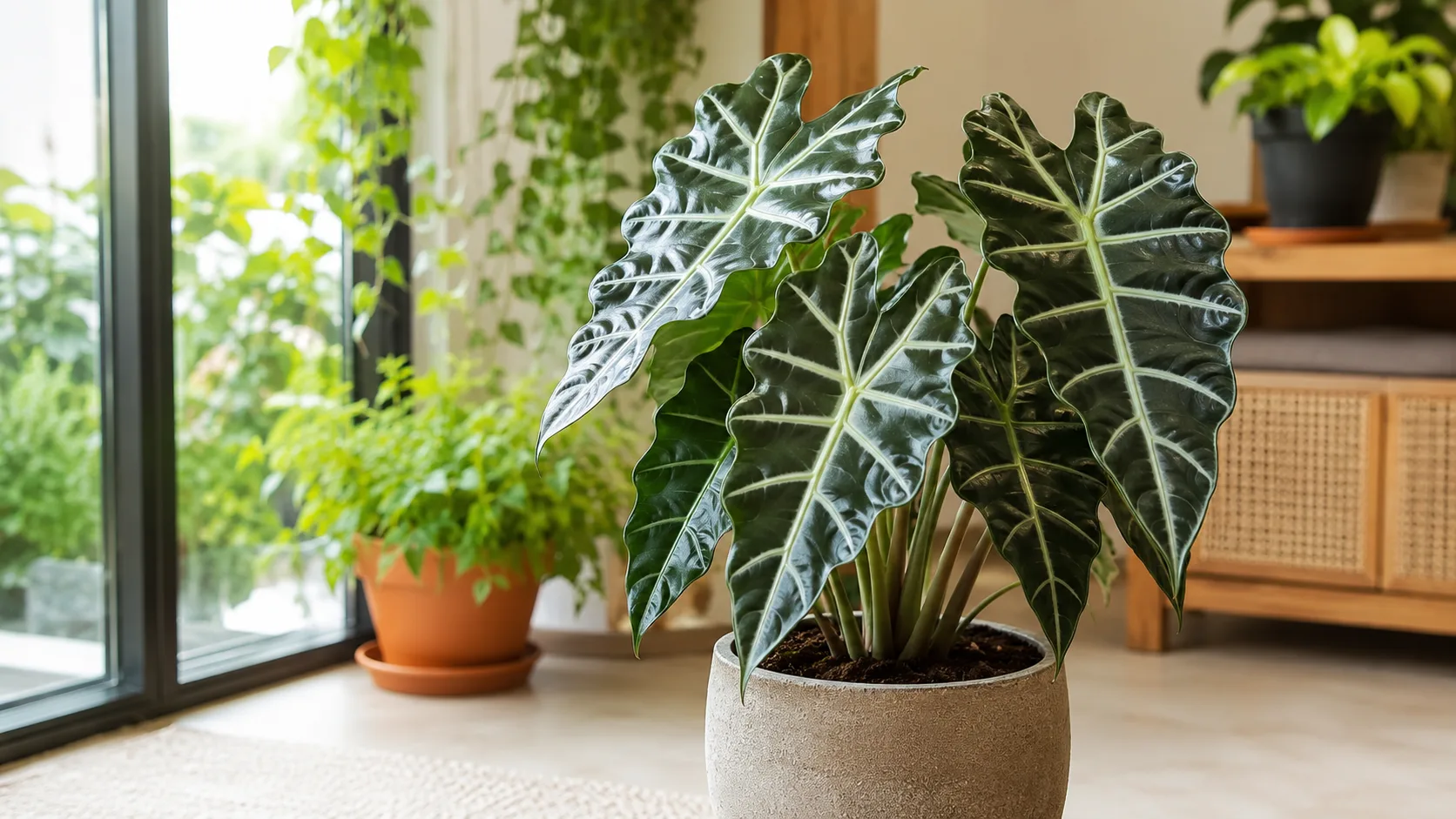
Alocasia Polly Care Guide – African Mask Plant Tips
Alocasia × amazonica 'Polly'
Alocasia Polly needs bright indirect light, high humidity (60–80%), and well-draining aroid mix. Water when the top inch dries and avoid cold drafts.
Alocasia Polly Care Guide – African Mask Plant Tips
Start with wateringThe most common care mistake for Alocasia PollyWatering guide →Alocasia Polly care essentials
Light
bright indirect light
Water
Water when the top inch of soil is dry; reduce significantly in winter when dormancy is likely.
Soil
Well-draining, chunky aroid mix that holds some moisture without becoming waterlogged.
Humidity
60–80%
Temperature
18–26°C (65–80°F)
Fertilizer
Use balanced liquid fertilizer (20-20-20) at half strength and stop if the plant is stressed, newly repotted, or not actively growing. Over-fertilizing in winter; salt buildup causes brown tips.
About Alocasia Polly
Alocasia Polly is native to Hybrid (Southeast Asian parentage), typically reaches 45–60 cm tall indoors indoors, with moderate during growing season growth. Alocasia Polly has a upright growth habit and part of the Araceae family. It is also known as African Mask Plant, Elephant Ear Polly, and Jewel Alocasia.
| Detail | Information |
|---|---|
| Also known as | African Mask Plant, Elephant Ear Polly, Jewel Alocasia |
| Native region | Hybrid (Southeast Asian parentage) |
| Mature size | 45–60 cm tall indoors |
| Growth rate | Moderate during growing season |
| Growth habit | Upright |
| Scientific name | Alocasia × amazonica 'Polly' |
| Family | Araceae |
How to care for Alocasia Polly?
How much light does Alocasia Polly need?
bright indirect light
- bright indirect light - bright indirect light.
When should you water Alocasia Polly?
Water when the top inch of soil is dry; reduce significantly in winter when dormancy is likely.
- Stick finger 2–3 cm into soil; water when it feels dry - Water when the top inch of soil is dry; reduce significantly in winter when dormancy is likely.
- Drain excess water - Water when the top inch of soil is dry; reduce significantly in winter when dormancy is likely.
What soil works best for Alocasia Polly?
Well-draining, chunky aroid mix that holds some moisture without becoming waterlogged.
- perlite - Light white granules that keep soil airy and help prevent compaction.
- orchid bark - Chunky bark pieces that create air pockets and mimic epiphytic growing conditions.
- peat-free potting mix - Well-draining, chunky aroid mix that holds some moisture without becoming waterlogged.
Grower notes for Alocasia Polly
What matters most with Alocasia Polly
Alocasia Polly is easiest to grow when you judge the whole plant: new growth, root-zone moisture, light exposure, and how quickly the pot dries after watering. In practice, the care checkpoint is simple: bright indirect light. Pair that with well-draining, chunky aroid mix that holds some moisture without becoming waterlogged, and avoid changing water, pot size, and placement all at once.
Best placement in a real home
Alocasia Polly belongs where bright indirect light is realistic for most of the day, not only where the pot looks good. Water when the top inch of soil is dry; reduce significantly in winter when dormancy is likely. If the pot stays wet longer than expected, move the plant into better light or reassess the mix before watering again. Humidity target: 60–80%. Temperature comfort zone: 18–26°C (65–80°F).
Before you buy this plant
Choose Alocasia Polly with firm new growth, clean leaf undersides, and soil that does not smell sour or feel compacted. Be cautious if you see yellow-leaves, sticky residue, collapsed crowns, or a pot that is wet in poor light. Cosmetic old-leaf damage is less worrying than weak roots or active pests.
First month after bringing it home
Do not repot Alocasia Polly on day one unless the mix is failing or pests are obvious. Quarantine it, learn how fast the pot dries, and keep care boring while it adjusts. Watch especially for yellow-leaves, brown-tips, and spider-mites. If problems appear, correct the condition first rather than stacking fertilizer, repotting, and pruning together.
Safety note for Alocasia Polly
Alocasia Polly is not a plant to keep within reach of pets or children. The database flags it for cats, dogs, and humans. Use gloves if sap or plant tissue is irritating, and pick a pet-safe alternative for floor pots or low shelves.
How to tell Alocasia Polly is settling in
Also sold as African Mask Plant, Elephant Ear Polly, and Jewel Alocasia, this plant should be judged by stable new growth rather than label names alone. If you plan to multiply it later, common methods include Division of rhizome corms and Offset separation. Repot only when you see roots circling pot and rapid soil drying. If brown-tips shows up early, inspect light, watering, and roots before assuming the plant is permanently weak.
Is it pet safe?
Alocasia Polly is toxic to cats and dogs and humans.
Contains insoluble calcium oxalate crystals causing oral irritation, drooling, and vomiting if ingested.
Watering Alocasia Polly
For Alocasia Polly, stick finger 2–3 cm into soil; water when it feels dry and water every 7–10 days in summer; every 2–3 weeks in winter. Reduce watering significantly in autumn and winter; plant may go dormant.
| Detail | Information |
|---|---|
| How often | Every 7–10 days in summer; every 2–3 weeks in winter |
| How to check | Stick finger 2–3 cm into soil; water when it feels dry |
| Seasonal changes | Reduce watering significantly in autumn and winter; plant may go dormant |
Signs of overwatering
- yellow leaves
- mushy petioles
- soggy soil
- root rot
Signs of underwatering
- drooping leaves
- dry crispy edges
- slow growth
Soil & potting for Alocasia Polly
Use a mix of perlite, orchid bark, peat-free potting mix, coarse sand for Alocasia Polly. Fast-draining; never let sit in water. Target soil pH around 5.5–6.5. Repot every 1–2 years, ideally in spring.
| Detail | Information |
|---|---|
| Recommended mix | perlite, orchid bark, peat-free potting mix, coarse sand |
| Drainage | Fast-draining; never let sit in water |
| Soil pH | 5.5–6.5 |
| Repotting frequency | Every 1–2 years |
| Best season to repot | Spring |
Signs it needs repotting
- roots circling pot
- rapid soil drying
- stunted growth
Humidity & temperature for Alocasia Polly
Alocasia Polly prefers 60–80%, though normal home humidity is usually fine. Keep temperatures around 18–26°C (65–80°F).
| Detail | Information |
|---|---|
| Humidity | 60–80% - normal home humidity is fine. |
| Ideal temperature | 18–26°C (65–80°F) |
Fertilizer & pruning for Alocasia Polly
Use use balanced liquid fertilizer (20-20-20) at half strength and stop if the plant is stressed, newly repotted, or not actively growing. Over-fertilizing in winter; salt buildup causes brown tips. for Alocasia Polly.
| Detail | Information |
|---|---|
| Fertilizer type | Use balanced liquid fertilizer (20-20-20) at half strength and stop if the plant is stressed, newly repotted, or not actively growing. Over-fertilizing in winter; salt buildup causes brown tips. |
Common problems on Alocasia Polly
Yellow Leaves
MediumLikely cause: Overwatering or low humidity
Quick fix: Reduce watering; boost humidity above 60%
Full fix guide →Brown Tips
LowLikely cause: Low humidity or fluoride in tap water
Quick fix: Use filtered water; increase humidity
Full fix guide →Spider Mites
HighLikely cause: Hot, dry indoor air
Quick fix: Wipe leaves with neem oil solution; raise humidity
Full fix guide →Root Rot
HighLikely cause: Soggy soil and poor drainage
Quick fix: Remove rot, repot into fresh chunky mix, reduce watering
Full fix guide →Overwatering
MediumLikely cause: Common on this plant type; confirm with recent watering, light, and root checks.
Quick fix: Inspect the plant and correct the most likely care stressor before stacking treatments.
Full fix guide →Underwatering
MediumLikely cause: Common on this plant type; confirm with recent watering, light, and root checks.
Quick fix: Inspect the plant and correct the most likely care stressor before stacking treatments.
Full fix guide →Mealybugs
MediumLikely cause: Common on this plant type; confirm with recent watering, light, and root checks.
Quick fix: Inspect the plant and correct the most likely care stressor before stacking treatments.
Full fix guide →Aphids
MediumLikely cause: Common on this plant type; confirm with recent watering, light, and root checks.
Quick fix: Inspect the plant and correct the most likely care stressor before stacking treatments.
Full fix guide →Leggy Growth
MediumLikely cause: Common on this plant type; confirm with recent watering, light, and root checks.
Quick fix: Inspect the plant and correct the most likely care stressor before stacking treatments.
Full fix guide →Slow Growth
MediumLikely cause: Common on this plant type; confirm with recent watering, light, and root checks.
Quick fix: Inspect the plant and correct the most likely care stressor before stacking treatments.
Full fix guide →Wilting
MediumLikely cause: Common on this plant type; confirm with recent watering, light, and root checks.
Quick fix: Inspect the plant and correct the most likely care stressor before stacking treatments.
Full fix guide →Drooping Leaves
MediumLikely cause: Common on this plant type; confirm with recent watering, light, and root checks.
Quick fix: Inspect the plant and correct the most likely care stressor before stacking treatments.
Full fix guide →Low Humidity
MediumLikely cause: Common on this plant type; confirm with recent watering, light, and root checks.
Quick fix: Inspect the plant and correct the most likely care stressor before stacking treatments.
Full fix guide →Not Enough Light
MediumLikely cause: Common on this plant type; confirm with recent watering, light, and root checks.
Quick fix: Inspect the plant and correct the most likely care stressor before stacking treatments.
Full fix guide →Fungus Gnats
MediumLikely cause: Common on this plant type; confirm with recent watering, light, and root checks.
Quick fix: Inspect the plant and correct the most likely care stressor before stacking treatments.
Full fix guide →Mold on Soil
MediumLikely cause: Common on this plant type; confirm with recent watering, light, and root checks.
Quick fix: Inspect the plant and correct the most likely care stressor before stacking treatments.
Full fix guide →Curling Leaves
MediumLikely cause: Common curling leaves pattern on Alocasia Polly under indoor care stress.
Quick fix: Inspect roots, watering, light, and pests; adjust one variable and monitor new growth.
Full fix guide →Brown Leaves
MediumLikely cause: Common brown leaves pattern on Alocasia Polly under indoor care stress.
Quick fix: Inspect roots, watering, light, and pests; adjust one variable and monitor new growth.
Full fix guide →Black Spots
MediumLikely cause: Common black spots pattern on Alocasia Polly under indoor care stress.
Quick fix: Inspect roots, watering, light, and pests; adjust one variable and monitor new growth.
Full fix guide →Holes in Leaves
MediumLikely cause: Common holes in leaves pattern on Alocasia Polly under indoor care stress.
Quick fix: Inspect roots, watering, light, and pests; adjust one variable and monitor new growth.
Full fix guide →Pale Leaves
MediumLikely cause: Common pale leaves pattern on Alocasia Polly under indoor care stress.
Quick fix: Inspect roots, watering, light, and pests; adjust one variable and monitor new growth.
Full fix guide →Distorted Leaves
MediumLikely cause: Common distorted leaves pattern on Alocasia Polly under indoor care stress.
Quick fix: Inspect roots, watering, light, and pests; adjust one variable and monitor new growth.
Full fix guide →Scale Insects
MediumLikely cause: Common scale insects pattern on Alocasia Polly under indoor care stress.
Quick fix: Inspect roots, watering, light, and pests; adjust one variable and monitor new growth.
Full fix guide →Thrips
MediumLikely cause: Common thrips pattern on Alocasia Polly under indoor care stress.
Quick fix: Inspect roots, watering, light, and pests; adjust one variable and monitor new growth.
Full fix guide →Whiteflies
MediumLikely cause: Common whiteflies pattern on Alocasia Polly under indoor care stress.
Quick fix: Inspect roots, watering, light, and pests; adjust one variable and monitor new growth.
Full fix guide →Leaf Miners
MediumLikely cause: Common leaf miners pattern on Alocasia Polly under indoor care stress.
Quick fix: Inspect roots, watering, light, and pests; adjust one variable and monitor new growth.
Full fix guide →Caterpillars
MediumLikely cause: Common caterpillars pattern on Alocasia Polly under indoor care stress.
Quick fix: Inspect roots, watering, light, and pests; adjust one variable and monitor new growth.
Full fix guide →Nitrogen Deficiency
MediumLikely cause: Common nitrogen deficiency pattern on Alocasia Polly under indoor care stress.
Quick fix: Inspect roots, watering, light, and pests; adjust one variable and monitor new growth.
Full fix guide →Iron Deficiency
MediumLikely cause: Common iron deficiency pattern on Alocasia Polly under indoor care stress.
Quick fix: Inspect roots, watering, light, and pests; adjust one variable and monitor new growth.
Full fix guide →Magnesium Deficiency
MediumLikely cause: Common magnesium deficiency pattern on Alocasia Polly under indoor care stress.
Quick fix: Inspect roots, watering, light, and pests; adjust one variable and monitor new growth.
Full fix guide →Potassium Deficiency
MediumLikely cause: Common potassium deficiency pattern on Alocasia Polly under indoor care stress.
Quick fix: Inspect roots, watering, light, and pests; adjust one variable and monitor new growth.
Full fix guide →Calcium Deficiency
MediumLikely cause: Common calcium deficiency pattern on Alocasia Polly under indoor care stress.
Quick fix: Inspect roots, watering, light, and pests; adjust one variable and monitor new growth.
Full fix guide →