Brown Tips on Alocasia Polly: Causes, Checks & Fixes
Quick answer
Brown tips on Alocasia Polly usually mean dry indoor air, fluoride or salt buildup in tap water, or root stress from wet soil-not a single generic watering mistake. First step: check the newest unfurling leaf and a hygrometer reading at leaf height, then probe soil moisture 2–3 cm deep before changing water or humidity.
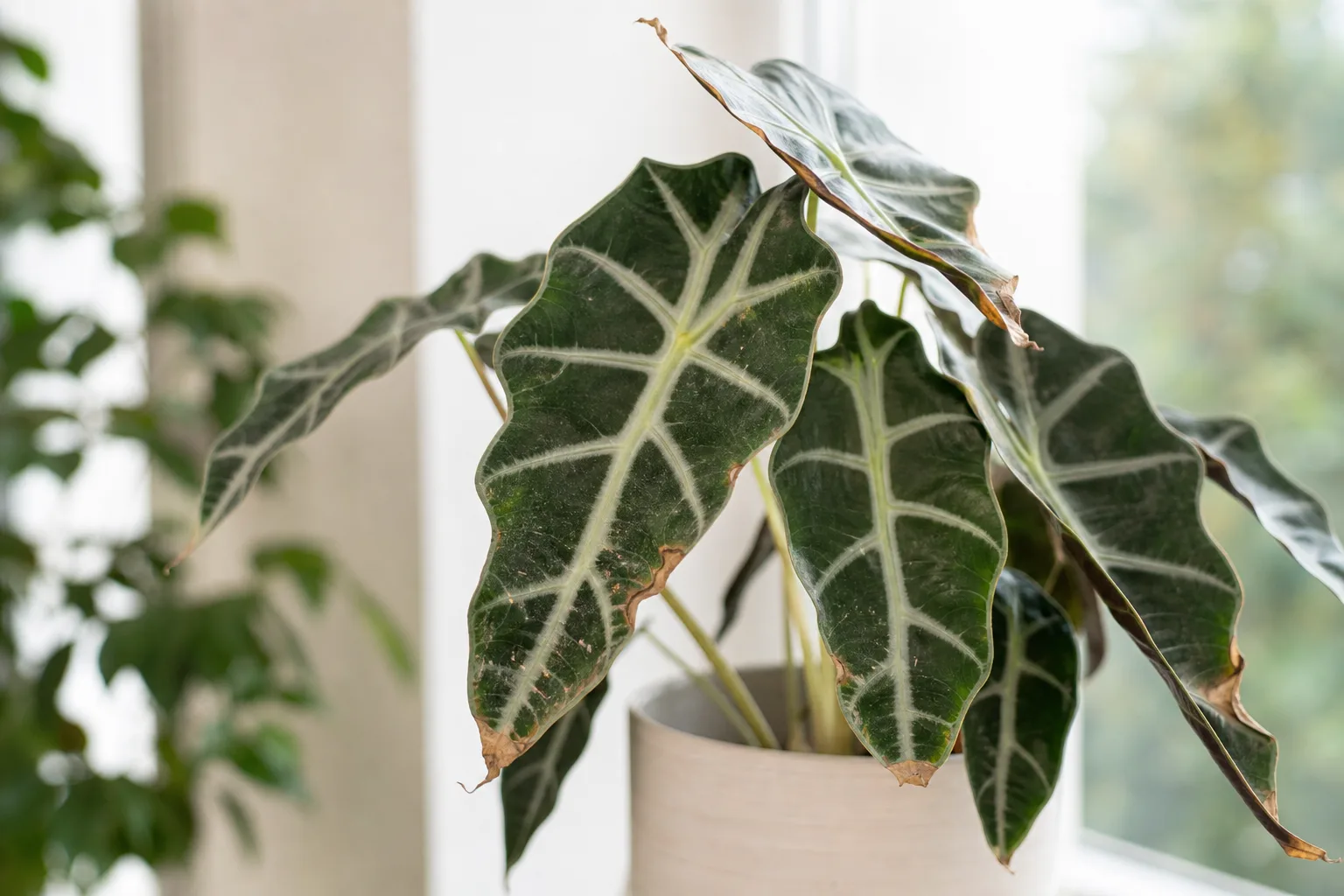
Brown Tips on Alocasia Polly: Causes, Checks & Fixes
This guide covers brown tips on Alocasia Polly. See also the general Brown Tips guide, watering, and light pages for this plant.
Brown Tips on Alocasia Polly: Causes, Checks & Fixes
Quick answer
Brown tips on Alocasia Polly (Alocasia × amazonica ‘Polly’) almost always trace to environmental edges-dry winter air, minerals or fluoride in tap water, salt buildup from fertilizer, or damaged roots from staying too wet-not random “bad luck” on the foliage. This compact African mask plant has large, thin-margined leaves on a small root volume, so stress shows at the tips before the rest of the leaf fails. Missouri Botanical Garden lists Alocasia for high humidity locations with consistently moist, well-drained soil-conditions far from a radiator shelf at 25% relative humidity (RH).
First step: inspect the newest leaf and measure RH at leaf height. If the unfurling blade already has brown edges and your hygrometer reads below 40–45%, start with a cool-mist humidifier in the same room-not extra watering. If humidity looks fine but new leaves brown as they open, switch to filtered or rainwater before changing anything else. If tips appear on yellowing leaves with wet soil, stop watering and check the corm- that pattern is overwatering, not dry air.
For overlapping dry-air damage, see low humidity on Alocasia Polly. For stippling plus webbing on glossy leaves, see spider mites.
What brown tips look like on Alocasia Polly
Polly’s dark, arrow-shaped leaves with silver veins make tip damage easy to spot-but the pattern tells you which cause is likely.
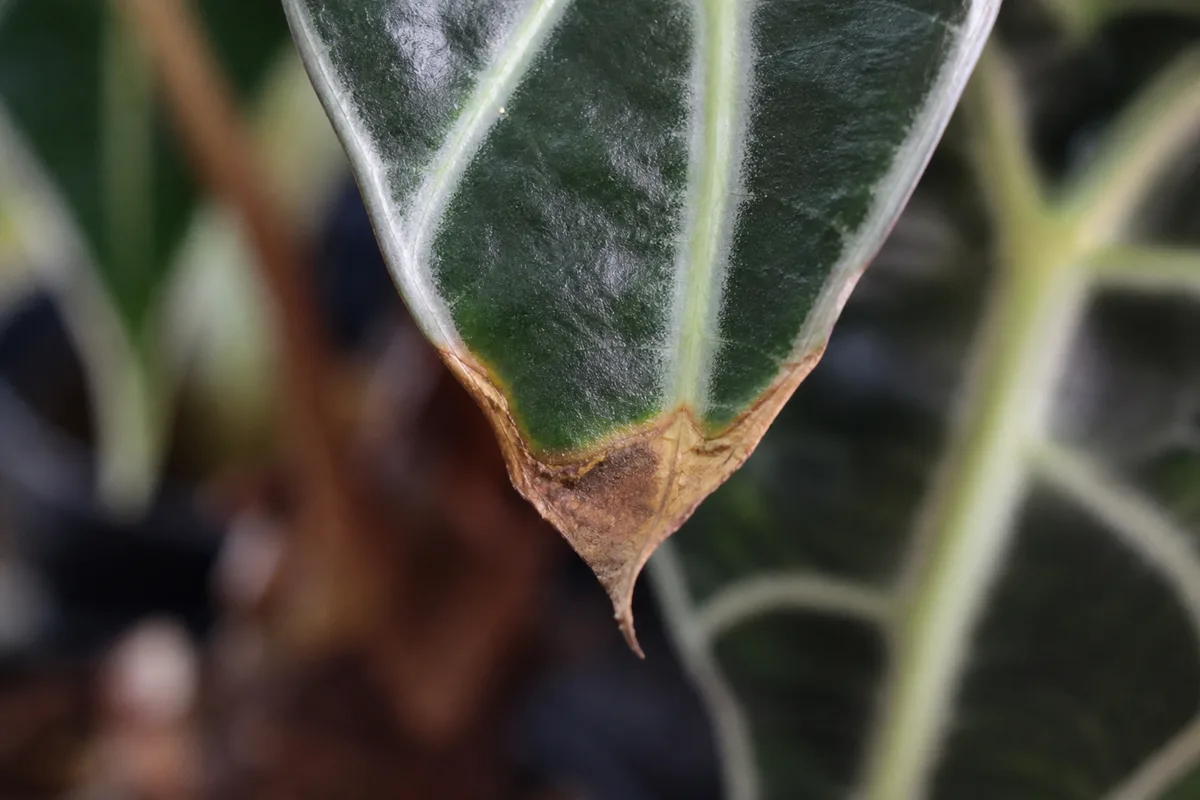
Brown Tips symptoms on Alocasia Polly - compare with healthy tissue on the same plant.
Dry-air tip burn
- Crispy tan-to-brown tips and margins on otherwise firm, dark green leaves
- Often starts on the leaf closest to a heat vent, radiator, or drafty window
- New leaves may stall while unfurling, with brown edges on the emerging blade
- Soil moisture at 2–3 cm depth feels appropriate-not bone dry, not soggy
- Common when indoor RH drops after heating season starts
Tap-water and salt burn
- Brown or scorched tips on newer leaves, sometimes shortly after a leaf fully opens
- May follow months of untreated tap water, heavy fertilizer, or white crust on the pot rim
- Clemson HGIC notes fluoride and salt buildup as common causes of brown leaf tips on sensitive houseplants
- Older leaves can look fine while the newest one shows burn first
- Corm still firm; petioles not mushy unless overwatering overlapped
Overwatering-related tip stress
- Brown tips plus yellowing lower leaves despite damp soil
- Petioles soft or base of plant limp; sour smell from mix possible
- Damaged roots cannot supply leaf margins normally-tips dry even when soil feels wet
- Often follows watering more because leaves “look dry”
- Escalates toward root rot if the corm softens
Spider mite damage
- Fine stippling (pale dots) on leaf surface with tip browning on heavily fed leaves
- Webbing on undersides or between petiole and leaf in advanced cases
- NC State notes Alocasia are prone to spider mites; UMN Extension links mite outbreaks to warm, dry indoor air
- Damage worsens in winter when humidity is low and heat runs constantly
- Wipe test: tap a leaf over white paper and look for moving orange specks
Direct sun scorch
- Bleached or brown patches on the side facing a south or west window-not isolated tip-only burn
- MOBOT warns direct sun can cause leaf burn on Alocasia grown in too much light
- Appears within days after moving Polly closer to glass or removing a sheer curtain
- Stems and corm firm; soil pattern unchanged
Dormancy-related older-leaf browning
- Lower, older leaves yellow or brown at tips before dropping in cool, short-day winter
- Growth slows; you may have already reduced watering appropriately
- Newest leaf may still look acceptable if dormancy is mild
- Corm firm; no sour soil smell
- Different from active stress, which hits new growth first
Why Alocasia Polly gets brown tips
Polly is a compact tropical aroid sold as a houseplant for its upright, glossy foliage-not a forgiving beginner plant in dry apartments. Three biological traits explain why tips burn here faster than on a snake plant or pothos:
Large leaf surface, small pot. A 4-inch Polly pot holds limited root mass to replace water lost from big, thin-margined leaves. Margins are the first tissue to desiccate when transpiration outpaces uptake-whether from dry air or roots that cannot drink because they are rotting in wet mix.
Humidity demand. Alocasia prefer high humidity locations and part shade or bright indirect light-not the 20–35% RH typical of centrally heated US homes in winter. Penn State Extension notes indoor RH during heating season can fall below 30%, well under what tropical foliage prefers.
Water chemistry sensitivity. Araceae as a group are often flagged for fluoride and soluble salt injury at leaf edges. Clemson HGIC lists fluoride or chlorine in tap water, salt accumulation, low humidity, and improper watering among causes of brown tips on houseplants. Polly’s constant new leaf production makes it a visible early warning for bad water-not because the cultivar is uniquely cursed, but because each unfurling leaf tests your current conditions.
The overwatering misread. Owners see crispy tips and water more. On Alocasia, wet soil kills fine roots; the plant then cannot hydrate leaf edges even though the pot feels damp-a classic wet-wilt paradox covered on the overwatering guide.
How to confirm the cause
Work through this checklist before stacking humidifier, repot, and fertilizer changes:
- Newest leaf first. Active dry-air or water-quality stress shows on the leaf opening now. Older-tip-only damage with clean new growth may be past stress or dormancy.
- Hygrometer at leaf height. Place a digital hygrometer within 30 cm of the canopy. RH below 40% during active growth strongly supports dry air; above 50% with continuing new-leaf burn points to water or salts.
- Soil moisture at 2–3 cm. Stick a finger or chopstick into the mix-not just the surface. Dry throughout with a light pot fits underwatering on Alocasia Polly margins (rare as primary tip cause on Polly). Wet depth with yellow lowers fits overwatering.
- Water source and fertilizer history. Tap-only watering for months, recent heavy feeding, or white crust on the rim raises salt or fluoride probability. See the Alocasia Polly watering guide for water-type guidance.
- Pest check on undersides. Stippling, webbing, or moving specks on a white paper tap test mean spider mites-treat pests before blaming humidity alone.
- Light and placement. Direct afternoon sun on dark leaves, or a pot directly under an HVAC vent, creates localized burn unrelated to whole-room humidity.
- Corm firmness. Press gently at the soil line. Soft, mushy tissue with wet soil is rot urgency-not cosmetic tips. See root rot.
Write down which rows matched. Three different patterns need three different first fixes.
First fix for Alocasia Polly
Match one action to what you confirmed:
- RH below 45%, firm leaves, correct soil moisture: Run a cool-mist humidifier in the same room, targeting 50–60% RH at leaf height, and move the pot off radiator ledges and out of HVAC blow paths. Details on the low humidity guide.
- Good humidity, new leaves browning as they open, tap-water history: Switch to filtered, distilled, or rainwater for the next four to six weeks. Flush the pot once with plain water if white salt crust is visible and drainage is excellent-then pause fertilizer until one clean new leaf opens.
- Wet soil, yellow lower leaves, soft petioles: Stop watering. Do not raise humidity or change water type until the mix dries and the corm is firm. Follow the overwatering guide.
- Stippling, webbing, or mite tap-test positive: Isolate and rinse leaf undersides with lukewarm water. Confirm active pests before any spray-see spider mites on Alocasia Polly.
- Sun-facing bleached patches after a recent move: Shift to bright indirect light for one to two weeks, then adjust placement per the light guide.
Make one correction first. Do not repot, prune heavily, and fertilize on the same day.
Step-by-step recovery by cause
After dry air (low humidity)
- Start the humidifier and confirm RH at leaf height for most of the day.
- Relocate away from heat vents; grouping with other tropicals adds minor local humidity.
- Maintain normal watering rhythm from the watering guide-do not compensate for dry air with wetter soil.
- Wait for the next one or two new leaves to open cleanly before trimming old crispy margins.
After tap-water or salt burn
- Switch water source immediately for all future waterings.
- If salt crust is present and drainage is fast, drench once with plain water until excess runs free; empty the saucer.
- Hold fertilizer until new growth shows clean edges-Clemson HGIC recommends leaching and avoiding over-fertilization to reduce salt injury.
- Track only new leaves; old burned tips will not re-green.
After overwatering / root stress
- Stop watering until the top half of the mix dries-Polly’s corm needs oxygen at the roots.
- If the corm softens or smell turns sour, unpot and inspect-rot recovery overrides tip cosmetics.
- When soil is appropriately moist again, resume the dry-down schedule; do not “mist for humidity” on a stressed, wet-rooted plant.
After spider mites
- Isolate from other plants.
- Wash foliage repeatedly with lukewarm water, focusing on undersides-UMN Extension recommends repeated washing to reduce populations.
- Raise humidity as support, but insect control comes first if stippling is present.
After sun scorch
- Move to filtered bright light; remove fully dead leaf tissue if needed.
- Acclimate gradually if you return Polly to a brighter window-abrupt jumps burn dark leaves quickly.
Recovery timeline
Dry air: Existing brown tips stay brown. With a humidifier running, margin progression usually stops within one to two weeks; the next unfurling leaf is the pass/fail test-allow 10–21 days in active growth.
Water quality / salts: After switching water, expect one to two new leaves (roughly two to four weeks in warm months) before judging success. Salt flush effects show on the first leaf that opens after the flush, not the same day.
Overwatering: Recovery depends on corm health-not a cosmetic timeline. Firm corm and no new yellowing for 7–10 days after correcting moisture is the minimum stable sign.
Spider mites: Visible stippling may persist on old tissue; two to three weeks of washing plus control measures before new leaves look clean.
Dormancy browning: Older leaves may drop over winter without new-tip damage on the opening leaf-that is seasonal, not failure, if the corm stays firm.
Lookalike symptoms to rule out
| Pattern | Soil / RH | New vs old leaves | Likely cause | First step |
|---|---|---|---|---|
| Crispy tips, RH low, firm petioles | Appropriate moisture | New leaf affected | Dry air | Humidifier + vent avoidance |
| Scorched new leaf tips, good RH | Appropriate | Newest leaves | Tap water / salts | Switch water; leach if crust |
| Tips + yellow lowers, wet depth | Wet, heavy pot | Any age | Overwatering / roots | Stop water; inspect corm |
| Stippling + webbing | Any | Often newer growth | Spider mites | Isolate; wash undersides |
| Bleached sun-side patches | Unchanged | Exposed side | Sun scorch | Reduce direct sun |
| Lower leaf tip browning, cool season | Dry-down winter rhythm | Old leaves only | Dormancy | Hold normal winter care |
Whole-leaf yellow without isolated tips points to yellow leaves on Alocasia Polly-a different diagnostic path.
What not to do
Do not increase watering because tips look dry-confirm soil moisture first. Wet soil on a Polly corm causes more damage than brief dry air.
Do not fertilize to green up browned tips. Salt buildup from over-fertilizing browns leaf edges on houseplants already under stress.
Do not rely on misting alone in a dry winter room-it does not sustain the 50%+ RH Polly needs for clean new leaves.
Do not flush a pot that drains poorly or a plant with a soft corm-you will waterlog rotting roots.
Do not stack Alocasia Polly repotting guide, heavy pruning, pesticide, and fertilizer on the same day. One stress at a time.
Resting tap water overnight does not remove fluoride-Clemson HGIC notes standing water helps some sensitive plants but fluoride and many minerals remain; do not expect overnight resting to fix new-leaf burn if minerals are the cause.
How to prevent brown tips on Alocasia Polly
Align daily care with how Polly actually grows indoors:
- Humidity: Maintain 50–60% RH at leaf height through heating season-humidifier first, pebble tray as support. See low humidity.
- Water type: Use filtered or rainwater if tap causes repeated new-leaf burn; room-temperature water only. Full protocol in the watering guide.
- Watering rhythm: Water when the top 2–3 cm dries-consistently moist, never soggy. MOBOT recommends consistently moist, well-drained soils for Alocasia.
- Light: Bright indirect light-avoid sudden moves to harsh direct sun. Light guide.
- Placement: Keep off radiator shelves and out of HVAC blow paths; cold drafts below 60°F stress Polly and can trigger dormancy leaf drop.
- Feeding: Dilute houseplant fertilizer during active growth only; leach occasionally if you feed frequently and see white rim crust.
- Pests: Check undersides monthly in winter dry air-mites follow low humidity. Spider mite guide.
Check the newest leaf weekly during active growth. Clean margins on fresh unfurling tissue mean your humidity, water, and moisture rhythm are working.
When to worry
Escalate immediately if the corm softens, petioles collapse at the base, or browning spreads up the plant while soil stays wet-that is rot, not edge burn. Go to root rot on Alocasia Polly.
Also act promptly if mites coat new growth despite washing-populations explode in dry heat.
Cosmetic tips on a firm corm with stable clean new leaves can wait for the next scheduled care check-no emergency repot or feed required.
Alocasia Polly care cross-check
Brown tips rarely exist in isolation. If multiple leaves look wrong, verify the baseline:
- Watering - moisture rhythm and water type
- Light - bright indirect, not scorching glass
- Low humidity - RH targets and humidifier setup
- Overwatering - wet-soil lookalike
- Spider mites - stippling plus tips
- Yellow leaves - whole-leaf vs tip-only patterns
When to use this page vs other Alocasia Polly guides
- Alocasia Polly watering guide - Use for routine moisture checks before assuming brown tips is the main issue.
- Alocasia Polly problems hub - Browse all 16 common issues on this species.
- Low Humidity on Alocasia Polly - Different entry point when symptoms overlap with brown tips.
- Underwatering on Alocasia Polly - Different entry point when symptoms overlap with brown tips.
- Overwatering on Alocasia Polly - Different entry point when symptoms overlap with brown tips.