Alocasia Polly Propagation: Division, Offsets, and Corm
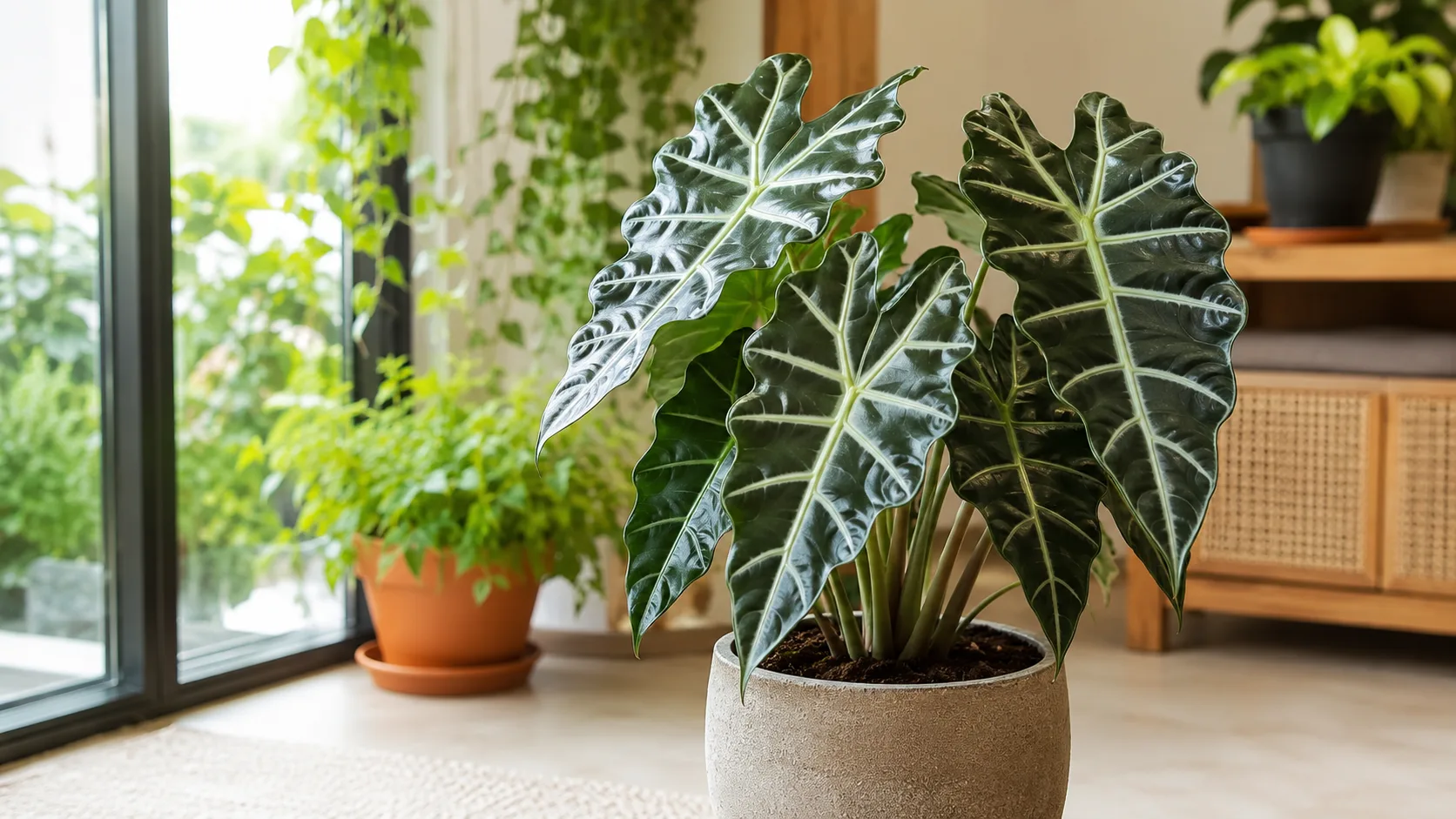
Alocasia Polly Propagation: Division, Offsets, and Corm Method
Alocasia Polly Propagation: Division, Offsets, and Corm Method
What Alocasia Polly Propagation Actually Means
Alocasia Polly propagation is the process of producing new Alocasia × amazonica ‘Polly’ plants from an existing one. Unlike many common houseplants, Alocasia does not root from a leaf or a stem segment. It grows from a thick underground stem called a rhizome, with smaller bulb-like corms and visible offsets (pups) clustered around the base. Those three structures - rhizome, corm, and offset - are the only materials that reliably become new plants. (Missouri Botanical Garden)
In practical terms, you have two choices. You can divide the mother plant at Alocasia Polly repotting guide, separating naturally formed sections that already have roots and a growth point. Or you can harvest the small corms that hide in the soil, then sprout them in a warm, humid medium. The first method gives you a near-instant new plant. The second gives you a small army of new plants, but only if you give them time, warmth, and steady humidity.
Why a Leaf or Stem Cutting Will Not Work
A single leaf with a piece of petiole will not produce a new Alocasia. The growth point that can restart a plant sits in the rhizome or the corm, not in the leaf blade or the petiole. This is also why Alocasia is often grouped with other rhizomatous aroids such as Alocasia zebrina and Alocasia ‘Black Velvet’ - they share the same underground architecture, as the Missouri Botanical Garden Plant Finder entry on Alocasia × amazonica confirms.
Some growers experiment with petiole cuttings in moist perlite under a humidity dome. The petiole may stay green for weeks, and a small number of growers report a corm forming at the base over time. That is not the same as a reliable method, and it is much slower than harvesting the corms the plant has already produced. Treat petiole or leaf “cuttings” as a curiosity, not a plan.
Rhizome, Corm, and Offset: The Three Structures That Matter
The rhizome is the main horizontal underground stem. It stores energy, sends up leaves, and produces the smaller structures used in propagation. The corm is a small, rounded, potato-like bulb that forms along the rhizome or its stolons. It is dormant by default, but under the right conditions it breaks dormancy and pushes out a leaf and roots. The offset - often called a pup - is the visible mini-plant that has already sprouted from a corm and is connected to the mother by a stolon or a short rhizome bridge. (Alocasia Plant)
A useful mental model: the rhizome is the trunk, offsets are the branches, and corms are the buds. Division works with branches. Corm sprouting works with buds. Leaf cuttings work with nothing at all.
The Two Methods That Actually Work
Division at Repotting
Division is the fastest and most reliable method. You unpot a mature Alocasia Polly, identify naturally formed clumps or offsets, and separate them with their own roots and growth point. Each section is essentially a small, complete plant, so the recovery period is short and the failure rate is low. (The Spruce) (Epic Gardening)
This method is ideal when your plant is already crowding its pot, sending roots out of the drainage holes, or producing multiple visible stems. It pairs naturally with routine repotting every one to two years, so you can divide and repot in the same session.
Corm Harvesting and Sprouting
Corms are the fallback when your plant is too young or too small to divide, or when you simply want more plants than division can give you. A mature Alocasia typically produces several corms per year; some heavy producers hide ten or more in a single root ball. (Ariumology)
Corms require more patience. They are dormant, with no leaves, and you cannot watch them grow on day one. The trade-off is volume. A single repotting can yield enough corms to multiply your collection several times over, and rare cultivars are often shared through corms rather than divisions.
Best Season: Spring and Early Summer
The best time to propagate Alocasia Polly is during active growth, which for most indoor growers means spring and early summer. The plant is coming out of winter dormancy, pushing new leaves, and primed to recover from any root disturbance - a window confirmed for Alocasia by the Royal Horticultural Society’s Alocasia growing guide.
Avoid propagation in late fall and winter. Cooler indoor temperatures, shorter days, and slower growth all reduce the plant’s ability to push new roots and leaves. A division made in December often sits dormant for months, while the same division in April can push a new leaf within weeks. If you find corms during a winter repotting, store them in a dry paper bag at room temperature and sprout them when the days lengthen.
If you live in a climate where summer is short, do not delay past early summer. Alocasia needs enough warm weeks after division to rebuild its root system and push a full new leaf before days shorten and light drops. A division made in late July in a northern climate can succeed, but it has a smaller margin than one made in May. Indoor growers in heated homes with stable 21–24°C (70–75°F) year-round have more flexibility, since the seasonal trigger is more about light and growth rate than raw temperature. Watch the plant, not the calendar: if it is actively pushing new leaves, you are in the propagation window; if it has stopped producing new growth, wait.
Tools, Sanitation, and Safety
Good tools do not need to be expensive, but they must be clean and sharp. A small sterile knife, scalpel, or pruning shears is enough for almost any division. Sterilize tools with 70% isopropyl alcohol before and after each cut, and wash your hands or wear gloves. Alocasia sap contains calcium oxalate crystals, which irritate skin and are toxic if ingested. Gloves are a small, sensible precaution any time you cut into the rhizome.
You will also need:
- Fresh, well-draining aroid mix for divisions.
- A small container with drainage holes for each new section.
- A clean surface - a tray, butcher paper, or a sheet of plastic - for unpotting.
- For corms: a humidity dome or clear container, a medium of choice, and ideally a seedling heat mat with a thermostat.
- Cinnamon or sulfur powder for dusting large cut surfaces, which helps prevent fungal infection. (Alocasia Plant)
Division at Repotting: Step-by-Step
Water the plant a day before you plan to divide, so the root ball holds together. Turn the pot on its side, support the base of the plant with one hand, and gently work the root ball free. Do not pull on the stems. If the plant is stuck, run a clean knife around the inside edge of the pot to loosen the roots. Lay the plant on a clean surface and shake or brush off loose soil so you can see the rhizome, the offsets, and where they connect. (Fiddle & Thorn)
Separating Offsets and Natural Divisions
Look for natural separation points - places where a smaller clump of stems and roots already grows on its own. These are your divisions. In many cases the plant does the work for you: the clumps come apart with a gentle pull. If they do not, slice cleanly through the connecting rhizome with a sterilized knife, taking care to leave as much root as possible on each new section. Each division must have at least one growth point (a node from which leaves emerge) and ideally a few healthy roots. (Garden Betty) (Epic Gardening)
If a clump has no roots - for example, a small offset that snapped off cleanly - treat it like a corm. Root it in moist sphagnum or perlite under high humidity rather than potting it dry, or it will desiccate before it can recover.
Dust any large cut surfaces with a small amount of cinnamon or sulfur powder to reduce the risk of fungal infection. Let the cuts callus for 15 to 30 minutes in open air. The callus is a thin, dry layer that protects the inner tissue from rot.
Pot Size, Mix, and First Watering
Pot each division in a small container - usually 8 to 12 cm (3 to 5 inches) - with drainage holes. Choose a pot that fits the root mass, not the leaf spread. Oversized pots hold too much moisture and invite rot. Use a chunky, well-draining aroid mix: potting soil amended with perlite, orchid bark, and a little coco coir works well for most home growers. (Houseplant Central)
Water lightly to settle the mix around the roots, then keep the medium just barely moist - not wet - for the first two to three weeks. Place the new divisions in Alocasia Polly light guide at 18–26°C (65–80°F) and above 60% humidity if possible. A new division may droop or lose an older leaf during recovery. That is normal, provided new growth emerges within a few weeks. (Garden Betty)
How to Harvest and Sprout Corms
Finding and Collecting Corms
When you unpot an Alocasia for any reason, sift the soil with your fingers or spread it on a tray. Corms are small - pea-sized to hazelnut-sized, sometimes larger - round, firm, and tan to dark brown. Discard any that are soft, mushy, hollow, or smell sour; those are already rotting. (Ariumology) (Blooming Expert)
When you unpot an Alocasia for any reason, sift the soil with your fingers or spread it on a tray. Corms are small - pea-sized to hazelnut-sized, sometimes larger - round, firm, and tan to dark brown. Discard any that are soft, mushy, hollow, or smell sour; those are already rotting. (Ariumology) (Blooming Expert)
Healthy corms feel like a small, firm potato. Some have a visible pointed tip (the growth point) and a flatter basal plate (where roots emerge). Place the corm with the pointed tip up. Planting a corm upside down wastes weeks while it rights itself, and can rot the crown.
Rinse the harvested corms gently, then let them air-dry for 15 to 30 minutes on a clean paper towel. This short rest helps any small nicks begin to callus.
Choosing a Corm Medium
The best medium for Alocasia corms is one that stays evenly moist without becoming soggy, holds humidity, and lets oxygen reach the corm surface. Four options are widely used, and each has real trade-offs.
| Medium | Why growers like it | Watch out for |
|---|---|---|
| New Zealand long-fiber sphagnum moss | Holds 10–20× its weight in water, contains natural antifungal compounds (tropolene), widely available | Compacts and waterlogs if packed too tightly; can dry out fast in a small dome if neglected |
| Perlite | Extremely airy, almost impossible to overwater, sterile, cheap | Inert - corms need liquid feeding once leaves appear; floats when watered from above |
| Fluval Stratum | Volcanic soil with good pH buffering (around 6.0–6.5), dark color absorbs heat, used by specialized growers | Costs more than perlite; can stain hands and surfaces |
| 50/50 sphagnum + perlite or Fluval + perlite | Combines moisture holding with aeration; often the most forgiving starter mix | Slightly more setup; still requires watching moisture |
Many aroid growers default to sphagnum moss for beginners and perlite or a 50/50 mix for anyone with a tendency to overwater. The medium is less important than consistent moisture and warm substrate temperature. (Growing Joy with Maria)
Planting Depth, Orientation, and Containers
Tuck each corm about two-thirds of the way into the medium, leaving the tip exposed so you can see when growth starts. If you bury the entire corm, you risk rot at the crown. If you leave it half-exposed, it can dry out before it roots. (Growing Joy with Maria)
A simple setup is a small plastic container with a clear lid - a clamshell deli box, a small food container, or a propagation tray. Add 2 to 3 cm of moist (not dripping) medium, place the corms with the pointed tip up, and gently firm the medium around them. Close the lid to create a near-100% humidity environment. (Blooming Expert)
Temperature, Humidity, and Light
Corms need warmth and high humidity to break dormancy. The widely cited target is a substrate temperature of 24–27°C (75–80°F) and humidity near 100% for the first stage. A seedling heat mat with a thermostat is the single most reliable way to hit those numbers in a typical home, a protocol documented for Alocasia corm sprouting by The Alocasia Company.
Without a heat mat, room temperature often reads 21–23°C (70–74°F), but the substrate can be 3–5°C cooler because of evaporative cooling from the moist medium. That gap is the most common silent cause of corm failure. A cheap aquarium thermometer stuck into the medium tells you the truth faster than your hand does.
Light at this stage should be bright but indirect - a shelf under a small LED panel, a bright windowsill with filtered light, or a spot a meter or two from an east-facing window. Direct sun will cook a sealed container in minutes.
Timelines, Hardening Off, and Aftercare
A healthy corm typically produces a small white root or a green spear within four to twelve weeks. Some sprout faster, others rest for the full three months. The medium-range numbers are useful, but the real metric is visible change at the tip, not the calendar; the Missouri Botanical Garden Plant Finder entry on Alocasia × amazonica treats division as the standard propagation method.
It helps to keep a simple log. Write the date you sowed the corms, the medium, and the substrate temperature on a small label or in a notebook. When a corm finally pushes, you will have hard data on how long it took and what worked. This matters more than it sounds, because the difference between “I waited eight weeks and it did nothing” and “I waited twelve weeks and got a sprout” is the difference between throwing away a viable corm and growing a new plant. A few growers speed the process by soaking dormant corms briefly in a dilute gibberellic acid (GA3) solution to break dormancy, but this is an advanced technique and not required for home propagation. (Ariumology)
Once a corm pushes a leaf and roots, it needs to be hardened off before it can survive open indoor air. The plant has been living in nearly 100% humidity, and your living room is probably closer to 40%. Open the lid a little more each day over a week or two - start with a 1 cm crack for a few days, then half-open, then full open. If leaves curl, gray, or crisp at the edges, slow the transition. (Growing Joy with Maria)
When the new plant has at least one open leaf and roots about 1–2 cm long, pot it in a small container of chunky aroid mix. Treat it like a juvenile Alocasia: bright indirect light, 60–80% humidity, soil kept lightly moist, and no fertilizer for the first month. Diluted balanced liquid fertilizer at half strength is fine after that. (Aqualogi)
Troubleshooting: Rot, Stalled Sprouting, and Wilting
Corms rotting before sprouting. This is the most common failure. Causes are almost always too much moisture in the medium, a substrate that is too cool, or a corm that was already damaged. Dust the corm with cinnamon, restart it in a drier, warmer setup, and check the substrate temperature. (Ariumology)
No visible change after eight weeks. The corm may still be alive. Corms are biologically designed to wait. Check firmness - a live corm stays plump and firm; a dead one goes soft. If it is firm and the medium is warm, give it more time. If the substrate is below 21°C (70°F), add a heat mat. (The Alocasia Company)
Leaf emerges but no roots. This is normal. The plant often pushes a leaf using stored energy before it builds roots. Keep humidity high, mist lightly, and do not fertilize. Roots usually follow within a few weeks.
Drooping or wilting division. Transplant shock is real. Drooping for a week or two is normal. Move the plant out of direct light, keep the medium just barely moist, and resist the urge to overwater. Most divisions recover and push new growth within three to four weeks. (Garden Betty)
Yellowing lower leaves on a division. Alocasia commonly sacrifices its oldest leaf after disturbance to redirect energy to new growth. One lost leaf is not a crisis. Multiple lost leaves over several weeks point to a deeper problem - usually overwatering on Alocasia Polly or low light.
Common Mistakes to Avoid
The fastest way to lose an Alocasia corm is to let the medium dry out even once. Corms have almost no internal water reserve at the dormancy stage, and a dry cycle can kill them in a day. Check the medium every few days. (Growing Joy with Maria)
Other common mistakes:
- Planting corms upside down. The pointed tip is up. The flatter basal plate is down. (Growing Joy with Maria)
- Using cold, dense, or waterlogged mix. Sphagnum that is sopping wet, perlite sitting in a sealed pot with no drainage, or standard potting soil straight from the bag can all suffocate corms.
- Skipping the heat mat in a cool room. Without bottom heat, many corms simply sit and rot.
- Dividing too early. A plant that is too small or too young may not have offsets yet. Forced divisions produce small, weak sections that struggle to recover. Wait for at least two bulbs and two leaves per section. (The Spruce)
- Overpotting. Big pots hold big volumes of wet soil around small root systems. Match the pot to the roots, not to the leaves.
- Forgetting toxicity. Alocasia sap irritates skin and is toxic to pets and children. Gloves during cutting, handwashing afterward, and keeping pots out of reach are all worth the small effort. (Missouri Botanical Garden)
Conclusion
Alocasia Polly propagation is not a single trick. It is a small, deliberate choice between two methods that work for the right reasons. Division at repotting is the fast, high-confidence path: each new plant already has roots and a growth point, and the recovery window is short. Corm harvesting and sprouting is the slow, high-volume path: each corm is a small investment of patience that returns a new plant in a couple of months. Both rely on the same foundations - sterile tools, active growth in spring, well-draining aroid mix, and steady warmth and humidity afterward.
Pick the method that matches your plant and your patience. If you have a mature, crowded Alocasia Polly, divide it during a spring repotting and pot each section in its own small container. If you want more plants than division can give you, harvest the corms, sort out the firm ones, and sprout them on a heat mat in a high-humidity container. Either way, the plant does most of the work. Your job is to give it the right conditions and the time to use them.
The fastest way to fail is to rush the biology. A division repotted into a soggy mix, or a corm planted in cold damp moss with no bottom heat, will simply stall or rot. The fastest way to succeed is the opposite: clean tools, a small pot, a chunky airy mix, a warm spot, and the discipline to leave the new plant alone long enough for roots to actually do their work. Alocasia Polly is not a hard plant to multiply once you respect how it grows.
When to use this page vs other Alocasia Polly guides
- Alocasia Polly overview - Start here for whole-plant context before deep-diving this topic.
- Alocasia Polly problems hub - Jump to symptom-specific fix guides when this care topic does not resolve the issue.