Underwatering on Alocasia Polly: Causes, Checks & Fixes
Quick answer
Underwatering on Alocasia Polly shows as a very light pot, limp arrowhead leaves, and bone-dry mix. First step: bottom-water thoroughly until the root zone rewets, then drain completely.
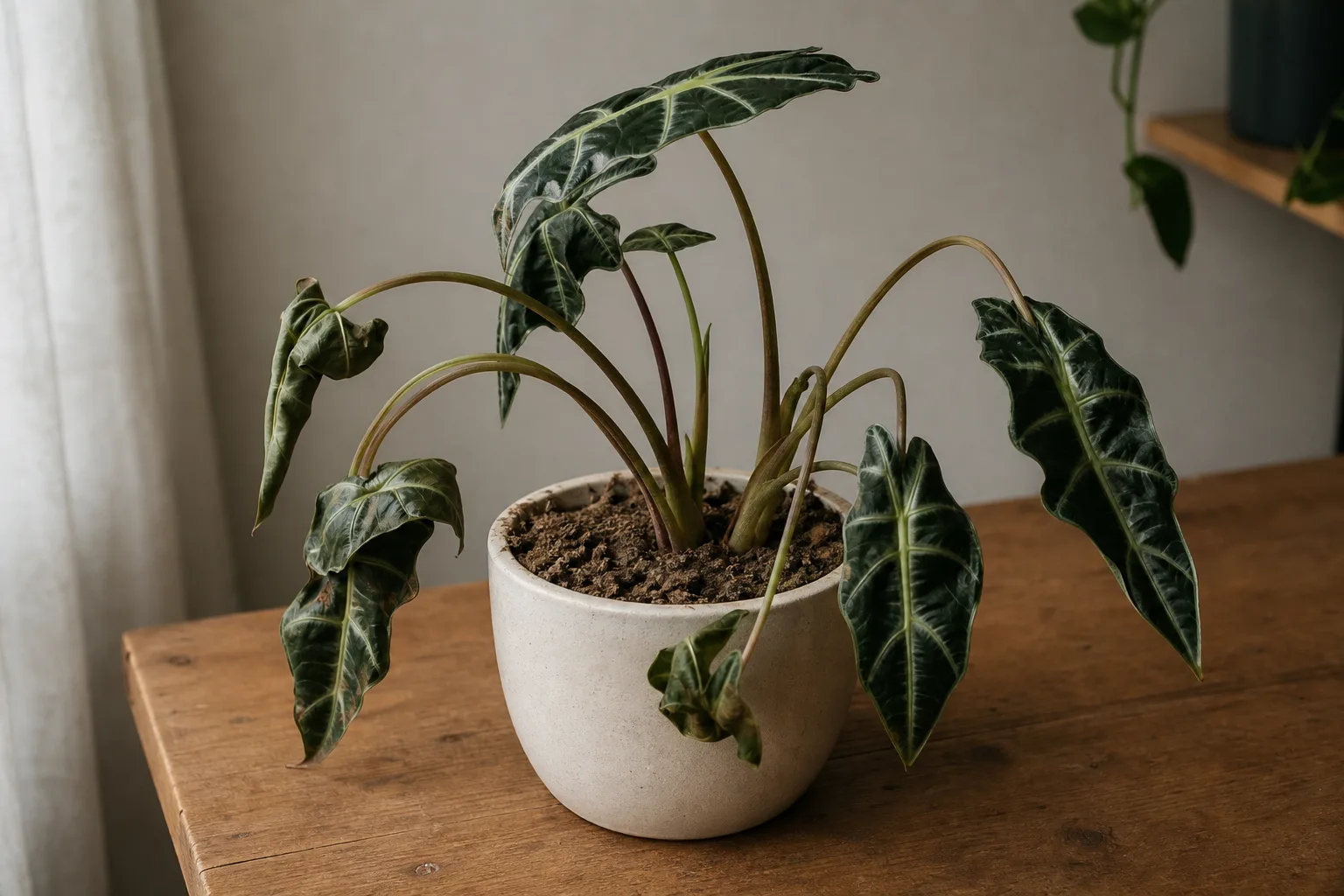
Underwatering on Alocasia Polly: Causes, Checks & Fixes
This guide covers underwatering on Alocasia Polly. See also the general Underwatering guide, watering, and light pages for this plant.
Underwatering on Alocasia Polly: Causes, Checks & Fixes
Quick answer
Underwatering on Alocasia Polly (Alocasia × amazonica ‘Polly’, African Mask Plant) means the root zone stayed dry too long for this moisture-loving aroid. Unlike succulents, Polly has thin, broad leaves that lose water quickly and a rhizome that still needs consistently moist, well-drained soil during active growth-not soggy, but not bone dry either.
First step: bottom-water the pot thoroughly. Set the container in a basin of room-temperature water until the surface moistens, then lift it out and let all excess drain. One deep rehydration beats repeated shallow sips that never reach the bottom of a dry root ball.
Before you water, confirm the mix is actually dry. Wilting on Alocasia can also mean rotting roots that cannot take up water even when soil feels wet-so check moisture and stem firmness first.
What underwatering looks like on Alocasia Polly
Early drought stress shows up fast on this compact elephant ear because the leaves are large relative to the pot. Watch for:
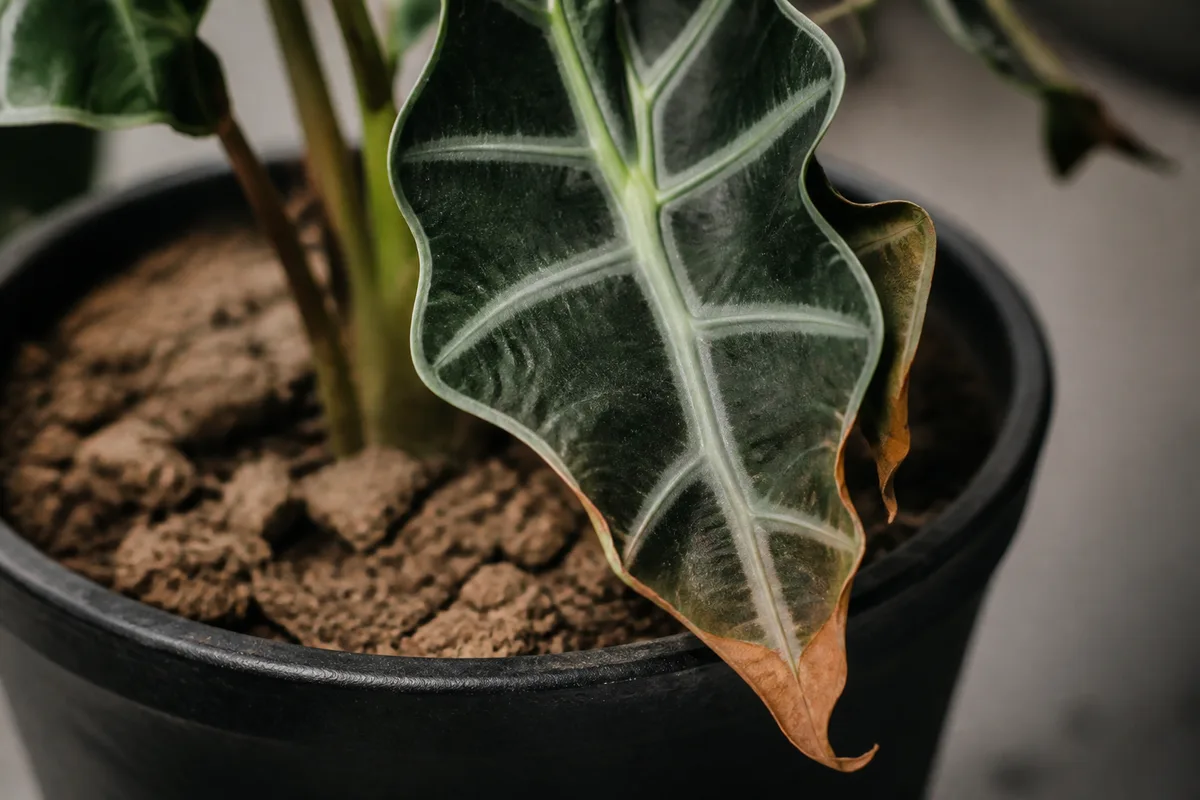
Underwatering symptoms on Alocasia Polly - compare with healthy tissue on the same plant.
- Limp, drooping leaves on Alocasia Polly that hang from firm petioles rather than mushy stems
- Dry, crispy brown edges or tips on the white-veined arrowhead foliage
- Soil pulled away from the pot rim and a dusty, light-colored surface
- A pot that feels noticeably light when lifted with one hand-one of the quickest ways to gauge dryness
- Slowed or stalled new leaf production during what should be active spring or summer growth
- Older leaves yellowing and dropping after repeated dry cycles
The pattern differs from overwatering on Alocasia Polly: underwatered Polly has dry mix throughout, firm stems at the soil line, and wilt that often improves within hours after a proper soak. Overwatered plants stay limp while soil stays dark and cool for many days, with yellow lower leaves and sometimes a sour smell.
Low humidity alone can crisp leaf margins on Alocasia Polly, but if the pot is also light and the mix is dry several centimeters down, drought is the primary issue-not just dry air.
Why Alocasia Polly gets underwatered
Alocasia × amazonica hybrids are grown for consistently moist, well-drained soil in Alocasia Polly light guide-not for drying out completely between drinks. Polly is not drought-tolerant; letting the entire root ball go bone dry repeatedly stresses the rhizome and kills fine absorbing roots.
Common triggers in real homes:
Fear of overwatering after past root rot on Alocasia Polly. Many owners swing too far the other way and wait until leaves collapse. Polly needs the top inch to dry, not the whole pot to turn to dust.
Calendar watering that ignores season and light. A plant moved to a brighter window or into summer growth uses water every 7–10 days; the same schedule in a dim winter corner may be fine-but skipping checks entirely leaves active plants dry for weeks.
Chunky aroid mix in a small pot. Perlite, bark, and coarse sand drain well, which Polly needs, but they also dry faster than heavy peat. A root-bound plant in a 12 cm pot can go from moist to parched in two or three days in warm, bright conditions.
Hydrophobic dry mix. When peat-heavy soil dries completely, water runs down the sides without wetting the center. The surface may look briefly damp while the root ball stays dry inside-severely dry mix may need soaking to rewet properly.
Winter confusion. Alocasia Polly often slows or goes dormant in cool months and needs less water in winter-but the rhizome should not desiccate. Some owners stop watering entirely and lose the plant to drought while trying to prevent rot.
Heat and airflow without adjusted frequency. Near heating vents, radiators, or sunny windows, transpiration increases. The plant may wilt in dry air even when you watered recently-though the fix still starts with confirming root-zone moisture, not misting alone.
How to confirm the cause
Work through these checks before soaking:
- Pot weight - Compare to how heavy it feels an hour after a thorough watering. A very light pot indicates dryness.
- Moisture at depth - Stick your finger 2–3 cm into the mix, or use a moisture meter mid-pot. Surface dryness alone is normal; dryness through the upper third confirms drought.
- Stem and corm firmness - Press the base gently. Firm tissue with dry soil supports underwatering. Soft, mushy tissue with wet soil suggests rot-do not add more water yet.
- Soil pull-away - Gap between mix and pot wall means extended dryness; plan for bottom-watering or soaking, not a quick top splash.
- Water behavior - If water races straight through to the saucer in seconds, the root ball may be hydrophobic and still dry inside.
- Recent history - Travel, a new “water every two weeks” rule, or Alocasia Polly repotting guide into very airy mix all raise underwatering risk.
- Rule out lookalikes - Wet heavy pot, yellow lower leaves, fungus gnats, or mushy roots mean overwatering or rot, not thirst.
If soil is wet at depth but leaves wilt, inspect roots before rehydrating. Wilting with wet soil often means damaged roots, not thirst-adding water to rotting roots makes Alocasia Polly decline faster.
First fix for Alocasia Polly
Bottom-water until the root zone rewets, then drain completely.
- Fill a basin or sink with room-temperature water (avoid softened water if your Polly is fluoride-sensitive).
- Set the pot in the water so the mix can absorb from below-soaking the pot rewets hard-to-moisten soil. Leave it until the surface darkens and feels moist-often 20–45 minutes for a moderately dry 15 cm pot; longer if soil has shrunk away from the sides.
- For severely dry, hydrophobic mix, poke a few shallow holes in the surface with a chopstick before bottom-watering so water penetrates evenly.
- Lift the pot out, let it drain until no water drips from the holes, and empty the saucer. Never leave Polly sitting in runoff.
- Place it back in bright indirect light and recheck weight after 24 hours.
Do not fertilize, repot, or prune heavily on the same day as recovery watering. One correction at a time lets you read the plant’s response.
If leaves perk within several hours and the pot gains weight, you likely solved underwatering. If wilt persists with wet soil, unpot and inspect roots for brown mushy tissue- that is a rot problem, not drought.
Step-by-step recovery
After the first soak, stabilize care over the next two weeks:
- Resume a check-based rhythm - Water when the top inch (2–3 cm) feels dry during active growth. In winter dormancy, stretch intervals but do not let the rhizome shrivel in a completely dry pot for weeks.
- Water thoroughly each time - Apply enough that a small amount drains from the bottom, then discard excess. Shallow top splashes on chunky mix often leave the lower root zone dry.
- Adjust for light and season - Brighter placement and warm summer months mean more frequent checks; cool dim winter means less-but still some-moisture.
- Trim only dead tissue - Remove fully brown crispy leaves for hygiene once the plant is turgid again. Partially damaged leaves can still photosynthesize.
- Raise humidity if edges keep crisping - A pebble tray or humidifier helps Polly hold leaf moisture, but it does not replace soil watering.
- Repot only if root-bound drying is constant - If the pot dries out within a day or two every cycle and roots circle the bottom, move up one pot size in spring with fresh chunky aroid mix-not as an emergency drought fix, but once the plant is stable.
Recovery timeline
Mild dehydration: Leaves often regain turgor within several hours to one day after a proper bottom-water. You should notice the pot feeling heavier and petioles stiffening.
Moderate stress with crispy edges: Existing brown margins stay brown permanently, but new growth over 2–4 weeks during spring or summer shows recovery. Judge progress by new growth rather than old damaged leaves-crispy tissue will not re-green.
Severe or repeated drought: Fine root dieback slows recovery to several weeks. The plant may shed multiple older leaves before pushing new ones. If the rhizome stays firm and you maintain even moisture, Polly can rebound from leafless dormancy when warmth returns.
Worsening signs: Continued collapse after thorough rehydration, softening at the crown, or leaves yellowing while soil stays wet-those point to root rot or cold damage, not ongoing underwatering.
Lookalike symptoms
- Overwatering / root rot - Limp leaves with wet, heavy soil, mushy stem base, sour smell, yellow lower leaves. Chronic overwatering favors root rot-fix by drying out and inspecting roots, not by soaking again.
- Low humidity - Crispy tips with otherwise turgid leaves and appropriately moist soil. Increase humidity; watering more will not fix dry air alone.
- Cold draft or temperature below 15°C (59°F) - Sudden droop and leaf drop in winter; soil may be moist. Warm the plant and reduce water slightly during dormancy.
- Normal dormancy - Leaf loss in cool months with a firm rhizome and barely moist soil is seasonal rest, not always underwatering-do not flood a sleeping plant.
- Spider mites - Stippling and webbing on leaf undersides in hot dry air; soil moisture may be fine. Treat pests; drought stress makes mite outbreaks worse.
What not to do
Do not drench daily after one dry spell-that swings care toward overwatering and root rot, which Polly tolerates even less than brief drought.
Avoid cold tap water shock on stressed roots; room-temperature water is gentler.
Do not mist instead of watering-roots need soil moisture, not surface humidity alone.
Skip fertilizer until the plant shows stable new growth for two weeks. Salts on drought-stressed roots burn easily.
Do not assume all drooping means thirst-always verify dry soil before bottom-watering. Wet-soil wilt needs the opposite response.
Do not leave the pot in the soak basin overnight-extended saturation suffocates aroid roots.
How to prevent underwatering next time
Build a routine around how fast your specific pot dries, not a calendar:
- Check the top inch of mix every few days during active growth; water when it feels dry.
- Use a chunky, well-drained aroid mix in a pot with drainage holes sized to the root mass-not so large that soil stays wet for weeks, not so small that it desiccates in days.
- Move Polly to bright indirect light so growth stays predictable; weak light slows water use but also weakens the plant’s ability to recover from stress.
- In winter, reduce frequency but keep the rhizome from drying to dust-many Polly plants rest with fewer leaves and need less water, not zero water.
- After travel or a missed week, weigh the pot before leaves collapse; early light weight is easier to fix than a fully limp plant.
Weekly pot checks during growing season catch drought before crispy edges spread across every leaf.
When to worry
Act the same day if all leaves collapse, soil has shrunk away from the pot, or the plant sat completely dry for two weeks or more in warm active growth. Fine roots may have died; gentle rehydration still helps, but recovery takes longer.
If the corm or stem base softens after rewatering, or leaves stay yellow and limp with consistently wet soil, switch to a rot diagnosis-continued soaking will not save the plant.
A leafless but firm rhizome after winter dormancy can still sprout in spring when warmth and moisture return-do not discard Polly immediately if the underground tissue is hard and healthy.
Conclusion
Underwatering on Alocasia Polly is a moisture-timing problem: the chunky mix and bold leaves dry out faster than many owners expect, especially in bright light. Confirm it with a light pot and dry soil at depth, then bottom-water once thoroughly and drain. Prevent repeat drought by checking the top inch regularly, adjusting for season, and reading new growth-not crispy old edges-as your recovery scorecard.
When to use this page vs other Alocasia Polly guides
- Alocasia Polly watering guide - Use for routine moisture checks before assuming underwatering is the main issue.
- Alocasia Polly problems hub - Browse all 16 common issues on this species.
- Wilting on Alocasia Polly - Different entry point when symptoms overlap with underwatering.
- Brown Tips on Alocasia Polly - Different entry point when symptoms overlap with underwatering.
- Yellow Leaves on Alocasia Polly - Different entry point when symptoms overlap with underwatering.