Wilting on Alocasia Polly: Causes, Checks & Fixes
Quick answer
Wilting on Alocasia Polly is sudden loss of leaf firmness-often from overwatered roots in wet soil, underwatering, heat stress, or post-repot shock. First step: stick your finger 1–2 inches into the mix; if soil is wet and leaves are limp, do not water-inspect the corm at the soil line instead.
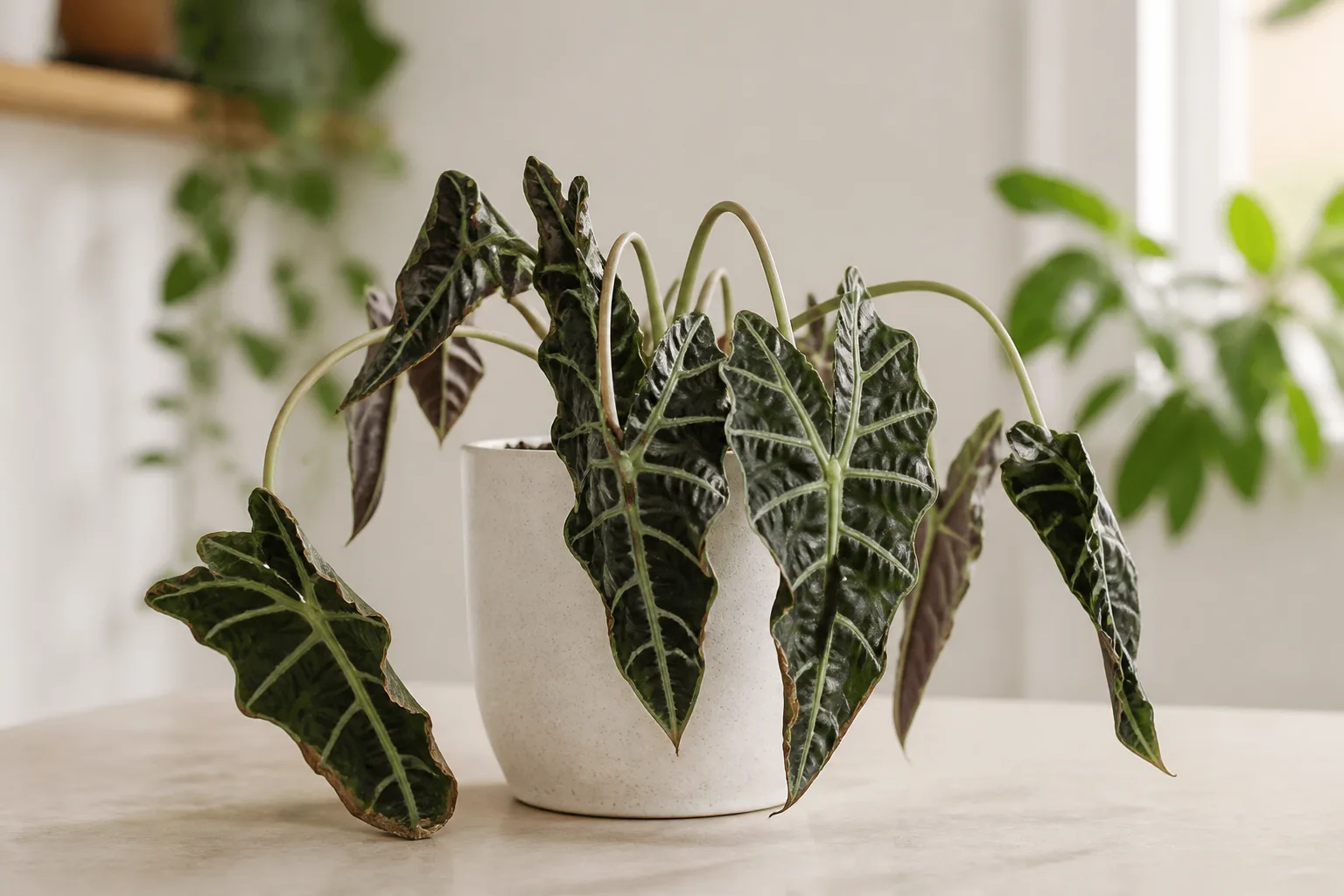
Wilting on Alocasia Polly: Causes, Checks & Fixes
This guide covers wilting on Alocasia Polly. See also the general Wilting guide, watering, and light pages for this plant.
Wilting on Alocasia Polly: Causes, Checks & Fixes
Quick answer
Wilting on Alocasia Polly (Alocasia × amazonica ‘Polly’) is a sudden loss of leaf firmness-petioles go limp, blades hang flat, and the plant can look thirsty even when the real problem is the opposite. On this corm-based aroid, wilting in wet soil is rarely underwatering. Saturated mix suffocates fine roots; the corm cannot supply water to leaves even though the pot feels heavy.
First step: check soil moisture at 1–2 inches depth and lift the pot. Wet and heavy with limp leaves means stop watering and inspect the corm at the soil line. Dry and light with limp, crispy-edged leaves means one thorough soak-then return to the Alocasia Polly watering rhythm. That single fork prevents the most dangerous mistake: drowning an already failing root system.
For gradual petiole sag over weeks-not overnight collapse-see drooping leaves on Alocasia Polly.
Why Alocasia Polly wilts (and why wet soil changes everything)
Alocasia Polly is built around a corm-a starchy underground storage organ at or just below the soil surface. The corm holds water reserves and energy for the next leaf. Leaves transpire moisture fast through large, thin blades; roots must replace it continuously from an airy, moist-not waterlogged-root zone.
When soil stays saturated, water displaces oxygen from pore spaces, fine roots die, and pathogens colonize weakened tissue. The corm may still look fine briefly while roots fail-leaves wilt despite wet soil because nothing functional is left to pull water up. This wet-wilt pattern is the signature misread on Alocasia: owners see limp leaves and add more water, accelerating rot.
Dry-wilt is the mirror problem. When the mix goes bone dry for too long-especially in bright light, near heat vents, or in an undersized pot-the corm dehydrates, roots shrivel, and leaves collapse from true drought. The corm can often recover from dry-wilt if caught while still firm; wet-wilt is more dangerous because anaerobic soil attacks the corm directly.
Other common triggers on Polly:
- Heat stress and low humidity - thin leaves lose water faster than roots replace it on hot windowsills or above radiators; Alocasias prefer medium to high humidity through the growing season
- Cold drafts or sub-60 °F rooms - Alocasias need warmth above 16 °C (60 °F) in the growing season
- Post-repot shock - disturbed roots cannot hydrate leaves for one to two weeks after repotting
- Root-bound stress - a crowded root ball dries unevenly and wilts between waterings even when you think you watered enough
What wilting looks like on Alocasia Polly
Wilting means acute turgor loss-the leaf blade and petiole lose internal pressure and go limp, often within hours or a day. It differs from the slow petiole sag covered on the drooping-leaves page.
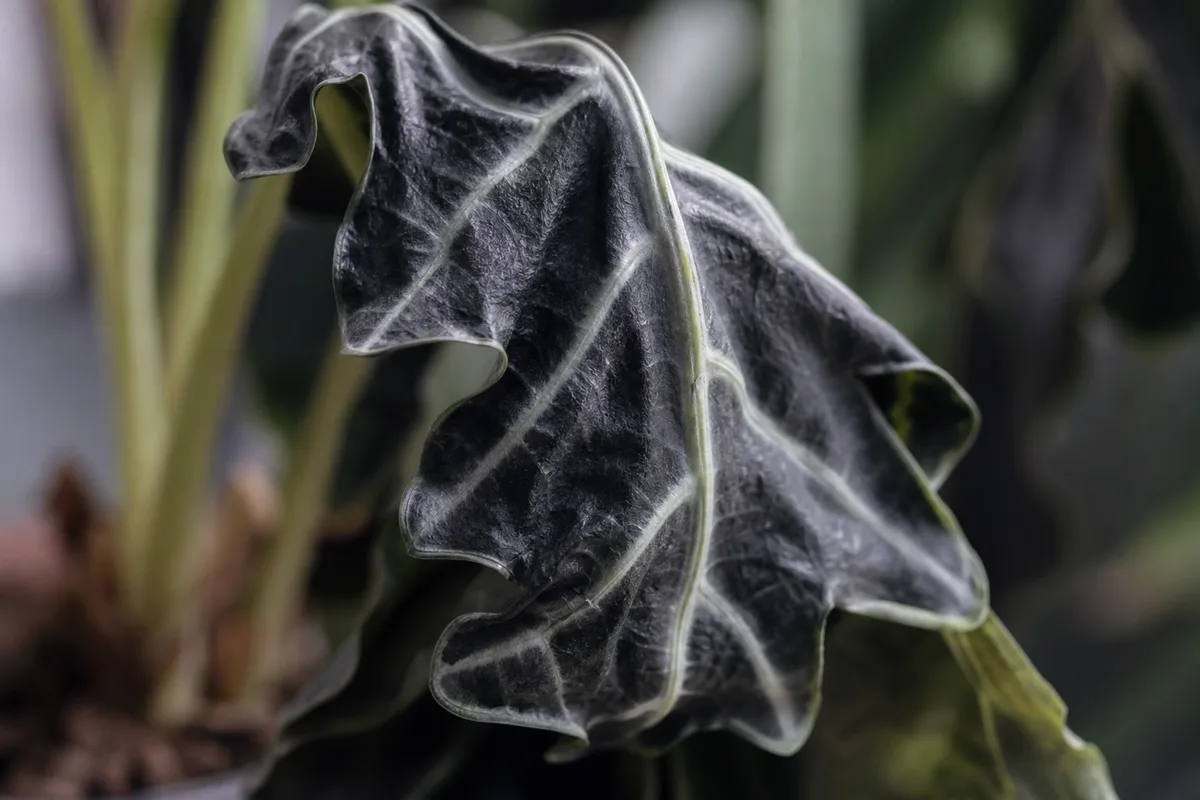
Wilting symptoms on Alocasia Polly - compare with healthy tissue on the same plant.
| Pattern | Soil / pot | Leaf feel | Most likely cause |
|---|---|---|---|
| Wet-wilt | Heavy, dark, cool surface; water may sit in saucer | Soft, limp, sometimes yellowing lower leaves | Overwatering / early root rot |
| Dry-wilt | Light pot; mix pulls from edges; top 2+ in dry | Limp with crispy brown edges or margins | Underwatering |
| Heat-wilt | May be appropriately moist; plant near heat source or hot glass | Limp midday, may recover overnight; no mushy base | Heat + low humidity |
| Transplant wilt | Moist after recent repot | All leaves collapse 1–3 days after repot | Root disturbance / shock |
| Cold-wilt | Often moist; plant on cold windowsill | Limp after cold night; corm usually still firm | Temperature below ~60 °F / 15 °C |
Normal-looking exceptions: one older leaf yellowing and wilting while new growth stays firm is often aging, not crisis. Several leaves collapsing at once-especially with wet soil or a soft corm-is not normal aging.
How to confirm the cause
Work through these checks in order. Stop when one pattern clearly matches.
Check 1: Soil moisture and pot weight
Push your finger 1–2 inches (2.5–5 cm) into the mix-the same depth the RHS Alocasia guide uses before watering. Lift the pot: heavy and wet with limp leaves points to wet-wilt; light and dry with limp leaves points to dry-wilt. If you watered in the last 48 hours and soil is still saturated, overwatering is the leading suspect.
Check 2: Leaf texture (soft vs. crispy)
Run a finger along the wilted blade. Soft, pliable tissue with wet soil fits root failure. Crispy edges with limp midrib and dry soil fits drought. Heat-wilt often shows limp leaves that still feel relatively smooth-not mushy-with no sour smell from soil.
Check 3: Corm firmness at the soil line
Gently brush soil away from the base of the petioles. A firm, potato-like corm means the storage organ is still viable even if every leaf wilted. A soft, sunken, or foul-smelling corm means advanced rot-recovery depends on how much firm tissue remains. This check matters more on Alocasia than on most houseplants because the corm, not just roots, determines survival.
Check 4: Light, humidity, and temperature
Note pot placement. Direct hot afternoon sun, radiator proximity, or a heat vent within three feet can cause midday wilting on tropical foliage that needs bright indirect light. Cold glass on winter nights or AC blasts can wilt leaves while soil stays damp. A hygrometer reading below 40% supports heat/low-humidity wilt when soil moisture is otherwise correct.
Check 5: Recent care events
Did you repot, divide, or move the plant in the last two weeks? Did you water heavily during a cool spell when evaporation slowed? Calendar overwatering in winter is a common Polly mistake-the RHS notes overwatering while dormant can rot roots.
Lookalikes to rule out
| If you also see… | Switch diagnosis to… |
|---|---|
| Fine webbing, stippling on undersides | Pests-inspect before treating as water stress |
| Gradual sag over 2+ weeks, firm leaf tissue | Drooping leaves-different timeline |
| Only oldest leaf wilting, firm corm, winter pause | Possible dormancy-reduce water, do not repot |
| Bleached patches on sun-facing side | Too much direct sun-see light guide |
First fix for Alocasia Polly
Make one change, then wait five to seven days before stacking another.
If wet-wilt is confirmed (limp leaves + wet soil)
Stop watering immediately. Move the pot to bright indirect light-not deeper shade, which slows drying. Empty any saucer water. Let the top inch of mix dry before the next drink. If lower leaves yellow or the corm softens, unpot and inspect roots-see root rot on Alocasia Polly for rescue steps. Do not water “because the leaves look thirsty.”
If dry-wilt is confirmed (limp leaves + dry soil)
Give one thorough top-water soak until water runs from the drainage hole; empty the saucer within 15 minutes. Then resume the top 1–2 inch dry-down rhythm-typically every 7–10 days in active growth, much less in winter dormancy. If water runs straight through dry cracks, bottom-water for 20–30 minutes once, then return to top watering.
If heat or low humidity is confirmed
Move the pot away from heat vents, radiators, and hot glass. Run a humidifier to hold 50–60%+ RH near the plant-above the medium to high humidity Alocasias expect indoors; see the low-humidity guide for setup details. Midday limpness that recovers overnight often resolves with environment alone; do not double-water.
If post-repot wilt is confirmed
Keep soil lightly and evenly moist-not soggy-in bright indirect light with humidity around the plant. Skip fertilizer and avoid moving the pot again for two weeks. Expect one to three weeks before roots re-establish and leaves firm up.
If cold stress is confirmed
Move to a stable 65–80 °F (18–27 °C) spot above 60 °F / 15 °C minimum. Trim only fully collapsed leaves after the plant stabilizes; a firm corm usually pushes new growth when warmth returns.
Recovery timeline
| Cause corrected | What to expect |
|---|---|
| Overwatering caught early (firm corm) | Leaves may not re-firm; stabilization in 3–7 days; first new leaf in 2–4 weeks |
| Underwatering corrected | Perking within 24–72 hours if corm is firm; crispy edges on old leaves stay |
| Heat / humidity fixed | Midday wilt stops within 3–5 days; new leaves open cleaner |
| Post-repot shock | 1–3 weeks before turgor returns; new shoot possible before old leaves recover |
| Advanced root rot (partial corm salvage) | 2–6 weeks to new roots; 2–3 months to a full new leaf |
Judge success by corm firmness and new growth, not by old wilted blades regaining stiffness. Fully collapsed leaves can be trimmed once the plant pushes a healthy new leaf.
What not to do
Do not water wilting Polly on autopilot-confirm soil moisture first. Do not fertilize a wilted plant before roots and light are stable; salts stress damaged roots. Do not repot, prune heavily, and relocate on the same day-each shock compounds wilting.
Do not move a wet-wilt plant to a dark corner hoping to dry soil slowly while starving it of light-it slows recovery without fixing oxygen-starved roots. Do not assume wilting always means thirst on Alocasia; wet-soil wilt is the opposite problem.
How to prevent wilting next time
Align daily care with how Polly actually grows in your room:
- Water when the top 1–2 inches dry-not on a fixed calendar; reduce sharply in winter dormancy
- Use chunky, well-drained aroid mix in a pot with drainage holes; empty saucers after every watering
- Keep bright indirect light per the Alocasia Polly light guide-not dark corners where wet soil lingers
- Maintain 50–60%+ humidity in heated air; keep the pot off radiators and AC paths
- Hold temperatures above 16 °C (60 °F) year-round; avoid cold window sills in winter
- Repot in spring into only slightly larger pots-oversized containers stay wet too long
Log pot weight and soil feel weekly during problem seasons so wet-wilt shows before every leaf collapses.
When to worry
Escalate today when multiple leaves wilt while soil is wet, the corm is soft or smells sour, or stems mushy at the base-unpot and inspect roots immediately.
Patience is reasonable when one leaf wilts on an otherwise firm plant, you just repotted within two weeks, or winter dormancy explains reduced turgor with a firm corm and lightly moist soil. A hollow, foul corm with no firm tissue after corrected care is an honest stopping point-salvage any firm offsets if present.
Alocasia Polly care cross-check
| Factor | Active-season target | Wilting mistake |
|---|---|---|
| Water | Top 1–2 in dry; moist root zone | Calendar watering into wet mix |
| Soil | Airy aroid mix; free drainage | Dense peat that stays saturated |
| Light | Bright indirect | Dark corner + wet soil = rot |
| Humidity | 50–60%+ near foliage | Heat vent + dry air midday wilt |
| Temperature | 65–80 °F; above 60 °F minimum | Cold glass night after warm day |
| Corm | Firm at soil line | Ignoring soft corm until collapse |
Related Alocasia Polly guides
- Alocasia Polly watering - top-inch checks, 7–10 day rhythm, winter dormancy
- Overwatering - wet soil, yellow lower leaves, fungus gnats
- Underwatering - dry wilt, crispy edges, light pot
- Root rot - corm rescue when wet-wilt advances
- Low humidity - heat-wilt and stuck new leaves
- Drooping leaves - gradual sag vs acute wilt
- Light requirements - placement and heat from windows