Mold on Soil on Alocasia Polly: Causes, Checks & Fixes
Quick answer
Fluffy white or gray mold on Alocasia Polly's soil means the surface stays wet too long. First step: scrape off the top layer, let the mix dry, and check whether overwatering or winter dormancy is keeping the pot damp.
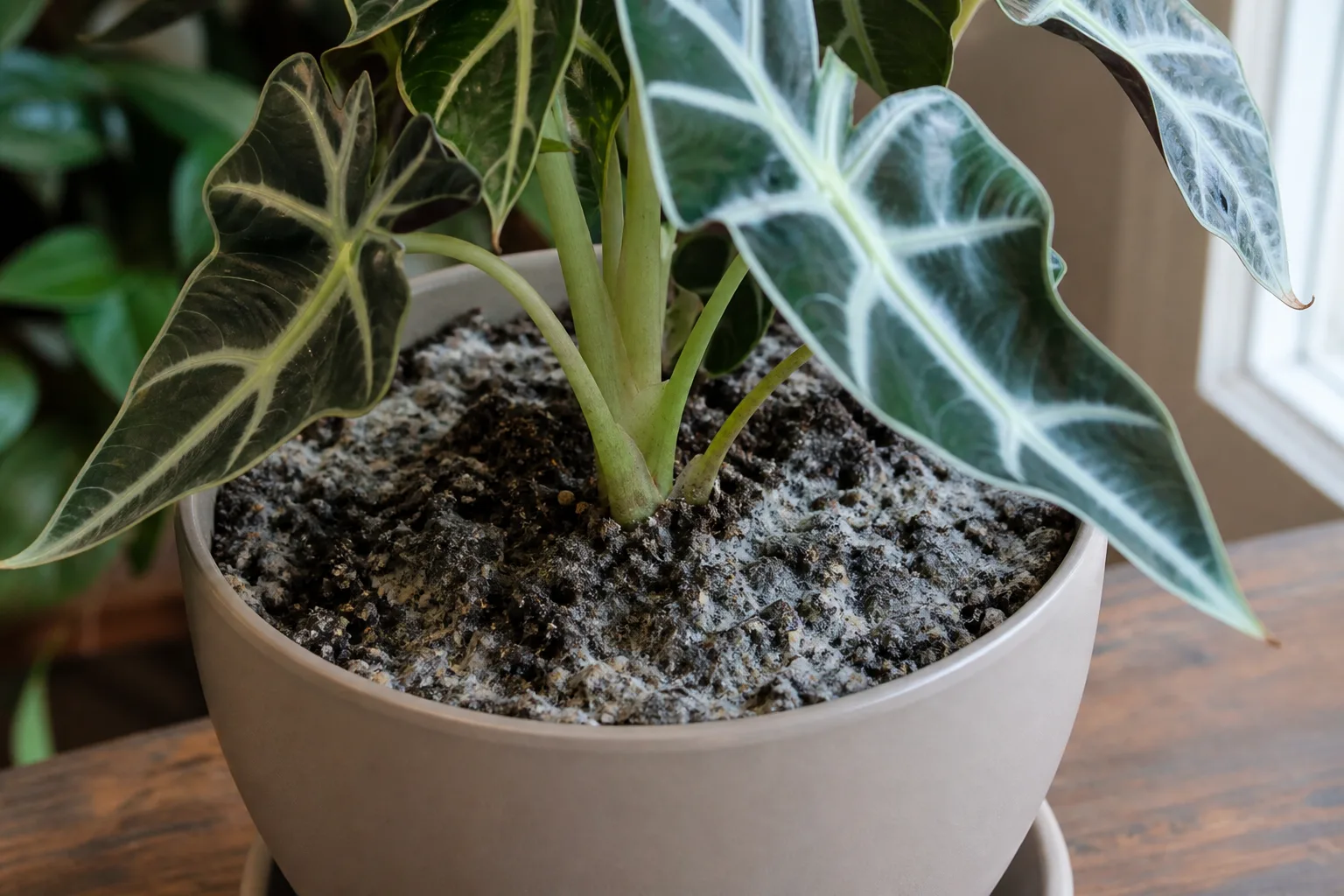
Mold on Soil on Alocasia Polly: Causes, Checks & Fixes
This guide covers mold on soil on Alocasia Polly. See also the general Mold on Soil guide, watering, and light pages for this plant.
Mold on Soil on Alocasia Polly: Causes, Checks & Fixes
Quick answer
White or gray fuzzy mold on Alocasia Polly potting soil is almost always saprophytic fungus feeding on organic matter in a surface layer that stays damp-not a leaf disease attacking your African Mask Plant. The plant can look fine while the soil looks alarming.
That does not mean you should ignore it. Surface mold is a moisture and airflow warning. On Alocasia Polly, the same wet conditions that grow harmless surface fungi also invite fungus gnats, oxygen-starved roots, and eventually crown rot around the corm. The corm sits near the soil line and rots fast when mix stays saturated.
First step: stop watering and scrape off the top 1–2 cm of moldy mix. Discard that material, not compost it indoors. Then let the surface dry completely before the next drink while you check whether you are overwatering on Alocasia Polly, watering on a summer schedule through winter dormancy, or keeping the pot in light too dim for the mix to dry.
What mold on soil looks like on Alocasia Polly
The classic sign is a white, gray, or occasionally yellow-green fuzzy film on the soil surface, sometimes spreading to the inner pot rim or drainage-hole edges. It may appear a few days after a heavy top watering or when humidity is high and airflow is low around a grouped plant shelf.
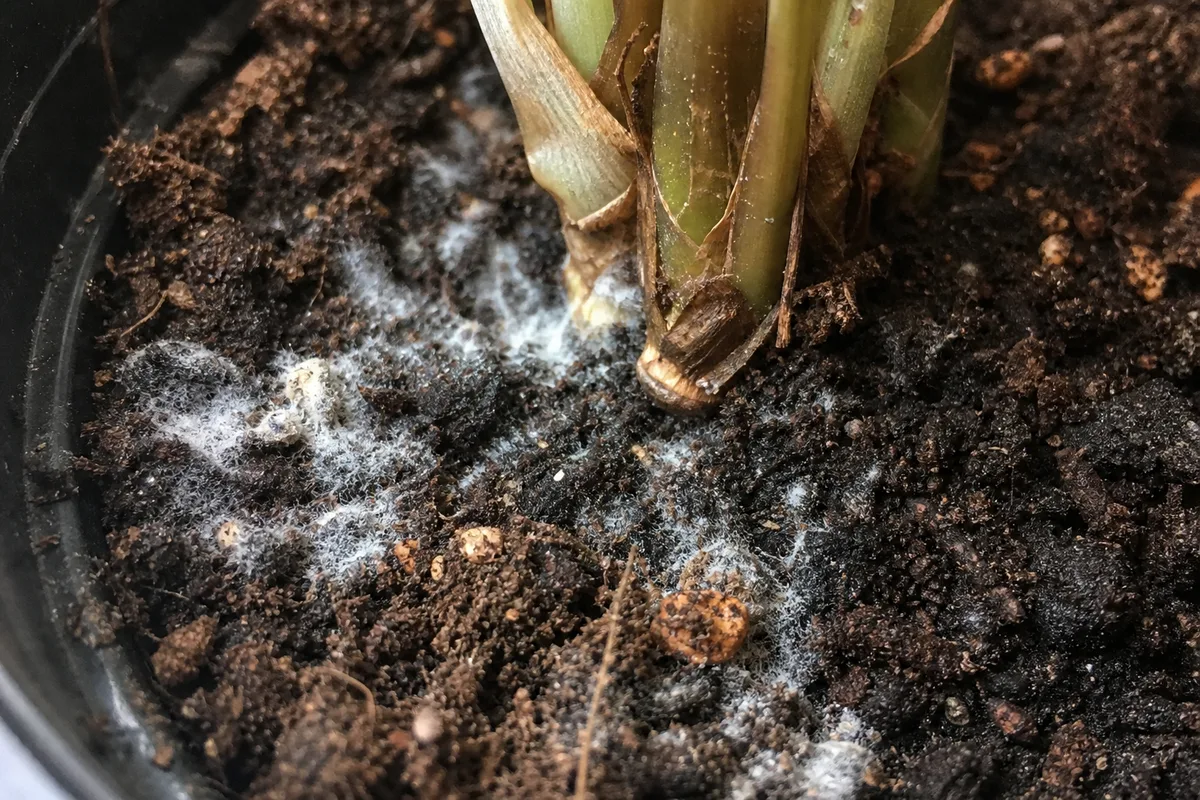
Mold on Soil symptoms on Alocasia Polly - compare with healthy tissue on the same plant.
On a healthy Polly, leaves and petioles often stay firm while only the soil looks wrong. Arrow-shaped leaves may still hold their dark green color and silver veining. That pattern fits harmless surface mold.
Separate these from mold-adjacent trouble:
- Soft, mushy petioles at the soil line - crown or root rot on Alocasia Polly, not cosmetic mold
- Wilting with wet soil - damaged roots from chronic saturation
- Small black flies when you water - fungus gnats breeding in the same damp top layer
- Yellow mushrooms - still saprophytic, but regarded as poisonous if eaten; remove if pets reach the pot
- Green algae on the surface - constant surface moisture plus low light; same watering fix
If only the soil is fuzzy and the corm area feels firm when you press gently at the base, you are likely dealing with surface fungus-not an emergency leaf infection.
Why Alocasia Polly gets mold on soil
Alocasia Polly wants organically rich, well-drained mix that holds some moisture without staying waterlogged. That description is exactly what saprophytic fungi need: decaying bark, peat-free compost, and fallen leaf bits on a surface that rarely dries.
Several Polly-specific habits make surface mold common:
Overwatering or watering on a calendar. Polly should be watered when the top inch of mix feels dry-not every Tuesday. When the root zone stays wet, the surface never dries and fungal hyphae spread across organic particles.
Winter dormancy with summer watering. In cool months Alocasia Polly often slows or stops growth and drinks far less. If you keep watering every 7–10 days while the plant is semi-dormant, unabsorbed moisture sits in the pot and the top layer stays damp for weeks. Mold follows.
Low light slowing evaporation. Polly needs Alocasia Polly light guide. In a dim corner the plant uses less water and the pot surface dries slowly even if you are not grossly overwatering.
High humidity without airflow. Target humidity of 60–80% helps Polly leaves, but stagnant humid air around the pot rim slows surface drying. Humidity at the leaves and dryness at the soil surface can coexist-you need gentle air movement, not a sealed terrarium effect at the pot.
Organic debris on the soil. Spent Polly leaves that fall into the rosette and land on the mix decompose quickly. That debris is food for surface fungi and keeps the top layer moist longer.
Chunky mix in an oversized pot. A small corm in a large wet reservoir dries slowly at the surface. Even good aroid mix can stay damp on top when the pot is bigger than the root ball needs.
The mold is rarely the primary problem. Persistent surface wetness is-and on Alocasia that wetness is what eventually damages the corm.
How to confirm the cause
Work through these checks before Alocasia Polly repotting guide or spraying fungicide:
- Surface moisture - Is the top inch cool, dark, and damp to the touch several days after watering? That confirms the environment mold needs.
- Pot weight - Lift the container. A heavy pot days after watering means slow dry-down; a light pot with mold still visible may mean you top-watered recently while lower mix was already stale and organic-rich.
- Corm and petiole firmness - Press gently at the base of the outermost petiole. Firm tissue with fuzzy soil only supports a cosmetic diagnosis. Soft, collapsing tissue means investigate rot, not just mold.
- Smell - Musty surface mold is common. A sour or swampy odor from the drainage hole suggests deeper anaerobic conditions and possible root damage.
- Season and recent watering - Are you in winter with reduced growth but unchanged watering frequency? That pattern fits dormancy overwatering.
- Light level - Has the plant been moved away from its bright spot, or is it blocked by seasonal short days? Slow evaporation fits.
- Pests and co-symptoms - Fungus gnats, yellow leaves on lower petioles, or edema spots often share the same wet-soil root cause.
- Debris - Are old leaves, bark fines, or fertilizer crust sitting on the surface?
If the plant is firm, leaves are stable, and only the surface is moldy after confirmed overwatering or poor dry-down, treat as environmental mold. If petioles soften or wilt persists on wet mix, unpot and inspect roots before assuming the issue is cosmetic.
First fix for Alocasia Polly
Scrape off the top 1–2 cm of moldy soil and stop watering until that fresh surface dries.
Use a spoon or fork, discard the removed mix in the trash, and wipe the pot rim. Add a thin layer of dry, chunky aroid mix only if you removed enough volume to expose roots-otherwise leave the surface open to air. Move the pot slightly away from humid groupings or add passive airflow so the top layer can dry.
Do not reach for fungicide as a first response. Fungicide treatments are generally not effective against these soil fungi; surface saprophytic colonies are controlled by drying and watering correction, not chemicals. Do not repot the entire plant on day one unless the mix smells sour, roots are mushy, or mold returns within days of scraping.
After the surface dries, resume watering only when the top inch of mix feels dry-typically less often in winter than in active summer growth.
Step-by-step recovery
Once you have scraped the surface and paused watering, work in this order:
- Remove debris - Pick off fallen leaves and organic litter from the pot surface; keep the soil surface free of dead leaves so fungi lose an easy food source.
- Adjust the Alocasia Polly watering guide - Track how many days until the top inch dries in your home. In active growth that may be 7–10 days; in winter dormancy it may stretch to 2–3 weeks between drinks.
- Improve dry-down - Move Polly to brighter indirect light if it has been in shade. Ensure drainage holes are open and saucers are emptied within 30 minutes of watering.
- Address fungus gnats if present - Let the top 1–2 inches dry completely between waterings, use yellow sticky traps for adults, and consider a Bacillus thuringiensis israelensis (BTI) drench for larvae if flies persist after the surface stays dry.
- Refresh the top layer if mold returns quickly - Replace the upper inch with fresh, dry chunky mix in the same pot if scraping alone is not enough and roots are still healthy.
- Repot only when needed - Full repot into fresh aroid mix and a right-sized container if mold keeps returning despite dry surface cycles, the mix is compacted, or root inspection shows decay.
Hold fertilizer until new growth looks stable for two weeks. Feeding a plant recovering from wet-soil stress adds salt load without fixing the cause.
Recovery timeline
Surface mold should stop reappearing within one to two weeks once the top layer stays dry between waterings and debris is cleared.
Fungus gnats, if present, often decline over two to four weeks as dry surface conditions break the life cycle-longer if lower mix stays wet.
Leaf symptoms tied to overwatering-yellow lower leaves, soft petioles-recover only after root-zone oxygen returns. Old damaged leaves will not green up again; judge success by firm new petioles and unfolding leaves, not by cosmetic repair of yellow tissue.
If mold returns within days of scraping while you have already lengthened dry time, the pot is likely still too wet at depth or the container is oversized. Escalate to top-layer replacement or repotting rather than repeated scraping alone.
Lookalike symptoms
- Powdery mildew on leaves - White dust on leaf blades, not soil; fix airflow and leaf wetness, not scraping mix.
- Mineral or fertilizer crust - Hard white or tan crust on soil surface from hard water or salt buildup; flush or repot, different from fluffy mold.
- Green algae - Slimy green film in constant surface moisture and low light; reduce watering and brighten indirect light.
- Yellow mushrooms - Saprophytic like white mold, but fruiting bodies are poisonous if ingested; remove for household safety, then fix moisture.
- Root rot without visible mold - Sour smell, mushy corm, wilt on wet soil; may have no fuzzy surface growth at all.
- Normal post-watering darkening - Top mix looks slightly darker for hours after watering but dries within 1–2 days; not mold.
What not to do
Do not keep watering on schedule because humidity is high or leaves look dramatic-check the mix first. Avoid misting the soil surface to “help humidity”; Polly wants humidity at leaf level, not a wet crown zone.
Skip cinnamon, baking soda, or random fungicides as a substitute for drying the pot. Do not cover the surface with decorative moss or rocks that trap moisture unless you are deliberately keeping that layer dry.
Do not assume mold is harmless when petioles are soft, gnats are thick, or the pot smells sour-the same wetness that grows harmless surface fungi can be damaging roots.
Avoid repotting into a much larger container to “fix” mold; extra wet soil volume slows drying and worsens Alocasia root stress.
When scraping mold or handling fallen leaves, wear gloves if sap irritates your skin-Alocasia Polly contains calcium oxalate crystals toxic to pets if chewed by cats, dogs, or children.
Alocasia Polly care cross-check
Mold is a signal to revisit the basics that keep Polly’s corm healthy:
- Water when the top inch dries, not on a fixed calendar; cut back sharply in winter dormancy.
- Bright indirect light so the plant uses water and the surface dries predictably.
- Chunky aroid mix with perlite, orchid bark, and peat-free base-fast drainage without letting the corm dry rock-hard for weeks.
- Pot with drainage holes sized to the root ball, not dramatically oversized.
- 60–80% humidity at leaf level paired with gentle airflow, not a sealed wet pot rim.
- Remove spent leaves from the soil surface promptly.
If mold appeared right after repotting, check whether fresh mix was pre-moistened heavily or you watered before the plant settled-hold water until the top inch dries even when other post-repot advice says “keep evenly moist.”
How to prevent mold on soil next time
Prevention is mostly surface dry-down discipline:
- Wait until the top inch of mix is dry before every watering, adjusting for season.
- Empty saucers after watering; never let Polly sit in standing water.
- Keep the soil surface free of decaying leaf litter and old bark fines.
- Place the pot where bright indirect light supports steady transpiration and evaporation.
- Bottom-water occasionally if top watering repeatedly leaves a soggy surface-but flush with a full top water every few sessions to prevent salt buildup.
- Quarantine new plants and inspect pot surfaces before grouping shelves get crowded and airflow drops.
When winter slows growth, reduce watering before mold appears-not after. A firm corm with dry surface mix through dormancy is safer than a constantly damp top layer “because Alocasias like moisture.”
When to worry
Treat mold as urgent background if:
- Petioles or the corm feel soft at the soil line
- Leaves wilt while mix is wet, especially lower yellowing leaves
- Sour smell persists after the surface dries
- Mold returns within 48–72 hours of scraping despite longer dry intervals
- Yellow mushrooms appear and pets or toddlers can reach the pot
- Root inspection shows brown, mushy tissue when you unpot for confirmation
Pure surface mold on firm plants can wait for a care correction. Soft crown tissue on wet soil cannot-that is the path to losing the corm even when the fuzzy soil looked like a minor cosmetic issue.
Conclusion
Mold on Alocasia Polly soil is usually harmless surface fungus telling you the top layer stays wet too long. Scrape it off, dry the surface, and fix the watering rhythm-especially in winter dormancy and low light. The mold itself rarely kills Polly; the chronic moisture behind it can. Confirm a firm corm, clear debris, let the top inch dry between drinks, and judge recovery by stable new growth-not by whether old leaves revert. When petioles soften or the pot smells sour, stop treating the problem as cosmetic and inspect roots before the corm is gone.
When to use this page vs other Alocasia Polly guides
- Alocasia Polly watering guide - Use for routine moisture checks before assuming mold on soil is the main issue.
- Alocasia Polly problems hub - Browse all 16 common issues on this species.
- Fungus Gnats on Alocasia Polly - Different entry point when symptoms overlap with mold on soil.
- Overwatering on Alocasia Polly - Different entry point when symptoms overlap with mold on soil.
- Root Rot on Alocasia Polly - Different entry point when symptoms overlap with mold on soil.