Slow Growth on Alocasia Polly: Causes, Checks & Fixes
Quick answer
Alocasia Polly grows moderately in warm months-often one new leaf every few weeks in bright indirect light-and commonly pauses or drops leaves in winter. First step: squeeze the rhizome through the drainage hole; if it is firm, the plant is likely alive. Then check whether light has fallen below roughly 200 foot-candles before changing water or fertilizer.
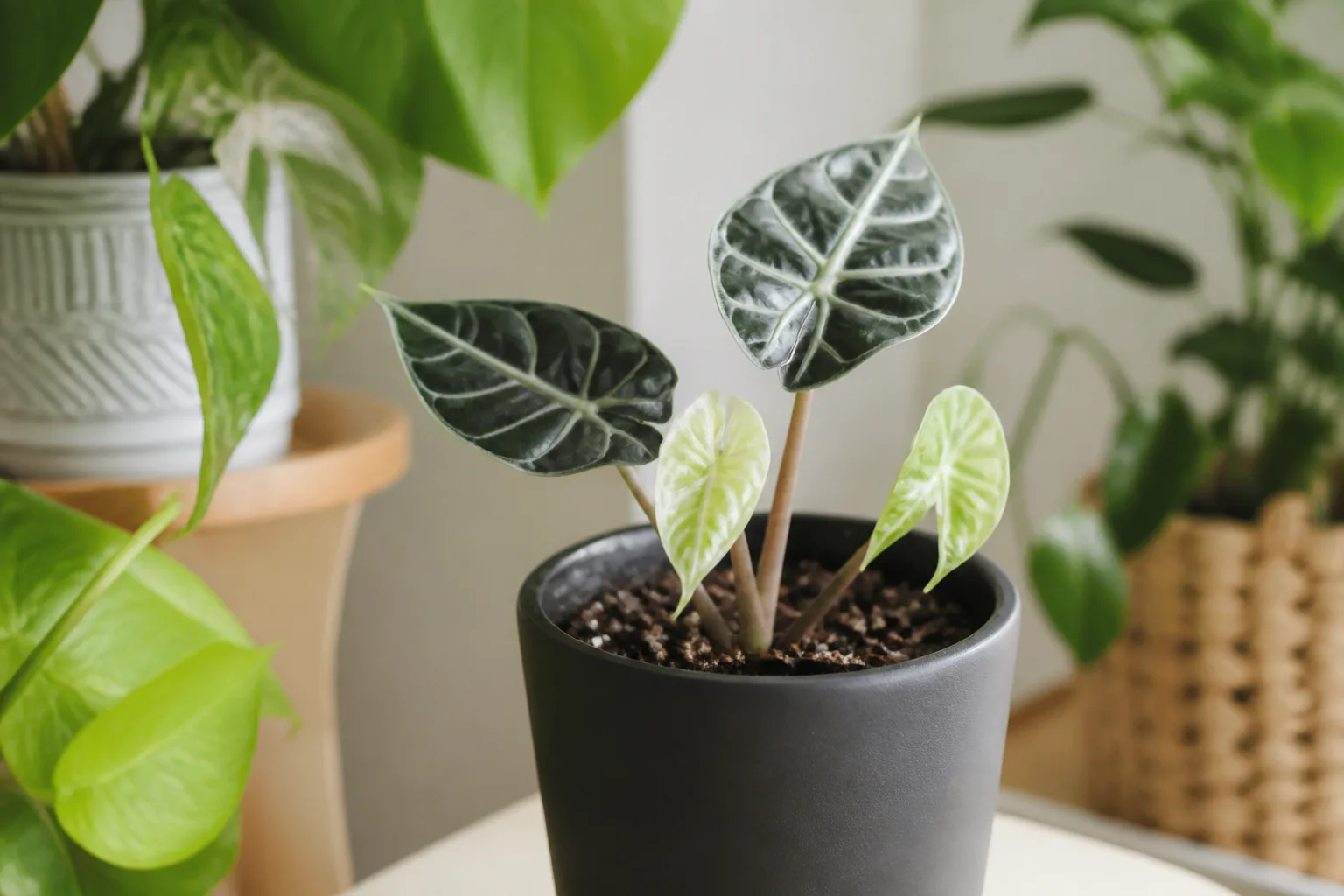
Slow Growth on Alocasia Polly: Causes, Checks & Fixes
This guide covers slow growth on Alocasia Polly. See also the general Slow Growth guide, watering, and light pages for this plant.
Slow Growth on Alocasia Polly: Causes, Checks & Fixes
Quick answer
Alocasia Polly (Alocasia × amazonica ‘Polly’) is a moderate grower, not a pothos-speed trailer. In warm months with bright indirect light, expect a compact rosette that adds one leaf at a time every few weeks-not constant weekly flushes unless you are in a very bright, humid setup.
Winter slowdown, older leaf drop, or even a leafless plant with a firm rhizome can be normal seasonal rhythm-not death. The RHS Alocasia guide notes that alocasias may lose foliage in winter dormancy and resume in spring.
First step: check rhizome firmness through the drainage hole or by gently easing the root ball out one side. Firm and dense = the plant is likely alive; soft or mushy = investigate root rot before anything else. If the corm is firm, measure or improve light next-roughly 200–400 foot-candles at the leaves is the working indoor range from our Alocasia Polly light guide. Do not repot, fertilize, or increase watering on the same day.
What normal slow growth looks like on Alocasia Polly
Slow growth is not always a problem on this plant. Polly is sold as an easy “African Mask Plant,” but it is a tropical understory aroid with a naturally moderate indoor pace.
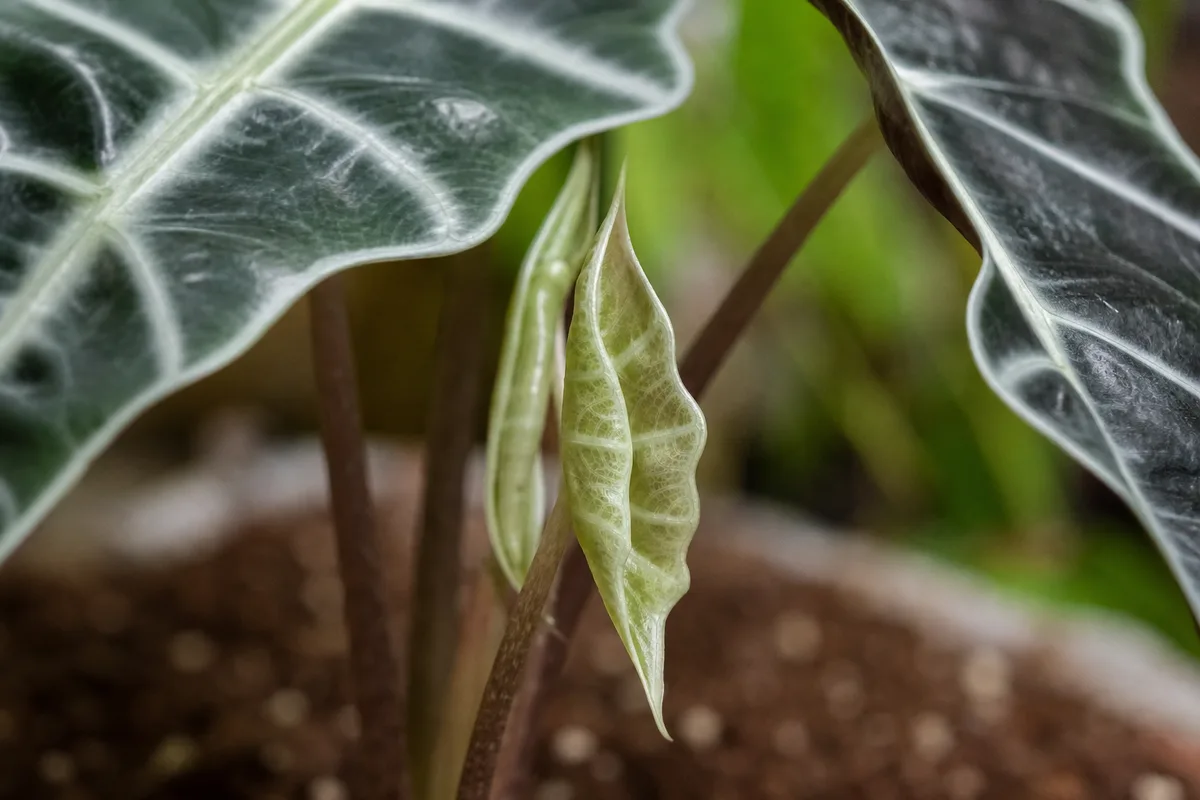
Slow Growth symptoms on Alocasia Polly - compare with healthy tissue on the same plant.
Expected warm-season pace indoors
During spring and summer in a bright east or filtered window:
- One new leaf every two to four weeks is typical for many homes-not the weekly leaf pace greenhouse alocasias can show
- New leaves unfurl one at a time from the center, keeping a tight upright rosette
- Each leaf should be similar in size or slightly larger than the previous one when light is adequate
- Petioles stay relatively short and hold leaves upright-not stretched toward a window
If your Polly matches that rhythm in warm months, it is growing normally even if it feels slower than a trailing pothos.
Winter dormancy and leaf loss - when it is normal
Alocasia Polly often slows sharply or drops leaves when daylight shortens and rooms cool. The RHS notes that alocasias need cooler, drier winter conditions and may lose foliage-then push fresh leaves in spring.
Normal winter slowdown looks like:
- Growth stops or nearly stops for weeks
- Older leaves yellow and drop one by one
- The plant may go completely leafless while the rhizome stays firm
- Soil dries much more slowly; the plant drinks less
This is often light-driven as much as temperature-driven. A leafless Polly in a dim room is still a light problem waiting to happen-even if the corm is alive.
Signs Polly is healthy despite slow pace
- Firm rhizome when you squeeze through the pot bottom
- Dry-to-slightly-moist soil on a reduced winter schedule-not constantly wet
- At least occasional new growth during bright warm months
- Dark, veined new leaves when growth does resume-not progressively paler and smaller
When slow growth is actually a problem
Worry when the pattern crosses from seasonal pause into stall:
| Pattern | Likely meaning |
|---|---|
| No new leaves all spring and summer in a bright spot | Light still too low, root-bound pot, chronic overwatering, or cold stress |
| Each new leaf smaller and paler than the last | Not enough light-energy budget is failing |
| Long petioles, dull veins, but some growth | Low light etiolation-see leggy growth |
| Leafless + wet soil for days in any season | Overwatering risk on a non-transpiring rhizome-rot danger |
| Soft rhizome, sour smell, yellow mushy base | Root rot-not dormancy |
| Stall for 4+ weeks after repotting | Post-repot transplant pause-usually resolves if corm is firm and soil is not soggy |
Confirmed abnormal stall: firm rhizome, but zero new leaves across an entire warm bright season-or new growth that keeps shrinking while care has not changed.
Why Alocasia Polly grows slowly
Naturally moderate aroid biology
Alocasia Polly is a compact cultivar, but it still follows aroid rules: large leaves cost energy, and the plant will not push them without enough light and warmth. NC State Extension lists alocasias as rapid growers in ideal tropical conditions, but indoor pots, lower light, and dry air usually throttle that speed.
Light as the energy budget
Light sets how fast Polly can grow. The RHS states that while alocasias can survive lower light, growth will be much slower-and our light guide targets roughly 200–400 foot-candles for steady indoor growth.
A dim plant also uses less water. Owners who keep summer watering in a dark winter corner often see stall plus yellow leaves-then blame fertilizer when light and soil moisture are the real limits.
Winter light drop
Even without a true bulb dormancy, Polly behaves like many alocasias in winter: less daily light integral means less photosynthesis, so the plant sheds leaves it cannot afford to maintain. Adding a grow light often restores growth faster than any other single change.
Root-bound and pot size
When roots circle heavily and soil dries within a day of watering, new leaves may stall even in good light. Check our repotting guide-but do not repot a leafless dormant Polly unless rot is confirmed.
Overwatering in shade
A slow, dim plant in wet soil stops growing and risks rot. The RHS warns that overwatering during dormancy can cause roots to rot. This is one of the most common kill mistakes on leafless winter plants.
Cold and draft stress
Alocasias should stay above about 16°C (60°F) in the growing season and above 10°C (50°F) in winter per RHS guidance. Cold windowsills and AC drafts stall growth and trigger leaf drop.
Post-repot pause
Repotting disturbs roots; Polly may sit still for several weeks while it re-establishes. One care change at a time lets you read the response.
How to confirm the cause
Work through this order before changing multiple variables:
- Rhizome firmness - Through the drainage hole or by sliding the root ball out slightly. Firm = alive; soft = rot protocol.
- Season and light - Is it winter with short days? Is the pot more than three feet from the brightest window? Meter at leaf height: below ~150 foot-candles during daylight hours is too dim for steady growth.
- Newest leaf quality - Compare the emerging leaf to an older one from a brighter period. Smaller, paler, or on longer petioles points to light-not a nutrient miracle cure.
- Soil moisture rhythm - Stick a finger in the top inch. Wet soil for days with no growth in a dim spot = dangerous. Appropriately dry winter soil with a firm corm = often normal pause.
- Temperature - Note AC vents, winter glass contact, and whether the room drops below comfortable tropical range.
- Pot check - Roots circling, soil drying in under 48 hours, or water running straight through may mean root-bound-see repotting.
- Recent changes - New pot, move, or fertilizer within the last month? Post-change pause is common if the corm is still firm.
Lookalikes to rule out:
- Not enough light - faded silver veins, stretched petioles, lean toward windows; growth is slow and quality declines
- Leggy growth - slow pace plus obvious stretch; different from compact slow growth in adequate light
- Winter dormancy - leafless or near-leafless, firm corm, dry-ish soil, cool season; patience plus optional grow light
- Root rot - soft corm, sour soil, yellow mushy petioles even when growth has been slow for weeks
First fix for Alocasia Polly
If the rhizome is firm: improve bright indirect light before repotting, fertilizing, or watering more.
Step 1 - Confirm the corm is alive
Gently squeeze the rhizome through the drainage hole. Firm tissue means your Polly can regrow once conditions improve. If it is soft, stop here and follow the root rot guide-light will not fix rot.
Step 2 - Correct light placement
- Move within 1–3 feet of your brightest east-facing window, or add a full-spectrum grow light 10–18 inches above the foliage on a 12–14 hour timer through dark months
- Target the 200–400 foot-candle range at the leaves-details in the light guide
- Acclimate over 7–14 days if coming from a very dim spot; sudden harsh sun scorches leaves
Step 3 - Match water to reduced growth
If the plant is leafless or nearly so, reduce watering-barely moist, not wet. Follow the watering guide winter rhythm: a dormant Polly drinks very little, and wet soil on a non-transpiring corm is dangerous.
Do not fertilize until a new leaf is actively unfurling in corrected light. See the fertilizer guide for timing.
Recovery timeline
Slow-growth recovery is measured in weeks to months, not days:
- After a light move - First noticeably darker, compact new leaf often appears within 2–4 weeks in warm conditions
- Winter leafless rest - Regrowth commonly resumes in late winter to spring when light and temperature rise; some plants need 6–10 weeks after a grow-light upgrade
- Post-repot pause - 3–6 weeks before new growth is normal if the corm stayed firm and soil is not soggy
- Root rot recovery - Much longer; slow growth is a symptom, not the primary diagnosis
Judge success by the next one or two leaves-size, color, and vein contrast-not by old foliage speeding up. Damaged or dropped leaves do not regrow; new ones tell the story.
What not to do
- Do not discard a leafless Polly with a firm rhizome - it may regrow when light and warmth return
- Do not overwater a dormant or leafless plant - the most common winter kill mistake
- Do not fertilize a stalled or leafless plant to “wake it up” - salts stress slow roots
- Do not repot and fertilize on the same day as a light move-stacking stress hides which fix worked
- Do not assume pothos-speed growth - moderate pace is normal for Polly indoors
- Do not panic-repot a winter-dormant plant with firm roots and dry-ish soil
How to prevent abnormal slow growth next time
- Place for light first - keep Polly in sustained bright indirect range year-round; add a grow light before winter shortens days
- Match watering to growth and season - slower growth means slower drinks; review the watering guide each autumn
- Feed only in active growth - fertilizer during the warm bright season per the fertilizer guide
- Repot on schedule, not on panic - root-bound checks in spring, not on a leafless winter corm
- Keep temperatures stable - avoid cold glass and AC drafts that stall tropical aroids
- Weekly rhizome spot-check in winter - firm corm plus appropriate dryness = peace of mind
Related Alocasia Polly guides
- Alocasia Polly overview - growth habit, toxicity, and care rhythm
- Light guide - foot-candles, windows, and grow lights
- Watering guide - how much to give when growth slows
- Fertilizer guide - when feeding actually helps
- Repotting guide - root-bound diagnosis