Aphids on Alocasia Polly (African Mask): Causes, Checks &
Quick answer
Aphids on Alocasia Polly cluster on tender new leaves and petiole bases. First step: isolate the plant and rinse every leaf surface with lukewarm water-wear gloves because Alocasia sap irritates skin and is toxic to pets.
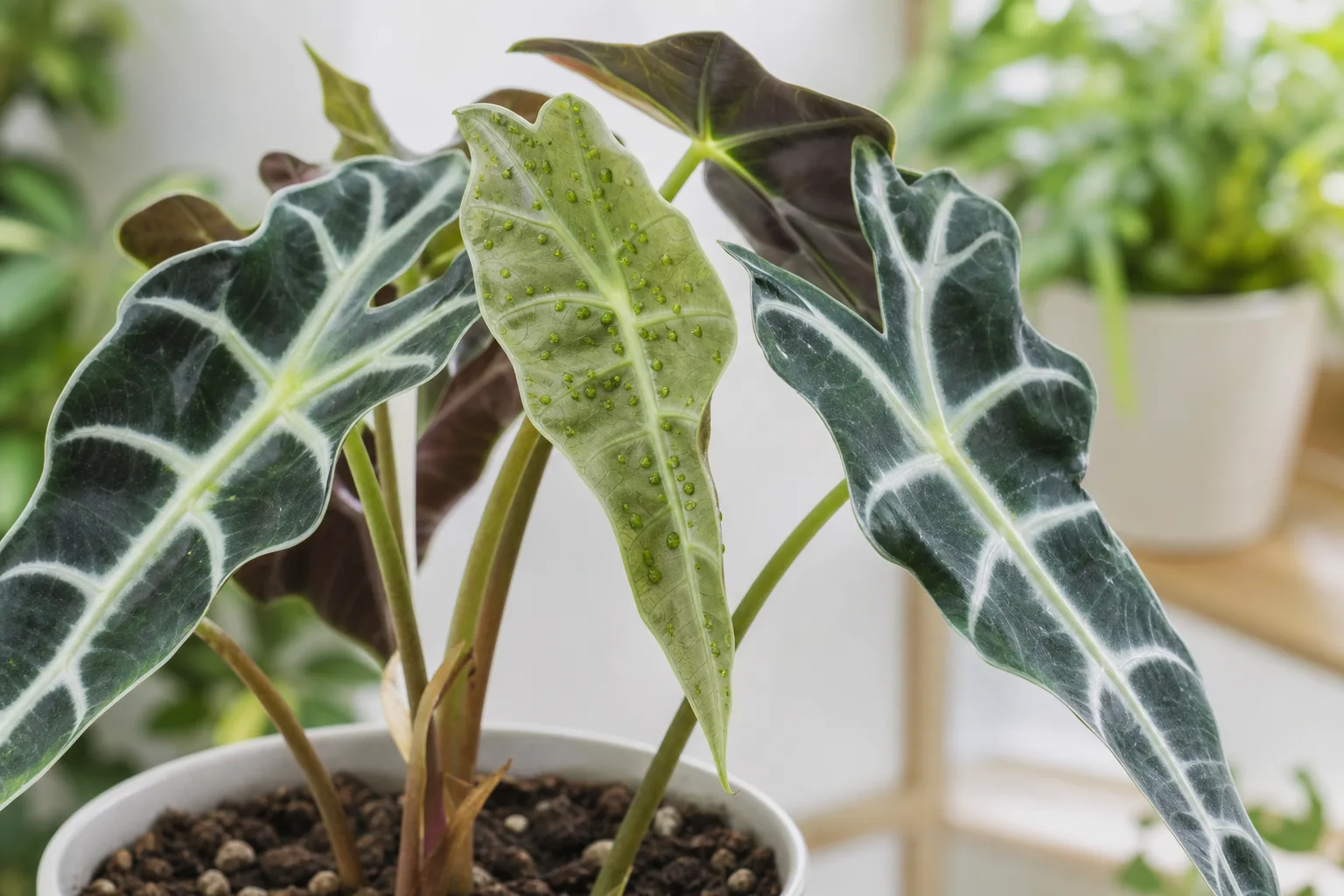
Aphids on Alocasia Polly (African Mask): Causes, Checks & Fixes
This guide covers aphids on Alocasia Polly. See also the general Aphids guide, watering, and light pages for this plant.
Aphids on Alocasia Polly (African Mask): Causes, Checks & Fixes
Quick answer
Aphids on Alocasia Polly (Alocasia × amazonica ‘Polly’) are small sap-sucking insects that colonize the plant’s fastest-growing tissue-unfurling arrowhead leaves, fresh petioles, and the crown center. You will often notice sticky honeydew on the glossy leaf surface before you spot the insects themselves.
First step: move the plant away from others and rinse it thoroughly. Wear gloves because Alocasia contains insoluble calcium oxalate crystals that irritate skin and are toxic to cats and dogs if chewed. Use lukewarm water in a sink or shower, angling the spray at leaf undersides and petiole bases where aphids hide. Knock down live insects and honeydew before reaching for soap or oil-treating a dry, dusty plant with spray first wastes product and can leave residue marks on Polly’s textured foliage.
For overlapping dry-edge damage without stickiness, see low humidity on Alocasia Polly. For white cottony clusters instead of pear-shaped insects, check mealybugs on Alocasia Polly.
What aphids look like on Alocasia Polly
On this African Mask plant, aphids rarely spread evenly across mature leaves. They concentrate where cells are dividing quickly:
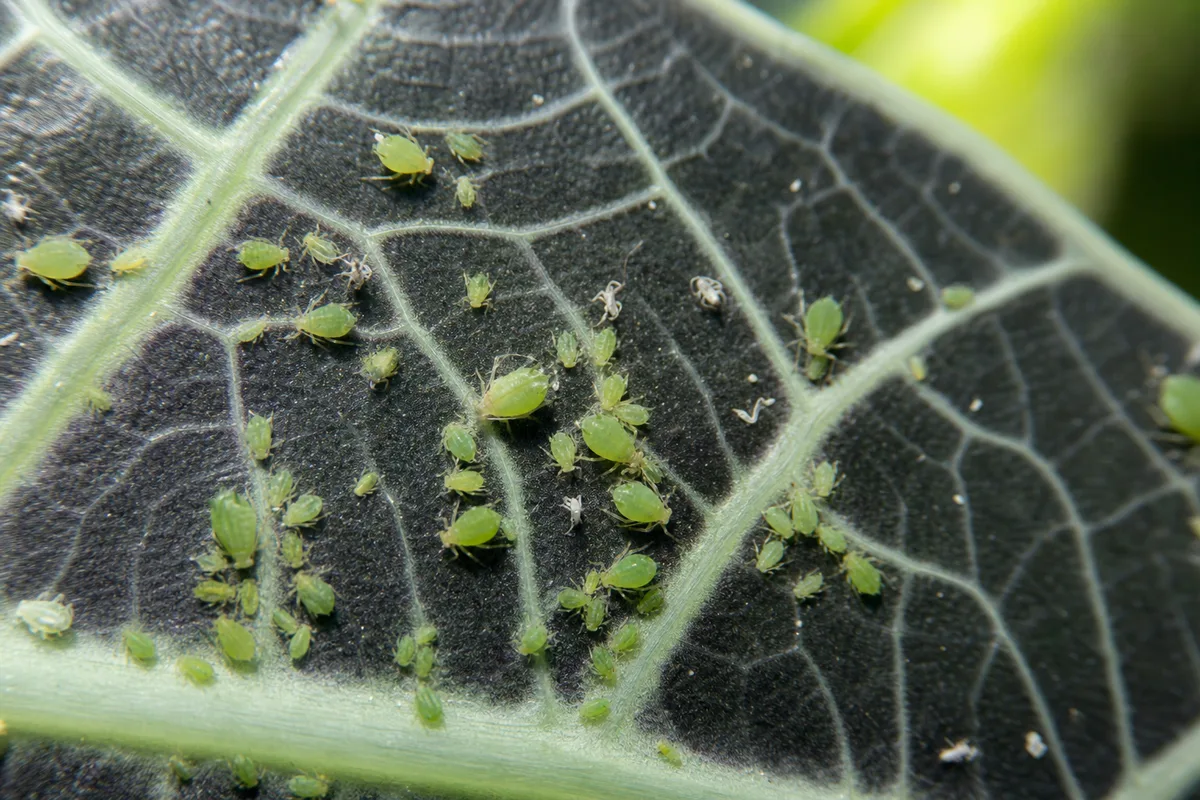
Aphids symptoms on Alocasia Polly - compare with healthy tissue on the same plant.
- New leaves still unfurling from the central corm
- Petiole axils-the tight angle where each leaf stalk meets the stem
- Stem tips during active spring or summer growth
- Occasionally flower or spathe structures if the plant blooms indoors
Individual aphids are pear-shaped, soft-bodied, and roughly 1/16 to 1/8 inch long. Color varies-green is common, but you may see black, brown, yellow, or pink forms on the same plant. They have visible legs and antennae and move slowly when you touch the leaf. Wingless forms cluster in groups; winged adults may appear when a colony gets crowded.
Damage on Alocasia Polly shows up as:
- Shiny, sticky leaf surfaces from honeydew excreted during feeding
- Curling or puckering of young leaves, especially at the edges
- Stunted or twisted new growth when feeding is heavy
- Yellowing of affected leaves if colonies persist for weeks
- Whitish specks on leaves-these are cast skins from molting nymphs, not pest eggs
Polly’s bold leaf veins and dark green color make honeydew and sooty mold especially obvious compared to matte-leaved houseplants. A fine black coating on sticky areas is sooty mold fungus growing on the sugar-rich residue-not a separate disease, but a sign aphids have been feeding for a while.
Why Polly’s compact crown attracts aphids
Aphids are not a sign that you failed at basic care. They are common indoor pests that thrive when tender new growth is available and natural predators are absent. Several factors make Alocasia Polly a frequent target:
Fast seasonal growth. During warm months, Polly pushes new leaves every one to two weeks when light, humidity, and watering align. Each emerging leaf is a fresh food source. Aphids feed on soft phloem sap; they prefer stems and buds just below opening leaf tissue.
Compact rosette architecture. Polly grows as a tight upright rosette with overlapping petiole bases. That makes crown inspection faster than on sprawling Alocasia species-but colonies also concentrate in the same few axils, so a small cluster can coat several new leaves within days if you skip weekly checks.
Indoor conditions without predators. Outdoors, lady beetles, lacewings, and parasitic wasps keep aphid numbers low. Inside, populations can increase with great speed because nothing is eating them. Warm room temperatures (18–26°C / 65–80°F)-ideal for Alocasia-also speed aphid reproduction.
Introduction from outside or new plants. Winged aphids can drift through open windows in spring and summer. More often, they hitchhike on a new nursery plant, a cutting, or an infested neighbor in a shared plant shelf. Skipping quarantine is the most common entry route into a collection.
Nitrogen-rich, soft growth after repot or feed spike. Over-fertilizing or using full-strength feed during active growth produces lush, tender shoots that aphids prefer. A fresh repot with nutrient-rich mix can push the same soft flush-watch the crown closely for two weeks after repotting per the repotting guide. Polly already grows quickly in good conditions; excess nitrogen from the fertilizer guide rhythm makes outbreaks worse without improving leaf quality.
Stressed plants are not immune. Low humidity, drafty windows, or inconsistent watering weaken Polly, but aphids colonize healthy, actively growing specimens just as readily. Do not assume pests mean the plant was already failing-focus on removal first, then review care if growth stalls after treatment.
How to confirm the cause
Work through these checks before committing to sprays:
Five-step crown inspection
- Locate the colony. Use a hand lens or phone macro mode on the newest leaf and each petiole base. Slow-moving pear-shaped insects confirm aphids. Fast, slender insects that run when disturbed suggest thrips instead.
- Test stickiness. Honeydew feels tacky and does not wipe away dry like hard-water spots. If your finger picks up a sugary film, sap-feeding insects are present.
- Look for ants. Ants farming aphids for honeydew are a strong secondary clue, especially on plant saucers or nearby windowsills.
- Check cast skins. Aphids molt four times before adulthood; empty white skins accumulate near colonies. Mealybugs leave cottony wax, not shed skins.
- Rule out lookalikes using the table below.
If you find insects only on one new leaf and the rest of the plant is clean, you likely caught the infestation early. If honeydew covers multiple leaves or ants are present, assume the colony is wider than it first appears.
Symptom lookalike comparison table
| What you see | Likely cause | How to tell apart on Polly |
|---|---|---|
| Sticky leaf surface, pear-shaped insects on new growth | Aphids | Slow movement; honeydew on glossy veins; cast skins near colonies |
| Silvery streaks on leaves | Thrips | Insects are slender and fast; no honeydew |
| Fine stippling, webbing | Spider mites | Dry leaf edges; paper tap test shows moving specks; no stickiness |
| White cottony clusters in crown crevices | Mealybugs | Wax does not move; see mealybugs guide |
| Brown immobile bumps on petioles | Scale | Scraping reveals a hard shell; no honeydew from armored types |
| Blister-like leaf bumps, no insects | Edema | No stickiness; linked to uneven watering |
Leaf curl alone is not diagnostic. Alocasia Polly can curl new leaves briefly from low humidity or draft stress. Curl plus stickiness plus visible insects points to aphids.
First fix for Alocasia Polly
Isolate the plant and rinse every surface with lukewarm water.
Move Polly to a sink, bathtub, or outdoor shaded spot (above 10°C / 50°F). Support the pot so it does not tip. Wear gloves when handling broken petioles or pruning-oxalate-rich sap irritates skin. Spray leaf tops, undersides, petioles, and the crown center until water runs clear. Use enough pressure to dislodge aphids but not so hard that you tear soft new leaves.
Why rinse first:
- Removes honeydew that would otherwise block soap contact
- Kills or washes off a large fraction of nymphs and adults immediately
- Lets you reassess colony size before adding chemicals
- Reduces risk of spreading insects to neighboring plants during handling
- Clears textured leaf grooves where soap film would otherwise sit
After rinsing, let foliage air-dry out of direct sun. Alocasia leaves can scorch if wet tissue sits in a hot window.
Textured-leaf soap residue and patch testing
Polly’s deeply veined, glossy foliage holds product in grooves if you spray before rinsing. Test one mature leaf first: apply insecticidal soap to a small area and wait 24 hours before treating the whole plant. If the test leaf shows pale spotting or edge burn, switch to rinse-only cycles for a week or dilute per label directions.
If live aphids remain after the rinse, apply insecticidal soap labeled for houseplants. Coat undersides and petiole bases thoroughly-soap only kills on contact. Repeat every five to seven days for at least three applications to catch newly hatched nymphs. Mist leaf surfaces, not the crown reservoir-saturating the corm center invites rot on a compact Polly.
Neem oil or horticultural oil can follow if soap alone is not enough, but avoid oils on drought-stressed plants or when temperatures exceed 27°C (80°F). Apply late in the day and keep treated foliage out of bright direct light until dry-oil plus sun on textured Alocasia tissue can leave permanent marks.
Do not reach for systemic insecticides indoors unless the label explicitly permits houseplant use and you have exhausted contact treatments. Many systemics are toxic to pollinators if you later move the plant outdoors.
Pet and human safety during treatment
Alocasia is toxic to cats and dogs because of insoluble calcium oxalate crystals in all plant tissue. Chewing any part-even a rinsed or sprayed leaf-causes oral irritation, drooling, and vomiting. Keep Polly on a stand pets cannot reach during and after treatment until foliage is dry. Bag and discard pruned infested leaves rather than composting indoors where crawlers or pets can access them. If a pet ingests plant material, contact your veterinarian or the ASPCA Animal Poison Control Center. This guide does not replace veterinary advice.
Step-by-step recovery
Once the first rinse is done, follow this sequence based on severity:
Light infestation (one cluster on new growth)
- Rinse every five days for two weeks
- Wipe sticky honeydew off mature leaves with a damp cloth
- Monitor the crown for new colonies when the next leaf emerges
Moderate infestation (multiple leaves, visible honeydew)
- Rinse, then apply insecticidal soap within 24 hours
- Prune only heavily curled leaves that shelter aphids you cannot reach-do not strip the plant bare
- Repeat soap every five to seven days for three to four cycles
- Inspect neighboring plants weekly for two weeks
Heavy infestation (sooty mold, ants, stunted new growth)
- Rinse and soap as above
- Consider pruning the worst-affected new leaves if insects are hidden inside tightly curled tissue-contact sprays cannot reach them
- Set yellow sticky traps nearby to catch winged dispersers (detection aid, not a cure)
- If ants are present, clean saucers and tray areas so ants cannot protect aphid colonies from natural die-off
- Continue weekly checks for one month after the last live aphid is seen
Throughout recovery, keep watering on your normal Polly rhythm-water when the top inch of mix is dry. Do not fertilize until new growth looks clean and the plant is actively pushing leaves again. Feeding a pest-stressed Polly produces more soft tissue for any survivors to colonize.
Recovery timeline
Expect visible improvement within one to two weeks if treatment is consistent:
- Days 1–3: Honeydew accumulation stops; rinsed leaves look cleaner
- Week 1: Live aphid counts drop sharply after rinse plus first soap application
- Weeks 2–3: New leaves emerge without curling or stickiness
- Week 4+: Old distorted leaves remain blemished, but the crown produces normal arrowhead foliage
If new leaves still curl or feel sticky after three soap cycles, re-inspect with magnification-you may have missed colonies in the crown or confused thrips with aphids. Persistent stickiness without visible insects warrants a check for scale on lower petioles or mealybugs in crown crevices.
Alocasia Polly may drop an older leaf during recovery. That is common and not a sign of failure if the center keeps producing green growth.
What not to do
- Spraying soap or oil in direct sun. Wet Alocasia foliage in a bright window can burn. Treat in indirect light per the light guide and let leaves dry first.
- Skipping the rinse before soap. Honeydew and dust block contact; residue sits in Polly’s leaf grooves and leaves pale marks.
- One-and-done treatment. Aphid nymphs hatch continuously indoors. A single spray misses the next generation.
- Homemade dish soap mixes. Unlabeled detergents can strip the waxy cuticle and cause permanent leaf spotting. Use products sold as insecticidal soap for plants.
- Ignoring neighboring plants. Aphids spread to any species with soft new growth. Check plants on the same shelf or windowsill.
- Fertilizing during active infestation. Soft new shoots feed the next wave of aphids. Wait until insects are gone.
- Composting pruned infested leaves indoors. Crawlers can migrate. Bag and discard, or compost outdoors only.
- Returning from isolation too soon. Wait at least two weeks after the last live aphid before placing Polly back with your collection.
- Handling without gloves on a pet household. Oxalate sap and spray residue both pose risks-keep treated plants away from cats and dogs until dry.
How to prevent aphids on Alocasia Polly
Prevention is mostly about early detection and limiting introduction:
- Quarantine new plants for at least two weeks before placing them near Polly-isolation limits spread when pests are detected early
- Inspect the crown weekly during active growth-check petiole bases every time you water
- Rinse foliage monthly with lukewarm water to dislodge early colonists and dust
- Avoid excess nitrogen that produces a burst of soft shoots-follow the fertilizer guide at half strength during active growth only
- Keep stable humidity at 60–80% per the low-humidity guide so growth is steady rather than stressed
- Use sticky traps near windows in spring to detect winged aphids early
- Watch the crown after repotting-fresh mix and root disturbance often push soft new shoots aphids target first
Aphids rarely disappear on their own indoors. Catching a cluster on a single unfurling leaf takes minutes; cleaning honeydew and sooty mold from a full Polly rosette takes much longer. Make the crown the first place you look whenever you walk past your African Mask.
When to worry - multi-plant spread, sooty mold, and pet safety
Treat immediately if you see:
- Aphids on multiple plants in the same room-winged adults disperse quickly
- Black sooty mold coating several leaves-colonies have been feeding long enough to support fungus
- Ants on saucers or plant stands-often means a larger hidden infestation
- Stunted or stuck unfurling leaves at the crown-insects may be inside curls contact spray cannot reach
- A pet chewing treated or pruned foliage-oxalate toxicity is separate from the pest problem
Pet safety: Alocasia is toxic to cats and dogs because of insoluble calcium oxalate crystals in all plant tissue. Treatment sprays do not neutralize that risk. Keep Polly on a stand pets cannot reach during and after treatment. If a pet ingests plant material, contact your veterinarian or the ASPCA Animal Poison Control Center.
When to escalate: If three to four weekly treatment cycles fail, colonies return within days, or winged aphids appear on multiple plants, consider consulting your local extension office for integrated pest management options labeled for indoor use-or isolate and discard severely infested plants to protect your collection.
Alocasia Polly care cross-check
After pests are controlled, confirm the growing conditions that keep Polly resilient:
- Light: Bright indirect light per the Alocasia Polly light guide-not so dim that growth stalls, not so harsh that leaves bleach
- Humidity: 60–80% supports healthy leaf texture without the dry air that favors spider mites
- Watering: Top inch dry before watering per the watering guide-avoid soggy mix that stresses roots while you fight foliage pests
- Fertilizer: Half-strength balanced feed every two to four weeks during active growth only per the fertilizer guide
A plant pushing steady, moderate new growth is easier to inspect than one cycling between flush and stall.
When to use this page vs other Alocasia Polly guides
- Alocasia Polly watering guide - Use for routine moisture checks before assuming aphids is the main issue.
- Alocasia Polly problems hub - Browse all 16 common issues on this species.
- Mealybugs on Alocasia Polly - Different entry point when symptoms overlap with aphids.
- Spider Mites on Alocasia Polly - Different entry point when symptoms overlap with aphids.
- Yellow Leaves on Alocasia Polly - Different entry point when symptoms overlap with aphids.