Black Petunias: Best Varieties, Color Tips and Design Ideas
Explore black petunia varieties, how their dark color develops, and how to use them in containers and garden designs.
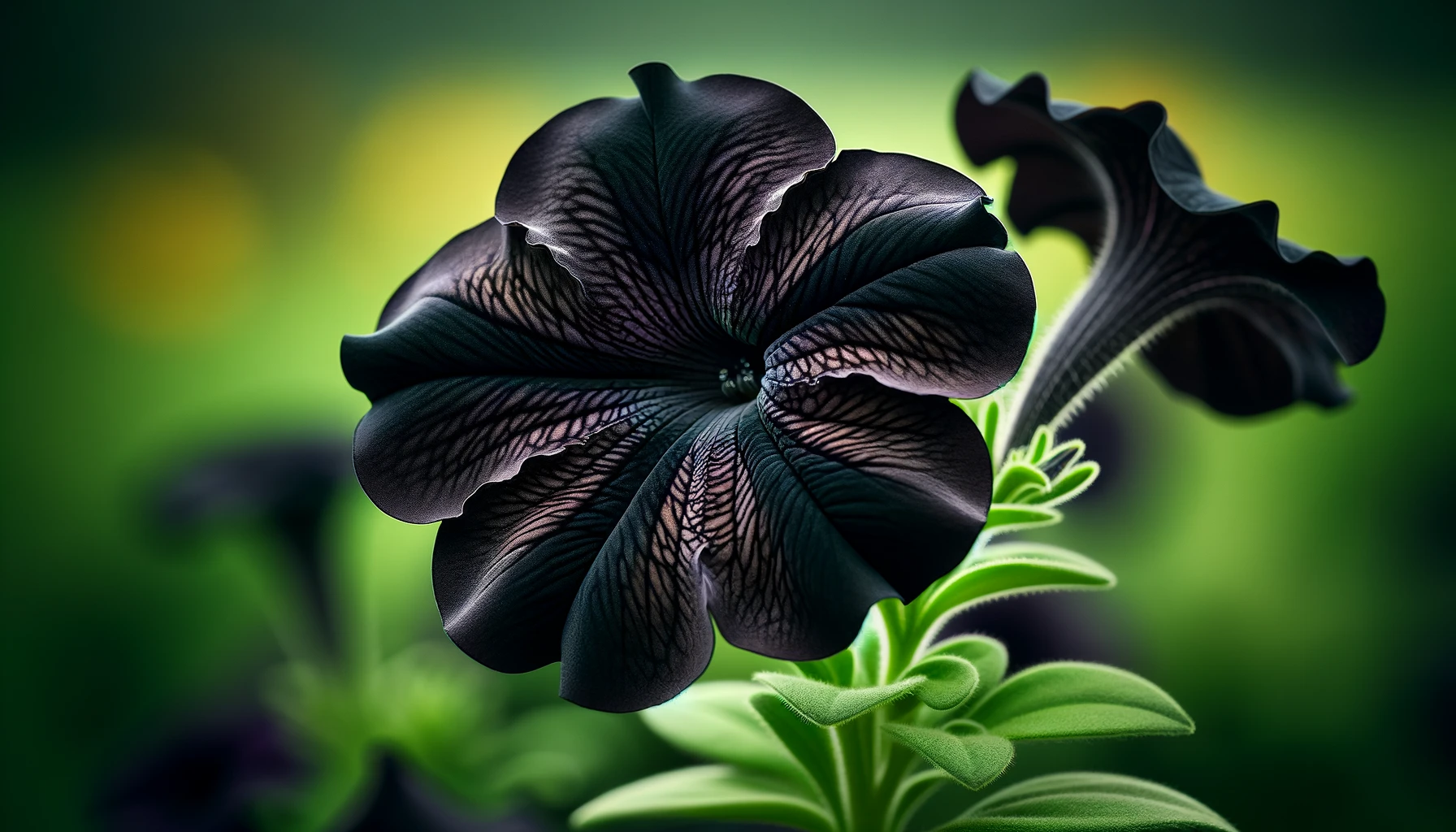
Black petunias are not a separate species. They are dark-flowered petunia cultivars bred to read as near-black in the garden — usually deep purple-black, burgundy-black, or red-black pigmentation rather than a flat, absolute black. That distinction matters because most searchers arrive with one of two questions: whether the color is real, and which named cultivar is worth buying for a pot or basket. This guide answers both, then focuses on what makes black petunias uniquely useful: contrast-driven design, not a repeat of general petunia culture. For watering schedules, deadheading by type, fertilizer rates, pest diagnosis, and troubleshooting leggy stems in depth, use the Petunia care guide on LeafyPixels.
What “Black” Means on a Petunia Bloom
Garden petunias (Petunia × atkinsiana) already come in dozens of colors. Black-flowered selections sit at the darkest end of that range. Retail tags often say “black,” but horticultural descriptions are more precise. The Royal Horticultural Society lists Black Velvet (Balpevac PBR) as producing very dark purple-black flowers up to 5 cm across — not a paint-chip black, but a bloom that reads as ink-dark from normal viewing distance.
That is the pattern across the category. Breeder catalogs and trial reports describe these flowers as black with purple, red, or maroon undertones that become visible in direct sun or as individual blooms age. Understanding that upfront prevents the most common buyer disappointment: expecting a flower that stays jet-black in every light condition.
Near-Black vs. True Black
True black flowers — meaning zero visible anthocyanin shift under normal daylight — are exceedingly rare in ornamental breeding. What gardeners call black is almost always near-black: extremely saturated red-purple pigment compressed into a velvety, light-absorbing surface. On a petunia, that means morning shade may look almost solid black, while midday sun reveals plum, wine, or maroon highlights.
The practical takeaway is simple. If you want a moody, high-contrast annual, near-black petunias deliver. If you want a flower that photographs like a black hole in every setting, you will likely be frustrated. Shop for depth and contrast, not literal blackness.
Why Black Velvet Still Defines the Category
Black Velvet remains the reference cultivar because it was among the first widely marketed solid near-black petunias and still anchors how the category is discussed. Wisconsin Master Gardener program materials note that the first totally black petunia Black Velvet was introduced by Ball FloraPlant in 2011. Fleuroselect awarded Phantom in 2010/11 as part of a Ball FloraPlant designer collection that included Black Velvet as its solid-color partner — evidence that breeders treat these as premium, impulse-driving novelty lines rather than ordinary bedding stock.
RHS notes Black Velvet is PBR-protected (Balpevac PBR), which matters if you propagate plants for sale: licensed production is required. For home gardeners buying transplants, the PBR tag is mainly a signal that you are getting the named cultivar, not a generic dark seedling.
Ball-connected introductions from the early 2010s — including Phantom with its yellow star and Black Velvet with ruffled near-black blooms — helped prove that dark petunias could perform as real garden plants, not just novelty curiosities. That history is why “black petunia” searches still cluster around Black Velvet even as newer dark reds and patterned types expand the shelf.
Why Gardeners Choose Dark Petunias
Most flowering annuals compete through brightness. Black petunias do the opposite: they add depth, shadow, and a focal point that makes neighboring colors look cleaner and more intentional. White calibrachoa looks sharper beside them. Chartreuse sweet potato vine looks electric. Silver dusty miller reads cooler and more architectural. In a hanging basket or porch pot, a single near-black petunia can change the whole composition without needing a large footprint.
The flower form helps, too. Petunias are open, soft, and familiar — so the dark color feels stylish rather than funereal. A black tulip reads formal. A black rose reads theatrical. A black petunia still feels approachable enough for everyday containers. That balance is why these cultivars persist in retail programs long after the initial novelty wore off.
There is also a performance angle, though it is secondary on this page. Near-black grandiflora and multiflora types behave like other modern petunias: long bloom season in full sun, strong container use, and the same hunger for light and steady feeding. What changes is the visual penalty for weak care. A leggy pink petunia can still look cheerful. A leggy black one looks tired almost immediately — which is why placement and contrast matter as much as culture.
Cultivar Comparison: Which Black Petunia Should You Buy?
The best black petunia depends on what you are optimizing for: darkest solid tone, pattern for distance visibility, or vigor and heat performance in mixed containers. Do not shop from a single catalog photo. Decide your priority first, then match the cultivar.
Black Velvet
Black Velvet is still the choice when “give me the blackest solid bloom” is the brief. RHS describes a bushy, upright habit with purple-black flowers from early summer until frost. Retail and trial sources commonly list plants around 20–25 cm tall and wide, with flowers near 5 cm across — a scale that works well in premium pots viewed up close.
Strengths: maximum depth of color; tidy, dense presence in containers; iconic status makes tags easier to verify.
Tradeoffs: extremely dark blooms can visually disappear against dark mulch, charcoal pots, or heavy shade. Black Velvet needs a lighter backdrop to show off. It is also less about trailing drama than some vigorous landscape petunias — better as a focal clump than a waterfall basket filler.
Phantom
Phantom trades pure darkness for graphic contrast. Ball FloraPlant’s catalog describes a black base with a distinctive yellow star pattern, positioned as a companion to solid near-black types at retail. Fleuroselect lists it as an F1 hybrid reaching roughly 20–30 cm tall and wide, flowering from June to first frost — similar scale to Black Velvet but with a completely different visual job.
Strengths: reads clearly from across a patio; strong impulse appeal; patterned throat solves the “dark flower disappears at distance” problem.
Tradeoffs: not monochrome. If you want sleek, moody, almost all-black elegance, Phantom’s yellow star changes the mood toward bold and theatrical.
Supertunia Black Cherry and Other Dark Reds
Not every dark petunia is trying to be black. Supertunia Black Cherry from Proven Winners is marketed as a deep red with black undertones, bred for landscape and container vigor rather than pure darkness. That distinction matters for buyers who prioritize bloom power, heat tolerance, and trailing fill over the blackest possible petal.
If your container already has strong structure and you need a dark note that keeps producing through hot weather, a dark cherry-black Supertunia series plant may outperform a novelty grandiflora on sheer flower count. If your goal is a conversation-starting near-black bloom for a small premium pot, Black Velvet or Phantom usually fits better.
Black Magic is Ball FloraPlant’s later solid near-black line, marketed as a stable, mounded, trailing type with non-striping blooms in the Ball FloraPlant catalog. Treat it as a sibling to Black Velvet with slightly different vigor and habit — read the tag for upright vs trailing before you buy. Other dark names such as Pinstripe or unnamed burgundy seedlings belong to the same broader wave of dark breeding from the early 2010s.
Cultivar at a Glance
| Cultivar | Color read | Best use | Distance visibility | Typical habit |
|---|---|---|---|---|
| Black Velvet | Solid purple-black | Premium pots, close viewing | Moderate — needs pale contrast | Bushy, upright, ~20–25 cm |
| Phantom | Near-black with yellow star | Statement baskets, graphic combos | High — pattern pops at distance | Mounded, ~20–30 cm |
| Supertunia Black Cherry | Deep red-black | Mixed containers, long-season bloom | Good — brighter undertone helps | Vigorous, trailing/spreading |
| Black Magic | Solid near-black | Mixed containers, mounded baskets | Moderate — similar to Black Velvet | Mounded trailing, ~25–41 cm |
| Other dark reds | Red-black to burgundy | Landscape fill, heat-heavy sites | Good to moderate | Varies by series |
Buying Licensed Transplants vs. Generic Seedlings
Black Velvet and Black Magic are PBR-protected cultivars sold as licensed vegetative transplants, not ordinary seed packets. That is why tags matter: a flat labeled “black petunia” with no cultivar name may be a dark seedling with weaker color or habit. For the named near-black look you saw in photos, buy Black Velvet, Phantom, Black Magic, or Supertunia Black Cherry from a reputable retailer and confirm the tag matches the series you want. RHS Plants sells Black Velvet as rooted cuttings and plugs — the same licensed material professional growers use.
Growing for Maximum Drama (Not Generic Petunia Care)
Black petunias do not need a separate horticultural rulebook. They need the same sun, drainage, and feeding as other garden petunias — plus smarter staging. Weak culture shows up faster on dark blooms, but the fixes live on the Petunia overview, light guide, and watering guide rather than in a duplicated care encyclopedia here.
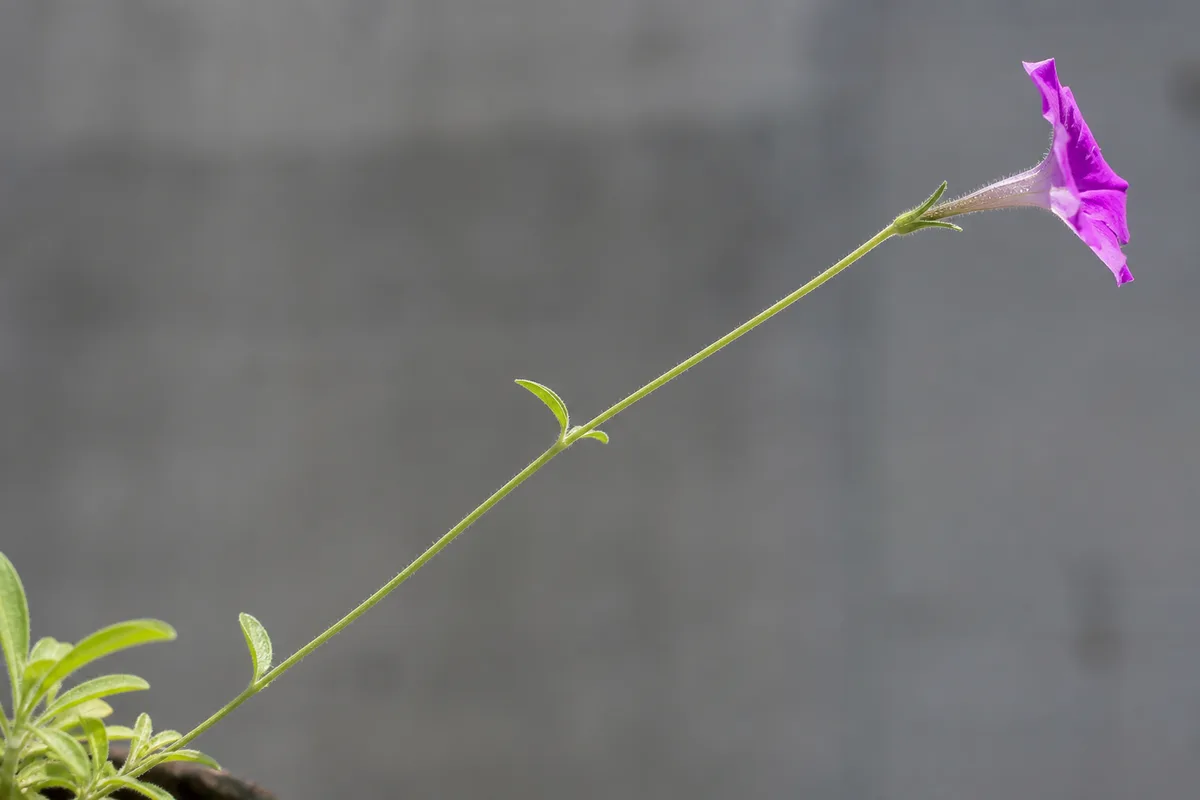
Placement and Contrast
Location is a design decision for near-black flowers. Put them where the bloom will be seen against something lighter: a white wall, pale stone, silver foliage, or a clean terracotta pot. Avoid planting solid black cultivars against dark mulch or shadowy corners — the flowers will look muted even when the plant is healthy.
Height matters in containers, too. Elevating a pot on a stand or using a tall planter brings dark blooms closer to eye level, which helps color register. Trial and retail commentary on black petunias consistently recommends framing them with chartreuse or gray trailing plants so the near-black center reads intentional rather than lost.
Sun still drives bloom quality. University of Minnesota Extension recommends at least five to six hours of good sunlight, with better performance in full sun. A black petunia in part shade will not only flower less — it will also look more purple and less dramatic, which feeds the “not really black” disappointment loop.
A Grower Note: How Light Changes the Color Read
During a June 2026 porch-container grow-out in the upper Midwest, we tracked the same Black Velvet-type plant through a cloudy morning and a bright afternoon after a light rain. The difference is exactly what breeder descriptions predict — and why honest “near-black” framing matters.
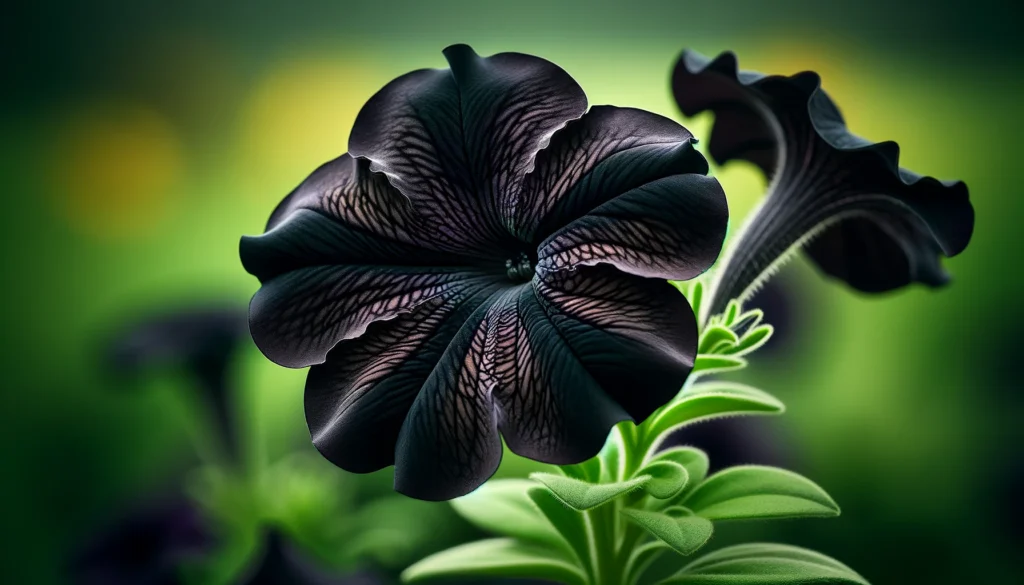
Morning overcast on a covered porch: petals read nearly solid black with only faint lavender veining visible up close.
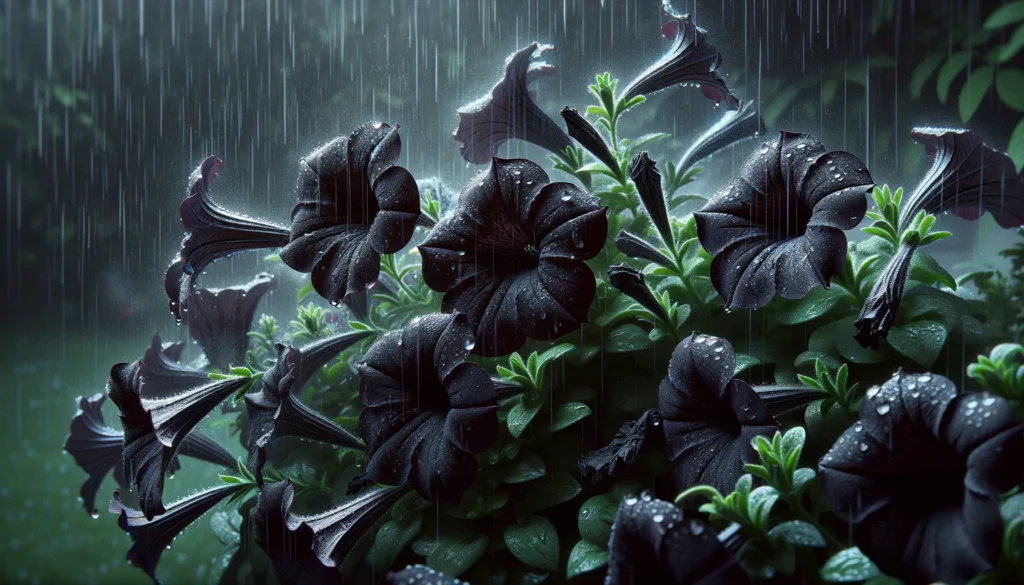
After rain with sun breaking through: wet petals stay ink-dark, but dry petal edges and older blooms shift toward plum-red — normal for near-black anthocyanin, not a cultivar failure.
If you are shopping online from a single studio photo, expect this light shift in your own garden. Stage the pot where you can see it in both morning shade and midday sun before you decide the color is “wrong.”
Quick Culture Checklist
Use this as a black-petunia-specific preflight, then follow the petunia hub for detail:
- Buy transplants after frost, when nights are reliably above about 10 °C and soil has warmed — same timing as other tender annuals.
- Choose by habit on the tag: upright grandiflora/multiflora types for focal pots; vigorous spreading series for large mixed baskets (container petunia guide covers pot sizing and feeding rhythm).
- Plant in full sun with sharp drainage — wet roots cause collapse fast on any petunia.
- Feed consistently in containers; poor bloom in adequate sun is often hunger, not cultivar failure.
- Plan for a midsummer reset: if stems stretch, cut back, feed, and return the plant to full sun — see leggy growth on petunia for the full recovery sequence.
- Watch for common pests such as aphids on petunia and powdery mildew — dark foliage does not make infestations any less likely; the Petunia care guide indexes all problem pages.
- Treat as an annual in most climates; petunias may overwinter as tender perennials in USDA Zones 9–11, but frost ends the display elsewhere.
If you want deadheading rules by petunia type, fertilizer intervals, or bed vs basket watering math, that is exactly what the Petunia care guide is for. This page stays focused on why you bought a near-black cultivar and how to make it look its best.
When Black Petunias Disappoint — and How to Fix It
The most common complaint is not “my plant died” but “it stopped looking special.” Usually that is a conditions or staging problem, not the wrong cultivar.
Color reads too purple. Expected. Near-black pigmentation shifts with light angle and bloom age. Fix it with contrast — pale companions, lighter pot, closer viewing — not with more fertilizer.
Flowers vanished into the background. Solid dark cultivars like Black Velvet against dark mulch or deep shade lose impact. Move the pot or add a silver or white trailer.
Leggy, open stems by July. Strong light, steady feed, and a hard trim fix most cases. A stretched black petunia looks tired faster than a pastel one — cut back by up to half, water if dry, resume feeding, and allow a week of recovery (leggy growth guide).
Wilting despite watering. Check drainage before you water again. Root rot follows soggy mix in containers; dark leaves do not make a drowning petunia any easier to save.
Weak bloom after purchase. Nursery plants often arrive in peak color under protected light. A few days in your sunniest spot plus consistent feed usually stabilizes performance — if the site truly has fewer than six hours of direct sun, no dark cultivar will look its best.
Pests or mildew mid-season. Sticky leaves, white powder on foliage, or distorted new growth point to aphids, whiteflies, or powdery mildew — treat early before bloom quality collapses.
Design Pairings and Container Ideas
Black petunias succeed when you treat them as a contrast tool, not a default filler.
Classic high-contrast: near-black petunia + white bacopa or calibrachoa + silver dusty miller. Clean, readable, works on front porches and formal entries.
Modern electric: black petunia + chartreuse sweet potato vine or lime ipomoea. Sharp and contemporary; keep the recipe to three players max so it does not turn chaotic.
Warm moody: dark petunia + deep purple coleus + bronze carex. Gothic without going muddy — include one pale element (white alyssum or silver artemisia) so the black bloom still has an edge.
Cheerful, not somber: black petunia + hot pink or lemon yellow calibrachoa. The dark anchor makes brights look intentional rather than candy-colored.
For basket mechanics — pot size, pinching, and midsummer feeding — pair this design thinking with the container petunias guide, which covers how to keep mixed pots full once the thriller plant is chosen.
Pet Safety
According to the ASPCA, petunias are non-toxic to dogs, cats, and horses. That makes them one of the safer colorful annuals for pet-aware patios. Non-toxic does not mean edible: large ingestion of any plant material can still cause mild stomach upset, and fertilizers or pesticides in the pot are separate risks. Raised planters and hanging baskets help keep curious pets out of the root zone.
Conclusion
Black petunias earn their place when you want near-black drama in a familiar annual form — staged against pale partners, in real sun, with the right named cultivar on the tag. Delegate ongoing culture to the Petunia care guide and treat this page as your cultivar and design brief.
Related guides
- Petunia care guide — Full culture for sun, watering, deadheading, fertilizer, pests, and seasonal care.
- Container petunias: fuller pots that bloom longer — Pot sizing, feeding, and midsummer recovery for mixed baskets.
- Leggy growth on petunia — When and how to cut back stretched petunias.
- Petunia light requirements — Why six or more hours of sun drives bloom quality on dark cultivars.
- Container petunias winter care — End-of-season options if you are overwintering cuttings in warm zones.