Buying a Monstera Plant: How to Pick a Healthy One
Avoid costly Monstera mistakes with tips on leaf health, roots, pests, pot size, variegation and nursery red flags.
Why Monstera Popularity Creates Buyer Traps
A Monstera sells because it delivers dramatic tropical foliage without orchid-level fuss. The big split leaves look expensive even when the care routine is straightforward, which is why the plant keeps appearing in retailer collections and beginner roundups. (Costa Farms)
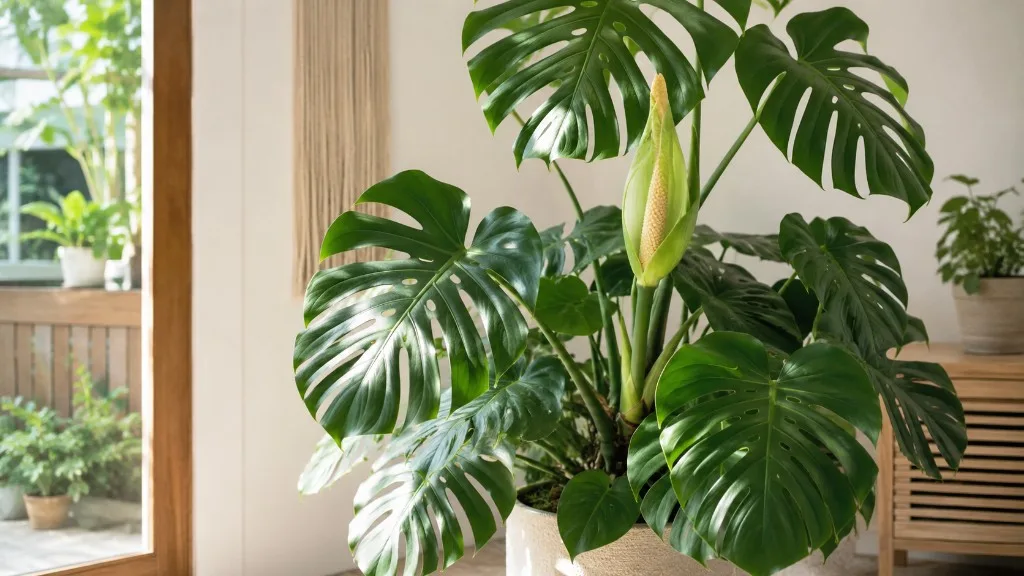
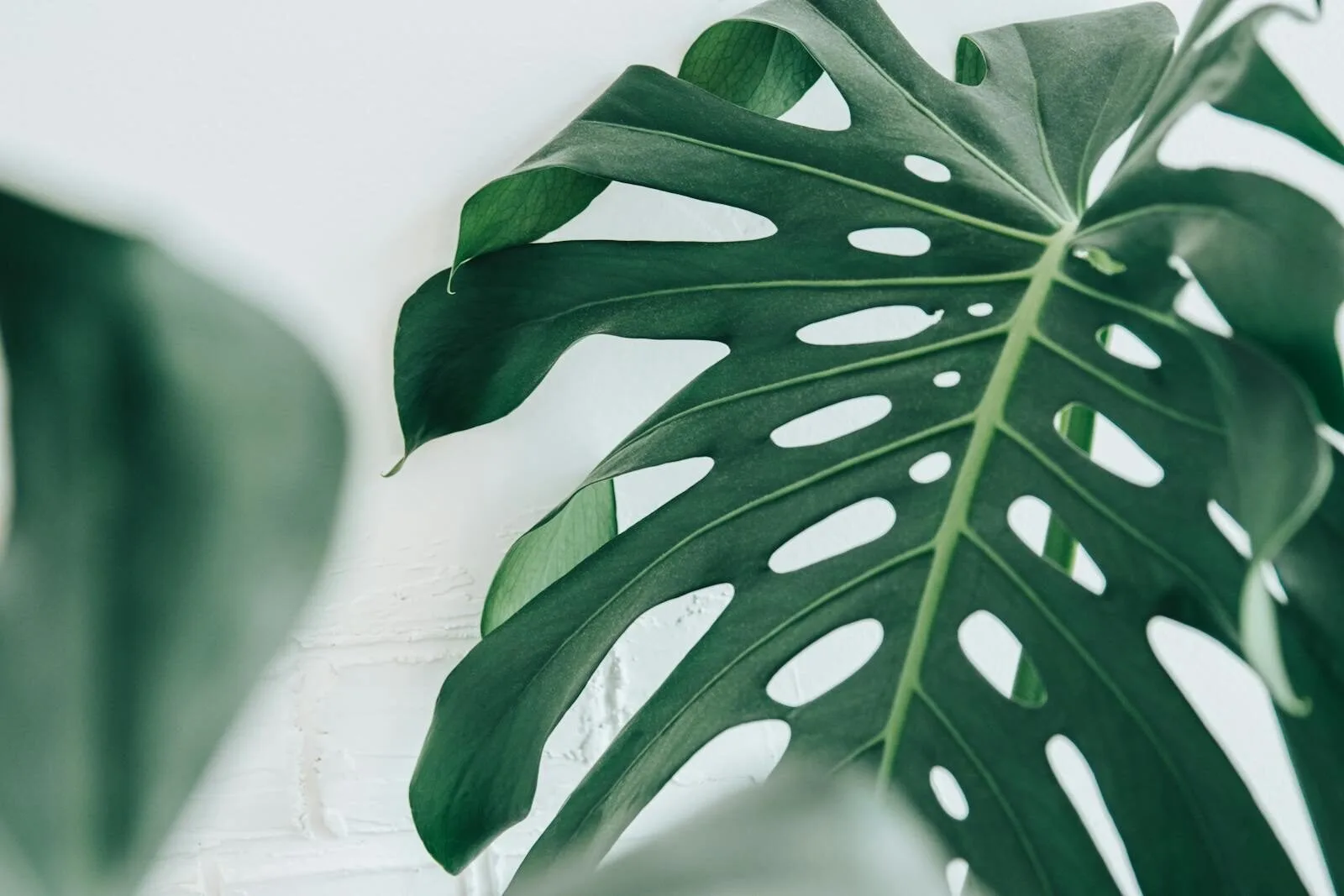
That popularity creates a predictable trap: buyers purchase the look in a photo, not the plant on the bench. Young Monsteras often arrive without fenestrations, while mature specimens in marketing shots already show the signature holes buyers expect. See how to get Monstera leaves to split for what fenestration timing actually looks like at home—not in retailer photos. The gap between expectation and reality is where most bad purchases start, and where sellers still charge full price for stressed stock.
You are not buying a species label alone. You are buying a growth stage, leaf form, root condition, light requirement, future size, and a level of risk. Get those aligned and the plant feels easy. Get them wrong and you pay collector prices for something that struggles in your room.
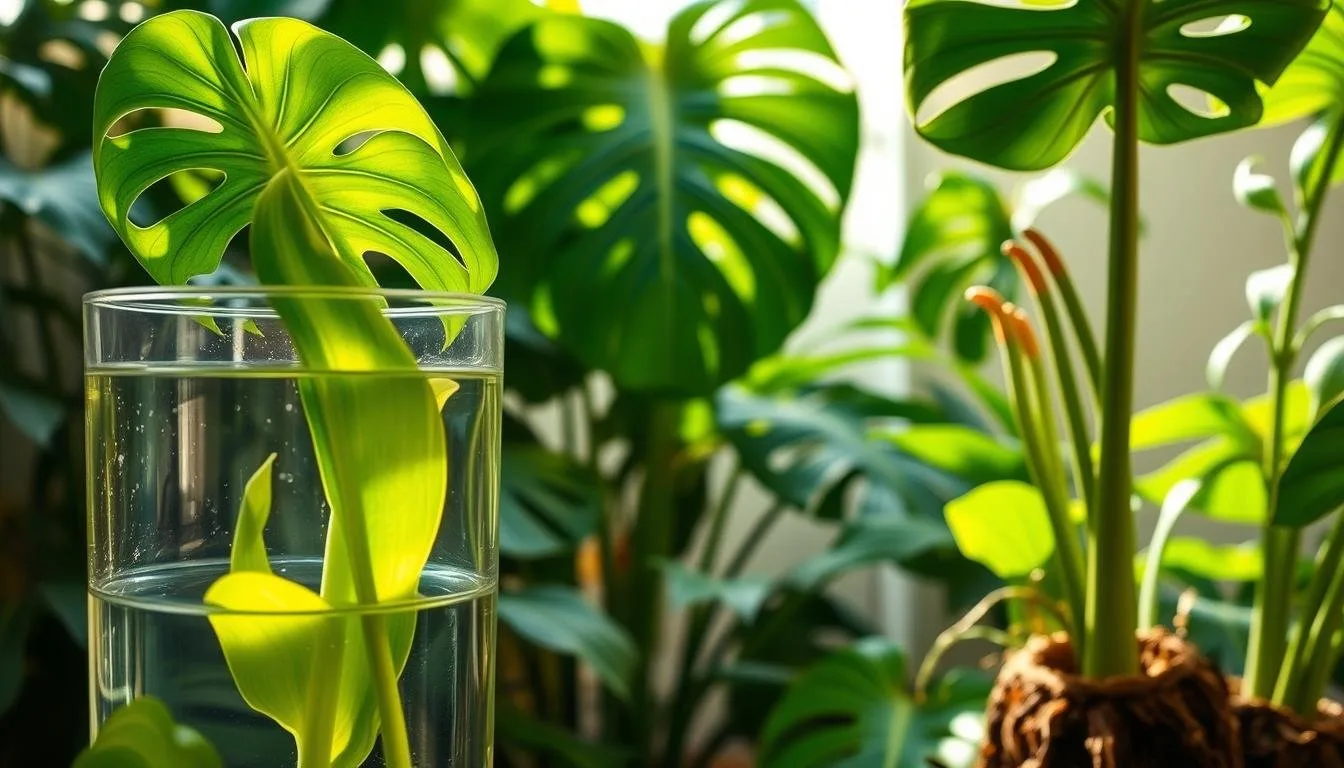
Editor’s note (June 2026): Bench stock at a specialist houseplant retailer was inspected for this guide—checking cachepot standing water, leaf undersides for early pest signs, drainage-hole root color, and whether juvenile deliciosa labels matched actual leaf form. The photos below document what those checks look like in practice, not generic care maintenance.
Quick Checklist: Five Things Before You Pay
Before you hand over money—at a nursery, garden centre, or online checkout—run through this short list:
- Confirm the type: Green Monstera deliciosa for most first buyers; adansonii for trailing texture; variegated forms only if you accept slower growth, higher light demand, and scam risk.
- Inspect leaves and stems: Even color, firm petioles, no active pest signs on leaf undersides, and a visible growth point or healthy new leaf emerging.
- Check soil and roots: Mix should smell earthy, not sour; drainage holes should not show dark mushy roots; cachepots on the sales floor should not hold standing water.
- Match size to goal: Small for budget and patience; medium established plants for the best value balance; large specimens only if you have floor space and bright light to maintain them.
- Verify seller transparency: For expensive variegated plants, demand photos of the exact plant, visible nodes on cuttings, and clear return or heat-pack policies for shipping.
When inspecting bench stock, lift the inner pot out of decorative cachepots first. Standing water at the base is common in retail displays and is one of the fastest ways a Monstera develops root stress before you even buy it—a problem the June 2026 inspection found on roughly one in five floor displays checked.
Which Monstera Type Fits You
The best Monstera is not the rarest one. It is the one that fits your light, budget, patience, and tolerance for ongoing maintenance. Ask a practical question first: do you want a reliable plant or a project? A reliable plant is cheaper, more forgiving, and easier to replace. A project may look stunning but usually costs more, grows slower, and punishes weak light faster.
Monstera deliciosa: the classic first choice
Monstera deliciosa is the safest recommendation for most buyers because it is widely available in multiple sizes and more tolerant of average indoor conditions than most collector forms. NC State Extension describes it as a common tropical houseplant that tolerates a range of indoor conditions when drainage is adequate. Costa Farms notes it can tolerate lower light, though it grows faster and looks more dramatic in a brighter spot. (Costa Farms) The Royal Horticultural Society recommends warmth, humidity, and bright but indirect light for best results indoors.
This is the plant most people picture when they hear “Monstera.” If you want broad leaves, eventual fenestrations, and a floor plant that can anchor a room, start here. It can climb aggressively when happy—Costa Farms describes mature plants reaching 10 feet or more with support—so buy with future size in mind, not just today’s shelf space. (Costa Farms)
For post-purchase care depth—watering, soil, repotting, and problem troubleshooting—use the Monstera deliciosa plant hub rather than expecting this buying guide to duplicate a full care encyclopedia.
Monstera adansonii and trailing types
Monstera adansonii fits buyers who want visible holes at a smaller leaf size and a trailing or compact climbing habit. NC State Extension lists it as a vining aroid that prefers bright indirect light and notes toxicity if ingested.
The buying advantage is shape: adansonii usually delivers the Swiss-cheese look earlier than a juvenile deliciosa. The downside is legginess in dim rooms. If your space is already low-light and you are still learning watering basics, this is not your easiest first purchase.
Variegated Monsteras and scam red flags
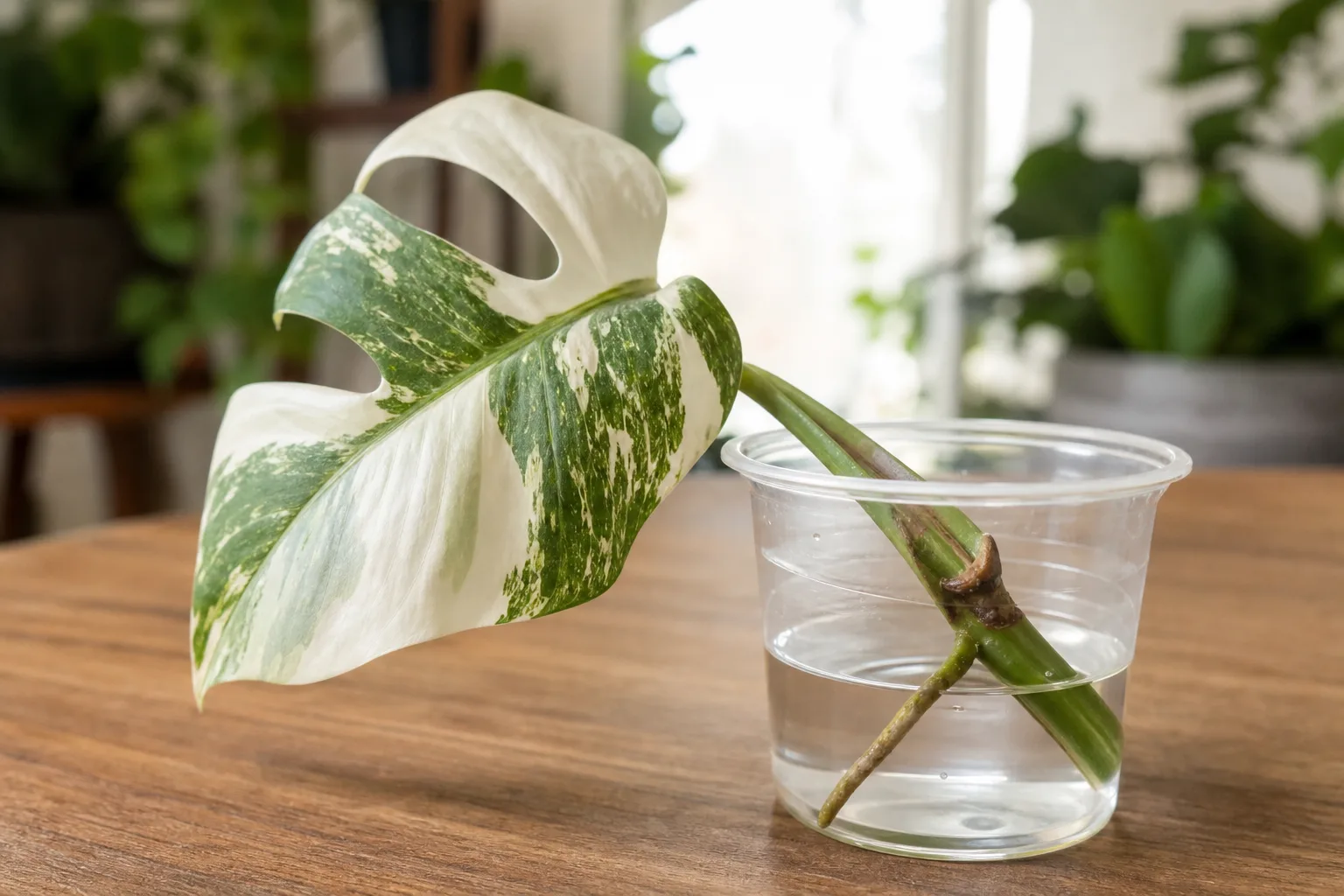
Variegated Monsteras belong in a different buying category. Pale tissue has less chlorophyll, so growth is usually slower and light demand is higher. Costa Farms notes slower growth in Thai Constellation, one of the more commercially available variegated forms. (Costa Farms)
Treat these as collector purchases, not beginner shortcuts:
- No node, no deal on cuttings—a viable cutting needs at least one node to grow.
- Reject “variegated seeds” for Thai Constellation or albo; reputable sellers do not sell these as seed-grown plants.
- Avoid all-white sections with no meaningful green tissue; they rarely sustain long-term growth.
- Demand current photos of the exact plant, not stock images from older listings.
The Spruce’s variegated Monstera guidance aligns with those red flags and is worth reading before any high-ticket purchase. (The Spruce)
Where to Buy a Monstera Plant
You have three realistic channels: local nursery or garden centre, specialist houseplant retailer, and online seller. Garden centres often stock common green deliciosa in standard sizes; specialist shops and online stores carry more size options, climbing forms, and collector cultivars. (BBC Gardeners’ World Magazine)
Local buying wins on inspection. You can check leaves, soil moisture, stem structure, pests, and—when allowed—roots before paying. Penn State Extension advises buying healthy, robust plants with no signs of harmful insects and moist but well-drained soil around the roots. Plant quality varies batch to batch even on the same bench.
Online buying wins on selection, especially for variegated or hard-to-find stock. It adds transit risk: packaging quality, heat or cold exposure, and seller honesty all matter. For expensive plants, vague photos, no return policy, or refusal to show nodes should end the conversation.
Practical rule: Buy common green Monsteras locally when you can inspect them. Buy rare cultivars online only from sellers who show the exact plant, document node structure, and explain shipping protections covered in the next section.
Online Seller Red Flags and Shipping Protections
Online Monstera purchases—especially variegated cuttings above $150—need a different vetting layer than in-store shopping. Most reputable specialty sellers offer some form of dead-on-arrival (DOA) protection, but the details vary and the reporting window is often short.
Before you checkout for a shipped plant, confirm these policies in writing:
- DOA reporting window: Many sellers require photo evidence within 12 to 48 hours of delivery. Missing that window usually voids replacement or refund claims regardless of plant condition.
- Heat packs below 50°F (10°C): Specialty retailers commonly require a purchased heat pack when destination temperatures drop below roughly 50°F; orders shipped without one may not qualify for DOA guarantees. Add a heat pack proactively in late fall through early spring.
- Insulated packaging: Ask whether the seller uses insulated liners, moisture wraps around the rootball, and expedited shipping. Standard postal service in a sealed box for more than two to three days increases stress on tropical foliage.
- Exact-plant photos: The listing should show the specific plant or cutting you will receive, including node position on variegated stock—not a generic stock image from a different specimen.
- Return vs. replacement: Many plant sellers do not accept returns but will replace or credit DOA stock with documented photos of the plant, packaging, and shipping label.
Red flags that should stop the purchase:
- Stock photos only, with refusal to send current images of your assigned plant
- No written DOA or live-arrival policy on the product page or FAQ
- “Rare variegated Monstera seeds” listings for Thai Constellation or albo types
- Pressure pricing (“only today”) without verifiable plant documentation
- Seller will not confirm whether a cutting is rooted, callused, or wet-stuck
- Free economy shipping on a $300+ cutting in winter with no heat-pack option
Document everything on arrival: unbox immediately, photograph all damage before repotting or discarding packaging, and contact the seller within their stated window. Penn State Extension recommends isolating new plants from your collection for two to three weeks regardless of how healthy they look at arrival.
What You Should Expect to Pay
Monstera pricing reflects size, maturity, fenestration, variegation, root establishment, and seller reputation—not species name alone. Prices vary sharply by market; treat any snapshot as a comparison tool, not a universal quote.
| Plant type / stage | Typical buying logic | India snapshot (2026 listings) | US / UK range (approx.) |
|---|---|---|---|
| Small green Monstera deliciosa sapling | Cheapest entry, slowest visual payoff | around ₹199–₹500 on some listings | $15–$35 / £12–£28 |
| Established green Monstera deliciosa | Best value for most buyers | roughly ₹845–₹4,500 by size | $35–$120 / £28–£95 |
| Large mature green Monstera | Pay for size and fenestration now | upper standard range | $120–$250+ / £95–£200+ |
| Thai Constellation / premium variegated | Collector pricing, more risk | ₹9,000+ on premium listings | $150–$500+ / £120–£400+ |
Price table last checked: June 18, 2026 (India retailer listings and US/UK nursery ranges). Refresh quarterly before budgeting—INR rows move fastest on marketplace listings.
Cheap is not always value. A small sapling is fine if you enjoy growing plants up over time. It is a poor fit if you want a big split-leaf statement within a few months. A medium established green plant often beats a tiny bargain because you skip the awkward juvenile stage and see fenestrations sooner.
For collector plants, price should rise only when proof rises: clear variegation quality, healthy active growth, strong roots, and transparent seller documentation.
What a Healthy Monstera Looks Like
A healthy Monstera should look alive, not merely upright. You want even leaf color, clean stems, stable structure, and soil that smells managed rather than neglected. One dramatic leaf can hide a weak plant; a strong buy has multiple leaves with decent color, no obvious active pest issue, no collapsing petioles, and no swampy mix.
Leaf checks that matter before you buy
Start with the leaves because they reveal both current health and the seller’s maintenance habits. You want foliage that is mostly even in color, without spreading yellowing, large mushy patches, active spotting, or crispy edges on every leaf. Some cosmetic tears happen in retail environments, especially on larger leaves, but widespread damage usually signals stress, rough handling, or pests. (BBC Gardeners’ World Magazine)
Turn leaves over. Pest signs often appear beneath foliage first: sticky residue, cottony clusters, tiny moving specks, silvery scarring, black dots, or webbing. Penn State Extension recommends choosing pest-free plants and isolating new purchases for about three weeks.
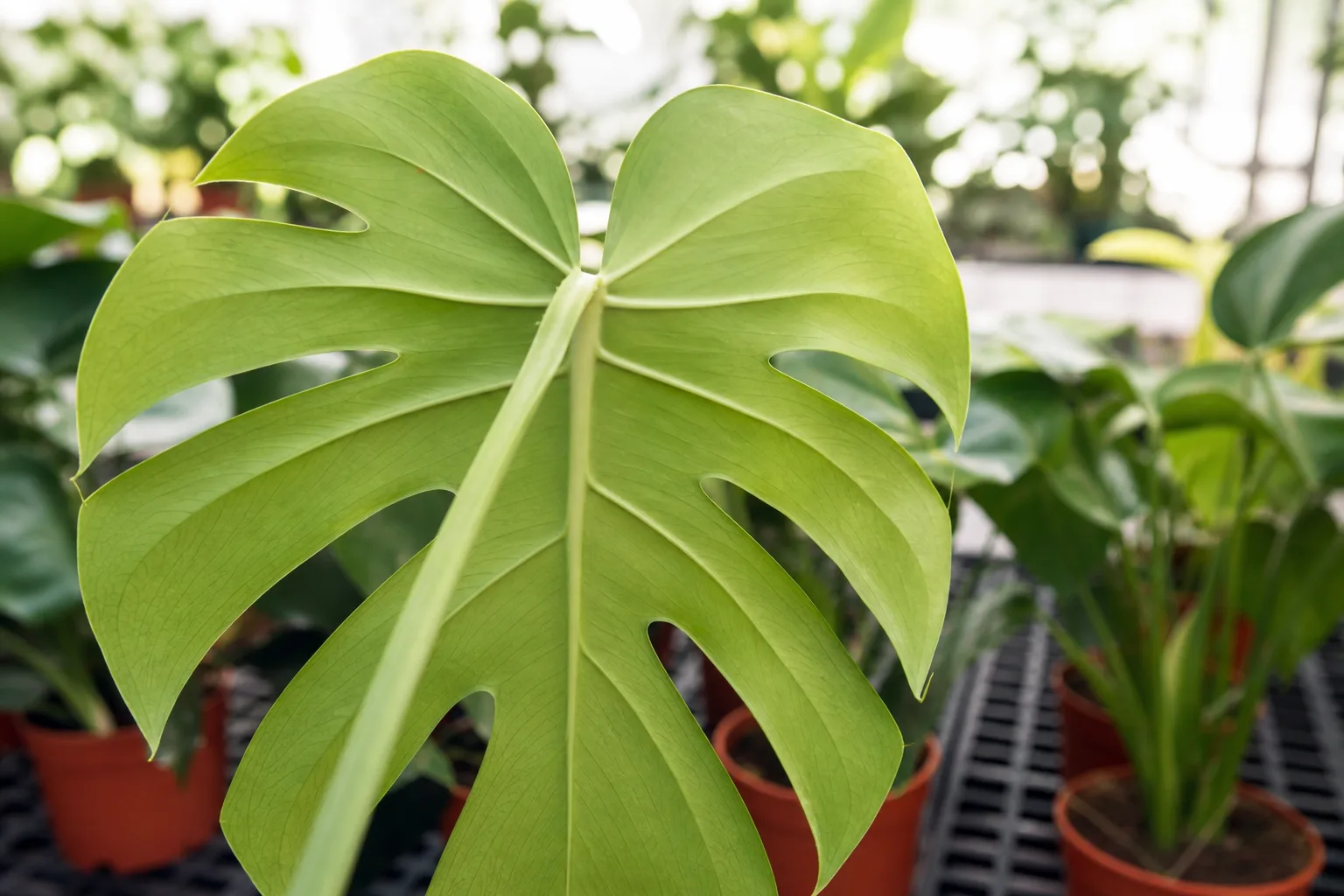
Also check newest growth. A plant pushing a healthy emerging leaf or active node is telling you it is still functioning. That momentum often matters more than one older show leaf.
Stem, root, and soil checks
Stem structure affects how easy the plant will be to train up a support later. A straight, manageable main stem is usually more useful than chaotic multi-direction growth that is already stiffened into an awkward angle.
Check potting mix next. It should not smell sour, stay waterlogged, or look like compacted mud. Penn State Extension notes that Monsteras need well-drained media and should not sit in saturated soil—a rule that matters on the sales floor, not just at home.
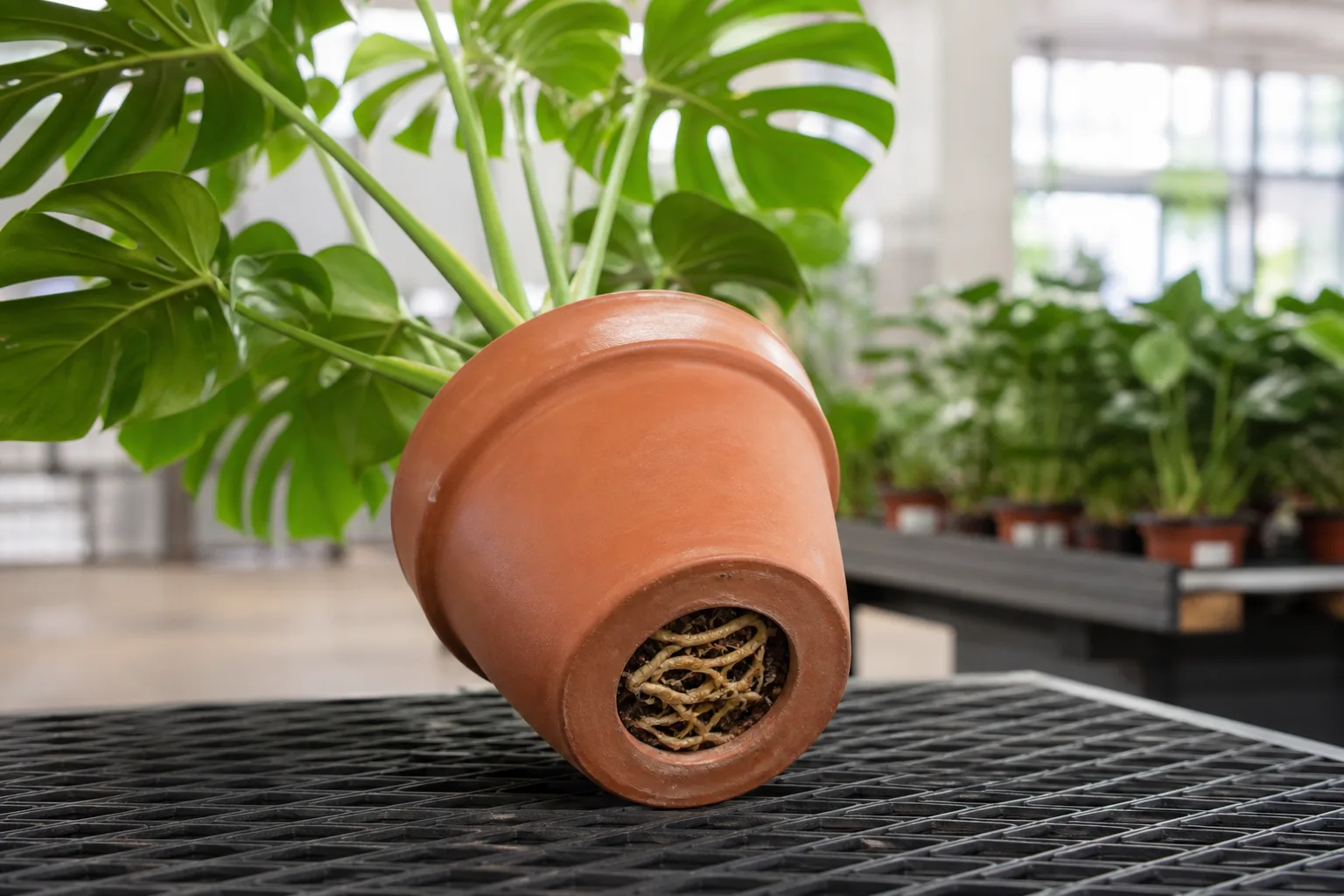
If the seller allows it, slide the root ball out slightly or inspect drainage holes. Healthy roots are generally firm and lighter in color; rotting roots are mushy and foul-smelling. You are not looking for perfection. You are looking for signs the plant has a future.
Best Size to Buy for Your Goal
For most people, the best Monstera to buy is neither the cheapest baby plant nor the most expensive mature specimen. It is a medium-size, established plant with multiple healthy leaves and a clear growth point. That sweet spot usually balances price, visual reward, and acclimation stress.
Small Monsteras are cheaper and easier to transport, but they require patience and often will not show the iconic split-leaf look immediately. Large mature plants deliver instant impact but need more floor space, brighter light, and often a support system from day one. If you move often, live in a small flat, or are still learning basic houseplant habits, medium usually beats massive.
Nursery-Grown vs. Tissue-Culture Juveniles
Juvenile Monstera deliciosa from a nursery bench and tissue-cultured starter plants can look nearly identical at purchase—small heart-shaped leaves with no fenestrations. That similarity confuses buyers who expect split leaves within weeks.
Both paths start with solid juvenile foliage. Fenestrations appear only after the plant matures, develops stronger roots, receives adequate bright indirect light, and ideally climbs a support. Costa Farms and extension sources agree that juvenile leaves are normally entire; splits and holes come later as the plant grows larger indoors—often after many leaves and one to three years of steady growth, not at the point of sale.
The practical buying difference is not “seed vs. tissue culture” on the label. It is whether the growth stage in front of you matches the photo that sold you on Monstera in the first place. A tissue-cultured Thai Constellation starter and a nursery-grown green deliciosa sapling will both look plain for a while. Pay for the stage you actually want, not the mature marketing image.
Questions to Ask the Seller
Good sellers answer basic provenance questions without defensiveness. Ask how long they have had the plant, whether it was recently repotted, what light it grew in, how often it is watered, and whether it had recent pest treatment. Those answers tell you whether you are about to change every condition at once.
For variegated Monsteras, ask sharper questions: Is it rooted or only callused? Does the cutting have a viable node? Is variegation stable or reverting greener? Are the photos of the exact plant you will receive? (The Spruce)
Also ask whether the plant is already on a support. If you want an upright climber, starting with—or planning for—a moss or coir pole early is easier than correcting a floppy mature vine later. See the DIY moss pole guide for support sizing before you commit to a large floor plant. (BBC Gardeners’ World Magazine)
A seller who cannot answer basic questions may still have a fine plant, but uncertainty should lower what you are willing to pay. Price without information is risk.
Match the Plant to Your Home Before Checkout
Purchase success starts before checkout. Use this compact fit check instead of treating a buying page like a full care manual:
| Factor | Before you buy, confirm… | If it fails… |
|---|---|---|
| Light | You have bright, indirect light for green forms; even stronger filtered light for variegated types. (RHS) | Skip variegated stock or choose adansonii only if you can place it in your brightest safe spot. See Monstera light requirements. |
| Space | Floor or shelf room for eventual size; plan for a support if you want an upright deliciosa. | Buy adansonii or a smaller established deliciosa rather than a mature floor specimen. |
| Pets / kids | You can keep foliage out of reach; Monstera deliciosa is toxic to cats and dogs (insoluble calcium oxalates). (ASPCA) | Choose a different plant if pets chew leaves habitually. |
| Budget vs. goal | Price matches the growth stage you actually want—not the photo you saw online. | Pay for medium established green stock instead of a tiny bargain or overpriced hype cultivar. |
A plant that looks cheap but fights your conditions becomes expensive fast. A slightly pricier plant that matches your light and household usually costs less over time because it survives.
What to Do Right After You Buy
The first mistake after purchase is over-helping: immediate repot, fertilizer, and three location changes in a week. A newly purchased plant is already adjusting to new light, airflow, and temperature. Your first job is stability, not intervention.
Place it in appropriate light, inspect thoroughly, and isolate briefly from other plants if you worry about hidden pests. Water only if the mix is actually dry—see watering Monstera deliciosa for dry-down checks after acclimation. Repot only when there is a real reason—severe rot, unusable soil, or a rootbound condition that makes watering impossible. Otherwise let it acclimate first. For repot timing and technique, see when and how to repot Monstera.
One yellowing leaf after a move is not automatically a crisis. Watch the trend over the next two weeks, not a single dramatic leaf.
Common Expensive Mistakes
Underestimating size and support. Green deliciosa becomes a large climbing plant. If you have no floor space and no plan for a pole, buy shape and size accordingly—or choose adansonii.
Treating rarity as quality. Variegation can be stunning, but it brings slower growth, higher light demand, higher price, and real scam risk. No node, fake seeds, and all-white cuttings remain expensive traps.
Skipping shipping protections. A $400 variegated cutting shipped in winter without a heat pack and no DOA policy is a gamble, not a purchase. Confirm policies before checkout, not after the box arrives damaged.
Ignoring toxicity and placement. If your cat eats plants, this purchase is a safety decision, not a décor choice. Keep Monsteras out of reach and know that ASPCA Poison Control is available at (888) 426-4435 if ingestion is suspected.
Chasing the lowest price. A bargain plant with pests, rot, or the wrong growth stage for your goal is not a deal. The best purchase usually feels balanced: healthy evidence, fair size, realistic fit, and a price that matches what you can verify in front of you.
Related guides
- Monstera care guide for beginners — first setup after you bring a plant home
- Types of Monstera plants — compare cultivars before you commit to a rare form
- How to get Monstera leaves to split — fenestration timing vs. what retailers show in photos
- Monstera light requirements — match light before you buy variegated or large stock
- Monstera propagation guide — if you plan to multiply a healthy purchase later
- When and how to repot Monstera — when acclimation is done and roots need room
- Monstera deliciosa plant hub — ongoing care, problems, and species depth after purchase
Conclusion
Buying the right Monstera takes judgment, not luck. Inspect leaves, stems, and roots; match the plant to your light and household; and treat variegated purchases as documented collector transactions with shipping protections—not impulse buys from a pretty photo.
For most buyers, a healthy green Monstera deliciosa from a local nursery or trusted specialist is the smartest starting point—then ongoing care from the Monstera deliciosa hub. Inspect hard, buy for your conditions, and let a solid green plant beat a risky flashy one.