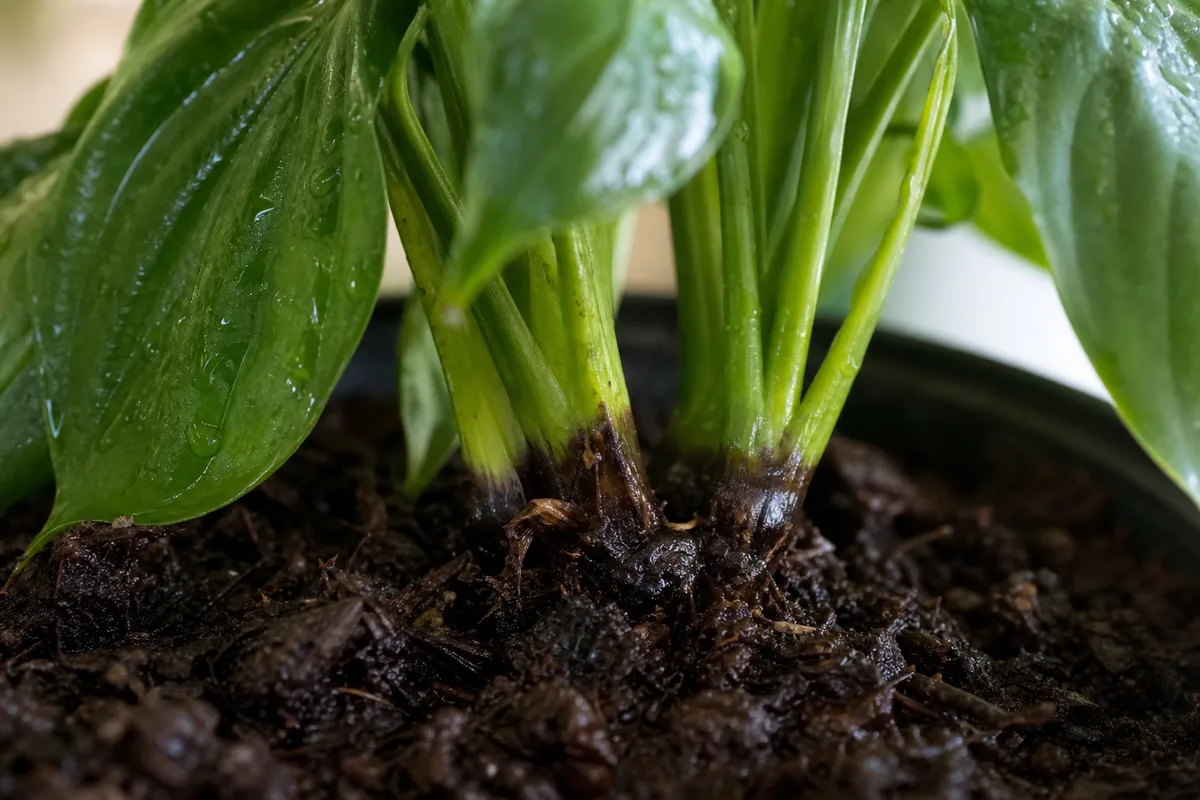
Monsoon care is not just “water less.” It is a seasonal reset for the whole growing environment: rain-cooled air, higher humidity, lower indoor evaporation, darker rooms, wet balconies, slower drying potting mix, and a bigger penalty for crowded foliage. The Monsoon Plant Care Tool turns those moving parts into a practical checklist so you can adjust watering, light, ventilation, pest checks, and fungal-risk prevention without guessing.
Use it when a rainy season starts, when several cloudy weeks change how your plants behave, or when balcony pots keep getting rain even though your indoor plants look thirsty. The result is a starting plan, not a promise. A plant in a bright east window with chunky bark mix may still need regular watering, while the same species in a plastic pot, dense peat mix, and a dim corner may stay wet for too long.
The tool helps you compare the monsoon factors that most often change houseplant care: ambient humidity, available light, air movement, pot drainage, potting mix texture, plant type, and whether the plant is indoors, near an open window, or exposed to rain on a balcony. Monsoon weather is defined by a seasonal wind shift that can bring a rainy season or a dry season depending on region; in everyday plant care, the concern is usually the wet phase with repeated rain, humid air, and long cloudy stretches (NOAA NESDIS).
The output should help you decide whether to stretch the watering interval, move a plant closer to usable light, increase airflow, hold fertilizer, protect balcony pots from direct rain, or check for early pest and disease symptoms. It is especially useful when several plants start changing at once and you need a calm way to separate normal seasonal adjustment from real decline.
The tool does not diagnose every disease, identify every insect, or replace a root inspection when a plant is already collapsing. If the leaves are yellowing quickly, stems are soft, the soil smells sour, or the pot has no drainage, use the result alongside the root rot risk checker, plant disease identifier, or yellow leaves diagnosis instead of treating monsoon season as the only cause.
Why monsoon care changes indoors
Houseplants respond to the conditions around their leaves and roots, not to the calendar name of the season. During wet monsoon weather, the air often holds more moisture, rooms may receive less direct sun through cloud cover, and potting mixes dry more slowly. Plant water use is shaped by radiation, temperature, humidity, and wind speed, which is why a cloudier, more humid room can lower the drying pressure on both leaves and soil (FAO).
That change matters because most indoor plant mistakes are not dramatic. They are small habits that no longer match the room. The same Saturday watering routine that worked during a dry, bright spell may become too frequent after two weeks of rain. A plant that loved a balcony in warm, breezy weather may sit in saturated mix once storms arrive. A fern that looked crisp in dry heat may improve with humidity, while a cactus in dense mix may move closer to rot.
The tool’s value is that it asks you to read the room before repeating the routine. It turns “monsoon season” into specific inputs: Is the pot actually drying? Is the plant still getting enough light to grow? Is foliage staying wet? Is air moving through the plant shelf? Are pests appearing on new growth or on the soil surface?
Start with humidity if you have a hygrometer, but do not stop there. Humidity by itself is not the care plan. A room can be humid and bright, humid and dim, humid but breezy, or humid and stagnant. The tool works best when you pair humidity with light level, pot size, pot material, mix texture, drainage, plant type, and placement.
For watering inputs, use touch and weight rather than memory. University of Maryland Extension notes that watering on a fixed schedule can give plants too much or too little water, and recommends checking soil moisture about two inches down as one practical test for many indoor plants (University of Maryland Extension). In monsoon weather, add a second check: lift the pot or use a skewer so you know whether only the surface is dry while the lower root ball remains wet.
For light inputs, be honest about cloud cover and distance from windows. A room can look bright to human eyes while still being weak for plant growth. If you have a light meter, check the plant’s actual position, not the window glass. If you do not, compare plant behavior: stretched stems, smaller new leaves, faded variegation, and long gaps between new leaves all suggest the tool should treat the plant as lower light.
How the scoring logic works
The tool should be read as a risk-balancing model. It raises moisture risk when humidity is high, light is low, airflow is poor, the pot is plastic or glazed, the potting mix is fine-textured, the pot is oversized, or the plant sits where rain reaches the soil. It lowers moisture risk when the plant is in strong filtered light, active growth, a breathable pot, a chunky mix, warm air, and reliable drainage.
It raises fungal-risk priority when foliage stays wet, plants are tightly grouped, dead leaves sit on the soil surface, or air cannot move through the canopy. Gray mold is a useful example because the fungus can survive on dead plant tissue and needs high humidity around plants to infect new tissue (Wisconsin Horticulture). The same principle applies to many leaf-spot and mildew problems: wet surfaces, dense growth, and still air make trouble easier.
It raises pest-monitoring priority when soil stays moist or plants are crowded. Fungus gnats are the classic monsoon-adjacent houseplant pest because their eggs are laid in moist potting-soil surfaces, and drying the top inch of soil is a key non-chemical management step (Wisconsin Horticulture). The tool should not make you panic about every fly, but it should prompt earlier sticky-card checks and soil-surface drying before a small nuisance becomes a shelf-wide problem.
Reading the watering recommendation
If the tool recommends less frequent watering, read that as “check later and water only when the root zone is ready,” not as “dehydrate the plant.” Missouri Extension gives the core rule well: no general watering schedule fits all houseplants because plant size, pot, light, temperature, humidity, and other conditions affect drying speed (University of Missouri Extension). Monsoon season changes several of those factors at the same time.
A good monsoon watering adjustment is usually modest at first. If you watered a pothos every five days in a dry, bright spell, the tool might push you toward seven to ten days during cloudy, humid weather. If you watered a snake plant every two weeks, it might push you toward three weeks or a deeper dryness check. If a fern in a terracotta pot still dries fast near a breezy window, the answer may be “do not reduce much, but stop misting and watch the saucer.”
Do not use leaf droop alone as the trigger. Droop can mean thirst, root damage, heat, cold, low light, or soil that is wet but oxygen-poor. During monsoon season, wet soil plus drooping foliage deserves more caution than dry soil plus drooping foliage. Check the mix, drainage holes, pot weight, and root smell before adding water to a plant that is already sitting wet.
Reading the light recommendation
Reduced light is the quiet part of monsoon care. High humidity gets the attention, but low light is often what makes the old watering routine unsafe. Less light usually means less photosynthetic activity, slower growth, and slower water use. Missouri Extension notes that flowering plants kept continuously in poor light can develop spindly shoots, few flowers, yellow foliage, poor roots, and related weakness, and that insufficient light cannot be fixed by extra fertilizer, water, or repotting (University of Missouri Extension).
If the tool suggests a light move, make it gradual and practical. Move plants closer to a bright window, open curtains during safe daylight hours, clean dusty leaves, rotate pots for even exposure, or use a grow light for plants that were already near their lower light limit. Do not move shade-adapted plants directly from a dim monsoon room into harsh sun the moment clouds clear; sudden exposure can scorch tender leaves.
For variegated plants, succulents, herbs, and flowering plants, low-light monsoon periods are more serious than they are for tolerant foliage plants. A peace lily or aglaonema may simply slow down. Basil, mint, echeveria, and many flowering plants may stretch, thin out, or become more disease-prone if the light drop continues.
Airflow is not optional in humid weather
Airflow is the difference between helpful humidity and stagnant dampness. Many tropical houseplants appreciate moisture in the air, but leaves that stay wet and crowded shelves that never dry are a different situation. Powdery mildew management guidance from University of Maryland Extension includes adequate sunlight, good air circulation, proper spacing, and pruning to reduce humidity around susceptible plants (University of Maryland Extension).
The tool’s airflow recommendation should be simple: create gentle movement, not a harsh blast. A small fan across the room, an open door, wider spacing between pots, and removal of dead foliage are usually enough. Avoid aiming strong airflow directly at delicate leaves for hours, especially if the fan also chills the plant.
For shelves, the hidden risk is the back row. Front plants may dry normally while plants against a wall sit in a pocket of still, humid air. If the tool flags high fungal risk, check the inner leaves, leaf undersides, and soil surface of the least visible plants first. That is where the season’s problems often begin.
Balcony and window plants need a separate answer
Balcony plants are not just houseplants with better light. During monsoon rain, they may receive repeated direct water, splash from railings, wind-driven rain through windows, and runoff from shelves above them. A plant that handles humidity indoors may still fail if its potting mix is constantly saturated outside.
Run the tool differently for balcony pots than for indoor pots. Mark rain exposure honestly. A covered balcony with bright reflected light and good drainage is very different from an open ledge that gets drenched twice a day. If a pot has no drainage hole, treat that as a high-risk setup and move it under cover or repot before the rainy pattern settles in.
Raise pots off flat saucers, empty trays after rain, and check whether drainage holes are blocked by roots, mud, or decorative outer pots. If you grow edible herbs such as mint near a rainy window, keep foliage from staying wet overnight and avoid letting stems collapse into the soil. For plants that resent wet roots, use the soil mix calculator or pot size calculator before blaming the season alone.
Fertilizer and repotting during monsoon season
Fertilizer should follow growth, not optimism. If a plant is actively pushing healthy leaves in warm, bright, humid conditions, a light feeding schedule may still make sense. If growth has slowed because the room is dim, the roots are staying wet, or the plant is recovering from stress, fertilizer is more likely to add salt pressure than solve the problem.
The tool should nudge you toward restraint when light is low. Missouri Extension notes that most houseplants producing new growth or flowers can be fertilized about monthly, but plants do not need fertilizer when no new growth is apparent and fertilizer should not be used to force growth in poor conditions (University of Missouri Extension). That is directly relevant to rainy-season care because a dim monsoon room can behave more like a low-growth period even when temperatures are warm.
Repotting is similar. Warm, humid weather can help some tropical plants recover, but only if light and root health are adequate. Repot if the plant is root-bound, the mix has collapsed, drainage is poor, or roots need inspection. Delay repotting if the plant is already weak, the room is dark, or the current pot is staying wet for too long. If the tool points to pot-size risk, compare the result with the repotting calculator before moving up a size.
Worked example: a pothos in a dim, humid room
Imagine a pothos in a 6-inch plastic pot, standard peat-heavy mix, sitting eight feet from a window during three weeks of rain. The room humidity is 78 percent, the pot feels heavy after seven days, and the newest leaves are smaller than older leaves. Before monsoon weather, you watered every five or six days.
The tool would likely flag lower water use, low-to-moderate light stress, and moderate fungal or gnat risk. The better plan is not a dramatic rescue. Move the plant closer to bright indirect light, wait until the mix is dry deeper into the pot before watering, empty any cachepot water, remove yellow leaves, and add gentle airflow for part of the day.
If you also see small flies near the soil, do not start by soaking the pot with home remedies. Let the soil surface dry more between waterings, use sticky cards to monitor adults, and inspect whether the mix has become too water-retentive. If yellowing spreads despite a drier surface, use overwatering and root rot symptom guides to decide whether to inspect roots.
Worked example: balcony succulents during heavy rain
Now picture a tray of succulents on an exposed balcony. The plants are in small terracotta pots, but a storm has soaked them for two days. The air is humid, sunlight is weak, and the forecast shows more rain. These plants may dry faster than plastic-potted foliage plants once weather clears, but repeated saturation is still the main risk.
The tool would likely recommend immediate rain protection, not routine watering. Move the tray under cover, remove saucers, tilt pots briefly if water is trapped on the soil surface, and wait for the mix to dry before watering again. Do not fertilize. Do not repot everything while the roots are wet unless you find rot, because stressed succulent roots can be damaged by unnecessary handling.
The important distinction is exposure. A succulent indoors in a bright, dry window may need only a small interval change. A succulent outdoors under repeated rain needs environmental protection. The same plant type can receive different recommendations because the tool is reading the conditions, not just the label “succulent.”
Pest checks that fit the season
Monsoon pest prevention is mostly about catching small changes early. Inspect new growth, leaf undersides, petioles, stem joints, and the soil surface once a week. Use a flashlight. Sticky residue, stippling, distorted leaves, cottony clusters, webbing, and flying adults all point in different directions, so do not treat before you identify the pest.
High humidity does not remove the need to check for spider mites, thrips, aphids, mealybugs, scale, whiteflies, and fungus gnats. It only changes which problems become more likely in your exact setup. Dry, warm corners can still favor mites, while consistently moist soil favors fungus gnats. Crowded soft growth can make sap-feeding pests harder to notice until damage appears.
If the tool flags pests, pair it with the pest identifier or specific symptom pages such as fungus gnats, mealybugs, thrips, and spider mites. Isolate heavily affected plants before spraying anything, and be careful with pesticide use around pets, children, edible herbs, and poorly ventilated rooms.
Fungal-risk checks that fit the season
Fungal prevention during monsoon weather is mostly cultural: keep leaves drier, improve air movement, remove dead tissue, space plants, avoid overhead watering, and stop letting decorative pots hold runoff. These steps sound basic because they are basic. They also work better than waiting until a disease has already spread.
Watch for white powdery patches, gray fuzzy growth on dead or wounded tissue, black or brown leaf spots with yellow halos, mushy stems near the soil line, and persistent mold on the potting mix. Not every mark is a disease. Old mechanical damage, mineral deposits, edema, and sun scorch can mimic disease at first glance. The tool should push you to inspect patterns: Is it spreading? Is new growth affected? Are leaves staying wet? Are nearby plants showing the same issue?
If symptoms are already visible, do not rely on the monsoon tool alone. Use white spots on leaves checker, black spots on leaves checker, leaf spot disease, powdery mildew, or mold on soil to narrow the problem. Remove the worst affected leaves only when that helps reduce spread and does not strip the plant bare.
When to trust the result
Trust the tool most when your inputs are specific and the plant’s symptoms match the recommendation. A high-humidity, low-light, wet-soil result that tells you to delay watering is usually reliable. A balcony-rain result that tells you to protect pots from direct storms is straightforward. A fungal-risk result that tells you to increase airflow and remove dead leaves is low-risk and sensible.
Treat the result more cautiously when inputs are uncertain. If you do not know the potting mix, the pot has a hidden liner, the plant was recently bought, roots may already be damaged, or you are guessing at light and humidity, the answer should be a range. In that case, make one conservative change and observe for several days rather than stacking watering, repotting, fertilizer, pruning, and pest treatment at once.
Also be careful with rare plants, recently imported plants, mounted orchids, carnivorous plants, bonsai, semi-hydro setups, and terrariums. Their water and airflow rules can differ sharply from ordinary potted foliage plants. The tool can still help you think through humidity, light, and drying speed, but plant-specific knowledge should override generic seasonal guidance.
Common monsoon mistakes
The first mistake is watering by habit. If the pot is still heavy, the lower mix is damp, and the plant is in weaker light, waiting is not neglect. It is matching the plant’s water use. The second mistake is closing every window and packing plants tightly because the air “already feels humid.” Humid, still air around crowded foliage is exactly when disease checks become more important.
The third mistake is treating misting as monsoon care. In a humid season, extra leaf wetness is rarely useful and may make fungal problems easier. If a plant needs higher humidity, measure the room first. During monsoon weather, many homes already have enough humidity for common tropical foliage plants, while the more urgent need is airflow and drying control.
The fourth mistake is assuming every yellow leaf means overwatering. Yellow leaves can come from low light, old age, root stress, nutrient issues, pests, acclimation, or disease. Use the tool to identify the most likely seasonal pressure, then confirm with the plant. The best monsoon routine is slower, more observant, and less automatic.
Use this tool as the seasonal layer. It tells you how rain, humidity, cloud cover, and airflow should change the baseline. Then use the more specific tools when one variable needs a deeper answer. If watering is the main question, compare with the plant watering calculator or water amount calculator. If the plant is leaving soggy soil behind, check root rot risk.
If light is the weak link, use the light requirement calculator or grow light distance calculator. If your issue is placement, use the balcony plant finder, bathroom plant finder, or low light plant finder. If you are planning the whole season, pair this page with the plant care calendar generator or seasonal plant care planner.
That workflow keeps the tool from doing too much. Monsoon care is the context. Plant type, pot size, soil mix, light, and symptoms still decide the final action.
Conclusion
The Monsoon Plant Care Tool is most useful when you treat rainy-season care as a set of linked changes rather than a single watering rule. Higher humidity, lower light, wet balconies, slower soil drying, and weaker airflow can all point toward a calmer routine: check moisture before watering, move plants toward usable light, protect exposed pots from repeated rain, space foliage, remove dead leaves, and monitor pests before they spread.
Run the tool with the conditions your plants actually have this week. Then change one thing at a time and watch the next leaves, not just the old damage. A good monsoon plan keeps roots oxygenated, leaves dry enough, light adequate, and care decisions slow enough that you can see what is working.