Free Pest Identifier Tool for Houseplants
Identify common plant pests like spider mites, fungus gnats, mealybugs, aphids, thrips, and scale.
Pest Identifier Tool
Identify the pest
Select all the signs and symptoms you can observe on your plant.
Free Pest Identifier Tool for Houseplants
Identify common plant pests like spider mites, fungus gnats, mealybugs, aphids, thrips, and scale.
Select all the signs and symptoms you can observe on your plant.
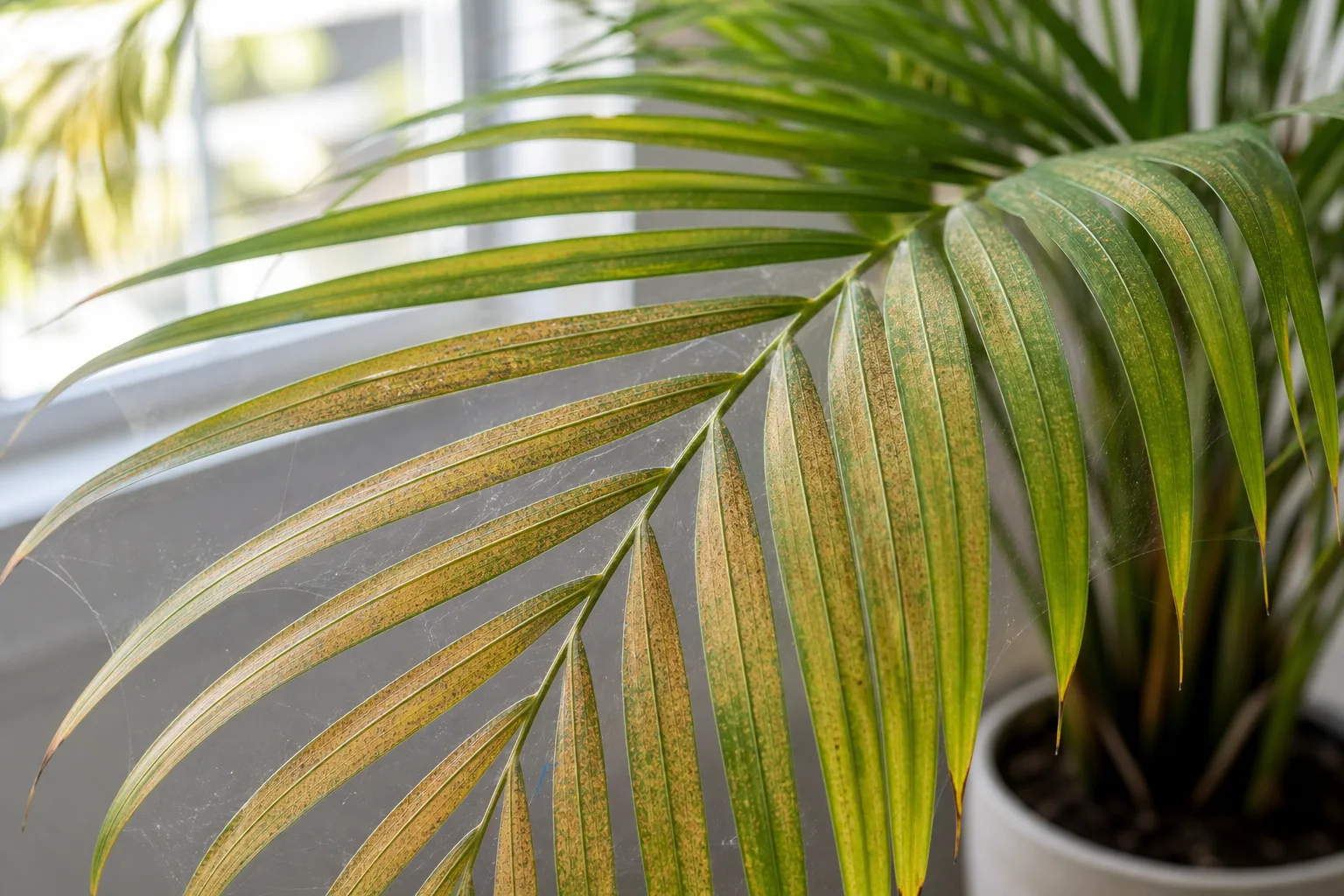
Houseplant pest problems are easy to over-treat and surprisingly easy to misread. A sticky leaf may point to aphids, mealybugs, soft scale, or whiteflies. Fine pale speckling may be spider mites, but it can also be old sun scorch, fertilizer injury, or mechanical abrasion. Tiny flies around a pot are usually fungus gnats, yet the larvae and the soggy root zone matter more than the adults you see in the air.
The Pest Identifier Tool is built for that first messy stage: you have symptoms, you may have seen something moving, and you need a practical shortlist before you spray, repot, isolate, or throw a plant away. It compares visible clues such as webbing, honeydew, cottony residue, stippling, black fecal specks, flying adults, soil moisture, and new-growth distortion. The output is not a lab diagnosis. It is a ranked starting point that helps you decide what to inspect next and which treatment path is least likely to make the problem worse.
Use the tool when you can observe the plant closely. A phone flashlight, a white sheet of paper, and a 10x hand lens turn vague symptoms into useful evidence. The goal is not to name every insect perfectly on the first pass. The goal is to separate likely pests from watering stress, light stress, root decline, nutrient issues, and cosmetic leaf damage so your next action fits the real problem.
The tool turns symptom choices into a pest shortlist. If you choose fine webbing, pale stippling, and dry indoor conditions, spider mites rise in the result. If you choose tiny flies near wet potting mix, fungus gnats move up. If you choose cottony white clusters at leaf joints, mealybugs become more likely. If you choose hard brown bumps on stems and sticky residue below the plant, scale insects become a stronger match. Those clue clusters reflect common indoor pest descriptions used by university IPM and extension programs for houseplant problems.
It also helps you decide when a pest is unlikely. Yellow leaves alone do not prove insects. Brown tips alone do not prove mites. Curling leaves can come from thrips, aphids, underwatering, heat, low humidity, or root stress. If the signs you enter do not include pest-specific evidence, the tool should push you toward closer inspection before treatment.
What it does not do is identify insects from a photo, confirm pesticide resistance, distinguish every species inside a pest group, or replace local extension advice for severe infestations. That boundary matters. A pest group is usually enough for a houseplant owner to choose an inspection and control strategy, but it is not enough for regulated greenhouse production, edible crops, rare collections, or recurring failures after multiple pesticide applications.
Most houseplant pest mistakes start with treating the most familiar pest rather than the most likely pest. Spider mites get blamed for nearly every speckled leaf. Fungus gnats get blamed for every weak plant in wet soil. Neem oil gets applied to problems that are not pests at all. The result is wasted time, plant stress, and sometimes chemical exposure in a room where people and pets live.
Symptom matching forces a better sequence. First, it asks what is visible. Second, it asks where the evidence appears. Third, it weighs whether the plant’s recent care history supports a pest or an environmental problem. That structure is especially useful indoors because pests are often found on protected surfaces: leaf undersides, new growth, petiole joints, stem nodes, and the rim or surface of the potting mix.
The tool works best when you treat the first result as a hypothesis. If the result says spider mites, confirm with a tap test over white paper, a hand lens, and a search for webbing near veins and leaf axils. If it says fungus gnats, confirm with adult flies, moist organic potting mix, larvae near the surface, and yellow sticky cards. If it says scale, check whether the bumps scrape off and whether honeydew or sooty mold is present.
Start with the whole plant. Look at new leaves, old leaves, stems, petioles, leaf undersides, the soil surface, drainage holes, and nearby plants. Pests often reveal themselves through pattern rather than one dramatic sign. Thrips tend to damage tender tissue and can leave black fecal specks. Spider mites often create pale stippling before webbing becomes obvious. Mealybugs hide in tight joints. Scale insects can look like part of the stem until you scrape one gently.
Then check the environment. A plant in persistently wet mix with tiny flying adults has a different risk profile from a plant that is dry, dusty, and stippled. Low humidity and warm rooms can favor mite outbreaks, while wet organic media support fungus gnat larvae. Weak roots can mimic pest damage because damaged roots cannot supply leaves consistently.
Finally, record timing. A plant that declined the week after repotting may be reacting to root disturbance or a moisture change. A plant that slowly collected sticky residue while neighboring plants developed similar symptoms is more suspicious for sap-feeding insects. A plant with old scarred leaves but clean new growth may not need treatment at all.
The tool gives more weight to signs that are specific, repeatable, and tied to the pest’s biology. For spider mites, fine webbing, pale stippling, tiny moving dots, dry conditions, and damage on leaf undersides matter more than generic yellowing. University of Maryland Extension describes mites as causing stippling and, when populations are high, webbing on plant parts, which is why those two clues carry strong weight for a mite result mites on plants.
For fungus gnats, adults flying around the pot are only part of the picture. The stronger clue is a moist potting environment where larvae can live and feed on organic matter, fungi, and sometimes tender roots. Maryland Extension notes that fungus gnat larvae develop in moist growing media, so the tool treats wet soil and surface activity as a combined signal rather than separate trivia fungus gnats.
For aphids, the tool looks for clusters on tender growth, curled or distorted new leaves, sticky honeydew, and the possibility of sooty mold. Aphids feed by sucking sap, and Maryland Extension notes that they can excrete honeydew and cause distorted growth on infested plants aphids in home gardens. Indoors, that often shows up as sticky shelves, glossy leaves below the feeding site, or curled new growth.
For mealybugs, cottony white wax is the clue that matters most. Mealybugs are soft scale relatives covered with waxy filaments, and UC IPM groups them among common houseplant pests that feed on plant sap and produce honeydew mealybugs on houseplants. That is why the tool treats cottony clusters at nodes, leaf axils, and root crowns as a strong match.
For scale insects, the best clues are immobile bumps, honeydew, sooty mold, and repeated presence along stems or leaf veins. Scale can be soft or armored, and the waxy covering makes casual sprays less reliable than direct contact with the vulnerable crawler stage. UC IPM’s houseplant pest guidance separates scale and mealybugs from other indoor pests because their protective coverings and feeding behavior change how you inspect and treat them scale insects.
For thrips, the tool looks for distorted new growth, silvery or scarred patches, black specks, and damage concentrated in tender leaves, flowers, or tight growth points. UC IPM describes thrips damage as scarring, distortion, and black fecal specks on affected tissue, which is why those symptoms carry more weight than general yellowing thrips damage.
A ranked result is not a command to spray. It tells you which inspection path deserves attention first. If the top result is fungus gnats but the plant’s roots smell sour and leaves are collapsing, the gnat result may be a symptom of overwatering rather than the main cause of decline. If the top result is spider mites but you find no mites, no webbing, and no fresh stippling, the next step is not a stronger miticide. It is a better inspection and a look at light, heat, and watering history.
Think in confidence levels. A high-confidence pest result needs at least one pest-specific sign and a matching pattern of damage. A medium-confidence result may have good symptoms but weak direct evidence. A low-confidence result is a reminder to observe more before acting.
The tool is most useful when you combine it with related LeafyPixels pages. If the result points to stippling and webbing, compare it with the spider mites guide. If wet soil and flies dominate, use the fungus gnats guide. If curled new growth is the main symptom but insects are not obvious, run the leaf curl diagnosis before choosing a pesticide.
Isolate the plant first if you suspect an active pest. Isolation does not have to be dramatic. Moving the plant a few feet away is better than leaving leaves touching a clean plant, but a separate room is better when you see active crawling insects, webbing, or sticky honeydew.
Next, inspect from the cleanest evidence to the messiest. Use a flashlight on leaf undersides and petiole joints. Tap several leaves over white paper and look for moving specks. Gently scrape a suspected scale bump with a fingernail or cotton swab. Check the soil surface for adult flies and larvae. Look at nearby plants because indoor pests rarely respect shelf boundaries.
Then decide whether treatment is urgent. A few fungus gnat adults on a thriving plant are annoying but not the same as a collapsing rooted cutting in soggy mix. A few aphids on a tender shoot can often be removed physically before spraying. Heavy spider mite webbing across multiple plants calls for faster isolation and repeated follow-up because eggs and hidden mites can keep the outbreak going.
Start with non-chemical controls when the infestation is light and the plant can tolerate handling. Rinse foliage, prune badly infested expendable growth, wipe leaves and stems, remove visible mealybugs or scale with a cotton swab, and replace the top layer of gnat-heavy potting mix when appropriate. These steps reduce pest pressure before any product is involved.
For contact products such as insecticidal soap or horticultural oil, coverage matters more than a dramatic one-time application. These products generally work only where they contact the pest, so leaf undersides, joints, and protected stems need attention. Clemson Extension describes insecticidal soaps as contact materials that require thorough coverage and are most effective on soft-bodied pests such as aphids, mealybugs, mites, and whiteflies insecticidal soaps.
For fungus gnats, think in two layers: reduce the conditions that favor larvae and monitor adults. Letting the upper potting mix dry when the plant can tolerate it, improving drainage, removing decaying plant debris, and avoiding constantly wet saucers all reduce larval habitat. Yellow sticky cards help monitor adults and can reduce nuisance numbers, but they do not fix the wet root-zone conditions that allowed the population to build.
For thrips, mealybugs, and scale, expect follow-up. Eggs, protected life stages, and hidden adults mean one treatment rarely proves the problem is gone. Recheck every few days at first, then weekly until new growth is clean and sticky residue or fresh scarring stops appearing.
Indoor pesticide use deserves more caution than outdoor garden spraying because residues, aerosols, pets, children, and poor ventilation are part of the setting. Before using any pesticide, read the product label and confirm that the plant, pest, and indoor use site are allowed. EPA explains that pesticide labels are legally enforceable and include directions for safe and lawful use pesticide labels.
Do not assume that “natural” means harmless. Neem oil, insecticidal soap, horticultural oil, pyrethrins, spinosad, and other common products can still injure sensitive plants, irritate skin or eyes, or create risk if misused. NPIC notes that neem oil products contain pesticide components and that product labels specify how they may be used neem oil. Test a small area first on sensitive plants, avoid spraying in direct sun or high heat, and keep treated plants away from pets and children until the label says it is safe.
Never mix pesticide products unless the label specifically allows it. Do not apply outdoor-only concentrates indoors. Do not use household cleaners, dish detergents, alcohol mixtures, essential oils, or internet recipes as substitutes for labeled plant products. Some plants tolerate a wipe with diluted alcohol on a cotton swab for visible mealybugs or scale, but broad spraying with improvised mixtures can burn foliage and still miss hidden pests.
Suppose a pothos has several small flies lifting from the pot whenever you water. The plant is in a decorative cachepot, the soil surface stays damp for a week, and the newest leaves are slightly smaller than usual. There is no webbing, no cottony residue, no sticky honeydew, and no scale-like bumps.
Those inputs should push the tool toward fungus gnats and root-zone moisture rather than spider mites or scale. The practical next step is not a leaf spray. It is to remove standing water, check whether the inner pot drains freely, let the top layer dry as far as the pothos can tolerate, and use sticky cards to confirm adult activity. If larvae remain a problem, a product labeled for fungus gnat larvae may be appropriate, but the moisture pattern still needs correction.
The useful insight is that the flying adult is the visible clue, while the potting mix is the control point. If the plant keeps sitting in wet mix, adult traps alone become a monitoring tool rather than a solution.
A calathea has pale speckles across several older leaves, a dusty look near the midrib, and a few fine threads between petioles. The room is warm, winter humidity is low, and two nearby plants have similar speckling. There is no sticky residue, no cottony wax, and no flying adults.
Those inputs should raise spider mites. The next inspection step is a tap test over white paper and a close look under leaves. If you see moving specks and fresh stippling, isolate the plant and start with a careful rinse plus a labeled product appropriate for mites and indoor ornamental plants. Because calatheas can be sensitive, test any spray first and watch for leaf injury.
The key mistake would be treating the plant as underfed because the leaves look pale. Fertilizer does not solve mite feeding damage, and stressed roots or excess fertilizer can make recovery harder.
A hoya has shiny sticky patches on leaves below the vines and a few dark, shell-like bumps along older stems. New leaves look acceptable, but the shelf underneath is tacky. There are no tiny flies, no webbing, and no cottony white masses.
Those clues point more toward scale insects than fungus gnats or mites. The next step is to scrape one bump gently. If it lifts off and leaves a mark, inspect the entire vine, especially older woody sections and leaf undersides. Manual removal is often the first meaningful reduction step on a small houseplant, followed by repeated monitoring for crawlers and new bumps.
The important limit is patience. Scale can persist because not every life stage is equally exposed. A plant that looks clean after one wipe-down still needs several follow-up checks.
The first mistake is treating before confirming a pest-specific sign. If the plant has yellow leaves but no visible insects, no sticky residue, no webbing, no fecal specks, no moving dots, and no soil flies, the better first move is diagnostic inspection. Use the yellow leaves diagnosis to separate water, light, root, nutrient, and pest possibilities.
The second mistake is changing everything at once. Repotting, pruning, fertilizing, moving the plant, and spraying in the same weekend can overwhelm a stressed plant and make it impossible to know what helped. If the plant is not in immediate danger, reduce the pest load, correct the most obvious care driver, and observe new growth.
The third mistake is skipping neighboring plants. A clean-looking plant next to a badly infested one may still host early-stage pests. Check the full shelf, especially plants with touching leaves or shared light and airflow.
The fourth mistake is judging recovery by old leaves. Spider mite stippling, thrips scarring, scale damage, and old gnat-related root stress do not vanish from existing leaves. Progress means fewer active pests, no spreading damage, cleaner new growth, and a plant that stabilizes over time.
Ask for help when the pest keeps returning after repeated correctly labeled treatments, when the plant is rare or valuable, when many plants are affected, when the plant is edible, or when pesticide use may affect children, pets, aquariums, or sensitive adults in the home. Local cooperative extension offices, reputable plant clinics, and trained pest-management professionals can often identify whether the problem is the pest, the product choice, the application coverage, or an environmental condition that keeps favoring the outbreak.
Also get expert input when symptoms look like disease rather than insects. Wet lesions, soft collapse, spreading rot, unusual fungal growth, or rapid decline after repotting may need a different path than pest control. The Pest Identifier Tool can help you decide what to inspect, but it cannot culture pathogens, test soil, or verify pesticide compatibility with every cultivar.
The Pest Identifier Tool is most useful when you use it as a disciplined inspection guide. Enter the signs you can actually confirm, read the result as a ranked shortlist, then verify the top match before treating. Pest control works better when the action fits the pest: dry and monitor for fungus gnats, inspect undersides for mites, look for honeydew and bumps with scale, search joints for mealybugs, and protect tender new growth from aphids and thrips.
The safest path is usually measured and repeatable: isolate when needed, inspect closely, reduce pest pressure physically, use labeled products only when the evidence supports them, and judge progress by clean new growth rather than perfect old leaves. That turns a confusing plant problem into a sequence you can check, adjust, and trust.
This Pest Identifier Tool was researched and written by . Logic, safety notes, and result copy for Pest Identifier are reviewed against LeafyPixels plant-care data, extension references, and veterinary toxicity sources where pet safety is involved.
We prioritize sources that hold up under scrutiny:
The LeafyPixels editorial team then reviews the draft for clarity, step-by-step usefulness, and fit with real apartment and home conditions-not ideal greenhouse setups. When guidance changes materially, we update the page and note the revision date.
The long-form review for this page covers Pest Identifier Tool. Its bottom source list includes 8 external citations pulled from the long-form guide, then deduplicated with the tool’s frontmatter sources.
The most frequently encountered houseplant pests are fungus gnats, spider mites, mealybugs, scale insects, aphids, and thrips. Each pest has distinct characteristics and feeding behaviors that cause different types of damage to plant leaves, stems, and roots. Our pest identifier tool uses visible symptoms and descriptions to help you accurately identify which pest is affecting your plant so you can choose the right treatment.
Fungus gnats are small flies whose larvae live in moist potting soil and feed on organic matter and young roots. The most effective treatment is allowing the top two inches of soil to dry out between waterings, which kills larvae, combined with applying a soil drench of Bacillus thuringiensis var. israelensis (Bti) to eliminate remaining larvae. Yellow sticky traps placed near the soil surface catch adult gnats and help monitor the infestation’s progress.
Spider mites are tiny, spider-like arachnids that are barely visible to the naked eye. Signs of infestation include fine webbing on leaves and stems, tiny yellow or white stippled marks across the leaf surface where mites have pierced and fed on cells, and overall leaf discoloration. They thrive in hot, dry conditions, so maintaining adequate humidity and regularly misting plants can deter them. Treat with neem oil or insecticidal soap sprays applied to all leaf surfaces.
Scale insects appear as small, flat, round or oval bumps attached to stems and the undersides of leaves. They secrete a waxy shell for protection, making them look like tiny brown or tan shells clustered along stems. Scale excrete sticky honeydew that often leads to sooty mold. Remove scale manually with a toothbrush or cotton swab dipped in rubbing alcohol, and follow up with neem oil or horticultural oil spray treatments.
Regularly inspect your houseplants, especially the undersides of leaves and stem joints, for early signs of pests. Quarantine any new plants for two to three weeks before placing them near your existing collection. Maintaining appropriate humidity, avoiding overwatering, and keeping plants clean by wiping leaves with a damp cloth removes dust and early pest populations before they become serious infestations. Healthy, well-cared-for plants are naturally more resistant to pest attacks.