White Spots on Leaves Checker
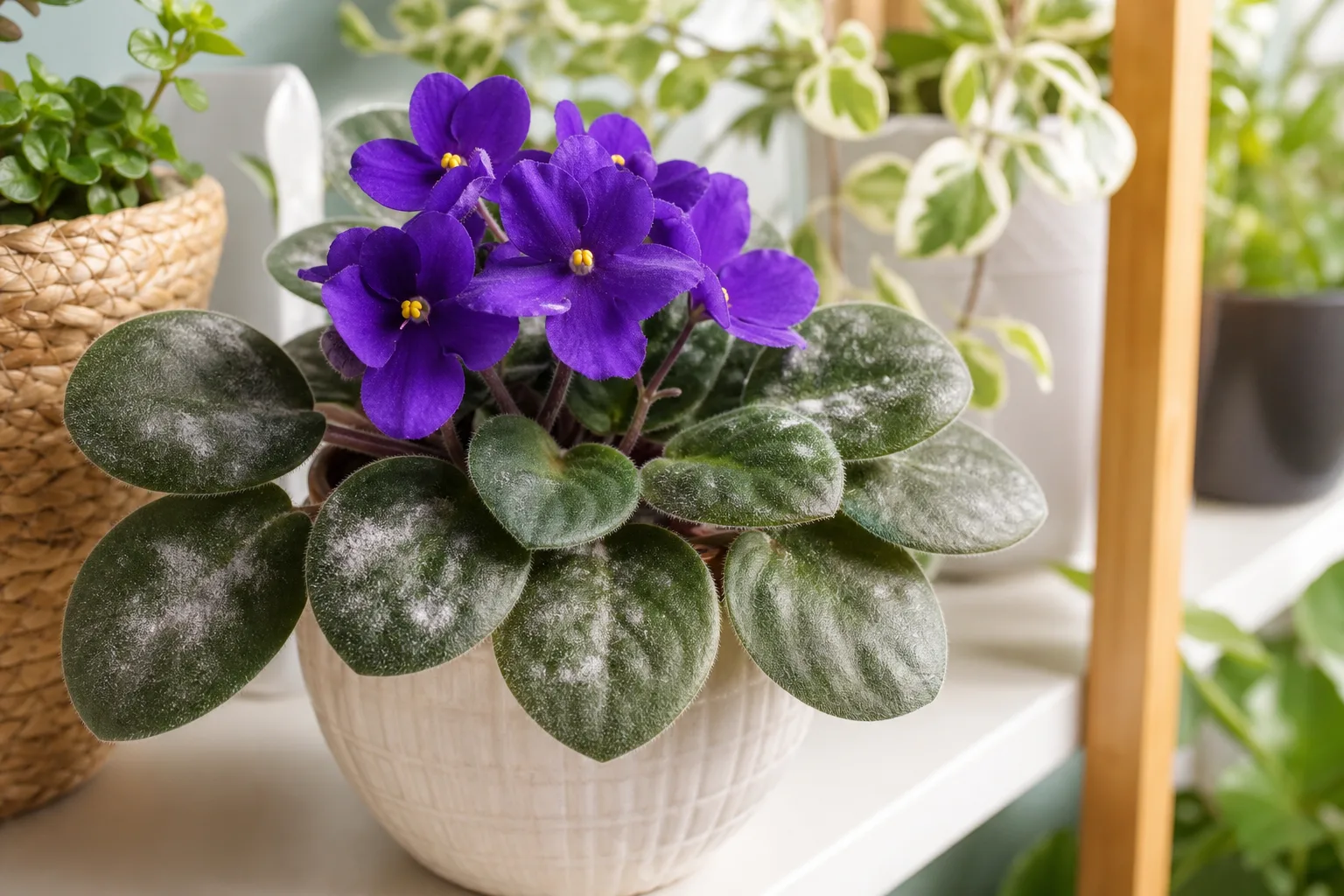
White spots on leaves are frustrating because they can mean several very different things. A dusty white film may be powdery mildew. Cottony clumps in leaf joints may be mealybugs. Tiny pale speckles may be mite feeding. Chalky marks that wipe away may be mineral residue. Pale, bleached patches may be light scorch. Raised pale blisters may be edema, which is a water-balance problem rather than a pest or disease.
The White Spots on Leaves Checker is designed to sort those look-alikes into a practical shortlist. It asks what the white marking looks like, where it sits on the plant, whether it rubs off, whether pests or webbing are visible, and what changed recently in light, watering, humidity, airflow, or cleaning. The point is not to replace a lab diagnosis. The point is to help you choose a sensible first check before you spray, repot, prune, isolate, or throw away a plant that may only need a wipe-down.
Use the checker when the mark is new, spreading, confusing, or appearing on more than one houseplant. If the plant is collapsing, has soft black stems, smells rotten, or is valuable enough that a wrong call would be costly, treat the result as a triage step and contact a local extension office, plant clinic, or experienced grower.
What the checker does
The tool compares your visible symptoms against the common indoor causes of white leaf marks: powdery mildew, mealybugs, spider mites, mineral and fertilizer salts, sunburn or excessive light, edema, and a few less common leaf-spot patterns. It gives more weight to details that are easy to confirm by eye. Texture matters. Location matters. Whether the mark moves, smears, wipes away, or grows into a larger patch matters.
For example, powdery mildew on indoor plants usually shows as a white powdery coating on leaves or stems, and early patches can start as small white spots before they merge into a larger film white powdery coating. Mealybugs look different: University of Maryland Extension describes their cottony white wax as a common first sign, with insects often resting on undersides of leaves, stems, flowers, or even outside the pot cottony white wax. Spider mites can create pale stippling from feeding, often with webbing when the population is established pale flecking. Mineral and fertilizer salts usually appear as white crystallized residue on leaves or as a white crust on the potting medium white crystallized coatings.
The checker also helps separate true disease from nonliving stress. Strong sun and heat can leave pale, bleached, or faded areas on houseplant leaves bleached or whitened leaves. Edema is a physiological condition that happens when plants take up water faster than they can use and transpire it; the resulting pressure can rupture cells and leave blister-like or corky spots water faster than it can be used. Those two causes need environmental correction, not a fungicide.
What it does not do
The checker does not identify every plant pathogen, insect species, cultivar reaction, or pesticide-safe treatment. It cannot inspect a leaf under magnification, culture a fungus, test the water supply, measure soluble salts in the potting mix, or judge whether a pesticide label permits use on your exact plant in your location.
It also does not assume every white mark is dangerous. Some white spots are cosmetic. Some are residue from hard water. Some are old sun damage that will not spread once the plant is moved. Some are farina or natural wax on succulents, which should not be scrubbed off. A good result tells you what to inspect next, not just what to buy.
That boundary matters because many quick treatments can make the plant worse. Oils can damage tender foliage or leaves sitting in strong light. Alcohol can spot sensitive leaves. Repeated sprays can stress plants already weakened by low light, drought, or root trouble. Any pesticide or fungicide should be used only when the label allows the plant, site, pest, rate, and safety precautions; EPA guidance says pesticide labels provide information for safe and legal use and are legally enforceable legally enforceable.
Start with texture and location
The fastest way to use the checker well is to describe the mark before you describe the plant. Is it powder, fuzz, crust, stippling, bleaching, or raised blisters? Is it on the upper leaf surface, underside, petiole, stem joint, new growth, old growth, soil surface, or pot rim? Does it wipe away cleanly, smear, return after watering, or stay embedded in the tissue?
Powdery white growth that expands across the surface points toward powdery mildew. Cottony clusters in protected joints point toward mealybugs. Very fine pale dots, especially on the undersides of leaves, move spider mites higher on the list. Crusty white rings on leaves, soil, or pot edges point toward dissolved minerals or fertilizer salts. Irregular bleached patches on leaves facing a window or grow light point toward light damage. Raised bumps or corky specks, especially after cool, wet, low-light conditions, point toward edema.
Use a clean fingertip, damp cloth, or cotton swab on one small test spot. Residue that wipes off is not the same as tissue that has turned pale. Insects may move, crush, or leave wax. Powdery mildew may smear and leave affected tissue underneath. Sunburn and edema are inside the leaf tissue, so wiping will not remove them.
Check whether the white marks are spreading
Speed is a useful clue. A mineral mark from dried water droplets may appear after a single misting session and stay about the same size. Sunburn can happen quickly after a plant is moved from gentle indoor light to a hot window, balcony, patio, or close grow light. Edema often appears after a period of wet soil, cool temperatures, low light, or poor airflow, then stops forming when the environment improves.
Pests and fungal diseases behave differently. Mealybugs can expand from a few protected hiding spots into stems, leaf axils, and nearby plants. Spider mite damage often starts as light stippling and becomes more obvious as feeding continues. Powdery mildew patches can grow together when the fungus is active. If new white areas appear every few days, or if nearby plants begin showing similar signs, isolate the affected plant while you inspect.
The checker asks about spread because it changes the risk level. A stable cosmetic mark usually calls for patience and prevention. A spreading pest or disease calls for closer inspection, isolation, sanitation, and targeted treatment.
Powdery mildew clues
Powdery mildew is one of the classic causes of a dusty white coating on leaves. On indoor plants, the most obvious symptom is the powdery coating on infected leaves and stems, and the first areas may look like small powdery white spots before they grow together small spots of powdery white growth.
The checker should point you toward powdery mildew when the white material looks like flour or dust, sits on the surface, appears on leaves or stems, and spreads in patches rather than as individual insects. It is more plausible when plants are crowded, air movement is weak, leaves stay humid around dense foliage, or a susceptible plant has been kept in a stagnant corner.
Do not confuse powdery mildew with mineral residue. Powdery mildew tends to be living growth on plant tissue; mineral deposits are often associated with splash marks, misting, overhead watering, hard water, fertilizer spills, pot rims, or crust on the growing medium. If the same white crust appears on the soil surface or container, salts move higher in the ranking.
Your next step is usually to isolate the plant, remove the worst affected leaves if the plant can spare them, improve airflow, avoid wetting leaves, and check whether the plant is receiving appropriate light for its species. For tool follow-up, pair this page with Plant Disease Identifier or the powdery mildew guide when the mark is powdery and spreading.
Mealybug clues
Mealybugs are easy to miss when the infestation is small because they hide where leaves meet stems, along veins, under leaves, around flower parts, and sometimes near the pot. Their waxy covering can look like small tufts of cotton rather than obvious insects. University of Maryland Extension notes that mealybugs can be found on leaf undersides, stems, flowers, and the outside of pots, and that they secrete honeydew that can support black sooty mold secrete honeydew.
The checker should rank mealybugs higher when the white material is clumpy, cottony, or gathered in protected joints. Sticky leaves, shiny droplets, ants, black sooty mold, yellowing, stunting, or distorted new growth strengthen the case. A single cottony speck may still be early mealybug activity, so use a hand lens and inspect every node before deciding it is harmless lint.
For a light infestation, many extension guides recommend physical removal as the first practical step. Maryland Extension says dabbing individual mealybugs with household alcohol on a cotton swab can control light infestations, but warns that alcohol can damage leaves if it gets on the plant cotton swab. That caveat is important for tender, fuzzy, thin, or stressed foliage. Test first, keep the plant out of strong light after treatment, and repeat inspections because eggs and hidden insects are easy to miss.
If the checker suggests mealybugs, open Pest Identifier next and compare against the mealybugs symptom guide. When several plants are affected, inspect the full group rather than treating the one plant with the most visible cotton.
Spider mite clues
Spider mites usually do not look like white blobs. They create white, yellow, or pale stippling because they feed from leaf undersides. On many houseplants the first clue is a leaf that looks dusty, faded, speckled, or sandblasted. Webbing is a strong sign, but you can have mite damage before obvious webbing appears.
The checker should move spider mites up when the white marks are tiny and numerous, especially on older leaves, lower leaves, or leaves close to dry heat. University of Maryland Extension describes mite feeding damage as pale flecking or stippling from injured and emptied plant cells feeding damage. The same guidance notes that abundant mites can cause stippled, deformed, or bleached-looking leaves stippled, deformed, or bleached-looking leaves.
Use the paper test before you spray. Hold a sheet of white paper under a suspect leaf, tap the leaf, and look for tiny moving specks. Then inspect the underside with a hand lens. If the plant has webbing, heavy stippling, and declining leaves, isolate it from other plants and check nearby foliage.
Spider mite management is not just about killing mites. Dry, stressed plants are more vulnerable, and broad-spectrum pesticides can harm natural enemies outdoors. Indoors, repeated harsh sprays can also injure stressed foliage. Start with confirmation, rinsing where the plant tolerates it, improved consistency in watering, and a houseplant-safe product only if the label fits the plant and pest.
Mineral and fertilizer salt clues
Mineral residue is one of the most common harmless reasons for white marks on leaves. Hard water can dry into chalky spots after misting, overhead watering, shower rinsing, or splash. Fertilizer solution can leave residue where droplets land. Salts can also build up as a white crust on the soil surface or around the pot.
The checker should rank mineral or fertilizer salts higher when the mark is crusty, follows droplet shapes, wipes off with a damp cloth, appears after misting or watering, or is paired with white crust on the potting medium. University of Maryland Extension explains that mineral salt deposits are caused by hard water with dissolved substances such as calcium carbonate, sodium, and iron, while fertilizer salt deposits come from soluble fertilizer components hard water.
Residue on the leaf surface is often cosmetic, but salt accumulation in the growing medium can contribute to root stress, leaf-tip burn, or nutrient uptake problems. If the checker points to residue, wipe one affected leaf and see whether the mark returns after the next watering or misting. Check the potting mix surface, drainage holes, saucer, and pot rim. If salts are building up, water from the top until excess drains freely, empty the saucer, and consider using lower-mineral water for sensitive plants.
Do not overcorrect by flushing a plant that is already in a cold, wet, poorly drained pot. Salt management still has to respect root oxygen. If the plant is also yellowing, wilting, or staying wet too long, run the Overwatered Plant Checker before adding more water.
Sunburn and excess-light clues
Bleached white or pale tan patches usually mean tissue damage, not a substance sitting on the leaf. The pattern often appears on the side facing the light source: a west or south window, a balcony, a patio, a greenhouse pane, or a grow light placed too close. Leaves that developed in low indoor light are especially vulnerable when they are moved suddenly into direct sun.
The checker should rank sunburn or excess light higher when the white marks are flat, dry, irregular, and concentrated on exposed leaves. Strong sun and heat can break down chlorophyll, producing pale, bleached, or faded areas that can later turn brown and brittle breakdown of chlorophyll. On indoor plants, Maryland Extension lists bleached or whitened leaves as a symptom of excessive light or sunburn and recommends slow acclimation to higher light levels acclimate plants slowly.
Sunburn does not spread like a fungus after the plant is moved, but old damaged patches usually stay visible. The goal is to stop new damage. Move the plant back from the glass, filter the light, shorten the direct-sun window, or raise the grow light. For plants under lamps, use Grow Light Distance Calculator to sanity-check distance and intensity before assuming the spots are disease.
Avoid spraying oils, soaps, or alcohol on a plant that may be sunburned and then leaving it in strong light. That combination can increase leaf injury on sensitive foliage.
Edema clues
Edema can look like pale dots, raised blisters, corky bumps, or scab-like marks. It is easy to mistake for pests because the marks can be small and scattered. The difference is that edema is caused by water balance inside the plant, not by insects feeding on the surface.
The checker should rank edema higher when the plant has been kept wet during cool, cloudy, low-light, or low-airflow conditions. It is common in container-grown plants and succulents with fleshy leaves, but it can appear on many plants when roots keep taking up water faster than leaves can transpire. Existing edema marks do not heal back into perfect green tissue; the win is fewer new blisters after watering, light, and airflow improve.
Look closely at the mark. If it is raised, embedded, or corky rather than powdery or cottony, do not treat it like mildew. Check pot weight, drainage, soil texture, temperature, and how long the plant takes to dry. If the pot is staying wet, use the checker result alongside Root Rot Checker or Watering Needs Calculator.
A practical inspection workflow
Start with isolation if the mark might be pest or disease related. You do not need to panic or seal the room, but moving the plant a short distance from the rest of the collection buys time while you inspect. Keep it somewhere with similar light if possible so you do not add light shock to the problem.
Next, inspect in this order:
- Look at the newest leaves, oldest leaves, undersides, stems, nodes, petioles, soil surface, pot rim, and saucer.
- Wipe one small spot with a damp cloth and note whether it disappears, smears, or stays in the tissue.
- Tap suspect leaves over white paper to check for mites.
- Use a hand lens on cottony clumps, webbing, or moving specks.
- Check whether the pattern matches a recent change: misting, fertilizer, shower rinse, direct sun, grow light adjustment, cold wet spell, or a new plant brought home.
- Photograph the plant today, then compare new growth and spread in three to seven days.
Enter those observations into the checker rather than guessing from memory. A clear result depends on the exact pattern.
How to read the result
Read the result as a ranked diagnostic path. The top cause is the best match to the inputs you gave, not proof that every other cause is impossible. Mixed problems happen. A plant can have mineral residue and mealybugs. A sun-stressed plant can also attract mites. A plant recovering from edema can still have hard-water marks from repeated misting.
Use the result to choose the next reversible step. If the result points to mineral residue, wipe and adjust water quality before treating for disease. If it points to sunburn, move or acclimate the plant before spraying. If it points to mealybugs, confirm insects and isolate before treating. If it points to powdery mildew, improve airflow and remove heavily affected leaves before reaching for a fungicide.
The checker is most useful when you rerun it after one change. If wiping removes the marks and they return only after misting, residue becomes more likely. If new powdery patches appear even without misting, mildew moves higher. If stippling expands and webbing appears, mites become harder to dismiss.
Treatment choices by confidence level
When confidence is low, choose observation and confirmation. Clean one test leaf, isolate the plant, improve airflow, and take photos. Do not stack treatments. A plant that gets wiped, sprayed, repotted, fertilized, pruned, and moved on the same day may decline from the cure as much as the original problem.
When confidence is moderate, choose the least disruptive action that fits the cause. For residue, improve water quality and leach salts only when the pot can drain well. For sunburn, change light exposure gradually. For edema, let the root zone move toward a healthier wet-dry rhythm. For mites, rinse or shower sturdy foliage if the plant tolerates it. For mealybugs, physically remove visible insects and reinspect hidden nodes.
When confidence is high and the issue is spreading, act more firmly. Isolate pest-infested plants. Remove severely affected leaves if that will not strip the plant. Use a labeled product only when you can match the pest, plant, and site. Keep treated plants out of harsh sun, and repeat checks on the schedule the label or extension guidance supports.
Discarding a plant is reasonable when it is heavily infested, inexpensive to replace, unsafe to treat around pets or children, or threatening a valuable collection. That is not failure. It is containment.
Examples of checker logic
Imagine a pothos with white speckles on many older leaves and faint webbing between petioles. The spots do not wipe away. The plant sits near a heating vent and the soil has been drying quickly. That combination should push the checker toward spider mites. The next step is underside inspection, the paper test, isolation, and mite-specific follow-up.
Now imagine a jade plant with pale raised dots after several weeks of cool weather, wet soil, and low light. The marks are embedded and do not smear. There are no insects, webbing, cottony clusters, or powdery patches. That pattern should push the checker toward edema or water-balance stress. Spraying for fungus would miss the point; the better next step is to adjust watering, drainage, light, and airflow.
A calathea with chalky rings after misting with tap water is different again. If the marks wipe away and the pot rim has white crust, the checker should favor mineral residue. A filtered-water wipe and less misting are more logical than pest treatment.
A begonia with a dusty white film that expands on leaf surfaces is a stronger powdery mildew case. Isolation, airflow, sanitation, and disease-specific guidance are more useful than flushing the pot.
Common mistakes
The first mistake is diagnosing from color alone. “White spots” is not specific enough. White powder, white crust, white cotton, white stippling, white scars, and white blisters point in different directions.
The second mistake is treating before checking the underside of the leaf. Mealybugs, mites, and scale-like pests often hide below the obvious surface. A plant can look clean from above and active underneath.
The third mistake is expecting old damage to disappear. Sunburn, edema scars, mite stippling, and some disease-damaged tissue will not turn perfectly green. Judge success by whether new growth is clean and whether the problem stops spreading.
The fourth mistake is assuming “natural” sprays are automatically gentle. Oils, soaps, alcohol, bicarbonate sprays, and homemade mixes can injure leaves when the plant is stressed, the concentration is too strong, the leaf is sensitive, or light is intense. Use conservative tests and label-based products instead of improvising on the whole plant.
The fifth mistake is ignoring the environment. Powdery mildew, mites, salts, sunburn, and edema each connect to conditions around the plant. If you only remove visible marks without changing the condition that favored them, the spots may return.
Use Pest Identifier when you see moving specks, webbing, cottony insects, sticky residue, distorted growth, or pests on neighboring plants. Use Plant Disease Identifier when the white mark is spreading as a surface growth, ringed lesion, fuzzy patch, or repeated disease pattern.
Use Grow Light Distance Calculator when the marks appeared after adding a grow light, lowering a fixture, changing timer length, or moving a plant into brighter exposure. Use Overwatered Plant Checker or Root Rot Checker when white marks appear with wet soil, yellowing, wilting, soft stems, sour smell, fungus gnats, or slow drying.
Use the plant-specific pages when the species matters. White markings on fuzzy African violet leaves, waxy succulents, thin calathea leaves, orchids, ferns, and herbs can behave differently. If your plant has a dedicated LeafyPixels plant guide, compare the checker result with that species’ normal light, watering, humidity, and pest sensitivity.
When to ask for expert help
Ask for help when the plant is valuable, the problem is spreading through a collection, the plant is used for food, or the recommended treatment would involve pesticides around children, pets, aquariums, or sensitive people. Also ask for help when the marks are paired with rapid wilting, stem collapse, black rot, severe defoliation, or symptoms you cannot match after close inspection.
A local extension service, plant clinic, botanical garden help desk, or experienced grower can often identify whether you need a pest treatment, disease management, environmental adjustment, or lab submission. Bring clear photos of the top and underside of leaves, the whole plant, the potting mix, and the room setup. Include timing: when the marks appeared, what changed before they appeared, and whether new leaves are affected.
Conclusion
The White Spots on Leaves Checker works best when you slow down and describe the mark precisely. Powder wipes differently from crust. Cotton hides differently from mildew. Stippling spreads differently from sunburn. Blisters tell a different story from insects. Once you know which pattern you are seeing, the next step becomes much clearer.
Start with observation, texture, location, spread, and recent care changes. Confirm pests before treating pests. Confirm residue before changing the whole care routine. Confirm light or water-balance stress before spraying for disease. Then use the checker result with the related LeafyPixels tools to make one targeted change, watch new growth, and adjust from evidence instead of anxiety.