Plant Disease Identifier
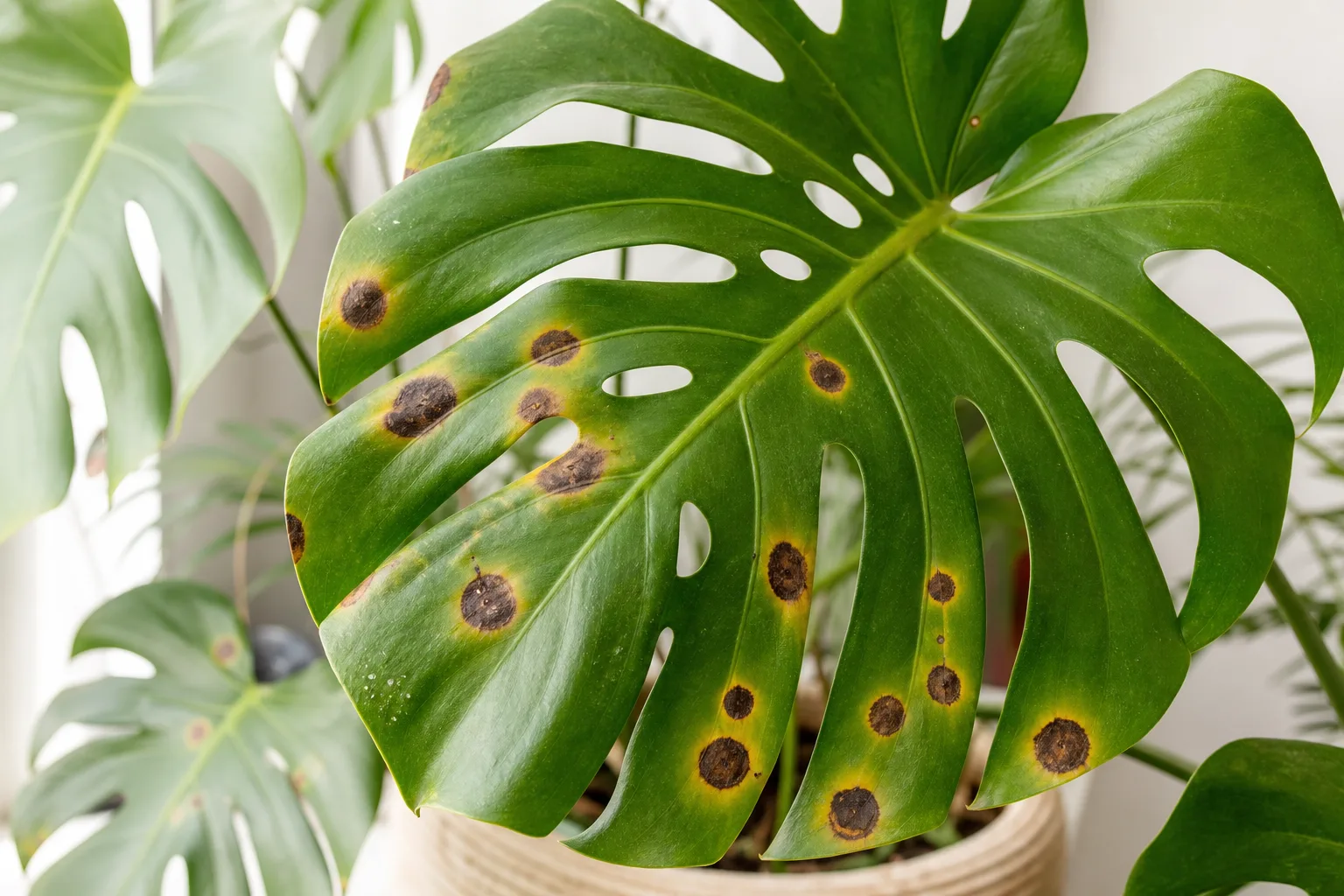
A plant disease diagnosis starts with pattern, not panic. Brown spots, yellow halos, white powder, limp leaves, mushy stems, and moldy soil all feel urgent when they show up on a favorite houseplant, but the same symptom can come from several causes. A brown mark can be fungal leaf spot, bacterial leaf spot, cold damage, sun scorch, fertilizer burn, physical bruising, pest feeding, or stress that began in the roots.
Use the Plant Disease Identifier when you can see symptoms and need a practical next step: isolate the plant, inspect roots, stop misting, check pests, prune damaged tissue, improve airflow, or get professional help. The tool is a triage aid. It cannot name a pathogen from one photo, culture bacteria, test for viruses, or decide whether a pesticide label allows indoor use on your exact plant. It can, however, help you sort likely disease patterns from lookalikes before you make the problem worse.
The identifier turns visible symptoms into a ranked shortlist. It asks about leaf spots, yellow halos, powdery coating, fuzzy growth, wilt, soft stems, crown collapse, root texture, soil odor, pest evidence, recent watering, humidity, airflow, crowding, new plants, and speed of spread. That mix matters because plant disease is rarely a single clue.
Plant pathologists often explain infectious disease with the disease triangle: a susceptible host, a pathogen, and a favorable environment are all part of disease development. Ohio State University Extension describes plant disease as the interaction of a susceptible host, virulent pathogen, and favorable environment. Indoors, you may not be able to prove the pathogen at home, but you can often inspect the conditions that make disease more likely.
The tool gives its strongest results when you enter specific details. “Brown spots” is weak. “Expanding dark spots with yellow halos on leaves that were misted every night” is much stronger. “Wilt” is weak. “Wilt with wet, sour-smelling soil and soft brown roots” points toward a root-zone problem instead of thirst.
What It Does Not Prove
The tool does not replace a plant clinic, lab test, extension office, or qualified grower. Visual diagnosis has limits because fungal, bacterial, viral, pest, and environmental symptoms overlap. The Royal Horticultural Society notes that houseplant leaf damage can come from fungal leaf spot, cold water, aerosol damage, sun exposure, and other non-disease causes, so leaf damage patterns need context before treatment.
It also does not justify broad spraying. Many houseplant problems are cultural: wet leaves, stale air, dense potting mix, poor drainage, crowding, low light, or stress after shipping. Some bacterial and viral problems have no simple home cure. Some pest problems look like disease but need pest management. The safest way to use the result is to treat it as a ranked suspicion, then confirm with inspection.
If the plant is rare, expensive, part of a commercial crop, used for food, or connected to symptoms spreading across multiple plants, treat the tool as a first pass only. Get local help when the outcome has financial, safety, or collection-wide consequences.
Start with the symptom location. Is the damage on new growth, old lower leaves, leaf edges, leaf centers, stems, the crown, or the root zone? New-growth distortion often points to active stress, pests, viral suspicion, or nutrient problems. Old lower-leaf decline can be less urgent if the rest of the plant is firm and producing clean growth.
Next, describe the texture. Dry, crisp spots suggest a different path than wet, greasy, water-soaked lesions. Powder is different from residue. Mushy stems are different from woody scars. Fuzzy gray growth is different from harmless mineral crust on the pot surface. Texture helps separate active decay from old damage.
Speed is the third big input. A stable blemish that has not changed in a month is less suspicious than spots that double in a week. Rapid collapse, soft crowns, spreading water-soaked tissue, or several plants declining together should be treated as urgent. Slow change after repotting, a move, winter light loss, or a heat wave may be environmental rather than infectious.
Moisture history is just as important as the symptom itself. University of Maryland Extension recommends reducing humidity, decreasing leaf wetness, increasing air circulation, watering early in the day, and spacing plants to reduce fungal leaf spot infection. If you recently misted daily, watered over leaves, crowded plants on a shelf, or kept a sick plant in a cool dim room, enter that context.
A Fast Inspection Order
Look at the whole plant before zooming in. A single damaged leaf on an otherwise vigorous plant is a different problem from a plant with limp stems, yellowing lower leaves, and stalled growth. Note whether nearby plants have similar symptoms, because spread changes the risk level.
Then inspect leaves with a flashlight. Check both surfaces, petioles, veins, and new growth. Look for yellow halos, concentric rings, powder, fuzzy growth, black specks, honeydew, webbing, eggs, crawling insects, and whether spots cross veins or stay between them. If insects or webbing are obvious, run the Pest Identifier before choosing a disease treatment.
Finally inspect the pot and roots when the clues point downward. Lift the pot. Smell the mix. Check drainage holes. If the plant wilts while the soil is wet, or if the mix smells sour, unpotting may be necessary. Root rot often fools owners into watering more because the top growth looks thirsty.
Fungal Patterns To Watch
Fungal disease is a category, not one diagnosis. Indoors it can show up as leaf spots, powdery mildew, gray mold, damping off in seedlings, stem rot, crown rot, or root rot. Each pattern calls for a different level of urgency.
Fungal leaf spots often show as tan, brown, reddish-brown, or dark lesions that enlarge when foliage stays wet. The most useful clue is the combination of spots plus conditions: low airflow, overhead watering, misting, crowding, plant debris, or repeated splash. If that is your main symptom, compare the tool output with the Black Spots On Leaves Checker and the broader black spots guide.
Powdery mildew is more recognizable because the visible sign is white or gray powdery growth on leaf surfaces, stems, or buds. University of Vermont Extension describes powdery mildew as a whitish gray powder made of spores that can move by air currents. For a symptom-specific route, use the white spots checker or the powdery mildew guide.
Root rot is different because the most important evidence is below the soil line. Wisconsin Horticulture says plants with root rots are often wilted even when soil is wet, and affected roots may be soft and brown. If the identifier raises root rot, move to the root rot guide instead of adding more water.
Bacterial Patterns To Watch
Bacterial problems often look wet, greasy, soft, or fast-moving. They may form water-soaked spots, brown or black lesions, yellow halos, collapsed tissue, or soft rot. NC State Extension describes bacterial leaf spots on ornamental plants as brown or black lesions that may have yellow halos and can merge into larger blighted areas.
The practical difference is treatment expectation. A standard home fungicide is not a cure-all for bacterial disease. Management usually emphasizes isolation, sanitation, dry foliage, removal of affected tissue, and prevention of splash. Copper products may have bactericidal uses on some plants, but labels vary by disease, plant, and use setting.
Move quickly when lesions look wet, spread after overhead watering, or appear on several leaves at once. Isolate the plant, stop misting, water the potting mix instead of the foliage, remove badly affected leaves if the plant can spare them, and disinfect tools after cuts. If the crown or stem base is soft, compare the result with crown rot and stem rot patterns.
Viral And Mosaic-Like Patterns
Viral symptoms can include mosaic mottling, ring spots, streaks, distorted new growth, stunting, and unusual color breaks. The hard part is that variegation, nutrient stress, cold injury, chemical damage, and pest feeding can mimic parts of that pattern. Do not throw away a plant because one leaf looks odd.
Do isolate a plant when mottling or distortion keeps appearing on new growth, especially if sap-feeding pests are present. Michigan State University Extension advises that virus-infected plants cannot be cured and should be removed from production settings because virus-infected plants cannot be cured. University of Maryland Extension similarly states that there is no cure for infected plants with viral disease.
For houseplants, the conservative route is isolate first, inspect for aphids or thrips, avoid sharing cuttings, disinfect tools, and verify before discarding a valuable plant. If the pattern fits, use the mosaic virus guide as the next stop.
Environmental Stress That Mimics Disease
Not every ugly mark is disease. Low light, direct sun, cold windows, fertilizer burn, salt buildup, dry air, wet roots, compacted mix, repotting shock, and chemical exposure can all create disease-like symptoms. These are abiotic problems, which means they come from nonliving stress rather than a spreading pathogen.
Environmental damage often matches position or timing. Cold damage appears after a winter night near glass. Sun scorch sits on the exposed side. Fertilizer burn follows feeding or poor flushing. Brown tips move slowly from margins. Yellowing after a potting change may be root stress rather than infection. If marks stop spreading after you correct the condition and new growth is clean, disease becomes less likely.
Use internal symptom pages to cross-check the pattern before treating. Yellow leaves can come from watering, roots, light, nutrients, age, or disease. Brown tips often point toward water quality, humidity, salt buildup, or watering inconsistency. Curling leaves can come from pests, drought, heat, cold, or root stress. Mold on soil is usually a surface moisture signal, but it can coexist with deeper rot risk.
Pest Damage That Looks Like Disease
Pests can make leaves look diseased before you ever see an insect. Spider mites create fine stippling, dull leaves, and webbing. Thrips leave silvery scars, black fecal specks, distorted growth, and streaky damage. Mealybugs leave cottony masses and sticky residue. Scale can look like raised bumps on stems or leaves. Aphids cluster on soft growth and produce honeydew.
Disease clues usually come from the tissue itself: lesions, halos, powder, rot, collapse, or spreading necrosis without visible insects. Pest clues come with bodies, eggs, webbing, honeydew, shed skins, frass, or feeding patterns. When you see both, address both. Pests can wound tissue and move viruses, while wet recovery conditions can invite fungal or bacterial spread.
If pest evidence is strong, switch from disease triage to the Pest Identifier. The pest route is especially important before applying fungicide, because a fungicide will not solve spider mites, thrips, scale, mealybugs, aphids, or fungus gnats.
Worked Example: Spotted Monstera Leaves
Imagine a Monstera deliciosa with several dark brown spots on older leaves. The plant sits in a tight group near a humidifier. It was misted every evening for a week. The spots have yellow edges, and two are larger than they were four days ago. No pests are visible under the leaves, and the soil is slightly moist but not sour.
The identifier should rank fungal or bacterial leaf spot above age-related damage. The next step is not immediate repotting. It is isolation, no more misting, watering only the mix, better spacing, gentle airflow, removal of the worst leaves if the plant can spare them, and monitoring new spots for one to three weeks.
Now change one input. The spots are only on the leaf that touched a cold window, appeared overnight after a freeze, and have not expanded in two weeks. That pattern is less like active disease and more like environmental injury. The fix becomes moving the plant and watching new growth, not escalating to disease treatment.
Worked Example: Drooping Peace Lily With Wet Soil
A peace lily droops even though the pot feels heavy. Lower leaves are yellowing, the soil smells sour, and water drains slowly. No insects are visible. The owner has watered twice a week because the leaves keep wilting.
The identifier should push root rot or root stress high on the list. The confusing symptom is wilt, but the supporting evidence is wet soil, sour smell, slow drainage, and repeated watering. The safer next step is root inspection. If roots are mushy, hollow, translucent, or foul-smelling, remove decayed tissue and repot into fresh, airy mix only if enough healthy roots remain.
If the same peace lily were drooping in dry, lightweight soil with crisp edges and no sour smell, the shortlist would change. This is why moisture and root-zone inputs matter as much as the leaf symptom.
What To Do After A Likely Match
For mild fungal leaf spots, start with cultural correction. Remove heavily affected leaves if the plant has enough healthy foliage. Keep foliage dry. Water at the soil line. Increase spacing. Improve airflow. Remove fallen debris from the pot surface. Judge progress by whether clean new growth appears.
For root rot, inspect before treating. Healthy roots should be firm and pale, tan, or species-appropriate. Rotting roots are often brown, black, translucent, mushy, hollow, or foul-smelling. Repot only after cutting away dead tissue, and use a pot with working drainage. Do not fertilize heavily while roots are injured.
For bacterial disease, prioritize isolation and sanitation. University of Maryland Extension describes bacterial disease symptoms on houseplants as black to brown, often watery leaf spots or lesions that can progress to tissue collapse. That kind of spread is a reason to act quickly, not wait for every leaf to show symptoms.
For viral or mosaic-like results, isolate and verify. Do not propagate from suspicious tissue. Do not share cuttings. Control likely vectors. If the plant is replaceable and symptoms are convincing across new growth, disposal may protect the rest of the collection. If the plant is valuable, seek testing before making the final call.
When Products Make Sense
Treatment products make sense only when the problem, plant, and label line up. A fungicide may protect new tissue or slow a fungal issue, but it will not erase dead spots. A bactericide may be labeled for some problems and not others. An outdoor ornamental product may not be appropriate indoors. A product safe on one species may damage another.
The EPA states that using a registered pesticide in a way inconsistent with its labeling is a violation. Read the whole label before using any fungicide, bactericide, insecticide, miticide, horticultural oil, soap, or disinfectant around plants. Check target disease, plant type, indoor use, dilution, ventilation, protective equipment, reentry language, and repeat interval.
In many houseplant cases, products are secondary. Dry leaves, clean tools, better airflow, less crowding, improved drainage, and removal of infected tissue often matter more than a spray bottle. Products should support the diagnosis, not replace it.
Quarantine is not only for new plants. Use it for any plant with fast-spreading spots, unexplained mottling, active pests, soft rot, crown collapse, or decline that does not match normal care stress. If a plant just arrived, pair this page with the New Plant Quarantine Planner before it joins the shelf.
Tool hygiene matters because pruning can move sap, bacteria, fungi, and virus particles between plants. Iowa State University Extension recommends alcohol for sanitizing pruning equipment and notes that 70% isopropyl alcohol can be used directly without a prolonged soak when tools are wiped or dipped in alcohol. Clean visible debris first so the disinfectant reaches the blade.
Work on healthy plants before sick plants. Keep suspicious plants far enough away that leaves do not touch neighbors. Wash hands after handling diseased tissue, especially before pruning or propagating. Throw away removed leaves rather than composting them indoors.
When To Trust The Result
Trust the result more when several clues point in the same direction: the symptom matches, the speed of spread matches, the moisture history matches, pest checks are negative or positive in the expected way, and root evidence supports the category. A high-confidence fungal result might combine expanding spots, repeated leaf wetness, poor airflow, no pests, and improvement after foliage stays dry.
Trust the result less when symptoms overlap or the plant has just been through several stresses at once. Shipping, repotting, cold exposure, pest treatment, fertilizer changes, and seasonal light loss can stack together. In those cases, the tool can still organize your thinking, but it should not push you into irreversible decisions.
Professional diagnosis is worth it when several plants are affected, a valuable plant is declining quickly, a suspected virus threatens a collection, or a pesticide decision is unclear. Penn State’s plant disease clinic instructions ask for symptomatic and live root material when submitting root samples, which shows why good diagnosis often needs more than a single damaged leaf.
Use the Plant Disease Identifier as the broad triage page, then route by the strongest symptom. For dark expanding lesions, use the Black Spots On Leaves Checker. For white powder, pale spotting, or residue confusion, use the White Spots On Leaves Checker. For insects, webbing, honeydew, or crawling pests, use the Pest Identifier.
For disease-specific reading, move to powdery mildew, leaf spot disease, mosaic virus, crown rot, or root rot after the tool narrows the category. For care context, check the plant profile under plants because a fern, cactus, ficus, pothos, calathea, and hoya do not share the same moisture and airflow tolerance.
The strongest diagnosis usually comes from three sources: what the plant shows, what changed recently, and what the species can tolerate. The identifier handles the first two. Plant profiles and symptom guides help with the third.
Conclusion
The Plant Disease Identifier is most useful when you treat it as structured triage. Enter precise symptoms, check pests before assuming disease, inspect the root zone when moisture clues point downward, and read the output as a ranked shortlist rather than a lab diagnosis.
For fungal patterns, reduce leaf wetness, improve airflow, remove infected tissue, and use labeled products only when the diagnosis supports them. For bacterial patterns, isolate quickly and keep foliage dry. For viral or mosaic-like patterns, isolate first and seek confirmation before propagating, sharing, or discarding a valuable plant. For environmental stress, fix the condition and judge recovery by clean new growth.
The best outcome is not a perfect pathogen name. It is a safer next action: isolate, inspect, clean, adjust, monitor, or ask for expert help before a small problem becomes a collection-wide one.