Free Bathroom Plant Finder for Houseplants
Find plants that enjoy humidity and can handle bathroom light conditions.
Bathroom Plant Finder
Find bathroom plants
Discover plants that love humidity and can adapt to bathroom light conditions.
Free Bathroom Plant Finder for Houseplants
Find plants that enjoy humidity and can handle bathroom light conditions.
Discover plants that love humidity and can adapt to bathroom light conditions.
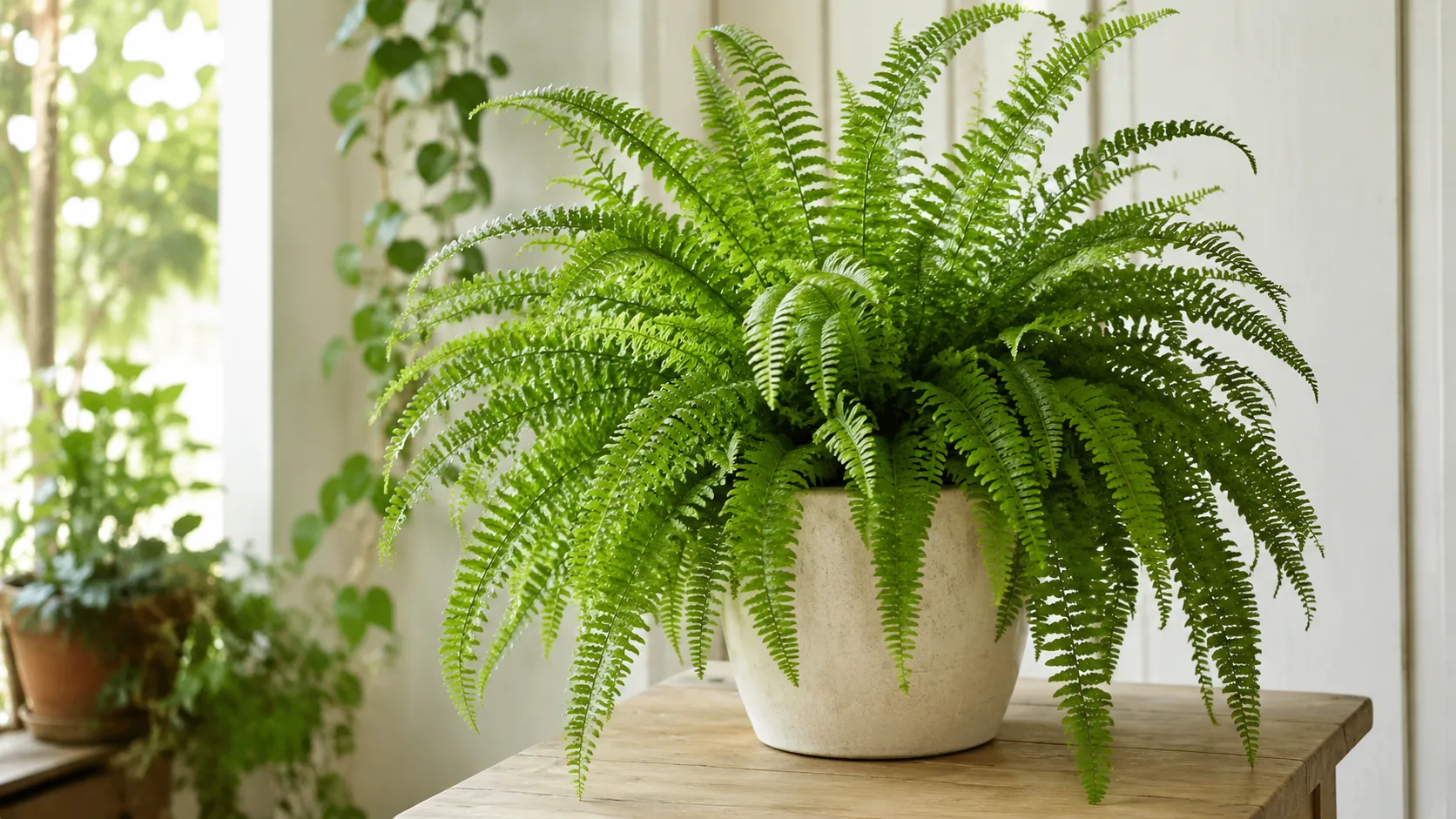
A bathroom can be one of the best rooms in the house for certain indoor plants, but only when the plant is matched to the actual bathroom rather than the idea of a bathroom. Steam helps some tropical foliage plants. Poor light, cold tile, closed doors, wet potting mix, and curious pets can undo that advantage quickly.
Bathroom Plant Finder is designed for that exact trade-off. It helps you narrow plant choices by light, humidity, care level, pet safety, room size, and placement so you do not buy a fern for a dark shelf, a sun-loving succulent for a steamy shower ledge, or a toxic trailing plant where a cat can chew it.
Use the result as a shortlist, not a guarantee. A good bathroom plant still needs usable light, drainage, airflow, and a watering routine that responds to the potting mix instead of the shower schedule.
Bathroom Plant Finder turns a vague goal, “I want a plant for my bathroom,” into a practical match. It looks at the conditions that most often decide success indoors: how much light reaches the plant, whether the room stays warm enough, whether the plant benefits from humidity, how much space it has to mature, how often you want to check it, and whether pets or children can reach the leaves.
The tool is especially useful because bathroom plant advice is often too broad. “Choose humidity-loving plants” is not enough. A bright bathroom with an east-facing window can support a different plant list than a windowless powder room with a fan that runs after every shower. A hanging basket above a bathtub has different safety and watering constraints than a plant on the back of a toilet tank.
The finder does not inspect your room, measure light, or diagnose plant health. If a plant is already declining, pair this page with the plant problem diagnosis tool or symptom guides such as yellow leaves, brown tips, drooping leaves, and root rot. The bathroom finder is strongest before you buy or move a plant, when the goal is to avoid a mismatch.
The tool weighs bathroom suitability in layers. Light comes first, because humidity cannot replace photosynthesis. University of Missouri Extension notes that only a few foliage plants tolerate dim room interiors and that many foliage plants do well with north-window light, daylight without direct sun, or sun diffused through a lightweight curtain (University of Missouri Extension). That matters in bathrooms because weaker light usually narrows the plant list and makes watering mistakes more likely.
Humidity comes second, because many tropical houseplants do benefit from the extra moisture found in a steamy room. The Royal Horticultural Society notes that many tropical houseplants need high humidity and may be well suited to a steamy bathroom (RHS houseplant guide). The key word is “many,” not “all.” Desert plants, silver-leaved sun plants, and rot-prone succulents usually prefer brighter, drier conditions.
Placement and safety come next. Bathrooms are small, hard-surfaced rooms where a falling pot, trailing vine, slippery saucer, or chewed leaf creates more risk than it would on a wide living-room plant stand. If the tool knows pets are part of the household, it should push you toward safer choices or direct you to the pet-safe plant finder and pet-safe plant checker before you commit.
Light is the input most people overestimate. Human eyes adjust to dim rooms; plants do not. A bathroom that feels bright because it has white tile and a mirror may still provide little usable light if the window is frosted, shaded by a neighboring wall, or far from the intended plant shelf.
Use three practical categories. Bright indirect light means the plant sits near a window but out of harsh direct sun for most of the day. Medium light means the room is clearly bright during daylight hours, but the plant is offset from the window or filtered through glass. Low light means the room is usable without artificial lighting during the day, but shadows are soft and the plant is not receiving direct sun.
No-window bathrooms are a separate category. A plant cannot survive long-term in darkness, even if humidity is excellent. For a windowless bathroom, the finder should favor artificial plants unless you are willing to add a grow light and run it consistently. If you want to make that setup real, use the grow light distance calculator and light requirement calculator before choosing live plants.
Humidity helps plants that naturally prefer moist air, especially ferns, prayer-plant relatives, many aroids, and some orchids. In a bathroom, humidity often rises briefly after showers and baths, then falls again as the fan, door, HVAC system, or open window clears the air. That rhythm can reduce crispy leaf edges on humidity-sensitive plants, but it is not the same as a stable greenhouse.
Humidity also slows drying. A glazed pot, dense potting mix, cool tile surface, and low-light shelf can keep the root zone wet long after the leaf canopy looks fine. That is why bathroom plants should usually have drainage holes, a saucer you can empty, and a potting mix that does not stay soggy for days.
The room itself still needs moisture control. The EPA advises increasing bathroom ventilation by running a fan or opening a window when recurring bathroom mold appears, and it separately recommends using bathroom exhaust fans to remove moisture outdoors rather than into an attic (EPA mold guidance, EPA moisture control). Plants are not a substitute for ventilation. If condensation sits on walls, grout, mirrors, or painted trim, solve the room problem first and treat plants as decor and living companions, not moisture equipment.
Bathrooms can swing between warm, steamy air and cooler conditions after the room dries. Most common foliage houseplants tolerate normal home temperatures, but they dislike cold drafts, sudden chill, and leaf contact with cold glass or tile. University of Maryland Extension notes that many foliage indoor plants grow best around 70 to 80 degrees Fahrenheit during the day and 60 to 68 degrees Fahrenheit at night (University of Maryland Extension).
That range does not mean every bathroom plant dies outside it. It gives you a sanity check. If your bathroom drops sharply overnight, has a drafty winter window, or sits over an unheated floor, choose tougher foliage plants and keep pots off cold tile with a stand, shelf, or cachepot liner.
Airflow matters because a sealed, wet room can encourage surface mold, algae on potting mix, and leaf problems. Maryland Extension recommends allowing the media surface to dry between waterings and reducing excess humidity when algae or fungal growth appears on indoor plant media (University of Maryland Extension). In practice, that means do not pack five plants into a wet corner just because they look lush together on day one.
For a bright bathroom, you have the widest range. Phalaenopsis orchids can work near bright filtered light if the pot drains freely and the crown does not sit wet. Spider plants handle bright indirect light, hanging baskets, and periodic drying better than many soft tropicals. A peace lily can flower in brighter conditions, although it is not pet-safe.
For a medium-light bathroom, focus on resilient foliage plants. Golden pothos, pothos, aglaonema, and zz plant can all be reasonable candidates depending on pet access and watering style. Pothos and aglaonema are better fits when you want vines or leafy texture; ZZ plant is better when you want a tough, architectural plant that should dry more between waterings.
For a low-light bathroom with a window, choose plants for tolerance, not speed. Cast iron plant, some aglaonemas, and ZZ plant are more forgiving than ferns if the room is dim. Low light usually means slower growth and lower water use, so the best plant is often the one you can leave alone between checks.
For a high-humidity shelf or shower-adjacent spot, ferns become more realistic. Boston fern, maidenhair fern, and blue star fern can appreciate moist air, but they still need light and should not sit in water. Maidenhair fern is beautiful but less forgiving; use the finder honestly if you do not want a plant that reacts quickly to drying out.
Succulents and cacti are usually poor bathroom matches unless the room is very bright, warm, and well ventilated. Their appeal is obvious: small size, sculptural leaves, low watering needs. The problem is that many are adapted to bright, dry conditions, and the RHS describes cacti and succulents as plants that generally come from desert habitats and enjoy hot, dry conditions (RHS sunny-room houseplants).
Avoid choosing a plant only because it appears on a “low light” list. Low-light tolerant does not mean no-light tolerant, and shade-tolerant plants still decline if they cannot photosynthesize enough to replace aging leaves. If the bathroom has no natural light and you will not add a grow light, choose a realistic artificial plant and put your live-plant energy elsewhere.
Also be careful with plants that hate wet crowns or crowded foliage. Some rosette plants, orchids, and cane plants can suffer if water sits in tight leaf joints after showers or hand-spraying. If the plant naturally holds water in its center, place it where steam can reach the leaves but splashes cannot collect in the crown.
Pet safety is not optional in a bathroom finder because bathrooms often encourage trailing and shelf displays. Golden pothos is toxic to dogs and cats according to the ASPCA, with insoluble calcium oxalates listed as the toxic principle (ASPCA golden pothos). Peace lily is also listed by the ASPCA as toxic to dogs and cats, with oral irritation and swallowing difficulty among the clinical signs (ASPCA peace lily).
That does not mean no one should grow those plants. It means the finder should not treat them as casual recommendations when a pet can reach the pot, the leaves trail down, or dropped foliage may be chewed. In a closed bathroom, a curious cat may have more uninterrupted time with a plant than you expect.
If pets have access, safer bathroom candidates include plants that veterinary toxicology sources classify as non-toxic. The ASPCA lists Boston fern as non-toxic to dogs and cats (ASPCA Boston fern) and lists spider plant under Chlorophytum as non-toxic to dogs and cats (ASPCA spider plant). “Non-toxic” does not mean “good to eat,” so still discourage chewing and place plants where they are not treated like toys.
For light, choose the weakest realistic condition the plant will experience, not the best hour of the day. If the plant sits six feet from a frosted window, do not call the room bright because sun hits the opposite wall at noon. If the bathroom only receives borrowed light through an open door, treat it as windowless unless the door stays open and the plant is near the light path.
For humidity, think in patterns. A shower used twice a day creates a different environment than a guest bathroom used once a week. If the exhaust fan is strong and runs after every shower, the plant may get short humidity spikes rather than all-day moist air. If the room stays damp long after use, prioritize ventilation and avoid plants that require constant wet soil.
For care level, be honest about maintenance. Ferns may be excellent bathroom plants for someone who checks moisture often, trims old fronds, and rotates the pot. They are frustrating for someone who wants to water only when leaves visibly droop. If you want forgiving care, filter toward spider plant, pothos, aglaonema, cast iron plant, or ZZ plant rather than delicate ferns.
For pets, answer based on access, not ownership alone. A dog that never enters the bathroom is different from a cat that jumps to the sink. A hanging pot can still drop leaves, plantlets, or spent flowers. If you cannot control access, use the safer filter and double-check any plant with the pet-safe plant checker before buying.
Imagine a full bathroom with an east-facing frosted window, daily showers, a working exhaust fan, and a shelf about two feet from the window. The room is bright for several morning hours, humid after showers, and dry enough that mirrors clear within a reasonable time. No pets enter the room.
The finder would likely favor humidity-friendly tropical foliage or flowering houseplants that appreciate bright indirect light. A peace lily could work if you want flowers and can keep the pot evenly moist without waterlogging it. A phalaenopsis orchid could work if you avoid splashing the crown and use a draining orchid pot rather than a sealed decorative container. A Boston fern could also work, but only if there is enough shelf width for fronds and enough routine care to avoid drying the root ball completely.
The key action after the match is placement. Put the plant where it receives the window light, not where it merely looks good in the room. Keep foliage away from direct shower spray. Use a saucer you can empty after watering. If the plant starts leaning or producing smaller new leaves, reassess with the light requirement calculator before assuming humidity is the issue.
Now imagine a half bath with no shower, one small north-facing window, a cool winter wall, and a narrow toilet tank as the main surface. The room has some natural light but little humidity. It is also easy for a pot to get knocked over.
The finder should not recommend moisture-loving ferns simply because the word “bathroom” appears in the room name. This is really a low-light, low-humidity, limited-space setting. A compact ZZ plant, small cast iron plant, or aglaonema may be more realistic than a fern, provided pets cannot reach it and watering is conservative.
The best result may also be “choose a different room.” If the only surface is unstable or the light is too weak, a plant stand outside the bathroom door could provide better light and fewer spills. Bathroom Plant Finder is useful when it tells you not to force a plant into a room that cannot support it.
A windowless bathroom can feel plant-friendly because it is warm and steamy after showers, but live plants need a light source. Without natural light, the finder should narrow choices to two paths: add a grow light or choose an artificial plant.
If you add a grow light, treat it as part of the plant’s care system rather than a decoration. Place the plant close enough for usable intensity, run the light on a consistent timer, and choose plants that tolerate the rest of the room: humidity swings, limited airflow, and lower evaporation. Use the grow light distance calculator to avoid placing the lamp so far away that it only lights the wall.
If you do not want a light, skip live plants in that bathroom. You can still grow humidity-loving plants in a brighter room and move a vase of cut greenery into the bathroom temporarily when you want the look. That is better than repeatedly replacing declining plants and assuming you have a watering problem.
Read the result as a fit profile. A top match should align with the hardest constraint first. In most bathrooms, the hardest constraint is light, pet access, or drainage rather than humidity. A plant that loves humidity but needs brighter light than the room provides is still a poor match.
The second thing to read is the care warning. If the match is a fern, the warning may be about consistent moisture and leaf crisping. If the match is ZZ plant or snake plant, the warning may be about not overwatering in a damp room. If the match is pothos or peace lily, the warning may be about pet toxicity and placement.
Do not treat the top plant as the only correct answer. A finder is most useful when it gives you a shortlist and shows why certain plants were excluded. If a plant you love is missing, ask which input blocked it. That answer usually teaches you more than the rank itself.
The first mistake is matching plants to humidity while ignoring light. A steamy room with poor light is still a low-energy environment for a plant. In low light, water use drops, growth slows, and the margin for overwatering gets smaller.
The second mistake is using sealed decorative pots. Cachepots are fine if the nursery pot inside drains and you empty excess water. They become a problem when water accumulates unseen at the bottom, especially in a bathroom where the potting mix already dries slowly.
The third mistake is overcorrecting brown tips with more water. Brown tips can come from low humidity, inconsistent watering, salts, old leaves, or root stress. If a bathroom plant develops brown tips while the soil stays wet, more water may push it toward root problems. Use brown tips and root rot guides to separate leaf humidity stress from root-zone stress.
The fourth mistake is placing plants where they interfere with cleaning. A plant that blocks the sink, sits on a wet shower curb, or makes it hard to wipe condensation will not stay enjoyable. Good bathroom planting should make the room better without making normal hygiene harder.
Use the low-light plant finder if the bathroom has a small window, deep shade, or a placement more than a few feet from natural light. That tool is better for light-first decisions where the room type matters less than the actual brightness.
Use the humidity calculator if leaf edges crisp across several tropical plants or if you are trying to decide whether the bathroom is really more humid than the rest of the home. Use the plant watering calculator when the plant is chosen but you need a starting watering rhythm for pot size, light, season, and soil behavior.
Use the best plant for my room tool if the bathroom is only one possible location. Sometimes the best bathroom plant decision is to choose a better room. If a living-room shelf has brighter indirect light, better airflow, and fewer safety issues, that may be the stronger match even if the bathroom looks more atmospheric.
Start with a pot that drains. If you want a decorative outer pot, keep the plant in a nursery pot inside it and check for standing water after each watering. Bathroom floors and counters are easy to wipe, but hidden water in a cachepot is still a root-risk problem.
Place the plant where it receives its best light and avoids direct splashes. Steam is different from spray. Leaves can handle humidity better than repeated soap residue, toothpaste mist, cleaning-product drift, or hard-water droplets drying on foliage.
Water by checking the mix, not by reacting to the room. Maryland Extension recommends testing indoor plant soil with a finger to about two inches and watering when the soil is dry for many houseplants, while noting exceptions such as succulents and cacti (University of Maryland Extension). In a bathroom, that check matters more because the top, middle, and bottom of the pot may dry at different speeds.
Give the plant a two-to-four-week adjustment period before judging it harshly. Some older leaves may yellow after a move. What matters more is whether new growth is appropriately sized, whether the potting mix dries in a reasonable window, and whether the plant stays upright and firm without constant intervention.
Bathroom Plant Finder can compare known plant traits against room inputs, but it cannot see your exact window glass, fan strength, cleaning routine, water quality, potting mix, or pet behavior. Those details can change the outcome. A plant that is perfect in one bathroom may fail in another with the same square footage.
Season matters too. A bathroom that is bright and warm in June may be cool and dim in January. If winter is your limiting season, choose for winter and let summer be a bonus. If your bathroom gets harsh afternoon sun through a small high window, choose for heat tolerance and avoid pressing foliage against glass.
Treat the tool result as the first decision layer. Then watch the plant. If leaves yellow from the lower canopy while soil remains wet, check watering and drainage. If new growth is pale, stretched, or smaller, check light. If leaf tips crisp while the mix dries too fast, humidity and watering consistency may be the issue.
The best bathroom plant is not simply the plant that likes humidity. It is the plant that fits your bathroom’s light, moisture pattern, temperature, airflow, space, care routine, and safety needs at the same time.
Run Bathroom Plant Finder with the least flattering version of your room: the dimmest season, the real pet access, the actual surface available, and the care routine you will maintain. Then use the result as a shortlist, open the individual plant guides, and choose the plant whose limits you can realistically support.
If your bathroom has light, drainage, and ventilation, it can be a strong home for ferns, orchids, spider plants, pothos, aglaonema, peace lilies, and other tropical foliage plants. If it lacks those basics, the tool’s most useful answer may be to add a grow light, choose a safer plant, or enjoy live plants in a better room.
This Bathroom Plant Finder was researched and written by . Logic, safety notes, and result copy for Bathroom Plant are reviewed against LeafyPixels plant-care data, extension references, and veterinary toxicity sources where pet safety is involved.
We prioritize sources that hold up under scrutiny:
The LeafyPixels editorial team then reviews the draft for clarity, step-by-step usefulness, and fit with real apartment and home conditions-not ideal greenhouse setups. When guidance changes materially, we update the page and note the revision date.
The long-form review for this page covers Bathroom Plant Finder. Its bottom source list includes 12 external citations pulled from the long-form guide, then deduplicated with the tool’s frontmatter sources.
Bathrooms provide naturally high humidity from showers and baths, making them ideal for tropical humidity-loving plants like pothos, peace lilies, ferns (especially Boston fern and maidenhair fern), orchids, air plants, calatheas, and spider plants. These plants appreciate the steam and moist air that would challenge lower-humidity areas of your home. Our bathroom plant finder matches you with species suited to your bathroom’s specific light and temperature conditions.
Plants in a windowless bathroom will struggle without supplemental light, but adding a small full-spectrum LED grow light running on a timer for 12 hours per day opens up your plant choices considerably. Without any light source, only silk or artificial plants are a viable option. If your bathroom has even a small skylight or frosted glass window, shade-tolerant plants like pothos or ZZ plant can manage with the minimal light available.
Not all plants enjoy high humidity. Desert plants like succulents, cacti, and air-dry oriented species prefer dry air and can develop rot, fungal issues, or root problems in the perpetually moist conditions of a bathroom. Stick with tropical, jungle, or fern-type plants that actively benefit from elevated humidity, and reserve your desert plants for drier areas of your home.
Bathrooms can experience significant temperature swings - warm and steamy during and after a shower, then cooler once the heating from the shower dissipates. Most tropical bathroom plants handle these fluctuations well as long as the temperature stays consistently above 60 degrees Fahrenheit and does not drop dramatically overnight. Avoid placing plants directly on cold tiles or near drafty windows during winter, as cold drafts can damage tropical bathroom plants.
Yes, bathroom plants contribute to a spa-like atmosphere and can absorb some of the humidity to prevent excessive condensation on walls and mirrors. Peace lilies and ferns are particularly good at absorbing excess moisture from the air. Beyond the functional benefits, lush green plants in a bathroom create a calming, natural aesthetic that can make everyday routines feel more luxurious and restorative.