Sago Palm Care: Light, Water, Soil & Tips
Cycas revoluta
Sago palms need bright light and infrequent watering. They are extremely toxic to pets and humans - handle with care.
Sago Palm Care: Light, Water, Soil & Tips
Start with wateringThe most common care mistake for Sago PalmWatering guide →Sago Palm care essentials
Light
bright indirect light, some direct sun
Water
Water thoroughly but allow soil to dry between waterings; very drought-tolerant.
Soil
Fast-draining cactus or palm mix.
Humidity
Average household humidity is fine (30–50%)
Temperature
18°C to 27°C (65–80°F)
Fertilizer
Feed lightly during active growth. Slow-release palm fertilizer or balanced liquid feed.
About Sago Palm
Sago Palm has a upright growth habit.
| Detail | Information |
|---|---|
| Growth habit | Upright |
| Scientific name | Cycas revoluta |
Sago Palm Care: Light, Water, Soil & Tips
What Is Sago Palm?
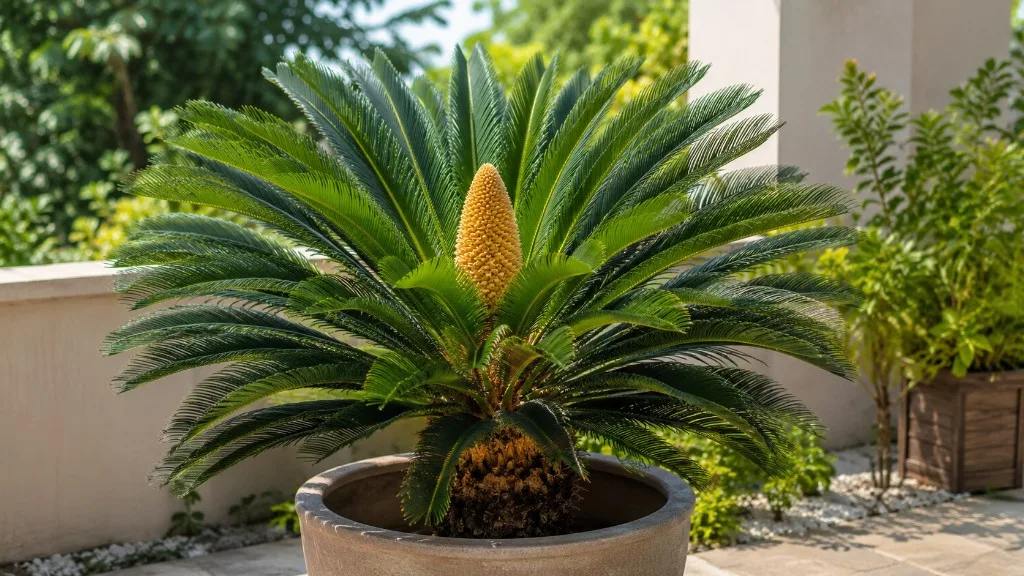
Sago palm is one of the most recognizable “tropical” houseplants sold in garden centers, home improvement stores, and bonsai sections - yet it is not a palm at all. The accepted scientific name is Cycas revoluta, a cycad in the family Cycadaceae and order Cycadales. Cycads are ancient gymnosperms that predate flowering plants by hundreds of millions of years. They produce stiff, feather-like fronds (technically compound leaves, not palm fronds) arranged in a rosette atop a thick, often partially buried caudex that stores water and starch. For practical care, think slow-growing drought-tolerant subtropical cycad, not fast-draining tropical palm.
Indoors, sago palm typically reaches 2 to 4 feet (60 to 120 cm) tall over many years, though outdoor specimens in frost-free climates can eventually grow 6 to 10 feet (1.8 to 3 m) wide and tall according to NC State Extension. Growth is very slow - adding an inch of trunk diameter can take years - which makes the plant popular as a bonsai subject and long-lived container specimen. Each frond may span 20 to 60 inches (50 to 150 cm) with stiff, dark green, needle-like leaflets that feel almost plastic to the touch when healthy.
If you are deciding whether sago palm fits your home, the honest summary is this: sago palm rewards bright filtered light, fast-draining soil, and a Sago Palm watering guide that respects drought tolerance - and it punishes overwatering, cold drafts, and unrealistic expectations about growth speed. It is easier than a finicky fern and harder than a snake plant in one specific way: every part of the plant is highly toxic to dogs, cats, and horses, with seeds being the most dangerous. That toxicity is not a footnote. For pet households, sago palm is one of the worst common houseplants you can bring indoors regardless of how attractive the symmetrical crown looks on a windowsill.
Botanical Background - Cycad, Not Palm
Sago palm belongs to Cycadaceae, a family with its own care logic that diverges sharply from true palms in Arecaceae. Palms are monocots that generally prefer steady moisture and humid air; cycads evolved in subtropical regions with seasonal dry periods and store reserves in a woody caudex. Knowing the family helps you predict behavior: drainage matters more than humidity, overwatering kills faster than underwatering, and growth is measured in seasons and years, not weeks.
The species is native to southern Japan, primarily Kyushu and the Ryukyu (Nansei-Shoto) Islands, where it grows in coastal and subtropical landscapes with sandy, well-drained soils. In USDA Hardiness Zones 9a through 12b, sago palm survives outdoors as a landscape accent, container patio plant, or rock-garden specimen. It tolerates brief cold snaps but foliage is damaged by frost, and NC State Extension notes the plant will not survive if temperatures drop below about 15°F (-9°C). Everywhere else, it is grown as a container plant moved indoors for winter or kept permanently inside as a slow, sculptural evergreen.
Retail labeling adds confusion. “Sago palm” also appears on tags for related cycads such as coontie (Zamia species) and cardboard palm (Zamia furfuracea), which share similar toxicity profiles through the cycad group. True sago starch historically came from other cycad species processed to remove toxins - do not assume your ornamental C. revoluta is food. The pith contains starch that must be carefully processed to remove poisons, and home preparation is unsafe. Your job as a grower is ornamental care, not harvest.
Sago palm is dioecious, meaning individual plants are either male or female. Male plants produce a tall, pineapple-shaped pollen cone; female plants produce a feathered golden seed head that develops orange to red seeds if pollinated. Pollination in cultivation usually requires hand transfer of pollen because indoor plants lack the insect and wind exposure of outdoor groves. Seed production is a multi-year curiosity for collectors, not a typical home-grower goal - and the seeds are the most toxic part of the plant, which makes casual seed-saving dangerous in pet households.
Why the Name and Species Matter for Care
The Latin name Cycas revoluta identifies a specific species with well-documented tolerances. “Sago palm” in commerce sometimes labels lookalike cycads or young specimens of other Cycas species with slightly different cold or sun preferences. If your plant arrived with a tag, keep the botanical name. If it did not, the care below still applies to standard king sago palm sold as C. revoluta, but confirm identity before investing in long-term landscape planning or propagation projects.
The common name “palm” sets up the most expensive mistake new owners make: watering like a tropical palm. Sago palm’s caudex and thick roots store moisture. In bright indoor light with a well-draining mix, the plant often needs water less frequently than ficus or peace lily, not more. Treat calendar-based watering as a reminder to check the soil, not a command to pour.
Slow growth is normal, not a sign of failure. A sago palm may produce one flush of new fronds per year - sometimes two in ideal warm, bright conditions - and individual fronds persist for years. Comparing your indoor plant to fast-growing palms or fiddle-leaf figs will make a healthy sago look “stalled” when it is actually behaving correctly. Patience is part of the care contract.
Best Growing Conditions for Sago Palm
Sago palm does best when your space approximates the bright, warm, well-drained rhythm of its native Japanese subtropics without simulating rainforest humidity. The four variables that decide almost every outcome are light, water, soil, and temperature. Align those and feeding, Sago Palm repotting guide, and frond grooming become occasional tasks. Misalign any one - especially water or drainage - and the plant declines from the roots upward while the crown still looks fine for weeks.
Light Requirements
Sago palm needs bright, indirect light with some tolerance for gentle direct sun. NC State Extension recommends filtered sunlight for four to six hours per day for indoor plants. East-facing windows are often ideal: soft morning direct sun, then bright indirect exposure. South- and west-facing windows work if you filter harsh afternoon rays with a sheer curtain - intense direct sun through glass can scorch fronds, producing bleached patches and brown, crispy leaflet tips. Outdoor specimens commonly grow in partial shade with morning sun and afternoon protection in hot climates.
The fastest diagnostic for incorrect light is new frond development, not old lower fronds. A healthy flush produces compact, stiff, dark green leaflets that arch symmetrically. Pale, weak new fronds with elongated petioles usually mean the plant wants more light. Bleached or brown sun-facing leaflets at midday mean it wants less direct exposure or slower acclimation. If you move a greenhouse-grown sago to a brighter sill, acclimate over one to two weeks - fronds hardened in lower light burn easily when light intensity jumps.
Sago palm adapts to lower light for a time, which is why it survives in offices and dimmer corners longer than many sun lovers. Long-term low light produces sparse crowns, thinner fronds, and increased overwatering risk because the mix dries slowly while you keep a summer watering rhythm. If natural light is weak - common in northern winters - a full-spectrum grow light on a 10–12 hour timer, positioned 12–24 inches above the crown, prevents the etiolated, floppy look that precedes root stress. Rotate the pot quarterly for even frond arrangement.
Temperature and Humidity
Sago palm prefers stable temperatures between 65 and 85°F (18 and 29°C) during active growth, which matches most indoor environments. It tolerates brief excursions higher when soil moisture is adequate and airflow is good. Cold is the hard limit: sustained frost damages foliage, and prolonged exposure below 15°F (-9°C) kills the plant outdoors. Indoors, avoid placing pots on cold window ledges in winter, directly under air-conditioning vents, or above radiators that desiccate roots through the pot wall.
Brief cool periods in the 50–60°F (10–15°C) range slow growth and reduce water use - useful information when deciding winter watering frequency. Do not confuse cool dormancy with permission to keep the plant in an unheated garage below freezing; the caudex is tough, but repeat freeze-thaw cycles damage vascular tissue.
Humidity is secondary compared with light and watering. Average home humidity in the 30–50% range is usually adequate. Very dry winter air can encourage spider mites on indoor specimens. A pebble tray with the pot elevated above the water line, grouping plants, or a small humidifier near the plant helps more reliably than misting, which raises humidity briefly and can leave wet crown tissue that invites fungal problems if airflow is poor. Do not mist as a substitute for fixing a root-zone moisture mistake.
Soil and Drainage
Use a fast-draining, sandy or gritty mix that mimics the loamy sands of its native range. NC State Extension lists sandy loam with good drainage and pH from acidic to neutral (roughly 6.0–7.0) as ideal. A practical home blend is two parts quality potting mix, one part coarse sand or perlite, and one part pumice or grit - adjust toward more grit if your home runs hot and bright or if you tend to water generously. Dedicated cactus and palm mixes sold commercially often work if you amend further with perlite when the bag feels heavy.
The principle matters more than a branded recipe: water must exit the root zone quickly, and air must reach roots between waterings. Heavy, peat-dominated indoor mixes compact over one to two years, turning into water-retentive mud that triggers Phytophthora root rot and crown decline. NC State Extension notes that sago palm is intolerant to overwatering or poor drainage - soggy soil and crown rot are the primary killers, not drought.
Always use a container with a drainage hole. Unglazed terracotta is an excellent choice for sago palm because it allows evaporation through the pot wall, reducing the risk of a soggy root zone in humid climates or after repotting into fresh mix. Decorative cachepots are fine only if you lift the nursery pot out to water and empty runoff every time. Never let the caudex sit in standing water.
How to Water Sago Palm
The general rule for sago palm is water thoroughly, then allow the soil to dry before watering again. More precisely, water when the top 1 inch (2.5 cm) of mix feels dry and the pot has lost noticeable weight - in many bright indoor setups that means roughly every two to three weeks during active growth, and every three to four weeks or longer in cool, dim winter months. Your interval depends on pot size, soil grit, light, temperature, and whether the plant is rootbound, so check moisture rather than obeying a calendar.
Water until a modest amount runs from the drainage hole, then empty the saucer immediately. Use a finger, a wooden skewer, or pot weight - a heavy pot with damp cool soil near the drainage hole means wait, even if the surface looks dry. Because the caudex stores moisture, sago palm survives occasional missed waterings better than repeated soggy cycles. Drought stress shows as slightly drooping fronds and leaflet curl; severe underwatering over months produces uniform yellowing and brittle brown tips. Overwatering shows later as soft caudex, foul-smelling mix, and blackened crown tissue.
Watering Rhythm During Active Growth
During the warm, bright months when new fronds may emerge, sago palm uses water steadily but not greedily. The target is a dry-to-moist oscillation, not constant wetness. After a thorough watering, let the mix approach dryness through most of the root zone before the next soak. In fast-draining terracotta in a sunny room, that cycle may complete in 10 to 14 days for a medium pot. In plastic pots with peat-heavy mix in air-conditioned offices, the same plant may need three weeks or more.
If you just bought the plant, expect adjustment. Nursery sagos often arrive in peat-heavy mix tuned for greenhouse drip irrigation, not your home’s light. Do not compensate for transplant shock by watering more frequently unless the pot is genuinely dry at depth. Stabilize light first, then refine the interval based on how fast your specific container dries.
Watch the crown center when watering. Avoid pouring directly into the tight new frond whorl repeatedly - waterlogged crown tissue contributes to heart rot in cycads. Apply water at the soil surface around the caudex and let it soak through.
Seasonal Adjustments
In cooler, dimmer months, growth slows or pauses and the pot dries more slowly. Stretch the interval between waterings and hold fertilizer until new frond flush is visible in spring. The most common winter failure is continuing a midsummer rhythm in lower light, which keeps mix waterlogged and leads to yellow lower fronds, fungus gnats, and root rot that only becomes obvious when the crown stops pushing new growth.
Outdoor container plants need a parallel shift in autumn. As nights cool and day length shortens, reduce frequency. If you move plants indoors for winter, inspect fronds and soil for pests before they cross the threshold, and expect a transition period where water use drops sharply even though the plant still looks green.
Common Watering Mistakes
The single most damaging mistake is watering on a fixed schedule without checking the pot - especially weekly “plant care Sundays” that ignore seasonal dry-down. The second is letting the pot sit in a full saucer, which suffocates roots within days. The third is treating drought tolerance as immunity to water forever; months of neglect in small pots still desiccate roots and produce irreversible frond loss.
People also misread sago palm symptoms. Lower frond yellowing is often natural senescence as the plant sheds its oldest leaves once or twice per year - not automatically a watering crisis. Uniform yellowing with a wet, heavy pot points to root trouble. Brown tips on otherwise green fronds often trace to salt buildup, low humidity, or past drought - not necessarily current overwatering. Always pair visual symptoms with a moisture check at depth and a review of recent light and temperature before changing your rhythm.
How to Feed Sago Palm
Sago palm is a light feeder that needs modest nutrition during active growth, not heavy palm-style fertilizing. A balanced slow-release fertilizer (for example 10-10-10) applied at half the label rate once in late spring is sufficient for many indoor specimens. Alternatively, use a diluted balanced liquid fertilizer at one-quarter to one-half strength monthly from late spring through early autumn, applied to already-moist soil so nutrients distribute without burning roots. Extension and botanical garden sources emphasize well-drained soil over frequent feeding - excess nitrogen on a plant that grows slowly mainly accumulates salts.
Hold fertilizer entirely during cool winter months, after repotting until new growth appears, and while the plant recovers from root rot, scale infestation, or frond loss from sun scorch. Feeding a plant that cannot use nutrients adds salt to the mix, showing up as crisp brown leaflet margins that persist even when watering seems correct. If margins brown despite good moisture, flush the pot with plain water at two to three times the pot volume and pause feeding for two to three months.
Micronutrient deficiencies are uncommon in fresh quality mixes but appear on very old, broken-down soil as uniform pale green fronds with slow new growth. Repotting into fresh gritty mix usually resolves that pattern faster than chasing individual minerals. Do not dump Epsom salt or iron supplements reactively without confirming the root zone is healthy and drainage is sound - cycads in soggy mix cannot absorb nutrients efficiently regardless of what you pour on top.
Repotting and Root Health
Repot sago palm roughly every two to three years, or when roots circle drainage holes, the pot dries within a day of watering, or the caudex threatens to split the container. Because growth is slow, many indoor sagos stay slightly rootbound for years without harm - in fact, a caudex that fills the pot often produces a more attractive bonsai-like proportion. Repot when water runs straight through dry mix without absorbing, salt crust covers the surface, or the plant becomes unstable.
The best timing is late spring to early summer as new fronds may emerge, giving a full warm season for root recovery. Choose a pot only one size larger - typically 1 to 2 inches (2.5 to 5 cm) wider than the caudex. Oversized pots hold excess wet mix around a small root system and are the most common trigger for rot after repotting. Use fresh gritty mix, plant with the caudex partially exposed as it was before (burying too deeply encourages crown moisture retention), and water lightly once after repotting, then return to a normal dry-down cycle only when the mix approaches dryness at depth.
Signs It Is Time to Repot
Physical signs include roots emerging from drainage holes, a caudex wider than the pot opening, or mix that has decomposed into fine mud that stays wet for a week after watering. Performance signs include new fronds smaller than previous flushes despite adequate light, or chronic tip burn that persists after flushing - sometimes indicating mineral-loaded old mix rather than current care errors.
Do not repot a plant actively collapsing from overwatering until you inspect the caudex and roots. Trim soft, black, or foul-smelling tissue with a sterile knife, dust cuts with cinnamon or sulfur if you have it, and repot into fresh grit-heavy mix kept barely moist until new growth confirms recovery. Moving a rotting caudex into fresh soil without removing damaged tissue rarely saves the plant.
Propagation Methods for Sago Palm
Home propagation of sago palm is straightforward in principle and slow in practice. The two main methods are basal pups (offsets) and seed. Both require patience measured in months to years, not days.
Pup removal is the standard nursery method. Mature plants produce basal offsets at or near soil level - sometimes called bulbs or side shoots. According to UC Cooperative Extension Master Gardeners, remove pups in spring or early summer with a clean sharp knife or spade, taking care to minimize damage to the parent caudex. Remove existing fronds from the pup - they draw moisture from a rootless offset. Let the cut surface callus and dry for several days to two weeks in a cool, dry place before potting. Plant in fast-draining mix, keep warm (70–85°F / 21–29°C), and maintain slight moisture - not wetness - until roots form over several weeks to a few months. Resistance when you tug gently indicates rooting.
Seed propagation requires a female plant with pollinated seeds - uncommon indoors without hand pollination. Seeds have a bright orange-red outer coat (sarcotesta) that must be cleaned off; wear gloves because the tissue is toxic and can irritate skin. Soak cleaned seeds in warm water for 24 to 48 hours, optionally scarify the hard inner shell, and sow half-buried in sandy, moist medium at 75–85°F (24–29°C). Germination takes one to six months; seedlings may need three to five years to resemble a recognizable rosette. Fresh seed germinates far better than old seed.
Do not propagate stressed, diseased, or rot-affected plants. Offsets inherit the parent’s health, and weak pups fail at high rates. Also remember: every pup and seed you handle is toxic - store propagation projects away from pets and children, and wash tools thoroughly afterward.
Common Sago Palm Problems
Most sago palm problems are environmental or watering-related, not mysterious cycad diseases. The plant signals through frond color, leaflet tips, and flush timing long before the caudex collapses. Check moisture at depth, light exposure, and recent temperature shifts before reaching for fertilizer or pesticide.
Yellow Fronds, Brown Tips, and Pests
Yellow fronds on the oldest, lowest tier are often normal senescence - sago palm periodically sheds lower fronds as the crown grows upward. Remove them cleanly at the base with sterilized pruners. Yellowing across multiple frond ages with wet mix suggests overwatering and root rot. Uniform pale yellow-green on new growth may indicate too little light or nutrient depletion in old mix. Yellow with crisp brown edges on a dry, light pot points to underwatering stress.
Brown leaflet tips commonly trace to low humidity, salt buildup from fertilizer or hard tap water, past drought, or sun scorch. Flush the pot if salts are suspected. Tips that are already brown will not revert to green; judge recovery by undamaged new leaflets on the next frond flush.
Scale insects are the most frequent pest on indoor sago palms - immobile brown bumps along frond petioles and the caudex that excrete sticky honeydew. Mealybugs appear as white cottony clusters in the crown. Spider mites stipple leaflets and build fine webbing in dry air. Inspect weekly, isolate new purchases, and treat early with manual removal, horticultural oil, or insecticidal soap applied per label directions on a cool, overcast day to avoid scorching stiff fronds. Heavy infestations on a weakened plant may require repeated treatments spaced seven to ten days apart.
Crown rot from chronic overwatering is the catastrophic failure mode: new fronds fail to open, the center smells sour, and the caudex softens. At that stage, recovery is unlikely. Prevention - gritty mix, dry-down cycles, and never standing in runoff - is the only reliable strategy.
Is Sago Palm Safe for Pets?
No. Sago palm is highly toxic to dogs, cats, and horses - and toxic to humans if ingested. The ASPCA lists sago palm under Cycas revoluta and related zamia species, with cycasin as the toxic principle. Clinical signs in pets include vomiting, melena (bloody stool), increased thirst, bruising, jaundice, liver damage, liver failure, and death. All parts of the plant are poisonous; seeds (nuts) are the most toxic, according to VCA Animal Hospitals.
Cycasin is metabolized to methylazoxymethanol (MAM), which causes severe hepatic injury. Pet Poison Helpline notes that gastrointestinal signs can appear within 15 minutes to several hours, with liver failure developing within two to three days in serious cases. Even with aggressive veterinary treatment, survival is roughly 50% in documented cases - which is why prevention matters more than hoping for a mild reaction.
This is not a plant to keep on the floor if you have a puppy that chews everything, a cat that treats greenery as entertainment, or a dog breed known for eating landscaping. Toxic does not require a large dose - VCA emphasizes that ingestion of even a small amount can cause serious effects. Bonsai-sized sagos on coffee tables are still dangerous if seeds or fallen leaflets reach the ground.
If you suspect your pet ingested any part of a sago palm, treat it as an emergency. Contact your veterinarian immediately or call the ASPCA Animal Poison Control Center at (888) 426-4435 (a consultation fee may apply) or Pet Poison Helpline at (855) 764-7661. Tufts Cummings School of Veterinary Medicine stresses that early decontamination - inducing vomiting when appropriate and safe - improves outcomes, but there is no antidote; treatment is supportive, including liver monitoring and intensive care if enzymes rise. Bring a frond sample or photo of the plant to help identification. This is general information, not veterinary advice.
For pet households, choose confirmed non-toxic alternatives and treat sago palm like a hazardous ornamental - beautiful, but belonging out of reach or out of the home entirely if your pets access plants unpredictably.
Conclusion
Sago palm (Cycas revoluta) is a slow-growing Japanese cycad, not a true palm, prized for its symmetrical crown of stiff dark fronds and rugged caudex. Give it bright filtered light for several hours daily, fast-draining gritty soil, thorough watering followed by a real dry-down, and stable warm temperatures above frost limits, and it will remain a low-maintenance sculptural plant for years - often producing only one or two frond flushes annually. Repot infrequently into slightly larger gritty pots, feed lightly in spring and summer, and remove pups only if you have the patience for months-long rooting.
When something looks wrong, read the plant in context: brown tips on old fronds often mean salts, drought, or past sun stress; uniform yellowing with wet mix means roots; lower frond yellowing alone is often normal aging. Scale and mealybugs respond to early treatment; crown rot from overwatering rarely reverses. Propagate from pups in warm weather with callused cuts, and never treat seed handling casually.
The non-negotiable line is pet safety. Every part contains cycasin; seeds are the worst. Keep sago palm away from dogs, cats, and horses, and seek emergency veterinary care immediately if ingestion occurs. Respect that toxicity alongside the watering discipline, and sago palm becomes one of the most durable ornamental cycads you can grow - a living fossil that rewards patience and punishes soggy soil and curious pets.
When to use this page vs other Sago Palm guides
- Sago Palm overview - Canonical hub for this species - care topics and problems branch from here.
- Sago Palm problems - Symptom-first path when you already know something is wrong.
Related Sago Palm guides
How to care for Sago Palm?
How much light does Sago Palm need?
bright indirect light, some direct sun
- bright indirect light, some direct sun - bright indirect light, some direct sun.
When should you water Sago Palm?
Water thoroughly but allow soil to dry between waterings; very drought-tolerant.
- Check top 2 inches - Stick a finger or knuckle into the soil; water only when the top layer feels dry.
- Drain excess water - Water thoroughly but allow soil to dry between waterings; very drought-tolerant.
What soil works best for Sago Palm?
Fast-draining cactus or palm mix.
- Well-draining mix - Fast-draining cactus or palm mix.
Grower notes for Sago Palm
What matters most with Sago Palm
Sago Palm declines slowly, which can hide mistakes for weeks. Watch spear growth, lower fronds, and soil drying speed rather than judging only one yellow leaflet. In practice, the care checkpoint is simple: bright indirect light, some direct sun. Pair that with fast-draining cactus or palm mix, and avoid changing water, pot size, and placement all at once.
Best placement in a real home
Sago Palm belongs where bright indirect light, some direct sun is realistic for most of the day, not only where the pot looks good. Water thoroughly but allow soil to dry between waterings; very drought-tolerant. If the pot stays wet longer than expected, move the plant into better light or reassess the mix before watering again. Humidity target: Average household humidity is fine (30–50%).. Temperature comfort zone: 18°C to 27°C (65–80°F).
Before you buy this plant
Choose Sago Palm with firm new growth, clean leaf undersides, and soil that does not smell sour or feel compacted. Be cautious if you see yellow-leaves, sticky residue, collapsed crowns, or a pot that is wet in poor light. Cosmetic old-leaf damage is less worrying than weak roots or active pests.
First month after bringing it home
Do not repot Sago Palm on day one unless the mix is failing or pests are obvious. Quarantine it, learn how fast the pot dries, and keep care boring while it adjusts. Watch especially for yellow-leaves, brown-tips, and slow-growth. If problems appear, correct the condition first rather than stacking fertilizer, repotting, and pruning together.
Safety note for Sago Palm
Sago Palm is not a plant to keep within reach of pets or children. Treat it as an inaccessible display plant. Use gloves if sap or plant tissue is irritating, and pick a pet-safe alternative for floor pots or low shelves.
How to tell Sago Palm is settling in
If you plan to multiply it later, common methods include Offsets (pups). If brown-tips shows up early, inspect light, watering, and roots before assuming the plant is permanently weak.
Is it pet safe?
Sago Palm is toxic to cats and dogs and horses and humans.
Highly toxic - all parts contain cycasin, which causes severe liver failure. Keep away from all pets and children.
Watering Sago Palm
Water thoroughly but allow soil to dry between waterings; very drought-tolerant.
Soil & potting for Sago Palm
Fast-draining cactus or palm mix.
Humidity & temperature for Sago Palm
Sago Palm prefers average household humidity is fine (30–50%), though normal home humidity is usually fine. Keep temperatures around 18°C to 27°C (65–80°F).
| Detail | Information |
|---|---|
| Humidity | Average household humidity is fine (30–50%) - normal home humidity is fine. |
| Ideal temperature | 18°C to 27°C (65–80°F) |
Fertilizer & pruning for Sago Palm
Use feed lightly during active growth. Slow-release palm fertilizer or balanced liquid feed. for Sago Palm.
| Detail | Information |
|---|---|
| Fertilizer type | Feed lightly during active growth. Slow-release palm fertilizer or balanced liquid feed. |
Common problems on Sago Palm
Brown Tips
LowLikely cause: Low humidity, fluoride in water, or underwatering.
Quick fix: Water with filtered water and increase humidity slightly.
Full fix guide →Slow Growth
LowLikely cause: Inherently very slow growing plant.
Quick fix: Ensure adequate light and feeding; growth speed is normal.
Full fix guide →Yellow Leaves
MediumLikely cause: Overwatering or nutrient deficiency (manganese).
Quick fix: Reduce watering and apply palm fertilizer with micro-nutrients.
Full fix guide →Aphids
MediumLikely cause: Aphids on Sago Palm cluster on the soft crown spear and unfurling fronds, leaving sticky honeydew on stiff older leaflets. First step: isolate the plant and rinse colonies off with a firm water stream
Quick fix: See plant-specific guide for step-by-step fixes.
Full fix guide →Drooping Leaves
MediumLikely cause: Drooping fronds on Sago Palm almost always mean the roots cannot supply water-either the mix is too dry or too wet and failing. First step: probe soil two to three inches deep and lift the pot before
Quick fix: See plant-specific guide for step-by-step fixes.
Full fix guide →Fungus Gnats
MediumLikely cause: Fungus gnats on Sago Palm mean the soil surface stays too wet too often-the same moisture pattern that leads to root rot on this drought-tolerant cycad. First step: let the top 1–2 inches of mix dry c
Quick fix: See plant-specific guide for step-by-step fixes.
Full fix guide →Leggy Growth
MediumLikely cause: Leggy growth on Sago Palm shows as pale, limp fronds with long weak petioles that lean toward the brightest window. This cycad does not vine, but insufficient light still stretches the crown. First st
Quick fix: See plant-specific guide for step-by-step fixes.
Full fix guide →Low Humidity
MediumLikely cause: Sago Palm tolerates average household humidity well-dry air alone rarely hurts it. Crispy leaflet tips usually trace to underwatering, salt in tap water, or spider mites that thrive in dry conditions.
Quick fix: See plant-specific guide for step-by-step fixes.
Full fix guide →Mealybugs
MediumLikely cause: Mealybugs on Sago Palm show up as white cottony patches tucked into the crown, frond bases, and leaflet axils of stiff Cycas revoluta foliage. First step: isolate the plant and dab every visible bug w
Quick fix: See plant-specific guide for step-by-step fixes.
Full fix guide →Mold on Soil
MediumLikely cause: Surface mold on Sago Palm soil is usually harmless saprophytic fungus on a wet top layer-not a crown disease. The real risk is chronic moisture, which can rot cycad roots. First step: pause watering,
Quick fix: See plant-specific guide for step-by-step fixes.
Full fix guide →Not Enough Light
MediumLikely cause: Not enough light makes Sago Palm pale, lean, and stall-with soil that stays wet too long. First step: move the pot to bright filtered sun for 4–6 hours daily; this cycad is not a low-light plant.
Quick fix: See plant-specific guide for step-by-step fixes.
Full fix guide →Overwatering
MediumLikely cause: Overwatering on Sago Palm shows as a heavy pot, wet mix days after watering, and yellowing fronds while the trunk still looks fine. Stop watering immediately and let the top few inches dry completely
Quick fix: See plant-specific guide for step-by-step fixes.
Full fix guide →Root Rot
MediumLikely cause: Root rot on Sago Palm follows chronic overwatering or poor drainage-the cycad declines slowly, so crown fronds yellow while soil stays wet. First step: stop watering and unpot to inspect roots and tru
Quick fix: See plant-specific guide for step-by-step fixes.
Full fix guide →Spider Mites
MediumLikely cause: Spider mites on Sago Palm cause pale stippling and fine webbing on stiff fronds, especially in dry heated rooms. First step: isolate the plant and rinse every frond thoroughly, including leaflet under
Quick fix: See plant-specific guide for step-by-step fixes.
Full fix guide →Underwatering
MediumLikely cause: Sago Palm tolerates drought but still needs regular moisture when the soil surface dries out. Extended dryness in bright light causes limp fronds and brown leaflet tips. First step: lift the pot, chec
Quick fix: See plant-specific guide for step-by-step fixes.
Full fix guide →Wilting
MediumLikely cause: Wilting on Sago Palm usually means roots cannot supply water-either the soil is too dry or too wet and rotting. Lift the pot before you act: a light dry pot needs one deep soak; a heavy wet pot needs
Quick fix: See plant-specific guide for step-by-step fixes.
Full fix guide →