Yellow Leaves on Sago Palm: Causes, Checks & Fixes
Quick answer
Yellow leaves on Sago Palm may be normal aging on lower fronds, overwatering, manganese deficiency (frizzle-top) on new growth, insufficient light, or underwatering stress. First step: note which fronds are yellow, lift the pot for weight, and probe soil moisture at depth before changing care.
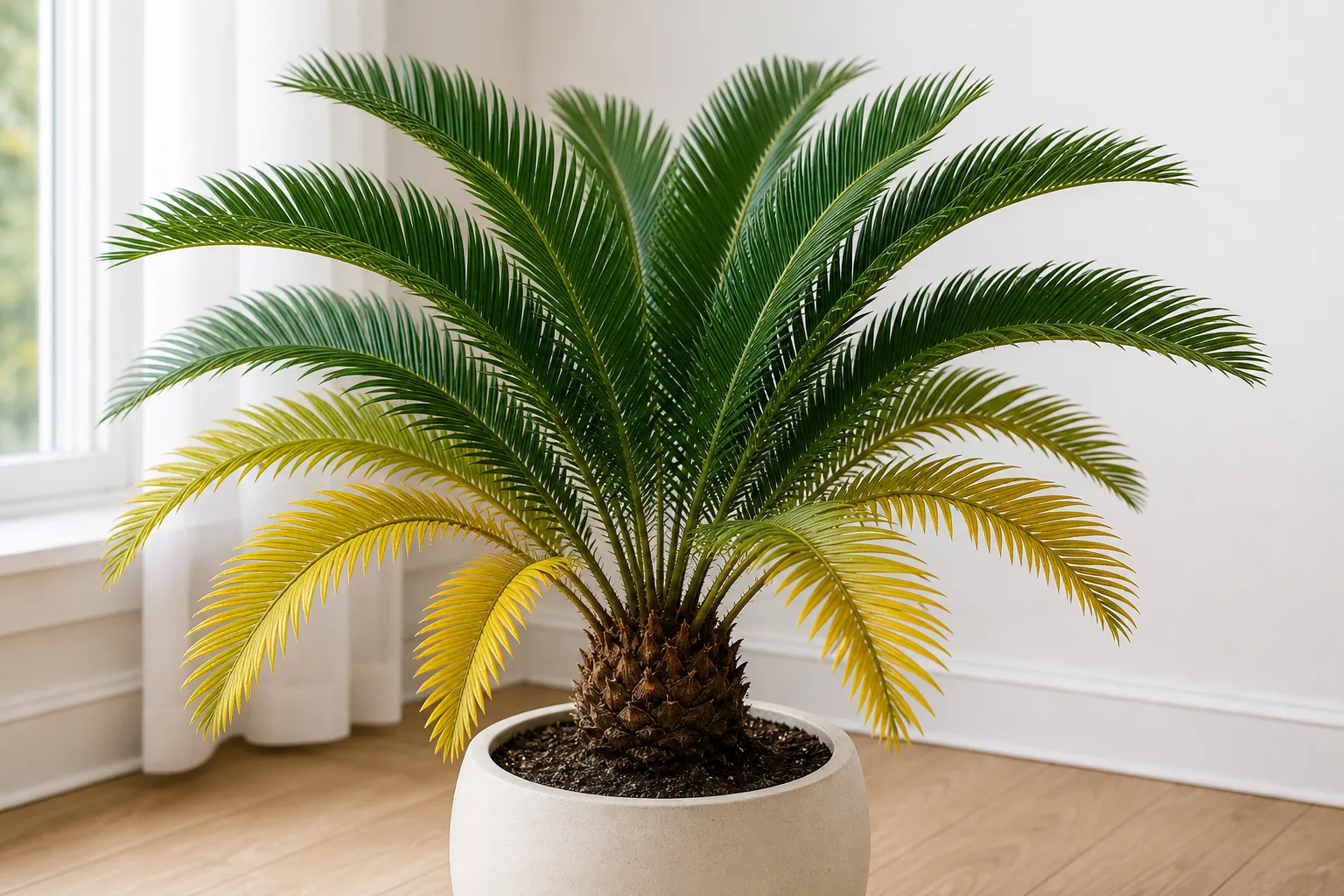
Yellow Leaves on Sago Palm: Causes, Checks & Fixes
This guide covers yellow leaves on Sago Palm. See also the general Yellow Leaves guide, watering, and light pages for this plant.
Yellow Leaves on Sago Palm: Causes, Checks & Fixes
Quick answer
Yellow leaves on Sago Palm (Cycas revoluta) need pattern recognition before you water less, feed more, or prune. This slow cycad-often flushing new fronds only once per year-sheds older lower fronds naturally as the crown grows. Yellow on the newest crown flush is different: it often signals manganese deficiency on alkaline or depleted soils, called frizzle-top when leaflets emerge crinkled. Yellowing with a heavy pot and wet mix usually means overwatering or poor drainage. Pale yellow-green across the rosette in a dim corner points to not enough light. Yellow with crisp brown tips on a light, dry pot fits underwatering stress.
First step: identify which fronds are yellow, lift the pot, and push your finger 5–7 cm (2–3 inches) into the mix. A single yellow bottom frond on firm trunk and appropriate dryness is often normal aging. All-new yellow crown leaves, a soggy heavy pot, or a pale leaning plant each need a different fix-do not stack treatments on day one.
What yellow leaves look like on Sago Palm
Yellowing on sago follows five common patterns. Match yours before acting.
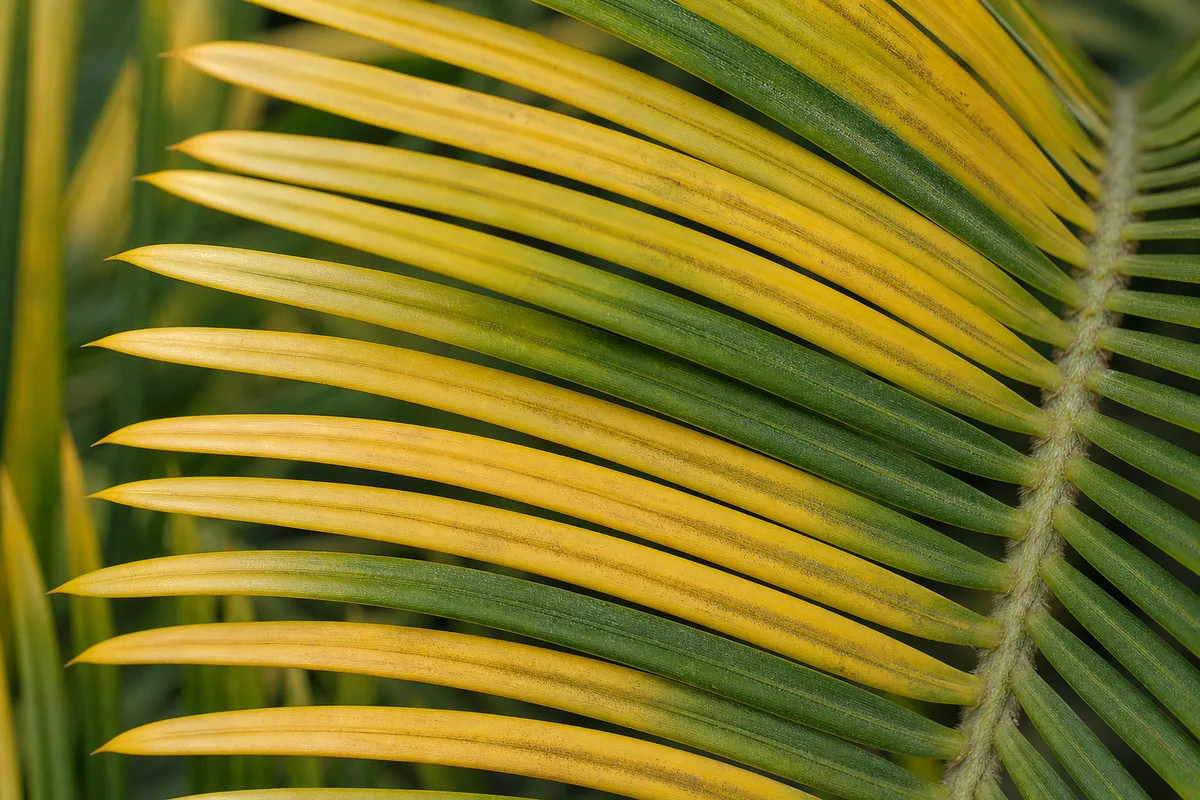
Yellow Leaves symptoms on Sago Palm - compare with healthy tissue on the same plant.
Normal lower-frond aging: The lowest frond yellows from the tip or base while the crown stays deep green and stiff. One frond at a time is typical on a plant that may add only one ring of new leaves per year. Soil dries at a normal pace; trunk feels firm.
Overwatering: Multiple fronds yellow together, often from the base upward, while the pot stays heavy days after watering. Mix smells sour at the drainage hole. New crown spears may stall or open small. See the full overwatering guide when wet soil is the dominant clue.
Manganese deficiency (frizzle-top): Newest crown fronds emerge with interveinal chlorosis and necrotic streaking, then crinkle, twist, or look stunted-unlike iron deficiency, leaves do not turn uniformly yellow. Older fronds may stay green while the center fails. Common in alkaline tap-water regions and old depleted mix.
Insufficient light: Fronds look pale or yellow-green, lean toward the window, and growth stalls. Soil dries unusually slowly because photosynthesis is weak. General washout across existing fronds-not crinkled new spears-fits low light better than frizzle-top.
Underwatering: Fronds yellow with brown, crispy tips on a light pot and bone-dry mix throughout. Turgor may return within a day of a deep soak. Wet soil rules this out.
| Pattern | Frond age affected | Soil / pot signal | Urgency |
|---|---|---|---|
| Normal aging | Lowest frond only | Normal dry-down; firm trunk | Low |
| Overwatering | Several fronds; lower first | Heavy pot; wet at depth | Medium–high if trunk softens |
| Frizzle-top (Mn) | Newest crown flush | May be dry or wet; alkaline/depleted mix | Medium; crown can fail if untreated |
| Low light | Whole rosette pale | Slow dry-down; dim placement | Low–medium |
| Underwatering | Tips + yellow; may wilt | Light pot; dry throughout | Low unless chronic |
Why Sago Palm gets yellow leaves
Senescence rhythm: Sagos keep individual fronds for years, then shed the oldest ring as the crown expands. Owners often panic at one yellow bottom leaf because the plant grows so slowly that any change feels alarming.
Overwatering from kindness: The common name “palm” tricks growers into frequent watering. Sago is a drought-adapted cycad intolerant to overwatering or poor drainage. Wet roots fail before the crown shows full stress-yellow fronds on soggy mix are a warning, not thirst.
Manganese lockout: Manganese is immobile in the plant, so deficiency shows on the newest leaves first. High soil pH greatly reduces manganese availability-common with alkaline tap water, limestone gravel, or years of unchanged potting mix indoors. Cold soil can also temporarily reduce uptake.
Low light slows the whole system: Dim placement reduces photosynthesis and water use, so the same Sago Palm watering guide that worked in a sunny window leaves soil wet too long-yellow lower fronds plus heavy mix can be overwatering layered on weak light.
Underwatering on a drought-tolerant schedule: Sagos forgive dry spells when established, but extended drought yellows leaf tips and stresses the crown before the caudex reserves run low.
How to confirm the cause
Work through this checklist in order:
- Frond age - Is only the lowest frond yellow with a green crown? Likely normal aging. Are the newest crown leaves yellow or frizzled? Suspect manganese deficiency before overwatering alone.
- Pot weight - Lift the container. Heavy days after watering with yellowing fronds points to overwatering. Light and dry throughout points to underwatering.
- Soil moisture at depth - Probe 5–7 cm (2–3 inches) down. Wet at depth with yellow fronds fits overwatering. Bone-dry fits underwatering. Normal dry-down with one bottom yellow frond fits aging.
- Frizzle pattern - On new crown spears, look for crinkled, stunted, or streaked leaflets. Uniform pale yellow without deformation on older fronds suggests light or iron-not classic frizzle-top.
- Trunk firmness - Press the caudex base firmly. Soft or spongy tissue on wet soil is urgent-inspect roots for root rot before assuming a nutrient problem.
- Light exposure - Count filtered sun hours on the fronds. Pale, leaning rosette in a dim spot fits insufficient light even when soil moisture looks “fine.”
- New spear status - Healthy sagos push one main flush per year in many indoor settings. Stalled or deformed new growth on appropriate moisture needs manganese or root checks-not more water by default.
Make one diagnosis at a time. Yellow crown leaves on wet soil can be rot and deficiency; fix drainage first, then reassess new growth after one to two weeks.
First fix for Sago Palm
Match the first action to what you confirmed:
Normal aging: Remove the frond with clean pruners only after it is fully brown-never cut green tissue.
Overwatering: Stop watering until the top few inches of mix are completely dry. Empty saucer water. Do not fertilize or repot on day one unless roots are mushy when inspected.
Manganese deficiency: Apply manganese sulfate per label rates broadcast under the frond canopy and water in lightly. Use a palm or cycad fertilizer with micronutrients if it already contains manganese. Do not use Epsom salts (magnesium sulfate)-magnesium sulfate is not manganese sulfate and does not correct frizzle-top. Damaged fronds cannot re-green; the next flush should emerge normal.
Insufficient light: Move to bright filtered sun for 4–6 hours daily and acclimate over 7–10 days. Adjust watering when the pot dries faster-do not add fertilizer on day one.
Underwatering: Water thoroughly until a little runs from the drainage hole, then empty the saucer. Resume soak-and-dry checks; do not keep the old calendar from when the pot was dry.
Step-by-step recovery
After the first fix:
- Wait one correction cycle - Sagos respond slowly. Give drainage or manganese 2–4 weeks before adding a second major change.
- Keep yellow fronds with green tissue - Especially during manganese correction, older yellow leaves still feed the plant while roots absorb nutrients.
- Retest soil pH if frizzle-top persists - Sagos prefer acidic soil around 5.5–6.5. Alkaline mix may need Sago Palm repotting guide into fresh palm/cactus mix, not repeated micronutrient dumps alone.
- Inspect roots if the trunk softens - Unpot, rinse mix, and trim only mushy foul-smelling roots. Repot into fast-draining mix; see root rot recovery if decay is advanced.
- Pair light with watering - After a window move, track dry-down speed. Faster evaporation in bright light prevents the wet-soil yellowing that dim corners hide.
- Repeat manganese lightly if the next flush still frizzles - A second application at half the initial rate may be needed on high-pH soils; avoid excess manganese that can induce iron deficiency.
- Rule out scale - Sticky residue or white patches on fronds may be pests, not nutrition. Scale and mealybugs are common on sago; inspect before fungicides or repeated fertilizer.
Wear gloves when handling fronds or soil-all parts of Sago Palm are highly toxic to pets and humans. If a dog or cat ingests any portion, contact your veterinarian or the ASPCA Animal Poison Control Center at (888) 426-4435 immediately. Sago palm poisoning can cause liver failure even from small ingestions; seeds are especially dangerous per Pet Poison Helpline.
Recovery timeline
Normal aging: The yellow frond browns and is removed over weeks; no crown change expected.
Overwatering caught early: Stabilization in 2–4 weeks once soil dries; new spear development may take a full growing season.
Manganese correction: Response may take 3–6 months before you see a clean new flush-sagos often produce one ring per year indoors, so judge success on the next crown flush, not old leaf color reversing.
Light improvement: Existing pale fronds do not re-darken; watch for stiffer, greener new leaflets on the next flush.
Advanced root or caudex damage: Soft trunk tissue often does not fully recover even after corrective care.
Signs you are winning: firm trunk, stable older fronds, normal dry-down rhythm, and a new crown spear opening without frizzle or stall.
Causes to rule out
Root rot - Yellow fronds on wet soil with soft caudex and sour smell. Escalate to root rot protocols; do not keep watering.
Spider mites - Fine stippling and webbing on leaflet undersides; soil moisture may be normal. See spider mites on sago if tap-test specks move.
Iron deficiency - Uniform chlorosis on new leaves without crinkling; less common indoors than manganese on sagos but possible on high-pH mix.
Normal slow growth - No flush for one year with deep green stiff fronds and appropriate dry-down may simply be slow growth-not pathology.
Cold or draft damage - Bronze or brown tips after cold exposure without persistent wet soil.
What not to do
Do not remove yellow fronds that still have green-especially during manganese correction.
Do not apply fungicides for frizzle-top; it is nutritional, not fungal.
Do not use Epsom salts expecting frizzle-top to clear; apply manganese sulfate instead.
Do not fertilize a waterlogged plant hoping to green yellow fronds.
Do not water because fronds look wilted when soil is already wet-roots in saturated mix cannot take up water.
Do not make multiple major changes the same week-drainage, repot, fertilizer, and pruning together obscure which fix helped on a slow cycad.
How to prevent yellow leaves next time
Let the soil surface nearly dry between water applications in fast-draining palm or cactus mix. Reduce watering frequency in winter when growth slows.
Provide filtered sun 4–6 hours daily so the plant uses water predictably-dim corners plus frequent watering are a common yellow-leaf trap.
Feed lightly with palm or cycad fertilizer that includes manganese during active growth. In alkaline tap-water areas, plan periodic manganese maintenance at half correction rates after a frizzle-top episode.
Refresh depleted mix every few years; old peat-heavy soil loses structure and micronutrient balance.
Keep the plant out of reach of pets and children. For full culture context, see the Sago Palm overview.
When to worry
Treat as urgent when the trunk base feels soft, new crown spears repeatedly fail on wet soil, the plant wobbles in its pot, or yellowing spreads quickly during warm active growth.
Also act promptly if frizzle-top worsens through two flushes despite manganese applications-test pH and root health.
A single yellow lowest frond on a firm plant with normal dry-down is not an emergency.
Conclusion
Yellow leaves on Sago Palm are a pattern-recognition problem: aging, wet roots, manganese frizzle-top, weak light, and drought each leave different clues in frond age, pot weight, and crown shape. Start with which leaves are yellow and what the soil is doing at depth-then apply one matched fix and judge recovery on the next slow crown flush, not on old frond color. For overlapping symptoms, use sibling guides: overwatering, not enough light, underwatering, root rot, slow growth, and brown tips. Horticultural claims in this guide were checked against UF/IFAS, NC State Extension, Missouri Botanical Garden, and ASPCA references before publication.
When to use this page vs other Sago Palm guides
- Sago Palm watering guide - Use for routine moisture checks before assuming yellow leaves is the main issue.
- Sago Palm problems hub - Browse all 3 common issues on this species.