Sago Palm Light Requirements: Best Window, Sun & Signs
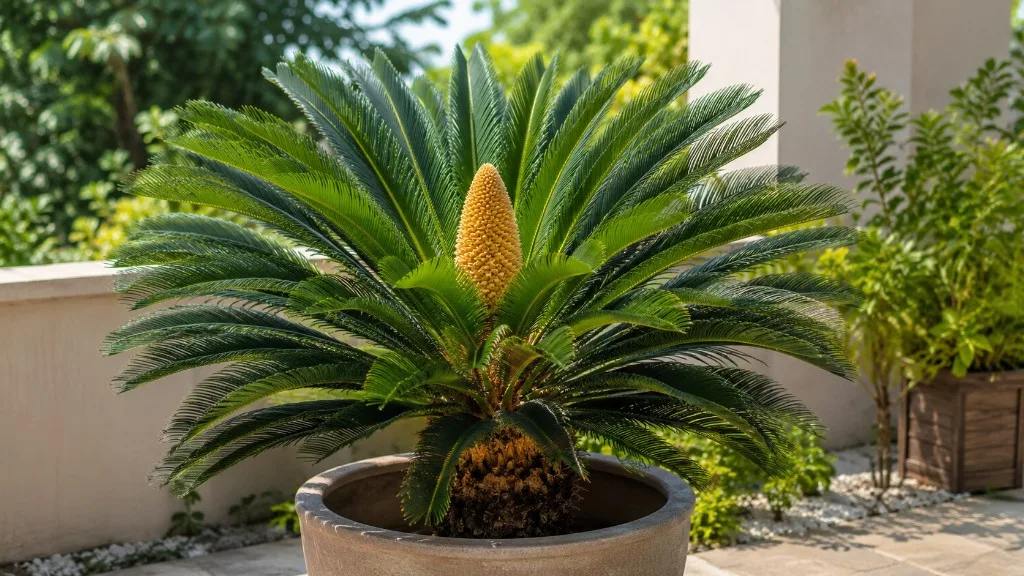
Sago Palm Light Requirements: Best Window, Sun & Signs
Sago Palm Light Requirements: Best Window, Sun & Signs
Sago palm looks like a miniature tropical tree, which leads many growers to treat it like a rainforest palm that wants soft, filtered dimness all day. That assumption costs you years of growth. Cycas revoluta is not a palm at all - it is an ancient cycad, a gymnosperm that evolved on sun-exposed ledges and open woodland edges in southern Japan, where light is bright but often broken by canopy or morning angle. The practical indoor target is bright indirect light with some direct sun, especially gentle morning rays, for roughly four to six hours of strong, plant-facing brightness daily. Miss that band and the plant may sit unchanged for months - because sago palms grow slowly enough to hide problems until a whole frond flush fails.
This guide focuses on the decisions that keep Cycas revoluta compact, green, and actively pushing new spears: how much light it actually needs, where to place it indoors and outdoors, how to handle direct sun without scorch, when grow lights become necessary, and how to read frond signals before yellowing or stretch becomes permanent habit. Light also sets your Sago Palm watering guide - a brighter plant dries faster - so placement is never an isolated choice.
If symptoms persist, see the Brown Tips on Sago Palm guide.
How Much Light Sago Palm Actually Needs
Sago palm does not thrive in “medium light” the way a pothos might. It needs high brightness with protection from the harshest midday beam, especially through hot window glass or on reflective patios. Missouri Botanical Garden notes that Cycas revoluta performs best in part sun to full sun outdoors in suitable climates, while indoor specimens need a bright location with protection from scorching direct rays at peak intensity. (Missouri Botanical Garden) NC State Extension recommends filtered sunlight for four to six hours per day for indoor plants - a similar indoor band to what cycad-focused growers report: bright, indirect light for about five hours daily, with some tolerance for direct morning or late-day sun when acclimated.
Outdoors in USDA Zones 9–11, established sago palms often take full sun to part shade, with afternoon shade recommended in hot inland climates where combined heat and radiation bleach emerging fronds. Indoors, think open bright room near glass, not a decorative corner that looks luminous to your eyes but delivers little usable light to the crown. NC State Extension recommends filtered sunlight for four to six hours per day indoors, and notes that root rot can occur if the plant is overwatered - dim rooms that slow dry-down raise that risk when watering habits stay on a bright-window schedule.
If you want a single measurable target, many experienced indoor growers aim for roughly 1,500–3,000 lux at the frond level during peak daylight hours - bright enough that you would not comfortably read a book there without turning on a lamp, but not so intense that leaf tissue heats within minutes. A phone lux app is imprecise yet useful for comparing windows before you commit a heavy ceramic pot to the wrong sill.
The Short Answer for Busy Growers
If you only remember four rules, use these. Default placement: brightest east window, or a south/west window filtered by sheer curtain or pulled back 3–5 feet (1–1.5 m) from glass in summer. Direct sun: yes for acclimated plants - prioritize morning exposure; avoid unfiltered west-facing afternoon blast indoors unless you are watching for scorch daily. Low light: survival is possible; healthy compact growth is not - expect sparse crowns, pale fronds, and no new flush for a year or more. Judge by the central spear and newest fronds, not old yellow lower leaflets that may be aging out normally. Give any placement change two to three weeks before deciding it failed - but watch for acute scorch within 48 hours after a sudden sun jump.
Why Light Matters for Cycas revoluta
Light drives photosynthesis, but on a sago palm it also controls crown architecture, pup formation, and drought tolerance behavior. Cycads store energy in a stout caudex and produce fronds in episodic flushes - a new central spear unfurls, leaflets expand, then the plant may pause for months. Without adequate light during that flush window, the fronds emerge longer, thinner, and more widely spaced than they would in bright conditions. The mistake persists visually for years because old fronds do not reshape; only the next flush can look better.
Unlike fast-growing tropical foliage plants, Cycas revoluta will not tell you it is starving for light within a week. It simply does not flush, or it produces one weak ring of leaves and returns to stillness. That slowness makes light the most commonly under-corrected indoor variable. Growers assume the plant is “just slow” or needs fertilizer, when the crown has been running on insufficient photons since the day it left the nursery bench.
Light also changes how fast the pot dries. A sago palm in a bright east window may need water on a different rhythm than an identical pot in a dim north room - even if both look equally green today. Pair light corrections with moisture checks, not calendar habits copied from a brighter windowsill.
Slow Growth and What New Fronds Tell You
The central spear - the tightly furled new frond emerging from the crown - is your best light report card. In good light, a developing spear should look firm, evenly green, and proportionally short relative to the previous flush. After unfurling, leaflets should hold stiff architecture without dramatic lean toward the window. If the spear stalls halfway, stays unusually narrow for months, or opens into abnormally long petioles with sparse leaflet spacing, light is usually the limiting factor - assuming temperature is stable and the root zone is not waterlogged.
Lower fronds yellow and drop naturally over time on healthy plants. Do not diagnose light from a single aging leaflet at the bottom of a crown that is otherwise pushing strong new growth. Do diagnose light when the upper crown pales, the plant leans hard toward glass, or no spear appears across a full growing season indoors. Missouri Botanical Garden notes that mature container plants may produce only one frond flush per year - extended periods without new growth indoors often indicate insufficient light rather than normal dormancy.
Because frond damage is permanent - scorched or bleached leaflets do not heal - your goal is to protect each flush as it forms. Prevention beats rehab.
Indoor Light Requirements for Sago Palm
Indoor success hinges on window quality, distance from glass, and seasonal angle shifts more than on compass direction alone. A south window deep-set in a porch alcove may underperform an unobstructed east window. Place the pot so light lands on the fronds, not merely on the floor beside the pot. Within 12 inches (30 cm) of suitable glass is a common starting point for indoor cycads; farther back often drops intensity below what Cycas revoluta needs for active growth.
Rotate the pot a quarter turn weekly during active growth months so fronds develop symmetrically rather than leaning into one bright vector. Dust blocks meaningful light on stiff, waxy leaflets - wipe fronds monthly with a damp cloth if your home is dusty or near a construction zone. Avoid cramming the crown against hot glass in summer; air gap and sheer diffusion matter as much as compass label.
Humidity and temperature stability support light use efficiency, but they do not replace brightness. A humid bathroom with a small frosted window still fails the light test even if fronds look temporarily glossy.
Best Window Placement by Direction
Start with the brightest exposure you can filter, not the dimmest exposure you can tolerate aesthetically. Sago palm belongs in the room you would choose for a sun-loving succulent collection, not a snake plant corner - then adjust intensity downward if scorch appears.
East, South, West, and North Windows Compared
An east-facing window is the best default for most indoor sago palms. Morning sun delivers high-intensity photons at cooler temperatures than afternoon rays, which supports compact frond development without the heat spike that magnifies scorch through glass. Many growers leave east-window sagos within a foot of the pane year-round, pulling back only if mid-summer mornings become unusually harsh in their latitude.
A south-facing window provides the strongest winter sun in the northern hemisphere and is excellent from fall through spring when the plant benefits from maximum photons during shorter days. In summer, south glass can overheat leaf tissue and bleach the glass-facing side of the crown. Use a sheer curtain, partial shade, or move the pot 3–5 feet (1–1.5 m) back while keeping the room bright. South is ideal if you combine window light with a supplemental LED in winter rather than relying on the window alone.
A west-facing window throws hot afternoon sun - the highest scorch risk indoors. If west is your only strong exposure, diffuse peak hours with curtain or blinds, or accept that the plant may need seasonal relocation to an east room during summer. NC State Extension lists partial shade (2–6 hours direct sun) as the cultural light range - unfiltered afternoon sun through west glass often exceeds what fronds hardened in lower light can tolerate without scorch. Never jump an unacclimated nursery plant straight onto an unfiltered west sill in June.
A north-facing window rarely supplies enough intensity for Cycas revoluta to thrive long-term at temperate latitudes. North may maintain static survival color for a while, but expect no pup development, extended dormancy, and progressively sparse crowns unless you add a grow light. Treat north as supplemental-light territory, not a permanent sago home if compact growth is the goal.
Direct Sun Tolerance and Acclimation
Sago palm can take direct sun - and in many outdoor settings it benefits from it - but tolerance depends on acclimation, humidity, leaf age, and heat load. Fronds that developed under nursery shade or low indoor light have not built sun-ready tissue. Moving that plant into unfiltered midday sun without transition produces bleached patches, tan crisping along sun-facing leaflets, and curled margins within days. The damage is permanent on those leaflets; only the next flush can look clean.
Acclimation is gradual exposure expansion, not wishful thinking. Over 7 to 14 days, increase direct hours by 30–60 minutes daily, starting with early morning or late evening rays before adding midday if ever needed. Watch the newest spear during acclimation - if it shows greying or tight curling at peak hours, pause at the current level for a week before advancing. Indoor acclimation to stronger south-window sun follows the same logic as outdoor patio hardening.
Morning Sun vs Afternoon Heat
Morning sun and afternoon sun are not interchangeable for container cycads. Morning delivers photosynthetic intensity without proportional leaf heating, especially through east glass or on east patios. Afternoon sun combines lower angle glare, higher air temperature, and radiative heat from walls, pavement, and dark pots - a triple stress that bleaches emerging spears even when total “hours of sun” look similar on paper.
Outdoors, the ideal pattern for many climates mirrors native ecology: bright open exposure in morning, light shade or dappled protection during the hottest mid-afternoon hours in Zones 9–11 summers where temperatures routinely exceed 90°F (32°C). In mild coastal climates, full-day sun often works without afternoon intervention once the plant is established.
Indoors, replicate morning priority by choosing east or by filtering south and west so the plant receives direct rays before noon and bright ambient light thereafter. If you must use west light, block 2–6 p.m. sun in summer and accept slightly slower flush timing as the trade.
Outdoor Light for Container and Landscape Sago Palms
Outdoor Cycas revoluta in warm zones behaves differently from indoor specimens. Ground-planted sagos in USDA Zones 9–11 commonly grow in full sun to partial shade, developing dense crowns and - at maturity, with strong light - occasional reproductive cones. Container plants on patios heat faster than in-ground plants; root zone temperature and leaf radiation rise together on dark decks and south-facing balconies. A spot that is perfect for an in-ground sago may scorch a black nursery pot by noon.
Summer outdoor moves from indoor winter culture are valuable for light recovery, but only with temperature and acclimation gates. Bring plants outside when overnight lows stay above 55°F (13°C) and acclimate over 7 days: start in bright shade, add morning direct hours, then open exposure as new growth looks clean. Reverse the process before frost - sudden indoor dimming after a bright patio summer can trigger spear stall; compensate with the brightest indoor window or a grow light during transition.
USDA Zones and Seasonal Light Shifts
In Zones 8–9, outdoor sago palms may see seasonal frost protection needs; light planning includes choosing winter sites that remain as bright as possible while avoiding cold glass contact. In Zones 9–11, year-round outdoor culture simplifies photoperiod but introduces summer heat management - afternoon shade cloth or placement under high open canopy prevents tip burn on emerging spears.
Seasonal light shift matters for indoor-only plants too. Winter drops both day length and sun angle, so a south window that powered summer flushes may barely maintain status quo from November through February. That is when supplemental LEDs prevent the slow decline most growers misattribute to “dormancy.” Cycads do rest, but 12–18 months without a flush indoors is a light problem until proven otherwise.
Low-Light Limits and Warning Signs
Sago palm can survive low light longer than many growers expect - which is part of the problem. Its caudex buffers stress, fronds persist for years, and the plant does not collapse quickly like a coleus in a dark hallway. Survival, however, is not compact crown development, pup production, or annual frond flushes. Chronic under-lighting produces leggy, sparse architecture that no amount of fertilizer reverses without brighter placement.
NC State Extension lists insufficient light among causes of yellowing and weak fronds when lower leaves fade while the crown weakens overall. Low light also slows soil dry-down, which invites root stress if watering habits ignore the changed metabolism. Never interpret “drought-tolerant cycad” as permission to keep a dim plant on a bright-window water schedule - wet caudex tissue in low light is a common silent killer.
What Happens When Light Is Too Dim
Typical under-lighting progression on indoor Cycas revoluta:
- Hard lean toward the brightest vector within weeks
- Longer petioles and wider frond spacing on the next flush
- Paler green overall, sometimes mistaken for nitrogen deficiency
- Extended pause - no central spear for many months
- No pupping at the base despite mature caudex size
- Increased susceptibility to scale and mealybug because stressed plants recover slowly
Fix priority is always raise photons first - closer to glass, better window, or grow light - then adjust water and feed to match slower growth. Do not stack Sago Palm repotting guide, fertilizer, and pruning while light remains inadequate; you will mask the root cause and stress an already weakened crown.
Grow Lights When Natural Light Falls Short
When the brightest window in your home delivers consistently dim readings - roughly below 1,200 lux at frond height for most of the day - a full-spectrum LED grow light is the most reliable upgrade. Incandescent bulbs and warm-white room LEDs lack the spectrum and efficiency cycads need for sustained indoor flushes. Choose a full-spectrum horticultural LED rated for foliage plants, mount it 12–18 inches (30–45 cm) above the crown to start, and run it on a timer.
Duration matters as much as intensity. Common starting protocols run 10–12 hours daily, mimicking a bright day length without attempting 24-hour “more is better” logic that disrupts plant rhythm. Increase duration before cramming the fixture closer if fronds look heat-stressed - leaf temperature rises faster than lux gains when distance shrinks.
Fixture Setup, Hours, and Adjustment Signs
Position the lamp so light hits the crown evenly; a side-mounted desk lamp produces asymmetric lean even if total lux looks acceptable. Combine overhead supplementation with weekly rotation unless you use a centered panel wide enough to cover the whole frond spread.
Adjustment signals:
- Spear accelerates and opens with normal leaflet spacing - current setup is working; hold steady
- Frond tips brown under the lamp but crown otherwise green - raise fixture 2–4 inches (5–10 cm) or reduce hours by 1–2
- No change after 8 weeks but no scorch either - increase hours toward 12–14 or add a second modest panel rather than moving dangerously close
- Bleaching on upper leaflets only under LED - spectrum may be heavy in blue/red; switch to balanced full-spectrum white 5000–6500 K range
Winter supplementation from November through February in northern latitudes often prevents the annual “why did my sago stop growing indoors” spiral. Keep watering conservative under lamps - growth may tick upward slightly, but it will not match summer metabolism.
Reading Light Stress on Sago Palm Fronds
Light diagnostics on Cycas revoluta require time-aware observation because symptoms overlap with water stress, cold shock, and natural senescence. Use a two-signal rule: confirm whether new growth and sun exposure geometry support your hypothesis before moving pots or changing care stacks.
Too much sun typically shows on sun-facing leaflets first: bleached yellow-white patches, dry tan crisping, curling during peak hours, and sudden collapse of soft new spear tissue after an unacclimated move. Damage is often one-sided toward the window or afternoon sun vector. Pull back, filter, or acclimate slower - do not prune aggressively until you know the next flush will open cleanly in corrected light.
Too little light shows in whole-crown behavior over months: lean, sparse spacing, small or narrow new fronds, loss of glossy rigidity, and flush failure. Lower yellowing alone, without crown weakness, may be normal aging.
Too Much Sun, Too Little Light, and Misdiagnosis
The most expensive mistake is treating low-light yellowing with more fertilizer and more water because “the plant looks hungry.” The second most expensive mistake is treating acute scorch with immediate repotting because “the roots must be failing.” Light stress deserves light corrections first.
Water-related yellowing often pairs with soft base tissue, sour soil smell, or persistent wetness - none of which are fixed by a brighter window alone, but bright light helps the plant use moisture once drainage is restored. Cold-draft yellowing hits suddenly after HVAC season change and affects multiple plants near the same vent. Light yellowing is directional, gradual, and crown-shape-related.
If two windows are available, run a two-week comparison: identical water checks, different exposures, watch spears only. Sago palms are slow, but side-by-side comparison still beats guessing from memory.
Moving Sago Palm Safely and Seasonal Adjustments
Every light move is a stress event for a cycad that prefers stability. Plan one variable change at a time - light first, then water rhythm, then feed or repot if still needed after the next flush verdict. Sudden jumps from dim office to blazing patio, or from nursery shade house to unfiltered south glass, cause spear abort, leaflet burn, or months of stall even when the destination would be perfect if reached gradually.
For indoor repositioning, shift 6 inches (15 cm) closer to glass every 3–4 days when upgrading brightness, or add one hour of filtered direct sun weekly when acclimating toward east exposure. For downgrades - moving a scorched plant to softer light - one step back is enough; do not flee to a dark interior hallway that trades scorch for etiolation.
Seasonal adjustments: move closer to south glass in late fall when sun angle drops; pull back or sheer-filter in late spring before peak summer heat; add LED hours in winter before fronds pale; reduce LED hours in late spring if window sun now satisfies daily totals. Track spear timing in a notes app - you will see your own annual pattern within two years.
Remember accessibility: Cycas revoluta is highly toxic to pets and humans if ingested (cycasin). Brighter windows are often lower sills and stronger sun rooms where cats sunbathe - secure pots and fronds away from chew access even while optimizing light. (ASPCA)
Conclusion
Sago palm light requirements boil down to bright, plant-facing exposure - bright indirect light with some direct sun, ideally morning-weighted, for roughly four to six hours of strong daily brightness indoors, with outdoor full sun to part shade in warm zones once acclimated. Cycas revoluta is a slow cycad, not a shade palm; it hides light mistakes until frond flushes fail, so judge health by the central spear and newest fronds, not aging lower leaflets.
Choose an east window or filtered south exposure as your default, acclimate before adding harsh afternoon rays, supplement with full-spectrum LEDs when winter or north rooms drop intensity, and adjust watering whenever light changes. Fix light before stacking repot, feed, or prune - and give each placement weeks, not days, to prove itself unless acute scorch demands immediate shade. Get light right and the stiff, prehistoric crown you bought at the nursery finally behaves like a plant that intends to grow.
When to use this page vs other Sago Palm guides
- Sago Palm overview - Start here for whole-plant context before deep-diving this topic.
- Sago Palm problems hub - Jump to symptom-specific fix guides when this care topic does not resolve the issue.
Related Sago Palm guides
- Sago Palm overview
- Sago Palm watering
- Sago Palm soil
- Sago Palm propagation
- Sago Palm fertilizer
- Sago Palm repotting
- Sago Palm problems
Related tool
Try the Plant Problem Diagnosis Tool with sago-palm pre-selected to estimate needs for your setup.