Sago Palm Fertilizer: When, How, and Mistakes to Avoid
Sago Palm Fertilizer: When, How, and Mistakes to Avoid
Sago Palm Fertilizer: When, How, and Mistakes to Avoid
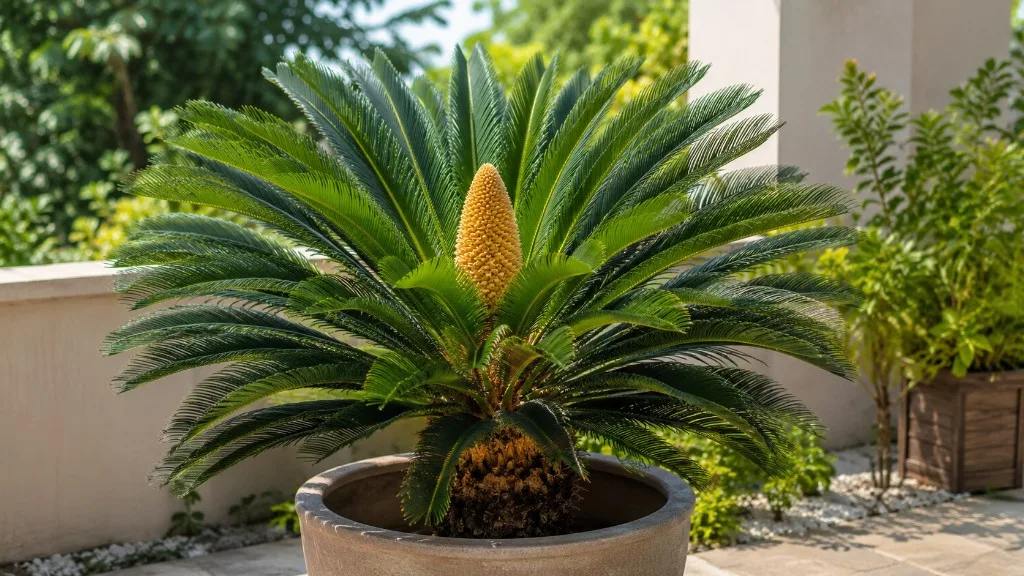
Sago palm fertilizer is one of the most misunderstood parts of caring for Cycas revoluta - the slow-growing cycad most people call a sago palm even though it is not a true palm at all. The plant pushes out a tight crown of stiff, feather-like fronds from a thick trunk-like caudex, and it does that work on a timetable measured in months, not weeks. Feed it like a fast-growing foliage annual and you risk salt burn, distorted new growth, and a white crust on the soil that tells you the root zone is stressed. Skip feeding entirely in alkaline soil or a depleted container mix and you may see frizzle top - yellow, twisted new fronds that look diseased but trace to a manganese shortage the plant cannot fix with Epsom salt.
The practical goal for most home growers is conservative and seasonal: use a palm or cycad formula with an NPK ratio in the 8-2-12 to 12-4-12 range, confirm manganese and magnesium are included in plant-available forms, apply two to three times during spring and summer for landscape plants or half-strength liquid every six to eight weeks for active indoor specimens, and pause entirely from late fall through winter. Water onto moist soil, spread granules under the frond canopy rather than against the trunk, and flush container pots monthly with plain water to keep soluble salts from stacking. Fix light, drainage, and soil pH before you chase nutrients - a sago in soggy alkaline mix will show deficiency symptoms even when fertilizer is present.
This guide covers when to fertilize, how much to use, which products work best, how to diagnose frizzle top versus burn, and the mistakes that cause more damage than skipping a season ever would.
Why Fertilizer Matters for Sago Palm
Sago palm is a long-lived cycad, not a palm, but its nutritional profile mirrors what true palms need: relatively high potassium, moderate nitrogen, low phosphorus, and a steady supply of micronutrients - especially manganese and magnesium. In the wild, Cycas revoluta grows slowly on well-drained, often acidic soils across southern Japan and nearby regions. In home landscapes and containers, that slow metabolism means the plant pulls nutrients out of the root zone gradually, yet it still depends on replenishment because watering leaches minerals and because each crown flush - the periodic push of new fronds from the center - demands manganese for healthy photosynthetic tissue.
The University of Florida IFAS Nutrient Deficiency Database notes that manganese deficiency is very common for palms and cycads, especially in alkaline soils, and that untreated deficiency can progress until new leaves emerge frizzled, reduced, or withered (UF/IFAS NutDef - Manganese). That is not a cosmetic issue. Manganese sits in the oxygen-evolving complex of photosystem II; without it, new fronds cannot form normally. Magnesium deficiency, by contrast, typically yellows older fronds first - a different pattern worth knowing before you grab the wrong bag from the garden center.
Think of feeding as maintenance for steady, healthy crown flushes - not a rescue tool for a sago that is yellow because it sits in too little light, stays waterlogged, or was recently moved into fresh mix still settling. Fix drainage, light, and pH first, then add nutrients on a conservative schedule. Sago palm tolerates lean feeding far better than heavy doses; over-fertilizing is among the most common owner-caused problems in containers.
When to Fertilize Sago Palm: Active Growth vs Dormancy
Timing follows the plant’s seasonal growth rhythm, not a generic houseplant calendar. Sago palm produces new fronds in flushes - often one or two per year outdoors in temperate climates, sometimes more in frost-free regions or under bright indoor light. Feed when the plant is actively building roots and fronds, and stop when growth stalls. Outdoors, that window generally runs from early spring through late summer. Indoors, heated rooms and supplemental light can extend activity, but most container sagos still slow sharply in late fall and winter.
A sago that keeps its old fronds through winter can look “active” even when the caudex is essentially resting. Feeding on that schedule stacks unused salts while roots move water slowly - a reliable path to Brown Tips on Sago Palm, crusty soil, and weak spring flushes.
Spring and Summer Feeding Window
Start feeding when soil temperatures rise and you see signs the plant is waking: tighter new fronds beginning to unfurl from the crown, root tips visible if you gently inspect the drain hole, or simply the calendar window when your climate reliably stays above roughly 60°F (15°C) at night. Outdoors in the Northern Hemisphere, that usually means March or April for the first application - the most important feed of the year because it supplies nutrients ahead of the main crown flush.
UF/IFAS Extension Nassau County and extension-aligned sources describe the active fertilizing period as running roughly early April through early September for outdoor sagos. A practical landscape schedule:
- First application: early spring (March–April north of the equator; September–October in the Southern Hemisphere)
- Second application: early summer (June–July), after the flush expands or hardens
- Optional third application: late summer (August–September) for vigorous plants or frost-free climates - skip in cold-winter regions where late soft growth is vulnerable
Indoor container sagos in active growth can use dilute liquid feeding every six to eight weeks through the same warm-season window, or monthly at half strength if new fronds are developing steadily under Sago Palm light guide.
| Month (temperate climate) | Growth phase | Feeding guidance |
|---|---|---|
| March–April | Pre-flush / flush start | First slow-release or liquid feed of the year |
| May–July | Crown flush expanding | Second feed; watch for frizzle on new fronds |
| August–September | Late-season growth | Optional third feed outdoors; taper indoors |
| October | Slowing | Reduce or stop liquid feeds |
| November–February | Dormancy / low growth | No fertilizer for typical setups |
The table is a framework. A sago in a frost-free patio pot in zone 10 may grow longer than one in a cool indoor room. Watch the crown: if new fronds are forming cleanly, timing is right. If growth is static, solve light and water before adding food.
Fall Taper and Winter Pause
Do not fertilize sago palm in winter during normal dormancy. Pause from late fall through early spring when frond production stops and soil temperatures drop. Most indoor sagos need no fertilizer from November through February, especially in cooler rooms or north-facing windows where metabolic demand is minimal.
Late-summer feeding in cold climates deserves caution. Nutrients that push soft new tissue right before frost create vulnerable growth. If your plant lives outdoors where freezes occur, skip the August application and let the crown harden off naturally.
Exception: if you grow under strong grow lights in a warm room and the sago keeps producing new fronds through winter, you may feed lightly at half strength every eight weeks - but watch closely for salt crust and extend intervals at the first sign of tip burn. Skipping winter feeds remains safer than forcing growth with nutrients the roots cannot use.
Best Fertilizer Type for Sago Palm
The best sago palm fertilizer is one formulated for palms or cycads - not because marketing magic matters, but because those products already balance NPK toward potassium, keep phosphorus moderate, and include micronutrients in available forms. A generic 10-10-10 houseplant food can work temporarily at half strength for a healthy indoor sago in fresh mix, but it is a poor long-term choice in alkaline soil or for plants showing micronutrient stress.
Avoid shopping by the word “sago” on the label alone. Read the guaranteed analysis, confirm manganese is listed, and prefer sulfate or chelated micronutrients over oxides that roots struggle to absorb.
Palm and Cycad Formulas with Micronutrients
Look for an NPK ratio near 8-2-12, 12-4-12, or similar - nitrogen and potassium roughly balanced, phosphorus noticeably lower. That pattern matches how palms and cycads use nutrients: potassium supports overall vigor and stress tolerance, nitrogen supports frond development, and excess phosphorus can interfere with micronutrient uptake in some soil conditions.
Micronutrients matter as much as the big three numbers. A complete palm formula should list manganese (Mn), iron (Fe), magnesium (Mg), zinc (Zn), boron (B), and copper (Cu). Manganese prevents frizzle top; magnesium supports chlorophyll in older fronds. UF/IFAS Extension Nassau County advises that if your palm fertilizer does not already contain manganese, add manganese sulfate separately - and explicitly warns not to confuse it with magnesium sulfate (Epsom salt) (UF/IFAS Extension Nassau County).
Slow-release granular palm food suits landscape plantings and large containers: polymer- or sulfur-coated granules meter nutrients over three to six months, which aligns well with a plant that flushes once or twice a year. Water-soluble liquid formulas suit indoor pots where you want precise, small doses - always at half the label strength unless you have leached salts recently and the plant is actively flushing.
NC State Extension recommends sandy, loamy soils with pH acid to neutral for sago palm. Alkaline soil locks up manganese even when the element is present; fixing pH or using manganese sulfate may be necessary alongside routine feeding.
Slow-Release, Liquid, and What to Skip
Slow-release granules are the default for in-ground sagos: broadcast under the canopy, water in, repeat two to three times per growing season per label rates scaled to plant size. Balanced liquid at half strength every six to eight weeks works for indoor containers during active growth. Organic options like compost top-dressing or diluted fish emulsion can supplement but rarely supply enough manganese in alkaline soils - do not rely on them alone if frizzle top appears.
Skip these common traps:
- High-phosphorus bloom boosters - wrong profile for a foliage crown plant and may worsen micronutrient balance
- Lawn fertilizer applied near the sago - turf products with high nitrogen can disrupt the micronutrient balance cycads need; either skip lawn feeding near the plant or use palm fertilizer on that entire sod strip
- Foliar feeding as your only method - UF/IFAS EP267 notes foliar manganese can help on alkaline soils but should supplement soil applications, not replace them (UF/IFAS EP267 - Manganese Deficiency in Palms)
- Slow-release pellets piled against the caudex - granules belong under the frond canopy over the root zone, not touching the trunk
- Fertilizer-pesticide combination products on routine schedule
Pet and child safety: The ASPCA lists sago palm (Cycas spp.) as highly toxic to dogs, cats, and horses - all parts contain cycasin, and ingestion can cause liver failure (ASPCA - Sago Palm). Concentrated fertilizer solution and crusty soil are additional hazards. Keep plants, granules, and runoff out of reach.
How Much Fertilizer to Use on Sago Palm
Sago palm needs less fertilizer than fast-growing houseplants, and landscape specimens need less total nitrogen per year than many owners assume. If you remember one rule for liquids, make it half strength on container plants during active growth. For slow-release granules outdoors, follow the palm fertilizer label rate for your trunk height or canopy spread, erring toward the lower end unless the plant is visibly nutrient-starved on good drainage and correct pH.
Example for liquid feeding: if the bottle recommends 1 teaspoon per gallon for houseplants, use ½ teaspoon per gallon for an indoor sago on a six- to eight-week schedule during spring and summer. If it recommends 1 tablespoon per gallon for outdoor palms, halve that for a modest container sago unless the label already targets cycads specifically.
For manganese sulfate correction of frizzle top, UF/IFAS guidance for palms suggests soil application rates ranging from 8 ounces for a small plant on acid sand to 8 pounds for a large palm on limestone, broadcast under the canopy (UF/IFAS EP267). Container sagos need far less - follow the product label for ornamental cycads and scale by pot size. A response may take three to six months; damaged fronds will not green up retroactively.
Measure with a spoon or scale. Eyeballing concentrates errors, and sago roots forgive under-feeding more readily than overdose.
How Often to Fertilize Sago Palm
Frequency should follow growth rate, planting context, and salt management - not anxiety about whether the caudex is “getting enough.”
For landscape sago palms in temperate climates:
- Two to three slow-release applications per growing season (early spring, early summer, optional late summer)
- Annual manganese sulfate if frizzle top has appeared before or soil pH runs alkaline
- No feeding from late fall through winter
For container sago palms indoors or on patios:
- Half-strength liquid every six to eight weeks during active spring and summer growth
- Monthly half-strength liquid only if the plant is under bright light and pushing steady new fronds
- Plain-water flush through the pot once monthly during the feeding season to leach salts
- No fertilizer from late fall through winter for typical setups
- Pause four to six weeks after Sago Palm repotting guide or any sign of root stress
For newly planted landscape sagos:
- One spring application after establishment watering settles - avoid heavy feeding in the first season unless soil tests show clear deficiency
That seasonal rhythm beats feeding at every watering because constant low-dose fertilizer stacks salts in small pots faster than a slow cycad can use them. Sago palm does better with a clear schedule and plain water between feeds.
| Situation | Suggested frequency | Strength / form |
|---|---|---|
| Landscape, active growth | 2–3 times per season | Slow-release palm granules per label |
| Container, bright indoor light | Every 6–8 weeks | Half-strength liquid |
| Container, moderate light | Every 8 weeks or skip | Half-strength liquid if new fronds active |
| Frizzle top correction | Per label, often annual | Manganese sulfate soil application |
| Winter / dormancy | None | - |
| After repotting or stress | Pause 4–6 weeks | - |
Step-by-Step: How to Feed Sago Palm Safely
Feeding sagos is straightforward once timing and product choice are settled. The physical application matters because granules against the caudex can burn, and liquid on dry roots does the same damage faster.
For slow-release granules outdoors or in large pots:
- Choose a calm, dry day in the active season - early spring for the first feed
- Broadcast granules evenly under the frond canopy over the root zone; stay several inches away from the trunk
- Water thoroughly so nutrients move into the soil profile - light irrigation right after application is essential
- Rake or brush any granules off the caudex if they landed against the trunk
- Mark the date and plan the next application for early summer
For liquid feeding on container sagos:
- Water the plant lightly the day before if the mix is very dry
- Mix fertilizer at half label strength in your watering can
- Pour slowly over moist - not soggy - soil until a little drains from the bottom
- Empty the saucer so the caudex is not sitting in concentrated runoff
- Resume plain watering between feeds; flush with plain water monthly
Never apply fertilizer to dry, stressed, or newly repotted roots. Never double the dose because last season’s flush was small - sago growth rate is genetically slow, not necessarily hungry.
Pre-Feed Checks and the Moist-Soil Rule
Before every feed, run a quick checklist:
- Soil moisture: If the top two inches are dry, water with plain water first and feed the next day
- Season: Is the plant in active growth, or is it November in a cool room?
- Salt crust: White residue on the soil surface means skip feed and flush instead
- New frond appearance: Twisted yellow new fronds suggest manganese, not more generic NPK
- Recent repot: If you repotted within the last month, hold fertilizer unless the plant is clearly active in fresh, well-drained mix
- pH context: Known alkaline soil or hard tap water may require manganese sulfate even when “palm food” is already scheduled
The moist-soil rule exists because fertilizer salts draw water osmotically. Dry roots exposed to concentrated solution burn quickly - and sago palm recovers slowly from root damage.
Manganese Deficiency and Frizzle Top
Frizzle top is the common name for manganese-deficient new growth on sago palm. UF/IFAS describes symptoms as interveinal chlorosis with necrotic streaks on the newest leaves, progressing to frizzled, withered, or greatly reduced fronds in severe cases (UF/IFAS NutDef - Manganese). Owners often assume fungus or insect damage and spray unnecessarily. The tell is location on the plant: manganese problems hit newest crown fronds first, while magnesium deficiency typically shows on older fronds yellowing from the tips inward.
Alkaline soil pH is a major driver because manganese becomes less plant-available as pH rises. UF/IFAS Panhandle horticulture notes that in sandy, acidic soils manganese may be sufficient at lower total levels, while high-pH soils require larger applied amounts before roots can use the nutrient (UF/IFAS - Yellow Is Not a Normal Sago Color). Overwatering and poor drainage compound the problem by reducing root function.
Treatment:
- Apply manganese sulfate to the soil under the canopy - not Epsom salt
- Confirm your routine palm fertilizer includes manganese; add separately if it does not
- Test or adjust soil pH toward 5.5–6.5 if chronically alkaline
- Improve drainage if the root zone stays saturated
- Wait for the next flush to judge success - existing damaged fronds will not unfurl correctly
The Epsom salt confusion is widespread. Jacksonville extension garden Q&A explicitly states owners often treat frizzle top with magnesium sulfate (Epsom salt) when they need manganese sulfate - two different elements solving two different deficiency patterns. Epsom salt will not fix frizzle top and may distract from the correct treatment for months or years.
Signs of Over-Fertilizing and Salt Buildup
Over-fertilizing sago palm produces clearer distress signals than under-feeding, which can masquerade as slow growth for years.
Watch for:
- Brown or burnt tips on fronds, especially after a heavy or dry-soil application
- White or yellowish crust on the soil surface - crystallized soluble salts
- Sudden frond drop or accelerated browning of lower fronds after feeding
- Stunted new flush despite fertilizer - roots damaged by salt cannot support new crown growth
- Sour or musty smell from the pot - anaerobic conditions sometimes pair with overwatering plus excess nutrients
- No improvement after feeding frizzle-like symptoms - if the issue is manganese lockout or wrong element, more NPK worsens salt load without fixing the frond
Under-fertilized sagos often look uniformly pale or simply slow with otherwise normal frond architecture. Over-fertilized plants look scorched or crusty. When in doubt, flush, pause feeding for four to six weeks, and inspect new crown growth on the next flush rather than doubling the dose.
How to Flush Sago Palm After Over-Feeding
If you suspect burn or salt buildup, stop feeding immediately and leach the pot or root zone.
- Move the container to a sink, tub, or outdoors where runoff can drain freely
- Slowly pour plain water through the mix for several minutes - aim for two to three times the pot volume over a session
- Let the pot drain completely; never leave the caudex sitting in saucer water
- Repeat plain watering weekly for two to three weeks without fertilizer
- Resume feeding at half strength only after new growth looks clean and salt crust is gone - usually four to six weeks minimum
For in-ground plants, deep irrigation over the root zone can help dilute surface salt concentration, but prevention - correct dose, no winter feeding, keeping lawn fertilizer away - matters more than emergency flushing. Badly scorched fronds will not revert to green; let them remain until fully brown if any green tissue persists, because UF/IFAS advises keeping partially green fronds on palms and cycads until they are fully dead - they still photosynthesize while the crown recovers.
Seasonal and Situational Adjustments
Not every sago palm shares the same feeding calendar. Adjust for climate, container size, and recent care changes.
In frost-free tropical or subtropical climates, sagos may flush more than once a year and can accept a third late-summer feed if growth stays active. In cold-winter regions, stop at two feeds and avoid late-season nitrogen that softens tissue before frost.
Hard tap water adds calcium and magnesium over time, pushing pH upward in small pots and increasing manganese lockout risk. That is one reason container growers see frizzle top indoors even when “feeding regularly” - the water chemistry matters as much as the fertilizer label.
After pest treatment, transplant, or caudex division, pause fertilizer until you see stable new root action and the plant is neither wilting nor dropping fronds abnormally. Sago palm allocates energy to repair before it builds new crown tissue.
Landscape, Container, and Newly Repotted Plants
Landscape sagos on native soil benefit from slow-release palm fertilizer broadcast under the canopy two to three times yearly, plus targeted manganese sulfate where pH or history warrants it. Mulch after feeding to keep granules in the root zone and reduce evaporation loss.
Container sagos depend entirely on you for both macronutrients and micronutrients. Leaching matters more because there is no ground to diffuse salts. Use half-strength liquid on a six- to eight-week cycle, flush monthly, and repot into fresh, well-drained mix every two to three years rather than endlessly increasing fertilizer to compensate for exhausted medium.
Newly repotted plants should sit four to six weeks without feed unless the mix is inert and the plant is actively flushing in bright light. Fresh quality potting mixes often contain starter fertilizer; adding liquid on top stacks nutrients unpredictably.
Fertilizer and Other Sago Palm Care
Fertilizer only works when light, water, drainage, and soil structure are already in range. Sago palm in bright indirect light uses nutrients efficiently; in dim corners it grows slowly and accumulates salts if fed on a summer schedule year-round. Pair feeding with allow-the-top-inch-to-dry Sago Palm watering guide - constant soggy soil reduces root uptake and mimics deficiency.
Well-drained, slightly acidic mix with pH 5.5–6.5 supports manganese availability. Heavy clay or limestone-derived soils may need amendment or chelated micronutrient strategies beyond generic NPK.
Drainage holes are non-negotiable in containers. A sago in a decorative pot without drainage cannot be flushed effectively and will show burn or deficiency symptoms that fertilizer alone cannot fix.
If lower fronds yellow while new crown fronds stay green and normal, suspect natural senescence or magnesium shortage on older tissue before increasing feed rate. If only the newest fronds distort, think manganese first.
Common Sago Palm Fertilizer Mistakes
These errors cause more sago palm problems than skipping a feed season:
Using Epsom salt for frizzle top. Magnesium sulfate treats a different deficiency pattern on older fronds. Frizzle top needs manganese sulfate and often pH correction.
Feeding on a fast-houseplant schedule. Monthly full-strength 10-10-10 on a slow cycad in a small pot is how salt crust becomes normal.
Applying granules against the caudex. Palm food belongs under the canopy over roots, not piled on the trunk.
Winter feeding in a cool room. Unused nutrients accumulate while growth is minimal.
Ignoring lawn fertilizer nearby. Turf products applied close to the sago can skew the micronutrient balance cycads require.
Expecting damaged fronds to recover. Correct feeding fixes the next flush, not last season’s twisted leaves. Prematurely removing still-green damaged fronds stresses the plant further.
Feeding dry soil. Always moisten first; liquid on dry roots burns.
Choosing oxide micronutrients without reading the label. Prefer sulfate or chelated forms listed on quality palm specials.
Conclusion
Sago palm fertilizer works best when it respects the plant’s identity as a slow cycad with palm-like micronutrient needs, not when it copies the aggressive feeding schedule of fast foliage annuals. Use a palm or cycad formula in the 8-2-12 to 12-4-12 range with manganese and magnesium, feed two to three times in spring and summer outdoors or half-strength liquid every six to eight weeks on actively growing container plants, and pause through winter. Keep granules under the canopy, water onto moist soil, flush containers monthly, and treat frizzle top with manganese sulfate - never Epsom salt alone.
When new fronds emerge clean and deep green, your schedule is working. When they twist yellow at the crown, check manganese and pH before you increase NPK. When tips brown and soil crusts white, flush and pull back. Less is almost always safer than more with Cycas revoluta - get the seasonal rhythm and micronutrients right, and this long-lived plant rewards patience with stiff, architectural fronds for decades.
When to use this page vs other Sago Palm guides
- Sago Palm overview - Start here for whole-plant context before deep-diving this topic.
- Sago Palm problems hub - Jump to symptom-specific fix guides when this care topic does not resolve the issue.
Related Sago Palm guides
- Sago Palm overview
- Sago Palm watering
- Sago Palm light
- Sago Palm soil
- Sago Palm propagation
- Sago Palm repotting
- Sago Palm problems
Related tool
Try the Fertilizer Dilution Calculator with sago-palm pre-selected to estimate needs for your setup.