Brown Tips on Sago Palm: Causes, Checks & Fixes
Quick answer
Brown tips on Sago Palm pinnae are usually environmental-fluoride or salts in tap water, a bone-dry root ball in bright light, or dry winter air. Check soil moisture and water source before pruning or repotting.
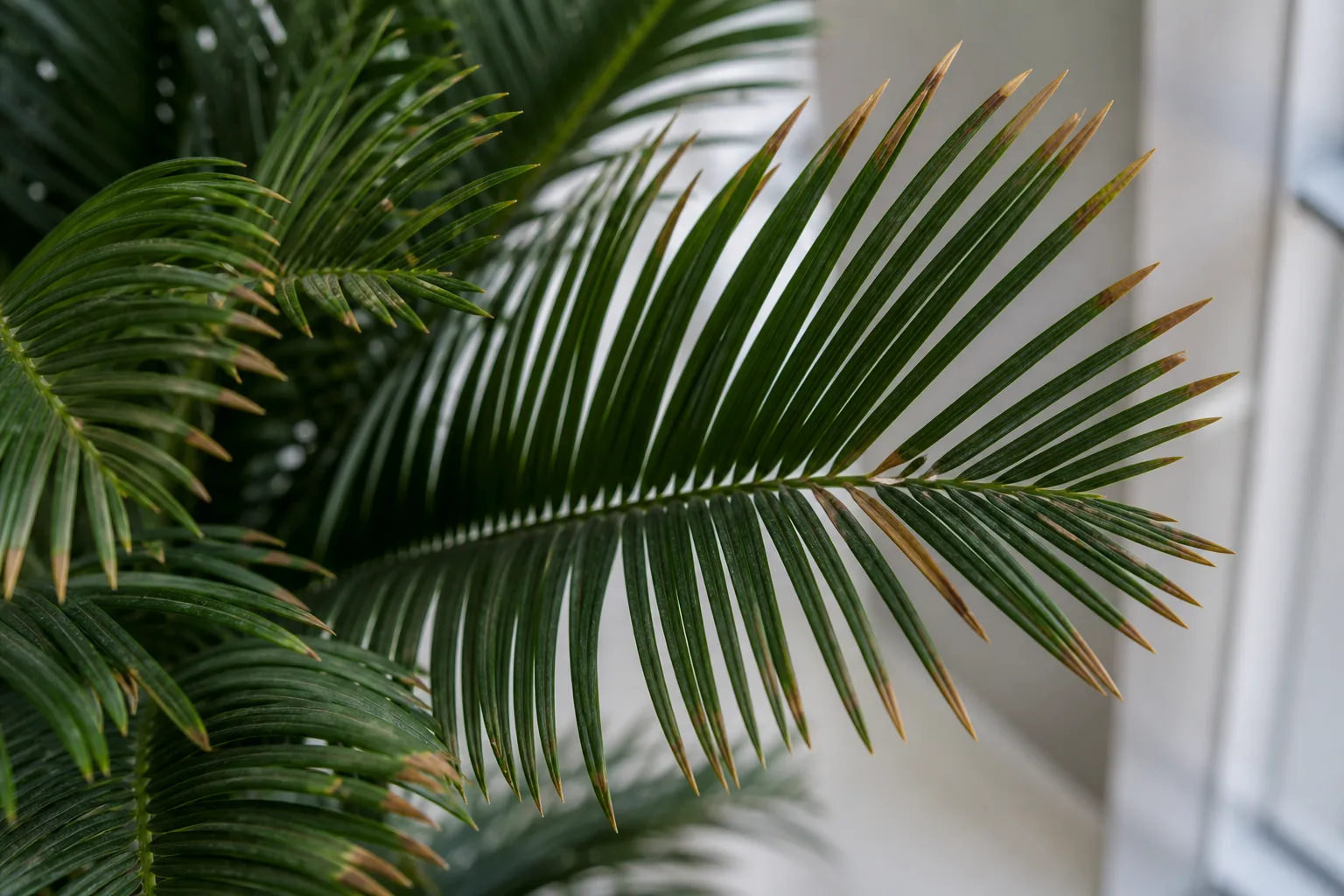
Brown Tips on Sago Palm: Causes, Checks & Fixes
This guide covers brown tips on Sago Palm. See also the general Brown Tips guide, watering, and light pages for this plant.
Brown Tips on Sago Palm: Causes, Checks & Fixes
Quick answer
Brown tips on Sago Palm (Cycas revoluta) almost always mean the leaflets lost moisture faster than roots could replace it-not a fungal frond disease. On this stiff, pinnate cycad, damage shows as dry tan-to-brown pinnae tips while the rest of the leaflet may stay deep green. The usual indoor triggers are fluoride or mineral salts in tap water, a root ball that went very dry in bright light, or winter air that is drier than the plant prefers.
First step: check how dry the soil is and what water you have been using. Crispy tips after missed waterings need a thorough soak and a steady dry-down rhythm. Tips that crept in over months of tap watering need filtered or rainwater and occasional soil flushing-not more fertilizer.
What brown tips look like on Sago Palm
Sago Palm fronds are feather-like rosettes of narrow, leathery pinnae with rolled-back leaflet edges. Tip burn affects individual pinnae first:
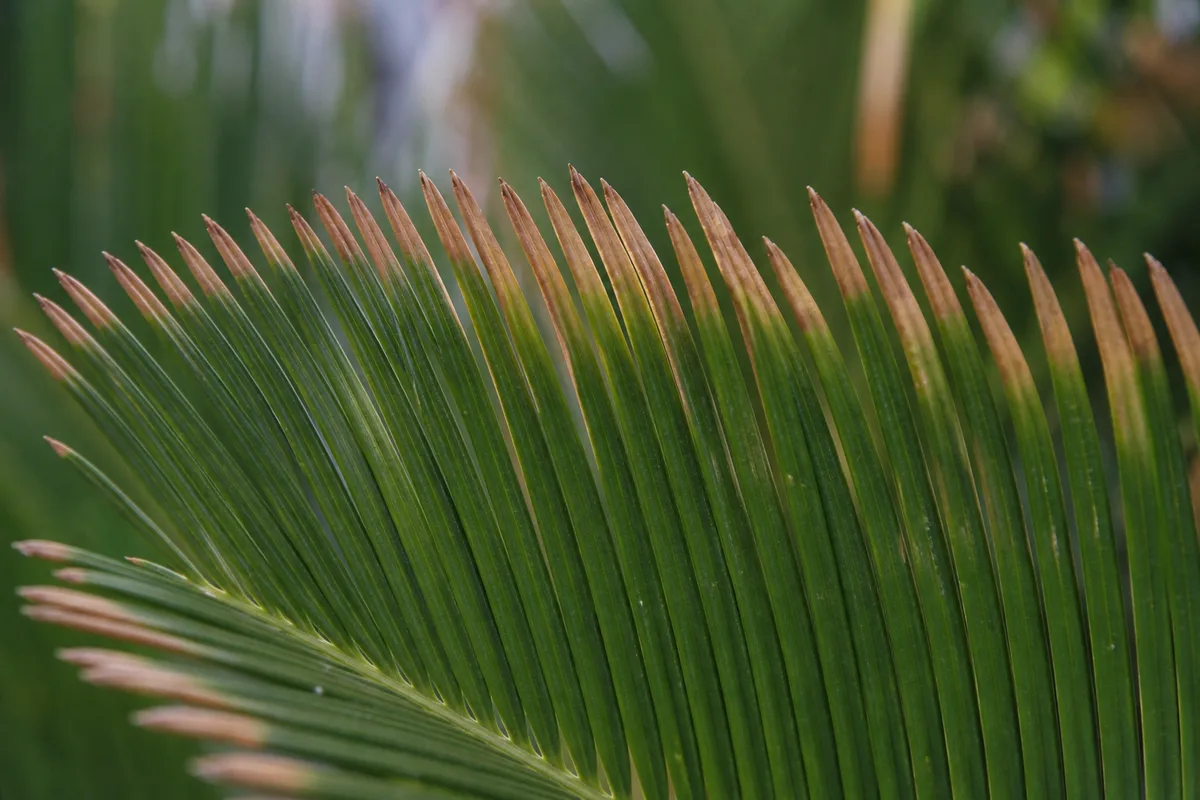
Brown Tips symptoms on Sago Palm - compare with healthy tissue on the same plant.
Typical environmental tip burn:
- Dry, crispy brown or tan at the very end of pinnae
- Rest of the leaflet and frond rachis stay green and stiff
- Damage often on outer or lower fronds exposed to heat or dry air
- Soil was very dry before browning appeared, or white mineral crust sits on the mix surface
- Crown and trunk base remain firm
Patterns that point away from simple tip burn:
- Entire new crown fronds yellow, frizzle, or emerge with brown margins - think manganese deficiency, not tap water alone
- Soft trunk base, sour-smelling wet soil, and multiple fronds yellowing at once - overwatering or root rot
- Fine stippling with webbing on pinnae undersides - spider mites in dry air, not classic tip necrosis
- Bleached patches on the sun-facing side only - harsh direct sun scorch after a sudden move
Damaged pinnae tips do not recover. New growth tells you whether care is fixed.
Why Sago Palm gets brown tips
Sago is drought tolerant when established but still needs regular moisture indoors. In filtered sun for several hours daily, a pot that dries completely between waterings forces pinnae tips-the farthest tissue from roots-to desiccate first. Missed waterings in winter heating or summer AC are a common trigger.
Tap water chemistry matters on slow-growing container plants. Fluoride in municipal water can cause brown leaf tips on sensitive species; fluoride and fertilizer salts accumulate in potting mix over time because the plant is watered repeatedly in the same container. Hard water minerals and excess fertilizer salts also burn leaflet edges when they build up in the root zone.
Low humidity alone rarely kills a sago indoors-average household levels are usually acceptable-but combined with bright light and dry soil, winter air accelerates tip drying. Spider mites can be problematic in dry air on sago and cause stippling that owners mistake for tip burn until they inspect closely.
Overwatering is a less common direct cause of isolated brown tips, but sago is intolerant to overwatering or poor drainage. Rotting roots cannot hydrate leaf tips even when soil feels wet-that pattern usually brings yellowing and softness, not crisp tips alone.
How to confirm the cause
Work through these checks in order:
- Soil moisture at depth - Insert a finger or skewer several inches into the mix. Bone-dry throughout with light pot weight points to underwatering. Constantly wet, heavy soil with no dry-down window points to overwatering stress instead.
- Water source history - Months of unfiltered tap water with gradual tip browning and white crust on the soil surface suggests salt or fluoride buildup. Recent move to a brighter window with sudden crispy tips suggests drought stress.
- Which fronds are affected - Oldest lower pinnae only often follow normal aging or localized dry air. New crown fronds with deformity need a manganese check, not just filtered water.
- Pot weight and drainage - Lift the container. A very light pot confirms drought. Water running straight through may mean hydrophobic dry mix that never re-wets evenly.
- Pest inspection - Examine pinnae undersides with a hand lens. Fine webbing, moving dots, or stippled yellow patches mean spider mites-not tip burn from water chemistry.
- Trunk and crown firmness - Press the caudex base. Softness, odor, or collapsing new spears mean escalate beyond tip-burn fixes.
If tips are dry and crispy on stiff green fronds with dry soil, underwatering is confirmed. If tips worsened slowly with tap water and crusty soil, mineral or fluoride accumulation is likely.
First fix for Sago Palm
If the mix is bone dry and the pot feels light, water thoroughly once until a little runs from the drainage holes, then empty the saucer.
That single deep soak rehydrates roots so the next pinnae do not scorch at the tips. Afterward, resume watering when the soil surface nearly dries between applications-not on a calendar schedule.
Do not soak a sago sitting in wet, sour-smelling soil; that worsens root rot. Do not prune heavily or repot on day one unless roots are clearly failing.
If soil moisture is already adequate and you have used tap water for months, your first fix is switching to filtered or rainwater for the next several waterings instead of adding fertilizer.
Step-by-step recovery
After the initial soak or water switch:
- Establish a dry-down rhythm - Water thoroughly when the top of the fast-draining palm mix feels dry to the touch. Sago uses water slowly; a heavy pot that never lightens is a warning sign.
- Flush accumulated salts - Every three to four months, water from the top until excess drains freely to leach minerals from hard water or fertilizer. Repeat once if white crust was heavy.
- Use room-temperature filtered or rainwater - Avoid softened water, which adds sodium that injures roots over time.
- Treat spider mites if confirmed - Rinse pinnae undersides with plain water and improve airflow; do not mist heavily into the crown, which can trap moisture on slow-opening new fronds.
- Trim dead tips cosmetically - Cut only fully brown pinnae tissue with clean pruners, following the natural leaflet shape. Leave a thin brown margin rather than cutting into green tissue.
- Hold fertilizer until stable - Do not feed a stressed sago hoping to green tips. Resume light palm fertilizer with micronutrients only after new growth looks normal.
Make one major change at a time. Sago declines slowly, which makes it easy to stack Sago Palm repotting guide, pruning, and feeding-and harder to see which fix helped.
Recovery timeline
Deep watering shows relief within days if drought was the sole cause-existing brown tips stay brown, but new pinnae on the current frond should not worsen. Switching water quality takes several weeks to months before you can judge the next frond flush; sago may only push one crown flush per year indoors.
Expect one full growing season before you trust that tips have stopped on new growth. Cosmetic trimming of old brown pinnae is optional anytime; structural recovery is measured by clean emerging fronds and a firm crown.
Lookalike symptoms to rule out
Manganese deficiency (frizzle top) deforms the newest crown fronds with yellowing and necrotic streaking-not isolated crispy tips on older pinnae alone. It needs manganese correction, not just filtered water.
Normal lower frond senescence yellows and browns entire old fronds from the bottom up while the crown stays deep green. Removing one fully brown lower frond is fine; do not confuse it with systemic tip burn.
Sun scorch bleaches or browns patches on the sun-exposed side after a sudden move to harsh direct glass. Damage is directional, not evenly distributed pinnae tips.
Root rot from overwatering brings yellowing multiple fronds, soft caudex tissue, and wet soil-not crisp dry tips on otherwise firm plants.
Mistakes to avoid
Do not increase fertilizer to fix brown tips-salts make tip burn worse on slow growers.
Do not let the pot sit in a full saucer while trying to fix dryness; empty runoff after every watering.
Do not assume every brown tip needs repotting. Repot only if mix stays waterlogged, roots are rotting, or the plant is severely rootbound with chronic dry-out.
Do not cut green pinnae tissue when trimming; wounds on stiff cycad leaflets heal slowly.
Wear gloves when handling sago-all parts are highly toxic if ingested.
Sago Palm care cross-check
Brown tips often mean basics drifted, not that the plant is doomed. Confirm:
- Light - Filtered sun about four to six hours daily through an east, west, or curtained south window. Too little light slows water use and invites overwatering mistakes; too much direct glass scorches pinnae.
- Soil - Fast-draining cactus or palm mix with a drainage hole. Heavy peat that stays soggy causes bigger problems than dry tips.
- Water - Thorough passes when the surface dries; never bone dry for weeks in bright light, never constantly wet.
- Humidity - Average household levels are usually fine; focus on soil moisture and water quality first.
How to prevent brown tips next time
Use filtered or rainwater if your tap is hard or fluoridated and tips recur. Flush the pot every few months during active growth. Water when the surface dries, not on a fixed weekly schedule. Keep the plant in stable bright light so drying speed stays predictable. Scout pinnae undersides in winter when heating dries air and spider mites become more common.
Avoid stacking care changes when bringing a new sago home-learn its dry-down speed before repotting or feeding.
When to worry
Escalate if new crown fronds fail to open, the caudex base softens, soil stays wet and smells sour despite reduced watering, or browning races down entire fronds within weeks. Those signs point to crown or root failure, not cosmetic tip burn.
Isolated crispy tips on stiff lower fronds after a dry spell are low urgency once you rehydrate and adjust water quality. Judge severity by whether damage spreads to new growth-not by how many old pinnae look rough.
Conclusion
Brown tips on Sago Palm pinnae are a moisture and water-quality signal on a slow cycad, not a mystery disease. Check soil dryness and tap water history first, soak once if the pot is light, switch to filtered water if salts built up, and wait for the next clean frond flush before declaring victory. Trim old brown tips for appearance if you want-the real win is firm crown growth and pinnae that emerge without scorch.
When to use this page vs other Sago Palm guides
- Sago Palm watering guide - Use for routine moisture checks before assuming brown tips is the main issue.
- Sago Palm problems hub - Browse all 3 common issues on this species.
- Yellow Leaves on Sago Palm - Different entry point when symptoms overlap with brown tips.