Slow Growth on Sago Palm: Causes, Checks & Fixes
Quick answer
Slow growth on Sago Palm is often normal-this cycad may produce only one new flush of fronds per year. Worry when no new crown spears appear through a full warm season despite bright light and proper feeding.
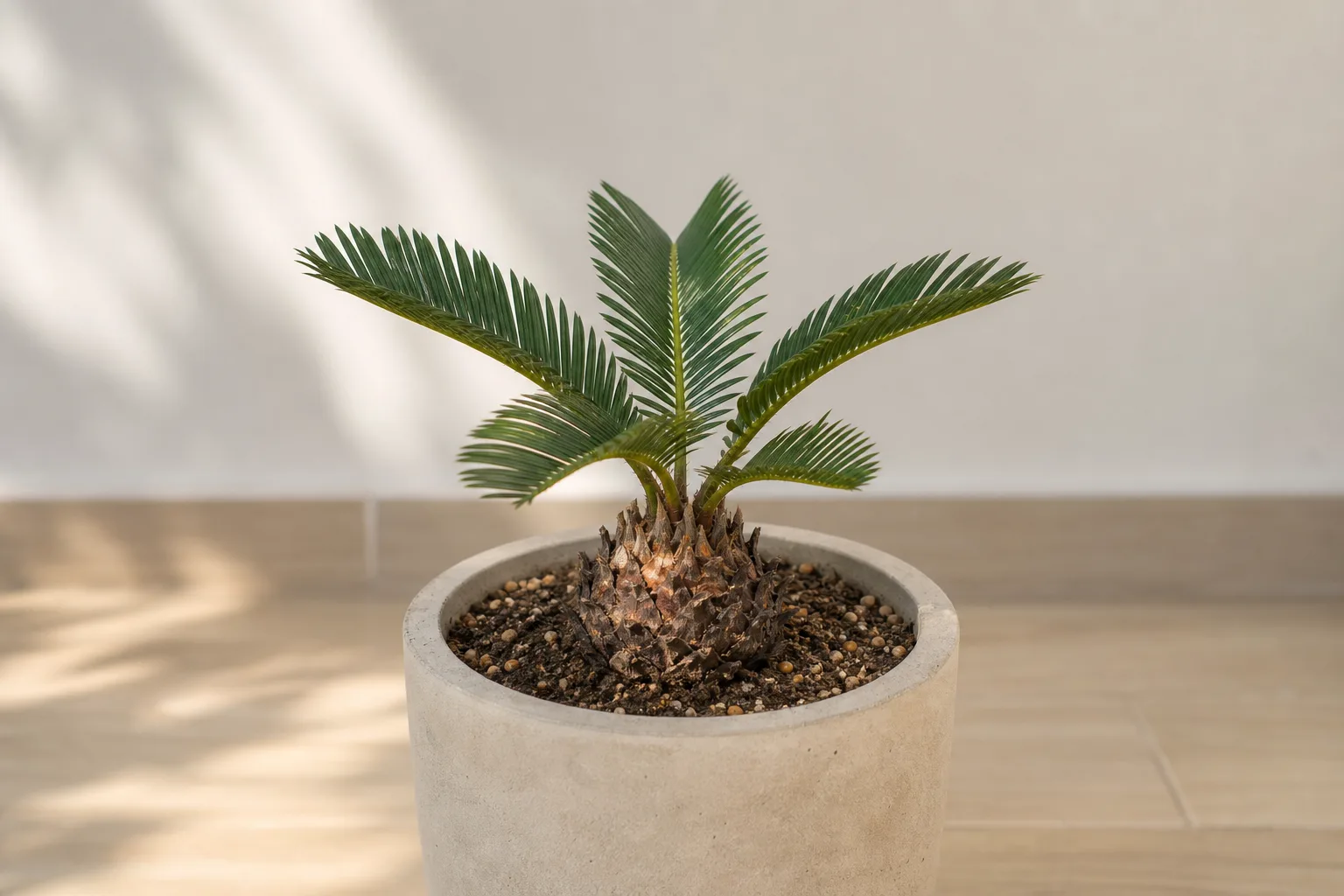
Slow Growth on Sago Palm: Causes, Checks & Fixes
This guide covers slow growth on Sago Palm. See also the general Slow Growth guide, watering, and light pages for this plant.
Slow Growth on Sago Palm: Causes, Checks & Fixes
Quick answer
Sago Palm (Cycas revoluta) is not a palm-it is a cycad, and very slow growth is normal for this long-lived plant. Indoors, expect perhaps one flush of new crown fronds per year, not the steady monthly leaf production you see on pothos or philodendrons. A healthy plant may sit visually unchanged for months while the trunk and roots rebuild reserves.
First step: confirm whether growth is actually stalled or just slow. Mark the crown center in spring and watch through late summer. If a new central spear unfurls-even once-you are seeing normal sago biology. If an entire warm season passes with no crown activity, pale stretched fronds, or wet soil that never dries, move to light and root checks before fertilizing.
One-minute crown check: Photograph the crown center in April. Compare in August. Firm caudex + one new spear = normal. No spear + wet heavy pot = inspect roots. No spear + yellow crinkled new leaves = manganese, not patience.
What slow growth looks like on Sago Palm
On this plant, “growth” means a crown flush-a tight bundle of new fronds (often called a spear) that opens over several weeks, then nothing visible for many months. That episodic pattern is the baseline, not a warning sign.
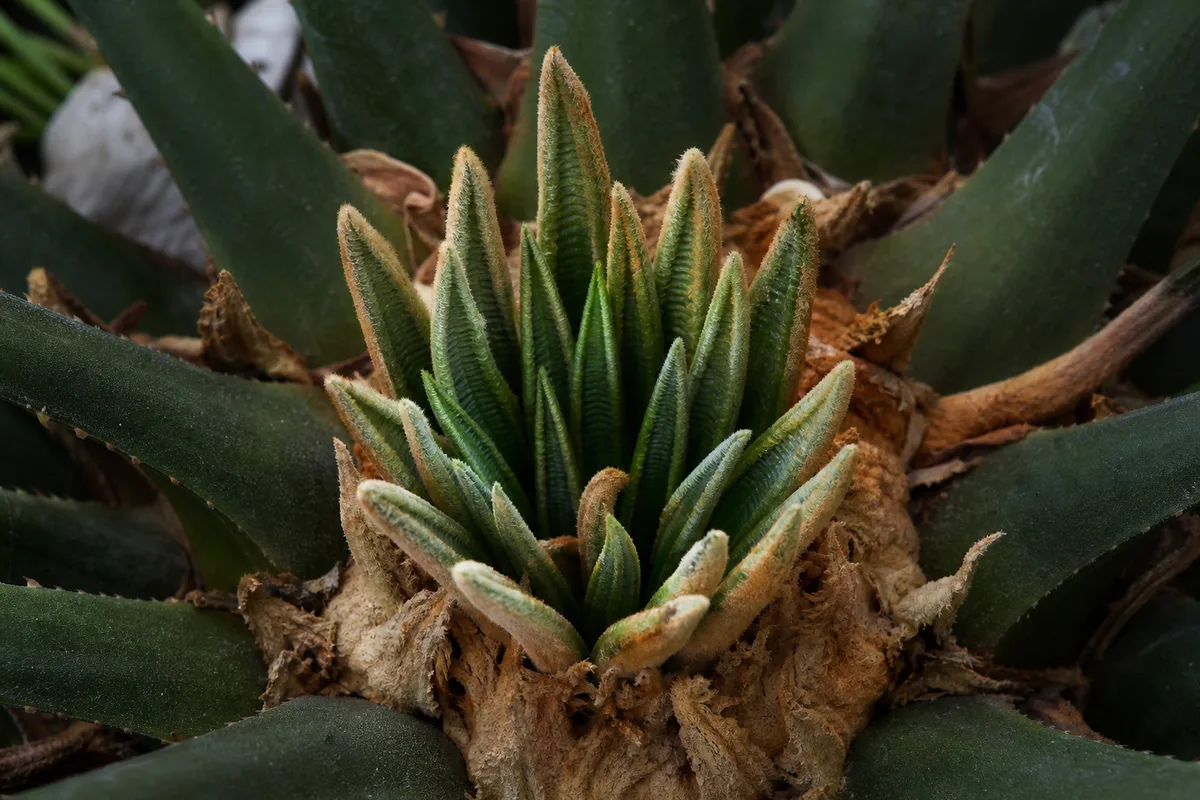
Slow Growth symptoms on Sago Palm - compare with healthy tissue on the same plant.
Normal slow growth:
- One new crown flush per year, often in late spring or early summer
- Existing fronds stay stiff, dark green, and upright
- Trunk (caudex) feels firm when pressed
- Lower fronds brown and drop one at a time while the crown stays healthy
- Pot dries at a predictable pace between waterings
- Side pups may appear at the base even when the main crown looks static
Abnormal stalled growth:
- No central spear through a full warm season despite adequate temperatures
- New fronds emerge small, yellow, frizzled, or fail to open fully
- Crown fronds look pale, limp, or stretched toward the nearest window
- Soil stays wet for days after watering; pot feels heavy and may smell sour
- Trunk base softens or lower yellowing spreads faster than one frond at a time
- Visible scale or sticky residue on fronds (Asian cycad scale can drain vigor)
Do not compare your sago to fast-growing houseplants. Compare it to last year’s flush and to the firmness of the caudex.
| Signal | Normal slow growth | Abnormal stall |
|---|---|---|
| Crown flush count (indoors) | 0–1 per warm season | 0 through two warm seasons after fixes |
| Caudex | Firm, woody | Soft, spongy, or foul-smelling |
| New frond quality | Opens flat, dark green | Yellow, frizzled, or fails to open |
| Existing fronds | Stiff, upright, deep green | Pale, limp, leaning to window |
| Soil dry-down | Predictable between waterings | Stays wet many days after one drink |
| Pups at base | Optional; slow but possible | None for years on otherwise stressed plant |
Why Sago Palm grows slowly-and when it stops
Normal cycad biology
Cycads allocate energy to a woody caudex and a crown rosette, not constant leaf turnover. Mature plants typically produce one growth flush per year, usually in early spring through midsummer. Seedlings may flush more often until they mature; container specimens in cool homes often flush once-or skip a year after stress.
The trunk itself grows extremely slowly-perhaps a few centimeters of diameter per year under ideal conditions. A small tabletop sago may look the same size for years while still being healthy. That pace is biology, not neglect.
Pups as a secondary growth signal: Even when the main crown looks frozen, a healthy sago may slowly produce offsets (pups) at the base. Pups confirm the caudex is alive and allocating reserves-but they are not a substitute for a crown flush. No pups and no crown activity through two warm seasons on corrected care is a stronger stall signal than a plant that simply skipped one flush.
Insufficient light
Sago Palm needs bright light with some direct sun to fuel a flush. In dim corners, the plant survives on stored reserves but may postpone crown growth. Pale, widely spaced fronds leaning toward glass are a classic low-light pattern. Without enough photosynthesis, the plant conserves energy rather than pushing a new spear.
A north-facing room with “adequate” house temperatures can still produce zero flushes through two warm seasons-the plant is metabolizing slowly, not resting. For window placement, lux targets, and acclimation steps, see not enough light on sago and the Sago Palm light guide. This slow-growth page owns flush pace and caudex health; those guides own placement detail and etiolation recovery.
Overwatering and root damage
Sago is drought tolerant once established but intolerant of overwatering and poor drainage. Chronic wet soil damages roots silently. Because the caudex stores starch, the plant can look stable for weeks while roots fail-then growth stops entirely. Wet soil plus stalled growth is a root-health red flag, not normal patience. Escalate to overwatering and root rot guides when the pot stays heavy and the trunk softens.
Manganese deficiency
On alkaline or nutrient-poor soils, sagos develop frizzle top-new crown leaves emerge yellow, distorted, or stunted. Manganese is essential to photosynthesis and is immobile in the plant, so deficiency shows on the newest fronds first. A plant trying to flush without enough manganese may produce a weak, partial crown or abort the flush entirely. Frizzle top is not the same as normal slowness-see yellow leaves on sago for full frizzle-top triage.
Recent repotting, cold, or pests
Cycads often skip a flush after transplant shock, cold exposure, or heavy pest pressure. The caudex stays firm and existing fronds stay green while the plant waits for stable conditions. UF/IFAS notes that new fronds unfurl each spring-if yours missed a cycle after repotting last year, one skipped season can be normal recovery, not death.
Asian cycad scale and other sap feeders weaken plants over time. Sticky leaves, white armor on fronds, or sooty mold can coincide with growth that never arrives.
Root-bound pots and depleted soil
Extremely crowded roots or years-old mix can limit uptake enough to delay the next flush. This is less common than light or water problems but worth checking on plants that have not been repotted in many years and dry out within a day of watering.
How to confirm the cause
Work through these checks in order:
- Flush history - Did any new crown spear appear this calendar year? Photograph the crown center in April and compare in August. One flush = normal.
- Caudex firmness - Press the trunk base gently. Firm, like hard wood = alive and likely resting or light-limited. Soft or spongy = root or crown rot until proven otherwise.
- Light audit - Count hours of bright indirect light plus any direct morning or afternoon sun. Sagos in north-facing rooms or far from windows often stall. Use the light guide if placement is the bottleneck.
- Soil moisture rhythm - Stick a finger 5 cm into the mix. Does it stay wet for many days after one watering? Does the pot feel heavy? Sour smell = inspect roots.
- New frond quality - If a spear did emerge, are leaflets opening flat and dark green, or yellow and frizzled? Frizzle points to manganese; failure to open with wet soil points to rot.
- Recent changes - Repotting, moving outdoors then back in, heating-season drafts, or missed winter rest can explain a skipped year.
- Pest scan - Check frond undersides and the crown for scale, mealybugs, or sticky residue.
If the caudex is firm, fronds are green, light is adequate, soil dries normally, and you saw one flush this year, you do not have a slow-growth problem-you have a slow plant.
First fix for Sago Palm
Increase bright light gradually and track the crown through one full warm season before changing anything else.
Move the plant to the brightest spot you can offer-near a south or west window with filtered direct sun, or add a grow light for 10–12 hours daily if natural light is weak. Do not jump from deep shade to harsh midday sun in one day; sunburn on existing fronds is permanent.
This single step addresses the most common fixable cause of stalled flushes indoors. Wait from spring through late summer. If a spear appears, growth was light-limited. If nothing emerges and soil stays wet, proceed to root inspection-not fertilizer.
Grow lights when windows are not enough
Dark apartments and north-only exposures often need supplementation. Hang a full-spectrum LED grow light 30–45 cm (12–18 inches) above the crown and run it 10–12 hours daily through the warm season. Sagos still flush on their own schedule-a grow light does not force monthly leaves-but consistent bright light is often the difference between zero flushes and one annual crown spear indoors. Pair supplemental light with normal watering dry-down; brighter light speeds evaporation, so recheck soil rhythm after any light upgrade.
Step-by-step recovery
If light is already strong and growth still fails, work in this order:
- Correct watering - Water thoroughly, then let the surface dry before the next drink. Never let the pot sit in a full saucer. If mix stays wet, unpot and inspect roots; trim mushy tissue, repot into fast-draining cactus or palm mix, and wait weeks before expecting a flush.
- Address manganese if new fronds frizzle - Apply manganese sulfate at label rates for plant size and soil pH; do not use Epsom salts (magnesium) instead. Follow with a palm fertilizer containing micronutrients during active growth only-see the Sago Palm fertilizer guide for timing.
- Hold fertilizer on stressed plants - Do not force growth with heavy nitrogen on a plant with wet roots or recent repot shock. Feed lightly in spring and summer when the plant is actively growing and soil dries normally.
- Repot only when needed - If roots circle densely and water runs straight through, move up one pot size in spring using sharp-draining mix. Expect zero or one flush the year after repotting.
- Treat scale if present - Isolate affected plants and treat per label directions; scale on roots can reinfest. Growth resumes only after pest load drops.
- Trim dead lower fronds only - Remove fully brown lower fronds for appearance. Never cut a green crown spear or living green fronds trying to force new growth.
Make one major change at a time. Sagos respond slowly; stacking repot, fertilizer, and relocation in one week adds stress.
Recovery timeline
Realistic expectations for Cycas revoluta:
- Normal flush cycle: One crown flush per year in most indoor settings; occasionally two in very bright, warm outdoor conditions.
- After light improvement: The next flush may not appear until the following spring-sometimes 6–12 months.
- After repot or root trim: Zero to one flush in the first year is common.
- After manganese correction: The next flush should open with normal green leaflets; existing damaged fronds do not repair.
- After severe root rot: Recovery takes years if the caudex stays firm; a softening base often means the plant cannot be saved.
Judge progress by new crown spears and firm caudex, not by trunk diameter or lower frond count.
Lookalike symptoms
Dormancy or rest between flushes looks like “no growth” but comes with firm caudex, stable green fronds, and normal soil drying. No action needed.
Leggy growth (long, weak petioles) means the plant is stretching for light-it is growing, just poorly. That is etiolation, not total stall. Fix light using leggy growth on sago before assuming the crown has stopped forever.
Not enough light without stretch can look like a full stall when the crown simply never pushes a spear. Pale washout across existing fronds and soil that stays damp for weeks fit not enough light better than this page’s primary “patience vs. pathology” frame.
No new growth with yellow crown leaves is manganese deficiency or overwatering, not normal slowness. Yellow on only the lowest frond is normal aging.
Wilting with wet soil suggests root failure, not underwatering. Do not add water.
Which guide to use
| Your main question | Start here | Defer to |
|---|---|---|
| Is one flush per year normal? | This page | Sago overview |
| Pale, leaning, no flush-where to put the pot? | Not enough light | Light guide |
| Long weak petioles but some growth | Leggy growth | Light guide |
| Wet soil, heavy pot, no flush | Overwatering | Root rot |
| Yellow crinkled new crown leaves | Yellow leaves | Fertilizer |
Mistakes to avoid
Do not remove yellow or partially opened crown fronds that still support the plant-especially during manganese correction.
Do not place a recently flushed sago in cold drafts or repot mid-flush-new fronds are fragile.
Do not expect monthly new leaves like a tropical foliage plant.
Do not fertilize heavily to “kick-start” a dormant or water-stressed sago-this burns roots and delays flushes.
Do not repot on day one when the real issue is light or wet soil.
Do not confuse magnesium (Epsom salts) with manganese for frizzle top.
Do not move a sago to a brighter pet-accessible shelf without knowing all parts are highly toxic to pets-keep the plant out of reach when applying fertilizers or soil amendments.
Sago Palm care cross-check
Slow growth often traces to a mismatch in the basics:
- Light: Bright indirect with some direct sun; weak light is the top indoor bottleneck. See light requirements.
- Water: Dry-down between waterings; drought tolerance does not mean constant moisture. See watering guide.
- Soil: Fast-draining cactus or palm mix; heavy peat stays wet too long.
- Feed: Light palm fertilizer with micronutrients in spring and summer only when actively growing.
- Temperature: Roughly 18–27°C (65–80°F) for steady metabolism; cold slows or aborts flushes.
If these align and you still see one flush per year, your sago is doing what the species does.
How to prevent stalled growth next time
Place the pot where it gets consistent bright light year-round; rotate slightly each month.
Water when the surface dries, not on a fixed calendar-adjust for season and pot size.
Feed with palm-specific fertilizer containing manganese and magnesium in spring; skip fall and winter.
Repot in spring only when roots are clearly crowded; go up one size, not three.
Scout for scale when growth slows unexpectedly; early treatment preserves the next flush.
Track flush dates annually so a skipped year triggers a review instead of panic.
When to worry
Treat as urgent if:
- The caudex softens or smells foul
- Crown spears emerge then collapse before opening
- Multiple fronds yellow at once while soil is wet
- Scale or rot signs spread during warm months
- No flush for two consecutive warm seasons despite corrected light and drainage
A firm caudex, green crown, and one flush every 12–18 months in a temperate home is often healthy, not failing.
Conclusion
When an entire warm period passes with no crown spear, pale stretched foliage, or chronically wet soil, start with brighter light and an honest root check-then wait for the next spring flush before deciding the plant is truly stuck. One annual crown flush, a firm trunk, and stable green fronds mean your timeline should be measured in seasons, not weeks.
When to use this page vs other Sago Palm guides
- Sago Palm watering guide - Use for routine moisture checks before assuming slow growth is the main issue.
- Sago Palm problems hub - Browse all 3 common issues on this species.
- Yellow Leaves on Sago Palm - Different entry point when symptoms overlap with slow growth.