Sago Palm Pruning: When, How, and Mistakes to Avoid
Sago Palm Pruning: When, How, and Mistakes to Avoid
Sago Palm Pruning: When, How, and Mistakes to Avoid
Quick Answer - Remove One Fully Dead Frond at the Crown Base
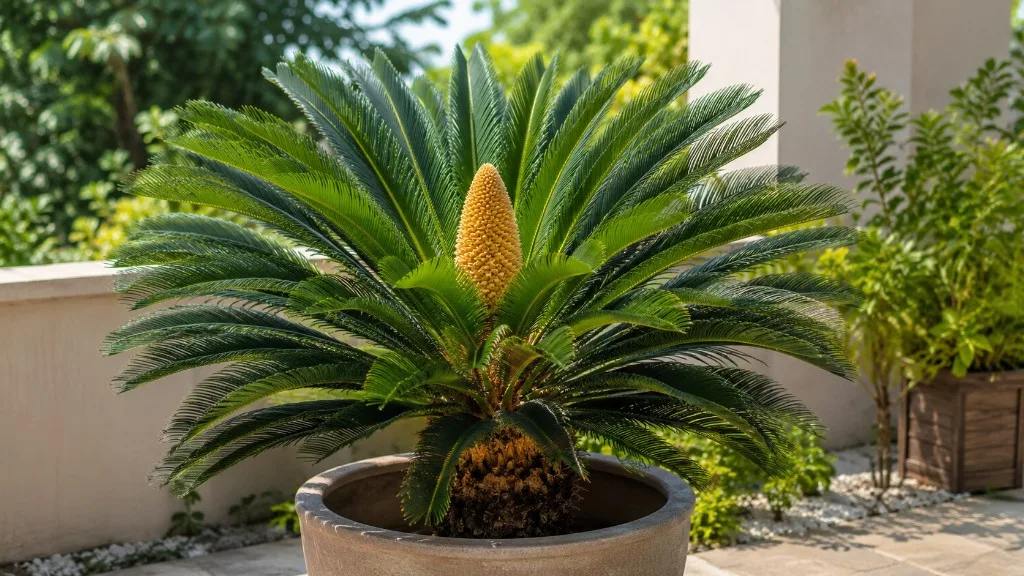
First action: find the lowest frond that is fully brown, dry, and brittle - then cut its petiole flush at the trunk crown, leaving the swollen collar intact. Sago palm (Cycas revoluta) is a cycad, not a true palm. It produces one ring of new feathery fronds from a central crown each year or so indoors, while lower fronds slowly senesce. Pruning means dead-frond cleanup at the base - not shearing green foliage, not mid-frond trimming, and never cutting the central spear where the next flush emerges. All parts contain cycasin, a toxin that causes severe liver failure in pets and humans if ingested - treat every cut as a hazard-control step, not casual grooming.
NC State Extension describes sago palm as a slow-growing cycad whose fronds arise from the trunk crown in a rosette. The Missouri Botanical Garden notes its use as a houseplant under bright light. What follows covers crown-safe removal, timing around the annual flush, how much is safe, and mistakes that stall or kill a plant that may take years to replace lost foliage.
What Sago Palm Pruning Can and Cannot Do
Indoors, owners prune sago palm to remove spent lower fronds, expose an attractive trunk, and clear broken or pest-damaged leaf sections. Over years, gradual removal of the oldest dead ring can shift a spreading bush toward a more upright, palm-like silhouette - but only if done slowly across seasons.
Pruning can improve appearance by clearing brown debris, reduce pest hiding spots on dead tissue, and remove fronds that block walkways or rub against walls. It cannot make the plant bushier, force faster growth, or reduce overall height the way shrub pruning does. Sago adds size through periodic flush growth from the crown - a single apical meristem - not through branching cuts below the crown. Cut that growing point or remove all green fronds and you may kill the plant or strip away an entire year’s photosynthetic capacity.
Unlike true palms, cycad fronds do not regrow from partial cuts. A brown stub halfway up a petiole stays brown permanently. FAMU Cooperative Extension emphasizes that even yellowing older fronds should remain until fully dead so nutrients can move into new growth - a detail many tidy-minded owners skip.
What to Check Before You Cut
Walk the plant once in good light before touching tools. Sago declines slowly; a frond that looks merely tired may still be feeding the crown.
Crown, Spear, and Lower Frond Rings
- Central spear: tightly packed emerging fronds at the crown center - must stay untouched.
- Active flush: if new fronds are still unfurling, postpone all but emergency removal of broken fronds.
- Lower rings: oldest fronds sit lowest; they yellow and brown from the bottom up as the crown rises.
- Trunk crown: the junction where petiole bases attach - your only cut zone for frond removal.
Yellow Fronds vs. Dead Fronds
A frond with substantial green tissue is still photosynthesizing - leave it even if the tips or lower leaflets are yellow. Yellowing on older, lower fronds is often natural senescence. Yellowing in the center of older leaves can signal magnesium deficiency; distorted new leaves may indicate manganese deficiency - problems pruning cannot fix. FAMU Extension recommends keeping chlorotic fronds until they are fully dead rather than removing them for appearance.
Remove a frond only when it is mostly or entirely brown and dry, broken beyond recovery, or clearly diseased with spreading lesions - not because it looks untidy while still partly green.
When to Prune Sago Palm
Timing matters less for truly dead tissue than for batch cleanup and stress avoidance.
Anytime Removal of Fully Dead Fronds
A single frond that snaps dry when bent can come off whenever you notice it. Waiting offers no benefit once tissue is fully senesced.
Batch Cleanup After the Annual Flush
For multiple lower brown fronds, schedule cleanup after the new flush has hardened - typically late spring through summer in many climates. You can then clearly separate last year’s spent lower ring from fresh crown foliage. NC State Extension notes that pruning may be done to remove dead fronds as part of routine low-maintenance care.
When to Wait
- During spear emergence: mechanical damage to unfolding fronds causes permanent deformity.
- After cold damage: if upper fronds browned from frost but the terminal bud is intact, leave damaged fronds until a new flush appears so nutrients can relocate - per FAMU Extension cold-injury guidance.
- After Sago Palm repotting guide or root stress: the plant may pause crown growth while roots recover - avoid bulk frond removal on top of that stress.
The First Cut to Make
After inspection, cut one fully dead lower frond at its petiole base - not a partially yellow frond, not a cosmetic shorten on green tissue, and not multiple fronds at once on your first pass. That single cut confirms your tool reach, shows how firmly the petiole attaches, and lets you verify the collar zone without opening several wounds across the crown at once.
If the dead frond pulls away cleanly by hand with no green attachment, you may not need a blade - but never yank a frond that resists. Forcing it tears trunk tissue.
How to Remove Fronds Step by Step
Work from the lowest fully dead frond upward, one or two fronds per session unless you are clearing obvious debris after the flush has hardened.
Tools and Safety Gear
Use sharp bypass loppers or a serrated knife for thick petiole bases on mature plants; smaller indoor specimens may need only bypass pruners. Wipe blades with 70% isopropyl alcohol between cuts if disease is suspected. Wear thick gloves - leaflet tips are sharp, and all sap and tissue contain cycasin. The ASPCA classifies sago palm as highly toxic to cats and dogs; the Merck Veterinary Manual documents severe outcomes from ingestion.
Bag fronds immediately. Do not compost where pets or children can reach piles. Wash hands and tools after finishing.
Cut Placement at the Petiole Collar
Cut flush at the trunk crown where the petiole base swells against the caudex - the woody stem. Do not gouge into trunk tissue. Do not cut midway along the frond. The goal is a clean removal of dead material with the collar edge left intact.
On multi-headed or branched specimens, identify which crown each frond belongs to before cutting - each head has its own growing point.
How Much You Can Safely Remove
There is no shrub-style “cut back by half.” The practical ceiling: remove only fronds that are fully dead or fully brown, and in one session avoid stripping so many lower green fronds that the crown looks sparse. If several rings are senescing at once, spread removal across two sessions weeks apart rather than clearing the entire skirt in one day.
Fully dead tissue carries no photosynthetic risk. The danger is impatient removal of yellow or partially green fronds that still support a plant producing perhaps one flush per year indoors. Removing too much living foliage can delay the next flush by a season or more.
What Never to Cut
- The central spear or any emerging flush - damage here can stop crown growth entirely.
- Healthy or mostly green fronds for tidiness - you are removing stored energy the slow caudex cannot quickly replace.
- Mid-frond or mid-petiole - cycads do not sprout replacement leaflets from partial wounds.
- The caudex itself - no topping, no trunk slicing. Unlike some woody shrubs, the sago crown does not regenerate from arbitrary trunk cuts.
If the central tissue is brown, dry, and hollow when gently scraped, the apical meristem may be dead - continued basic care may eventually produce offsets, but that is a recovery scenario, not routine pruning.
Pruning for Shape or Size - Realistic Limits
You cannot shear a sago palm smaller. Height and spread increase when new crown fronds extend outward and upward during each flush - not when you cut green leaves. Gradually clearing dead lower fronds over several years can reveal a taller trunk and more upright profile, similar to landscape specimens where lower skirts are removed slowly.
Pups - offsets at the base - are separate from crown frond pruning. Removing pups is propagation, not shaping. If you detach pups during repotting, use clean tools and treat sap as equally toxic. Parent and pup tissue both contain cycasin.
Pruning also cannot fix yellowing from overwatering, nutrient deficiency, or insufficient light. Correct those conditions first; otherwise new fronds emerge pale or distorted regardless of how tidy the skirt looks.
Aftercare and Recovery Timeline
After lower-frond cleanup, the plant should show a clean trunk and a full green crown. Do not fertilize heavily the same week - light feeding during the next active flush is enough if basics are already sound. Keep Sago Palm light guide with some direct sun, allow fast-draining soil to dry between thorough waterings, and maintain steady temperatures without moving the pot repeatedly.
Expect no instant crown refill. One new flush per year is normal indoors. After aggressive or mistimed green-frond removal, the next flush may be smaller, delayed a full season, or absent until the caudex rebuilds reserves. Signs pruning went well: stable crown color, no soft rot at cut sites, and a normal flush when the growing season arrives. Signs it went wrong: crown shrinkage, spear collapse, persistent yellowing of all remaining fronds, or no new growth for more than one expected flush cycle while the caudex stays firm.
Store bagged debris out of reach. Cycasin persists in cut fronds and seeds.
Mistakes to Avoid
Cutting the spear or all green fronds - can kill the plant or remove an entire year of growth capacity.
Removing yellow fronds for appearance - weakens a slow-growing specimen and masks deficiency symptoms you should diagnose instead.
Mid-frond cuts - leave permanent brown stubs; cycad fronds do not regrow from partial wounds.
Pruning during active flush emergence - unfolding fronds deform permanently if bumped or cut.
Leaving trimmings accessible - fatal ingestion risk for pets per ASPCA and Merck Veterinary Manual documentation.
Pruning without gloves - sharp leaflet tips cut skin; sap contact is a toxicity and hygiene concern.
Expecting fast regrowth - patience measured in seasons, not weeks, is normal for Cycas revoluta.
When to use this page vs other Sago Palm guides
- Sago Palm overview - Start here for whole-plant context before deep-diving this topic.
- Sago Palm problems hub - Jump to symptom-specific fix guides when this care topic does not resolve the issue.
- Slow Growth on Sago Palm - Escalate here when pruning adjustments are not enough.
- Brown Tips on Sago Palm - Escalate here when pruning adjustments are not enough.