Rust Disease on Java Fern: Causes, Checks & Fixes
Quick answer
Whole rust-brown Java Fern fronds are almost never fungal rust in aquariums-they are melt, old-leaf senescence, or acclimation die-back. Trim firm-rhizome plants at the base, stabilize water and light, and only suspect true rust if powdery orange pustules appear on terrestrial emersed fronds.
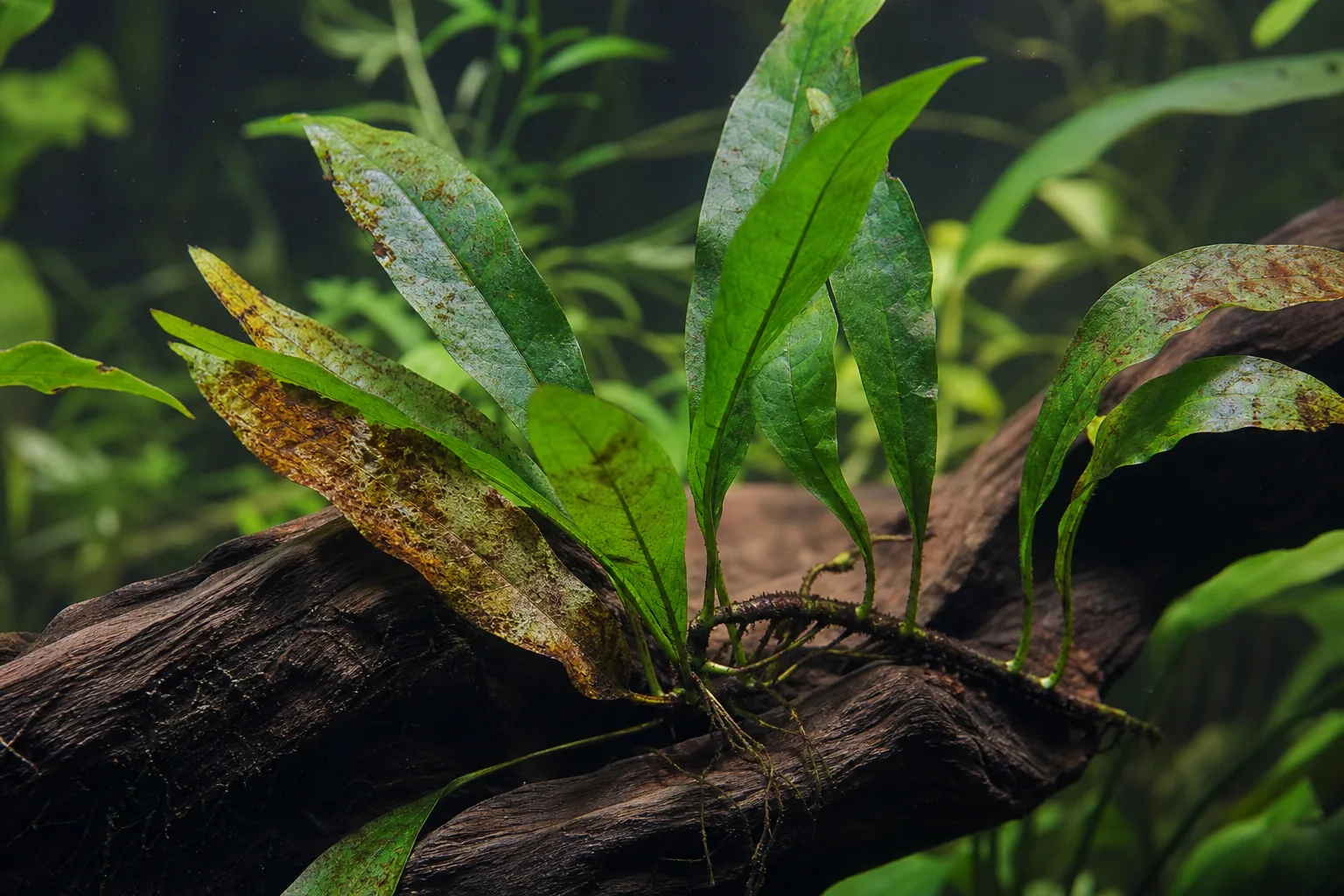
Rust Disease on Java Fern: Causes, Checks & Fixes
This guide covers rust disease on Java Fern. See also the general Rust Disease guide, watering, and light pages for this plant.
Rust Disease on Java Fern: Causes, Checks & Fixes
Quick answer
When aquarists search “rust disease” on Java Fern (Microsorum pteropus), they usually mean whole fronds turning rust-brown-not true fungal rust (Puccinia and related genera with powdery orange pustules). In submerged tanks, rust-brown entire leaves almost always signal melting, acclimation die-back, or normal old-frond senescence on this slow-growing epiphyte. Trim affected fronds at the rhizome if tissue is melting, stabilize light at Easy-plant levels (roughly 15–50 PAR per the Java Fern overview), and confirm the rhizome is not buried in substrate.
This page owns whole-frond rust-brown color and the fungal-rust debunk. For glassy see-through melt first, see transparent-leaves. For mushy black rhizome decay, see root-rot.
Why Java Fern gets rust-brown fronds
Old-leaf senescence (normal)
Java Fern fronds do not live indefinitely. One or two oldest leaves may bronze, rust, or yellow while the rhizome stays firm and new green tips emerge-expected on a healthy plant.
Acclimation melt
Plants grown emersed before sale often kill off air-adapted leaves after submerging. Rust-brown whole fronds in the first three to six weeks in a new tank are common while the plant grows submerged foliage-see the Java Fern overview melt section for the emersed-to-submerged timeline.
Environmental melt
Buried rhizomes, light shock, cold water changes, nutrient-poor water, or stagnant flow cause translucent rust-brown die-back that spreads along the blade-not discrete fungal pustules. Stock LED fixtures on small tanks often exceed what this low-light species tolerates; whole-frond rust-brown can appear before fronds turn fully glassy. Windelov and Trident cultivars show melt faster after high-light rescapes because their forked or lacey blades have more edge area exposed to PAR spikes.
Not aquarium fungal rust
True rust fungi on terrestrial plants produce orange, yellow, or brown powdery spore masses that rub off-infected leaves leave orange dust on fingers or equipment. Java Fern in fully submerged culture essentially never develops classic rust pustules; hobby “rust” language describes color, not Puccinia infection. Aquarists often import terrestrial plant-care vocabulary from garden forums and mislabel melt as “rust disease.”
Rhizome rot
Rust-black mushy tissue at the base climbing upward is bacterial decay from burial-not senescence. Full salvage workflow: root-rot.
What rust-brown fronds look like on Java Fern
| Pattern | Fronds affected | Tissue | Likely cause |
|---|---|---|---|
| Single oldest frond rust-brown | 1–2 bottom leaves | Firm until dry; rhizome woody | Senescence |
| Several whole fronds after purchase | Many at once | Translucent edges, dissolving | Acclimation melt |
| Spreading rust from midrib | Multiple | Glassy, softening | Stress melt |
| Black-rust mush from base | All attached | Soft rhizome | Rot |
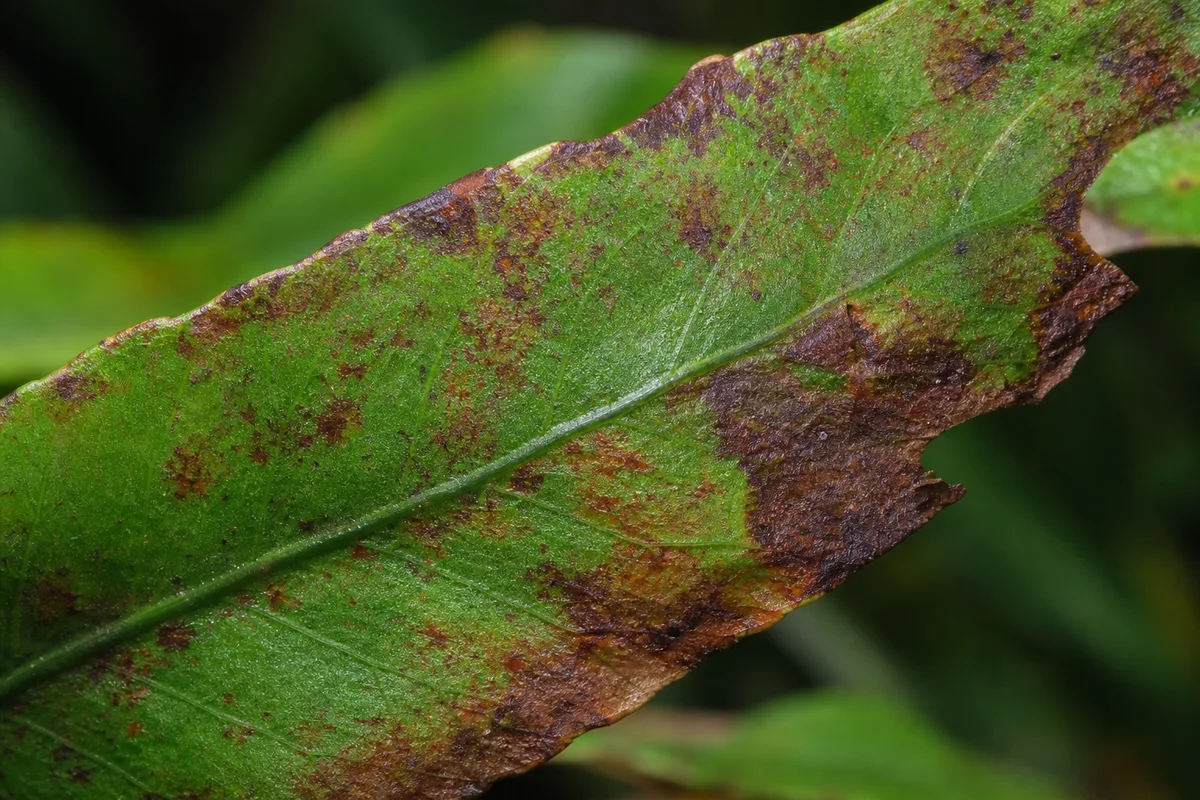
Rust Disease symptoms on Java Fern - compare with healthy tissue on the same plant.
Not rust fungus: No powdery orange dots that smear on your finger. Sporangia are dark, firm, underside reproductive dots on green leaves-also not disease.
Potassium pinholes punch small holes in firm older leaves-they do not uniformly rust the whole frond unless the leaf is also aging out. Confirmed K shortage workflow: potassium-deficiency.
Sporangia vs rust pustules
Sporangia sit in organized rows on firm green mature fronds and do not powder when rubbed. Fungal rust pustules erupt as yellow-to-orange powdery masses that transfer to your skin. If underside dots are firm and the upper blade stays green, you are looking at reproduction-not pathology.
How to confirm the cause
- Count fronds-Only the oldest one or two rusting while new growth stays green = senescence.
- Timeline-New plant within six weeks? Expect melt regardless of “disease.”
- Texture-Firm leathery brown (age) vs translucent dissolving brown (melt). Glassy transparency throughout? Cross-check
transparent-leaves. - Rhizome-Firm and mounted above substrate?
- Powder test-Rub a rust-colored area; fungal rust leaves orange dust-melt does not.
- Recent stress-Rescape, LED upgrade, cold water change, stopped fertilizing?
If one or two rust fronds appear on a month-old plant with firm rhizome and green new tips, senescence or late acclimation beats fungal rust every time.
Example observation (2026-02): A standard green Java Fern from a local fish store showed four whole fronds rust-brown by week two in a new 10-gallon tank. The rhizome stayed firm on driftwood. After trimming rust fronds at the base, holding photoperiod at seven hours, and dosing half-strength liquid fertilizer weekly, the first opaque green replacement frond appeared at week five-typical acclimation melt, not rust fungus.
First fix for Java Fern
For senescence: Trim the rust-brown frond at the rhizome when it is mostly dead-optional if it is not melting into the water.
For melt:
- Remove translucent rust fronds immediately at the rhizome.
- Remount if the rhizome was buried-covering it causes rot.
- Hold light at 0.25–0.5 W/L for Easy plants (about 15–30 PAR at the plant) and six to eight hours photoperiod for two weeks-see the Java Fern light guide for shading after LED upgrades.
- Dose complete liquid fertilizer at half strength weekly in lean planted tanks. In shrimp-only nano tanks, choose a product labeled shrimp-safe and start at quarter to half strength-many complete fertilizers include chelated copper trace elements; overdosing on a stressed plant risks invertebrate stress. See the fertilizer guide.
- Increase gentle flow so debris does not sit on fronds.
Do not apply terrestrial fungicides or copper ich treatments-copper damages submerged plants. Do not use garden rust fungicides on paludarium emersed growth if submerged portions share the same water column.
Recovery timeline
Senescence resolves when you trim the old frond-replacement green leaves are the success signal. Acclimation melt may continue two to four weeks after stabilization; judge by the rhizome, not every leaf. Slow growth means allow three weeks before declaring failure-see slow-growth when new tips stall entirely. Maintain 22–28°C/27914) for steady regrowth.
| Scenario | Damaged tissue | Recovery signal |
|---|---|---|
| Senescence | One old frond rusts | New green tips; rhizome firm |
| Acclimation melt | Whole rust fronds | Opaque new frond in 3–5 weeks |
| Stress melt after rescape | Multiple rust blades | Browning stops; one firm new leaf |
| Rhizome rot | Mushy base | Requires root-rot salvage-not trim alone |
What not to do
Do not treat rust-brown submerged fronds as Puccinia rust with garden fungicides. Do not panic-remove the whole plant when only one old frond rusts out. Do not bury the rhizome hoping brown leaves will root. Do not confuse underside sporangia with rust pustules. Do not trim mid-leaf-cut at the rhizome or the remaining blade may melt entirely. Do not dose copper-based fish medications when melt is the actual problem.
Lookalike symptoms
| Pattern | Key clue | Read next |
|---|---|---|
| Glassy transparent melt | See-through tissue first | transparent-leaves |
| Red cultivar aging | Red types green up when mature; old fronds bronze | red-leaves |
| Potassium deficiency | Pinholes in firm tissue | potassium-deficiency |
| Black beard algae | Fuzzy coating on edges, not uniform frond rust | Diagnose by texture-algae, not tissue rust |
| Nitrogen deficiency | Pale glassy leaves, not solid rust-brown | nitrogen-deficiency |
| Yellow whole-frond melt | Chlorotic before rust-brown | yellow-leaves |
How to prevent rust-brown frond loss next time
Mount Microsorum pteropus epiphytically from the start per the Java Fern overview. Quarantine new plants with stable parameters before full rescape. Expect occasional single-frond rust on long-lived rhizomes-that is normal senescence, not epidemic rust disease.
When to worry
Cosmetic rust on one or two oldest fronds with a firm rhizome is not urgent. Escalate if:
- Every new frond emerges rust-brown and translucent within days-treat as severe melt; review
transparent-leavesand tank nitrate - The rhizome softens, blackens, or smells sour-switch to
root-rotsalvage - Rust-brown spread continues past four weeks after trim, light reduction, and conservative fertilizer with no green new growth-see
slow-growth - You buried the rhizome during a rescape and browning climbs from the base upward
When to use this page vs other Java Fern guides
- Java Fern watering guide - Use for routine moisture checks before assuming rust disease is the main issue.
- Java Fern problems hub - Browse all 28 common issues on this species.
Related Java Fern guides
- Java Fern overview
- Java Fern watering
- Java Fern light
- Java Fern soil
- Java Fern problems
- Black Spots on Java Fern
- Chemical Damage on Java Fern
- Cold Damage on Java Fern
Related tool
Use the Plant Problem Diagnosis Tool to narrow causes for rust disease on this plant before changing multiple variables at once.