Red Leaves on Java Fern: Causes, Checks & Fixes
Quick answer
Check your purchase label first: Red cultivar young fronds blush brownish-red then green up-that is genetics, not disease. Rust-red whole fronds on standard green stock that soften and melt mean stress from burial, light shock, or acclimation-trim at the rhizome and stabilize the tank.
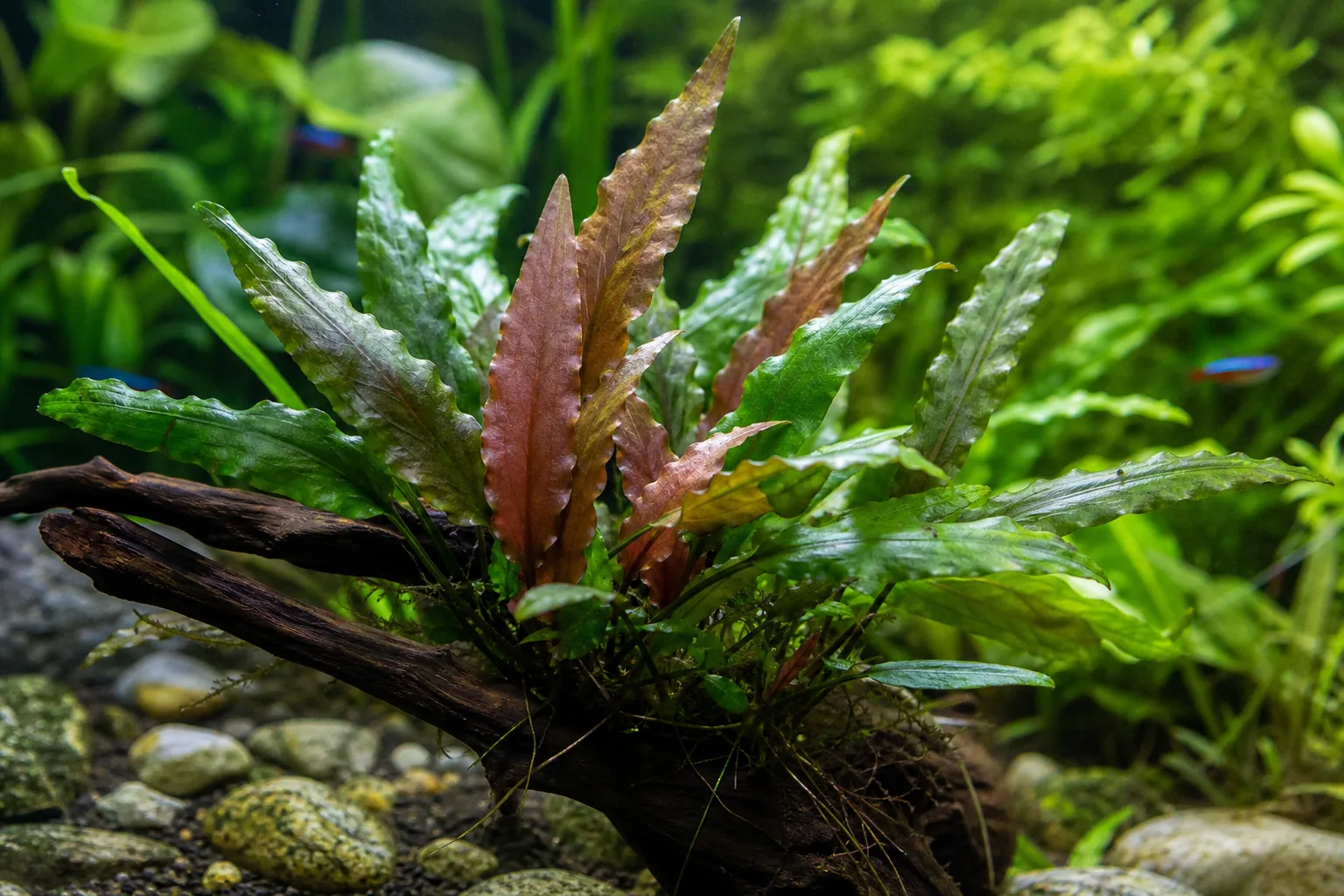
Red Leaves on Java Fern: Causes, Checks & Fixes
This guide covers red leaves on Java Fern. See also the general Red Leaves guide, watering, and light pages for this plant.
Red Leaves on Java Fern: Causes, Checks & Fixes
Quick answer
Check your purchase label first. Red on Java Fern (Microsorum pteropus) splits into two buckets: Red cultivar color on young fronds that mature green, versus stress red-brown on standard green stock that often precedes melt. Microsorum pteropus ‘Red’ from Thailand trade shows brownish-red new growth under moderate light-Tropica bred this variety from a highly variable species. If you bought plain green Java Fern and whole fronds turn rust-red and translucent, treat acclimation melt, burial, or light shock-not a color upgrade.
Why Java Fern gets red leaves
Red cultivar genetics
Microsorum pteropus ‘Red’ and similar trade names produce pronounced brownish-red young leaves that turn green as they harden. Brighter blush often appears under moderate light in the 15–50 PAR range hobbyists target for this low-light epiphyte; in dim tanks new growth may look less vivid. This is expected-not a deficiency. Mature fronds on Red types always green up; sellers who promise permanently red Java Fern are mislabeling normal cultivar behavior.
Acclimation melt
Emersed-grown ferns transitioning to submerged life often shed older leaves that brown or redden before dissolving. The plant redirects energy to new submerged-adapted fronds-a common post-purchase pattern on this slow epiphyte. See yellow-leaves for melt-first triage when glassy transparency appears before rust color.
Light and nutrient stress
Excess PAR or long photoperiod on a low-light species can bleach or burn tips; combined with lean water, older fronds may redden before melting. This is damage, not cultivar blush. Cranking light on green stock to “bring out red” worsens melt-details in the Java Fern light guide.
Rhizome rot
Rust-brown to black mushy fronds climbing from a buried rhizome is decay. Covering the rhizome causes rot-never mistake rot for Red cultivar charm. Full salvage workflow: root-rot.
Senescence
Individual old fronds naturally yellow, bronze, or rust before the plant sheds them-normal on a firm rhizome pushing green replacements. One or two bottom fronds bronzing out is not an epidemic.
What red leaves look like on Java Fern
| Pattern | Likely cause | Tissue feel | Action |
|---|---|---|---|
| Red-brown on new tips only; older fronds green | Red cultivar genetics | Firm | Confirm cultivar ID; no fix needed |
| Whole frond rust-red, translucent edges | Acclimation or stress melt | Softening | Trim at rhizome; stabilize tank |
| Red-black spreading from rhizome base | Burial rot | Mushy base | Remount exposed; see root-rot |
| One or two oldest fronds bronze | Normal senescence | Firm until dry | Trim optional; watch new growth |
| Rust-brown after LED upgrade | Light shock | Firm then glassy | Reduce photoperiod; shade plant |
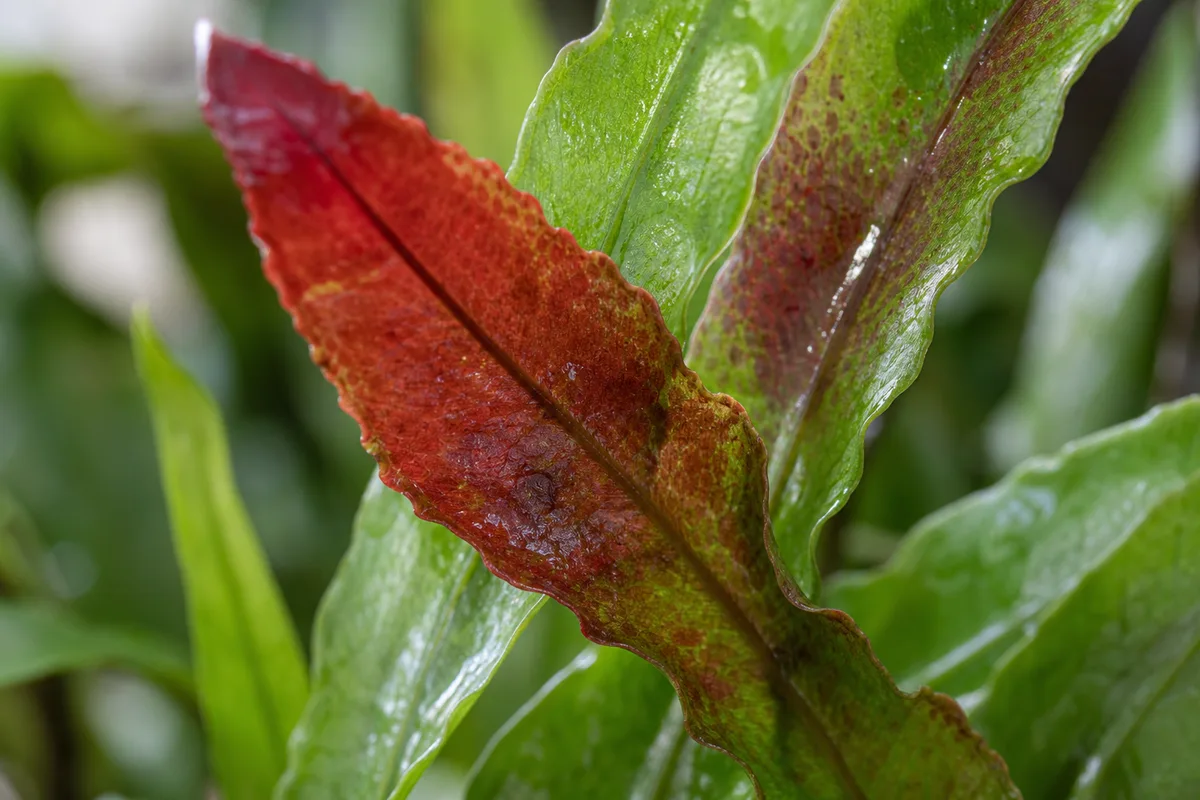
Red Leaves symptoms on Java Fern - compare with healthy tissue on the same plant.
Do not confuse sporangia-small dark underside dots on firm green mature leaves-with upper-surface red color. Sporangia are reproductive structures, not pigment stress.
Example observation (2026-03): A verified M. pteropus ‘Red’ on driftwood in a low-tech 15-gallon tank showed stronger copper blush on new croziers after photoperiod increased from six to eight hours at roughly 35 PAR-mature fronds behind them stayed deep green within three weeks. No melt followed because the rhizome remained firm and exposed.
How to confirm the cause
- Cultivar ID-Seller label, receipt, or reference photos. No label and you bought generic “Java Fern”? Assume green stock unless young tips alone are red. Cultivar overview: Java Fern overview.
- Leaf age-Red on tips only that green up = cultivar or normal new growth. Red on entire mature fronds = stress or age-out.
- Tissue texture-Firm vs glassy-translucent melting.
- Rhizome-Mounted above substrate and firm?
- Recent changes-New tank, lighting upgrade, large water change within two weeks?
- Tank mates-Fast stem plants starving macros can coincide with red-brown older epiphyte fronds.
Confirmed Red cultivar blush: firm rhizome, red only on unfurling tips, mature fronds green, purchase history matches Red trade name. Suspected stress: whole-frond rust on green stock after rescape or burial-stabilize before dosing heavily.
First fix for Java Fern
If Red cultivar with firm red new tips: No fix needed-provide low-to-moderate light if you want stronger blush; avoid blasting PAR that causes melt.
If stress red on green stock-trim melting fronds at the rhizome first:
- Cut translucent rust fronds at the rhizome with clean scissors-not mid-leaf.
- Confirm rhizome is exposed on hardscape, not buried.
- Reduce photoperiod to six to eight hours and hold Easy-plant light levels (roughly 0.25–0.5 W/L or 15–30 PAR at the plant) for two weeks.
- Dose complete liquid fertilizer at half strength weekly if the tank runs lean.
- Match water-change temperature to avoid cold shock near 22–28°C/27914).
Do not treat rust whole-frond color with antifungal meds-this is usually melt or age, not fungal rust. See rust-disease for why aquarium “rust” language describes color, not Puccinia infection.
Recovery timeline
Red cultivars continue showing blush on every new leaf-that is permanent genetics. Stress red on green stock: melting may continue one to two weeks after fixes; success means firm green new fronds without spread. Slow growth requires three to four weeks before judging failure. Single old fronds bronzing out need no treatment if replacements stay green.
| Scenario | Damaged tissue | Recovery signal |
|---|---|---|
| Red cultivar new tips | N/A-color is normal | Ongoing blush on each new frond |
| Stress melt on green stock | Whole rust fronds will not re-green | Firm green new frond from rhizome in 2–4 weeks |
| Senescence | One old frond bronzes | New tips stay green; rhizome firm |
What not to do
Do not buy “Red Java Fern” expecting every leaf to stay red forever-mature fronds green up by design. Do not increase light on melting green stock to “enhance color.” Do not bury the rhizome. Do not treat rust whole-frond color with copper-based medications when the issue is melt-see rust-disease. Do not confuse red stress with purple-leaves from cold shock or phosphorus drift on green stock.
Lookalike symptoms
| Pattern | Key clue | Read next |
|---|---|---|
| Rust-brown whole fronds | Hobby “rust” = color, not fungus | rust-disease |
| Violet or purple cast | Cold shock or light stress on green stock | purple-leaves |
| Potassium pinholes | Perforations in firm older leaves | potassium-deficiency |
| Yellow glassy melt | Translucent acclimation die-back | yellow-leaves |
| Black sporangia | Underside dots only; leaf stays green above | black-spots |
How to prevent unwanted red stress next time
Quarantine new plants with stable water changes and conservative initial light. Mount Microsorum pteropus epiphytically from day one-never bury the rhizome to anchor during rescapes. If you want persistent red new growth, buy a verified Red cultivar rather than chasing color on green stock with excess light. For photoperiod and PAR targets, see the Java Fern light guide.
When to worry
Cosmetic Red cultivar blush on firm new tips is not urgent. Escalate if:
- Every new frond emerges rust-red and translucent while the rhizome softens-treat as
root-rot - Red spreads to all fronds within days of a cold water change or medication dose-stabilize temperature and review tank chemistry
- Rust-red color on green stock persists past four weeks after trim and light reduction with no green new growth
When to use this page vs other Java Fern guides
- Java Fern watering guide - Use for routine moisture checks before assuming red leaves is the main issue.
- Java Fern problems hub - Browse all 28 common issues on this species.
Related Java Fern guides
- Java Fern overview
- Java Fern watering
- Java Fern light
- Java Fern soil
- Java Fern problems
- Black Spots on Java Fern
- Chemical Damage on Java Fern
- Cold Damage on Java Fern
Related tool
Use the Plant Problem Diagnosis Tool to narrow causes for red leaves on this plant before changing multiple variables at once.