Wilting on Echeveria: Causes, Checks & Fixes
Quick answer
Wilting Echeveria usually means lost leaf turgor-from drought, failed roots, repot shock, or heat stress-not simply 'needs water.' First step: lift the pot and probe the mix two inches deep; water deeply only if dry and light, stop watering and inspect roots if wet and heavy.
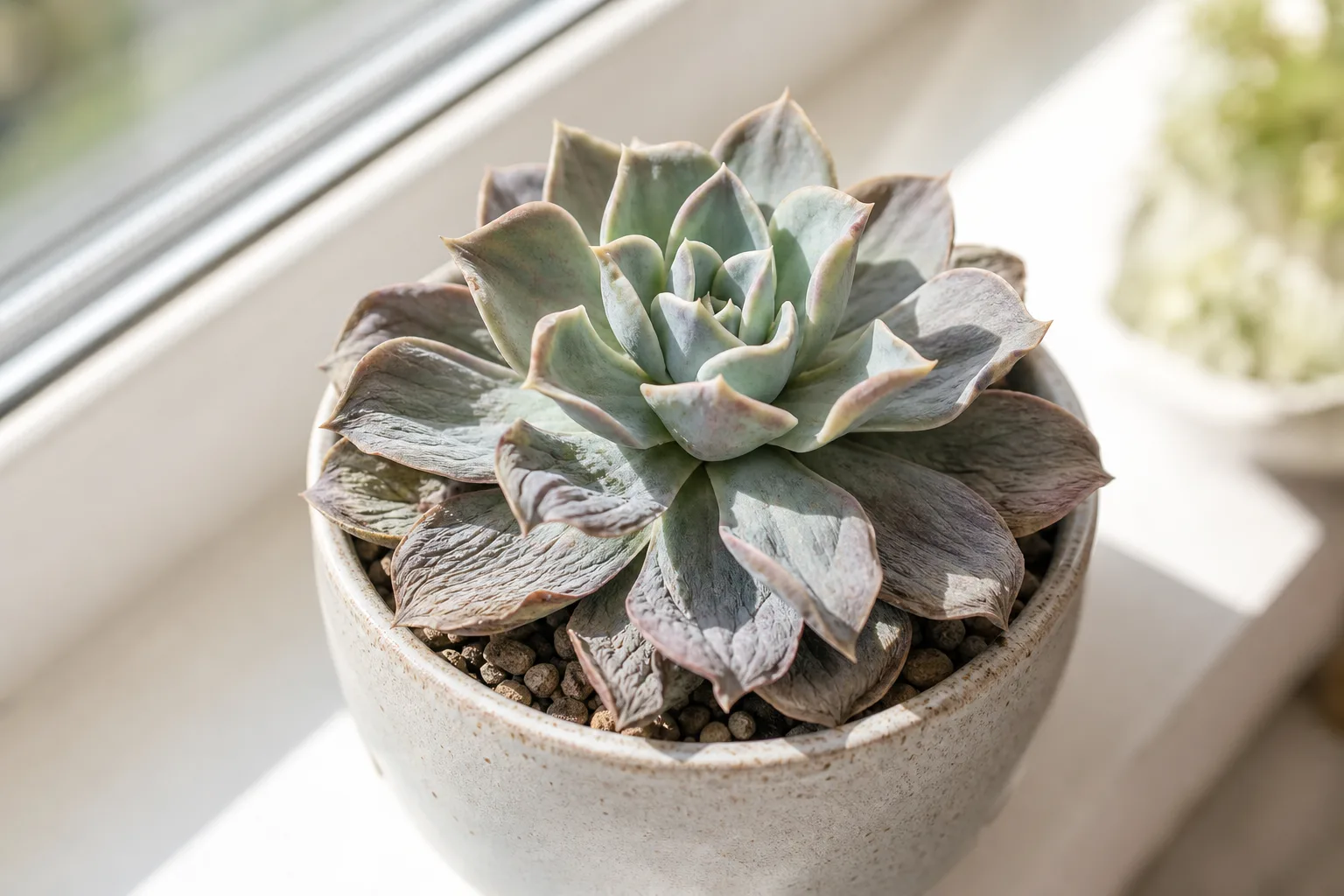
Wilting on Echeveria: Causes, Checks & Fixes
This guide covers wilting on Echeveria. See also the general Wilting guide, watering, and light pages for this plant.
Wilting on Echeveria: Causes, Checks & Fixes
Quick answer
Wilting on Echeveria (Echeveria spp.) means the rosette has lost normal leaf turgor-leaves look deflated, soft, or collapsed instead of firm and plump. On a Crassulaceae rosette succulent that stores water in thickened leaves, the same wilt pattern can come from opposite problems: bone-dry gritty mix, waterlogged rotting roots, repot shock, or heat overload after a sudden move.
First step: lift the pot and probe the mix two inches deep before you add water. A light pot with firm-wrinkled leaves → underwatering is likely; water deeply until drainage runs free, then let the mix dry fully before the next drink. A heavy pot with limp translucent leaves → stop watering and inspect roots-damaged roots cannot move water upward, so sympathy pours worsen collapse.
Echeveria evolved on semi-arid Mexican slopes with long dry intervals between rain. The RHS Plant Guide warns that wet and cold conditions rot roots-the outcome of chronic overwatering-while Iowa State Extension notes succulents store water in leaves and tolerate drought better than constant dampness. The pot-weight and moisture check separates those paths in under a minute.
What wilting looks like on an Echeveria rosette
Healthy echeveria leaves feel firm, slightly thick, and hold a tight rosette angle. Wilting removes that stiffness-the plant looks deflated rather than merely leaning.
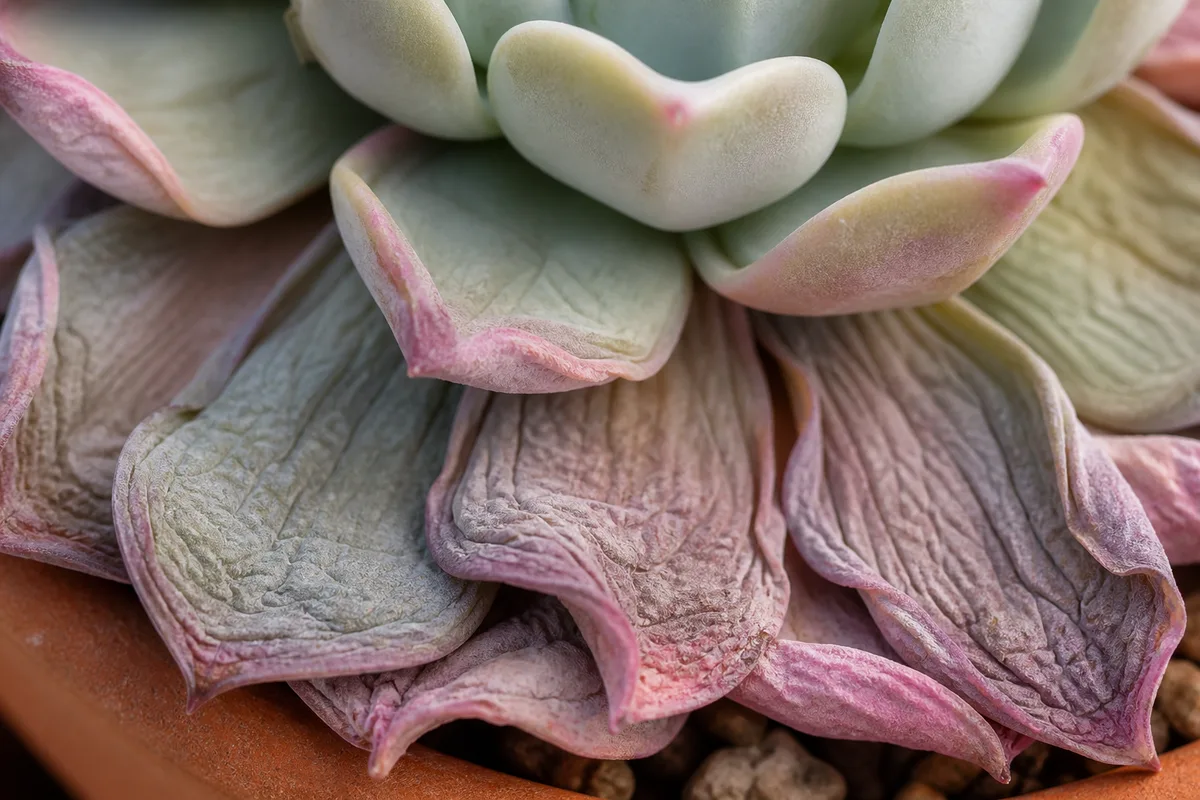
Deflated, wrinkled outer rosette leaves that feel dry and firm when pressed - pair with pot weight and soil moisture before you add water.
Dry-pot wilt (underwatering / turgor loss):
- Outer leaves look wrinkled or thin-like a raisin pulled inward when conditions are too dry
- Leaves stay relatively firm when pressed; texture is dry, not mushy
- Mix is dry two inches down; pot feels noticeably light when lifted
- Rosette center may still look acceptable while lower leaves shrivel first
- Leaves often re-plump within 24 to 48 hours after a thorough soak if roots are healthy
Wet-pot wilt (overwatering / root rot):
- Leaves limp, translucent, or yellowing-often starting on the lowest rosette layer
- Mix stays cool and damp at depth; pot feels heavy days after you thought you watered
- Sour or musty smell when you disturb the surface or unpot
- Leaves may detach with light touch; stem base can soften on advanced cases
- The paradox: rosette looks thirsty while soil is wet
Repot-shock wilt:
- Softness or limpness within one to two weeks of repotting, even on appropriate moisture
- Roots have not re-established contact with fresh gritty mix
- Crown usually still firm if rot is not involved
Heat-stress wilt:
- Midday softness on otherwise moist soil near hot glass or heating vents
- Rosette often firms again overnight or by morning once heat load drops
- Sun-scorched patches may appear on leaves moved into harsh direct sun without acclimation
Normal lower-leaf senescence (not pathological wilt):
- One or two bottom leaves dry, brown, and papery while the center stays firm and compact
- No spreading softness up the stem; pot weight and moisture match your normal soak-and-dry rhythm
Echeveria shows thirst in its leaves before roots fail completely-but extreme shriveling combined with a blackened, mushy stem base usually means rot already underway, not a simple dry spell.
Why Echeveria wilts
Echeveria stores water in succulent leaves so roots can experience drought between drinks. Wilting appears when that storage is depleted or when roots cannot refill it.
Underwatering drains leaf reserves faster than roots replace them. Prolonged drought on a bright summer windowsill can wrinkle the whole rosette in a week. Small terracotta pots in strong light dry fastest. The RHS recommends watering only when compost starts to feel dry-not on a fixed calendar-because frequency shifts with season, pot size, and light.
Overwatering and root rot produce visible wilt through a different mechanism. Succulents will not tolerate staying wet; saturated gritty mix drives out oxygen and fine succulent roots decline and cannot transport water. Wilted appearance with moist soil can indicate damaged roots. Owners see limp leaves and water again-accelerating crown collapse. Overwatering rots the stem at soil level and can collapse the rosette-the most fatal mistake on this genus.
Heavy or compacted mix keeps the root zone wet even when the surface looks dry. Standard peat-heavy houseplant soil retains moisture too long for rosette roots. An oversized pot holds unused wet volume the small root mass cannot dry quickly.
Repot shock temporarily reduces root function. Fresh wounds and air gaps mean the plant cannot drink evenly for one to three weeks. Watering heavily right after repotting on already stressed roots adds salt and saturation without solving uptake.
Heat and draft stress increase water loss from leaves faster than roots replace it on a hot windowsill. A rosette with wet roots may wilt from heat while soil stays damp-a dual stress pattern common after summer moves outdoors without acclimation.
Low light does not always wilt immediately, but dim rooms slow growth and extend drying time, making calendar watering more likely to keep soil wet too long. Weak, pale rosettes in shade wilt faster when rot begins because the plant has less reserve.
Wilting vs. drooping vs. stretching
These symptoms overlap on rosette succulents but point to different fixes.
Wilting is lost turgor-leaves look deflated, thin, or limp. Causes are usually water pathway problems (drought, root failure, repot shock, heat).
Drooping describes leaves angling downward or flattening off the rosette plane without always losing thickness. Some echeveria cultivars naturally hold looser leaves; see drooping leaves on Echeveria when posture changes but leaves stay plump.
Stretching (etiolation) is a long stem with widely spaced pale leaves reaching for light-not shriveling. Fix light, not water. See not enough light when internodes lengthen.
If leaves are wrinkled and the pot is light, treat as wilt from thirst. If leaves are mushy and soil is wet, treat as wilt from root failure-not drooping from posture alone.
How to confirm the cause
Work through these checks in order-do not skip pot weight and depth moisture:
- Pot weight - Lift the container. Light with firm-wrinkled leaves fits underwatering. Heavy with limp leaves fits waterlogging or root rot.
- Soil moisture at two inches - Insert a dry finger or wooden skewer two inches into the mix. Clean and dry emerging skewer → suspect drought. Cool dampness clinging → suspect root failure or heat on saturated mix. Surface dryness alone is not enough; the root zone must dry fully between soaks per the watering guide.
- Leaf texture - Press outer leaves gently. Firm but wrinkled fits thirst. Soft, translucent, or compressible tissue fits rot. Papery brown on one bottom leaf only fits normal aging.
- Crown firmness - Pinch the stem at the rosette base. Firm crown with dry soil points to underwatering. Soft darkening base on wet soil points to crown rot-urgent.
- Smell and surface - Sour odor, algae, or fungus gnats on persistently wet mix support chronic saturation. See fungus gnats if small flies hover over damp soil.
- Recent events - Repotting within two weeks, a heat wave, a move to direct sun, or a missed watering month narrows cause quickly.
- Root spot-check if mismatch persists - Slide the plant out. Healthy echeveria roots are pale, firm, and fibrous. Brown or black mush that collapses between fingers confirms rot. Dry, brittle roots in dusty mix confirm drought damage.
Wilting is not always a call for water. Root injury from too much water decreases uptake; watering a wet, wilted rosette can complete the kill.
First fix for Echeveria
Lift the pot and check moisture two inches deep-then act on what you find.
- If dry and light: Water deeply until water runs from drainage holes. Empty the saucer within 30 minutes. Do not give repeated shallow sprinkles; one soak rewets the root ball. Wait until the mix is substantially dry before the next drink.
- If wet and heavy: Do not water. Move to bright light with good airflow to speed drying, empty saucer water, and unpot if the crown is soft or the smell is sour.
That single diagnostic step prevents the most common mistake: watering a rotting echeveria because the leaves look thirsty.
Do not fertilize, mist the rosette, or repot on day one unless you have confirmed mushy roots or a clearly hydrophobic dry core. Stacking fixes on a stressed rosette adds disturbance without solving the water pathway.
Step-by-step recovery
If underwatering is confirmed
- Water deeply once using soak-and-dry-water until drainage runs free, empty the saucer, then wait for full root-zone dryness before the next session.
- For very dry hydrophobic mix, water once, wait 30 minutes, water again so the center rewets, then drain fully.
- Trim only leaves that stay papery and brown after 48 hours; green wrinkled tissue often re-plumps.
- Adjust schedule: water when a skewer two inches deep emerges clean and dry, not on a calendar. Summer bright windows may need water every 10 to 14 days; cool winter rest may stretch to four to six weeks.
- If the plant was in harsh unacclimated sun, move to bright light with gradual sun increase-recovery is faster without extra heat load.
If overwatering or root rot is confirmed
- Stop watering immediately.
- Unpot, rinse roots, and trim all brown or mushy tissue back to firm pale roots with clean scissors.
- Let severe trims callus in dry shade for one to two days if the stem was cut.
- Repot into fast-draining succulent mix in a pot only one size larger with drainage holes.
- Withhold water for five to seven days unless the remaining root mass is tiny-then give one light drink.
- Remove lower leaves that continue to soften; they will not re-firm.
- If the crown is lost but upper rosette tissue is firm, behead above healthy flesh, callus, and re-root as a cutting. Full detail: root rot on Echeveria and overwatering.
If repot shock is confirmed
- Keep the plant in bright indirect light-not blasting midday sun while roots heal.
- Wait five to seven days after repotting before the first light watering unless the mix was bone dry at planting.
- Do not fertilize until new center growth looks normal-usually two to four weeks.
If heat stress is confirmed
- Move the pot away from hot glass, radiators, and heating vents.
- Ensure soil moisture is even-not bone dry, not soggy.
- Acclimate gradually if increasing direct sun; filter harsh afternoon rays until leaves toughen.
- Expect firmness to return within 24 to 48 hours once heat load drops.
Recovery timeline
Underwatering: Noticeable re-plumping within 24 to 48 hours after a thorough soak on healthy roots; severely dehydrated rosettes may need up to a week for full turgor across all leaves.
Overwatering / early rot: Days to several weeks. Judge by firm crown, new tight center leaves, and stable pot weight-not old translucent lower leaves.
Repot shock: One to three weeks for the rosette to feel firm again; hold fertilizer until new growth looks normal.
Heat stress: Often overnight to 48 hours once placement stabilizes.
Wrinkled leaves that re-plump usually keep their color; mushy leaves rarely become firm again-they dry out or are removed while new center growth tells you recovery is real.
Lookalike symptoms to rule out
Yellow leaves without acute wilt often mean chronic overwatering or normal lower-leaf aging-not always sudden collapse. Check moisture and crown firmness before treating wilt.
Brown crispy tips on firm leaves may follow salt buildup, fluoride, or sun scorch-see brown tips when edges dry but the rosette stays plump.
Leggy long stem with spaced leaves means not enough light over time, not necessarily wilt. Leaves may be firm while the stem stretches.
Spider mite damage shows fine stippling and webbing on undersides in hot dry air-not uniform wrinkling from thirst alone. Rule out spider mites before assuming water stress.
Cold damage turns leaves mushy after exposure below comfortable range. The RHS notes echeveria are frost-tender and should be kept above 10°C (50°F); wet cold roots wilt and blacken faster than drought alone.
Mistakes to avoid
Do not water every wilt without checking soil-wet-soil wilt needs drying and root inspection, not another drink.
Do not leave saucers full. Standing water keeps the bottom anaerobic and mimics overwatering wilt.
Do not mist the rosette crown for humidity. Trapped moisture in tight leaf axils invites fungal rot on a plant that does not need foliar humidity.
Do not move a wilted rosette into unacclimated direct sun hoping to “dry it out.” Scorched leaves add stress on already failing roots.
Do not fertilize collapsed rosettes. Salt stress on damaged roots slows recovery.
Do not repot healthy dry wilt on day one-a deep watering usually fixes simple thirst.
Do not assume winter and summer need the same interval. Cool dormant rest needs far less water than bright summer growth.
Echeveria care cross-check
Wilting often exposes a mismatch between your routine and the rosette’s current environment:
- Light - At least six hours of bright light daily maintains compact growth and predictable water use. Dim rooms dry slowly and need less water, not the same summer schedule on heavy mix.
- Mix - Gritty fast-draining succulent soil is non-negotiable; dense peat holds water and invites rot wilt.
- Pot size - Oversized pots stay wet at the center; root-bound pots in tiny containers wilt between drinks despite surface watering.
- Season - Short winter days slow growth; calendar watering in January causes wet-soil wilt. The RHS describes a cooler, drier winter rest with only occasional moisture.
- Watering method - Soak-and-dry, not sips. Shallow watering wets the top while the root core stays dry, producing chronic wrinkling misread as humidity stress. Full rhythm: Echeveria watering guide.
How to prevent wilting next time
Water only when the root zone is substantially dry-probe two inches deep or lift the pot-using soak-and-dry, not a day-of-the-week schedule.
Use pots with drainage holes and empty saucers within 30 minutes of every watering.
Repot every one to two years into fresh gritty mix before organic components compact and hold water too long. See repotting when roots circle drainage holes or water runs straight through without absorbing.
Give bright light with gradual acclimation to direct sun; etiolated rosettes in shade use water unpredictably and rot more easily when overwatered.
Inspect weekly while problems are small: pot weight, leaf firmness, and center growth tell you more than waiting for full collapse.
When to worry
Treat as urgent when:
- The crown feels soft on wet soil with translucent lower leaves slipping off easily
- Blackening spreads from the stem base up into the rosette
- The plant does not re-plump within 48 hours after confirmed dry-soil watering on a firm crown
- More than half the roots are mushy on inspection
Less urgent but worth fixing soon: mild outer-leaf wrinkling on a light dry pot, afternoon softness on moist soil near a window, or wilt right after repotting with a firm crown and no rot smell.
Related Echeveria problems
If wilting persists after correcting water, check these sibling guides on the Echeveria care overview:
- Underwatering - dry-pot shrivel and soak-and-dry recovery
- Overwatering - wet-pot limp leaves and drainage fixes
- Root rot - crown softness, trimming, and re-rooting
- Drooping leaves - posture changes when leaves stay plump
- Yellow leaves - chronic stress vs. acute wilt
Conclusion
Wilting Echeveria is a diagnostic signal, not an automatic command to water. Pot weight, moisture two inches deep, leaf texture, and crown firmness tell you whether to soak, dry, or repot. Acting on that check first saves rosettes from crown rot and rescues thirsty plants before crispy damage spreads. Match watering to how fast your gritty mix actually dries in your light-not to how limp the leaves look at first glance.
When to use this page vs other Echeveria guides
- Echeveria watering guide - Use for routine moisture checks before assuming wilting is the main issue.
- Echeveria problems hub - Browse all 16 common issues on this species.
- Underwatering on Echeveria - Different entry point when symptoms overlap with wilting.
- Overwatering on Echeveria - Different entry point when symptoms overlap with wilting.
- Root Rot on Echeveria - Different entry point when symptoms overlap with wilting.