Echeveria Watering: Soak-and-Dry Method, Bottom Watering
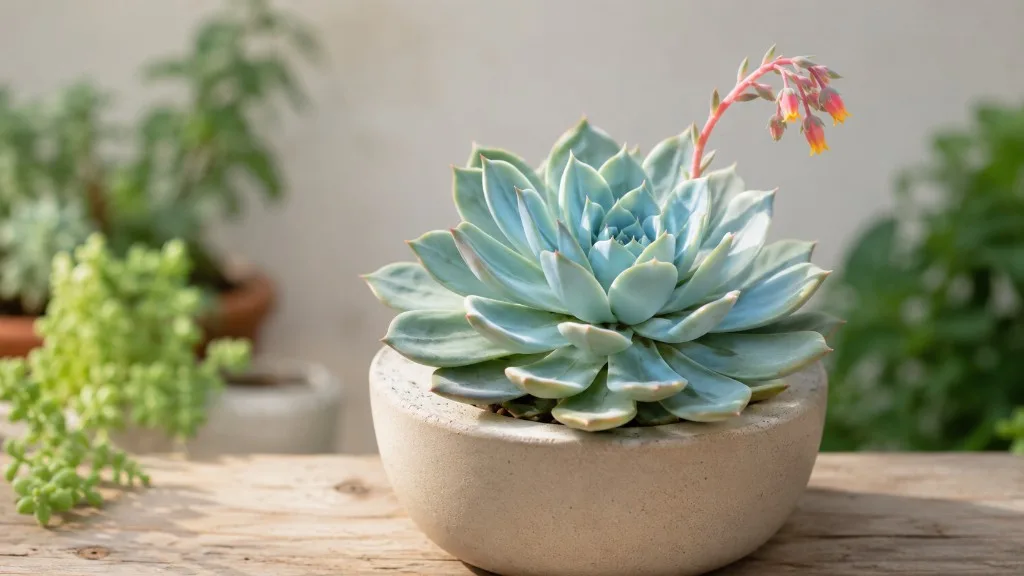
Echeveria Watering: Soak-and-Dry Method, Bottom Watering, and Rot Prevention
Echeveria Watering: Soak-and-Dry Method, Bottom Watering, and Rot Prevention
Echeveria watering starts with one structural fact most generic succulent guides bury in paragraph three: the overlapping rosette leaves form a cup that traps moisture against the stem. Water that pools in the crown and evaporates slowly - especially in cool, dim winter rooms - is the fastest route to crown rot on tight forms like Echeveria elegans. Everything else in this guide - soak-and-dry rhythm, bottom watering, seasonal reduction, fast-draining echeveria soil - exists to keep the root zone hydrated while the crown stays dry. Echeveria is a rosette succulent from the semi-arid highlands of Mexico and Central America. In habitat, rain arrives in short bursts separated by long dry spells. Indoors, more echeverias die from too much water than from too little.
What Echeveria Actually Needs From Water
Echeveria roots evolved for a pulse of moisture followed by a long dry spell, not for constantly damp compost. Extension guidance for indoor succulents describes a wet-dry cycle: water thoroughly until the entire root ball is wet and excess drains away, then allow the soil to dry completely before the next drink. That cycle matches how NC State Extension characterizes echeveria - desert-adapted, needing little water, thriving on a bright windowsill with minimal fuss. The practical indoor translation is not “ignore the plant,” but “check soil at depth every time and only soak when the mix is bone dry.”
Why Echeveria Stores Water in Its Rosette Leaves
The fleshy leaves are reservoirs packed with water-storing tissue. A well-hydrated echeveria feels firm; a thirsty one feels lighter, with the lowest leaves showing slight softening or fine wrinkling as internal reserves draw down. That storage is why echeveria tolerates missed waterings far better than tropical foliage plants - but the rosette crown is also a water trap. Moisture pooled between overlapping leaves invites fungal decay and crown rot, particularly on tight, cupped forms. Open, spreading rosettes like Echeveria gibbiflora and hybrids such as ‘Perle von Nürnberg’ shed surface water more easily than the tight spoons of E. elegans, so tight forms demand stricter crown discipline and often benefit from bottom watering during recovery.
The Soak-and-Dry Rule in Plain English
The soak-and-dry method is a two-step rhythm: water deeply so the entire root ball becomes wet, then wait until the soil dries completely from top to bottom before watering again. Pour room-temperature water slowly around the inner edge of the pot until it runs freely from the drainage hole, let the pot finish draining, empty any saucer, and leave the plant alone until a finger or skewer pushed 2 inches into the mix comes out clean and dry.
This works because echeveria roots absorb water efficiently when it is suddenly available, then need air in the soil between drinks. Constantly damp mix suffocates fine roots and invites oomycete pathogens such as Pythium and Phytophthora - the organisms behind most succulent root rot on Echeveria. The RHS Plant Guide describes echeveria as drought-tolerant and instructs growers to only water when the compost starts to feel dry and never leave them sitting in water. The soak-and-dry method is not misting, not “slightly moist” soil, and not a small sip every few days. It is a full drink, a full drain, and a full dry-down.
How Often to Water Echeveria Indoors
There is no single correct interval. Frequency depends on pot size, pot material, light intensity, room temperature, humidity, cultivar form, and whether the plant is actively growing or sitting in winter semi-dormancy. The honest starting range for most indoor echeverias is roughly every 10 to 14 days during spring and summer active growth, and roughly every 21 to 28 days - sometimes monthly or less - during cooler, dimmer fall and winter months. A plant in a small unglazed terracotta pot on a sunny south-facing windowsill may dry in 7 to 10 days. The same cultivar in a large glazed ceramic pot in a dim room may stay moist for five weeks. Use the ranges as orientation; let soil moisture make the actual decision every time.
A Realistic Summer and Winter Schedule
In spring and summer, an indoor echeveria in a typical 4-inch terracotta pot in bright light with several hours of direct sun usually needs water every 10 to 14 days. The plant pushes new leaves, temperatures are higher, and transpiration pulls moisture from leaves faster. Check weekly, water only when soil is fully dry, and expect roughly twice a month for most homes in the 18–29°C (65–84°F) comfort range echeveria prefers.
In fall, growth slows. Stretch the interval toward every 14 to 21 days and note how long the mix stays damp after each watering. The same pot that dried in 10 days in August may take 18 days in October.
In winter, echeveria enters semi-dormancy with cooler, drier rest and sharply reduced water demand. Metabolic activity drops, new growth nearly stops, and water demand falls to a fraction of summer levels. Most indoor echeverias need water only every 21 to 28 days during this period, and some in cool, low-light rooms can go a full month or longer between drinks. A weekly summer schedule that felt right in July becomes a slow drowning routine by December if you do not adjust.
Documented dry-down example (LeafyPixels observation): A 4-inch unglazed terracotta pot of E. elegans on a south-facing indoor sill in a heated apartment - checked with a skewer at 2 inches depth - averaged 11 days between soaks in July and 26 days in January using the same gritty mix and soak-and-dry technique. Your home will differ; track one pot for a full season before trusting any blog’s calendar.
| Season | Typical frequency (indoor echeveria) | What to watch for |
|---|---|---|
| Spring | Every 10 to 14 days | New growth resuming, soil drying faster than winter |
| Summer | Every 10 to 14 days | Hot windowsills, active growth, strong direct sun |
| Fall | Every 14 to 21 days | Growth slowing; stretch interval gradually |
| Winter | Every 21 to 28 days or longer | Semi-dormancy, dim rooms, slow dry-down |
Indoor Climate Modifiers That Change Dry-Down Speed
Extensions rarely discuss how modern homes distort dry-down timing, but indoor growers see these patterns constantly. Central heating and radiator shelves warm the air and can dry the soil surface faster than the root zone in winter - the classic trap where the top inch looks ready but deeper mix is still damp. Always check at depth, not at the surface alone. Air-conditioned rooms run cooler and drier in summer; echeveria may need water slightly more often than an un-air-conditioned room at the same latitude. Humid bathrooms slow evaporation from terracotta walls and keep rosette leaves wet longer after top watering; bottom watering or stricter edge pouring helps. Heated dry winter air above 40% humidity is fine for echeveria - the RHS notes they dislike being wet or cold - but misting the rosette to “compensate” for dry air is unnecessary and risky. If humidity stays under 40%, improve airflow rather than wetting foliage.
How to Tell If Your Echeveria Needs Water
The fastest way to read thirst is to check the soil, not the leaves. Fully dry soil from top to bottom is a green light. Anything else means wait. Combine the finger or skewer test, pot weight, and leaf feel - and treat moisture meters as a secondary signal only.
Finger, Skewer, Pot Weight, and Moisture Meters
Push a clean finger into the potting mix to the second knuckle, roughly 2 inches down. Cool, damp soil or mix clinging to your skin means wait. Completely dry soil with a clean finger means water. A wooden skewer or chopstick pushed 2 to 3 inches deep and left for a minute is more reliable in small pots: damp soil darkens and sticks to the wood; dry soil leaves it clean. Iowa State Extension recommends the chopstick method for succulents - moisture on the stick means the plant does not yet need irrigation.
Lift the pot right after a thorough watering and feel the weight. As the soil dries over the following days, the pot loses noticeable mass. Learn the difference between “wet pot” and “dry pot” for each container; weight is especially valuable in winter when ready-to-water and still-damp can be weeks apart.
Moisture meters can misread in very coarse, fast-draining succulent mix because probes measure electrical conductivity in a small zone, not the full root ball. They may show “dry” while the center still holds moisture, or “wet” after a light surface splash. If you use one, calibrate it against finger and skewer results on your specific mix, and never water on meter reading alone.
Leaf feel is a secondary signal. Healthy leaves are firm and plump. When internal reserves draw down, the lowest, oldest leaves may soften slightly and show fine wrinkles - a subtle dimpling that means dry-down is complete. Do not wait for dramatic shriveling; repeated severe underwatering on Echeveria damages fine roots.
How to Water Echeveria the Right Way
A good watering is a deep, even drink that wets the entire root ball, followed by complete drainage. Place the pot in a sink or over a saucer. Use room-temperature water - cold water from a winter tap can shock roots and mark leaves if it splashes on them. Pour slowly, moving around the inner edge so water soaks into the mix rather than channeling down the side. Keep pouring until water runs from the drainage hole, let the pot drain several minutes, and empty the saucer completely.
Top Watering Without Wetting the Rosette Crown
Top watering is the default for most growers because it is fast and flushes excess mineral salts downward through the drainage hole. The critical rule for echeveria is to keep water off the rosette. Pour onto the mix around the inside edge, not into the center where leaves overlap. Water that pools in the crown - especially in cool rooms where evaporation is slow - sets up crown rot on tight forms. A long-spout watering can gives precise control. After watering, tip the pot slightly to shed droplets on leaves and blot the crown gently with a paper towel if needed. Texas A&M AgriLife Extension warns not to let moisture collect in the rosette or stand in a saucer under potted plants.
Bottom Watering and When It Helps
Bottom watering sets the pot in a shallow tray of room-temperature water and lets mix absorb moisture upward through the drainage hole by capillary action. No water touches the foliage - useful for tight rosettes, growers who struggle to pour without hitting the crown, and soil that has pulled away from pot walls and repels top watering.
Choose a tray deep enough to reach the drainage holes. Add water to roughly one-third the pot height. Leave the echeveria for 15 to 30 minutes, checking until the surface feels slightly moist. Remove immediately, drain 10 to 15 minutes, and never leave the pot sitting in the tray for hours. Bottom watering can leave fertilizer salts near the top because water moves up; alternate with occasional top watering to flush salts. Terracotta pairs well because porous walls continue evaporating after tray removal; plastic and glazed pots hold moisture longer - check soil more conservatively before the next cycle.
Echeveria Watering During Winter Dormancy
Winter is when echeveria watering goes wrong for the largest number of indoor growers - not from forgetting the plant, but from forgetting to slow down. As days shorten and temperatures drop, growth nearly stops. The plant enters semi-dormancy, a state where metabolic processes slow dramatically and water demand falls to a fraction of summer levels. In nature this mirrors the dry season of its semi-arid highland habitat. In your home, the same pot that needed water every 10 days in July may not need it for four to six weeks in January.
Reducing winter watering is the single most effective rot-prevention step during the season when evaporation is slowest and roots process water most slowly. Indoor heating adds a wrinkle: warm air from radiators and vents can dry the soil surface faster than the root zone, tricking growers into watering when deeper mix is still wet. If you see no new leaf growth, the plant is not asking for summer-frequency water. If heating warms the room all winter, soil may dry somewhat faster than a strict “once a month” rule - but still much slower than in summer. Check at depth before every drink.
Pot, Soil, and Drainage: The Foundation of Rot Prevention
Even perfect soak-and-dry timing fails in the wrong pot or wrong soil. Rot prevention starts with pot material, pot size, and mix composition - full recipes live on the echeveria soil guide.
Unglazed terracotta is the safest default: porous walls speed dry-down and give roots more air between drinks. Glazed ceramic and plastic hold moisture longer and suit growers who check soil consistently. Whatever the material, the pot must have a drainage hole.
Pot size matters. Echeveria prefers being slightly root-bound. An oversized pot holds soil the roots cannot use; that extra volume stays wet long after a properly sized container would have dried - functionally identical to overwatering on Echeveria. Choose a pot only 1 to 2 inches wider than the root ball.
Soil mix must drain fast. A practical home recipe is 50% standard potting compost, 30% coarse perlite, and 20% grit or coarse horticultural sand - the same very fast-draining blend echeveria needs to match rocky native substrates. Regular peat-heavy indoor potting soil is too dense; water pools around roots and compacts over time. When in doubt, the mix should feel gritty in your hand, not spongy.
| Pot material | Summer dry-down (typical 4-in pot, bright light) | Winter dry-down | Notes |
|---|---|---|---|
| Unglazed terracotta | 7–12 days | 18–28 days | Fastest; best default for beginners |
| Glazed ceramic | 12–18 days | 24–35 days | Check skewer; surface lies |
| Plastic | 14–21 days | 28–40+ days | Lightest; holds moisture longest |
Signs of an Overwatered Echeveria
Overwatering is the leading cause of echeveria death indoors. Symptoms follow a predictable pattern once you know what to look for - the plant is suffocating at the root zone, and leaves reflect damage that started underground days or weeks earlier.
Watch for these signs together:
- Soft, mushy, or translucent leaves. Healthy leaves are firm and opaque. Overwatered leaves feel squishy, sometimes glassy, and may turn faint yellow-green as cells fill with excess water.
- Yellowing or blackening at the leaf base. Color change starts on lower, older leaves where they meet the stem. Tissue feels wet and may detach with light pressure.
- A soft or collapsing crown. If the center feels wet, brown, or unstable, crown rot has likely set in - more urgent than root rot alone because it threatens the only growing point.
- A sour or musty smell from the soil. Anaerobic decomposition - rotting roots in waterlogged mix.
- Stem rot creeping upward. A dark, mushy patch at the soil line spreading up the stem means rot has advanced beyond the roots.
- Roots that are brown, black, soft, or slimy. Healthy roots are pale tan or white and firm. Rotted roots pull apart when touched.
If soil is wet, the pot is heavy, and lower leaves turn translucent or yellow, treat the situation as root rot until proven otherwise. Stop watering, move the plant to bright light with good air circulation, and inspect roots.
Overwatered vs Underwatered: Quick Comparison
Read soil before reacting to leaves alone. Wrinkled leaves in wet soil mean rot, not thirst.
| Signal | Overwatered | Underwatered |
|---|---|---|
| Leaf texture | Soft, mushy, translucent | Thin, wrinkled, sometimes papery on lowest leaves |
| Leaf color | Yellow-green, blackening at base | Dull gray-green; may redden on some cultivars |
| Soil at 2 in depth | Cool, damp, clings to skewer | Bone dry; skewer clean |
| Pot weight | Heavy | Noticeably light |
| Smell | Sour or musty from mix | Neutral |
| Crown | Soft, wet, may collapse | Firm; wrinkles start at outer leaves |
| Recovery path | Stop water; unpot; trim rot; dry repot | Bottom or top soak when soil fully dry |
| Urgency | High - rot spreads in days | Moderate - tolerates short drought |
How to Save an Overwatered Echeveria With Root Rot
Root rot is time-sensitive but not always fatal. Oomycetes such as Pythium and Phytophthora need saturated soil to spread. Remove saturated mix and rotted tissue, and you cut off the disease.
- Stop watering and unpot. Brush away wet mix to expose roots and stem base. Healthy roots are pale tan to white and firm. Rotted roots are dark, soft, and may slide off the core.
- Trim every soft, dark, or slimy root with a clean blade sterilized in rubbing alcohol. Cut back to firm, pale tissue. If rot climbed into the stem, cut upward into clean tissue even if that removes lower leaves. Sterilize between cuts.
- Inspect the crown. If the central growing point is soft or collapsed, the original rosette may be lost. Healthy upper leaves or a firm stem section can be removed for propagation - the beheading technique covered on the echeveria propagation guide.
- Let the plant callous. Place the trimmed echeveria in a dry, shaded, ventilated spot for 3 to 7 days so cut surfaces dry. Skipping this invites fresh rot.
- Repot in dry, fast-draining mix in a clean terracotta pot with a drainage hole. Do not water.
- Wait before the first post-recovery drink. Hold off 5 to 7 days after repotting, longer if you removed substantial root mass. The first watering should moisten the mix without flooding it. Return to soak-and-dry only when soil is fully dry.
New white root tips and firmer leaves are early success signs. Trim mushy leaves at the base once the plant stabilizes - they will not heal in place.
How to Revive an Underwatered Echeveria
Underwatered echeveria is far more recoverable than overwatered echeveria. Iowa State Extension notes that succulents can go weeks without water, but repeated drought can shrink the root mass so the plant reacts badly when water finally returns. Catch thirst at fine wrinkling on the lowest leaves, not at papery, curled collapse.
Revival protocol:
- Confirm dryness. Skewer at 2 inches must come out clean and dry. If any dampness remains, wait - adding water to partially dry mix creates alternating wet-dry stress.
- Choose your method. For soil that still accepts water normally, top-water slowly around the pot edge until drainage runs freely. For hydrophobic mix that repels water, or tight crowns you do not want to splash, use bottom watering: tray one-third pot height, 20 to 30 minutes, remove when surface is slightly moist.
- Drain completely. Empty saucers within 15 minutes. Never leave revival soaks sitting in runoff.
- Wait for the next cycle. Do not water again until the soil dries fully - underwatering recovery is not permission to keep soil moist. Echeveria still wants soak-and-dry after the rescue drink.
- Adjust placement if drought repeats. Chronic underwatering often means insufficient light, a pot too large for the root ball, or a mix so gritty it dries in 4 days on a hot sill. Fix the environment rather than shortening the interval blindly.
Leaves should re-plump within 3 to 7 days after a proper soak. Outer leaves that turned papery may not recover fully; peel them once the rosette firms up.
Watering After Repotting
Fresh repotting is when eager growers cause rot. Nursery mix is already slightly moist, roots may be disturbed, and new soil volume dries more slowly until roots explore it. Wait at least 5 to 7 days after repotting before the first drink - 7 to 10 days if you trimmed roots or moved to a noticeably larger pot. The plant has internal leaf reserves to bridge the gap.
When you do water post-repot, use a moderate soak - enough to moisten the mix without flooding a root zone that has not yet calloused from handling. Then return to full soak-and-dry. If you repotted because of rot, use the recovery timeline above (dry repot, longer hold) rather than the standard post-repot schedule.
Common Echeveria Watering Mistakes to Avoid
- Watering on a fixed weekly schedule. Use the calendar as a reminder to check soil, not as permission to pour.
- Misting the rosette. Echeveria does not need foliar moisture. Misting keeps the crown wet and encourages fungal problems.
- Pouring into the rosette center. Always direct water at the soil surface around the inner pot edge.
- Using a pot without a drainage hole. Cachepots are fine only if the inner grow pot drains freely and you empty runoff every time.
- Overpotting. Size up only 1 to 2 inches at a time.
- Watering immediately after repotting. Wait at least a week unless you are actively reviving a dehydrated plant in dry mix.
- Keeping summer frequency through winter. The most dangerous seasonal mistake is watering every 10 days in January.
- Leaving the pot in a full saucer. Standing water wicks back into the drainage hole.
- Bottom watering for hours. Over-hydrates the root ball and removes the method’s advantage.
- Treating wrinkled leaves as thirst without checking soil. Wrinkles in wet soil mean rot. Read soil first, always.
- Using ice cubes or cold tap water on a winter windowsill. Room-temperature water prevents root shock.
Water quality note: The RHS recommends rainwater when possible because fluoride in tap water can damage leaves over time. Iowa State Extension notes that municipal tap water is fine for most houseplants if safe to drink, but chlorine and fluoride can cause leaf-tip issues on sensitive species over extended periods. For echeveria, room-temperature tap water is acceptable in most homes; switch to rainwater or filtered water if you see persistent leaf spotting on cultivars you know are fluoride-sensitive.
How We Wrote and Verified This Guide
Author: sai-ananth · Reviewer: LeafyPixels Review Board · Reviewed: 2026-06-15
This guide targets indoor echeveria growers - especially those with tight rosette forms worried about crown rot and winter overwatering. Recommendations were cross-checked against the Royal Horticultural Society, Iowa State Extension, Missouri Botanical Garden, NC State Extension, eFlora, and Texas A&M AgriLife Extension before publication. The July-vs-January dry-down example reflects LeafyPixels editorial observation of a single 4-inch terracotta pot, not a formal trial.
Methodology: Guide recommendations are reviewed against botanical or extension references, LeafyPixels plant-care data, and practical indoor growing constraints before publication. Factual claims in the body carry inline citations; a claims-validator-v1 pass records link counts and any flagged claims at the end of this file.
Revision note (2026-06-15): Added crown-trap lead, over/under comparison table, underwatered revival workflow, post-repot hold, indoor climate modifiers, cultivar form note, moisture-meter caveat, water-quality guidance, visible author block, internal cluster links, and rosette-specific FAQs per E-E-A-T audit.
Conclusion
Your next checks depend on what the plant is telling you through the soil, not the calendar. If the skewer is dry at depth and the lowest leaves show fine wrinkling, soak thoroughly, drain, and wait for a full dry-down before the next drink. If soil is wet and leaves are soft, stop watering and open the root-rot workflow above before the crown collapses.
For ongoing care, pair this watering rhythm with fast-draining soil, strong light that speeds healthy dry-down, and conservative repotting that does not jump pot size. If crown rot costs you the growing point, healthy tissue can still restart through propagation. The full species hub - varieties, toxicity, and seasonal rhythm - lives on the echeveria overview. Winter reduction is not neglect; it is the biology echeveria expects from its semi-arid highland origins.
When to use this page vs other Echeveria guides
- Echeveria overview - Start here for whole-plant context before deep-diving this topic.
- Echeveria problems hub - Jump to symptom-specific fix guides when this care topic does not resolve the issue.
- Overwatering on Echeveria - Escalate here when watering adjustments are not enough.
- Underwatering on Echeveria - Escalate here when watering adjustments are not enough.
- Root Rot on Echeveria - Escalate here when watering adjustments are not enough.