Mold on Soil on Echeveria: Causes, Checks & Fixes
Quick answer
White or gray fuzz on Echeveria potting mix is usually harmless saprophytic fungus-but on a drought-adapted rosette succulent, visible mold means the surface stays wet too long, often from fallen rosette leaves decaying on damp peat. First step: stop watering, scrape the top quarter-inch, and let the surface dry completely. If mold keeps returning, bottom-water so roots drink from below while the top stays dry.
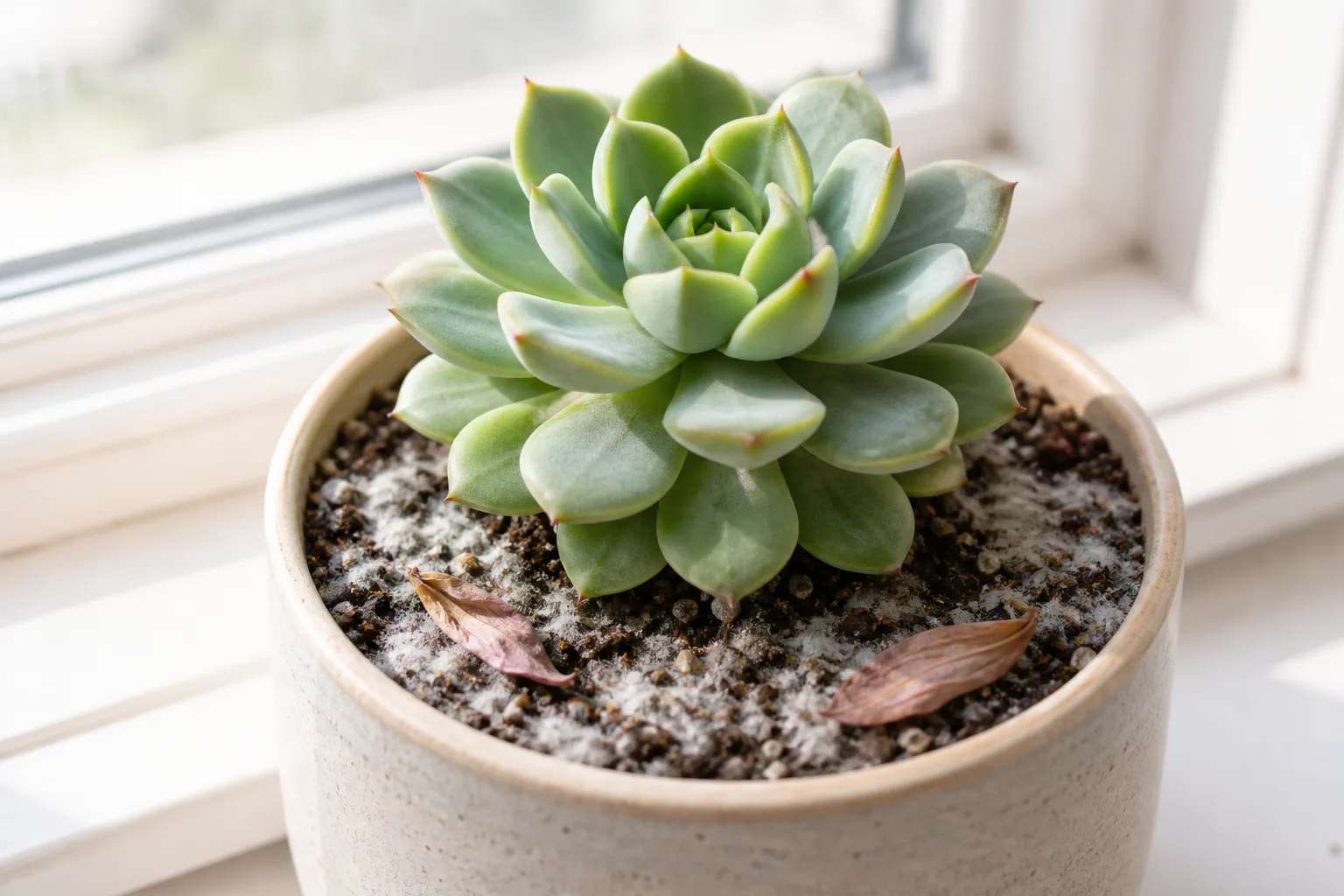
Mold on Soil on Echeveria: Causes, Checks & Fixes
This guide covers mold on soil on Echeveria. See also the general Mold on Soil guide, watering, and light pages for this plant.
Mold on Soil on Echeveria: Causes, Checks & Fixes
Quick answer
White or gray fuzzy growth on Echeveria potting mix is almost always saprophytic fungus-organisms that feed on decaying organic matter rather than living succulent tissue. On many leafy houseplants that alone is mostly cosmetic. On Echeveria, which evolved for semi-arid, fast-draining conditions, visible mold is a loud signal that the soil surface is staying damp too long-and on a tight rosette succulent, fallen lower leaves decaying on wet peat are often the first fuel source fungi colonize.
First step: stop watering and scrape off the top quarter-inch of moldy mix. Let the surface dry completely before the next drink. If mold returns after two dry cycles, switch to bottom-watering so roots drink from below while the top stays drier. Do not reach for fungicide on day one-the fix is drying the environment that feeds the fungus, not killing the fuzz while roots sit wet.
For soak-and-dry rhythm, see our Echeveria watering guide. For gritty mix ratios when culture fixes fail, see the soil guide.
Scope note: This page covers white or gray fuzzy growth on damp Echeveria potting mix-the early moisture signal before roots fail. If lower leaves are already mushy on saturated soil, pair this guide with overwatering on Echeveria for wet-soil triage or root rot when the stem base softens or roots are brown and slimy. Persistent tiny flies point to fungus gnats.
Why mold grows on Echeveria’s soil
Echeveria stores water in thick leaves and expects the root zone to cycle between thorough soaking and complete dryness before the next drink. When the top layer stays moist for days, saprophytic fungi colonize wood chips, peat, and decomposing leaf litter in the mix. These fungi break down dead material; they are not typically attacking a healthy rosette directly. On this genus, that means mold is less about a mysterious infection and more about culture drift-treating a rosette succulent like a moisture-loving tropical.
Several Echeveria-specific habits make surface mold more common than on leafy houseplants:
Overwatering on a succulent schedule. Watering every few days because the plant “looks dry” while the mix below is still damp leaves the surface wet. Winter makes this worse-echeveria slows growth and drinks far less when light and temperatures drop, so the same summer schedule saturates cool soil for three to four weeks while outer leaves still look plump from stored water. The most frequent cause of problems with cacti and succulents is overwatering, and winter overwatering commonly leads to root rot.
Peat-heavy nursery mix. Most store-bought echeveria arrive in moisture-retaining potting soil that holds water near the surface long after roots have had enough. Dense mix in a decorative cachepot without drainage traps even more moisture-a common windowsill setup where the inner nursery pot drains into a sealed outer bowl.
Rosette litter on the soil. Lower leaves naturally senesce and fall into the crown and onto the soil. Tight cultivars like Echeveria elegans shed outward in layers; that organic debris is ideal fungal food-especially where leaves touch damp mix. On echeveria, thick leaves can mask wet-soil problems longer than thin-leaved houseplants because the rosette stays firm while the surface festers underneath.
Low light and poor airflow. Plants on dim shelves or crowded succulent collections evaporate less water from the pot. Cool, stagnant air around a windowsill cluster has the same effect-four to six hours of direct sun from a south- or west-facing window dries pots noticeably faster than a north-facing desk.
Oversized pots. A small root ball in a large wet zone dries slowly at the center and surface, encouraging both mold and fungus gnats-placing succulents in too large a pot can keep soil very wet and cause root rot.
The mold is often harmless in isolation, but the wet conditions that support it are dangerous for Echeveria. Chronic surface moisture is how crown rot and root rot start on succulents grown indoors.
What mold on soil looks like on Echeveria
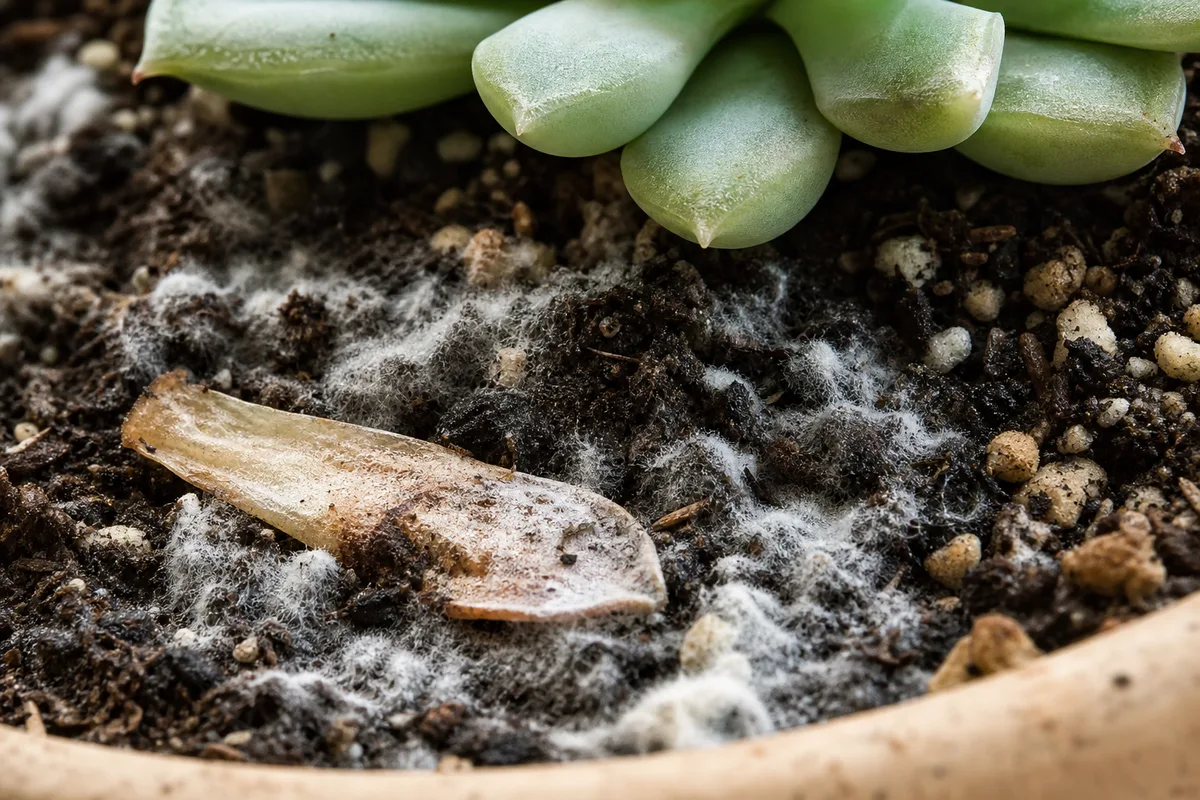
White fuzzy saprophytic patches on damp Echeveria potting mix clustered around fallen rosette litter - firm plump center growth above with no stem-base softness.
Typical harmless surface mold:
- White, gray, or occasionally yellowish fuzzy patches on topsoil only
- Growth appears within days of watering when the surface does not dry
- Rosette leaves remain firm, plump, and normally colored
- No sour or swampy smell from the pot
- Mold may return quickly if you scrape it but keep watering on the same schedule
Signs the wet soil is already hurting the plant:
- Lower leaves turning translucent, yellow, or mushy at the base
- Soft or dented tissue at the stem where it meets soil
- Pot stays heavy a week after you thought it should be dry
- Small dark flies hovering near the pot when you water or bump the container-fungus gnats thrive in damp, overwatered soil
- Musty odor when you lift the plant
Surface mold stays on the soil. Crown rot climbs into living stem tissue. If leaves are failing while only the soil looks fuzzy, you may have both-or rot may be the primary problem.
Visual check: White fuzzy patches clustered under outward-shedding lower rosette leaves on damp topsoil, with a firm plump center rosette and no stem-base softness-classic cosmetic mold on wet mix. Photo reference: surface mold under senesced echeveria leaves beside firm center growth; contrast with black mushy stem tissue at soil line for crown rot.
Mold vs crown rot vs fungus gnats - quick decision table
| Signal | Cosmetic surface mold | Fungus gnats (moisture alarm) | Crown or root rot |
|---|---|---|---|
| Soil surface | White/gray fuzz on topsoil | May or may not show fuzz | Often wet; may smell sour |
| Rosette center | Firm and plump | Firm unless rot advanced | May feel wet or unstable |
| Lower leaves | Normal color, firm | Firm unless overwatered | Translucent, mushy, detach easily |
| Stem at soil line | Firm | Firm unless rot advanced | Soft, black, or dented |
| Pot weight | Heavy if recently watered; dries with pause | Heavy for days | Stays heavy for weeks |
| Flies | Occasional when disturbed | Daily swarms at pot rim | Often present on wet mix |
| First fix | Scrape surface; dry top inch | Stop water; sticky trap | Root rot trim or behead |
How to confirm the cause
Work through these checks in order before Echeveria repotting guide or spraying:
- Rosette firmness - Gently press center leaves. Firm and plump suggests the plant is still healthy; a squishy base means inspect roots.
- Pot weight - Lift the container. Heavy days after watering confirms slow drying. Light pot with wrinkled outer leaves may mean underwatering, not mold.
- Surface moisture - Stick a finger into the top inch. Cool, dark, clinging soil means too wet. Bone dry with visible mold may mean you water too often but the surface briefly steams after each drink.
- Debris check - Remove fallen leaves and petals from the soil and crown. Mold often clusters where litter collects under the rosette.
- Drainage audit - Confirm drainage holes are open, saucers are emptied within an hour, and no decorative outer pot is holding standing water.
- Gnat test - Tap the pot rim. A cloud of tiny flies points to persistently moist organic mix-the same habitat mold uses. See fungus gnats on Echeveria if flies persist after dry cycles.
- Season check - Are you still on a summer watering rhythm in short winter days? Reduced uptake without reduced watering is a classic mold trigger on indoor collections.
If the rosette is firm, leaves are not translucent, and only the soil surface is fuzzy, you are likely dealing with cosmetic saprophytic mold on wet mix-fix the moisture cycle first.
First fix for Echeveria
Stop watering and remove the moldy top layer today.
Use a spoon or fork to scrape off roughly the top quarter-inch of affected mix and discard it. Wipe fallen leaf debris from the crown and soil line. Set the pot in bright light with good airflow and do not water again until the top inch is bone dry-for many indoor Echeveria in winter, that means two to four weeks depending on pot size, mix, and window exposure.
This single step does three things: it removes active fungal growth, eliminates a food layer of decaying surface matter, and breaks the wet cycle that lets spores reestablish. Hold off on repotting unless mold returns within days of scraping and the mix still feels damp at depth.
Step-by-step recovery
After the first dry-out and scrape:
- Adjust watering to soak-and-dry - When you resume, water thoroughly until it runs from drainage holes, then wait until the top inch is completely dry and the pot feels noticeably lighter. Follow the watering guide for skewer checks and winter slowdown. In winter, that interval may stretch to three or four weeks.
- Clean the rosette base weekly - Pull off dried lower leaves before they fall into the soil. Echeveria rosettes shed outward; litter is normal but should not accumulate on the mix.
- Improve airflow - Space pots so air moves between them. A small fan in a plant shelf setup helps surface drying without blasting cold drafts on the plant.
- Bottom-water if surface mold keeps returning - Set the pot in a tray of water for fifteen to thirty minutes so roots drink from below while the top stays drier. Remove all standing water afterward. Alternate with an occasional top soak to flush salts-details in the watering guide.
- Repot only when culture fixes fail - If mold reappears within a week after two dry cycles, move the plant into fresh gritty succulent mix per the soil guide in a pot only slightly larger than the root ball.
- Address fungus gnats if present - Let the growing medium dry between waterings, use yellow sticky traps for adults, and avoid fish-emulsion fertilizers that enrich fungal food in the mix. Full protocol: fungus gnats.
Do not mist Echeveria leaves during this recovery. Extra surface moisture on foliage and soil slows drying and invites more fungal growth around the crown. Do not enclose a recovering echeveria in a closed terrarium or humidity dome unless you cut watering sharply-high humidity plus wet mix is a mold and rot trap on rosette succulents.
Recovery timeline
Days 1–3: Scraped surface looks cleaner; mold should not spread across new areas if watering is paused.
Week 1–2: With a dry top inch, fuzzy regrowth usually stops. The pot should feel lighter. Firm center leaves mean the rosette is stable.
Week 3–4: If you resumed watering on a true dry-through schedule, mold should not return. New inner leaves opening with normal color confirm the root zone is acceptable.
Longer than one month: Persistent mold with a constantly heavy pot, continuing leaf loss, or a softening stem base suggests root or crown rot-not a surface fungus problem alone. Unpot, trim rotted tissue, and let cuts callus before replanting in dry mix. If rot has climbed the stem, behead the firm rosette above clean tissue, callus three to seven days, and reroot per the root rot guide.
Lookalike symptoms
Green algae on soil and pot rim - Flat green film in very wet, low-light setups. Fix is the same: drier surface, brighter light, less frequent watering.
Crown rot at soil line - Brown or black mushy stem tissue with collapsing leaves. This is living tissue decay, not harmless topsoil mold. Requires stopping water, trimming rot, callusing three to seven days, and replanting in dry mix-or beheading the healthy rosette if rot has entered the lower stem. Full salvage steps: root rot on Echeveria.
Fungus gnats without visible mold - Gnats breed in moist organic mix even when you do not see fuzz. Shared cause: overwatering and decomposing debris. Dry the soil and clean litter. See fungus gnats.
Mealybugs in leaf axils - White cottony clusters on leaves and stems, not a uniform soil carpet. Alcohol swabs on insects, not soil scraping.
Powdery mildew on leaves - White coating on leaf surfaces in humid, stagnant air. Distinct from soil-surface growth; improve airflow and avoid wetting foliage.
Early overwatering without rot - Heavy wet pot and firm leaves, no mushy base. Pause watering and check drainage before escalating to repot. See overwatering.
Mistakes to avoid
- Scraping mold daily without drying the soil - You remove the symptom but leave the cause.
- Watering on a calendar - Echeveria needs dryness between drinks, not Tuesday waterings regardless of pot weight.
- Using fungicide as a first response - Chemical sprays do not fix saturated gritty mix or poor drainage.
- Repotting into an oversized container - A bigger wet zone makes mold and rot more likely, not less.
- Leaving spent rosette leaves on the soil - They decay into fungal food under the plant you are trying to protect.
- Assuming mold is always harmless on succulents - The fungus may be benign, but Echeveria should rarely have a visibly wet surface. Treat mold as a watering and drainage audit, not background noise.
- Keeping the pot in a sealed cachepot - Drainage water pooling in a decorative outer shell recreates the damp surface mold needs.
How to prevent mold on Echeveria soil
Match prevention to how this plant actually grows:
- Soak-and-dry watering - Water deeply, then wait for bone dryness through the top inch per the watering guide. Summer may mean every ten to fourteen days; winter may mean monthly or less.
- Fast-draining mix - Use cactus or succulent blend amended with extra perlite or pumice per the soil guide. Avoid heavy peat that stays dark and cool at the surface.
- Right-sized pots with drainage - One size up when repotting, never a large bowl around a small root ball. If you use cachepots, lift the inner pot to drain after every soak.
- Bright light - Cacti and succulents generally require at least four hours of bright, direct light each day; a south- or west-facing window speeds evaporation and keeps rosettes compact. Dim rooms slow drying and encourage etiolation plus wet soil.
- Low humidity is fine - Echeveria tolerates dry indoor air. Do not enclose it in a humid terrarium unless you also cut watering sharply.
- Routine debris removal - Clear fallen leaves before they mold on the mix.
- Empty saucers - Never let the pot sit in drained water after a soak.
When to worry
Escalate beyond surface scraping if:
- The stem base goes soft, black, or smells sour
- Lower leaves turn translucent or detach in clusters while soil stays wet
- Mold returns within two to three days after you have let the top inch dry fully
- Fungus gnats persist for weeks despite dry surface cycles
- The rosette wilts or wrinkles while the pot is still heavy-possible root failure, not drought
A firm Echeveria with fuzzy soil only and no leaf decline is a culture fix, not a rescue operation. A soft base with wet mix is rot until proven otherwise-dry soil alone will not reverse that. Follow root rot on Echeveria the same day: trim mushy roots or behead the firm rosette above clean stem, callus three to seven days in dry shade, then set on dry gritty mix to reroot.
If mold and rot keep returning after repotting into gritty mix, or you are unsure whether tissue is still salvageable, contact your local cooperative extension office or a master gardener helpline for hands-on diagnosis-especially when multiple succulents on the same shelf show the same pattern.
Echeveria care cross-check
Mold is a surface clue pointing back to core care:
| Checkpoint | Mold-prone setup | Healthier setup |
|---|---|---|
| Watering | Frequent light sprinkles; calendar schedule | Soak, then full dry-through per watering guide |
| Mix | Peat-heavy, moisture-retaining | Gritty succulent blend per soil guide |
| Light | Dim shelf, slow drying | South/west window, 4–6 hrs direct sun |
| Pot | No drainage; oversized cachepot | Draining pot sized to roots |
| Debris | Old leaves on soil | Clean surface and crown weekly |
Related tool
Use the Plant Problem Diagnosis Tool to narrow causes for mold on soil on this plant before changing multiple variables at once.
Related guides
- Echeveria overview - species care hub: light, water, soil, dormancy
- Watering - soak-and-dry rhythm, bottom-watering, winter slowdown
- Soil - gritty succulent mix ratios
- Overwatering - wet-soil triage before roots fail
- Root rot - trim, behead, and reroot when stem base softens
- Fungus gnats - flies and larvae in persistently damp mix
- Underwatering - wrinkled firm leaves on light dry pots
This guide targets mold-on-soil diagnosis on container Echeveria-rosette litter as fungal fuel, winter calendar-watering traps, bottom-watering for recurring surface fuzz, mold-vs-rot decision checks, cachepot drainage warnings, and escalation to overwatering, fungus-gnat, and root-rot sibling pages-not generic houseplant mold advice alone. Saprophytic soil mold is usually not particularly damaging to the plant when cultural conditions are corrected.
When to use this page vs other Echeveria guides
- Echeveria watering guide - Use for routine moisture checks before assuming mold on soil is the main issue.
- Echeveria problems hub - Browse all 16 common issues on this species.
- Fungus Gnats on Echeveria - Different entry point when symptoms overlap with mold on soil.
- Overwatering on Echeveria - Different entry point when symptoms overlap with mold on soil.
- Root Rot on Echeveria - Different entry point when symptoms overlap with mold on soil.