Underwatering on Echeveria: Causes, Checks & Fixes
Quick answer
Underwatered Echeveria shows wrinkled, deflated outer leaves and a very light pot with bone-dry soil. First step: bottom-water or soak the mix thoroughly until the root zone is moist, then drain completely before you water again.
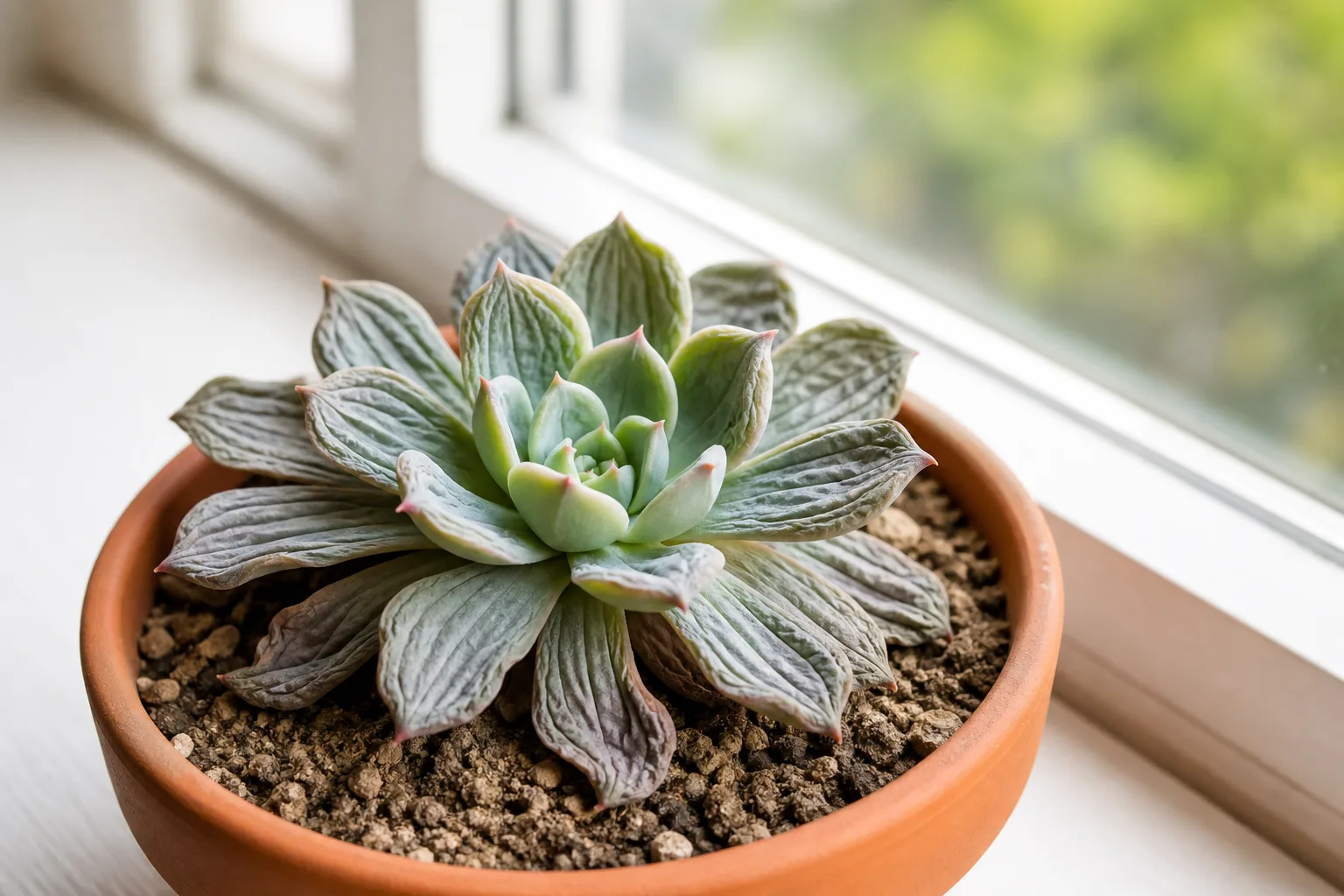
Underwatering on Echeveria: Causes, Checks & Fixes
This guide covers underwatering on Echeveria. See also the general Underwatering guide, watering, and light pages for this plant.
Underwatering on Echeveria: Causes, Checks & Fixes
Quick answer
Echeveria stores water in its thick rosette leaves, so drought shows up as wrinkled, deflated foliage-not the mushy translucence of rot. The pot feels feather-light, the mix is dusty dry, and often the outermost leaves shrivel first while the center still looks okay.
First step: give one thorough soak so the entire root ball rewets, then let the pot drain completely. Bottom-water in a tray until the surface moistens, or top-water slowly until excess runs from the drainage holes. Do not mist the rosette, do not drip water daily, and do not repot on day one unless the mix has gone hydrophobic and water runs straight through.
What underwatering looks like on Echeveria
Healthy Echeveria leaves feel firm and plump, like a filled water balloon. When reserves drop, the change is visible on the oldest outer leaves first:
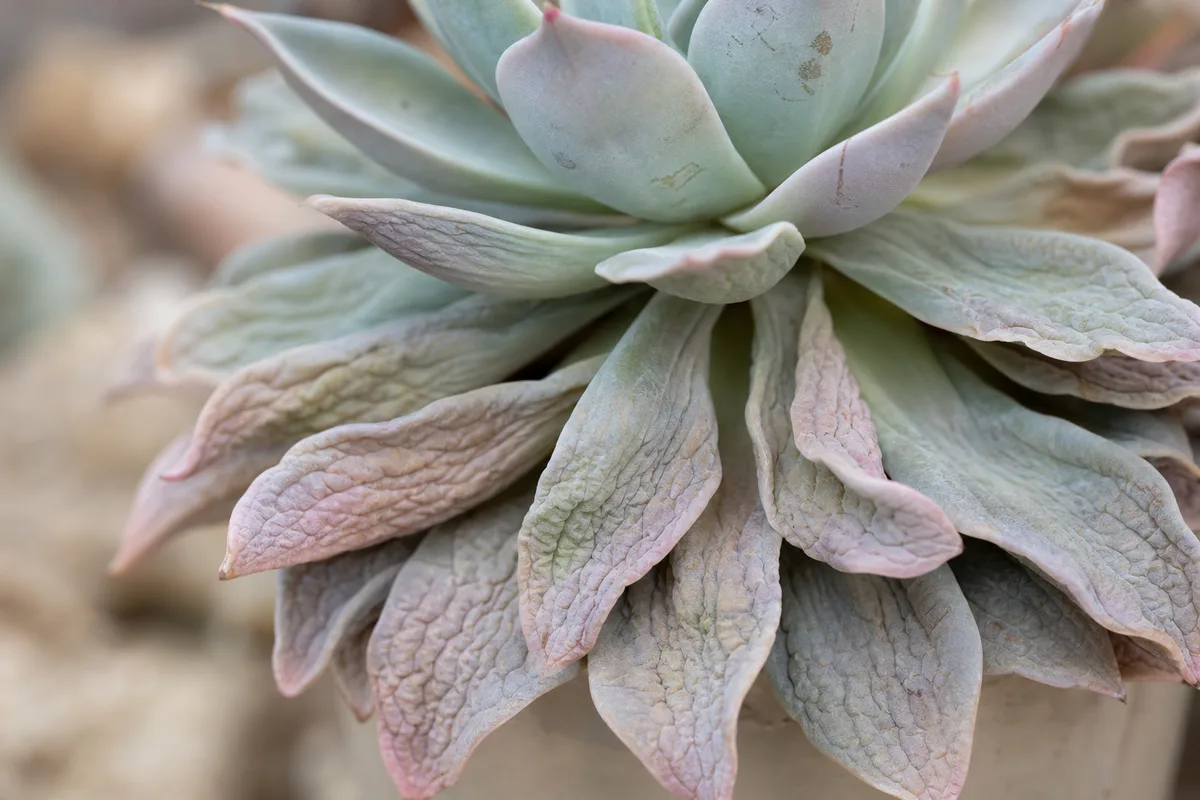
Wrinkled, thin outer rosette leaves with accordion-pleated texture - compare with firm plump center growth and a feather-light pot on bone-dry mix.
- Wrinkled or accordion-pleated texture on lower rosette leaves
- Thin, papery, or concave leaves that still cling to the stem (unlike [overwatered leaves that turn mushy and fall off easily](https://www.missouribotanicalgarden.org/gardens-gardening/your-garden/help-for-the-home-gardener/advice-tips-resources/insects-pests-and-problems/environmental/[overwatering on Echeveria](/plants/echeveria/overwatering/)))
- Dull or slightly gray-green color instead of the usual waxy sheen
- Potting mix pulled away from the inside of the container
- Very lightweight pot compared with how it feels an hour after watering-a light pot signals the plant needs water
- Slow or stalled offset growth during what should be active spring or summer
Unlike overwatering-which causes translucent, yellow, or black mushy leaves at the rosette base with damp soil-underwatered tissue stays dry and leathery. Roots, when you inspect them, should be firm and pale, not brown and collapsing.
Normal lookalikes: Some Echeveria species naturally blush or tighten in strong sun. That stress coloring is different from widespread wrinkling across multiple leaves plus a bone-dry pot. Lower leaves also die and dry as part of normal rosette renewal; a single crispy leaf on an otherwise plump plant is not drought.
Why Echeveria gets underwatered
Echeveria evolved for semi-arid highland conditions with sharp drainage and long dry intervals between rains. That makes it drought-tolerant-but not immune to chronic neglect, especially when growth is active and the plant is using stored leaf water faster than you replace it.
Fear of overwatering is the most common trigger indoors. Because rot collapses rosettes quickly on Echeveria, many growers swing too far the other way and skip drinks for weeks even while the plant sits in hot summer sun.
Other Echeveria-specific causes:
- Calendar watering in winter only - Plants in warm, bright rooms keep using water through winter even when growth slows; a strict “once a month everywhere” rule can leave heated windowsills chronically dry.
- Small pots and root-bound plants - Tight rosettes in shallow pots can dry completely in two or three days under grow lights or south-facing glass.
- Fast-draining mix done right - Gritty succulent soil is correct, but it also means water passes through quickly; light top splashes never reach the root ball.
- Hydrophobic dry mix - When peat or old soil repels water, the surface looks briefly damp while the center stays dust-dry.
- Hot, windy, or AC-drafted spots - High evaporation plus fast-draining mix accelerates drying beyond a lazy summer schedule.
- Recent repot into dry mix - Fresh gritty soil wicks moisture away from roots until the first few soaks establish even moisture.
Echeveria tolerates short dry spells better than constant wet feet, but repeated severe drought during active growth can kill fine roots-the same roots you need for the next drink to matter.
How to confirm the cause
Work through these checks in order before you soak:
- Leaf squeeze test - Pinch a soft lower leaf. Deflated and slightly wrinkled, like soft rubber, suggests thirst. Mushy with moisture release suggests overwatering instead.
- Pot weight - Lift the container. If the pot is light, the plant is in need of water. A very light pot with limp outer leaves strongly fits underwatering.
- Soil at depth - Dry on the surface means little for succulents. Stick a finger through the drainage hole or use a bamboo skewer-if it comes out clean and dry several centimeters up, the root zone needs water.
- Soil edge gap - Mix shrunken away from the pot sides confirms prolonged dryness and may mean hydrophobic soil.
- Watering history - How many days since a thorough drink, not a few spoonfuls? Did water run out the bottom or merely wet the top inch?
- Season and placement - Active summer growth in Echeveria light guide dries pots faster than cool winter rest. Adjust expectations accordingly.
- Root spot-check (optional) - If leaves stay wrinkled after two good soaks, slide the plant out. Firm white roots confirm drought was the issue; mushy brown roots mean rot, and soaking further will make things worse.
If the pot is heavy, soil is cool and damp below the surface, and leaves are soft at the base, stop-wilted leaves with moist soil can indicate damaged roots from overwatering, not thirst.
First fix for Echeveria
Bottom-water or deeply soak the pot once until the entire root ball is moist, then drain all excess.
Choose one method:
Bottom-watering: Place the pot in a tray of room-temperature water reaching about halfway up the container. Watering from the bottom wets the entire soil ball when the top of the mix darkens-usually 20–30 minutes for a 10 cm pot. Remove, let drain 30 minutes, and empty the saucer.
Top-watering: Water slowly in circles near the pot rim, avoiding the rosette center. Pause, then repeat until water runs freely from the drainage holes. This suits very gritty mix that wicks well from above.
Do not leave the pot sitting in water overnight-never let houseplants sit in water. Do not pour water directly into the rosette crown- trapped moisture on leaves invites rot on an already stressed plant.
After this single rehydration, wait until the mix is completely dry again before the next drink. Your goal is one full cycle, not a week of daily splashes.
Step-by-step recovery
If the first soak does not plump leaves within 48 hours:
- Repeat one thorough soak two to three days later if the mix dried evenly and roots looked healthy on inspection.
- Fix hydrophobic mix - If water channels through instantly, bottom-water twice in one session or top-water in slow passes. Persistent repelling soil may need Echeveria repotting guide into fresh succulent mix-but only after the plant rehydrates once.
- Move out of extreme heat temporarily - A wilted rosette on a baking windowsill loses water faster than roots can take it up. Bright light is good; scorching afternoon glass is not while recovering.
- Remove only fully dead leaves - Crisp, flat, brown leaves that pull away cleanly can go. Do not peel living but wrinkled leaves; they often recover.
- Hold fertilizer - Rehydrate first. Feeding drought-stressed roots can burn tender tissue.
- Adjust the schedule - Note how many days until the pot feels light again. That interval-not a generic calendar-is your baseline going forward.
Skip repotting, pruning the whole rosette, or rooting cuttings until turgor returns unless roots are clearly dead.
Recovery timeline
Mild dehydration often shows improvement within 24–48 hours as leaves rehydrate. Outer leaves plump first; the rosette center may take an extra day.
Moderate drought with some crisp lower leaves: expect one to two weeks of stable care before new offset growth resumes. Old brown tips do not green up again.
Severe or repeated drought with root damage: recovery can take several weeks, and some outer leaves may stay scarred. If the center stays firm and new leaves emerge tightly packed, the plant is winning. If the core goes soft while soil is wet, shift diagnosis to rot.
Lookalike symptoms to rule out
Overwatering and root rot on Echeveria - Mushy, translucent, or blackening leaves at the base; sour soil smell; wet mix; leaves detaching with a gentle tug. Wilt with wet soil means rotting roots cannot take up water, not simple thirst.
Sunburn - Tan or brown patches on the side facing the window, on otherwise firm, adequately watered leaves.
Mealybugs - White cottony clusters in leaf axils, sticky residue, and distorted new growth-not uniform pot-wide wrinkling with dry soil.
Normal leaf senescence - A single drying outer leaf on an otherwise plump rosette is renewal, not necessarily underwatering.
Not enough light - Stretching, pale loose rosettes, and leaning toward the window without the dry-soil pattern of drought.
Mistakes to avoid
Do not mist the rosette instead of soaking soil-roots need soil moisture, and wet leaf crowns invite rot.
Do not water daily after one dry spell-that swings straight into overwatering on fast-draining mix that has not actually dried again.
Do not assume all soft leaves mean rot and withhold water from a feather-light pot; you may be treating the wrong problem.
Do not use cold tap water on fuzzy-leaved species like Echeveria pilosa; room-temperature water reduces shock.
Do not fertilize until leaves firm up and the mix has gone through at least one normal dry cycle post-recovery.
Echeveria care cross-check
Underwatering prevention on Echeveria is really about learning your pot’s dry weight in your light:
- Use very fast-draining succulent mix with perlite, pumice, or grit-not moisture-retaining peat-heavy blends.
- Give several hours of direct sun when possible; strong light means the plant uses water predictably and dries the mix on a readable rhythm.
- In summer active growth, many rosettes need a full soak every 10–14 days; in cool winter rest, stretch toward monthly-but heated indoor winter rooms may still need more.
- Water when the mix is completely dry-allow the pot to dry out thoroughly between waterings-and outer leaves feel just slightly soft, not severely shriveled.
- Always use pots with drainage holes and empty saucers after watering.
Short dry spells are safer for Echeveria than soggy soil-but a wrinkled rosette in a hot window is the plant spending down leaf reserves it cannot replace without your help.
How to prevent underwatering next time
Build a simple check habit instead of a rigid calendar:
- Weekly pot lift during growing season-learn light versus heavy.
- Seasonal adjustment - Shorten intervals in hot, bright months; lengthen in cool winter rest, but do not ignore a warm bright windowsill entirely.
- Right pot size - A rosette filling a small pot dries faster; either water more often or accept that the schedule differs from a large Jade plant nearby.
- Refresh old mix that repels water before chronic drought damages roots.
- One full soak per cycle - Partial top splashes on gritty mix cause more underwatering than any calendar ever prevented.
When outer leaves wrinkle slightly, that is Echeveria telling you the reserves are low-not an emergency yet, but the right moment for a thorough drink before leaves crisp and roots suffer.
When to use this page vs other Echeveria guides
- Echeveria watering guide - Use for routine moisture checks before assuming underwatering is the main issue.
- Echeveria problems hub - Browse all 16 common issues on this species.
- Wilting on Echeveria - Different entry point when symptoms overlap with underwatering.
- Brown Tips on Echeveria - Different entry point when symptoms overlap with underwatering.
- Yellow Leaves on Echeveria - Different entry point when symptoms overlap with underwatering.