Yellow Leaves on Echeveria: Causes, Checks & Fixes
Quick answer
Yellow leaves on Echeveria usually mean overwatering, underwatering, low light, or harmless lower-leaf aging-not one mystery disease. First step: lift the pot and feel the outer leaves-mushy translucent yellow on wet mix calls for dry-down; thin concave leaves on a light dry pot call for a deep soak.
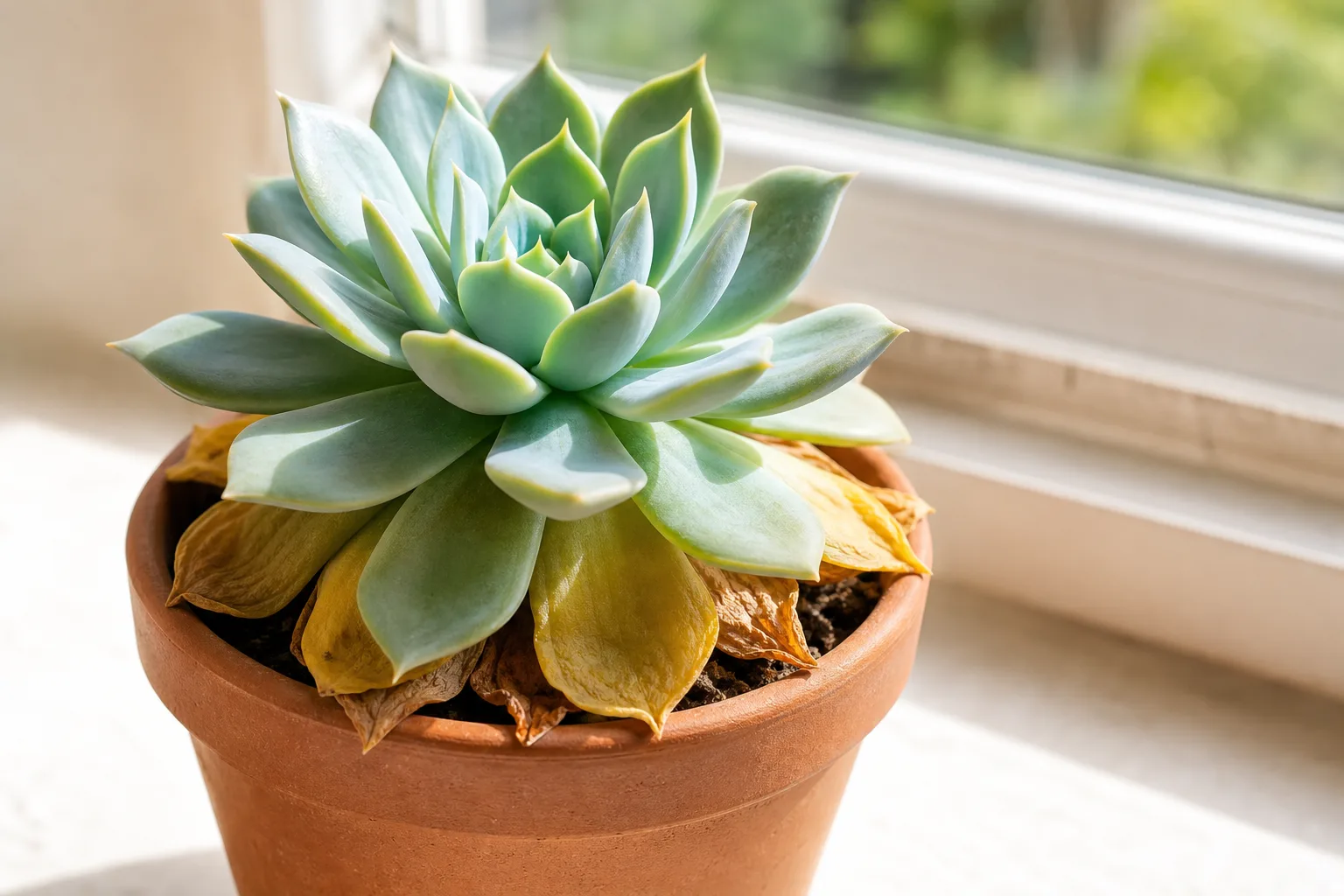
Yellow Leaves on Echeveria: Causes, Checks & Fixes
This guide covers yellow leaves on Echeveria. See also the general Yellow Leaves guide, watering, and light pages for this plant.
Yellow Leaves on Echeveria: Causes, Checks & Fixes
Quick answer
Echeveria rosettes store water in thick leaves and expect bright light with several hours of direct sun plus a soak-and-dry watering rhythm. Yellow leaves on this succulent almost always trace to water stress (too wet or too dry), insufficient light (pale etiolated upper foliage), sun scorch after a sudden move, or normal aging of the lowest rosette leaves-not a leaf disease you spray away.
The diagnostic trap: Echeveria yellows from the bottom outward for both overwatering and underwatering on Echeveria, so leaf placement alone is not enough. Leaf texture and pot weight tell you which path to take.
First step: lift the pot and feel the lowest yellow leaf. If the pot is heavy and cool and the leaf is soft, translucent, or mushy, stop watering and let the mix dry completely before the next drink. If the pot is very light and outer leaves are thin and concave, give one thorough soak until water drains. If moisture is normal but new leaves stay pale and spaced out, move to brighter direct sun before changing anything else.
What yellow leaves look like on Echeveria
Echeveria announces the cause through texture, placement, and soil moisture together.
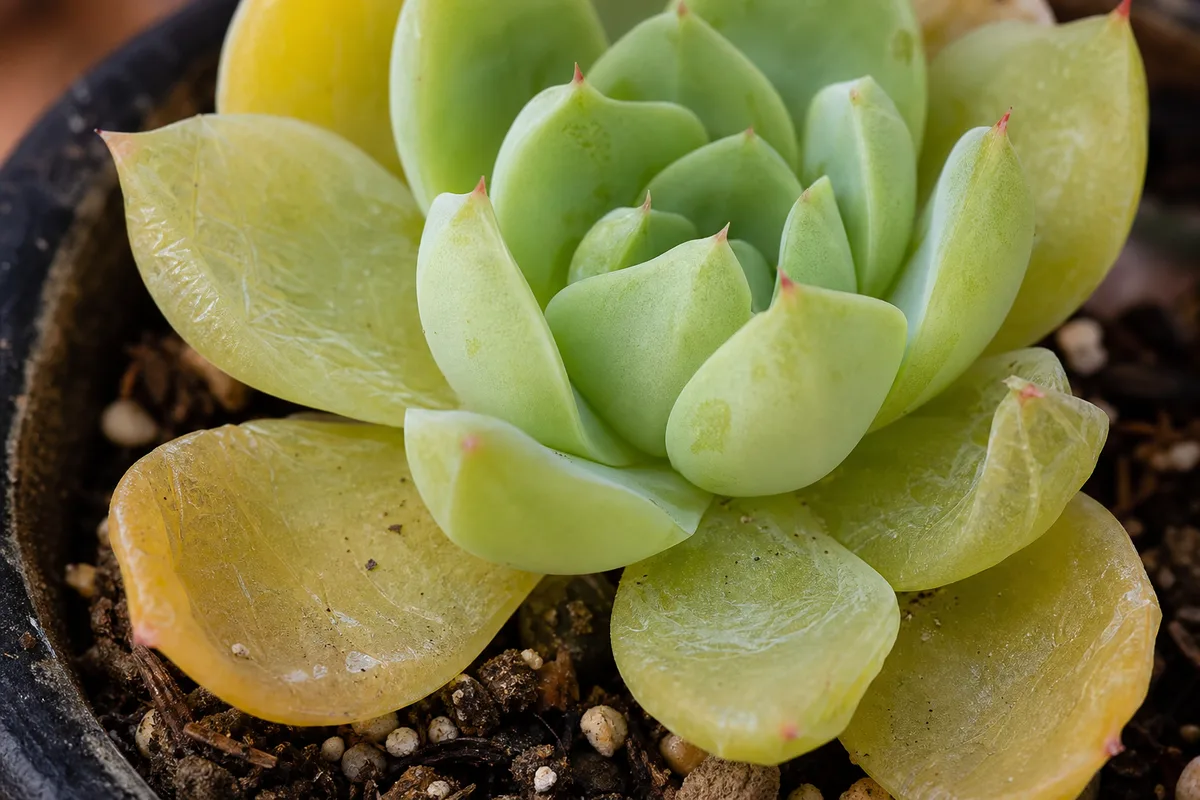
Yellow Leaves symptoms on Echeveria - compare with healthy tissue on the same plant.
Overwatering / rot pattern (most dangerous):
- Translucent, mushy lower leaves that yellow from the base upward
- Pot stays heavy days after you thought you watered lightly
- Leaves detach easily with a gentle tug-healthy Echeveria leaves resist
- Blackening at the rosette stem base or sour smell from drain holes
- Center leaves still firm early on, then collapse if rot climbs the stem
- Often pairs with fungus gnats or leads to root rot-see overwatering
Underwatering pattern:
- Dry, crisp yellow or brown outer leaves on a very light pot
- Concave, wrinkled leaf faces-the plant is drawing on stored water
- Mix shrunken away from pot walls; water runs down the gap without soaking roots
- Recovery within 24–48 hours after a deep soak if the stem base is still firm
Low-light pattern:
- Pale yellow-green upper leaves with widening gaps between leaf pairs (etiolation)
- Rosette loses tight cup shape and leans toward the window
- Soil stays wet longer in dim corners because transpiration slows-often pairs with overwatering
- See not enough light and leggy growth
Sun scorch pattern:
- Bleached yellow-white patches on leaves facing intense afternoon sun after a sudden move
- Affects exposed leaf faces, not just the bottom ring
- Firm leaf texture-not mushy like rot
Normal aging:
- One or two oldest bottom leaves turn dry yellow and papery over months
- Tight green center and firm stem base
- No sour smell, no heavy wet pot
Why Echeveria gets yellow leaves
Overwatering in slow-dry conditions. Echeveria needs well-drained soil and infrequent watering. Dense peat mix, blocked drain holes, and watering on a calendar keep the root zone oxygen-poor. Saturated soil deprives roots of oxygen and yellows lower leaves first-the classic progression toward stem rot at the rosette base.
Underwatering in hot windows. Echeveria in south-facing summer sun can dry a small pot in days. Repeated shallow sips never re-wet a shrunken root ball, so outer leaves yellow from drought while you think you watered “often enough.”
Low light slowing water use. In dim rooms the rosette etiolates and the mix stays damp for weeks. The same watering that worked in summer sun becomes excessive in a dark corner-wet cool mix plus weak growth is how rot starts.
Winter dormancy mismatch. Succulents slow growth in low light and cool temperatures. Owners who keep summer watering frequency through winter yellow bottom leaves on constantly damp mix.
Natural senescence. Echeveria sheds its oldest bottom leaves as new center leaves emerge. That single-leaf fade is harmless if the rosette stays compact and the stem base is firm.
How to confirm the cause
Work through these checks in order-pot weight beats guessing from photos.
- Pot weight and moisture at the base - Heavy and damp after several dry days strongly suggests overwatering. Very light and dusty suggests underwatering.
- Leaf squeeze test - Mushy translucent tissue on wet mix escalates toward rot. Thin concave leaves on dry mix fit drought.
- Center rosette check - Tight new leaves with one yellow bottom leaf suggest aging. Pale stretched new growth points to light stress.
- Stem base inspection - Black soft tissue at soil level is urgent rot, not aging.
- Light audit - South- or west-facing windows with direct sun suit Echeveria; north windows rarely keep rosettes compact without supplementation.
- Pest scan - Mealybugs hide in leaf axils and leave white waxy clusters-not uniform bottom yellowing alone.
| Pattern | Pot weight | Leaf texture | Center rosette | Likely cause |
|---|---|---|---|---|
| Lower mushy yellow | Heavy | Soft, translucent | May still be firm | Overwatering / rot |
| Crisp outer yellow | Light | Thin, concave | Firm, tight | Underwatering |
| Pale whole rosette | Medium-heavy | Firm but pale | Stretched, loose | Low light |
| Bleached patches | Normal | Firm, dry scorch | Tight | Sun shock |
| 1–2 bottom leaves | Normal | Dry, papery | Tight green | Normal aging |
First fix for Echeveria
Match your first action to the pot and leaf check-not a bundle of fixes.
- Wet heavy pot with mushy leaves: Stop watering until the mix is fully dry at the rosette base. Empty saucers. Do not fertilize. If the stem base blackens, unpot and inspect roots-see root rot.
- Light dry pot with concave leaves: Water deeply until runoff, drain fully, then wait until the mix dries through before the next soak per the watering guide.
- Normal moisture but pale stretched rosette: Move to the brightest window with several hours of direct sun over one to two weeks. See not enough light.
Make one targeted correction first. Stacking repot, fertilizer, and pesticide on the same day hides what actually helped.
Step-by-step recovery
Overwatering recovery
- Skip watering until the mix is dry throughout-often one to two weeks indoors.
- Remove fully mushy yellow leaves; they will not recover.
- Ensure drain holes are open and saucers stay empty.
- If the stem base softens or smells sour, unpot, trim black roots, and repot into fresh gritty mix.
- Resume soak-and-dry watering only after the rosette base stays firm for two weeks.
Underwatering recovery
- Soak the root ball until water runs from holes; repeat once if mix was hydrophobic.
- Trim fully crisp yellow leaves at the base.
- Move out of harsh midday sun until turgor returns-usually 24–48 hours.
Low-light recovery
- Relocate to south- or west-facing glass with gradual exposure increase.
- Cut watering frequency to match slower growth in the brighter spot.
- Behead and reroot if the stem is too stretched-only after new growth in better light proves the diagnosis.
Recovery timeline
- Underwatering: Outer leaves plump within 24–48 hours; new center leaves in one to two weeks.
- Overwatering (mild): Yellowing stops spreading in two to three weeks once dry-down holds.
- Low light: Tighter new leaves in three to six weeks; old stretched leaves stay pale unless removed.
- Normal aging: Single bottom leaf drops; no further spread.
Judge success by firm stem base and tight new center leaves-not by old yellow tissue re-greening.
Lookalike symptoms
- Brown tips - Usually salt or physical damage, not whole-leaf yellow.
- Wilting - Can mean over- or underwatering; always pair with pot weight.
- Mealybugs - White cottony patches in axils, not uniform bottom senescence.
Mistakes to avoid
- Do not keep watering because leaves look “thirsty” on wet soil-that accelerates rot.
- Do not fertilize yellow rosettes before fixing water and light-salts stress failing roots.
- Do not assume every yellow leaf needs Echeveria repotting guide; many cases resolve with dry-down or one deep soak.
- Do not place a dark-stretch rosette into harsh all-day sun in one step-scorch adds bleached patches.
How to prevent yellow leaves next time
Water when the mix dries through at the rosette base-not on a fixed calendar. Give bright light with direct sun for part of each day so the plant uses water predictably. Use fast-draining succulent mix in a pot sized to the root mass. Remove spent lower leaves during routine checks. Inspect weekly so one yellow bottom leaf does not become a wet-root crisis.
For full species context, see the Echeveria overview.
When to use this page vs other Echeveria guides
- Echeveria watering guide - Use for routine moisture checks before assuming yellow leaves is the main issue.
- Echeveria problems hub - Browse all 16 common issues on this species.
- Overwatering on Echeveria - Different entry point when symptoms overlap with yellow leaves.
- Underwatering on Echeveria - Different entry point when symptoms overlap with yellow leaves.
- Not Enough Light on Echeveria - Different entry point when symptoms overlap with yellow leaves.