Underwatering on Aparajita (Butterfly Pea): Causes, Checks
Quick answer
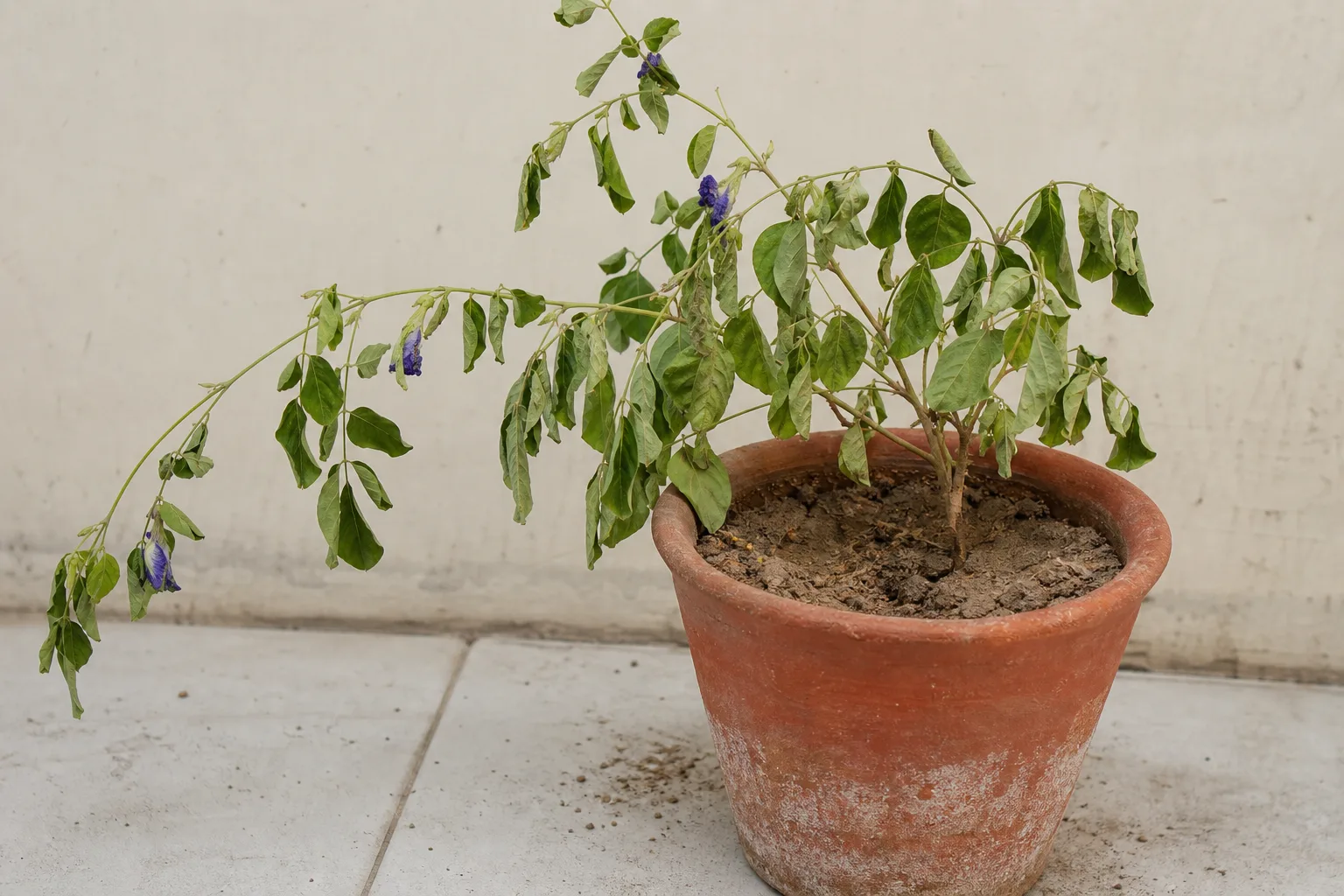
Underwatering on Aparajita shows as limp twining stems, dull folded leaflets, and flower buds that abort before leaves yellow-on a pot that feels light with dry soil 3 cm down. First step: water deeply at the soil line until runoff drains, then empty the saucer. One thorough soak beats daily sips.
Underwatering on Aparajita (Butterfly Pea): Causes, Checks & Fixes
This guide covers underwatering on Aparajita. See also the general Underwatering guide, watering, and light pages for this plant.
Underwatering on Aparajita (Butterfly Pea): Causes, Checks & Fixes
Quick answer
If your butterfly pea collapsed on a sunny balcony and you are wondering whether it is dying or just thirsty-start with the pot, not panic. Underwatered Aparajita (Clitoria ternatea) wilts from the vine tips inward: twining stems go limp, compound leaflets fold or dull to gray-green, and flower buds abort before you see much yellowing. The container feels light, and soil at 3 cm depth is dry and may pull slightly from the wall.
First step: water deeply at the soil line until water runs from the drainage hole, then empty the saucer. One thorough base soak re-wets the root zone better than repeated small drinks that never reach deep roots. Do not assume every wilt means thirst-wilted leaves can also mean soil that is too wet when roots have failed. If the mix is damp and cold while stems hang limp, switch to the root rot guide instead of adding more water.
This page is for emergency diagnosis and recovery. For day-to-day watering rhythm, soil checks, and season-by-season adjustments, use the Aparajita watering guide.
What underwatering looks like on butterfly pea
Butterfly pea is a fast-growing twining legume that moves a lot of water through compound leaves when it climbs in Aparajita light guide. When roots run dry, the whole vine shows stress quickly-unlike a succulent that can coast on stored water for weeks.
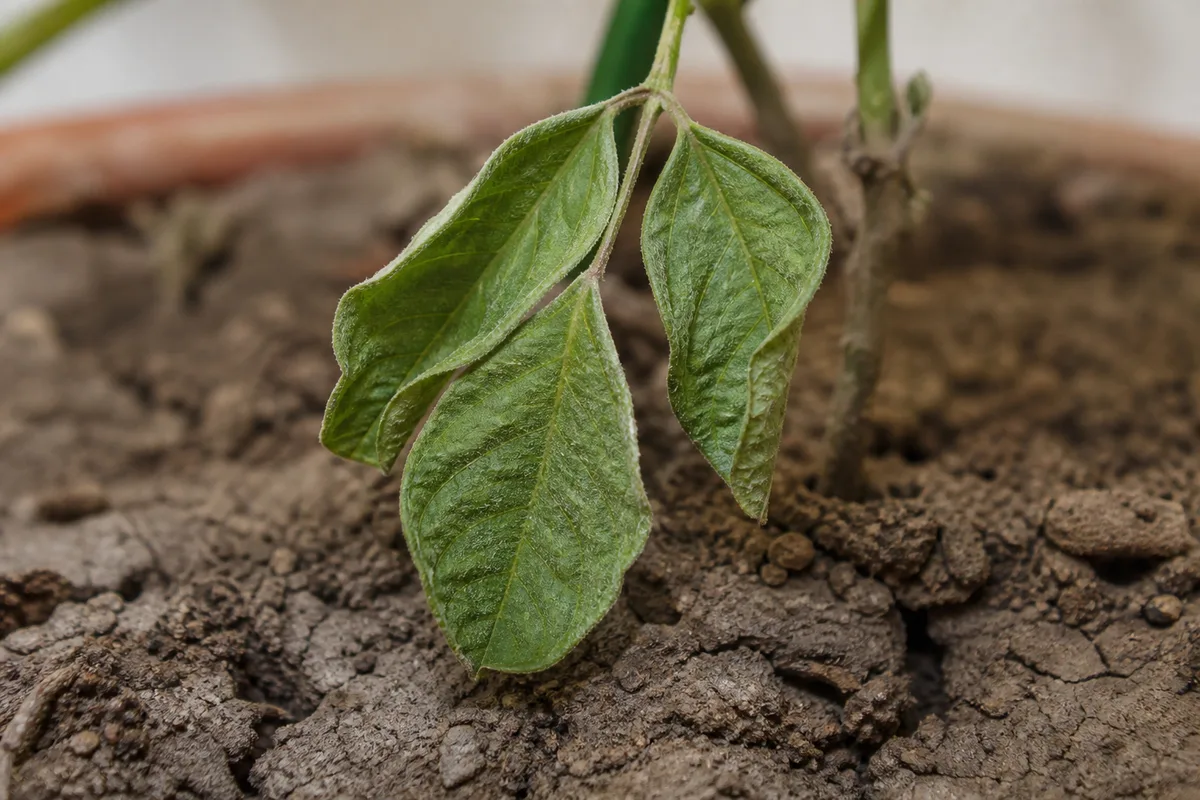
Underwatering symptoms on Aparajita - compare with healthy tissue on the same plant.
Typical underwatering signs:
- Limp or drooping twining stems, often worst at the growing tips
- Compound leaflets that fold, feel thin, or turn dull gray-green instead of rich green
- Dry, dusty soil pulling away from the pot edge
- A pot that feels noticeably lighter than right after watering
- Reduced flowering or buds that form and drop before opening-the earliest bloom signal on Aparajita
- Crispy brown edges on older leaflets after repeated dry cycles
- Water that runs straight through the pot without moistening the center-often hydrophobic mix after long dryness; very dry soil may need soaking to wet properly again
What healthy drought tolerance looks like: Established butterfly pea can survive brief dry spells-NC State Extension notes drought tolerance with best performance under consistent watering and full sun. On Aparajita that usually means the vine stays green with few or no blue flowers while new tendrils slow-not a happily stressed specimen worth copying. Survival mode is not bloom mode.
Unlike root rot, underwatered soil smells neutral or dusty, not sour. Roots, if you slip the plant out, should be firm and pale tan-not brown, mushy, or black.
Why Aparajita gets underwatered
Several traits that make butterfly pea easy to grow also make it easy to underwater by mistake.
Full sun dries containers fast
Aparajita wants five to six hours of direct sun for heavy flowering. NC State lists full sun as six or more hours of direct light daily. On a west-facing balcony rail, that translates to a small pot losing its shallow moisture layer in a single hot afternoon-long before a calendar says “watering day.”
Drought tolerance hides the problem
Growers often read “drought tolerant” on a tag and water rarely. UF/IFAS describes butterfly pea as drought tolerant with a high growth rate in favorable conditions. On Aparajita the vine may stay green while quietly dropping buds and slowing new tendrils. By the time stems wilt dramatically, the pot has often been dry for days.
Rhizobium buffer masks early thirst
As a legume, butterfly pea partners with soil bacteria to fix nitrogen-a buffer noted in the watering guide that can keep lower leaflets green slightly longer than you’d expect on a non-legume vine. Do not mistake that green hold for adequate moisture; bud drop still happens first when the root zone runs lean.
Small pots, travel gaps, and fear of rot
Young vines in starter pots or mature plants with roots densely filling a 30–60 cm container both dry unevenly. A long weekend away in peak summer can leave a sunny balcony vine bone dry-especially if a neighbor “helps” with a light sprinkle that never reaches the root zone. Growers who previously lost vines to soggy mix sometimes swing too far dry after reading about bacterial soft rot on butterfly pea; the fix for rot is drainage, not permanent drought.
In-ground vines versus balcony containers
In-ground butterfly pea along a fence or trellis draws from a larger soil volume and may need deep irrigation only every week or two in summer-PROSEA notes the species tolerates dry periods in tropical cultivation when roots reach deeper moisture. The same cultivar in a 25 cm balcony pot can need water every two to three days in pre-monsoon heat because the entire root zone is exposed to sun and wind. Do not copy in-ground intervals onto a container vine without checking the 3 cm depth.
How to confirm underwatering vs. rot, heat stress, and lookalikes
Work through these checks before you pour:
- Finger test at 3 cm - Push your finger to the second knuckle. Dry, crumbly soil confirms thirst. Cool damp soil means wait-even if leaflets look soft in afternoon heat.
- Pot-weight test - Lift the container right after your next proper watering to learn the heavy baseline. A dry Aparajita pot is dramatically lighter. Missouri Botanical Garden recommends lifting small pots as a quick moisture guide. Spend two weeks lifting after every soak until heavy versus light becomes automatic on your setup.
- Skewer or chopstick test - Insert a wooden skewer to mid-pot depth. A clean, dry stick means water; clinging damp soil means the lower mix still holds moisture.
- Wilting pattern - Underwatering wilts the whole vine fairly evenly during dry soil. One branch collapsing while others stay firm suggests mechanical damage, stem rot, or localized root failure-not simple thirst.
- Flower response - Bud drop on dry soil with limp tips strongly points to moisture stress. Bud drop on wet heavy soil points elsewhere.
- Smell and root peek - Sour or swampy odor with wet mix suggests overwatering or rot. Neutral dry soil with firm roots confirms underwatering. Slide the plant out only if symptoms persist after a correct soak.
| What you see | Likely cause | Next step |
|---|---|---|
| Dry 3 cm, light pot, limp whole vine, bud drop | Underwatering | Deep base soak, drain saucer |
| Wet heavy soil, limp vine, sour smell | Root rot / overwatering | Root rot guide - stop watering |
| Afternoon limpness, moist 3 cm, recovery by evening | Heat stress | Shade briefly; do not soak without dry test |
| Fine stippling + webbing on leaf undersides | Spider mites | Spider mites guide |
| Leggy pale stretch, moist soil, no wilt | Insufficient light | Light / not enough light |
| Yellow lower leaflets on wet soil | Overwatering | Overwatering guide |
If soil is dry at 3 cm and the pot is light, you have confirmed underwatering. If soil is wet and cold while the vine wilts, rotting roots cannot take up water-stop watering, improve drainage, and follow the root rot protocol. Damaged roots fail to transport moisture even when the mix holds plenty of water; adding another soak only deepens decay.
First fix for Aparajita
Water thoroughly at the base of the plant until excess drains from the bottom, then empty the saucer within thirty minutes.
Use a narrow-spout watering can or gentle hose directed at the soil line-not an overhead shower that wets compound leaves and invites fungal problems on humid nights. Pour slowly if the mix has gone hydrophobic so water sinks in rather than racing down the inside wall of the pot. When runoff appears, stop and let the pot drain completely.
That single deep soak is the entire first fix. Do not follow with fertilizer, Aparajita repotting guide, or heavy pruning on the same day. Wait until the top 3 cm dries again before the next watering-timing varies by season and pot size; see the watering guide for rhythm, not a fixed calendar.
Bottom-wick for hydrophobic mix
If water ran through without wetting the center, set the pot in a shallow tray of room-temperature water for twenty to thirty minutes so the mix wicks upward, then drain fully. Repeat the finger test at 3 cm afterward to confirm the root zone actually moistened.
What not to do the same day
Do not mist leaflets instead of soaking soil. Do not compensate with daily shallow drinks. Do not fertilize a drought-stressed vine. Do not overhead-water at dusk on humid nights when bacterial soft rot risk rises on wet foliage.
Step-by-step recovery after chronic dryness
Once the first soak is done, recovery depends on how long the vine went dry.
Mild same-day wilt on dry soil: One thorough watering often restores turgor within hours. Move the pot out of harsh midday sun until stems firm if heat compounded the stress.
Several days dry with crispy leaflet edges: Soak as above, then maintain steady moisture when the top 3 cm dries. Trim only fully brown, dead leaflets if they look unsightly-green tissue may still feed the plant. Do not strip half the vine at once.
Hydrophobic mix that repels water: Bottom-wick once, then top-water slowly in two sessions an hour apart. Consider top-dressing with fresh moist mix or repotting in spring if the root ball stays dry inside despite repeated soaks-compacted peat-heavy soil often needs replacement, not more calendar water.
Repeated drought cycles with stalled growth: After rehydration, watch new tendrils for two weeks. If growth resumes and buds form, roots survived. If the vine stays limp on now-moist soil, unpot and inspect for brittle dead roots trimmed back to firm tissue before repotting into fresh well-draining mix-hold fertilizer until new shoots appear. Persistent wet-soil wilt after correction points to root rot from earlier overwatering swings, not ongoing thirst.
Recovery timeline
Simple thirst on an otherwise healthy vine often shows improvement within six to twenty-four hours after one proper soak. Stems feel firmer by the next morning; new tendrils may resume twining within a few days.
Severe dryness that needed bottom-wicking or hydrophobic rewetting may take one to three days before leaflets look fully turgid again. Judge success by new growth and fresh buds, not by old crispy edges-they will not green up.
Chronic underwatering that damaged fine roots recovers over two to four weeks if enough healthy root tissue remains. Continued wilting on moist soil after forty-eight hours suggests root loss or rot from prior swings-not ongoing thirst. See wilting on Aparajita when dry-soil and wet-soil patterns blur.
Mistakes to avoid
Do not water on a fixed calendar without checking the top 3 cm. Summer sun on a west-facing metal trellis and winter cool rooms dry pots at very different speeds.
Do not assume drought tolerance means skipping water all summer. Consistent watering supports the best performance even though the species survives dry intervals.
Do not repot on day one unless mix is hydrophobic or roots are clearly damaged. Fresh disturbance on a wilted vine adds unnecessary shock.
Do not confuse underwatering with spider mites on heat-stressed dry plants-check leaflet undersides for stippling and webbing when soil checks are ambiguous.
Aparajita care cross-check
Underwatering rarely happens in isolation on a flowering vine. After you rehydrate, confirm the rest of the setup supports even moisture use:
- Light - Full sun drives water demand. Less light means slower dry-down; adjust watering when you move the trellis.
- Pot and mix - Well-draining moderately fertile mix with perlite or coarse sand dries predictably. Heavy waterlogged clay in a sealed cachepot causes the opposite problem-see overwatering.
- Support - A vine climbing a hot metal trellis loses water faster than one on a shaded wall. Windy balcony corners dry pots overnight.
- Season - Active growth from spring through fall drinks steadily; cool winter slowdown extends intervals between soaks even indoors. Monsoon humidity can pause frequent watering even when temperatures stay warm-keep checking soil depth.
For full culture context, see the Aparajita overview.
How to prevent underwatering next time
Build a habit around soil checks, not dates. Water when the top 3 cm feels dry, then soak at the base until drainage runs clear. The watering guide covers season-by-season frequency; this page only handles thirst emergencies.
Lift the pot weekly until you learn its weight rhythm-heavy right after a soak, light when the 3 cm layer is dry. Use containers with drainage holes and empty saucers after every watering.
After repotting, travel, or moving to a sunnier spot, re-learn dry-down speed for two weeks before trusting an old schedule. Mulch the soil surface lightly on in-ground vines to reduce evaporation-not against the stem-to help roots stay evenly moist between deep irrigations.
When to worry
Treat as urgent when the entire vine collapses with bone-dry soil in extreme heat, or when soil has pulled far from the pot edge and leaflets are crisp-not merely soft. Rehydrate immediately with base watering and brief shade until turgor returns.
Also act quickly if the vine stays limp more than forty-eight hours after a confirmed correct soak on dry soil. That pattern suggests root death from repeated drought, not a simple missed watering. Inspect roots and consult the root rot or wilting guides if recovery stalls.
Lower urgency fits temporary afternoon wilt on a light dry pot that firms overnight after one deep drink, or slightly folded leaflets that recover within a day when you catch dryness early.
If wilting persists on moist soil despite your corrections, inspect roots for rot from earlier overwatering swings-the classic butterfly pea trap is drought followed by panic drowning. Contact your local extension office if a balcony vine fails repeatedly after you have corrected both drainage and dry-down rhythm.
When to use this page vs other Aparajita guides
- Aparajita watering guide - Use for routine moisture checks before assuming underwatering is the main issue.
- Aparajita problems hub - Browse all 16 common issues on this species.
- Wilting on Aparajita - Different entry point when symptoms overlap with underwatering.
- Brown Tips on Aparajita - Different entry point when symptoms overlap with underwatering.
- Yellow Leaves on Aparajita - Different entry point when symptoms overlap with underwatering.