Overwatering on Aparajita: Causes, Checks & Fixes
Quick answer
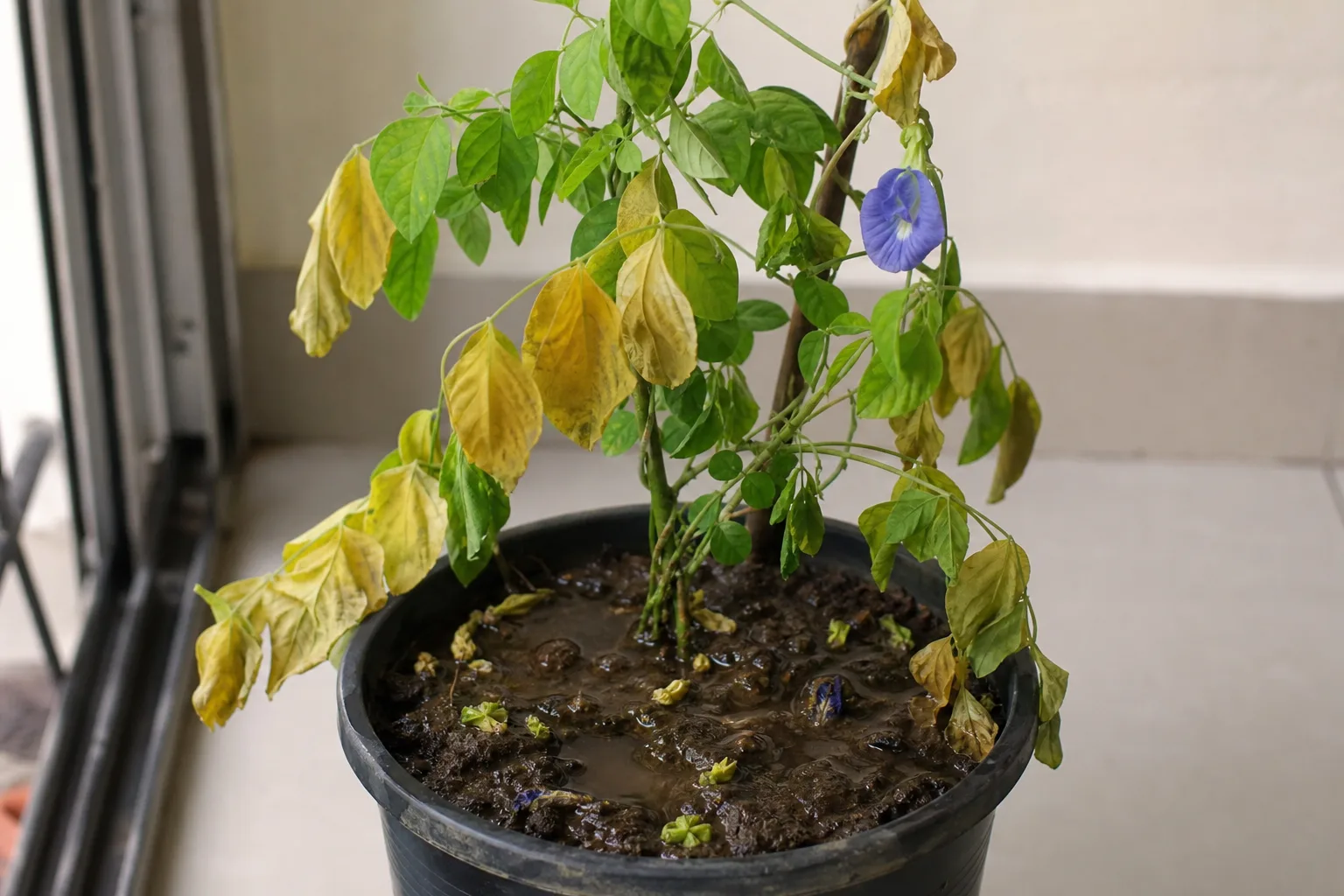
Overwatering on Aparajita shows as limp twining stems, yellow lower compound leaflets, and soil that stays wet 3 cm down while the pot feels heavy. First step: stop watering until the top 3 cm dries and empty any standing saucer water.
Overwatering on Aparajita: Causes, Checks & Fixes
This guide covers overwatering on Aparajita. See also the general Overwatering guide, watering, and light pages for this plant.
Overwatering on Aparajita: Causes, Checks & Fixes
Quick answer
Overwatered Aparajita (Clitoria ternatea, butterfly pea) keeps limp twining stems and dull compound leaflets while the potting mix stays wet-not light and dusty like a thirsty vine. Lower leaflets often yellow from the base upward, flower buds abort on saturated roots, and the container feels heavy days after your last watering.
First step: stop watering until the top 3 cm of mix feels dry to the touch, then empty any saucer or cachepot water. That single pause lets oxygen return to the root zone before you add another drop. Do not assume every wilt means drought-push your finger to the second knuckle first, because wilted foliage with moist soil often means damaged roots cannot absorb water.
What overwatering looks like on Aparajita
Butterfly pea is a fast twining legume that moves water through compound leaves when climbing in full sun. When roots sit in saturated mix too long, the whole vine shows stress-but the soil story differs sharply from underwatering.
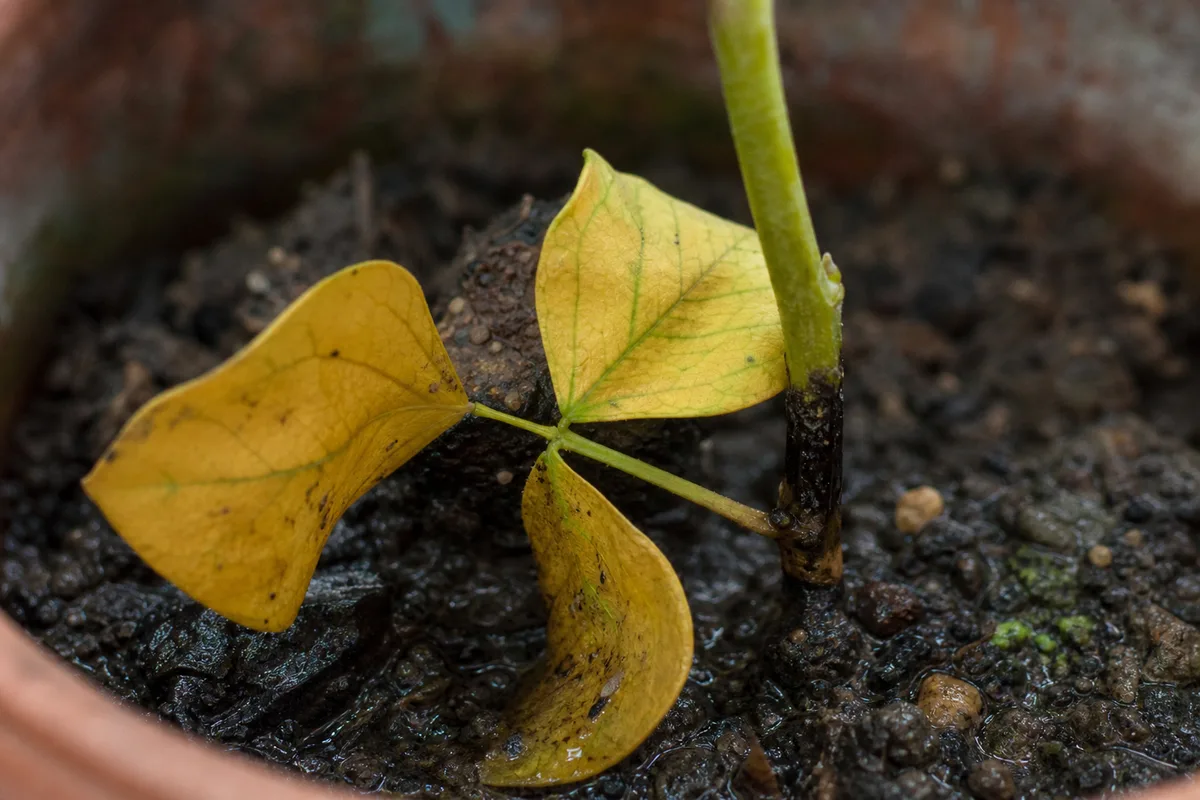
Overwatering symptoms on Aparajita - compare with healthy tissue on the same plant.
Typical overwatering signs:
- Limp or drooping twining stems while soil at 3 cm depth stays cool, damp, and clinging
- Yellowing of lower compound leaflets first, often spreading upward on older growth
- A pot that feels heavy and slow to dry compared with your post-watering baseline
- Reduced flowering, buds that form and drop before opening, or stalled new tendrils
- Sour, swampy, or musty odor from the mix when you lift the pot edge
- Fungus gnats hovering above persistently wet surface soil
- Soft or darkening tissue at the stem base where it meets soggy mix
- Surface mold or algae on soil that never dries between waterings
What it does not look like: Underwatered Aparajita wilts on dry, crumbly soil with a dramatically light pot. If your finger at 3 cm finds dust and the saucer is empty, read the underwatering guide instead.
Unlike simple thirst, overwatered mix smells sour-not neutral or dusty. Roots, if you slip the plant out, may be brown, mushy, or translucent instead of firm and pale tan.
Why Aparajita gets overwatered
Several traits that make butterfly pea easy to grow also make it easy to overwater by mistake-especially after a past drought scare or during humid monsoon stretches.
Calendar watering ignores the 3 cm rule
Growers who water every Sunday regardless of weather stack moisture on moisture. The Aparajita watering guide standard is simple: water when the top 3 cm dries, not on a fixed date. Cool winter rooms, monsoon humidity, and shaded corners all slow evaporation; the same calendar that worked in July can drown roots in November.
Drought tolerance creates a dangerous paradox
Extension references describe butterfly pea as drought tolerant yet performing best with consistent watering and full sun. PROSEA and agronomic profiles add that the species will not tolerate flooding or waterlogging. An established vine survives brief dry spells; it does not survive wet feet for days. Growers who lost a vine to drought sometimes panic-water daily-and trigger the opposite failure mode.
Legume biology does not prevent drowning
Butterfly pea fixes nitrogen with rhizobium bacteria in the soil. That partnership helps lean mixes but does not keep roots alive in anaerobic sludge. Saturated pore spaces drive out oxygen; roots stop functioning even while the mix looks dark and “healthy.” Nitrogen fixation is not a rescue raft for waterlogged tissue.
Heavy mix, blocked drainage, and oversized pots
Peat-heavy potting soil without perlite, sealed cachepots, and pots without drainage holes keep the bottom third anaerobic while the surface looks merely damp. Aparajita repotting guide into a larger container “to help drying” often worsens the problem-the extra soil volume holds water longer. Missouri Botanical Garden notes overwatering as among the most common indoor plant problems, usually from poor drainage rather than generous intent alone.
Monsoon humidity and full-sun balcony traps
A vine in blazing balcony sun still overwaters when rain, high humidity, and poor saucer drainage combine. The top centimeter may look dry after a brief sunny break while the pot core has been wet for a week. Outdoor Aparajita during monsoon needs paused manual watering until the 3 cm test reads genuinely dry-not merely surface dust.
Low light slows water use
Aparajita moved from full sun to a dim corner transpires less water through its leaflets. The same watering rhythm that worked on a hot trellis keeps mix wet too long indoors. NC State lists butterfly pea as doing well in well-drained, dry to slightly moist soil-”moist” is not “saturated for days.”
How to confirm the cause
Work through these checks before you pour-or before you repot:
- Finger test at 3 cm - Push to the second knuckle. Cool, clinging damp soil days after watering confirms excess moisture. Dry crumbly soil means underwatering, not this problem.
- Pot-weight test - Lift the container right after your next proper watering to learn the heavy baseline. An overwatered Aparajita pot stays noticeably heavy while stems droop. Missouri Botanical Garden recommends lifting small pots as a quick moisture guide.
- Skewer or chopstick test - Insert a wooden skewer to mid-pot depth. A dark damp stripe clinging to the stick means the lower mix is still wet-wait even if leaflets look soft in afternoon heat.
- Wilting pattern - Overwatering wilts the vine while soil stays wet. Evenly limp tips on bone-dry soil point to underwatering. One branch collapsing while others stay firm suggests localized stem rot or mechanical damage.
- Leaflet color pattern - Yellow lower compound leaflets on wet mix strongly suggest root stress. Widespread dull gray-green fold on dry soil fits thirst first.
- Smell and root peek - Sour or swampy odor with wet mix confirms oxygen-starved roots. Slide the plant out only if symptoms persist after a correct dry-down period, or if the stem base feels soft.
If soil is wet at 3 cm, the pot is heavy, and lower leaflets yellow, you have confirmed overwatering. If soil is dry and the pot is light, do not stop watering-rehydrate at the base per the underwatering workflow.
Symptom lookalike table
| What you see | Soil at 3 cm | Pot weight | Likely cause | First move |
|---|---|---|---|---|
| Limp twining stems, yellow lower leaflets | Cool, clinging wet | Heavy | Overwatering | Stop watering; drain saucer |
| Limp tips, dull leaflets, bud drop | Dry, crumbly | Light | Underwatering | Deep base soak |
| Wilt + wet soil + sour smell + mushy roots | Wet throughout | Heavy | Root rot | Stop water; inspect roots |
| Yellow lower leaves only, firm stems, moist not soggy soil | Moist, not saturated | Moderate | Nitrogen or age | Confirm drainage first; avoid extra water |
| Midday limpness, recovery by evening | Moist at 3 cm | Normal | Heat stress on well-watered vine | Check before watering again |
First fix for Aparajita
Stop watering immediately and empty any standing water in the saucer or cachepot. Do not add another drop until the top 3 cm of mix feels dry.
That pause is the entire first fix. Tilt the pot to drain trapped water, move it off a wet saucer, and improve airflow if it sits in a stagnant corner. If the vine is in deep shade where evaporation barely occurs, move it to brighter indirect light temporarily-not harsh midday scorch-so the mix dries at a realistic pace.
Do not follow with fertilizer, repotting, or heavy pruning on the same day. Do not overhead-water to “help drying”-wet compound leaves on humid nights invite bacterial soft rot and fungal problems that NC State lists for butterfly pea.
Wait until the 3 cm finger test reads dry-often five to fourteen days in cool winter rooms, faster in hot dry summer sun-before the next base soak. When you do water again, direct flow to the soil line until runoff appears, then drain fully within thirty minutes per the watering guide.
Step-by-step recovery after chronic wet soil
Once the first dry-down begins, recovery depends on how long roots sat saturated.
Mild recent overwatering on otherwise firm roots: Stop watering until 3 cm dries. Stems often firm within three to seven days as oxygen returns. Watch for new tendrils before you trust the vine fully.
Several weeks of wet soil with yellow lower leaflets: Complete the dry-down cycle, then resume the 3 cm rhythm only. Trim fully yellow, mushy leaflets if unsightly-green tissue may still photosynthesize. Do not strip half the vine at once.
Persistent wet mix despite dry surface: The pot may lack drainage holes, sit in a sealed cachepot, or hold peat-heavy soil that stays anaerobic at the bottom. Unpot only if dry-down fails after two weeks of corrected watering-inspect for brown mushy roots and repot into fresh well-draining mix with perlite, trimming only obviously rotten tissue.
Advanced soft crown or spreading wilt on wet soil: Escalate to the root rot guide-overwatering left unchecked crosses into decay that simple dry-down cannot reverse.
Recovery timeline
Simple overwatering caught early often shows improvement within three to seven days after you stop watering and the top 3 cm dries. Stems feel firmer; the sour smell fades.
Moderate root stress from weeks of wet feet may take one to three weeks before new tendrils resume twining. Judge success by fresh growth and new buds, not by old yellow leaflets-they rarely re-green.
Severe waterlogging that damaged a large portion of the root ball recovers over three to six weeks if enough firm root tissue remains-or not at all if the crown softens. Continued wilting on moist soil forty-eight hours after a confirmed correct dry-down suggests advancing root rot, not ongoing overwatering alone.
Lookalike symptoms to rule out
Wilting with dry, light soil - Underwatering. The vine looks equally limp but the pot tells the truth. Adding more water is correct only when 3 cm is dry.
Midday limpness that recovers by evening on moist-not soggy-soil - Temporary heat stress on a well-watered vine in extreme sun. Check 3 cm before reacting; afternoon wilt alone is not proof of excess water.
Crispy brown leaflet edges on firm stems with moderate soil moisture - Often low humidity or salt buildup, not overwatering. Overwatering more often yellows lower leaflets before crisping margins.
Spider mite stippling with webbing - Fine speckling on leaflet undersides indicates pests. Mites surge on heat-stressed plants; check foliage and soil together. NC State notes butterfly pea is susceptible to spider mites.
Leggy pale growth without wilt - Insufficient light. Stems stretch while soil dries on a normal schedule. Brighter sun reduces water stagnation by increasing transpiration-see the light guide.
Mistakes to avoid
Do not water on a fixed calendar without checking the top 3 cm. Monsoon rain, winter cool rooms, and indoor humidity all change dry-down speed.
Do not add fertilizer to waterlogged soil. Salts on damaged roots burn tissue. Resume feeding only after new growth appears on a corrected rhythm.
Do not repot into a larger pot while soil is saturated “to help drying.” Extra soil volume holds moisture longer and deepens anaerobic zones.
Do not overhead-water at dusk on humid nights. Wet compound leaves plus warm air invite fungal and bacterial problems on butterfly pea.
Do not interpret drought tolerance as permission to flood after a dry spell. The classic trap is drought followed by panic drowning-both reduce flowering.
Do not mist leaflets instead of fixing drainage. Surface humidity does not aerate waterlogged roots.
Do not assume full sun prevents overwatering. Heavy clay mix, blocked holes, and monsoon rain saturate roots even on a blazing balcony.
Aparajita care cross-check
Overwatering rarely happens in isolation on a flowering vine. After you dry the mix, confirm the rest of the setup supports healthy wet-dry rhythm:
- Drainage - Pots need open holes; saucers drain within thirty minutes. Container culture succeeds when excess water exits freely.
- Mix - Moderately fertile, well-draining blend with perlite or coarse sand. Heavy waterlogged clay in a sealed cachepot causes chronic wet feet.
- Light - Full sun increases transpiration and helps mix dry predictably; deep shade slows it and extends wet periods.
- Season - Active growth from spring through fall uses steady moisture; cool winter slowdown means soil stays wet longer between needed drinks.
- Watering method - Base watering at the soil line, not overhead showers, per the watering guide.
How to prevent overwatering next time
Build a habit around soil checks, not dates. Water when the top 3 cm feels dry, then soak at the base until drainage runs clear.
In peak bloom season on a sunny balcony, that may mean every two to four days. During monsoon or cool winter slow growth, seven to fourteen days between checks is common-and outdoor vines may need no manual water while rain keeps the core wet.
Lift the pot weekly until you learn its weight rhythm. A heavy pot with drooping stems is a stop sign, not a cue to water.
Use containers with drainage holes and empty saucers after every watering. Self-watering reservoirs and full saucers left overnight keep butterfly pea roots in the saturated zone PROSEA warns against.
After repotting, travel, or moving to a shadier spot, re-learn dry-down speed for two weeks before trusting an old schedule.
Cross-check the Aparajita overview-overwatering is a primary cause of yellow leaves on this vine-and keep the underwatering page handy for the opposite misread.
When to worry
Treat as urgent when the stem base feels soft with wet soil, when the vine collapses despite moist mix for more than forty-eight hours after you stop watering, or when unpotting reveals mostly mushy brown roots with a sour smell. Those patterns fit advancing root rot-simple dry-down alone may not save the plant.
Also act quickly if fungus gnats swarm constantly and mold returns within days of scraping-the root zone may be chronically anaerobic.
Lower urgency fits yellow lower leaflets on a heavy wet pot caught within the first week, before crown tissue softens. Stop watering, drain, and reassess in three to seven days.
If wilting persists on dry soil after your corrections, the problem is likely thirst or prior root damage from earlier wet-dry swings-not ongoing overwatering.
Conclusion
Overwatering on Aparajita is a drainage and rhythm problem on a drought-tolerant legume that cannot tolerate waterlogging, not a mystery disease. Butterfly pea survives brief dry spells while quietly dropping buds on saturated roots, so read the pot-not your anxiety-before you react to wilt. Check wetness at 3 cm, confirm a heavy container, then stop watering and drain the saucer until the mix dries. Old yellow leaflets may stay, but new tendrils and blue buds tell you the vine is back. Match your schedule to season, humidity, and pot size, and Clitoria ternatea rewards you with the flowering climb it was bred for across tropical Asia.
When to use this page vs other Aparajita guides
- Aparajita watering guide - Use for routine moisture checks before assuming overwatering is the main issue.
- Aparajita problems hub - Browse all 16 common issues on this species.
- Root Rot on Aparajita - Different entry point when symptoms overlap with overwatering.
- Yellow Leaves on Aparajita - Different entry point when symptoms overlap with overwatering.
- Wilting on Aparajita - Different entry point when symptoms overlap with overwatering.